Why Gnats Appear in Your Yard and Home

Common gnat species and their life cycles
Homeowners most often encounter three types of gnats: fungus gnats, which develop in damp potting soil; fruit flies (often called vinegar flies), whose larvae thrive in fermenting fruit and organic debris; and the larval stage of black‑fly species, which prefer moist, shaded soils near water sources. All three share a rapid life cycle—egg, larva, pupa, adult—that can be completed in as little as two weeks when conditions are warm and humid. This speed allows populations to explode before you even notice a problem.
Typical outdoor habitats that invite gnats
Gnats are drawn to any environment that offers moisture and decaying organic material. In a typical yard you’ll find prime real estate in:
- Moist garden soil or over‑watered lawns where larvae can burrow.
- Compost piles and leaf litter that provide a constant food source.
- Mulch beds that retain water and decompose slowly.
- Shade‑loving areas near ponds, drainage ditches, or poorly drained low spots.
When these zones stay damp for several days, they become breeding factories, releasing thousands of adult gnats that take to the air.
How outdoor populations spill into indoor spaces
During the warm months, adult gnats are attracted to light and the carbon dioxide we exhale. As evening approaches, they gravitate toward porch lights, window sills, and indoor plants. If you keep houseplants with overly wet soil, you’re essentially inviting the outdoor swarm inside. Even a small gap under a door can become a highway for these insects, especially when outdoor humidity is high.
Early warning signs to watch for
Before an infestation becomes visible, gnats give subtle clues:
- Swarming in thin clouds around outdoor lights or near patio furniture.
- Small, erratic flies hovering close to potted plants or freshly watered garden beds.
- Increased activity around kitchen trash cans, fruit bowls, or compost bins.
Spotting these patterns early lets you act before the numbers reach nuisance levels.
Seasonal patterns that boost gnat activity
Gnats thrive when temperatures consistently sit between 68°F – 85°F (20°C – 29°C) and humidity stays above 60%. In most U.S. regions this window opens in late spring, peaks through midsummer, and tapers off in early fall. Rainy spells or irrigation over‑watering can extend the season, giving gnats extra breeding cycles. Understanding this calendar helps you schedule preventive treatments—such as soil drying, mulch replacement, or professional barrier applications—right when the risk is highest.
Spotting Indoor Gnat Breeding Hotspots

Gnats thrive in the quiet, damp corners of a home where food and moisture mingle. Unlike fruit flies, which are attracted primarily to fermenting fruit, gnats are drawn to any moist organic matter. Recognizing the exact spots where they reproduce is the first step toward a lasting solution, because treating the adult insects without addressing the source only offers temporary relief.
Typical Indoor Breeding Sites
- Fruit bowls – Overripe or bruised fruit releases sugars that attract gnats.
- Sink drains – Food particles and standing water create a perfect larval habitat.
- Houseplants – Over‑watered soil or saucers with stagnant water nurture gnat larvae.
- Garbage disposals – Residual food scraps provide both food and moisture.
- Damp sponges or cloths – Forgotten cleaning tools retain moisture for days.
Step‑by‑Step Inspection Checklist
| Area | What to Look For | Action |
|---|---|---|
| Kitchen counters & fruit bowls | Ripe fruit, spilled juices, sticky residues | Remove fruit, wipe surfaces, store produce in sealed containers |
| Sink & disposal | Film on drain walls, slow draining water | Pour boiling water or a baking‑soda/vinegar mix down the drain weekly |
| Houseplant pots | Wet soil surface, tiny larvae on soil surface | Allow top inch of soil to dry, replace saucers, consider sand top layer |
| Bathroom floor & shower | Moist grout, standing water in tub corners | Dry surfaces after use, fix any leaks, ventilate |
| Basement corners | Damp cardboard, stored food items, leaky pipes | Seal food, repair leaks, use dehumidifier if needed |
Confirming the Source: Simple Traps
Two low‑cost traps can tell you whether a suspected area is actively breeding gnats:
- Vinegar trap – Fill a shallow dish with apple cider vinegar, add a drop of dish soap, and place it near the suspected site. Gnats are drawn to the scent, the soap breaks surface tension, and they drown.
- Apple‑cider trap – Mix equal parts apple cider and water in a bottle, add a few drops of sugar, and puncture a small opening near the cap. The insects enter for the scent and cannot escape.
Check the traps after 24–48 hours. A noticeable catch confirms that the location is a breeding hotspot, and you can prioritize treatment there.
Preventative Housekeeping Tips
- Store fresh produce in airtight containers or refrigerate promptly.
- Empty trash cans daily and keep lids sealed.
- Wipe down kitchen counters and sink edges after each use.
- Allow plant soil to dry between waterings; add a sand layer to deter larvae.
- Repair leaky faucets, pipes, or roof leaks immediately.
- Use a dehumidifier in damp basements or crawl spaces.
By systematically inspecting these high‑risk zones, confirming activity with simple traps, and tightening up everyday habits, homeowners can cut off the gnat life cycle at its source. When the breeding sites are eliminated, the adult gnats lose their foothold, and a professional treatment from Anthem Pest Control can finish the job safely and affordably.
DIY Strategies to Reduce Gnat Populations
Soil‑drying techniques for garden beds and potted plants
Gnats often hatch in moist, organic material, so the simplest defense is to keep the top layer of soil dry. Allow the upper inch of soil in garden beds and containers to dry out between watering sessions. When you water, aim for the roots rather than a surface soak, and consider placing a thin layer of sand or decorative gravel over the soil. The sand creates a barrier that lets water reach the roots while preventing adult gnats from laying eggs on the damp surface.
Natural repellents you can apply yourself
Several garden‑friendly products deter gnats without harming pets or children:
- Neem oil – Mix 1‑2 teaspoons of cold‑pressed neem oil with a gallon of water and a few drops of mild dish soap. Spray the solution on soil and foliage every 7‑10 days. Neem disrupts the gnat life cycle and repels adults.
- Cinnamon – Sprinkle ground cinnamon lightly over potting mix. Cinnamon’s antimicrobial properties inhibit fungal growth, which gnats love as a food source.
- Diatomaceous earth (DE) – Apply a thin dusting of food‑grade DE to the surface of dry soil. The microscopic silica particles abrade the soft bodies of crawling larvae, causing them to dehydrate.
Homemade traps that actually work
Traps are a quick way to reduce adult gnat numbers while you treat the breeding sites.
- Apple cider vinegar + dish soap – Fill a shallow bowl with ½ cup apple cider vinegar, add a few drops of dish soap, and cover with plastic wrap pierced with tiny holes. The scent lures gnats, and the soap breaks surface tension so they drown.
- Red wine trap – Pour a small amount of leftover red wine into a glass, add a splash of dish soap, and leave it uncovered in the kitchen or near potted plants. The sweet aroma attracts gnats, and the soap traps them.
- Sticky traps – Cut yellow index cards to size, coat one side with a thin layer of petroleum jelly, and place the cards near soil surfaces. Gnats are drawn to the bright color and become stuck.
Proper waste management and compost handling
Food scraps and decomposing organic matter are a buffet for adult gnats. Keep kitchen counters clear of fruit peelings, store trash in sealed containers, and empty compost bins regularly. If you maintain a compost pile, turn it weekly and add a layer of dry leaves or straw to keep the surface from staying soggy. For indoor plants, avoid over‑watering and discard any rotting foliage promptly.
When DIY measures aren’t enough – signs you need a professional
Even the best home remedies can fall short if the infestation is entrenched. Call in a pest‑control specialist if you notice any of the following:
- Gnats persist despite consistently dry soil and regular trap placement for more than two weeks.
- Large swarms appear near windows, doors, or HVAC vents, indicating they’re breeding inside walls or ducts.
- Visible larvae in the soil or in standing water that you cannot eliminate with DE or drying techniques.
- Concurrent pest problems (e.g., fungus gnats alongside fungus‑related plant disease) that suggest a broader moisture issue.
At Anthem Pest Control, we combine targeted treatments with a thorough inspection to locate hidden breeding sites, ensuring lasting relief while keeping your family and pets safe.
Professional Gnat Treatment Options in Decatur
Targeted Treatment Methods That Work
Licensed pest‑control companies use three core tactics to eliminate gnats fast and keep them from returning:
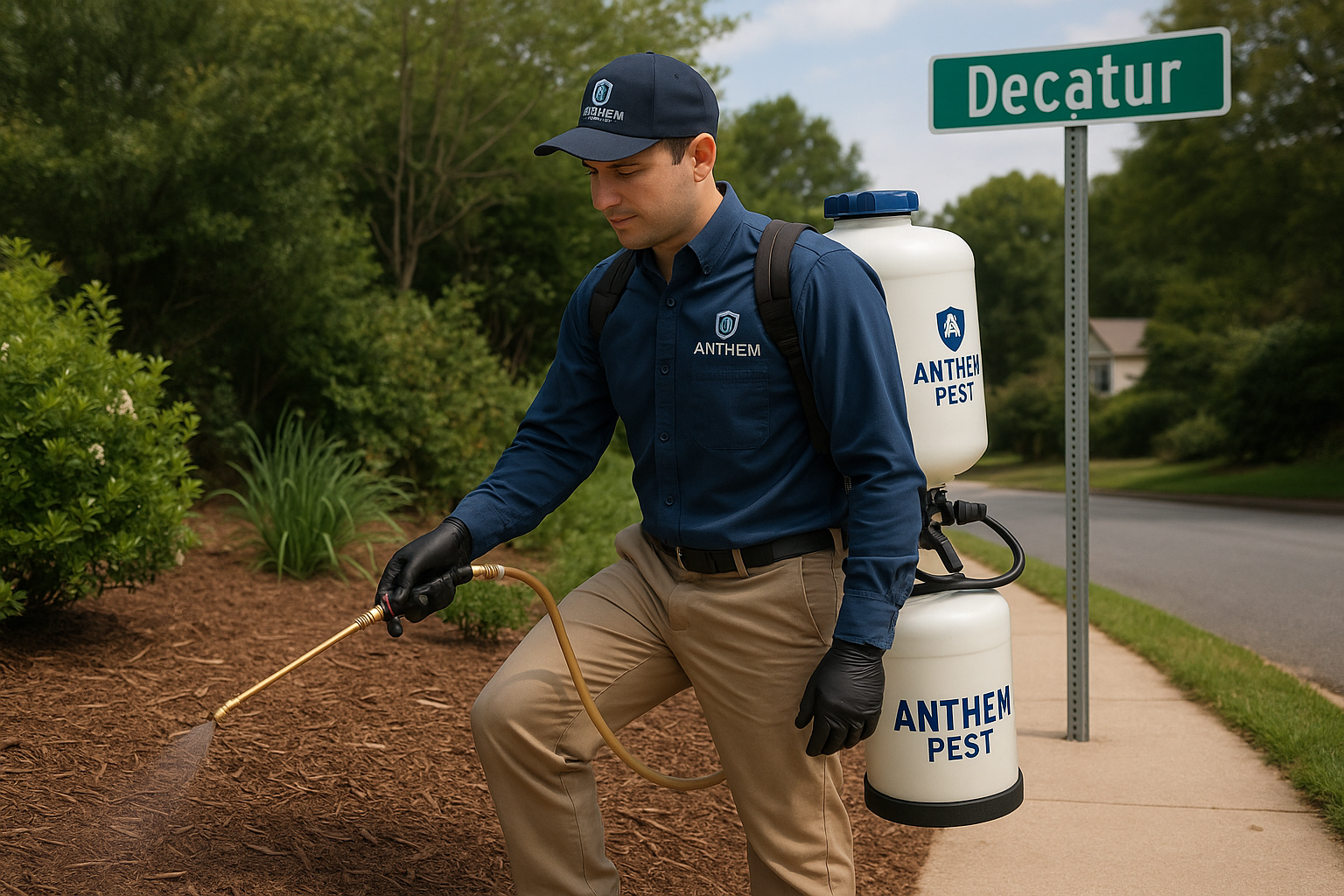
- Targeted insecticide applications – A low‑volume spray is placed directly on breeding sites, such as over‑watered flower beds or compost piles. The formula is designed to act quickly while minimizing exposure to non‑target insects.
- Soil drenches – When gnats are emerging from moist soil, technicians inject an EPA‑approved larvicide into the root zone. This creates an invisible barrier that stops larvae before they become flying adults.
- Barrier sprays – A perimeter treatment around doors, windows, and patios creates a protective shield that deters adult gnats from entering the home.
Pinpointing the Source
Effective control starts with discovery. Our technicians conduct a two‑step investigation:
- Indoor inspection – We check kitchen drains, houseplants, and any standing water for adult activity and larval habitats.
- Soil testing – A small sample from suspect beds is examined on‑site for moisture content and larval presence, allowing us to tailor the treatment precisely.
This scientific approach prevents guesswork and reduces the need for repeat visits.
Why Anthem Pest Control Is Decatur’s Go‑To
Anthem Pest’s Decatur team brings local expertise to every job. Our technicians arrive in branded uniforms, equipped with calibrated sprayers and handheld soil testers calibrated for Georgia’s climate. Knowing the city’s typical irrigation schedules and common landscaping practices lets us anticipate where gnats hide before they become a nuisance.
Safety First: Protecting Pets, Children, and the Environment
All products we use are EPA‑approved and specifically formulated for residential use. We follow a strict safety protocol that includes:
- Pre‑treatment briefing with the homeowner to identify pet‑friendly zones.
- Application during low‑traffic hours to limit human exposure.
- Post‑treatment verification that residue levels are well below regulatory limits.
The result is a gnat‑free yard without compromising the health of your family or the surrounding ecosystem.
Transparent Pricing You Can Trust
Anthem Pest believes in clear, upfront costs. A single, one‑time gnat treatment in Decatur typically ranges from $119 to $149, depending on property size and the complexity of the infestation. For homeowners who want year‑round peace of mind, our annual maintenance plan—covering two seasonal visits, monitoring, and a follow‑up retreat—starts at $299 per year. All quotes include a detailed service report, so you know exactly what was done and why.
Take the Next Step to a Gnat‑Free Home
By now you should be able to spot the tell‑tale signs of a gnat infestation, know which household fixes can keep them at bay, and understand the moment when DIY stops and professional help begins.
Quick recap
- Identify: swarms near drains, over‑ripe fruit, or damp soil.
- DIY: eliminate standing water, use traps, and keep food sealed.
- Call a pro: infestations persist after 48 hours, or when gnats appear in multiple rooms.
If gnats return after you’ve tried the DIY steps, it’s a clear sign that professional treatment is needed.
Why choose Anthem Pest Control?
Expertise you can trust. Our technicians have years of experience targeting gnats and the broader family of flying insects. We use EPA‑approved products that are safe for children and pets while delivering rapid results.
Transparent, affordable pricing. You’ll receive a detailed quote before any work begins, and our rates are competitive because we believe every homeowner deserves a pest‑free environment without breaking the bank.
Safe, lasting solutions. We don’t just kill the insects we see; we treat breeding sites and install preventative barriers so gnats stay gone season after season.
Ready for a free, no‑obligation quote?
Give us a call at 877‑371‑8196 or visit our website to schedule your complimentary assessment. Our friendly team will walk you through the process, answer any questions, and set up a treatment plan that fits your schedule.
Don’t let gnats ruin another evening on your porch or in your kitchen. Acting today means a calmer, healthier home tomorrow—plus the peace of mind that comes from knowing a trusted professional is on your side. Contact us today and enjoy a gnat‑free summer without the hassle.