What Are Fruit Flies and Why They Matter in Georgia
When you spot tiny, buzzing insects hovering over ripe peaches or near your kitchen trash can, you’re likely looking at fruit flies—often prompting homeowners to research fruit fly control cost Holly Springs before the problem spreads. In Georgia, two species dominate the issue: the Mediterranean fruit fly (Ceratitis capitata) and the Oriental fruit fly (Bactrocera dorsalis). Both are invasive, highly adaptable, and capable of turning a modest garden into a rapid-growth infestation.
Key Identifying Features
- Size: Adults measure 4‑7 mm, roughly the length of a grain of rice.
- Color: Mediterranean fruit flies display a tan‑brown body with a distinctive yellow‑orange patch on the abdomen, while Oriental fruit flies are darker with a metallic sheen.
- Wing pattern: Both species have clear wings, but the Mediterranean species often shows faint dark spots near the wing edges, a helpful field clue for homeowners.
The Fruit Fly Lifecycle—A Speedy Cycle
Understanding the life cycle is essential because it explains why populations can explode in a matter of weeks. The cycle proceeds as follows:
- Egg: A female can lay up to 200 eggs on the surface of a ripe fruit, often within the first 24 hours after mating.
- Larva (maggot): Eggs hatch in 24‑48 hours; the larvae feed on the fruit’s flesh, creating the characteristic “wormy” interior.
- Pupa: After 5‑7 days of feeding, larvae drop to the soil to pupate. This stage lasts another 7‑10 days, depending on temperature.
- Adult: Fully formed adults emerge, ready to mate within 2‑3 days, restarting the cycle.
In warm Georgia summers, the entire cycle can complete in under three weeks, meaning a single female can generate thousands of offspring before the season ends.
Why Fruit Flies Matter to Georgia Homeowners
Fruit flies are more than a minor annoyance; they pose real economic and health risks:
- Crop damage: Larval feeding destroys the flesh of peaches, apples, citrus, and even ornamental berries, reducing marketable yield for backyard orchards and local farms.
- Pathogen spread: As flies move from fruit to fruit, they can carry bacterial and fungal spores, potentially contaminating produce and increasing the risk of food‑borne illness.
- Indoor nuisance: Adult flies are attracted to fermenting residues in trash cans, drains, and overripe fruit left on countertops, leading to persistent indoor swarms.
Local Agriculture and Home Gardens
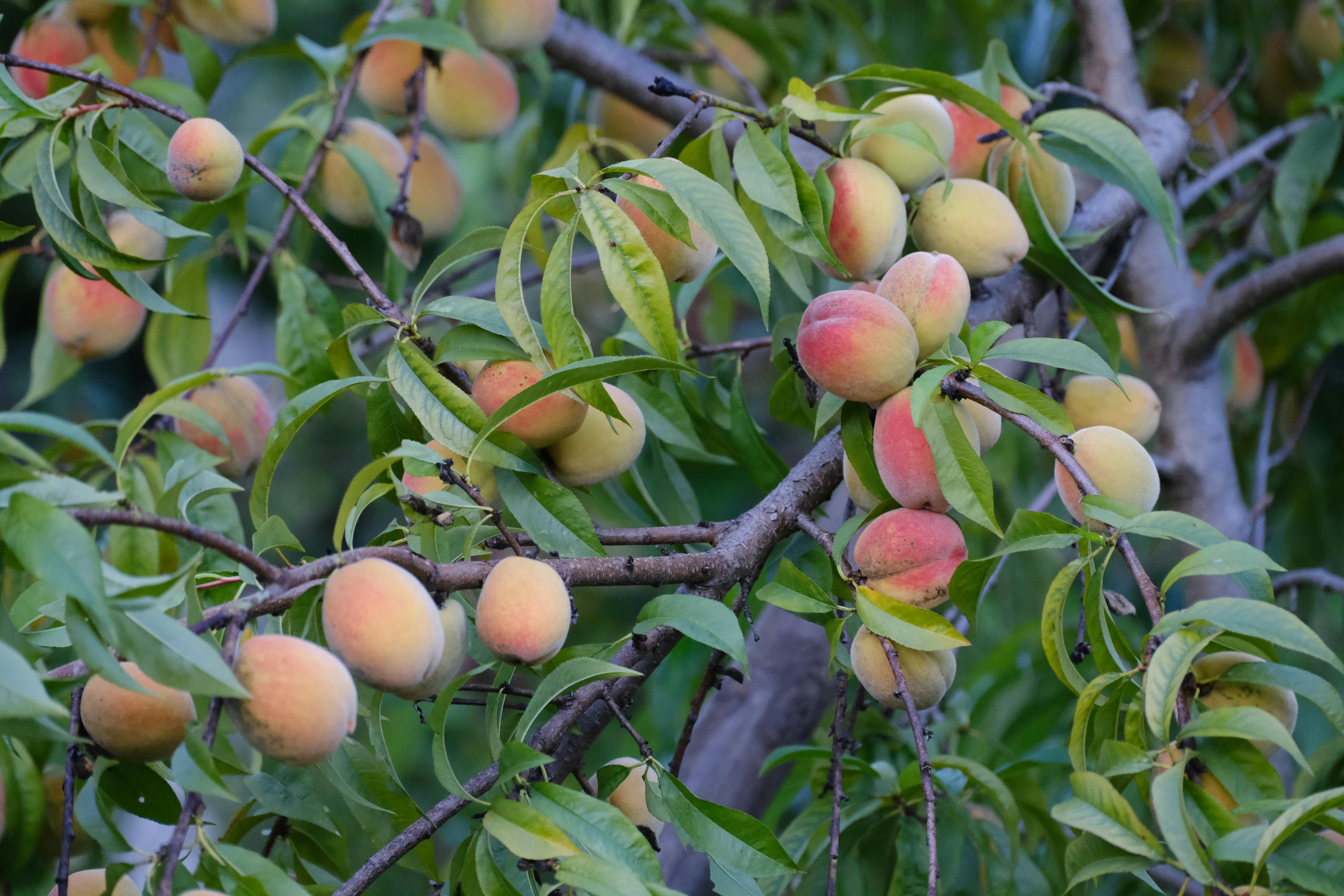
Georgia’s reputation as the “Peach State” makes it especially vulnerable. Commercial orchards in the Peach County area report up to 30 % yield loss when fruit fly populations go unchecked. Home gardeners aren’t immune—an unharvested peach or a forgotten jar of homemade jam can become a breeding hotspot within days.
Safe Management Practices
The U.S. Environmental Protection Agency (EPA) provides clear guidance on pesticide use for fruit flies, emphasizing targeted applications, proper timing, and adherence to label instructions to protect non‑target organisms and human health. For homeowners, EPA‑approved baits and traps, combined with diligent sanitation, often keep numbers below damaging levels. When infestations exceed what DIY measures can control, professional services—like those offered by Anthem Pest Control—apply calibrated treatments that respect EPA standards while delivering rapid results.
By recognizing the species, monitoring their rapid life cycle, and understanding the specific threats they pose to Georgia’s prized fruit crops, homeowners can take proactive steps before a tiny fly becomes a costly problem.
When Fruit Flies Are Most Active in Georgia
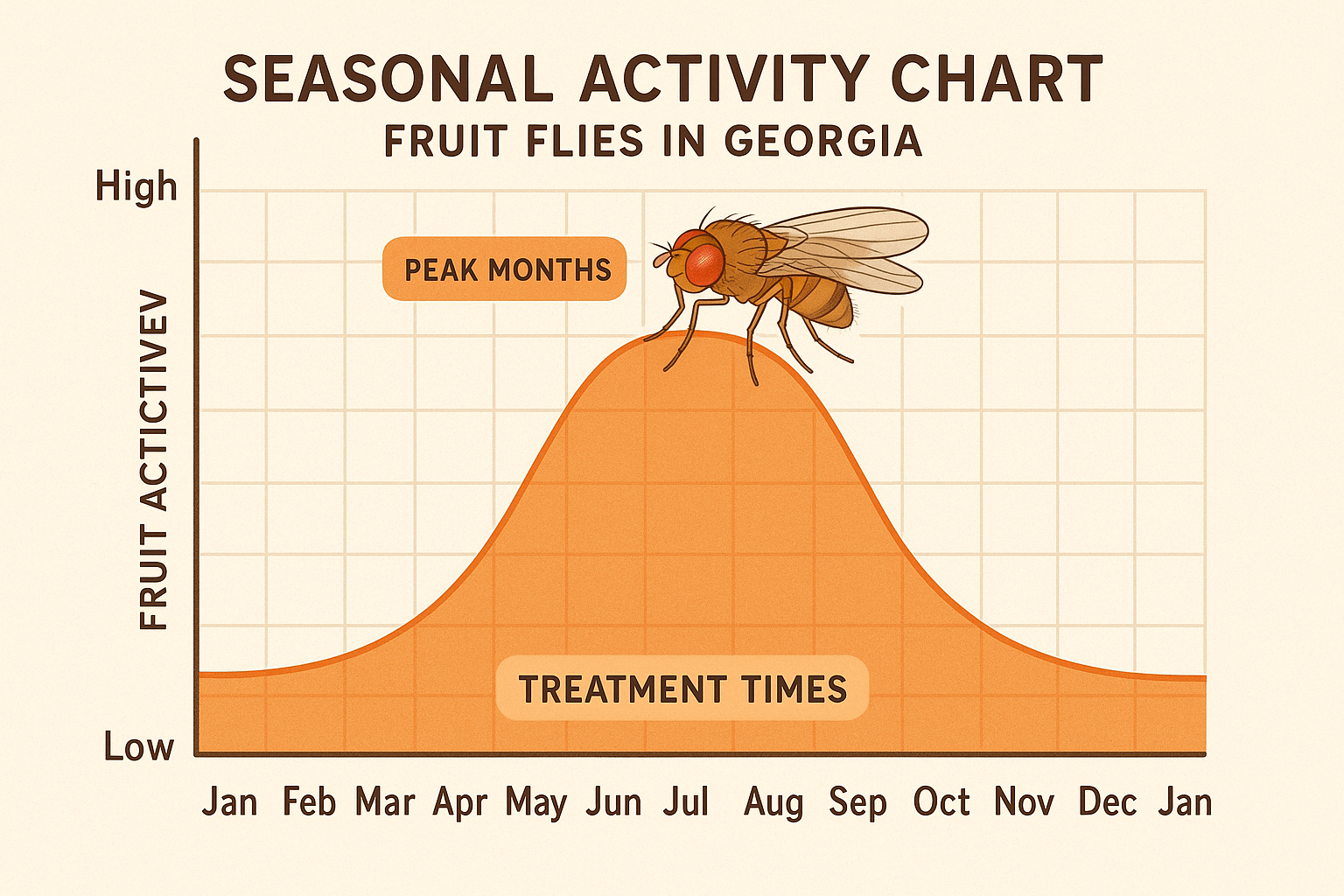
Fruit flies don’t appear at random; they follow a predictable rhythm dictated by temperature and humidity. In Georgia’s warm climate, each spring the rising daytime highs and nightly moisture create the perfect breeding ground for adult flies to emerge from pupae. When average temperatures hover between 70 °F and 85 °F and relative humidity stays above 60 %, eggs hatch faster, larvae develop more quickly, and populations can double in just a few days. Conversely, a sudden cold snap or a dry spell will stall the cycle, pushing activity back down.
Temperature, humidity, and emergence cycles
Think of fruit fly development as a thermostat‑controlled furnace. Below 60 °F, the “heater” stays off—eggs remain dormant. As soon as the mercury climbs, the furnace ignites, accelerating metabolism. Humidity acts like the fuel; without sufficient moisture, larvae can’t thrive, even if it’s warm. That’s why you’ll notice the most dramatic spikes in late summer when both heat and moisture peak, especially after a series of rainstorms that leave fruit and organic debris damp.
Seasonal activity chart for Georgia
| Month | Activity Level |
|---|---|
| January | Very Low |
| February | Low |
| March | Low‑Moderate |
| April | Moderate |
| May | Moderate |
| June | High |
| July | Peak |
| August | Peak |
| September | Peak |
| October | Moderate |
| November | Low‑Moderate |
| December | Very Low |
The chart makes one thing clear: July through September are the high-water months for fruit fly activity across the state, a period that often drives up fruit fly control cost Holly Springs homeowners experience. That’s the window when you’ll see the most adult flies buzzing around ripe fruit, garbage cans, and even indoor kitchen areas.
Species‑specific peaks
Not all fruit flies follow the exact same calendar. The Mediterranean fruit fly (Ceratitis capitata) often peaks a bit earlier, in late June, because it prefers slightly cooler, more humid conditions. The native vinegar fly (Drosophila melanogaster) tends to linger longer into September, thriving on fermenting fruit that remains on the ground after harvest. Knowing which species you’re dealing with helps fine‑tune treatment timing—if you suspect Mediterranean flies, start monitoring in early June rather than waiting for the July surge.
Inspection frequency recommendations
During the peak July‑September window, conduct a visual inspection of kitchen counters, trash receptacles, and any fruit‑bearing trees or bushes at least once a week. Look for tiny larvae in overripe fruit, sticky traps with adult flies, and the tell‑tale “mushy” spots on the ground. Outside of the peak, a bi‑weekly walk‑around is sufficient to catch early buildups before they explode. Pair inspections with proper sanitation—remove fallen fruit, keep compost bins sealed, and clean drains regularly—to keep the population from gaining a foothold.
For a broader perspective on how fruit flies contribute to food‑borne pest problems nationwide, see the CDC’s 2024 food‑borne burden report. Understanding the seasonal rhythm empowers you to act before the flies become a nuisance, and it gives Anthem Pest Control a clear window to deploy the most effective, cost‑efficient treatments for Holly Springs homeowners.
DIY Strategies to Reduce Fruit Flies at Home
Fruit flies thrive on the smallest bits of organic matter, so the most effective defense starts with a clean, well‑organized kitchen. Below are low‑cost, homeowner‑friendly steps that can keep those tiny pests at bay long enough to avoid an immediate call to a professional.
Sanitation Basics
Removing food sources is the single most powerful tool in your arsenal. Follow these three habits every day:
- Dispose of overripe fruit immediately. Place spoiled produce in a sealed bag before it hits the trash can, and empty the bag outside the house as soon as possible.
- Clean drains and garbage disposals. Pour a cup of boiling water down each sink weekly, then scrub with a brush and a mixture of baking soda and vinegar to eliminate the film where flies lay eggs.
- Cover compost and recycling bins. Use tightly fitting lids or a thin layer of newspaper to stop flies from landing and breeding inside.
Homemade Traps
Simple traps can dramatically reduce adult populations, especially during fruit‑fly season. Choose one or combine several for best results.
Apple Cider Vinegar Trap
- Fill a 16‑oz glass jar halfway with raw apple cider vinegar.
- Add a few drops of liquid dish soap to break the surface tension.
- Cover the opening with plastic wrap and poke 4–5 small holes with a toothpick.
- Place the trap on the countertop near fruit or trash; replace every 3–4 days.
Wine Trap
- Pour a half‑cup of red or white wine into a small bowl.
- Stir in a teaspoon of sugar and a drop of dish soap.
- Leave the bowl uncovered in a high‑traffic area; fruit flies are attracted to the fermenting scent.
- Discard the mixture once it’s full of flies and repeat as needed.
Sticky‑Paper Trap
- Cut a piece of yellow sticky paper to fit a small tray.
- Place a few drops of fruit juice or a dab of ripe banana on the paper to lure flies.
- Set the tray near fruit bins or sink drains; replace the paper when it becomes saturated.
Physical Barriers
Preventing flies from reaching food is just as important as eliminating the sources they love.
- Fine mesh screens. Install 1‑mm or tighter mesh on windows, vents, and any opening that leads to the kitchen.
- Fruit‑fly‑proof containers. Store ripe fruit in glass or hard‑plastic containers with airtight lids; a simple zip‑top bag works for smaller batches.
- Proper produce storage. Keep harvested berries, melons, and tomatoes in the refrigerator or in a cool, dark pantry until you’re ready to use them.
Biological Control Options
For gardeners or homeowners with a modest orchard, introducing natural enemies can suppress fruit‑fly populations without chemicals.
- Parasitic wasps (e.g., Fopius arisanus). These tiny wasps lay eggs inside fruit‑fly larvae, halting development. Release rates vary, so follow the supplier’s guidelines carefully.
- Beneficial nematodes. Soil‑dwelling nematodes such as Steinernema feltiae target the pupal stage in the ground. Apply them to the soil around fruit‑bearing plants, but avoid use on edible produce that will be harvested soon.
Caution: Biological agents are safe when applied as directed, but they can affect non‑target insects if over‑released. Always purchase from reputable suppliers and read the label.
When DIY Methods May Not Be Enough
Even the most diligent homeowner can be overwhelmed when fruit‑fly numbers surge, especially in larger settings like home orchards, extensive vegetable gardens, or properties with multiple compost piles. Signs that professional help is warranted include:
- Visible swarms of adult flies despite regular traps.
- Persistent larvae found inside ripening fruit or in the soil.
- Infestations that spread beyond the kitchen to outdoor fruit‑bearing trees.
In these cases, a licensed pest‑control provider can apply targeted baits, area sprays, or advanced biological agents that are not available over the counter. Contacting Anthem Pest Control early can prevent a small problem from becoming a costly, seasonal outbreak.
How Professional Pest Control Handles Fruit Flies
When fruit flies turn your kitchen into a buzzing nuisance, a DIY spray often only offers a temporary reprieve—especially when the issue starts impacting fruit fly control cost Holly Springs homeowners may face over a full season. Licensed pest-control professionals bring a systematic, science-backed approach that targets the insects where they breed, not just where you see them. Below is a step-by-step look at how a certified service—like Anthem Pest Control—tackles fruit fly infestations in Holly Springs, Georgia.
Professional Inspection: Finding the Hidden Breeding Sites
The first visit is never a blind spray. Technicians conduct a thorough inspection to locate the exact sources of the problem. They:
- Identify overripe fruit, damp organic matter, and clogged drains that serve as ideal breeding grounds.
- Place discreet monitoring traps—often sticky or funnel‑type—to confirm activity levels and pinpoint hotspots.
- Use handheld moisture meters and visual checks to uncover hidden moisture pockets in basements, crawl spaces, or under appliances.
This data‑driven assessment lets the technician map out a targeted treatment plan, saving time and reducing chemical use.
Treatment Options: From Spot‑Sprays to Area‑Wide Fogging
Based on the inspection findings, professionals select one or more of the following methods:
- Targeted residual sprays: EPA‑registered emulsions are applied to the exact surfaces where flies land, creating a lasting barrier that kills insects on contact for weeks.
- Bait stations: Enclosed devices containing attractant‑laced gel or liquid lure flies into a lethal environment without exposing residents or pets to chemicals.
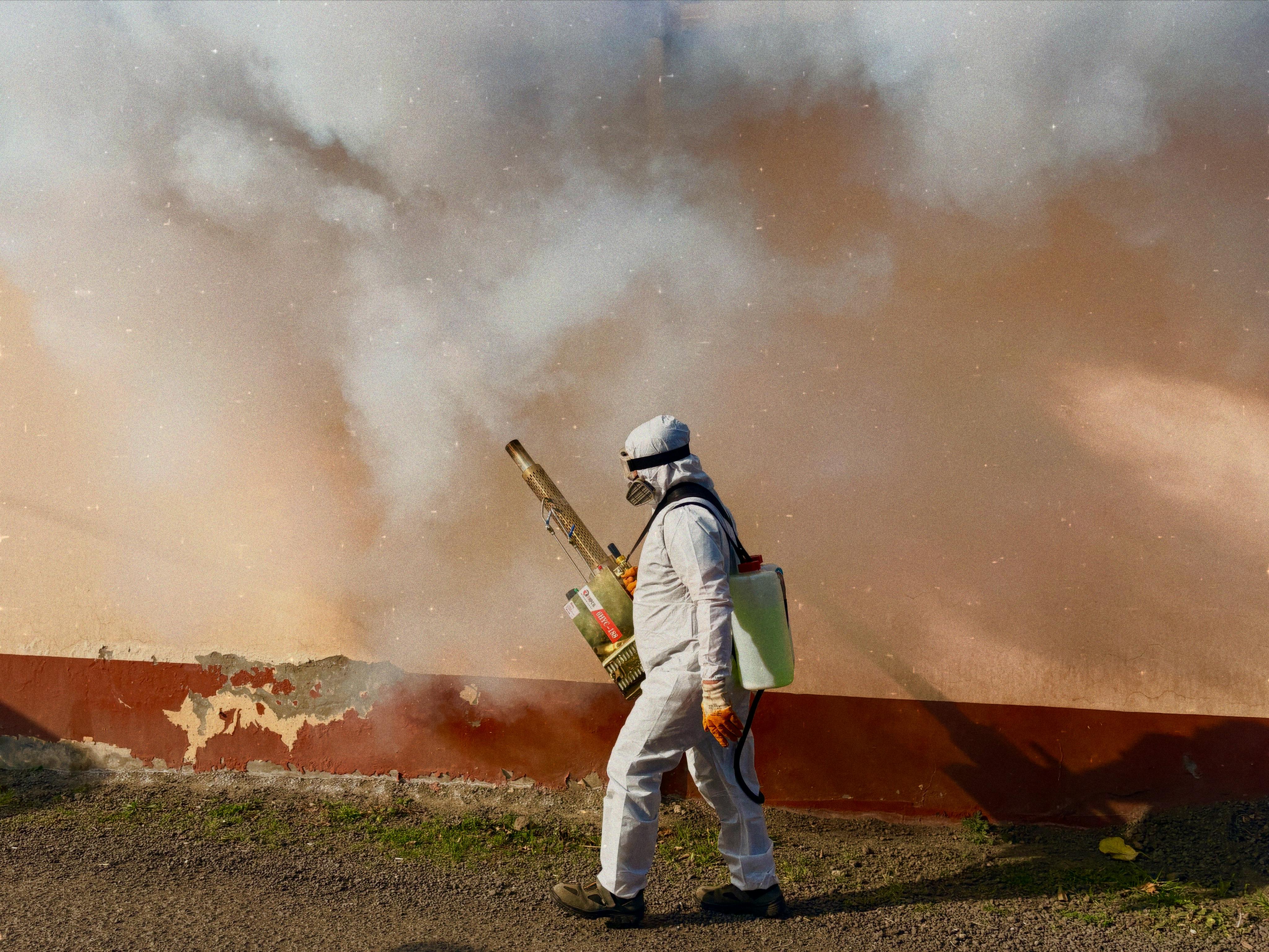
- Area‑wide fogging: In severe cases, technicians may use low‑volume foggers to disperse a fine mist throughout the affected zone, rapidly reducing adult populations.
Each product is chosen for its efficacy against Drosophila melanogaster and its compliance with Georgia’s environmental regulations.
Safety Measures: Protecting Home, Family, and the Environment
Professional pest control companies adhere to strict safety protocols:
- All chemicals are EPA‑registered and labeled for indoor use, ensuring they meet federal toxicity standards.
- Technicians wear protective gloves, goggles, and respirators when handling concentrates.
- Application rates are calibrated with calibrated sprayers to avoid over‑application.
- Service plans comply with local ordinances and the NPMA (National Pest Management Association) standards, which set the industry benchmark for safety and efficacy.
These safeguards mean you can continue your daily routine with confidence, knowing that the treatment will not linger on countertops or in the air.
Benefits of Hiring a Licensed Service
Choosing a professional over a DIY approach delivers tangible advantages:
- Faster knock‑down: Trained technicians know the exact pressure and placement needed to eliminate adult flies within hours.
- Reduced re‑infestation risk: By eradicating the source—often hidden in drains or compost bins—future generations are prevented from emerging.
- Expert follow‑up: Most companies, including Anthem Pest Control, schedule a post‑treatment inspection to verify results and adjust any lingering issues.
- Warranty and satisfaction guarantees: Homeowners receive peace of mind through service guarantees that cover repeat visits if flies return.
Why Anthem Pest Control Is Your Local Expert
Anthem Pest Control has served Georgia homeowners for years, and its technicians are certified in Integrated Pest Management (IPM). The company’s approach blends chemical control with preventive measures—such as drain cleaning and waste management advice—to keep fruit flies at bay long after the spray dries.
Clients benefit from transparent pricing, a 100% satisfaction guarantee, and a dedicated hotline (877‑371‑8196) for any follow‑up questions. When you choose Anthem, you’re not just buying a service; you’re partnering with a team that understands Holly Springs’ climate, local regulations, and the specific habits of the fruit fly populations that thrive here.
DIY vs. Professional Fruit Fly Control – Cost Comparison
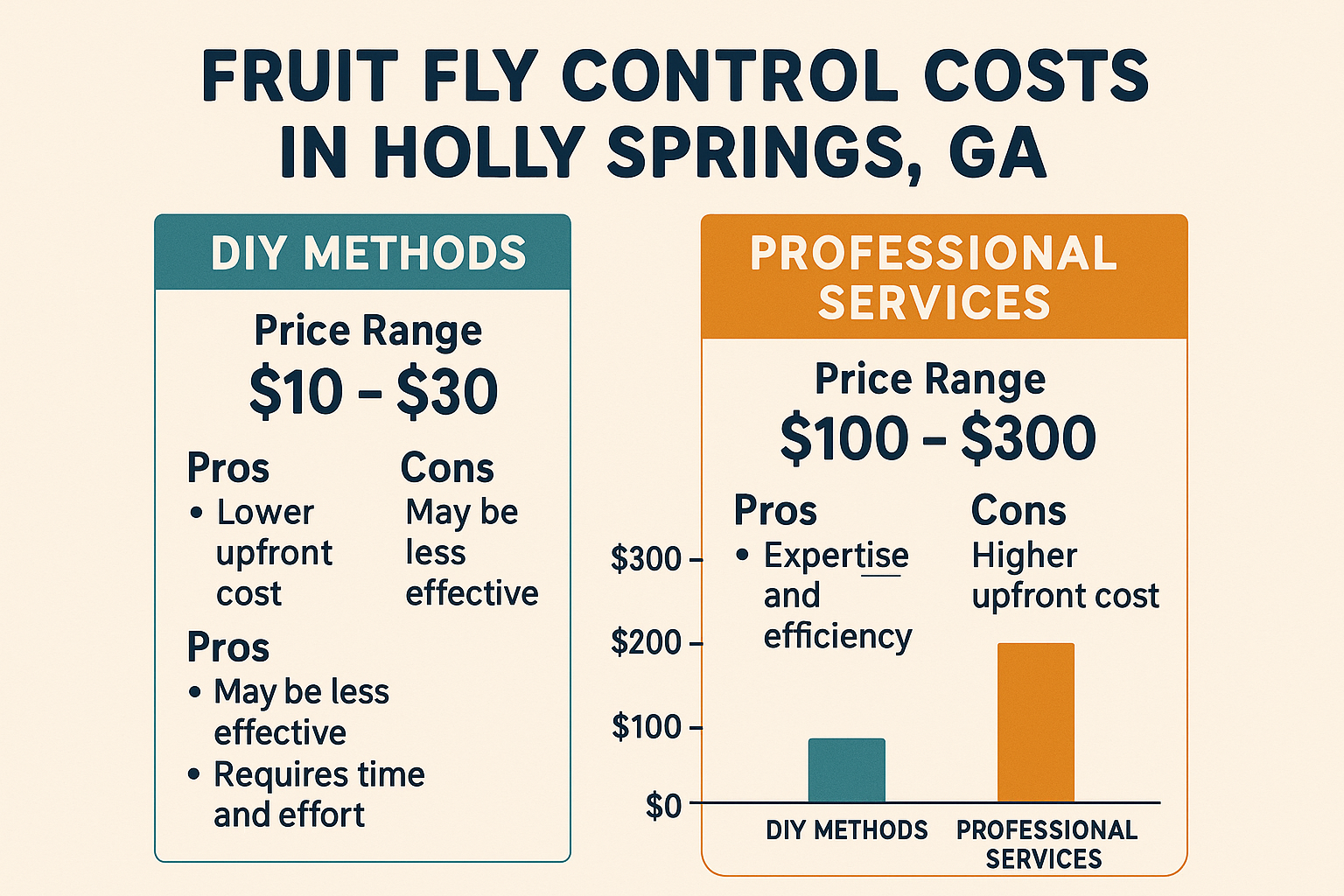
Cost Breakdown
| Option | Initial Outlay | Ongoing Costs | Total Seasonal Estimate |
|---|---|---|---|
| DIY (traps, baits, spray) | $15‑$30 (starter kit) | $5‑$20 (replenish supplies) | $20‑$80 |
| Professional service (single treatment) | $150‑$200 (inspection & application) | $0‑$100 (follow‑up visits, if needed) | $150‑$300 |
Pros and Cons
DIY Approach
- Cost: Lowest upfront expense, ideal for tight budgets.
- Control: You decide when and where to set traps or apply baits.
- Time Commitment: Requires regular monitoring, trap replacement, and occasional re‑application.
- Safety: You handle chemicals directly; proper ventilation and protective gear are essential.
- Effectiveness: Varies widely; success hinges on correct product selection and diligent execution.
Professional Service
- Cost: Higher initial price, but includes expert diagnosis and warranty.
- Effectiveness: Trained technicians use EPA‑approved treatments that target fruit fly life cycles.
- Time Commitment: Minimal for the homeowner—technician handles inspection, treatment, and follow‑up.
- Safety: Professionals apply chemicals safely, reducing exposure risk for families and pets.
- Speed: Faster reduction of adult flies, which can curb a spreading infestation quickly.
While DIY kits appear inexpensive, failed attempts can quickly become costly. A missed breeding site often leads to renewed swarms, forcing homeowners to purchase additional traps, replace spoiled produce, or even replace damaged indoor plants. Those hidden expenses—lost harvest, extra chemical purchases, and the intangible stress of a lingering problem—can push the real cost well beyond the $80 ceiling of a well‑executed DIY plan.
Before you decide, assess the severity of your infestation. A light, isolated presence may be handled with a $30 starter kit and a few weeks of diligent monitoring. Conversely, a full‑blown outbreak in a kitchen garden or near fruit‑bearing trees typically warrants a professional’s $150‑$300 treatment to stop the cycle before it spreads. Use the table above as a quick calculator: multiply the number of expected visits or supply replacements by the unit cost, then compare that total to the quoted professional fee.
Protect Your Home with Anthem Pest Control
Fruit flies may seem harmless, but a small infestation can quickly turn your kitchen, pantry, or even a backyard orchard into a breeding ground. Catching the problem early prevents damage to fruits, vegetables, and the overall hygiene of your home.
Professional treatment from Anthem Pest Control delivers fast, safe, and lasting results—especially during the peak summer months when fruit fly activity spikes. Our certified technicians use targeted, EPA‑approved solutions that eliminate adults and disrupt the life cycle, so you won’t see a return of the pests weeks later.
We invite you to schedule a free, no‑obligation quote to assess your property. Our experts will walk you through the findings, recommend a tailored plan, and answer any questions you have about prevention.
Whether you’re dealing with a few flies in the kitchen or a full‑blown orchard outbreak, our certified technicians have the tools and local knowledge to protect your harvest and your home. We understand Holly Springs’ climate, so our treatments are timed for maximum effectiveness.
Call us today at 877-371-8196 for a free quote and a clear estimate of fruit fly control cost Holly Springs homeowners can expect, or visit Anthem Pest Control to take the first step toward a fruit-fly-free home.