Why German Cockroaches Matter in Georgia Homes
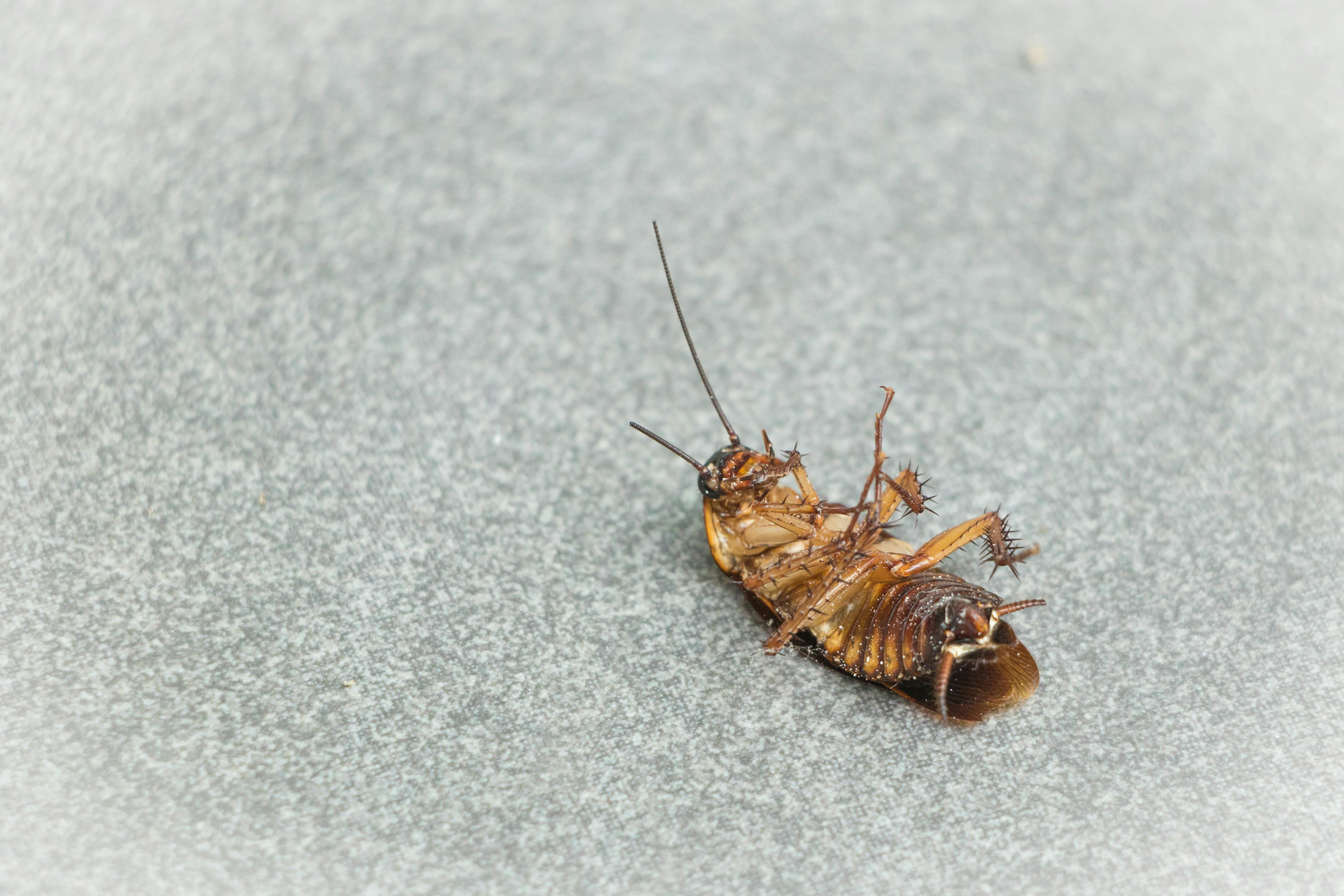
German cockroaches (Blattella germanica) are small, light‑brown insects that thrive in warm, humid environments—exactly the conditions found in many Georgia kitchens and bathrooms. An adult measures only about a half‑inch long, but a single female can produce up to 40 eggs at a time, leading to rapid population explosions if left unchecked. They prefer warm cracks near food sources, such as behind appliances, in cabinet crevices, and inside wall voids.
According to the EPA and the NPMA, the Southeast registers the highest indoor cockroach activity in the nation, with Georgia consistently ranking in the top three states. The EPA’s pest‑risk maps show that over 60 % of homes in the region report at least one sighting per year, making German cockroaches a common—and costly—guest. Recent surveys by the NPMA indicate that more than one in three Georgia households have reported a sighting in the past year, underscoring the need for proactive measures.
Beyond the nuisance factor, these roaches pose real health threats. Their shed skins, droppings, and saliva contain potent allergens that can trigger asthma attacks, especially in children and the elderly. Moreover, they carry bacteria such as Salmonella and E. coli, contaminating food surfaces and increasing the risk of gastrointestinal illness. Studies link cockroach allergen exposure to a 30 % increase in asthma symptoms among sensitized individuals.
From an economic standpoint, a German cockroach infestation can damage pantry items, force premature food disposal, and drive up cleaning expenses. Homeowners often find themselves spending extra on deep‑cleaning services, replacement of contaminated food, and, eventually, professional pest control—costs that can quickly climb into the hundreds of dollars. In addition, the presence of roaches can devalue a property and complicate real‑estate transactions, further amplifying the financial burden.
In the sections that follow, you’ll learn how to spot the tell‑tale signs of a German cockroach presence, understand the seasonal patterns that influence their activity in Cumming, and discover affordable, effective treatment options that keep your home safe and your budget intact. We’ll also cover how seasonal humidity spikes in summer and the cooler indoor temperatures of winter influence their breeding cycles, helping you time interventions for maximum impact.
Spotting German Cockroaches – Identification and Warning Signs
Detailed physical description
German cockroaches are the smallest household roaches you’ll encounter, measuring roughly ½ inch (12 mm) in length. Their bodies are a light brown or tan hue, and the most reliable field mark is the pair of dark, parallel stripes that run across the pronotum (the shield‑like area just behind the head). These stripes are often faint, so a close look or a good photograph can make all the difference when you’re trying to confirm the species.
Life‑stage overview
Understanding the life cycle helps you recognize what you’re seeing. A female German cockroach carries an ootheca—a protective egg case that contains 30‑40 tiny, oval eggs. Once the eggs hatch, the nymphs look like miniature, wingless adults and go through six molts before reaching maturity. Because nymphs are so small, they can hide in cracks that adults cannot, making early detection a bit trickier.
Common hiding spots in Georgia homes
In the humid climate of Cumming, Georgia, German cockroaches gravitate toward warm, moist environments where food is readily available. Typical hideouts include:
- Kitchen cabinet crevices, especially near crumbs or spilled liquids
- Behind refrigerators, stoves, and dishwashers where condensation forms
- Bathroom grout lines and under sinks where water drips
- Pantry shelves, particularly around cereal boxes, flour, and pet food
Typical signs of an infestation
Even if you haven’t seen a live roach, several tell‑tale clues point to a German cockroach problem:
- Droppings: Tiny, black‑pepper‑like specks that appear on countertops, cabinets, or near appliances.
- Musty odor: A faint, oily smell that becomes noticeable in heavily infested areas.
- Egg casings: Small, brownish oothecae often tucked in dark corners or behind wall voids.
- Live sightings: Rapid, skittering movements at night, especially when lights are turned on.
How to use a flashlight and sticky traps for early detection
A bright, narrow‑beam flashlight is your best friend for a quick inspection. Shine the light into tight spaces—under appliances, inside cabinet doors, and along baseboards—and watch for movement or the glint of a roach’s exoskeleton. Placing sticky traps (the kind with a pheromone lure) along travel routes gives you a passive monitoring tool; a few trapped insects in a week usually signals the need for professional intervention.
Quick checklist for homeowners
Use the list below to gauge how serious the situation might be. Mark “Yes” if you notice any of these items:
- Visible adult German cockroaches during the day or night
- Droppings resembling ground pepper on surfaces
- Found oothecae (egg cases) in hidden corners
- Persistent musty or oily odor in kitchens or bathrooms
- Sticky traps catching more than two roaches per week
- Multiple sightings in the same area over a short period
If you answer “Yes” to three or more items, it’s time to call a local expert—like Anthem Pest Control—to assess the infestation and discuss a targeted treatment plan.
Seasonal Activity of German Cockroaches in Georgia
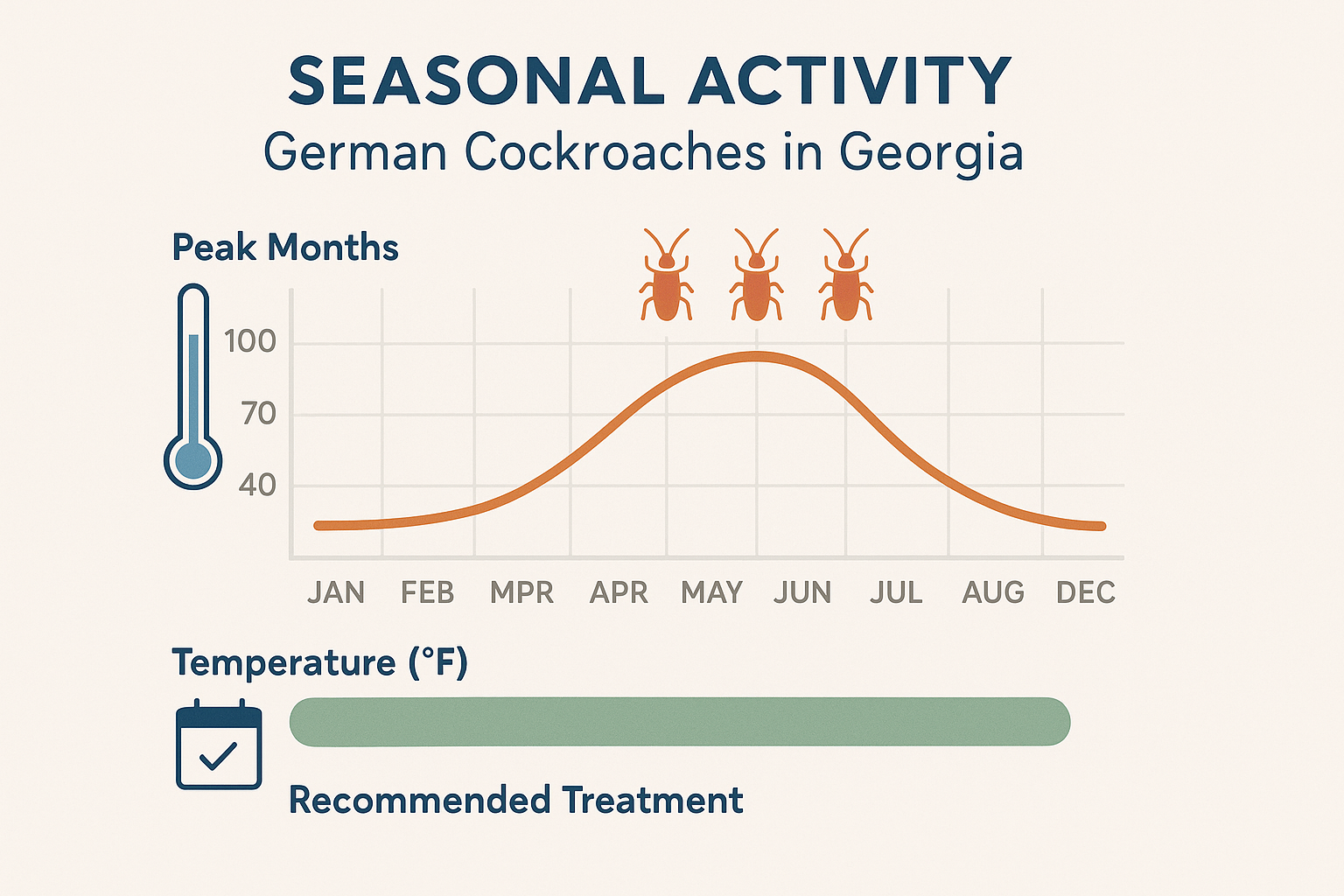
German cockroaches thrive on the warm, humid conditions that Georgia experiences for most of the year. The chart above breaks down the typical activity pattern by month, pairing average high temperatures with relative humidity. You’ll notice three distinct phases:
| Month | Avg. High (°F) | Avg. Humidity (%) | Activity Level |
|---|---|---|---|
| January | 50‑55 | 55‑65 | Low |
| February | 55‑60 | 55‑65 | Low‑Moderate |
| March | 60‑68 | 60‑70 | Moderate |
| April | 68‑75 | 65‑75 | High |
| May | 75‑83 | 70‑80 | Peak |
| June | 83‑90 | 75‑85 | Peak |
| July | 88‑93 | 78‑88 | Peak |
| August | 87‑92 | 78‑88 | Peak |
| September | 80‑86 | 73‑83 | High |
| October | 71‑78 | 68‑78 | Moderate |
| November | 62‑68 | 62‑72 | Low‑Moderate |
| December | 53‑58 | 58‑68 | Low |
Why summer and early fall are the hotspots: From May through September, daytime highs regularly exceed 80 °F while humidity hovers above 70 %. These conditions accelerate the cockroach life cycle—eggs hatch faster, nymphs mature quicker, and adults reproduce more often. Kitchens, bathrooms, and laundry rooms become miniature ecosystems where moisture and food are abundant.
Using indoor climate control to your advantage
Air conditioning does more than keep you comfortable; it lowers indoor humidity to 40‑50 %, a range that slows German cockroach breeding. Pair your AC with a dehumidifier in damp areas such as basements or laundry rooms, and you’ll see a noticeable dip in activity. Remember to clean or replace HVAC filters regularly—otherwise they can become hidden feeding stations.
Optimal treatment windows
- Pre‑summer deep clean (late March‑early April): Remove food debris, seal cracks, and run a preventative spray before the population spikes.
- Early fall follow‑up (late September‑early October): Treat residual hotspots after the peak season to prevent overwintering colonies.
- Winter maintenance checks (December‑January): Inspect for hidden nests and keep moisture control measures in place, even when activity is low.
Practical tips for homeowners during peak periods
- Store dry goods in airtight containers; avoid leaving pet food out overnight.
- Fix leaky faucets and use exhaust fans to reduce bathroom moisture.
- Empty trash cans daily and keep lids tightly sealed.
- Vacuum pantry shelves weekly to remove crumbs and potential egg casings.
By syncing your prevention plan with Georgia’s seasonal climate, you can stay one step ahead of German cockroaches and keep your home comfortable year‑round.
Effective Treatment Options and Cost Guide for Cockroach Control in Cumming, GA
Professional Integrated Pest Management (IPM) Approach
Anthem Pest Control relies on an Integrated Pest Management (IPM) strategy that blends inspection, targeted baiting, residual sprays, and scheduled follow‑up visits. First, a certified technician conducts a thorough walkthrough to locate nests, identify entry points, and assess the level of infestation. Next, they place EPA‑registered gel or bait stations in high‑traffic zones—kitchens, bathrooms, and behind appliances—where roaches are most likely to forage. A low‑odor residual spray is then applied to cracks, voids, and baseboards, creating a long‑lasting barrier that kills wandering insects for weeks. Finally, follow‑up visits (usually every 30‑45 days) ensure the bait stations remain effective and allow technicians to adjust treatment if new activity appears.
Over‑the‑Counter Alternatives
- Gel baits – Convenient for spot treatment but require careful placement to stay out of children’s reach.
- Sticky traps – Useful for monitoring activity; they won’t eradicate a full‑scale infestation.
- DIY aerosol sprays – Provide quick knock‑down relief but lack residual protection and can leave hazardous residues if misused.
OTC products work best for low‑level sightings or as a supplemental measure while waiting for a professional visit. If you notice roaches in multiple rooms or see droppings, it’s time to call an expert.
Safety Considerations
All treatments we use are EPA‑registered, meaning they meet strict safety standards for humans, pets, and the environment. For households with small children or animals, we prioritize low‑toxicity gel baits and micro‑encapsulated residuals that activate only when roaches contact them. Technicians wear protective gear and follow a strict application protocol to minimize exposure risk.
Detailed Cost Breakdown for Cumming, GA
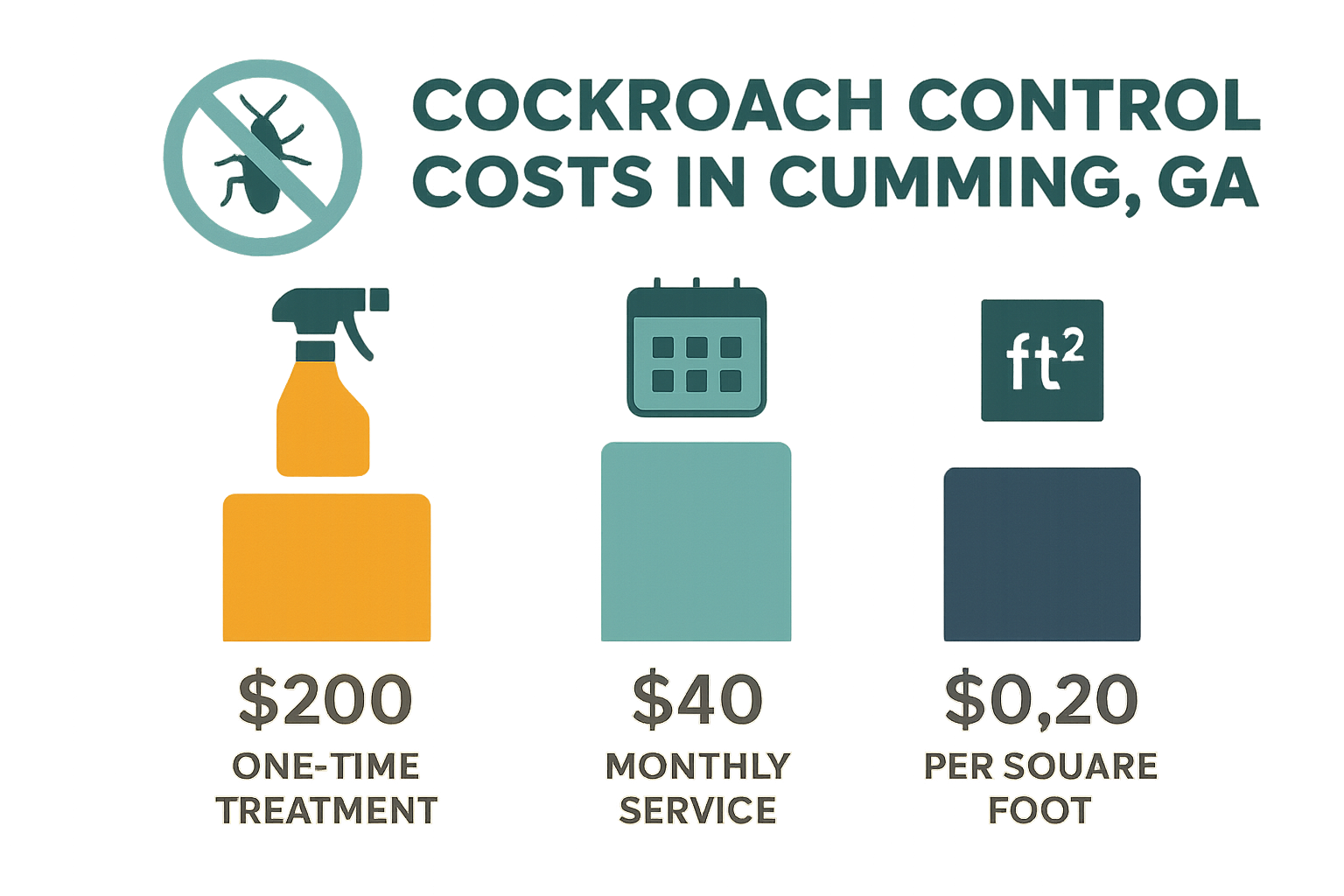
| Service Type | One‑Time Cost | Monthly Plan | Per‑Square‑Foot Rate |
|---|---|---|---|
| Standard IPM (inspection, baiting, residual spray) | $199–$259 | $39–$49 per month (includes quarterly follow‑up) | $0.12–$0.18 / ft² |
| Premium “All‑Season” Package (adds quarterly deep‑clean & seal) | $299–$349 | $59–$69 per month | $0.15–$0.22 / ft² |
| DIY OTC Kit (gel baits + traps) | $45–$75 (one‑time purchase) | N/A | N/A |
How Anthem Pest Control Structures Its Pricing
Transparency is built into every quote. We start with a flat inspection fee of $49, which is waived when you schedule a treatment. All product costs are itemized, so you see exactly what you’re paying for—whether it’s a single residual spray or a full‑service IPM package. Monthly plans are pre‑paid, eliminating surprise charges, and we offer a “no‑contract” option for homeowners who prefer pay‑as‑you‑go. Discounts are applied automatically for seniors, military personnel, and multi‑property accounts.
Preparing Your Home Before the Technician Arrives
- Remove clutter from kitchens, pantries, and under sinks; roaches love hidden debris.
- Seal all food in airtight containers and wipe down countertops to eliminate attractants.
- Take out pet dishes and clean any spills; this reduces the chance of accidental exposure to chemicals.
- Clear pathways to baseboards, cracks, and under appliances so the technician can place bait stations and spray without obstruction.
- If possible, vacuum the treatment area to remove debris that could shield roaches from contact pesticides.
Following these simple steps not only speeds up the service but also maximizes the effectiveness of the treatment, giving you a faster, longer‑lasting result.
Protect Your Home Today with Anthem Pest Control

Spotting a roach droppings trail, hearing that tell‑tale skittering at night, or noticing damage to food packaging are the classic signs that cockroaches have moved in. In Georgia, these pests are most active in the warm, humid months of late spring through early fall, which is why timely treatment can stop an infestation before it spreads. Because cockroaches breed rapidly, a single missed egg case can lead to dozens of new insects within weeks, making early intervention crucial.
Homeowners have three main treatment paths: a one‑time chemical spray, a targeted baiting system, or an ongoing Integrated Pest Management (IPM) program that combines monitoring with low‑impact products. Each option is designed to eliminate the current population and prevent future guests.
Why Choose a Professional Service?
- Expertise: Certified technicians know where roaches hide and how to treat hard‑to‑reach areas.
- Guaranteed results: Our service agreements include follow‑up visits until the problem is gone.
- Safe products: We use EPA‑approved solutions that protect your family and pets.
Our technicians also wear protective gear and follow strict safety protocols, giving you peace of mind during every visit.
Anthem Pest Control brings deep local knowledge of Georgia’s pest cycles, so we schedule treatments at the optimal moment for maximum impact. We understand the unique humidity patterns of Cumming, GA, and tailor our treatment plans to target the hidden harborage spots typical of this region. Our pricing is transparent—no hidden fees, just a clear quote that matches the service you need.
Ready to reclaim your kitchen and living spaces? Schedule a free, no‑obligation inspection today. Our friendly team will assess the situation, recommend the best plan, and provide a detailed quote—nothing more, nothing less.
Call us now at 877‑371‑8196 or visit Anthem Pest Control for your free quote.