Identifying Common Household Moths
Fast Moth Exterminator Decatur GA services are often needed when homeowners first notice a moth fluttering inside their living space. What seems like a harmless insect is usually a sign of a larger indoor infestation already developing behind the scenes. In Decatur homes, the three most common species are clothes moths, pantry moths, and webbing moths. These pests enter houses seeking food, shelter, and safe places to lay eggs—often hitching a ride on fabrics, grocery bags, or moving boxes. Recognizing the species early and acting quickly can prevent a minor nuisance from turning into costly damage.

Clothes Moth (Webbing Clothes Moth, Tineola bisselliella)
The clothes moth commonly treated by a fast moth exterminator Decatur GA measures about 6–8 mm in length, with a wingspan of approximately 12 mm. Its forewings are a dull golden-brown color, marked by subtle, irregular darker speckles that resemble tiny freckles. When at rest, the moth folds its wings roof-like over its body, giving it a narrow silhouette. The larvae are creamy-white with fine hairs and construct silken tunnels within the natural fibers they consume, often damaging wool, silk, and other fabrics found in Decatur homes.
Pantry Moth (Indian Meal Moth, Plodia interpunctella)
Pantry moths are slightly larger, typically 10–15 mm long with a wingspan of 20–25 mm. Their forewings are a striking blend of reddish‑brown and amber, crossed by a wavy, darker band that resembles a tiny, broken “M.” The hindwings are pale gray, almost translucent. The caterpillars are off‑white to light gray, often dotted with tiny black heads, and they spin loose silk webs as they feed on stored products.
Webbing Moth (Case‑Bearing Moth, Psychidae family)
Webbing moths vary in size, but most adult females are wingless and remain inside a protective case, while males are the flying form you’ll spot. Male moths are about 7–9 mm long, with narrow, grayish‑brown wings that lack the bold patterns of pantry moths. Their antennae are feathery, helping them locate the silent, case‑bound females. The larval cases are made of silk mixed with bits of fabric, paper, or debris, giving a distinctive “cobweb” appearance on surfaces.
Where You’ll Find Them
- Clothes moths: Dark, undisturbed closets, especially where wool, cashmere, or silk garments are stored; also in attic corners and under floorboards.
- Pantry moths: Grain shelves, cereal boxes, flour bins, and any dry goods left uncovered; they also favor cracks around pantry doors and baseboards.
- Webbing moths: Attic rafters, insulation seams, and the tops of cabinets where dust and debris collect; their cases often cling to ceiling corners or behind wall hangings.
Early Warning Signs
- Small, irregular holes in woolen sweaters, blankets, or curtains—typical of clothes‑moth larvae feeding on keratin.
- Fine, silken webbing or “cocoons” tucked into seams of fabric or tucked behind pantry items.
- Clusters of creamy larvae crawling on the surface of flour, rice, nuts, or dried fruit, indicating a pantry moth outbreak.
- Visible adult moths fluttering near light fixtures at night, especially in closets or pantry doors.
- Unpleasant, musty odor from heavily infested fabrics or stored food, a sign that larvae are proliferating unchecked.
According to the National Pest Management Association, early detection and proper sanitation are the most effective defenses against indoor moths, reducing the need for chemical treatments by up to 70 % when applied promptly.
How Moths Damage Your Home and Belongings
When a moth infestation goes unnoticed, the damage can spread faster than you realize. From the clothes hanging in your closet to the pantry staples you rely on, these tiny insects turn everyday items into costly losses. Understanding exactly what they target—and how quickly—helps you act before a small problem becomes a big expense.
Fabric Damage
Moth larvae are natural fiber enthusiasts. They chew through wool, silk, cashmere, and even cotton blends, leaving behind a trail of irregular holes, frayed edges, and weakened seams. A single caterpillar can consume up to 1/10 of an ounce of fabric each day, meaning a sweater left in a dark corner for a few weeks may emerge riddled with gaps that are impossible to repair. The result? You’re forced to replace cherished garments, heirloom blankets, or upholstered furniture—often at a price that far exceeds the cost of a professional inspection and treatment.
Food Contamination
Pantry moths, such as the Indian meal moth, lay their eggs directly on stored grains, nuts, dried fruit, and pet food. When the larvae hatch, they burrow into the product, creating webs of silk and leaving behind fecal pellets. This not only renders the food unsafe to eat but also creates a breeding ground for mold and bacteria. Homeowners typically discover the problem only after opening a contaminated bag and finding larvae crawling on the contents. The waste can be staggering—one 5‑pound bag of flour may be rendered unusable, forcing you to discard it and replace it entirely.
Structural Concerns
Webbing moths, like the case-bearing moth, construct silken tunnels along baseboards, under appliances, and within wall voids. While the silk itself isn’t destructive, it traps moisture and provides a hidden pathway for secondary pests such as silverfish, carpet beetles, and even mold spores. Over time, these moist environments can weaken drywall joints and wood trim, especially in humid climates like Decatur, GA. The hidden nature of these tunnels means the damage often goes unnoticed until a larger repair—such as replacing a section of drywall—is required.
Economic Impact
According to industry surveys, the average homeowner spends between $300 and $800 replacing moth‑damaged clothing and upholstery each year. Add to that the cost of discarded pantry goods, which can easily exceed $150 for a typical family’s bulk purchases. When structural repairs are needed, expenses can climb into the thousands, especially if moisture‑related damage spreads to insulation or framing. Prompt identification and treatment not only protect your belongings but also safeguard your budget from unexpected, high‑ticket repairs.
For a deeper dive into moth biology and prevention tips, visit the NPMA moth facts page.
Seasonal Moth Activity and Prevention Tips
Understanding when moths are most active lets you stay one step ahead. In Decatur, GA, temperature swings and local harvest cycles create predictable windows for both clothes moths and pantry moths. Below is a month‑by‑month breakdown, followed by practical checklists you can apply each season.
Peak Activity by Moth Type
Clothes moths (Tineola bisselliella, Tineola pellionella) thrive in warm, humid conditions. Their numbers typically surge from late July through September, when wardrobes are packed with summer garments that haven’t been aired out.
Pantry moths (Plodia interpunctella) are drawn to the abundance of stored grains and dried foods that appear after the local harvest. Expect the highest infestations from early September through November, especially in kitchens that store bulk purchases.
Indoor Hotspots Aligned with Seasons
- Spring (Mar‑May): Light‑weight fabrics in closets and damp basements begin to attract early‑season clothes moths.
- Summer (Jun‑Aug): Warm wardrobes, especially those holding swimsuits and linens, become prime breeding grounds.
- Fall (Sep‑Nov): Kitchen pantries stocked with grains, nuts, and cereals provide a buffet for pantry moths.
- Winter (Dec‑Feb): Indoor heating creates pockets of humidity in attics and crawl spaces where moth larvae can survive.
Seasonal Prevention Checklist
Spring
- Vacuum closets and under furniture; discard lint and debris.
- Rotate seasonal clothing, placing off‑season items in sealed plastic bins with airtight lids.
- Inspect attic insulation for cracks; seal with caulk.
- Start a weekly pantry sweep: discard expired items and wipe shelves with a vinegar solution.
Summer
- Air out wardrobes daily; sunlight and airflow deter moths.
- Place cedar or lavender sachets in drawers (natural repellents).
- Check kitchen floor drains for organic buildup; clean with boiling water.
- Store bulk food in Mylar bags or glass containers with tight‑fitting lids.
Fall
- Perform a thorough pantry inventory; use “first‑in, first‑out” for all dry goods.
- Freeze newly purchased grains for 72 hours before storage to kill hidden eggs.
- Seal pantry cracks with expandable foam; install door sweeps on pantry doors.
- Run a high‑heat cycle (≥130°F) on any washable fabrics that have been stored all summer.
Winter
- Maintain indoor humidity below 50% using a dehumidifier.
- Inspect stored clothing for signs of webbing; spot‑treat with a light spray of ethanol.
- Rotate pantry stock weekly; discard any items showing signs of infestation.
- Schedule a professional inspection before the spring surge.
Seasonal Activity Chart
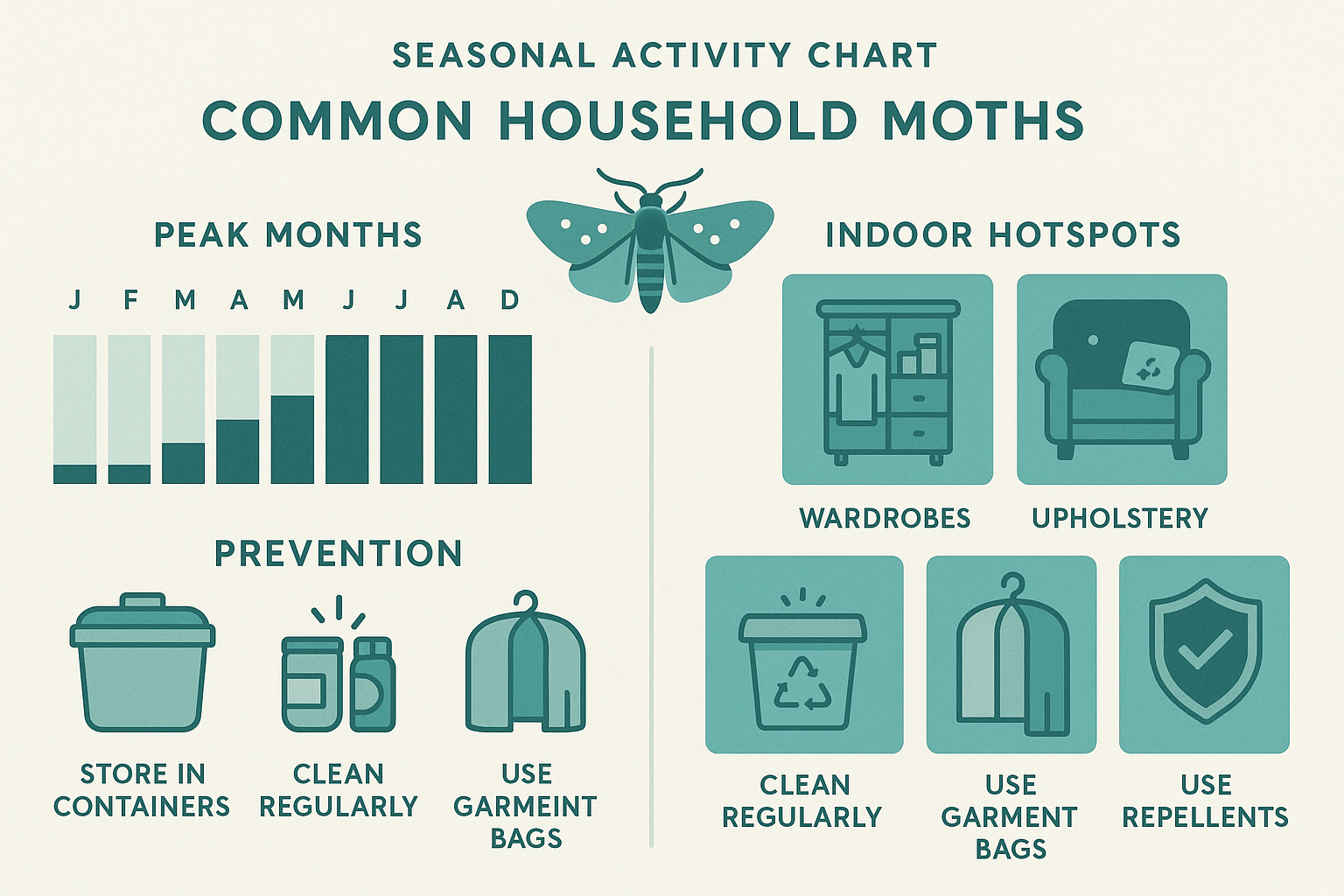
| Season | Peak Moth Type | Indoor Hotspot | Top Prevention Action |
|---|---|---|---|
| Spring | Clothes moths | Closets & basements | Vacuum & seal clothing in airtight containers |
| Summer | Clothes moths | Wardrobes with summer wear | Air out fabrics daily; use natural repellents |
| Fall | Pantry moths | Kitchen pantry & bulk storage | Freeze grains; seal containers; rotate stock |
| Winter | Both types (low activity) | Attics, crawl spaces, stored clothing | Control humidity; conduct pre‑spring inspection |
Regular inspections are the linchpin of any successful moth‑prevention plan. Before each high‑risk period—late summer for clothes moths and early fall for pantry moths—walk through your home with a flashlight. Look for webbing, tiny larvae, or the tell‑tale “peppercorn” size moths. Spotting an issue early lets Anthem Pest Control intervene before the problem spreads, saving you time, stress, and money.
Treatment Options – DIY vs Professional Services
When moths invade your pantry or wardrobe, the first instinct is often to reach for a quick fix you can apply yourself. While DIY solutions can offer temporary relief, understanding their strengths and shortcomings helps you decide whether to call a certified technician from Anthem Pest Control. Below we break down the most common do‑it‑yourself methods, the gaps they leave, and how a professional approach delivers comprehensive, long‑lasting protection.
Common DIY Treatments
Homeowners typically turn to three categories of over‑the‑counter products:
- Pheromone traps – Sticky cards or dispensers that lure male moths, disrupting the breeding cycle.
- Cedar products – Cedar blocks, chips, or oils that emit a scent moths find repellent.
- Benzyl alcohol sprays – Contact insecticides that claim to kill larvae on contact.
These items are inexpensive and easy to place, making them attractive for a quick, visible effort. For a small, isolated infestation, a well‑positioned pheromone trap can give you a snapshot of the problem’s severity, while cedar can add a pleasant aroma to closets.
Why DIY Often Falls Short
Despite their convenience, DIY tactics usually miss the bigger picture. Moth larvae hide deep inside stored food, fabric seams, and cracks where traps and sprays can’t reach. This incomplete coverage means surviving insects continue reproducing, leading to a resurgence within weeks.
Resistance is another concern. Repeated use of the same chemical, such as benzyl alcohol, can encourage moths to develop tolerance, rendering the product ineffective over time. Moreover, many household sprays contain solvents that, if misapplied, pose health risks to children, pets, and even the applicator. Without proper protective gear and ventilation, you’re trading one problem for another.
Professional Approach: Inspection, Targeted Treatment, and Ongoing Monitoring
Anthem Pest Control starts every engagement with a thorough inspection. Certified technicians locate breeding hotspots—whether they’re hidden in pantry corners, under floorboards, or within carpet fibers—using specialized tools and a trained eye. Once identified, they apply a multi‑stage strategy:
- Targeted fumigation – Concentrated, EPA‑approved gases or aerosols that penetrate deep into infested areas, eliminating larvae and eggs that DIY sprays can’t reach.
- Residual treatments – Long‑acting formulations applied to baseboards, shelving, and fabric edges, creating a protective barrier that kills any moth that later contacts the treated surface.
- Follow‑up monitoring – Placement of professional‑grade pheromone traps and periodic site visits to verify that the population stays below actionable levels.

Safety Protocols Used by Certified Technicians
Professional exterminators follow strict safety standards that far exceed what a homeowner can realistically achieve. Technicians don full‑body protective suits, respirators, and gloves to prevent any exposure to chemicals. All products used are EPA‑registered, meaning they have been rigorously tested for efficacy and human safety when applied according to label directions.
Before any treatment, the technician explains the product’s active ingredients, the necessary preparation steps (such as removing food items or covering furniture), and the expected re‑entry time for occupants. This transparent communication ensures that you and your family remain safe while the moths are being eradicated.
Bottom Line: Choosing the Right Path for Your Home
If you’re dealing with a minor, isolated moth sighting and prefer a low‑cost, immediate response, a few well‑placed pheromone traps and cedar sachets can buy you time. However, for a persistent infestation, especially one that has spread to multiple rooms or food storage areas, the DIY route often leaves hidden larvae that will rebound.
Investing in a professional service from Anthem Pest Control means you get a complete, science‑backed solution that addresses the problem at its source, protects your family with industry‑standard safety measures, and includes ongoing monitoring to keep moths from returning. When the goal is lasting peace of mind, the expertise and thoroughness of a certified technician make all the difference.
Pricing Overview – Fast vs Standard Moth Extermination
When a moth infestation threatens your wardrobe or pantry, the speed of response can make a big difference. Anthem Pest Control offers two clear tiers—Fast and Standard—so you can match the service to the urgency of the problem and your budget. Below, we break down what each tier includes, how the costs are calculated, and which scenario each is best suited for.
What “Fast” Extermination Means
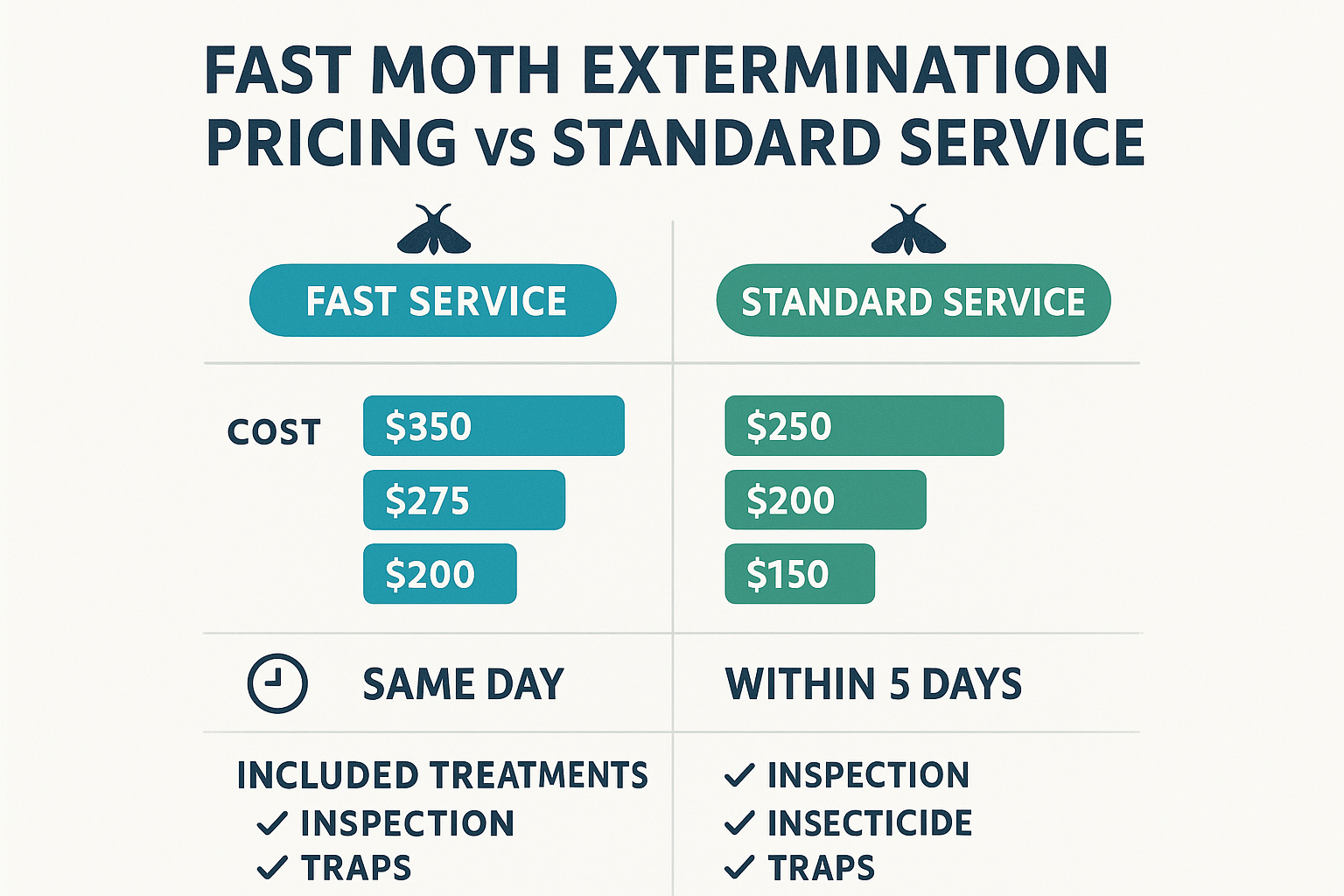
The Fast tier is designed for homeowners who need immediate relief. Our team commits to a same‑day response once you call, with priority scheduling that puts your job at the top of the day’s route. Technicians arrive equipped with the full suite of EPA‑approved chemicals and perform an immediate treatment on the affected areas, targeting both adult moths and their larvae. This rapid approach minimizes damage and prevents the infestation from spreading further.
What “Standard” Service Entails
The Standard tier follows a more measured timeline. After you contact us, we schedule a visit within 24–48 hours. The first appointment includes a comprehensive inspection to locate nests, assess damage, and identify any hidden entry points. Treatment is applied based on the inspection findings, and a scheduled follow‑up (usually 7–10 days later) ensures the population is fully eradicated and any residual eggs are dealt with.
Cost Components Explained
- Labor: Fast service includes a premium for the on‑call technician and priority routing; Standard service uses regular scheduling rates.
- Chemicals: Both tiers use the same high‑efficacy, low‑toxicity formulations, but Fast may require a slightly larger dosage to achieve immediate knock‑down.
- Warranty: Fast tier comes with a 30‑day guarantee covering re‑treatment if moths return; Standard offers a 60‑day guarantee, reflecting the longer observation period.
- Additional Fees: Any extra work—such as deep‑cleaning of heavily infested closets or treating adjacent structures—is billed separately, but the base price already includes a thorough interior sweep.
Choosing the Right Tier for Your Home
Start by assessing the severity of the infestation. If you’ve spotted dozens of moths, see damage to clothing, or have a time‑sensitive event (like a family gathering), the Fast tier’s same‑day response is worth the extra cost. For smaller, early‑stage problems—perhaps a few moths in a pantry or a single closet—the Standard tier provides a thorough, cost‑effective solution with the added benefit of a longer warranty.
Budget‑conscious homeowners can also look for bundled offers or seasonal discounts that Anthem Pest Control frequently runs. Remember, the true value lies not just in the price tag but in the peace of mind that comes with a guaranteed, professionally executed treatment. If you’re unsure which option fits your situation, give us a call at 877‑371‑8196 and we’ll help you decide.
Protect Your Home Today with Anthem Pest Control
By now you know how to spot a moth infestation, the damage it can cause to fabrics, stored foods, and even structural wood, and the best times of year to stay vigilant. Seasonal prevention—such as sealing entry points in spring and conducting a thorough clean‑out before winter—helps keep moths from gaining a foothold. When an outbreak does occur, you have several treatment options: targeted EPA‑approved sprays, pheromone traps, and comprehensive indoor/outdoor treatment plans that eradicate both adult moths and their larvae.
Why Choose Anthem Pest Control?
Certified technicians with years of experience handle every step, from precise identification to safe application of treatments. We rely exclusively on EPA‑approved products that protect your family and pets while delivering fast, lasting results. Our transparent pricing means you’ll know exactly what’s included—no hidden fees, no surprise add‑ons.
Nationwide Reach, Local Commitment
Anthem Pest Control operates across the United States, bringing a consistent standard of quality to every community we serve. Whether you’re in Decatur, GA, or any other city, our team is equipped to provide affordable, effective solutions tailored to your home’s unique layout and pest pressure. Our nationwide network ensures that you receive the same level of expertise and rapid response, no matter where you call from.
Take the Next Step—No Pressure, Just Help
Ready to safeguard your home without the guesswork? Schedule a complimentary inspection and receive a free, no‑obligation quote. Our specialists will walk you through the findings, recommend the most efficient treatment plan, and answer any questions you may have.
Give us a call today at 877‑371‑8196 or visit Anthem Pest Control to book your free inspection. Protect your home now, and enjoy peace of mind knowing a trusted professional is on your side.