Recognizing House Centipedes in Georgia Homes
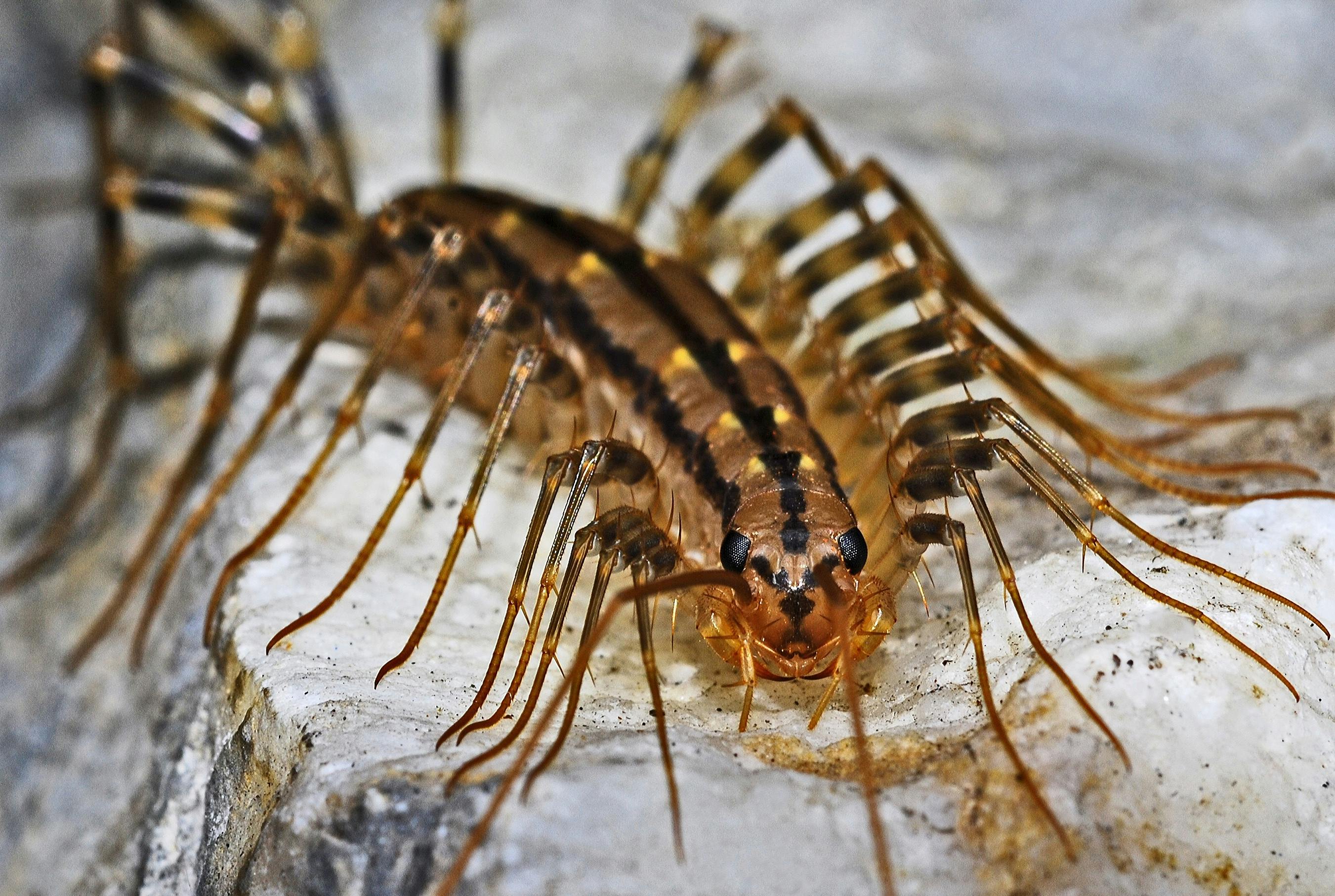
The house centipede (Scutigera coleoptrata) is a sleek, multi-legged arachnid that often surprises homeowners in Suwanee with its lightning-fast dash across tile or drywall—one of the most common reasons people search for a centipede exterminator near me Suwanee. Its most striking feature is a pair of long, delicate legs extending from each body segment, giving it a spider-like silhouette. The head is typically a reddish-brown hue, contrasting with a pale, segmented thorax. When disturbed, it can sprint up to 30 centimeters per second, a movement that feels almost too quick to be real.
In Georgia’s warm, humid climate, house centipedes thrive in the moist micro‑environments that pepper most residences. Bathrooms, basements, and laundry rooms provide the perfect combination of humidity and shelter. Leaky pipes, standing water, and even damp laundry piles create ideal breeding grounds. Because the Peach State experiences high humidity year‑round, these pests can establish hidden colonies in corners, under sinks, and behind baseboards without the homeowner noticing for months.
Despite their unsettling appearance, house centipedes are actually beneficial predators. They hunt a variety of other household pests—spiders, flies, silverfish, and even cockroaches—helping to keep those populations in check. Problems arise, however, when environmental conditions cause their numbers to surge. A single centipede is harmless, but an infestation can become a visual nuisance and may trigger anxiety for occupants who are uncomfortable with the sight of many fast‑moving arthropods.
From a health perspective, bites from house centipedes are extremely rare. When they do occur, the sting feels like a mild pinprick and typically resolves without medical intervention. Some individuals may experience localized redness or swelling, and a small subset could have an allergic reaction, though such cases are uncommon. The primary concern for most residents is psychological—seeing a centipede can provoke fear or disgust, especially in families with children or pets. The CDC’s centipede fact sheet confirms that these insects are not vectors for disease, reinforcing that the risk is more about comfort than contagion.
Spot‑the‑Centipede Checklist
- Long, slender legs (up to 15 per side) that give a “feather‑duster” look.
- Reddish‑brown head contrasting with a pale, segmented body.
- Fast, darting movement across smooth surfaces.
- Found near moisture: under sinks, in shower stalls, basements, or behind appliances.
- Presence of other small insects (their prey) often indicates a hidden centipede population.
By familiarizing yourself with these visual cues, you can quickly determine whether a fleeting visitor is a harmless predator or a sign that your home’s moisture control needs attention. If you notice multiple sightings or a steady increase in activity, it’s wise to consult a local professional—like Anthem Pest Control—to assess the situation and implement a targeted, safe treatment plan.
Why House Centipedes Proliferate in Georgia Residences
Georgia’s climate is a perfect cocktail for house centipedes. Warm summers, mild winters, and a pronounced humidity cycle create an environment where these fast‑moving predators thrive. In Suwanee and the surrounding suburbs, the combination of outdoor moisture and indoor conditions gives centipedes a year‑round invitation to set up shop.

1. Humid, Warm Climate – Nature’s Open Door
Centipedes are ectothermic; they rely on external heat to stay active. Georgia’s average summer temperature hovers between 80‑90°F (27‑32°C), while humidity often exceeds 70 %. This moisture‑laden air seeps into basements, crawl spaces, and even living rooms, keeping the soil and detritus outside perpetually damp. The result? A continuous supply of prey—spiders, silverfish, and termites—that draws centipedes indoors.
2. Indoor Humidity and Poor Ventilation
Inside the home, excess humidity is the silent accomplice. Leaky pipes, condensation on cold surfaces, and inadequate ventilation in bathrooms or laundry rooms raise indoor moisture levels. When relative humidity climbs above 60 % for extended periods, centipedes can survive and reproduce without ever leaving the house.
3. Common Entry Points
Centipedes are master squeezers. They exploit any gap larger than a pencil’s width. Typical entry routes in Georgia homes include:
- Cracks in foundation walls or basement floors.
- Gaps around utility openings—electrical conduit, plumbing stacks, and HVAC vents.
- Unsealed foundation vents and crawl‑space access doors.
- Improperly fitted window screens or door sweeps.
4. Seasonal Peaks – Rain‑Driven Surges
The EPA’s 2024 Indoor Pest Survey notes a clear spike in centipede reports during two windows: late summer (July‑August) after heavy rains, and early fall (October‑November) when humidity remains high but temperatures begin to dip. Summer storms saturate the soil, forcing centipedes to seek drier refuges indoors. As leaves decay in fall, the resulting damp leaf litter further fuels their numbers.
5. Warning Signs of an Emerging Infestation
Spotting a few centipedes doesn’t always mean an outbreak, but the following indicators suggest a growing problem:
- Frequent sightings in kitchens, bathrooms, or basements, especially at night.
- Shedded exoskeletons—tiny, translucent shells left near baseboards or under appliances.
- Dark, pepper‑like droppings resembling fine sand.
- Unexplained bites, often described as a mild, localized sting.
6. Quick Moisture & Entry‑Point Inspection for Homeowners
Before calling a professional, run a simple walk‑through:
- Check for standing water or damp spots. Look under sinks, behind appliances, and in crawl spaces. Use a hygrometer; readings above 60 % signal a problem.
- Inspect pipe joints and fixtures. Tighten loose connections and replace worn‑out seals.
- Seal cracks and gaps. Apply caulk to foundation cracks, weather‑strip doors, and install mesh covers over vent openings.
- Improve ventilation. Run exhaust fans in bathrooms and laundry rooms, and consider a dehumidifier in basements.
By understanding how Georgia’s climate, indoor moisture, and structural vulnerabilities converge, Suwanee homeowners can catch centipede activity early. When the signs stack up, a targeted treatment from a local expert—such as Anthem Pest Control—can eliminate the infestation while preserving the safety of your family and pets.
Professional Treatment Options and What to Expect
Inspection Phase: Finding the Hotspots
Before any chemical touches a wall, a certified technician conducts a thorough inspection—an essential first step when working with a centipede exterminator near me Suwanee homeowners can trust. This isn’t a cursory glance; the pro walks through each room, checks under sinks, behind appliances, and around baseboards to locate where centipedes are congregating. They also trace moisture sources—leaky pipes, damp basements, or poor ventilation—that attract these arthropods. Finally, entry points such as cracks, gaps around utility lines, and poorly sealed doors are marked for later sealing. Identifying these three elements—hotspots, moisture, and entry—creates a roadmap for an effective treatment.
Targeted Indoor Spray Application
Anthem’s technicians use low‑toxicity insecticides that meet EPA guidelines for indoor use. The products are specifically formulated to knock down centipedes while posing minimal risk to people, pets, and indoor plants. Application follows a precise placement protocol:
- Spray is focused on baseboards, wall voids, and behind cabinets—areas where centipedes hide.
- Each spray line is spaced no more than 12 inches apart to create a continuous barrier.
- Rooms are ventilated for 15‑20 minutes after treatment, and occupants are advised to stay out of treated zones for at least one hour.
All chemicals are registered for residential use and are applied at the lowest effective concentration, ensuring safety without compromising efficacy.
Integrated Pest Management (IPM) Approach
Centipede control isn’t just about spraying; it’s about breaking the entire life cycle. Anthem combines chemical treatment with three core IPM pillars:
- Moisture Control: Fixing leaks, installing dehumidifiers, and improving ventilation reduces the humid environment centipedes love.
- Structural Sealing: Cracks and gaps are filled with silicone or expandable foam, denying the pests easy entry.
- Habitat Reduction: Removing clutter, trimming vegetation away from the foundation, and keeping firewood stored off the ground eliminate outdoor refuges that feed indoor infestations.
This layered strategy not only eliminates the current problem but also prevents future invasions.
Service Plans: One‑Time vs. Recurring
Homeowners can choose between a single‑visit eradication or a scheduled maintenance program. A one‑time service is ideal for isolated sightings, while recurring plans—typically quarterly or bi‑annual—offer these advantages:
- Continuous monitoring of moisture levels and structural integrity.
- Re‑application of low‑toxicity sprays before centipedes can rebound.
- Priority scheduling and discounted rates for loyal customers.
Most families in Suwanee find that a quarterly plan aligns with seasonal humidity spikes, delivering peace of mind year‑round.
Timeline and Homeowner Responsibilities
After the initial spray, visible activity usually drops within 24‑48 hours. Full population control can take up to two weeks, as the treatment works through eggs and hidden nymphs. During this window, homeowners should:
- Keep treated areas dry—wipe up spills promptly and run exhaust fans in bathrooms and kitchens.
- Avoid moving furniture or stored items for at least 48 hours to allow the spray to settle.
- Report any lingering activity to the technician so a follow‑up can be arranged.
Follow‑up visits, when scheduled, are brief—often a quick inspection and a touch‑up spray if needed. The result is a long‑lasting barrier that keeps centipedes at bay.
Why Choose Anthem Pest Control?
Anthem’s certified technicians bring more than a spray can; they bring a commitment to eco‑friendly practices. All products used are low‑impact, EPA‑approved formulations that protect families and the environment. Technicians undergo annual training on the latest centipede biology, ensuring they apply the most effective, up‑to‑date methods.
When you call Anthem, you receive:
- A detailed inspection report with photos and actionable recommendations.
- Transparent pricing—no hidden fees, just a clear quote before any work begins.
- Ongoing support through a dedicated customer line (877‑371‑8196) and online portal for scheduling follow‑ups.
Choosing a local, trusted partner means you get fast response times, knowledge of Suwanee’s climate quirks, and a team that treats your home with the same care they would their own.
Cost Guide and Seasonal Activity Insights for Suwanee, GA
Typical Pricing Breakdown
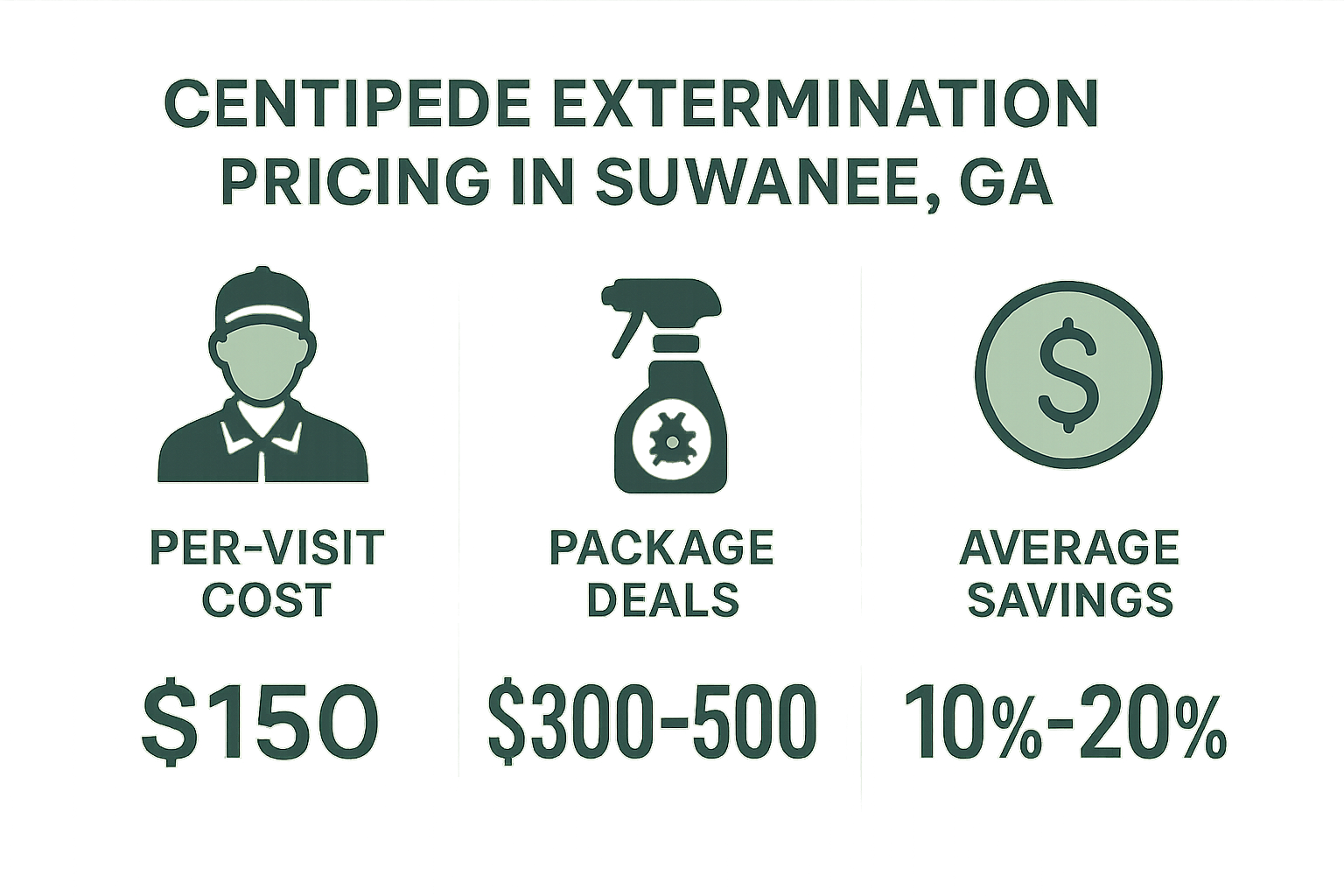
According to the 2024 NPMA price guide, a standard centipede treatment in Suwanee usually runs between $120 – $150 per visit. Most homeowners opt for a quarterly package, which drops the per‑visit cost to roughly $110 and includes a follow‑up inspection. If you choose an annual “all‑season” plan, you can expect to save an additional 10‑15 %—bringing the total to about $440‑$470 for four treatments plus two preventive visits.
For larger properties or severe infestations, technicians often recommend a customized package. These can range from $180 for a single intensive treatment to $650 for a comprehensive year‑long program that covers both interior and perimeter applications.
Pricing Infographic
What Influences the Price?
- Property size: Larger homes or homes with extensive landscaping require more product and longer labor time.
- Infestation level: A light sighting may need only a spot‑treatment, while a heavy infestation calls for multiple applications and possibly bait stations.
- Treatment frequency: One‑time visits are priced higher per service than bundled quarterly or annual plans.
- Access and obstacles: Homes with tight crawl spaces, multiple stories, or heavy clutter may incur a small access surcharge.
Seasonal Activity Chart
Best Time to Treat for Maximum Effectiveness
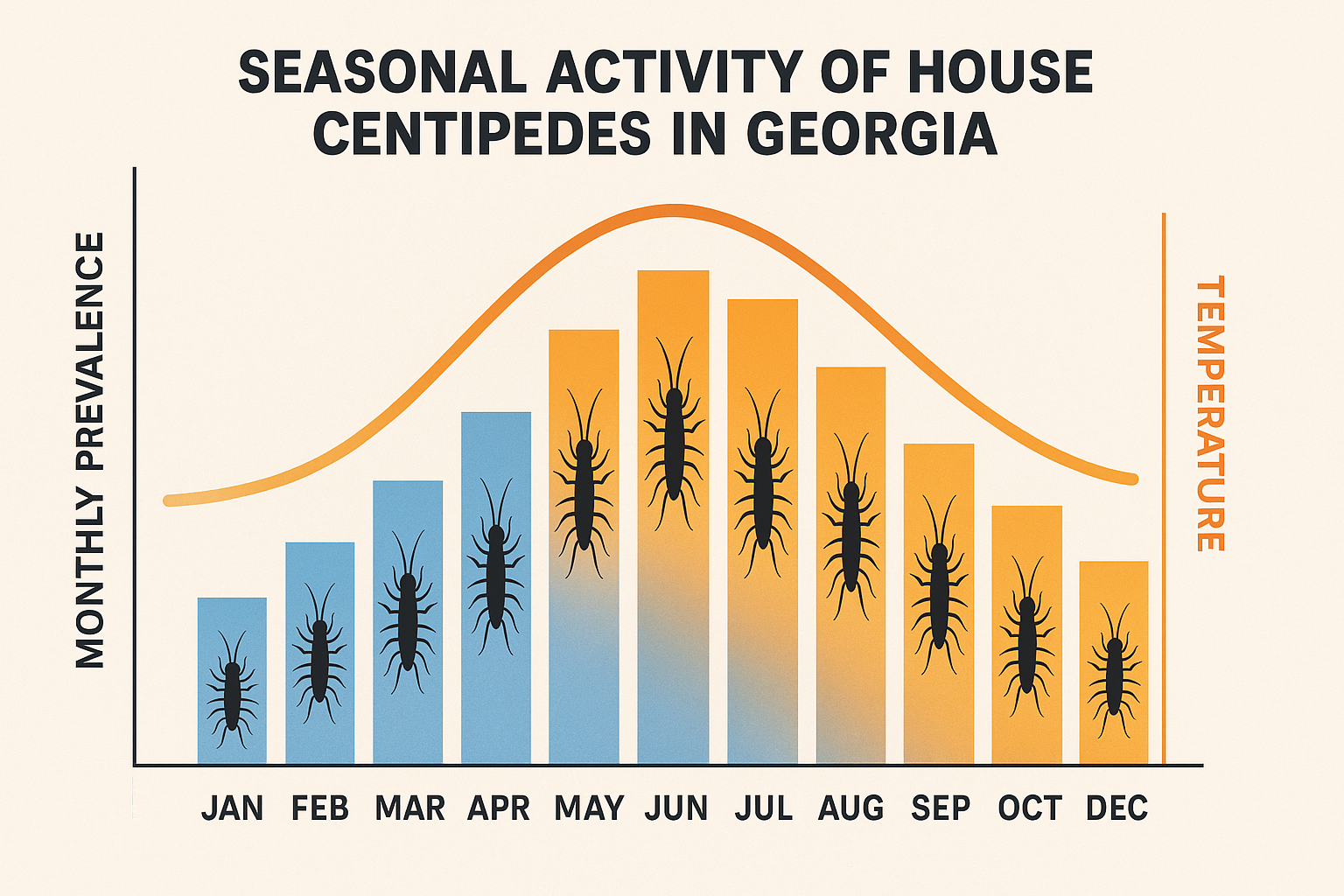
Centipedes thrive when temperatures hover between 75 °F and 85 °F and humidity stays above 60 %. In Suwanee, those conditions peak from late May through early September, which is why searches for a centipede exterminator near me Suwanee often rise during this period. Scheduling a treatment in early May or late September gives you two advantages:
- Pre‑emptive control: You strike before the population explodes in midsummer.
- Cost efficiency: Off‑peak months often carry lower labor rates and promotional discounts.
If you notice centipedes inside your home during the peak summer months, a “mid‑season boost” can still be worthwhile, but expect a modest price premium due to higher demand for technician time.
Quick FAQ
- Does homeowner’s insurance cover centipede treatments? Most standard policies consider centipedes a “preventable” pest, so coverage is rare. However, if the infestation results from a covered event (e.g., water damage), a claim may be possible.
- What warranty options are available? Anthem Pest offers a 30‑day guarantee on the first treatment and a 90‑day warranty on any follow‑up service if centipedes reappear under normal conditions.
- Can I combine centipede treatment with other pest services? Yes—bundling with ant, spider, or termite programs often reduces the overall cost by 10‑20 %.
- Is there a discount for seniors or veterans? Anthem Pest provides a 5 % discount for qualifying seniors and veterans on all annual packages.
Secure a Centipede‑Free Home with Anthem Pest Control
Over the past sections we’ve shown you how to spot a centipede invasion, what draws these nocturnal hunters into Suwanee homes, the most effective treatment methods, and the transparent pricing you can expect from a reputable provider.
- Identification: Fast‑moving, many‑legged arthropods hiding in damp basements, bathrooms, or closets.
- Causes: Excess moisture, clutter, and easy entry points give centipedes a foothold.
- Treatment: Targeted baits, perimeter sprays, and moisture‑control recommendations that eliminate current bugs and deter future ones.
- Pricing: Flat‑rate inspections, clear service tiers, and no hidden fees – so you know exactly what you’re paying for.
Choosing a certified, locally‑experienced team means you gain more than just a pest‑free space. Anthem’s technicians carry state‑approved licenses, undergo regular training, and understand Suwanee’s unique climate patterns, giving you confidence that the job is done right the first time.
A complimentary inspection is the fastest way to turn uncertainty into a concrete plan. During the visit, a specialist will assess moisture sources, locate entry points, and tailor a treatment schedule that fits your budget and lifestyle.
Anthem Pest Control’s Suwanee technicians are trained to use EPA‑approved products that target centipedes while protecting your family and pets. They also offer preventive advice—like fixing leaky pipes and reducing clutter—to keep moisture low and make your home an unattractive environment for future invasions.
Ready to reclaim every corner of your home? Call us today at 877‑371‑8196 or visit Anthem Pest Control to schedule your free quote. Our friendly staff will walk you through each step, answer any questions, and provide a written estimate before any work begins.
We understand that dealing with pests can feel overwhelming, but you don’t have to face it alone. A quick phone call or online request to a centipede exterminator near me Suwanee homeowners trust can set the ball rolling toward a centipede-free household, giving you peace of mind and more time for the things you love.