
Why Ticks Are a Growing Concern for Cumming Homeowners
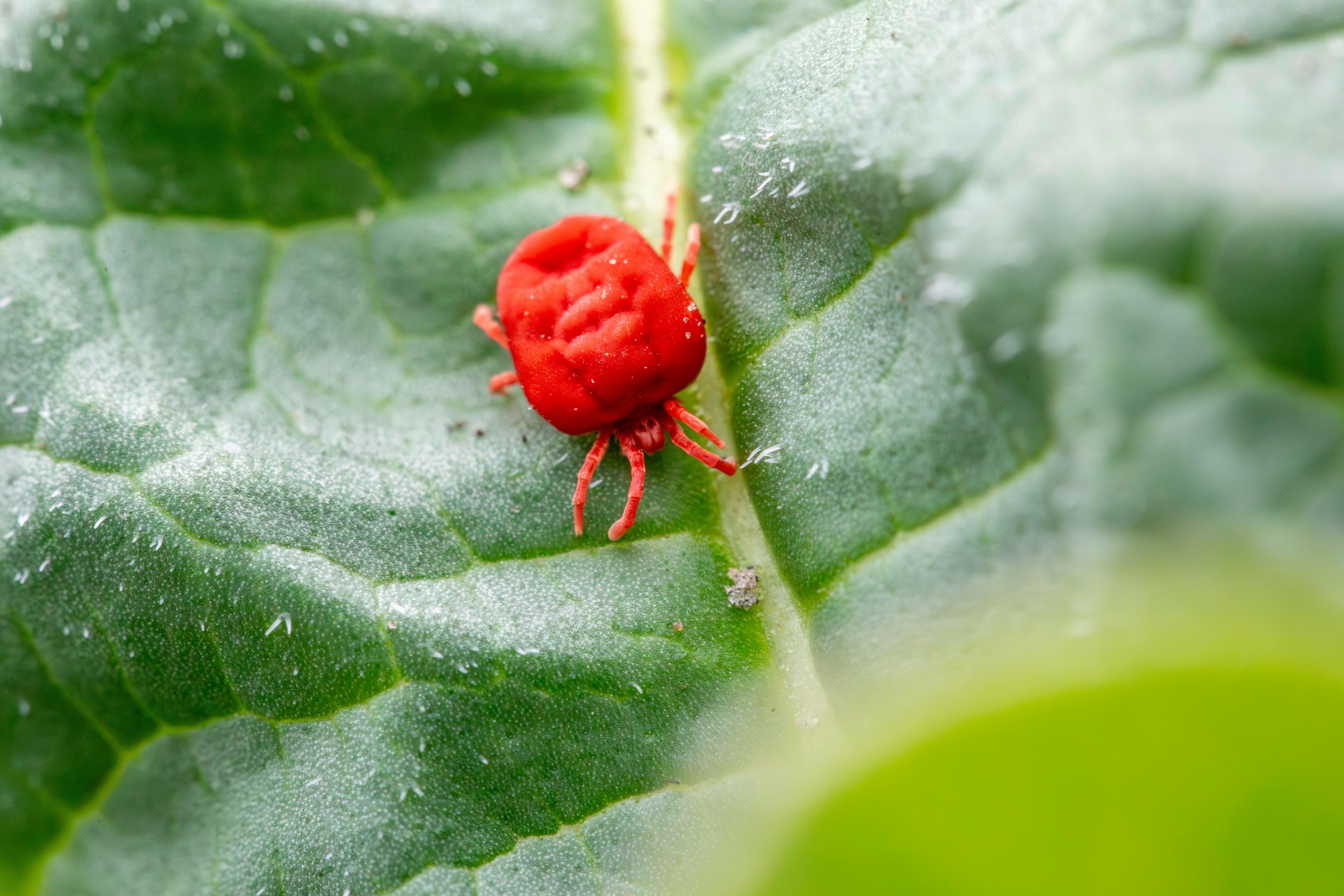
In the rolling suburbs of Cumming, Georgia, the tiny arachnid that most homeowners dread is making itself increasingly comfortable in backyards, dog runs, and even the manicured lawns you spend weekends maintaining—prompting many residents to research tick control cost Cumming homeowners can expect. The two species you’ll encounter most often are the Lone Star tick (Amblyomma americanum) and the American Dog tick (Dermacentor variabilis). Both thrive in the humid, warm climate that defines north-central Georgia, and both have proven themselves to be efficient disease vectors.
When a tick latches onto skin, it’s not just a nuisance—it can be a health hazard. The Centers for Disease Control and Prevention (CDC) lists several tick‑borne illnesses that are prevalent in Georgia, including Lyme disease, Rocky Mountain spotted fever, and ehrlichiosis. While Lyme is more commonly associated with the black‑legged tick, the Lone Star and American Dog ticks can still transmit pathogens that cause fever, severe headaches, and, in rare cases, long‑term joint or neurological problems. A single bite can lead to weeks of medical visits and costly treatments, underscoring why prevention is far cheaper than cure.
Recent surveillance data show a steady upward trend in tick populations across the Southeast. Warmer winters, longer growing seasons, and expanding suburban developments have created a patchwork of edge habitats—think fragmented woods bordering lawns—that are perfect breeding grounds. Ticks love leaf litter, tall grasses, and the shade provided by shrubs; they wait patiently for a passing host, whether it’s a curious Labrador or a child playing tag.
Cumming’s local geography amplifies the risk. The town sits amid rolling hills dotted with oak‑hickory forests, and many neighborhoods feature large yards with mature trees and natural mulch beds. These micro‑environments retain moisture and provide the humidity ticks need to survive. Additionally, the area’s active pet community means that dogs and cats frequently roam between yard and woods, inadvertently ferrying ticks straight onto your porch.
Red‑Flag Signs to Watch For
- Finding attached ticks on pets after a walk or play session.
- Visible clusters of ticks in leaf litter, especially under decks or near garden beds.
- Unexplained “bites” on family members that appear as small, red bumps, often near ankles or wrists.
- Increased wildlife activity (deer, raccoons) that can boost tick numbers in the neighborhood.
Spotting these early warnings can save you a lot of hassle down the line. If you notice any of the signs above, it’s time to consider a professional tick‑control program that targets both the adult ticks and the hidden larvae in your yard. At Anthem Pest Control, we combine proven acaricide treatments with habitat‑modification advice—like proper grass height and regular leaf removal—to keep the tick population in check while protecting your family’s health.
Tick Life Cycle and Seasonal Peaks in Georgia
Understanding the Tick Life Cycle
Ticks move through four distinct stages: egg, larva, nymph, and adult. After a female lays thousands of eggs in a protected, moist environment, the hatchlings emerge as six-legged larvae. These tiny “seed ticks” climb onto small hosts—often mice or birds—where they feed for several days before dropping off to molt into eight-legged nymphs. Nymphs are the most likely to transmit disease because they are small enough to go unnoticed while still seeking larger hosts, including humans and pets—one of the key reasons tick control cost Cumming homeowners face often increases when infestations go untreated. After another blood meal, nymphs molt into adults, which prefer larger mammals such as deer, dogs, or people. Adult females then feed, engorge, and return to the ground to lay a new batch of eggs, completing the cycle.
Temperature, Humidity, and Development Speed
In Georgia, temperature and humidity are the two main drivers of tick development. Warm days (70‑85°F) accelerate metabolism, shortening the time a larva or nymph spends on a host. High relative humidity (above 80%) is essential for survival; ticks lose water rapidly in dry air and will retreat to leaf litter or shaded soil. The EPA’s pesticide‑use cost data shows a clear seasonal pattern: pesticide applications spike in April, June, and September, aligning with the periods when ticks are most active and when homeowners are most willing to invest in control.
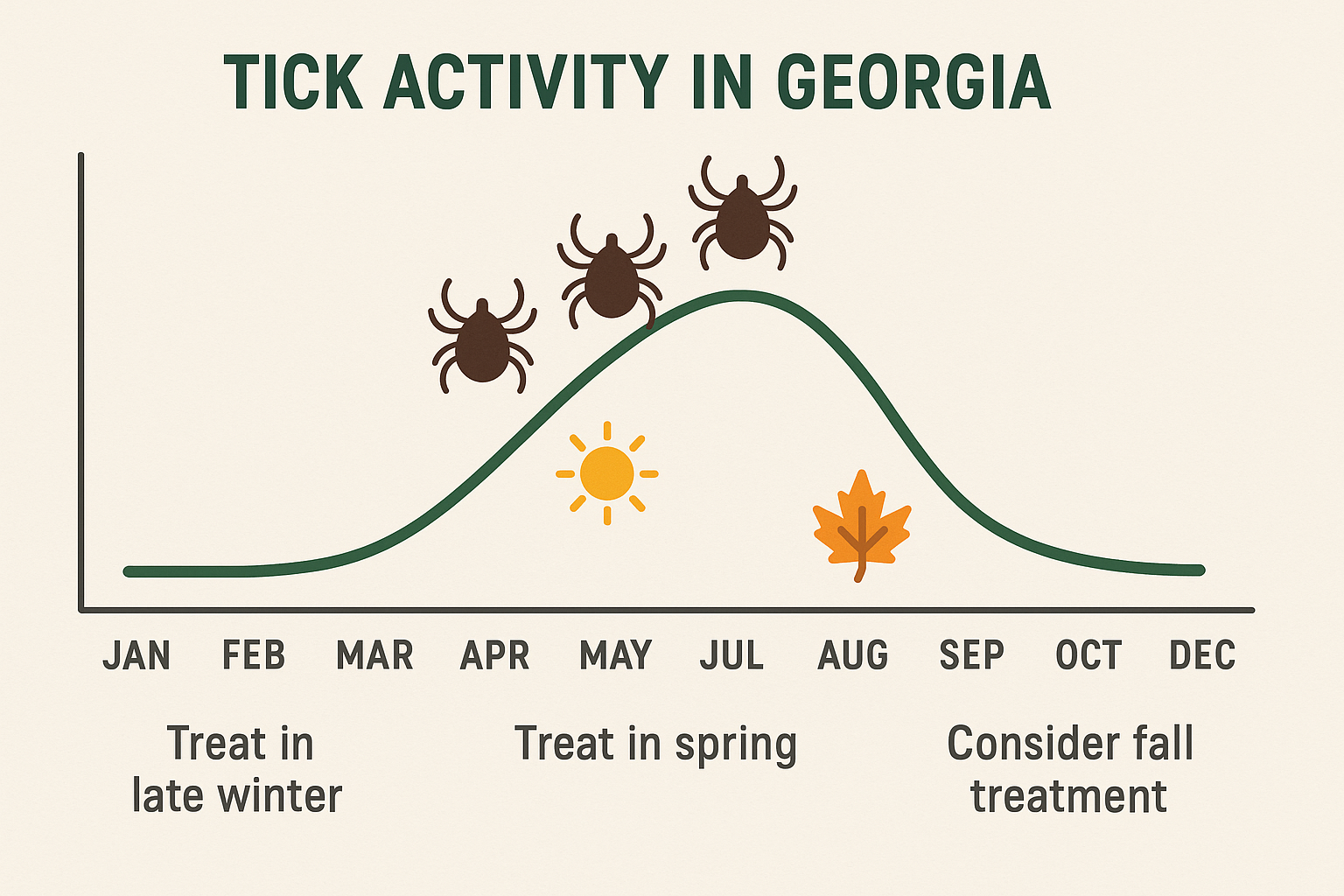
Seasonal Activity Diagram – When Are Ticks Most Active?
The diagram above highlights three peak windows in Georgia:
- Spring (April‑May): Larvae hatch and begin questing for small mammals. This is the first major opportunity to interrupt the cycle.
- Summer (June‑July): Nymphs dominate the landscape, seeking larger hosts. Because nymphs are both prolific and hard to spot, this is the most critical period for treatment.
- Fall (September‑October): Adult females are active, attaching to deer and dogs before laying eggs. A late‑season treatment helps reduce the egg load that will overwinter.
Timing Your Inspections and Treatments
Early Spring (late March‑early April): Conduct a thorough yard inspection. Look for clusters of leaf litter, tall grasses, and damp areas where larvae may be hiding. Apply a pre‑emptive acaricide to these micro‑habitats before larvae emerge.
Mid‑Summer (June): Schedule a professional treatment focused on nymph hotspots—brushy borders, garden edges, and pet-frequented zones. This is also the ideal time to treat pets with veterinarian‑approved tick preventatives.
Early Fall (late August‑early September): Perform a second round of treatment targeting adult activity zones. Consider a residual spray that remains effective through October, reducing the number of eggs laid for the next year.
Each treatment should be followed by a 2‑week monitoring period. If you still find active ticks, a supplemental spot‑treatment may be necessary.
Homeowner’s Tick‑Monitoring Checklist
- ✔️ March–April: Clear leaf litter and trim overgrown vegetation.
- ✔️ April–May: Inspect pets for larvae; apply a larval‑stage acaricide.
- ✔️ June–July: Walk the property with a white towel; any attached ticks are likely nymphs.
- ✔️ July: Verify that pets are on a veterinarian‑approved tick preventive.
- ✔️ September–October: Look for adult females on larger mammals and in shaded, humid spots.
- ✔️ Every month: Perform a quick “tick drag” using a piece of cloth to gauge activity levels.
- ✔️ After any treatment: Keep a log of dates, products used, and observed tick counts to share with your pest‑control professional.
Identifying Ticks and Early Warning Signs in Your Yard
Visual characteristics of Georgia’s most common ticks
Knowing what a tick looks like is the first line of defense. In the Cumming area you’ll most likely encounter three species:
- Blacklegged (deer) tick – 3‑5 mm when unfed, reddish‑brown body that turns gray‑blue after feeding; a distinctive dark shield (scutum) on the back.
- Lone star tick – Slightly larger, 4‑6 mm, with a creamy‑white body and a single white dot or “star” on the dorsal shield of adult females.
- American dog tick – 4‑6 mm, brown‑orange coloration, and a noticeable white‑gray spot near the front of the scutum.
All three are hard‑bodied, have eight legs as adults, and will expand dramatically after a blood meal, making early detection crucial.
Where ticks like to hide
Ticks are not random wanderers; they position themselves in micro‑habitats that protect them from wind and desiccation while waiting for a host. In a typical Georgia yard, check these hotspots:
- Leaf litter and mulch beds – the damp, decomposing material provides ideal humidity.
- Tall, uncut grass – especially along the perimeter where sunlight is filtered.
- Shaded borders and fence lines – ticks favor the cool, moist shade created by trees or shrubs.
- Pet bedding and indoor/outdoor pet hangouts – pets can transport ticks directly into your home.
Tools for detection
Proactive homeowners use a few simple tools to spot ticks before they become a problem:
- Tick‑removal tweezers – Fine‑pointed tweezers let you grab the tick close to the skin without crushing it.
- Sticky traps – White card traps coated with a low‑toxicity adhesive can be placed in high‑risk zones; ticks that wander onto them stay visible.
- Visual sweep method – Walk a slow, deliberate path with a white sheet or a piece of cardboard. Any ticks that drop onto the surface are easy to see.
Signs of a tick‑infested area
Even if you haven’t yet found a live tick, there are subtle clues that an infestation is brewing:
- Small, dark specks on the ground – these are tick feces (often called “tick droppings”) and look like tiny black dots.
- Results from a “tick drag” test – Dragging a 1‑meter white cloth over suspect ground and later counting attached ticks provides a quick infestation index.
- Increased tick sightings on pets after a walk in the yard – a sudden spike is a red flag.
Immediate steps when a tick is found on a person or pet
Finding a tick attached can be alarming, but quick, correct action reduces the risk of disease transmission:
- Use fine‑pointed tweezers to grasp the tick as close to the skin as possible.
- Pull upward with steady, even pressure; avoid twisting, which can leave mouthparts embedded.
- Disinfect the bite area with rubbing alcohol or iodine.
- Place the removed tick in a sealed container with a label (date, location) – this helps health professionals if symptoms develop.
- Monitor the bite site for redness, swelling, or a “bull’s‑eye” rash over the next 24‑48 hours.
- Contact a medical professional for advice, especially if the bite was from a blacklegged tick or if you live in an area with known Lyme disease cases.
- For pets, clean the bite area, check the entire coat for additional ticks, and call your veterinarian if the animal shows signs of irritation or illness.
Prompt removal and observation are the most effective ways to keep your family safe while you plan a more comprehensive tick‑control treatment with a professional service like Anthem Pest Control.
Effective Tick Control Options and Pricing in Cumming
DIY Treatments vs. Professional Services
Many homeowners start with a do-it-yourself approach because the upfront cost looks appealing, especially when comparing options for tick control cost Cumming residents often research online. Typical DIY kits include spot-on sprays, granules, or a perimeter barrier that you spread yourself. While these products can knock down a few ticks, they often miss hidden micro-habitats such as leaf litter, shaded borders, and under decks—places where ticks thrive year-round. DIY solutions also require careful timing, precise dosage, and repeated applications, which can quickly add up to the same expense a professional service would charge in a single visit.
Professional tick control, on the other hand, combines EPA‑registered formulations with trained technicians who know exactly where to treat. A single, well‑executed spray covers the entire yard, including hard‑to‑reach zones, and is calibrated to the local tick species in Cumming. The result is a more consistent, long‑lasting barrier that reduces the need for frequent re‑applications.
What Professional Technicians Do
At Anthem Pest Control we offer three core service tiers, each designed to fit a different budget and level of protection:
- One‑time yard spray: A thorough, whole‑yard application using a fast‑acting, EPA‑registered acaricide. Ideal for homeowners who need immediate relief before a family gathering or outdoor event.
- Quarterly maintenance plan: Four seasonal visits (spring, early summer, late summer, fall) that refresh the barrier, target newly emerging tick hotspots, and adjust treatment based on weather patterns.
- Add‑on options: Pet‑focused treatments that protect dogs and cats from tick attachment, and a detailed inspection service that identifies high‑risk zones such as compost piles, woodpiles, and shaded shrubbery.
Pricing Infographic: How the Numbers Stack Up
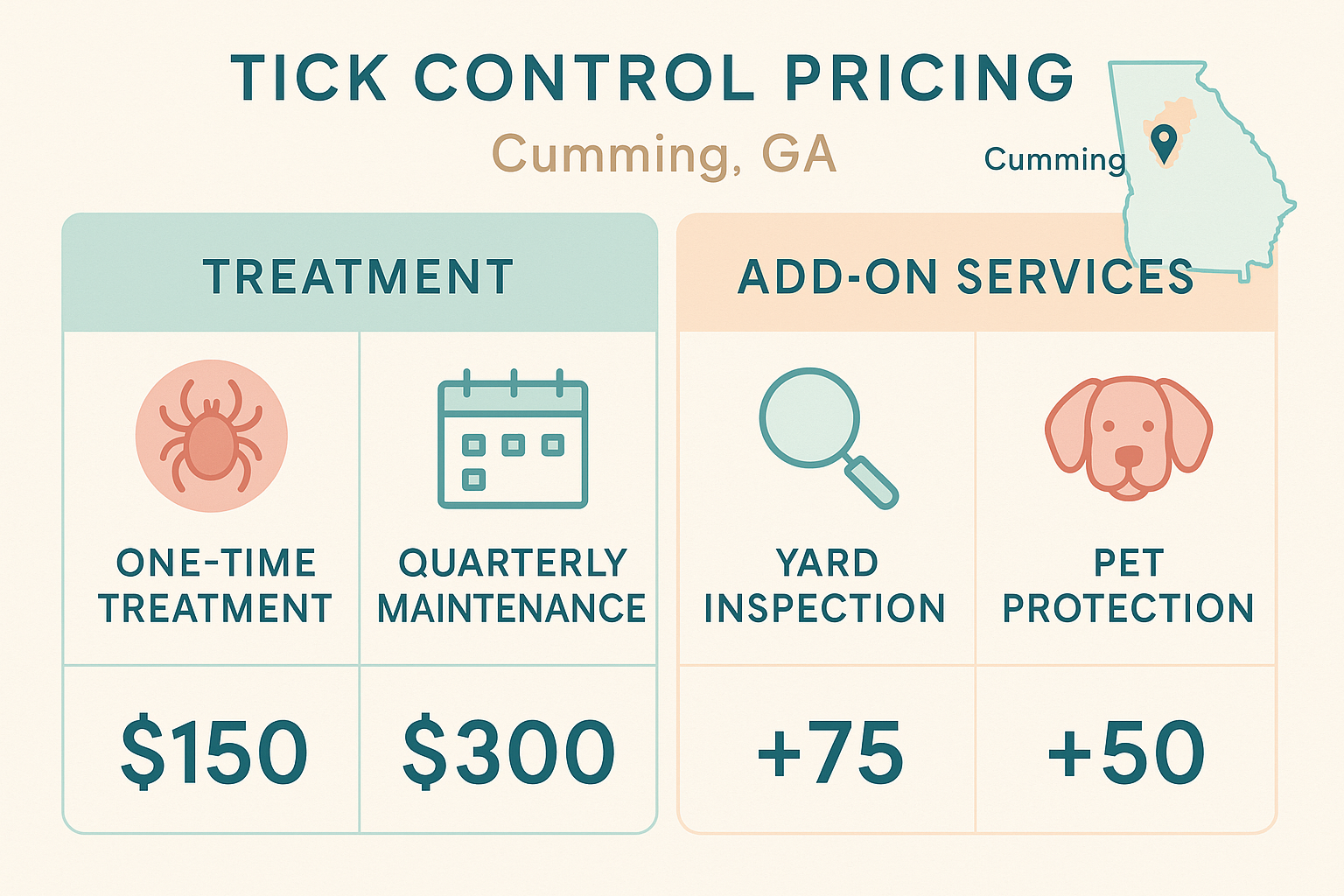
The graphic above breaks down the average out‑of‑pocket cost for each option. A DIY starter kit runs roughly $30‑$45 per application, but you’ll likely need three to four rounds per season—pushing the total past $150. Our one‑time professional spray starts at $149, while the quarterly bundle (including two add‑on services) averages $399 per year, delivering a 30%‑plus savings compared to repeated DIY purchases.
EPA‑Registered Products Applied Safely
All treatments we use are listed on the EPA’s Pesticide Product Label Database, meaning they have undergone rigorous testing for efficacy and human/animal safety. Certified technicians wear protective gear, calibrate sprayers to the exact dosage recommended for the target tick species, and follow strict buffer‑zone guidelines to protect flower beds, vegetable gardens, and pet‑friendly areas. This level of precision eliminates the guesswork that DIY users face, ensuring that the active ingredient reaches the tick’s habitat without over‑exposing residents or wildlife.
Why Regular Maintenance Pays Off
Consistent, professionally applied barriers produce three measurable benefits:
- Reduced tick population: Re‑treating each season keeps the tick life cycle interrupted, preventing eggs from maturing into biting adults.
- Lower disease risk: Fewer ticks mean a smaller chance of Lyme disease, Rocky Mountain spotted fever, or other tick‑borne illnesses affecting children and pets.
- Peace of mind for the whole family: Knowing that a certified team has inspected and treated every vulnerable spot lets you enjoy backyard barbecues, hiking, and playtime without constant worry.
When you factor in the potential medical costs of a tick‑borne illness, the modest annual investment in a professional maintenance plan becomes a clear financial safeguard. Anthem Pest Control’s transparent pricing, local expertise, and EPA‑compliant methods make it the smartest choice for Cumming homeowners who want reliable protection without hidden fees.
Protect Your Home with Anthem Pest Control
In Cumming, Georgia, ticks aren’t just a nuisance—they’re a genuine health risk for you, your family, and your pets. The humid, wooded environment creates a perfect breeding ground, especially from early spring through late fall. Treating your yard during the early‑spring emergence and again in the late‑summer peak dramatically reduces the chance of an infestation taking hold. Ignoring these windows can lead to increased exposure to Lyme disease, Rocky Mountain spotted fever, and other tick‑borne illnesses.

Anthem Pest Control brings a level of expertise that goes beyond “spray and forget.” All of our technicians are fully licensed, undergo continuous training, and use only EPA‑approved products that target ticks without harming children, pets, or beneficial insects. Our transparent pricing model means you’ll know exactly what you’re paying for—no hidden fees, no surprise add‑ons. Whether you need a one‑time treatment or a seasonal protection plan, we tailor the service to fit the unique layout of your suburban yard.
Safety and affordability are at the heart of every solution we design. For pet owners, we prioritize low‑toxicity formulas that keep dogs and cats safe while still delivering a lethal blow to adult ticks and their larvae. Homeowners on a budget appreciate our tiered packages, which let you choose the level of coverage that matches your needs without compromising effectiveness. We also offer a complimentary yard assessment, so you can see exactly where ticks are most likely to hide—under leaf litter, along fence lines, or in shaded garden beds.
Ready to take the next step? If you’re researching tick control cost Cumming homeowners can expect, scheduling a free, no-obligation quote takes just a few clicks or a quick phone call. Visit our website, select “Schedule Service,” and choose a convenient time slot; our friendly dispatch team will confirm the appointment within minutes. If you prefer to speak directly, call us and a knowledgeable representative will walk you through the process, answer any questions about pricing or treatment options, and set up your service date.
Contact Anthem Pest Control today:
Phone: 877‑371‑8196
Website: https://anthempest.com