Why Ticks Are a Growing Concern for Druid Hills Homeowners
Druid Hills may be known for its leafy streets and historic homes, but the same oak-lined avenues, shaded parks, and humid summers create an ideal breeding ground for ticks—making proactive tick control Druid Hills homeowners rely on especially important. These tiny arachnids thrive in the region’s temperate climate, where average summer highs hover around 88°F (31°C) and humidity stays above 70 percent. The combination of dense canopy, leaf litter, and abundant wildlife—white-tailed deer, raccoons, and songbirds—provides the perfect host-to-host cycle that lets tick populations multiply year after year.
Recent data from the Georgia Department of Public Health and local university studies show a steady uptick in tick encounters over the past five years. In 2022, reported bites in Fulton County rose by 18 %, and neighboring DeKalb County reported a similar surge. Residents are finding ticks not only on hiking trails but also in backyards, community gardens, and even on freshly mowed lawns. The trend is not a seasonal blip; it reflects a broader ecological shift driven by milder winters and expanding deer habitats.
For homeowners, the risk is closely tied to everyday outdoor activities. A weekend gardening session, a family walk through the historic Druid Hills Park, or a playful afternoon at a local dog park can all become exposure points. Ticks latch onto passing hosts within minutes, and a single bite can go unnoticed for days. The danger escalates when children or pets spend time in the yard, because their smaller bodies make them easier targets and they often bring ticks back inside the home.
Understanding why ticks matter is the first step toward effective control. In the sections that follow, we’ll walk you through how to identify the most common species in Druid Hills, explain the health risks they carry—from Lyme disease to Rocky Mountain spotted fever—and outline the seasonal activity patterns that dictate the best treatment windows. We’ll also compare professional extermination methods, break down typical pricing, and show you how a proactive approach can keep your family and pets bite‑free.
By the end of this guide, you’ll have a clear roadmap for protecting your property: recognize tick habitats, know when and how to act, and choose a trusted partner—like Anthem Pest Control—to implement safe, affordable solutions tailored to Druid Hills’ unique environment.
The financial impact of unchecked tick infestations can add up quickly. Homeowners may face veterinary bills for pets diagnosed with tick‑borne illnesses, medical expenses for human treatment, and even property devaluation if the neighborhood gains a reputation for pest problems. Moreover, the time spent removing ticks from clothing, pets, and skin detracts from the enjoyment of your outdoor spaces. Investing in early detection and professional control not only safeguards health but also protects your home’s value and your family’s peace of mind.
Spotting Ticks – Identification and What They Look Like

Georgia’s warm, wooded neighborhoods are a perfect playground for several tick species that love to hitch a ride on humans and pets. Knowing the look of the three most common culprits—American dog tick, Lone‑star tick, and Blacklegged (or deer) tick—helps you spot them before they embed and start feeding.
American Dog Tick (Dermacentor variabilis)
These ticks are the largest of the trio, measuring 3‑6 mm when unfed and swelling to about 10 mm after a blood meal. Their bodies are reddish‑brown with a distinctive white or ivory‑colored shield (scutum) on the back. The legs are noticeably long, giving the tick a “spindly” appearance. You’ll often find them in grassy fields, especially near the edges of woods.
Lone‑Star Tick (Amblyomma americanum)
Named for the striking “hour‑glass” or star‑shaped dark spot on the female’s back, the Lone‑star tick is easily recognized. Adults range from 2‑5 mm, with females slightly larger than males. Their coloration is a mottled brown‑gray, and the scutum lacks the solid white patch seen on the American dog tick. These ticks favor hardwood forests, leaf litter, and even suburban lawns.
Blacklegged Tick (Ixodes scapularis)
Also called the deer tick, this species is the smallest—about 2‑3 mm when unfed. It has a reddish‑brown body with a darker, almost black, “leg” area just behind the head, which gives it its name. The back is relatively plain, lacking any bold markings. Blacklegged ticks thrive in moist, shaded environments such as forest understories and shrubbery.
How to Perform a Thorough Skin Check
After any outdoor activity—hiking, gardening, or playing with pets—run a systematic skin inspection. Start at the scalp and work down, using a mirror for hard‑to‑see spots like the back of the neck, behind the ears, and the groin area. Pay special attention to folds: underarms, behind knees, and around the waistline. Lightly part hair with a fine‑tooth comb to reveal hidden ticks.
Safe Tick Removal: Pinch‑and‑Pull Method
When you locate a tick, use fine‑point tweezers or a dedicated tick‑removal tool. Grasp the tick as close to the skin’s surface as possible, then pull upward with steady, even pressure—avoid twisting or jerking, which can leave mouthparts embedded. Once removed, clean the bite area with rubbing alcohol or soap and water. Disinfect the tweezers, and store the tick in a sealed container if you need to show it to a professional.
- Tools needed: Fine‑point tweezers, tick‑removal hook, alcohol wipes, and a small zip‑lock bag.
- Aftercare: Monitor the bite for redness or a rash over the next few days; seek medical advice if symptoms develop.
For a deeper dive into each species’ biology and disease risk, visit the CDC Tick Identification page.
Health Risks Associated with Tick Bites
Ticks may be tiny, but the illnesses they carry are anything but. In Georgia’s humid climate, several tick species thrive, and each can transmit pathogens that jeopardize a homeowner’s health. Understanding which diseases are most common, how they present, and why swift medical care matters can turn a frightening bite into a manageable situation.
Major Tick‑Borne Illnesses in Georgia
- Lyme disease – Caused by Borrelia burgdorferi, primarily spread by the black‑legged (deer) tick. Georgia reports a growing number of cases each year.
- Rocky Mountain spotted fever (RMSF) – Transmitted by the American dog tick, this bacterial infection can be severe if not treated promptly.
- Ehrlichiosis – Carried by the lone star tick; it attacks white blood cells and can lead to systemic illness.
- Southern tick‑associated rash illness (STARI) – A milder rash‑producing condition linked to the lone star tick, often confused with early Lyme disease.
Incubation Periods and Early Symptoms
Each pathogen follows its own timeline, but most begin to show signs within a week to three weeks after the bite. Typical early symptoms overlap and include:
- Fever ranging from low‑grade to high
- Persistent headache
- Unexplained fatigue or muscle aches
- A rash – often circular (“bull’s‑eye”) for Lyme disease or spotted for RMSF
Because these signs mimic flu or other common ailments, many people dismiss them. Knowing the incubation window—often 3‑14 days for Lyme, 2‑14 days for RMSF, and 5‑10 days for Ehrlichiosis—helps you connect the dots between a recent outdoor activity and emerging symptoms.
Potential Long‑Term Complications
If a tick‑borne infection goes untreated, short‑term discomfort can evolve into serious, lasting health issues. Lyme disease may progress to arthritis, neurological problems, or heart rhythm disturbances. RMSF can cause organ damage, including kidney failure and neurological deficits. Ehrlichiosis, when severe, may lead to bleeding disorders or respiratory failure. Even STARI, though generally milder, can leave lingering fatigue and joint pain. Early detection is the most reliable safeguard against these outcomes.
When to Seek Medical Attention
The rule of thumb is simple: any fever, rash, or persistent symptoms after a known tick bite warrants a doctor’s visit. Physicians typically order:
- Blood tests that detect antibodies or DNA of the specific pathogen (e.g., ELISA and Western blot for Lyme, PCR for Ehrlichia).
- Complete blood count (CBC) to assess inflammation or platelet levels, especially important for RMSF.
- Prompt prescription of antibiotics—doxycycline is the first‑line treatment for most tick‑borne illnesses in adults and children over eight.
Early antibiotic therapy dramatically reduces the risk of complications, often resolving symptoms within days. Delays, however, can extend treatment courses and increase the chance of chronic issues.
Everyday Preventive Measures
Beyond professional tick control, homeowners can add layers of protection:
- Wear protective clothing—long sleeves, long pants, and closed shoes when venturing into woods or tall grass. Tuck pants into socks to create a barrier.
- Use EPA‑approved repellents containing DEET, picaridin, or oil of lemon eucalyptus on exposed skin and clothing.
- Conduct regular tick checks on yourself, children, and pets after outdoor activities. Prompt removal within 24 hours reduces transmission risk.
- Maintain your yard by keeping grass trimmed, removing leaf litter, and creating a tick‑free perimeter with wood chips or gravel.
These steps, combined with a reliable tick‑control service like Anthem Pest Control, create a comprehensive defense against both bites and the diseases they carry.
For the most up‑to‑date statistics on tick‑borne illnesses in Georgia, consult the CDC’s Tick‑Borne Diseases page. Staying informed, vigilant, and proactive is the best prescription for a healthy, bite‑free home.
When Are Ticks Most Active in Georgia?
Understanding a tick’s life cycle is the first step to timing your defenses. In Georgia, ticks move through four stages: egg, larva, nymph, and adult. Eggs hatch when soil temperatures rise above 50 °F (10 °C). The tiny, six‑legged larvae emerge in late winter, feed briefly on small hosts, then drop off to molt into nymphs. Nymphs are the most aggressive bite‑seekers because they’re small enough to go unnoticed yet hungry enough to attach for several days. Adults, which require larger hosts such as dogs, deer, or humans, become active when daytime humidity stays above 70 % and temperatures stay between 60–85 °F (15–30 °C). Too cold or too dry, and the population stalls; warm, moist conditions accelerate each stage and push numbers sky‑high.
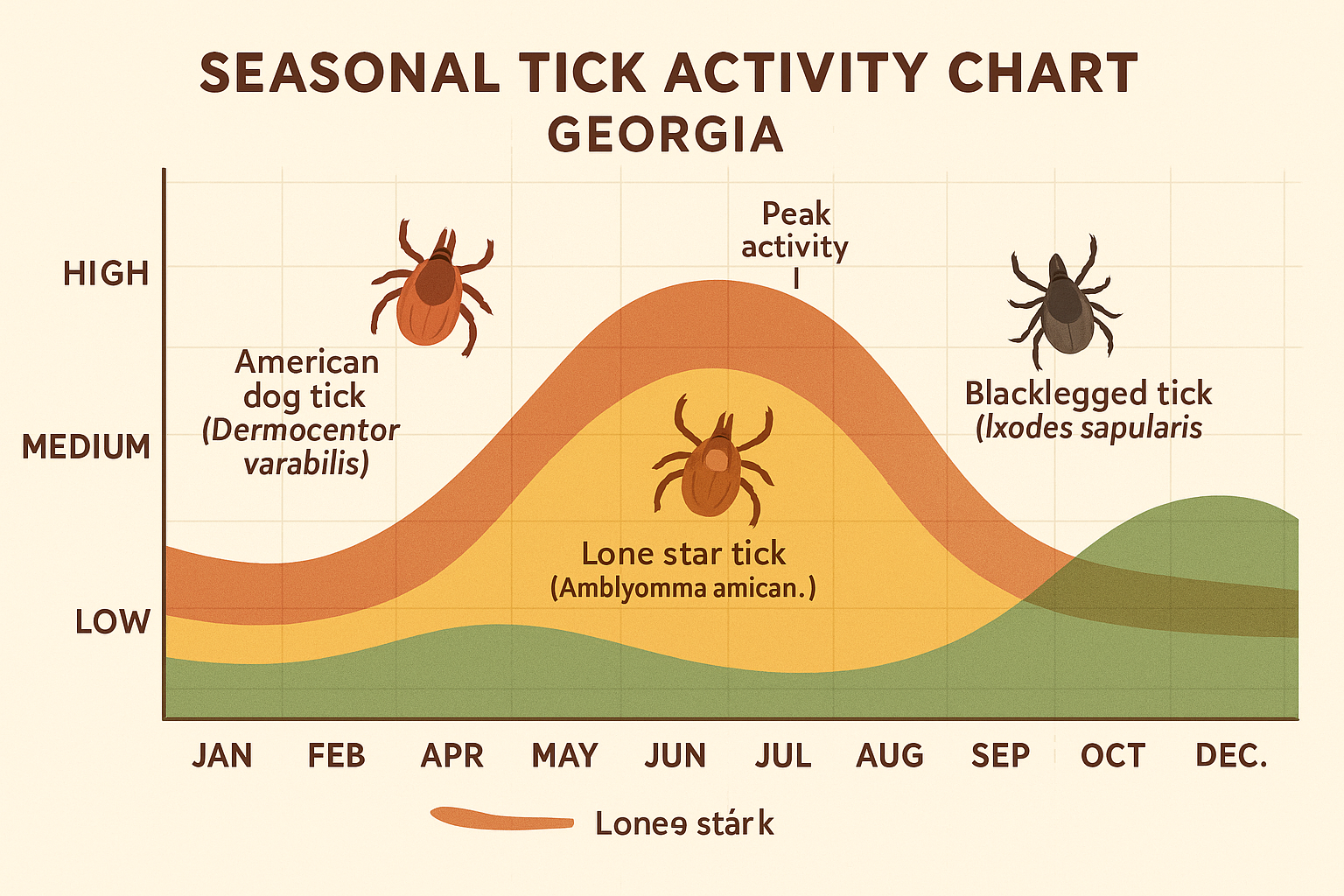
Georgia’s climate creates a long “tick season,” but activity isn’t uniform. Below is a month‑by‑month snapshot that shows when each stage typically peaks across the state. Use it as a calendar for personal checks and to schedule professional treatments.
| Month | Activity Level | Dominant Stage |
|---|---|---|
| January | Low | Eggs (over‑wintering) |
| February | Low | Eggs |
| March | Moderate | Larvae emerging |
| April | High | Larvae & early nymphs |
| May | High | Nymphs (peak) |
| June | High | Nymphs & early adults |
| July | Moderate | Adults |
| August | Moderate | Adults |
| September | High | Adults (second peak) |
| October | Moderate | Adults winding down |
| November | Low | Egg laying begins |
| December | Low | Eggs |
Peak Activity by Species
- American Dog Tick (Dermacentor variabilis): Most active from late April through early July. Nymphs dominate April–May; adults peak in June.
- Lone Star Tick (Amblyomma americanum): Shows a broader window, with high numbers May through September. Nymphs surge in May‑June, adults stay busy through August.
- Blacklegged (Deer) Tick (Ixodes scapularis): Nymphal activity spikes in May‑June, which aligns with the highest risk for Lyme disease transmission. Adults are most common in October‑November, but they can still bite in early spring.
Timing Your Checks and Treatments
Personal inspections: Walk the property weekly from March to September. Focus on the lower legs and ankles during the nymphal peak (April‑June) and on the upper arms and torso when adults are most active (July‑October). Use a bright flashlight on your clothing and pets after each outing.
Professional interventions: The sweet spot for a pre‑emptive tick barrier treatment is early April, just before larvae hatch and nymphs begin their rapid expansion. If you missed that window, a second application in late May targets the nymphal surge, while a fall service (late September) curtails adult activity and reduces egg‑laying.
By aligning your personal vigilance and Anthem Pest Control’s treatment schedule with the state’s seasonal tick calendar, you’ll keep the bite risk low and protect your family, pets, and yard all year long.
Effective Tick Control Methods for Your Property
Ticks thrive in the quiet corners of a yard—under tall grass, in leaf piles, and along the edges of shaded pathways. By combining smart landscaping with targeted treatments, homeowners can achieve effective tick control Druid Hills residents depend on to dramatically cut the chance of a tick bite before it even happens. Below is a practical, step-by-step guide that shows exactly what works, how it works, and what you’ll see when the job is done.

Landscape Management
Keeping the yard tidy is the first line of defense. Mow lawns at least once a week during peak tick season (April‑September) and keep the grass no higher than 3 inches. This shortens the humidity zone where ticks linger. Remove leaf litter, pine needles, and any other organic debris where ticks love to hide; a thin layer of mulch over a well‑drained soil is preferable to thick, damp piles. Finally, create “tick‑free zones” around play areas and patios by installing hardscape features—gravel, stone pathways, or wood chips—because ticks cannot cross dry, exposed surfaces easily.
Chemical Barriers
When landscaping alone isn’t enough, a chemical barrier adds a protective shield. Perimeter sprays applied along the property’s outer edges create a 10‑ to 15‑foot buffer that kills ticks before they can migrate inward. Spot‑on treatments target high‑risk zones such as shaded shrub borders, dog runs, and garden beds; these products typically remain active for 2‑4 weeks, depending on weather and sun exposure. Choose EPA‑approved pyrethroids or newer, low‑toxicity formulas that are safe for humans when used as directed. Professional applicators can blend products for a longer residual effect, often extending protection up to six weeks.
Biological Controls
For homeowners who prefer a more natural approach, biological controls work quietly in the soil. Beneficial nematodes—microscopic roundworms—are introduced into the lawn and feed on tick larvae and nymphs, reducing the next generation’s numbers. These nematodes are harmless to pets, children, and beneficial insects. In addition, encouraging natural predators such as ground‑hunting beetles, spiders, and certain bird species adds an extra layer of biological pressure on tick populations. Applying nematodes in early spring or late summer aligns with the tick life cycle for maximum impact.
Professional Treatments
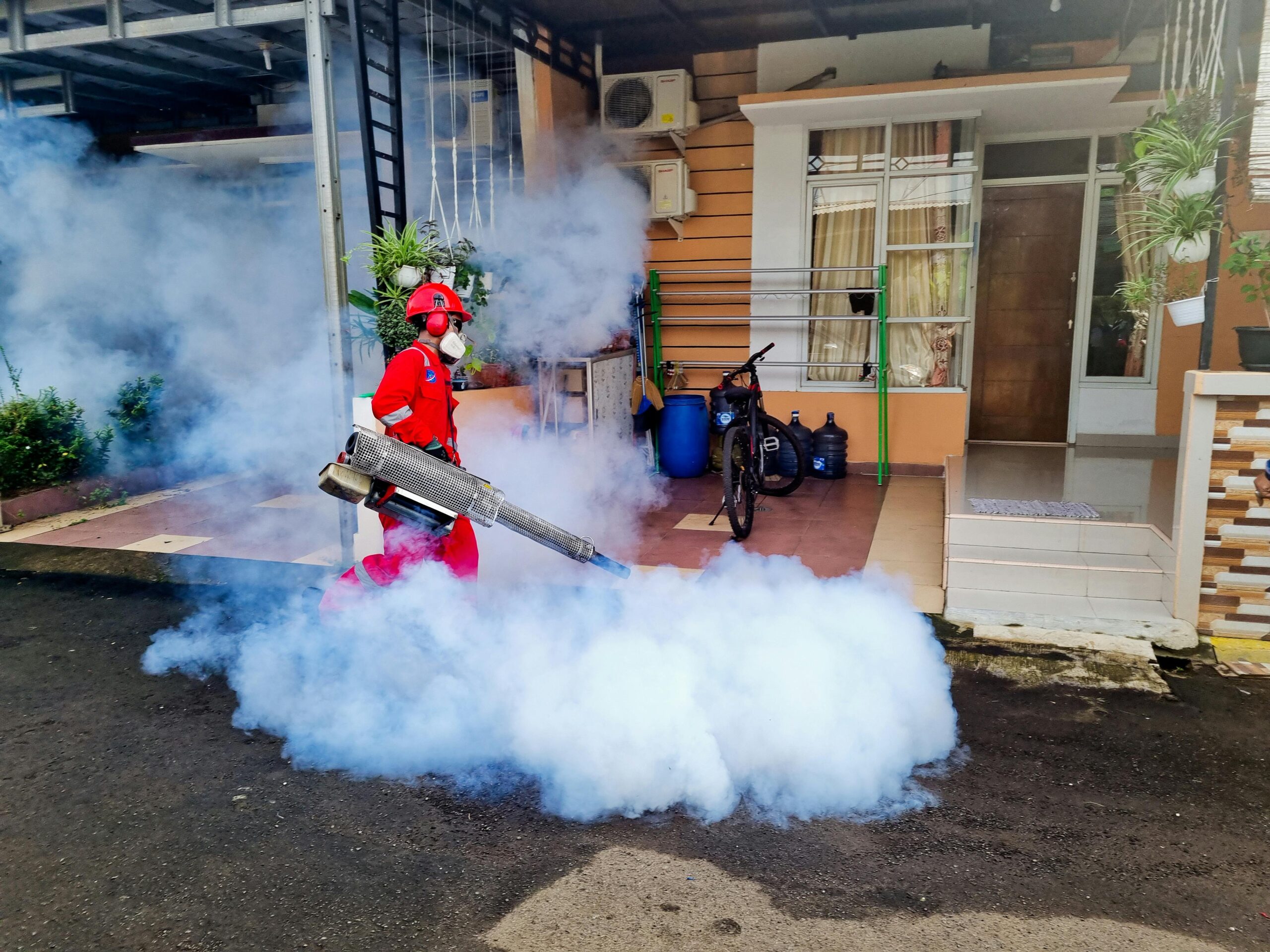
Anthem Pest’s licensed technicians bring advanced tools that go beyond DIY sprays. Misting systems disperse a fine, uniform mist of EPA‑approved insecticide across large areas, reaching the leaf litter and low‑lying vegetation where ticks hide. Targeted foggers are ideal for dense shrubbery and wooded sections, delivering a quick, high‑volume dose that penetrates hard‑to‑reach spots. In some cases, a low‑temperature smoke machine can be used to treat outdoor structures—porches, decks, and pergolas—where ticks may congregate after seeking shelter from the sun. These professional methods typically provide 4‑6 weeks of residual control.
Safety Considerations
Protecting the people and pets you love is non‑negotiable. Always inform the applicator of any children, seniors, or animals that will be on the property during and after treatment. EPA‑approved products are formulated to break down quickly, but it’s wise to keep pets and kids off treated zones for at least 2‑4 hours, or as the label advises. If you have a dog with a known sensitivity to pyrethroids, ask the technician to use a pet‑safe alternative such as permethrin‑free formulas. Wearing gloves and long sleeves during any DIY application adds an extra layer of protection.
Treatment Frequency
Ticks have a multi‑stage life cycle that can span a full year, so a single application won’t eradicate them forever. For most Druid Hills properties, a repeat treatment every 3‑4 weeks throughout the active season (April through October) keeps the tick population suppressed. Homeowners who maintain rigorous landscape management may stretch the interval to six weeks, while those with heavy shade or wooded borders should stick to the tighter schedule. Regular inspections by Anthem Pest can pinpoint hotspots and adjust the treatment calendar to match your yard’s unique risk profile.
Pricing Options for Tick Control Services in Druid Hills
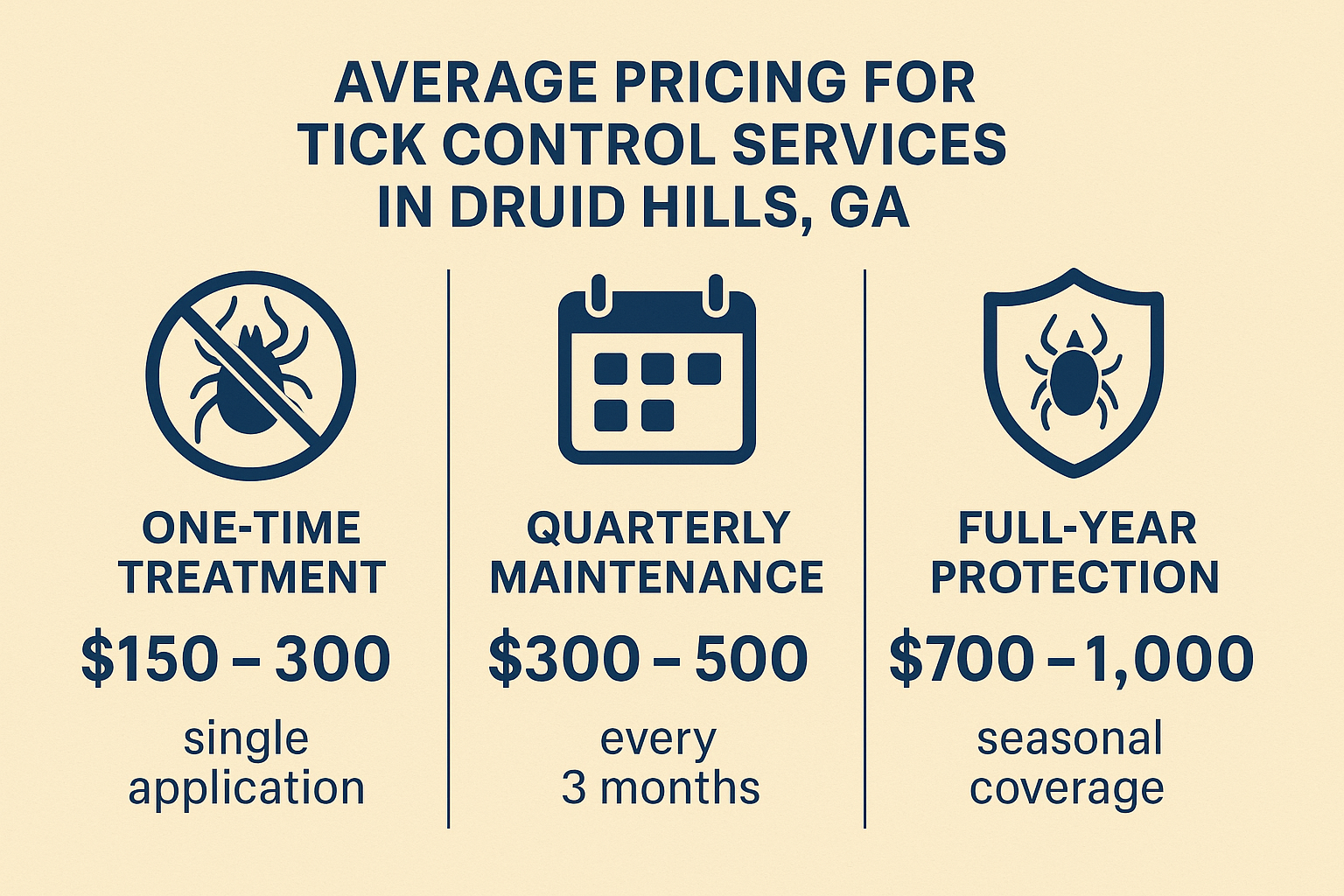
Understanding how tick control Druid Hills services are priced helps you avoid surprise invoices and pick the plan that truly protects your yard. In Druid Hills, most reputable companies—Anthem Pest Control included—offer three core service models: a one-time treatment, a quarterly maintenance schedule, and a full-year protection package. Each model is built around the same goal—eliminating ticks before they bite—but they differ in frequency, product mix, and overall cost.
One‑Time Treatment
- Single visit focused on high‑risk zones (perimeter, shaded areas, and pet hangouts).
- Application of a fast‑acting adulticide combined with a residual larvicide.
- Follow‑up call within 7 days to confirm effectiveness; no additional visits unless re‑treatment is requested.
Typical price range in Druid Hills: $120 – $180 for a standard ¼‑acre residential lot. Larger properties can see costs rise to $250‑$300.
Pros: Immediate knock‑down of existing ticks, ideal for homeowners who need a quick fix before a weekend BBQ. Cons: Protection fades after 4‑6 weeks, so you may face another infestation later in the season.
Quarterly Maintenance
- Four scheduled visits per year (early spring, late spring, midsummer, and early fall).
- Combination of contact sprays, residual barriers, and targeted spot treatments for high‑traffic zones.
- Two brief post‑visit inspections to ensure the barrier remains intact.
Typical price range in Druid Hills: $350 – $420 for an average yard, with discounts available for multi‑property owners.
Pros: Consistent protection throughout the peak tick season, reducing the need for emergency re‑treatments. Cons: Higher upfront cost than a single visit, and you’ll still need a final “touch‑up” if the season extends unusually long.
Full‑Year Protection
- Eight visits covering the entire calendar year, including pre‑season “pre‑emptive” applications in late winter.
- Use of both adulticides and growth regulators to interrupt the tick life cycle at multiple stages.
- Quarterly property inspections, a detailed tick‑risk report, and unlimited on‑call adjustments.
Typical price range in Druid Hills: $560 – $680 for a standard lot, with tiered pricing for larger estates or HOA contracts.
Pros: Maximizes long‑term ROI by preventing re‑infestation, offers peace of mind for families with children or pets, and often includes a guarantee or free re‑treatment if ticks reappear. Cons: The highest initial outlay; may feel excessive for homeowners with small, low‑risk yards.
Choosing the Right Plan: ROI and Seasonal Risk
To decide which option delivers the best value, weigh three key factors: the size of your property, the historical tick pressure in your neighborhood, and your personal tolerance for risk.
- Property size: Larger yards (over ½ acre) typically benefit from quarterly or full‑year plans because the per‑square‑foot cost drops with more frequent visits.
- Seasonal risk: Druid Hills experiences a long tick season—from early April through late October. If you notice early activity or have nearby wooded edges, a quarterly schedule often balances cost and coverage.
- Long‑term ROI: Calculate the potential medical expenses of a tick‑borne illness (Lyme disease treatment can exceed $5,000) against the annual service fee. Even the full‑year package often pays for itself after one prevented case.
By matching the service model to your yard’s dimensions and your family’s exposure tolerance, you’ll secure the most cost‑effective shield against ticks while keeping your outdoor spaces safe and enjoyable.
Protect Your Home with Anthem Pest Control Today
Ticks in Druid Hills aren’t just a nuisance; they’re a year‑round health risk that can turn a weekend yard stroll into a medical emergency. Their bite can transmit Lyme disease, Rocky Mountain spotted fever, and other serious illnesses, while a heavy infestation can damage lawns, gardens, and outdoor furniture. That’s why timely, professional tick control isn’t optional—it’s essential for protecting your family, pets, and property.
Anthem Pest Control brings more than a toolbox to the job; we bring local expertise, EPA‑approved products, and a transparent pricing model that lets you see exactly what you’re paying for. Our technicians are trained to identify tick hotspots, apply treatments that target all life stages, and follow up with a safety‑first approach that protects children and pets. The result is a lasting barrier that keeps ticks off your lawn without breaking the bank.
Ready to take the first step? We offer a free, no‑obligation quote that’s customized to the size, layout, and tick pressure of your property. Just give us a call at 877‑371‑8196, and one of our friendly specialists will schedule a walkthrough, answer your questions, and provide a clear, written estimate before any work begins.
Imagine the peace of mind that comes from knowing your yard is a tick‑free zone, where kids can play and pets can roam without a second thought. That confidence is only a phone call away, and the sooner you act, the less chance ticks have to establish a foothold. Let Anthem Pest Control handle the heavy lifting so you can enjoy your outdoor spaces with total confidence.
What sets Anthem apart is our commitment to safety and affordability. All treatments are applied by certified technicians using low‑toxicity formulas that meet strict state regulations, so your family and pets stay protected while the ticks are eliminated. Plus, our flat‑rate pricing eliminates surprise fees, and we back every job with a satisfaction guarantee—so you know you’re getting real value.
Visit Anthem Pest Control to learn more about professional tick control Druid Hills and schedule your service today.