Why Spider Prevention Matters for Georgia Homeowners

Common Spiders in Georgia
Georgia’s warm, humid climate creates an ideal breeding ground for a variety of spiders, making proactive spider control Druid Hills homeowners rely on especially important. Homeowners most often encounter the brown recluse, notorious for its violin-shaped marking and secretive habits; the black widow, recognized by its shiny black body and red hourglass; and the ubiquitous house spider, which rarely bites but can quickly fill a room with tangled silk. While many species are harmless, the presence of these three alone is enough to warrant proactive prevention.
Health Risks of Venomous Bites
Venomous bites are more than a nuisance; they can trigger serious medical emergencies. According to the CDC, brown recluse bites may cause necrotic lesions that take weeks to heal, and black widow envenomation can lead to muscle cramps, hypertension, and, in rare cases, respiratory distress. Even non‑lethal bites can provoke allergic reactions ranging from mild swelling to anaphylaxis. Prompt medical attention is essential, but the best defense is keeping these spiders out of living spaces before they have a chance to bite.
Property Impacts Beyond the Bite
Spiders don’t just threaten health—they can compromise the integrity of a home. Dense webs in HVAC ducts reduce airflow, forcing systems to work harder and raising energy bills. Webbing in insulation traps moisture, encouraging mold growth that damages structural components. In kitchens, spider webs can contaminate food preparation areas, leading to unsanitary conditions that attract other pests. Over time, unchecked spider activity can erode both comfort and property value.
Seasonal Spikes Make Early Prevention Critical
Georgia experiences distinct seasonal patterns that influence spider activity. Late spring and early summer bring an influx of adult spiders seeking mates, while the cooler months push them indoors to escape temperature drops. This seasonal surge means that a home left unprotected in April can quickly become a hub for breeding colonies, making later treatment more extensive and costly. Initiating prevention before the first wave arrives is the most economical strategy.
Anthem Pest Control’s Expertise and Commitment
At Anthem Pest Control, we combine local knowledge with industry‑leading, EPA‑approved treatment methods to keep Georgia homes spider‑free. Our technicians conduct thorough inspections to identify entry points, then apply targeted, low‑toxicity solutions that protect families, pets, and the environment. Transparent pricing ensures you know exactly what you’re paying for, and our seasonal service plans let you stay ahead of the next spike without surprise costs. Trust Anthem to turn spider worries into a thing of the past, so you can enjoy a safe, clean home year‑round.
Identifying the Most Common Georgia Spiders

Brown Recluse (Loxosceles reclusa)
The brown recluse is a small, shy spider that often goes unnoticed until it bites. Adults measure 6–12 mm (about the size of a pencil eraser) and display a uniform light‑brown to tan coloration. The hallmark feature is a dark, violin‑shaped marking on the dorsal side of the cephalothorax, with the “neck” of the violin pointing toward the abdomen. Their legs are long and slender, giving them a delicate appearance.
In Georgia homes, brown recluses favor undisturbed indoor locations: closets, attics, basements, and the backs of furniture. They love tight, dark crevices—think under stacks of clothing, inside shoe boxes, or behind wall hangings. Because they do not spin extensive webs, you’ll usually find them tucked into a small, irregular silk retreat rather than a visible web.
Black Widow (Latrodectus mactans)
Black widows are instantly recognizable by their glossy, jet‑black abdomen and the iconic red hourglass shape on the underside. Females grow up to 30 mm, while males are considerably smaller and less dangerous. Their legs are long and covered in fine hairs that catch light, giving a slightly iridescent sheen.
These spiders construct irregular, tangled cobwebs close to the ground. In Druid Hills, you’ll most often encounter them in sheltered outdoor sites: woodpiles, garages, sheds, and under eaves. Inside, they may spin webs in dark corners of basements or crawl spaces. Their web is sticky enough to trap insects but not so dense that it looks like a classic orb web.
House Spider (Parasteatoda tepidariorum)
The common house spider is a harmless, non‑venomous species that thrives in human dwellings. Adults range from 5–10 mm, with a mottled brown‑gray body and a faint pattern of lighter markings on the abdomen. They are prolific web builders, producing classic sheet‑like webs in corners, window frames, and ceiling edges.
Seasonally, house spiders become especially abundant in late summer and early fall when they seek indoor shelter to overwinter. Their presence is usually a sign of a healthy insect population, as they help control flies and moths.
Tips for Differentiating Harmless Spiders from Dangerous Ones
- Body shape and markings: Look for the violin‑shaped dorsal mark on brown recluses and the red hourglass on black widows. House spiders lack distinctive markings.
- Web style: Brown recluses rarely spin webs; black widows make irregular, three‑dimensional cobwebs; house spiders produce neat, flat sheet webs.
- Habitat preference: Recluse spiders hide in indoor, undisturbed spaces; widows favor outdoor, sheltered corners but can move inside; house spiders are everywhere, especially in corners and windows.
- Size and color: Brown recluses are uniformly light‑brown; black widows are shiny black with a red hourglass; house spiders are mottled brown‑gray.
- Behavior: Recluse spiders are shy and rarely bite unless pressed; black widows are more defensive and may bite when disturbed; house spiders are non‑aggressive.
When in doubt, avoid handling any spider and consult a professional. For a deeper dive into spider identification, the NPMAP pest guide offers detailed photos, range maps, and safety tips.
When Spiders Are Most Active in Georgia
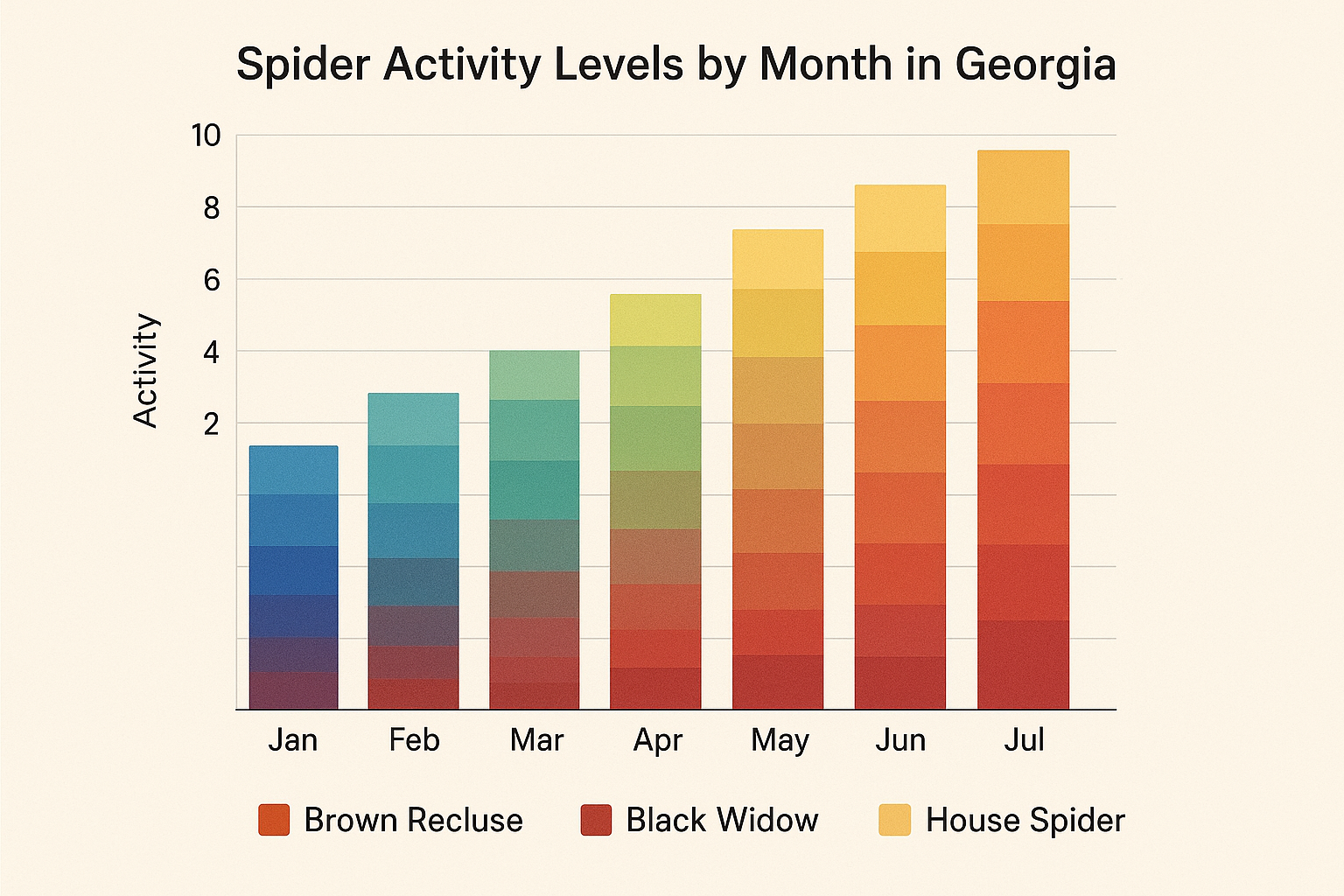
The bar chart above paints a clear picture: spider activity in Georgia climbs steadily after the last frost, peaks between May and September, and then tapers off as cooler air returns in October. Early-season sightings (March–April) are modest, but by late May the numbers surge, staying high through July and August before a gradual decline in September—highlighting why timely spider control Druid Hills homeowners depend on is so important. This seasonal rhythm is consistent across both urban and suburban neighborhoods, meaning homeowners can anticipate when spiders are most likely to wander inside.
Temperature, Humidity, and Spider Behavior
Spiders are ectothermic; they rely on external heat to regulate their metabolism. Warm days (70‑85°F) accelerate growth, egg‑sac development, and hunting activity. At the same time, Georgia’s summer humidity—often above 60%—creates ideal micro‑habitats in basements, crawl spaces, and indoor corners where moisture lingers. The combination of heat and moisture boosts prey populations (flies, ants, and other insects), giving spiders abundant food and encouraging them to expand their territory into homes.
High‑Risk Months for Dangerous Species
While most spiders are harmless, two medically significant species demand extra vigilance:
- Brown Recluse: Their numbers swell from late May through early August, especially in dry, secluded spaces like closets and woodpiles.
- Black Widow: Activity spikes from June to September, favoring warm, sheltered spots such as garages, sheds, and outdoor furniture.
During these windows, bite incidents rise, so recognizing the species and their preferred hiding places becomes crucial.
Monthly Inspection Checklist (May – September)
- Check all window and door frames for webs; wipe away any you find.
- Inspect the underside of furniture, especially in basements and attics.
- Examine stored boxes, firewood, and laundry baskets for egg sacs.
- Look behind appliances and inside cabinet corners for hidden corners.
- Seal any cracks or gaps in exterior walls, foundation, and screens.
Running through this quick list each month helps you spot early infestations before they become full‑blown problems. If you notice a sudden increase in webbing or suspect a brown recluse or black widow, contact a professional promptly.
For those planning chemical treatments, timing is key. The EPA guidance on pesticide application timing outlines best practices for applying products when they’ll be most effective and least disruptive to the environment.
Treatment Options, Methods, and Pricing
Overview of Treatment Methods
When spiders set up shop in Druid Hills, a one-size-fits-all approach rarely works, which is why professional spider control Druid Hills services are so effective. At Anthem Pest Control, we start with a spot-treatment that targets high-traffic zones such as doorways, window sills, and dark corners where webs are most visible. For larger properties or severe infestations, we add a perimeter spray, creating a protective barrier around the home’s exterior to stop wandering spiders before they cross the threshold.
Inside the house, indoor fogging disperses a fine mist that reaches cracks, vents, and ceiling voids—areas that are difficult to treat with a handheld sprayer. Finally, our Integrated Pest Management (IPM) program blends chemical controls with non‑chemical tactics like web removal, de‑cluttering advice, and habitat modification, delivering long‑term suppression without over‑reliance on pesticides.
Safety First: Protecting Your Family and Pets
All of our treatments use EPA‑approved products that have been vetted for indoor use around children and pets. Technicians wear gloves, respirators, and eye protection, and they follow strict containment protocols to keep residue away from food preparation surfaces and pet bedding. We also provide a simple safety checklist—ventilate rooms for at least 30 minutes after fogging, keep pets outdoors until the area dries, and store any remaining product out of reach of curious hands.
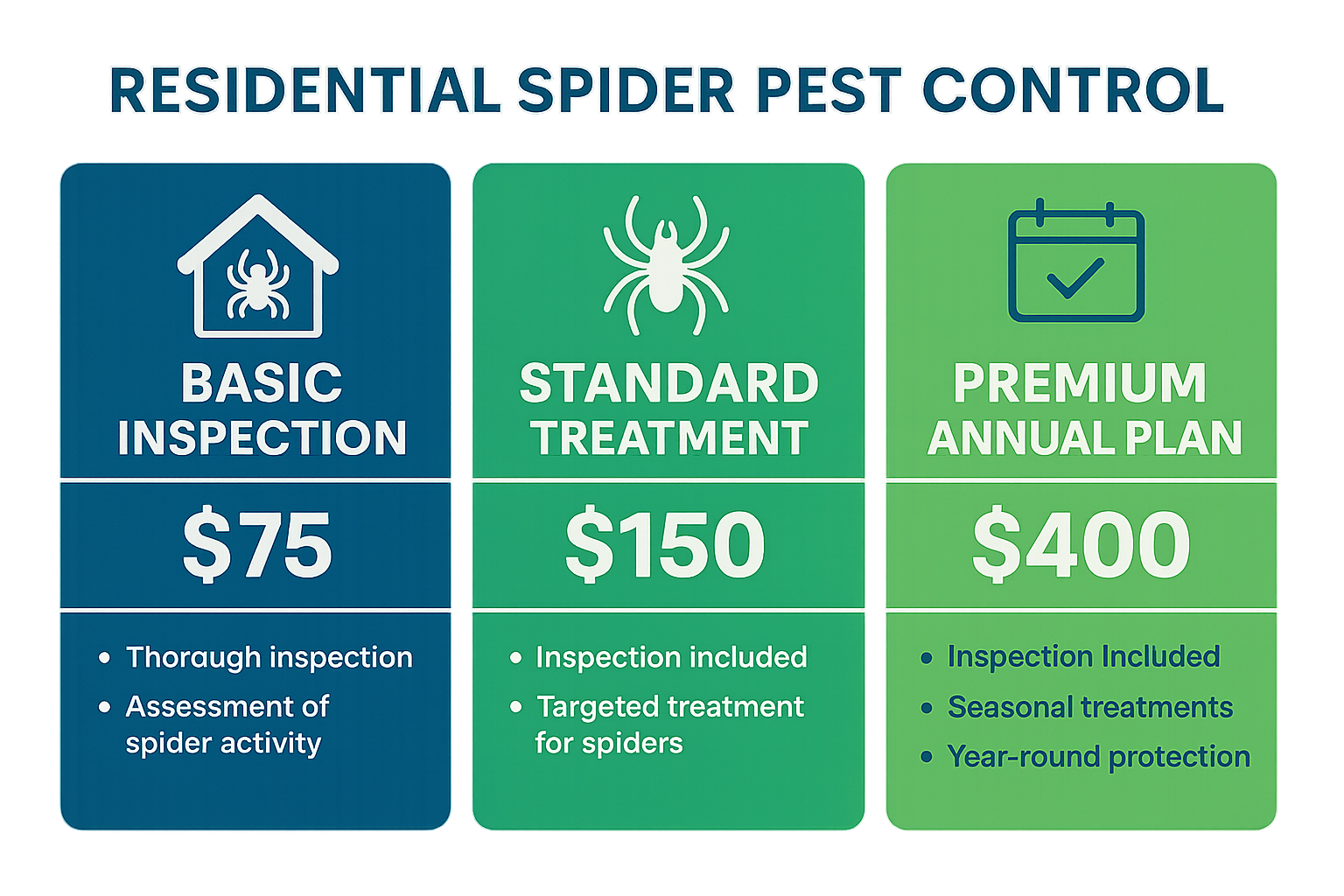
Pricing Infographic
What’s Included in Each Service Tier
| Tier | Inspection Depth | Follow‑up Visits | Warranty | Typical Price (GA) |
|---|---|---|---|---|
| Basic Inspection | Visual walk‑through of interior and exterior | None (one‑time service) | 30‑day guarantee | $89‑$119 |
| Standard Treatment | Spot‑treatment + perimeter spray | One follow‑up visit (30 days) | 60‑day guarantee | $179‑$229 |
| Premium Annual Plan | Full IPM package + indoor fogging | Quarterly visits (4 per year) | Year‑long warranty | $499‑$649 |
The Basic Inspection is perfect for homeowners who suspect a few stray webs and want a professional opinion without a big commitment. It includes a thorough visual assessment, a detailed report, and a one‑time spot‑treatment if needed. The Standard Treatment steps it up by adding perimeter spraying and a scheduled follow‑up, ensuring that any hidden spiders are caught before they multiply.
Our most popular choice, the Premium Annual Plan, delivers the full IPM suite. Technicians perform quarterly inspections, reapply fogging, and adjust the perimeter barrier based on seasonal spider activity. Because the plan spreads the cost across twelve months, homeowners typically save 15‑20 % compared with four separate Standard Treatments.
Why an Annual Plan Saves Money—and Peace of Mind
Spiders are opportunistic; a single missed entry point can lead to a cascade of webs during the warm months. One‑time treatments may appear cheap, but if you need to call back for a second round, the total expense quickly surpasses the price of an annual contract. With Anthem’s Premium Plan you lock in a fixed rate, receive a guaranteed response time for any resurgence, and benefit from continuous habitat‑modification advice that reduces future infestations.
In short, the tiered pricing structure is designed to match your level of concern and budget. Whether you opt for a quick spot‑check or a year‑long IPM partnership, you’ll receive the same EPA‑approved products, fully trained technicians, and a transparent warranty that protects your investment.
Protect Your Home Today with Anthem Pest Control
Spiders thrive when they’re given the chance to hide, breed, and spin webs undisturbed. That’s why catching the problem early, treating at the right point in the season, and selecting a service tier that matches your home’s needs are essential steps for lasting protection. Early identification lets you act before a few stray webs become a full‑blown infestation. Seasonal timing—especially in the spring and early fall—targets spiders when they’re most active, maximizing the impact of each treatment. And choosing the proper service tier—whether a single‑visit spot treatment, a quarterly maintenance plan, or an all‑year comprehensive program—ensures you’re not overpaying for services you don’t need while still covering every vulnerable entry point.
- Early identification: Spotting a single spider or a new web can signal the start of a larger issue.
- Seasonal timing: Treat during peak activity periods for the most effective control.
- Right service tier: Match the frequency and scope of treatment to your home’s specific risk factors.
At Anthem Pest Control, we back those best‑practice steps with a commitment to safety, effectiveness, and affordability. Our certified technicians rely on EPA‑approved products and a proven Integrated Pest Management (IPM) approach that minimizes chemical use while delivering consistent results. Transparency is built into every quote, and our flexible plans let you scale services up or down as your needs change. In short, we aim to keep your home spider‑free without breaking the bank or compromising family health.
If you’ve spotted a spider, noticed increased webbing, or simply want peace of mind this season, Anthem Pest Control is ready to help. Our certified technicians use EPA‑approved products and a proven IPM approach to keep your home safe year‑round. Call us today at 877‑371‑8196 for a free, no‑obligation quote, or visit our website to learn more about our transparent pricing and flexible service plans.
Take the next step toward a spider‑free home by scheduling a free inspection or requesting a personalized quote. Our friendly team will assess your property, discuss the most effective treatment options, and set up a plan that fits your schedule and budget. There’s no pressure—just clear, professional guidance that puts you in control of your home’s pest situation.
Visit Anthem Pest Control for trusted spider control Druid Hills homeowners rely on.