Recognizing House Centipedes in Georgia Homes
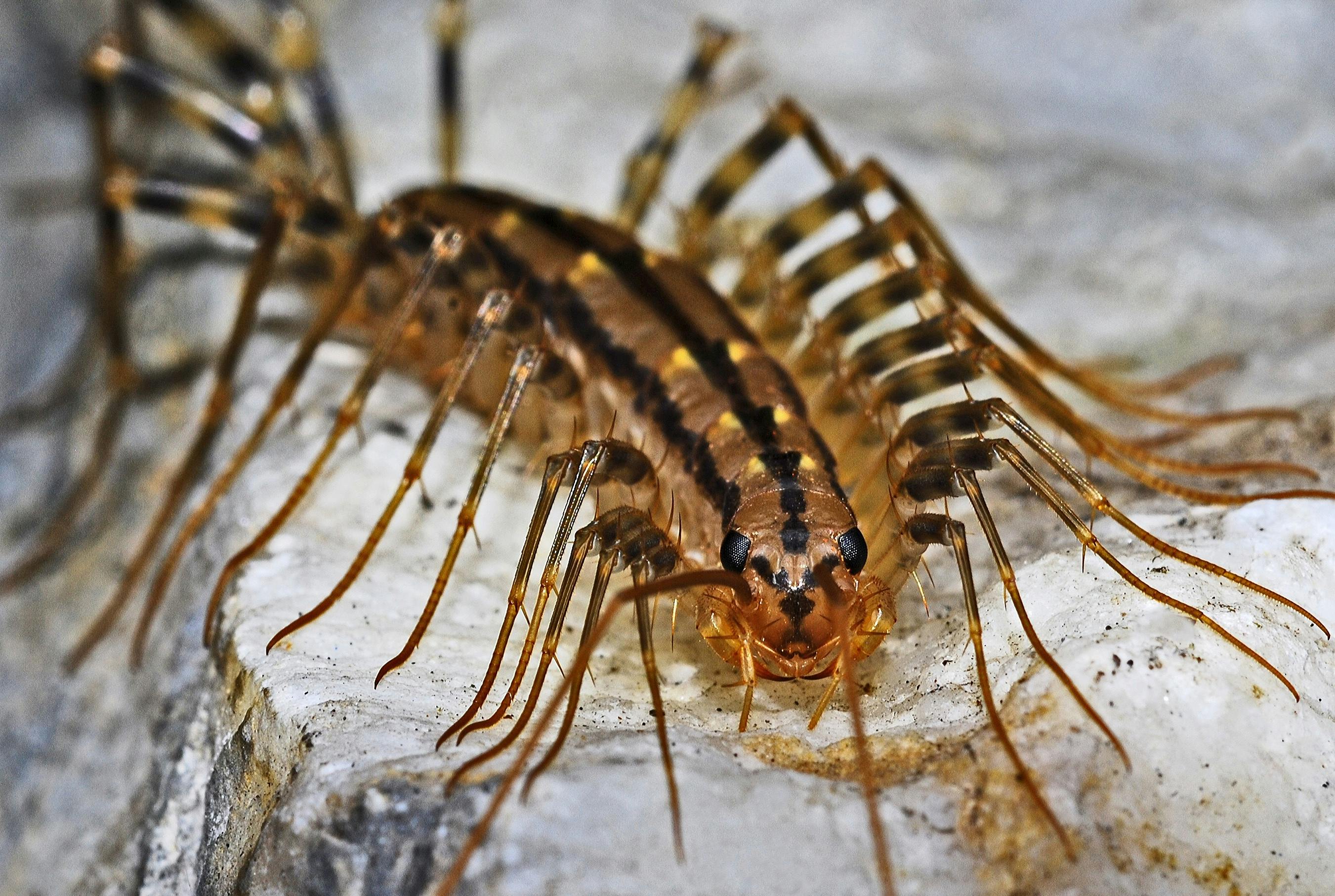
When you spot a swift, many-legged creature darting across the bathroom floor, it’s likely the common house centipede (Scutigera coleoptrata). Unlike the creepy-crawlies that cause damage, this centipede is actually a silent ally, feasting on flies, spiders, termites, and other household pests. In the humid climate of Cumming, GA, they thrive in the very places we share our homes with—often prompting homeowners to start researching centipede control cost Cumming when sightings become frequent—making them a common, though often misunderstood, visitor.
Physical characteristics you can count on
- Length: Typically 2–3 inches (about the size of a housefly stretched out).
- Leg count: 15 pairs of long, slender legs that give the unmistakable “many‑legs” silhouette.
- Coloration: Reddish‑brown body with a slightly darker head; the legs are a lighter, almost yellow‑tan.
- Antennae: Three thick, segmented antennae that swivel quickly as the centipede navigates.
- Movement: Lightning‑fast scurrying; they can cover a foot in a fraction of a second.
Where they like to hang out indoors
House centipedes gravitate toward damp, dark environments where other insects hide. In Georgia homes you’ll most often find them in:
- Basements and crawl spaces with concrete walls.
- Bathrooms and kitchens that lack proper ventilation.
- Under sinks, around leaky pipes, or near standing water.
- Behind furniture stored against exterior walls.
Why a sighting can feel like a nuisance
Even though they help control more harmful pests, house centipedes can cause a stir for three main reasons:
- Surprise factor: Their sudden, rapid dash across a tiled floor can startle anyone.
- Fear of bites: Bites are rare, but the centipede’s venomous claws can deliver a mild, localized irritation if it feels threatened.
- Perceived infestation: A few individuals often signal that the home’s humidity levels are high enough to support larger colonies.
Quick visual cue
Imagine a housefly stretched out to the length of a small ruler. Now picture that fly with 30 tiny, spindly legs and three whisker‑like antennae— that’s a house centipede. The “many legs” are the easiest identifier; if you see a slender body moving in a wave‑like motion, you’ve likely found one.
For a deeper dive into the biology and behavior of these beneficial predators, check out the National Pest Management Association’s centipede facts page. Understanding what you’re sharing your home with is the first step toward deciding whether a professional treatment from Anthem Pest Control is needed—or if you can simply manage humidity and let the centipedes do their job.
Warning Signs of a Centipede Infestation

Centipedes may seem harmless, but a growing population can turn your home into a uncomfortable place. The sooner you spot the early clues, the easier it is is to intervene before a a full‑blown infestation. Below, a veteran pest‑control professional outlines the the tell‑tale signs that a centipede problem is taking root in a typical Georgia house.
Common signs you’ll notice first
- Frequent sightings of the fast‑moving, many‑legged arthropod, especially at night.
- Shedding of the delicate exoskeleton – you’ll find tiny, translucent skins near entry points.
- Clusters of dead insects (centipedes feed on spiders, flies, and other small bugs).
- Rising humidity or localized moisture problems in basements, bathrooms, or under‑sink areas.
These signs are often linked. Moisture creates the perfect environment for centipedes and their prey, making the area a a magnet for both. A a single sighting may be a a warning; a a pattern of sightings, combined with the other the signs, indicates a the problem is growing.
Seasonal spikes in Georgia
In the Peach State, centipede activity peaks in summer and early fall. Warm temperatures and high humidity during these months create an ideal breeding environment. During July and August, you’ll notice the most frequent sightings, especially in homes that lack proper moisture control. Understanding this seasonal cycle helps homeowners plan the right timing for preventive treatments and better anticipate centipede control cost Cumming during peak activity periods.
Structural clues that invite centipedes
Centipedes are skilled at slipping through the smallest of openings. Check the these areas for the the following the clues:
- Cracks in the foundation or the the slab that are not the the sealed.
- Gaps around pipe entries, especially the the where the water lines enter the home.
- Cluttered storage spaces—stacks of boxes, fire‑wood, or old laundry provide the the dark, the shelter that centipedes love.
Repairing these the gaps and reducing clutter the can the dramatically the reduce the the likelihood of a the centipede invasion.
Health considerations
While most centipedes only deliver a a mild, the a short sting, some the homeowners are allergic to the the venom. The reaction can range from a a slight irritation to a the more severe swelling and the itching. Beyond the physical the the bite, the the presence of many the centipedes can create a a psychological discomfort, especially for the the children and the the elderly who may fear the the “creepy‑crawly” insects.
DIY quick‑check routine
Perform a a simple the inspection each week during the the peak season:
- Inspect the the windows and doors—look for any the the cracks or the the gaps where the insects could slip in.
- Check around bathroom fixtures and the the kitchen sink for the the moisture and the the any shed skins.
- Run a a flashlight along baseboards and the the underside of furniture—spot any the the live centipedes or the the their dead prey.
- Record any the sightings and the the conditions—this helps a a professional professional pest control service determine the the severity of the the problem.
While a bite from a centipede is rarely life‑threatening, a few people experience an allergic reaction that can cause swelling, itching, or a rash that looks a bit like a bee sting. Even if you’re not allergic, seeing a wave of these eight‑legged predators can be unsettling and make you feel uneasy in your own home.
DIY quick‑check routine
Perform a a quick the inspection each week during the peak season. Use a flashlight and a small cloth to wipe away dust around these the areas:
- Windows and doors – check the frames and the weather‑stripping for any gaps.
- Bathroom fixtures – examine the base of the sink, the tub, and the shower head for moisture and any shed skins.
- Kitchen sink and the pantry – look behind the cabinets and the sink pipe for the small the cracks that could be a entry point.
- Base‑boards and the crawl‑space – run a a flashlight along the base of the walls and the the floor for the tiny the cracks, the the holes, and the the presence of dead the insects.
Documenting a few sightings and the surrounding conditions helps a professional pest control service plan the most effective treatment. For a more detailed cost analysis, consult the EPA pesticide cost data.
Effective Treatment Options and Seasonal Timing
Centipedes thrive in the warm, humid corners of Cumming homes, so choosing the right control method and timing it correctly can make the difference between a one‑time fix and a long‑term peace of mind. Below we break down the most reliable treatment categories, explain why a licensed technician often outperforms a DIY approach, and show exactly when to act for maximum impact.
Treatment Categories at a Glance
- Chemical Sprays: Fast‑acting liquid formulations that coat foundations, walls, and outdoor perimeters.
- Dusts: Fine silica‑gel or diatomaceous earth powders applied into cracks, voids, and crawl spaces where liquids can’t reach.
- Bait Stations: Encapsulated attractants placed near entry points; useful for monitoring and suppressing low‑level infestations.
- Structural Barriers: Professional-grade perimeter treatments that create a continuous, invisible shield around the home’s exterior.
Professional vs. DIY: Why Licensed Technicians Matter
Homeowners often reach for over‑the‑counter sprays, but licensed pest‑control professionals bring three critical advantages:
- Correct Formulation & Dosage: Technicians know the precise concentration required for Georgia’s climate, ensuring the product remains effective without over‑application.
- Safety Equipment & Training: Proper PPE, ventilation practices, and disposal methods protect families, pets, and the environment.
- Targeted Application: Professionals can identify hidden entry points, apply dusts into wall voids, and create a seamless perimeter barrier—tasks that are difficult to replicate with a garden sprayer.
Key Chemicals Approved in Georgia
The Georgia Department of Agriculture permits several low‑toxicity options that balance efficacy with safety:
| Active Ingredient | Class | Safety Highlights |
|---|---|---|
| Lambda‑Cyhalothrin | Pyrethroid | Rapid knock‑down; low mammalian toxicity when used as directed. |
| Silica Gel (Diatomaceous Earth) | Inert Dust | Mechanical desiccant; non‑chemical, safe around children and pets. |
| Bifenthrin | Pyrethroid | Long residual life; approved for outdoor perimeter use. |
Application Techniques That Work
Effective centipede control blends the right product with the right method:
- Perimeter Spraying: A fine mist is applied 3‑4 feet above the foundation, covering the soil line, siding, and any landscaping that contacts the house. This creates a barrier that repels wandering centipedes before they reach the door.
- Crack & Crevice Treatment: Dusts are blown or brushed into foundation joints, window frames, and baseboard gaps where centipedes hide during the day. Because the dust remains dry, it continues to act long after the application.
- Interior Misting: In severe infestations, a low‑volume fogger disperses a pyrethroid spray throughout closets, basements, and bathrooms, targeting active centipedes without saturating furnishings.
Seasonal Timing: When to Treat for Best Results
Centipedes in Cumming are most active from June through August, when temperatures consistently sit above 80°F and humidity spikes. Treating *before* this window—ideally in late April to early May—establishes a protective barrier that curtails the upcoming surge.
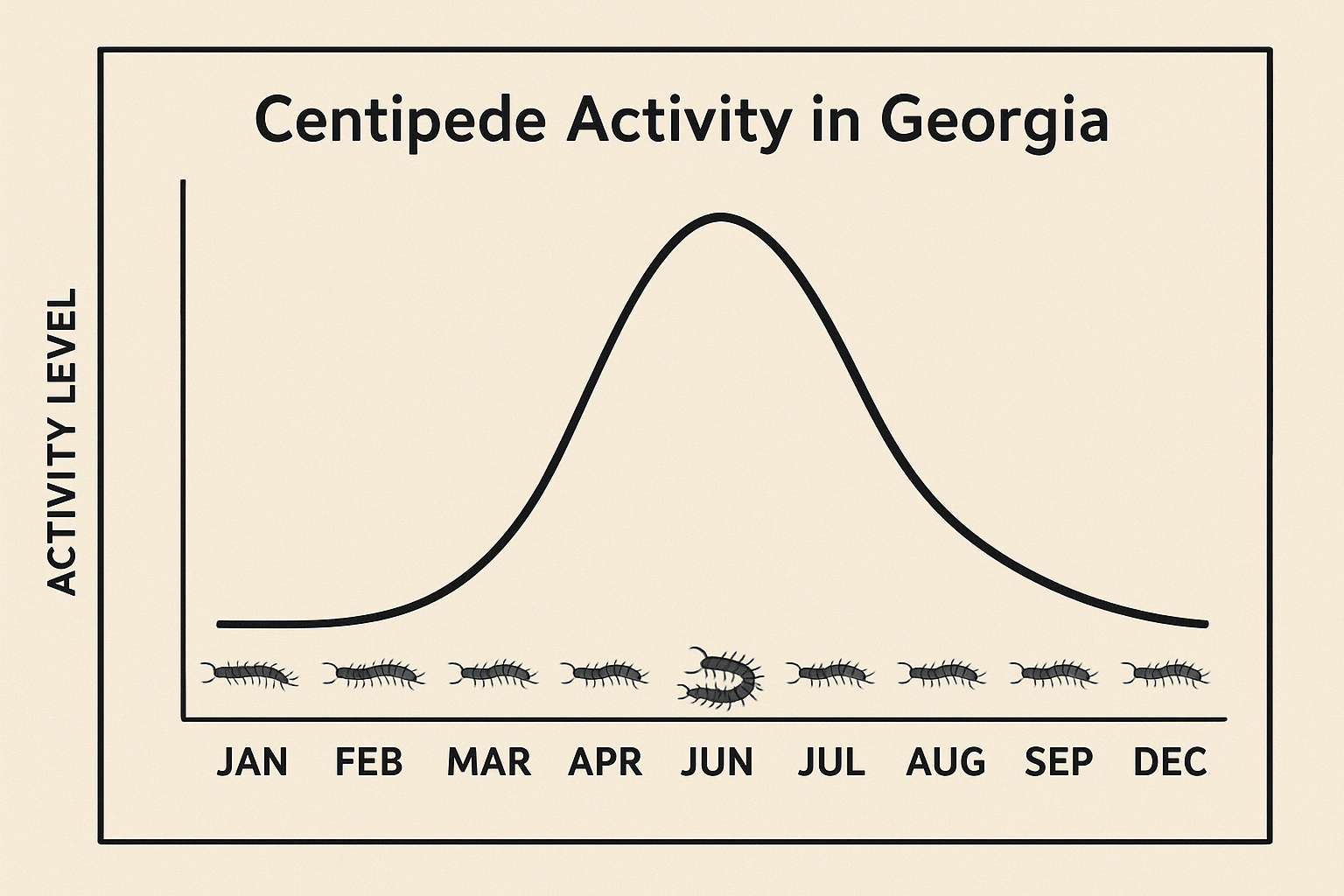
The chart above illustrates three key phases:
- Pre‑Peak (April‑May): Apply perimeter sprays and dusts to set up a barrier.
- Peak (June‑August): Conduct interior misting if sightings increase; consider supplemental dusting in high‑traffic zones.
- Post‑Peak (September‑October): Perform a follow‑up perimeter treatment to mop up any late‑season survivors.
Maintenance Plans Keep Populations Low Year‑Round
Even with a well‑timed initial treatment, centipedes can rebound if conditions become favorable again. Most homeowners find that a quarterly maintenance schedule—spring, early summer, early fall, and winter—maintains a consistently low population. Annual contracts often bundle these visits with a complimentary inspection, allowing technicians to adjust formulations based on the previous year’s activity.
By pairing the right chemicals, precise application techniques, and a calendar‑driven approach, you’ll protect your Cumming home from the irritating, fast‑moving centipedes that love damp basements and cluttered closets. When you choose Anthem Pest Control, you benefit from licensed experts who know exactly how and when to act, giving you confidence that the problem stays solved—not just temporarily suppressed.
Understanding Centipede Control Costs in Cumming, GA
When a centipede makes its way into your home, the first question most homeowners ask is, “How much will it cost to get rid of it?” In Cumming, Georgia, the price you pay depends on the type of service you choose and the level of protection you want year‑round. Below is a clear, no‑surprise breakdown of what you can expect to spend, so you can plan your budget with confidence.
Typical Cost Ranges
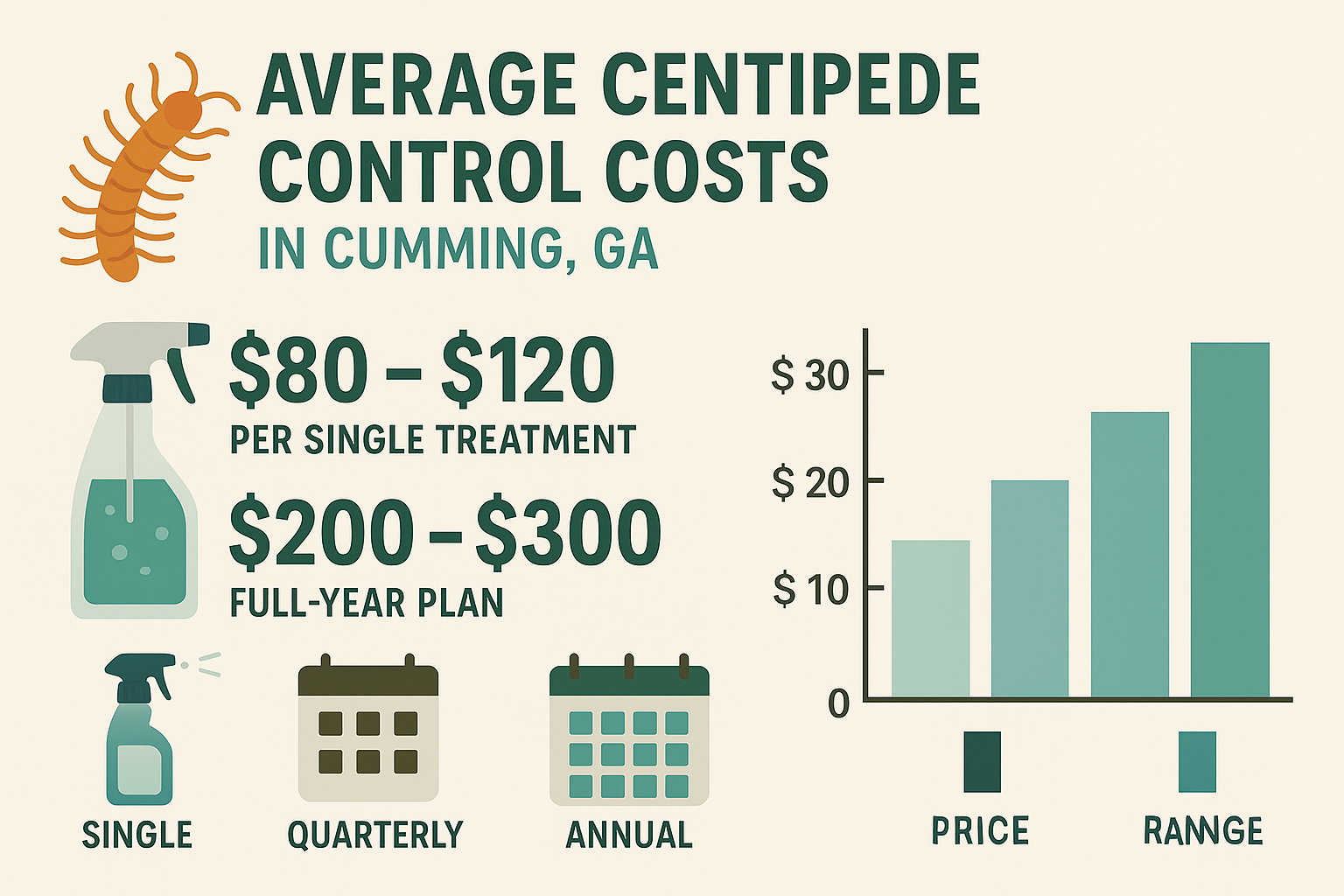
A one-time treatment that targets the current infestation usually falls between $80 and $120, which aligns with the typical centipede control cost Cumming homeowners pay for single-visit service. This option includes a focused interior and exterior application, along with a basic warranty that covers a repeat visit if centipedes return within 30 days.
For homeowners who prefer ongoing protection, an annual plan typically costs $200 to $300. The plan spreads the expense across multiple visits, ensuring that centipedes are kept at bay throughout the warm months when they’re most active.
What’s Included in Each Package
- One‑time treatment: comprehensive inspection, interior spray, exterior perimeter treatment, and a 30‑day guarantee.
- Quarterly plan: four scheduled visits (spring, early summer, late summer, fall), each with full‑service treatment and a 60‑day warranty after each visit.
- Annual protection plan: six visits (including two early‑season preventive applications), interior & exterior coverage, follow‑up inspections, and a full‑year guarantee that includes free re‑treatment for any centipede resurgence.
Cost‑Benefit Analysis: Why a Yearly Plan Saves Money
While the upfront cost of a single treatment is lower, repeat infestations can quickly add up. A homeowner who experiences two or three additional outbreaks in a year may spend $240‑$360 on extra visits, surpassing the price of an annual plan. The yearly option spreads the cost, reduces the need for emergency calls, and protects your home’s structural integrity—especially in crawl spaces where centipedes can damage wiring and insulation.
Service Options at a Glance
| Plan | Price Range | Visits per Year | What’s Covered |
|---|---|---|---|
| Single Treatment | $80‑$120 | 1 | Inspection, interior & exterior spray, 30‑day guarantee |
| Quarterly Plan | $150‑$200 | 4 | Full inspection each visit, interior & exterior treatment, 60‑day warranty |
| Annual Protection | $200‑$300 | 6 | Comprehensive inspections, preventive & curative treatments, year‑long guarantee |
Tips for Getting the Best Value
- Ask about bundled services—combining ant and centipede control often reduces the per‑pest price.
- Verify that the technician holds a valid Georgia pest‑control license; licensed pros follow strict safety standards.
- Request a written guarantee that outlines re‑treatment policies and any exclusions.
- Check for seasonal promotions; many local companies offer discounts during the early spring lull.
For a quick visual recap of these options, refer to the infographic above. By understanding the cost structure and what each plan delivers, you can choose the solution that fits both your budget and your peace of mind.
Protect Your Home with Professional Centipade Control
Recap of Key Points
Today we’ve covered how to spot centipedes in your home, the warning signs that signal a growing population, the optimal window for treatment in the Cumming climate, and the transparent pricing structure that Anthem Pest offers. By recognizing the tell‑tale signs—such as the fast‑moving, many‑legged crawlers in bathrooms or the tiny silk‑like tracks along baseboards—homeowners can act early and avoid costly damage.
Why a Licensed Local Provider Matters
Choosing a licensed, locally‑experienced pest‑control partner gives you three a‑plus benefits: a safe application process, a proven the‑right‑for‑our‑region approach, and peace of mind that your home is protected. Anthem’s technicians are trained specifically for the Georgia climate, so they know the exact species of centipedes that thrive in Cumming and the most effective Integrated Pest Management (IPM) strategies.
Safety is paramount; the products we use are EPA‑registered and applied with precision to minimize exposure for family and pets. Effectiveness is backed by a guarantee—if the centipedes return, we’ll revisit the treatment at no extra charge. The peace‑of‑mind factor comes in the form of a clear, written estimate that eliminates hidden fees.
Take Action Today
Ready to protect your home? Our experts are happy to schedule a free, no-obligation inspection and provide a detailed quote tailored to your property. Simply call 877-371-8196 or visit Anthem Pest Control to book your appointment.
We understand that a centipede problem can feel urgent, and a timely response is the best way to keep the infestation at a manageable level. Our team will arrive with a customized treatment plan, explain the process, and answer any questions you have about the safety or follow‑up care.
Our Commitment
Anthem Pest Control stands behind a transparent pricing policy, a guarantee that our work delivers results, and a commitment to providing safe, affordable, and reliable pest solutions. Homeowners seeking clarity on centipede control cost Cumming can rest assured that their home will be treated with the utmost care using proven, effective methods—allowing them to enjoy a centipede-free environment.