Why Centipedes Matter to Georgia Homeowners
Centipedes might look like the creepy-crawlies you spot under a porch light, but they’re more than just a visual nuisance. For homeowners searching for a centipede exterminator Decatur residents can rely on, understanding these pests is the first step toward effective control. Belonging to the class Chilopoda, these arthropods are characterized by a single pair of legs per body segment—ranging from 30 legs in the common house centipede (Scutigera coleoptrata) to over 100 in larger forest species. In the Southeast, the house centipede and the larger “giant” centipede (Scolopendra polymorpha) are the two species you’ll most likely encounter inside a Georgia home.
What makes them a homeowner concern?
First, centipedes are nocturnal hunters. While they help control other pests such as spiders, silverfish, and cockroaches, they also have a painful bite that can cause localized swelling, redness, and in rare cases an allergic reaction. The CDC notes that centipede bites are generally harmless but can be unsettling for anyone with a low pain threshold.
Second, they wander through food‑storage areas, contaminating pantry items with their saliva and excrement. Even a single bite on a piece of fruit or a slice of bread can turn a family meal into a health concern. For homeowners who value a clean kitchen, that “creepy‑crawl” factor translates directly into customer complaints and a loss of peace of mind.
Georgia’s climate fuels year‑round activity
Georgia’s warm, humid summers and mild winters create an almost perfect habitat for centipedes. Moist leaf litter, mulch, and the abundant organic debris found in suburban yards provide both shelter and a steady food supply. When temperatures stay above 60°F (15°C), centipedes remain active, moving indoors in search of moisture and prey. This means that unlike some northern states where centipedes disappear in winter, Georgia homeowners can expect encounters throughout the year.
Humidity plays a pivotal role, too. High relative humidity softens the soil and leaf litter, allowing centipedes to burrow easily and emerge at night. Even indoor environments with leaky pipes, damp basements, or poorly ventilated crawl spaces become attractive entry points. In short, the very climate that makes Georgia a great place to live also invites these nocturnal predators.
Regulatory backdrop and best‑practice guidance
When it comes to treatment, it’s essential to follow both safety regulations and industry standards. The EPA classifies centipedes as “non‑target” pests, meaning that any pesticide application must be carefully selected to avoid harming beneficial insects or violating residential pesticide rules. Moreover, the National Pest Management Association (NPMA) recommends an integrated approach: combine targeted chemical treatments with habitat modification, such as reducing excess mulch, fixing moisture leaks, and sealing cracks around foundations.
At Anthem Pest Control, we align our service plans with these guidelines. Our technicians conduct a thorough inspection, identify the species present, and then apply EPA‑approved products only where necessary. We also provide homeowners with a simple “centipede checklist” to keep indoor humidity low and eliminate outdoor clutter—practical steps that dramatically cut the likelihood of a re‑infestation.
Understanding the biology, the health implications, and the climatic conditions that favor centipedes empowers Georgia homeowners to act before a small crawl becomes a big problem. The next sections will walk you through how to spot the different species and what treatment options are most effective for your home.
Spotting a Centipede Infestation in Your Home

Physical description
A household centipede typically measures 2 to 4 inches long, though the species common in Georgia can stretch up to 6 inches. They sport a flattened, El‑Cobra‑like body with 15 to 30 segmented legs, each pair attached to a distinct body segment. Their coloration ranges from a deep amber‑brown to a muted reddish‑gray, and the legs often appear a lighter shade, creating a “spotted” effect. The key visual cue that sets centipedes apart from millipedes is the number of legs per segment—centipedes have one pair per segment, while millipedes have two pairs. Additionally, centipedes move quickly and can raise the front of their body, whereas millipedes curl into a tight coil when disturbed.
Common entry points
Centipedes are skilled at slipping through the smallest gaps. The most typical entry routes include:
- Cracks in the foundation foundation, especially those near the garden’s soil‑moisture line.
- Gaps around doors and windows, the tiny spaces around weather‑stripping that are often overlooked.
- Utility penetrations—pipe, vent, and electrical openings that haven’t been sealed with caulk or expandable foam.
- Access points in crawl‑spaces, where the moisture level is ideal for centipedes and the insects they hunt.
Homeowners in Decatur often discover that a simple seal‑job on these areas can dramatically reduce the number of centipedes that make it inside.
Indoor Hotspots
Once inside, centipedes gravitate toward damp, food-rich areas. The classic “man examining kitchen cabinets” scenario is a perfect illustration: a homeowner opens a pantry and notices a centipede perched near stored food. These are the most common places where centipedes thrive:
-
Kitchens — around the sink basin, under the refrigerator, and along the backs of pantry cabinets.
-
Bathrooms — near the bathtub, shower drain, base of the toilet, and towel racks where moisture lingers.
-
Basements — along concrete slabs, inside water-heater closets, and around stored boxes that retain moisture.
-
Closets — especially laundry closets or areas housing a washing machine, where humidity levels are higher.
These locations share two key factors centipedes need to survive: consistent moisture and access to the small insects they feed on.
These locations all share a common thread: they provide the moisture that centipedes need to survive and the small insects (spiders, silver flies) that they feed on.
Signs of activity
Spotting a centipede isn’t the only way to know they’re present. Look for these subtle signs of ongoing activity:
-
Shedding of exoskeletons — thin, translucent skins that resemble the shells of tiny insects.
-
Dark, grainy droppings — small particles that look like fine sand or crushed insect debris.
-
Clusters of dead insects — centipedes often leave behind the remains of the small insects they prey on, usually found near baseboards or in corners.
-
Occasional bite marks or skin irritation — while centipede bites are rarely painful, they may cause a small red spot similar to a mosquito bite.
Indoor hotspots
Homeowners often find centipedes in rooms where moisture is constant and where they can hunt other pests. The most common places include:
- Kitchen cabinets and under the sink—the “man examining kitchen cabinets” scenario is the perfect illustration of a centipede lurking behind a pantry door.
- Bathrooms, especially around the tub, shower and the toilet flange.
- Basements or unfinished crawl‑spaces where the concrete floor is damp.
- Closets or laundry rooms that have a leaky washer or a vent pipe.
These areas act as a highway for centipedes, giving them easy access to both water and the insects they love to eat.
Signs of activity
Even if you don’t see the centipede itself, you’ll notice its presence through these tell‑tale clues:
- Shedding skins—tiny translucent shells that look like a spider’s exoskeleton.
- Dark droppings—small specks of pin‑point size that collect near baseboards.
- Clusters of dead insects—centipedes often leaving the remains of their prey in a corner or behind a cabinet.
- Occasional bite marks—a brief, mild sting that can feel like a tiny pinch and leaves a tiny red spot.
Quick inspection inspection checklist
Use this simple 5‑step checklist to spot a centipede problem before it spreads.
- Check the entry points: look for cracks around foundation, doors, windows and utility penetrations.
- Inspect the damp areas: examine the underside of sinks, shower bases, and any water‑stained concrete in the basement.
- Search for shed skins or droppings in corners, baseboards, and the back of closets.
- Look for tiny a dead insects or centipede clusters near trash cans, pantry doors, and bathroom vents.
- Test a light‑trap in the kitchen or bathroom at night—centipedes will quickly move toward the light.
Effective Treatment Options for Centipede Control
Professional low‑pressure pesticide spray in crawl‑spaces
Centipedes love the darkness and humidity of crawl-spaces, where they can multiply unnoticed. This is where a professional centipede exterminator Decatur homeowners trust makes a critical difference. A licensed technician will apply a low-pressure, fine-mist pesticide that penetrates every nook, crevice, and void. The mist is engineered to cling to surfaces, creating a residual barrier that remains active for weeks. Because the spray is delivered at a gentle pressure, it doesn’t disturb insulation or structural components, yet it reaches the hidden colonies that DIY products miss. This method is especially effective after a heavy rain or during spring, when moisture drives centipedes upward into the living area.

Interior perimeter treatments and crack‑seal applications
Once the crawl‑space is treated, the next line of defense is the interior perimeter of your home. Technicians spray a targeted insecticide along baseboards, window sills, and door frames—exactly where centipedes enter from the outside. At the same time, they seal cracks, gaps around utility penetrations, and any openings larger than ¼ inch. The sealant not only blocks entry points but also reduces the moisture that attracts centipedes. Combining chemical control with physical barriers creates a double‑layered shield that dramatically cuts re‑infestation risk.
Baits and sticky traps for monitoring
Bait stations and adhesive traps are valuable tools for both professionals and homeowners. Baits contain a slow‑acting toxin that centipedes carry back to their hideouts, extending the reach of a single application. Sticky traps, placed in dark corners, under appliances, and along baseboards, provide visual confirmation of activity levels. By reviewing trap catches after a treatment, a pest specialist can gauge whether the chemical barrier is holding or if additional spot‑treatments are needed.
DIY steps you can take today
- Vacuum regularly. A shop‑vac with a HEPA filter removes adult centipedes and their eggs from floors and upholstery.
- Declutter. Stacks of cardboard, firewood, or laundry create perfect hiding places. Keep storage off the floor and away from walls.
- Control moisture. Fix leaky pipes, use a dehumidifier in basements, and ensure gutters direct water away from the foundation.
- Over‑the‑counter sprays. If you opt for a consumer insecticide, choose one labeled for centipedes, wear gloves, eye protection, and follow the label’s ventilation instructions.
- Seal entry points. Apply silicone caulk around windows, doors, and utility openings you can safely reach.
While DIY measures can lower the population temporarily, they rarely eradicate an established infestation. Improper use of sprays can also create health hazards for pets and children, which is why safety cautions are essential.
Integrated Pest Management (IPM) – the smart strategy
IPM blends chemical, mechanical, and cultural tactics into a coordinated plan. First, a professional inspection identifies the exact locations where centipedes thrive. Then, targeted low‑pressure sprays and perimeter treatments are applied, followed by sealing and moisture reduction. Ongoing monitoring with traps informs whether a follow‑up visit is needed. Most homeowners see the best results when a second inspection occurs 4–6 weeks after the initial service, allowing technicians to address any survivors before they reproduce.
Choosing an IPM‑focused provider like Anthem Pest Control means you get a transparent, step‑by‑step roadmap: assessment, treatment, prevention, and verification. When you see fewer centipedes crawling at night, you’ll know the plan worked—and you’ll have peace of mind knowing your home stays safe for the whole family.
Understanding Centipede Extermination Pricing
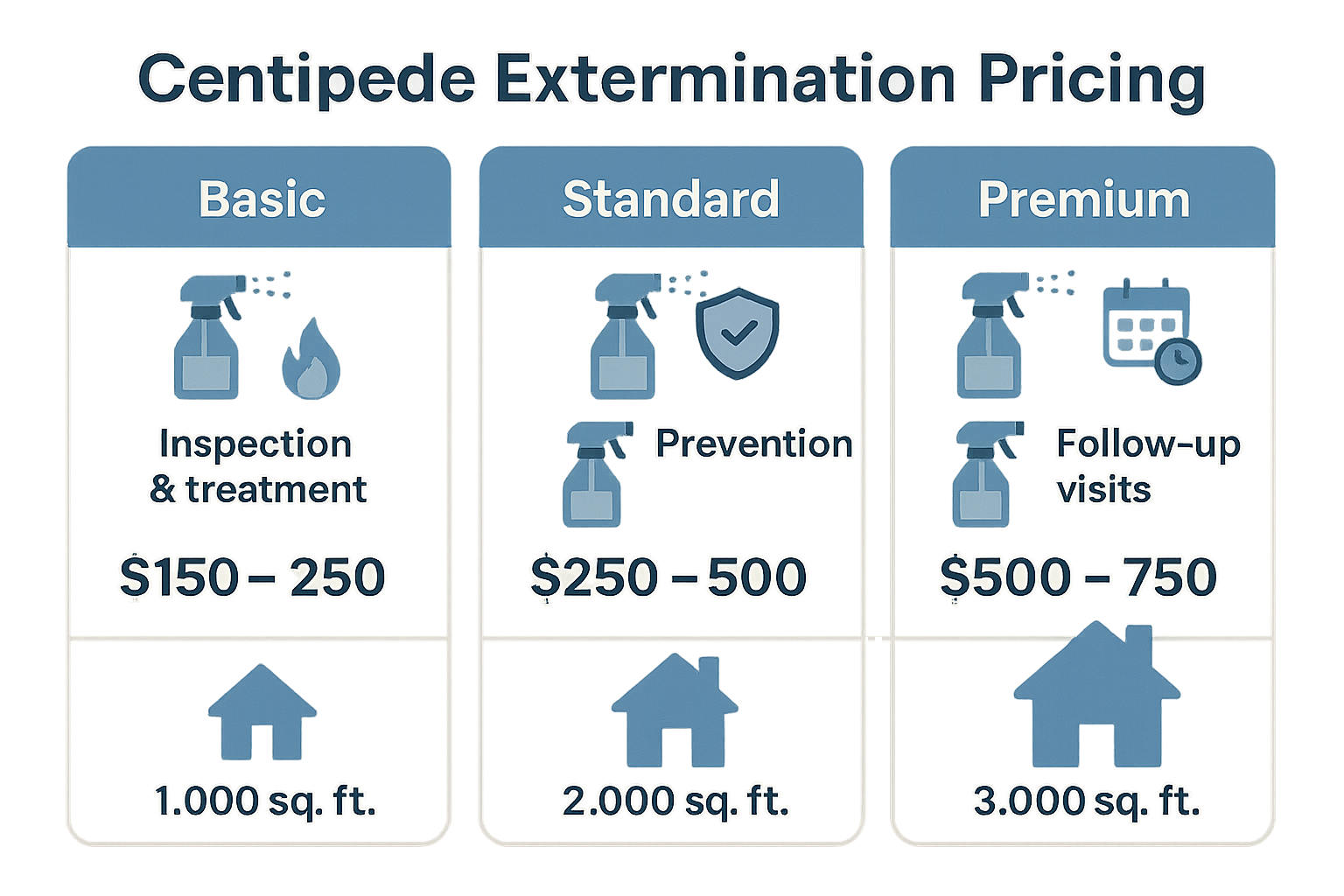
When a centipede invasion shows up at your front door, the first question most homeowners ask is, “How much will it cost to get rid of them?” For those searching for a centipede exterminator Decatur residents can trust, Anthem Pest Control organizes its services into three clear-cut tiers—Basic, Standard, and Premium—so you can see exactly what you’re paying for and choose the level of protection that matches your budget and your home’s needs.
Basic Tier
The Basic tier is designed for small‑scale problems or first‑time treatments. It includes a thorough on‑site inspection, a single‑application liquid spray targeting the most active zones, and a written report of findings. One follow‑up visit is scheduled within two weeks to confirm that the centipedes are gone, and the service comes with a 30‑day warranty on the treated areas. Georgia homeowners typically see bills in the $150‑$250 range for this entry‑level option.
Standard Tier
The Standard tier steps up the game for medium‑size homes or moderate infestations. In addition to the full inspection and initial spray, technicians apply a residual barrier that continues to work for up to 90 days. This tier also includes two follow‑up visits—one at the two‑week mark and another after six weeks—to adjust treatment if needed. A 90‑day warranty backs the work, and most Decatur residents pay between $250 and $400 for this comprehensive package.
Premium Tier
The Premium tier is the all‑in‑one solution for larger properties, severe infestations, or homeowners who want the utmost peace of mind. It features a detailed inspection with heat‑mapping technology, a combination of liquid spray and targeted dust applications, and a long‑lasting perimeter barrier that can protect for up to six months. Clients receive three follow‑up visits, a 180‑day warranty, and a customized prevention plan for future seasons. Prices usually fall in the $400‑$600 bracket in Georgia.
What Influences the Final Price?
Even within a single tier, the exact cost can shift based on a few key variables. Property size is the most obvious—larger square footage means more product and more labor. Infestation severity also matters; a heavy, multi‑room problem requires additional treatment cycles. Finally, access difficulty—think tight crawl spaces, steep roofs, or heavily landscaped yards—can add time and equipment costs, nudging the final figure upward.
Anthem Pest Control’s Transparent Pricing Promise
At Anthem, we believe you should never guess what you’ll pay. That’s why we provide a free, no‑obligation quote after a quick phone call or on‑site walkthrough. Our estimate breaks down every line item—inspection, product type, number of visits, and warranty length—so you can compare tiers side‑by‑side and budget with confidence. If you have questions about a particular charge, our friendly specialists are just a phone call away at 877‑371‑8196 or via our website anthempest.com.
Timing Your Treatment with Georgia’s Seasonal Centipede Activity
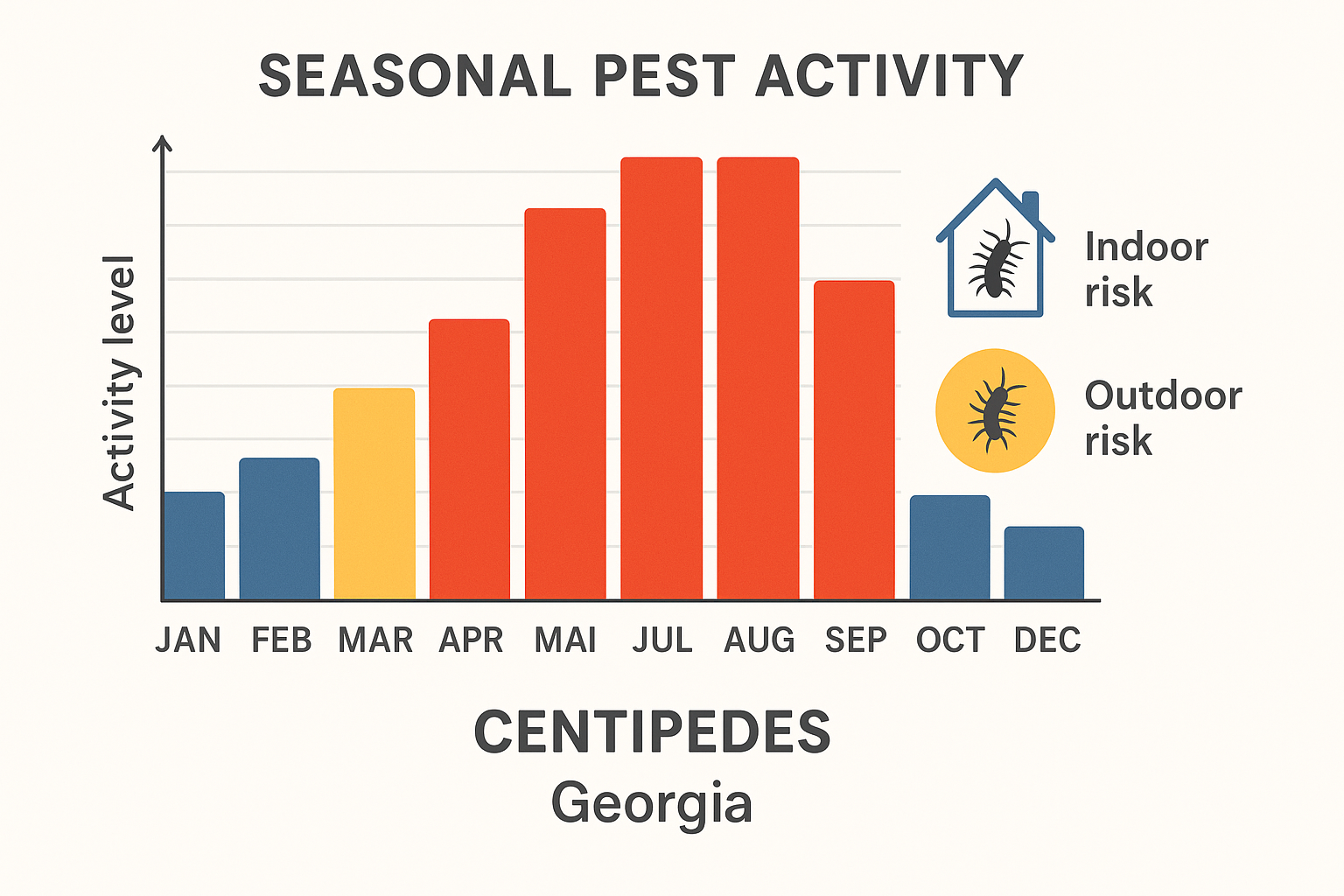
Understanding the Seasonal Activity Chart
The chart above condenses years of field data into a simple visual guide often used by a professional centipede exterminator Decatur homeowners rely on. In Georgia, centipedes tend to wander indoors most aggressively during the late-summer to early-fall window (August–October). That’s when indoor humidity climbs and the soil temperature remains warm enough for them to seek shelter inside homes. Conversely, the outdoor activity spike occurs in spring (March–May) as warming soil and rain-filled leaf litter create ideal hunting grounds for these nocturnal predators.
Why Temperature and Humidity Matter
Centipedes are ectothermic; their metabolism accelerates as ambient temperature rises. When daytime highs hover between 75°F and 85°F, they become more active and are more likely to cross foundation cracks in search of prey. Humidity is the second driver—high indoor moisture levels (above 60% relative humidity) soften building materials, opening micro‑gaps that let centipedes slip inside. During dry, cooler weeks, they retreat to the earth, reducing the chance of indoor sightings.
Optimal Treatment Windows
- Early Spring (mid‑March to early May): Apply a pre‑emptive perimeter spray. This creates a barrier before the outdoor surge, limiting the number that ever reach your foundation.
- Late Summer (late July to early September): Conduct a follow‑up indoor treatment. Target cracks, baseboards, and damp zones where centipedes congregate during their peak indoor period.
- Post‑Fall (late October): Schedule a final inspection and spot‑treatment if you notice lingering activity. This helps seal any gaps before the cooler months set in.
Scheduling Your Service for Maximum Impact
Aligning your service appointments with the chart’s peaks maximizes both effectiveness and cost efficiency. A pre‑emptive spring spray is typically less expensive than a reactive emergency call in August when infestations are already established. By following up in late summer, you address any survivors before they reproduce and spread deeper into wall voids.
When you call Anthem Pest Control, our technicians will reference the same seasonal data to tailor a treatment plan that fits your home’s layout and micro‑climate. We’ll also advise on simple moisture‑control steps—like using a dehumidifier in basements or fixing leaky pipes—to keep the indoor environment less inviting to centipedes year‑round.
In short, treat early, treat again at the indoor peak, and you’ll enjoy a centipede‑free home without the surprise of a sudden infestation. The seasonal chart is your roadmap; let us be the guide that puts you on the fastest, most affordable path to relief.
Take Action with Anthem Pest Control
Identifying centipedes early, treating them promptly, and knowing exactly what you’ll pay are the three pillars of a pest‑free home. When you can spot the tell‑tale signs—quick‑moving, many‑legged runners in damp corners—you avoid a full‑blown infestation. Timely treatment stops breeding cycles before they explode, and transparent pricing eliminates surprise invoices, letting you budget confidence‑free. By acting early, you also protect your family’s health, since centipedes may bite when disturbed.
Anthem Pest Control brings more than a spray can to the job. Our technicians are EPA‑certified, meaning every product we apply meets strict safety standards for people, pets, and the environment. We pair that expertise with a commitment to homeowner education: you’ll receive a clear explanation of why a particular method works, how long it will protect you, and what steps you can take to keep centipedes out for good. Our ongoing training program ensures every technician stays current on the latest integrated pest management techniques.
We understand that a free, no‑obligation quote is often the first step toward peace of mind. That’s why Anthem offers a detailed estimate before any work begins, breaking down each service tier so you can choose the level of protection that fits your budget. Whether you live in Decatur, GA, or any of the 40+ states we serve, our nationwide network ensures the same high‑quality care in every community. We also provide a follow‑up inspection to confirm the treatment’s success and address any lingering concerns.
If you’ve spotted centipedes or simply want reassurance that they won’t return, our certified technicians will assess your home, recommend the right tier of service, and schedule treatment at the optimal time for your area. We tailor each plan to your home’s layout, moisture sources, and seasonal patterns—so you get effective control without unnecessary applications.
Ready to take the next step? Call us today at 877-371-8196 for a free quote, or visit Anthem Pest Control to schedule your assessment online. If you need a trusted centipede exterminator Decatur homeowners rely on for fast, reliable relief, let Anthem deliver it.