Why Ants Are a Growing Concern for Homeowners in Decatur, GA
Decatur’s Climate Fuels Ant Activity
Decatur sits in the heart of the humid subtropical zone, where mild winters and long, warm summers create a near-perfect backdrop for ant colonies to thrive—conditions that often make an early ant inspection Decatur homeowners schedule especially important. Average annual rainfall exceeds 50 inches, keeping soil moist and providing the humidity ants love for nesting and foraging. This combination means that even a small patch of shade in a backyard can become a bustling ant highway within weeks, and the problem spreads quickly from yard to home.
Health and Structural Risks
Not all ants are harmless. While odorous house ants are mostly a nuisance, carpenter ants can silently undermine the integrity of a house. They excavate wood to build galleries, leaving behind powdery frass that weakens beams, decks, and even load‑bearing structures. Meanwhile, pavement ants and pharaoh ants can contaminate food stores, leading to allergic reactions or gastrointestinal distress. Homeowners often overlook these threats until they see visible damage or notice food that has been chewed or stained.
- Food contamination: Ants travel from outdoor nests to kitchen counters, leaving bacteria and allergens behind.
- Structural damage: Carpenter ants hollow out wood, compromising support members and increasing repair costs.
- Allergic reactions: Some species trigger skin irritation or asthma symptoms in sensitive individuals.
Rising Service Calls in the Southeast
According to the U.S. Environmental Protection Agency, ant‑related pest service calls in the Southeast have risen by roughly 15% over the past five years. The surge is linked to expanding suburban development, which creates new edge habitats—think mulch beds and wooden decks—that are ideal for ant colonization. In Decatur, the trend mirrors the regional data, with more homeowners reporting unexpected ant sightings during the spring and early summer months.
Financial Toll of Ignoring Ants
When an infestation goes unchecked, the cost can snowball. A minor carpenter‑ant problem might start with a few hundred dollars in treatment, but if the wood damage spreads, repair bills can climb into the thousands, directly affecting property resale value. Even non‑structural infestations increase utility costs, as homeowners resort to excessive cleaning, food waste, and temporary pest‑control products that only mask the issue. Over time, the cumulative expense of repeated DIY attempts often exceeds the price of a professional inspection and targeted treatment.
From Awareness to Action
Understanding how Decatur’s climate, health risks, and rising service demand intersect makes it clear: early identification and timely intervention are essential. The next step is to pinpoint the ant species and locate the nest before damage becomes irreversible. That’s why a thorough, professional ant inspection is the smartest move for any Decatur homeowner who wants to protect both health and home value.
Identifying Common Ant Species and Early Warning Signs
Living in Decatur means sharing your home with a bustling community of insects—some of them are welcome, others are not. The good news is that most ant problems start small, and with a little know‑how you can spot the culprits before they turn into a full‑blown infestation. Below, we break down the three ant species that show up most often in Decatur houses, what they look like, where they like to nest, and the early clues that tell you they’ve moved in.

Carpenter Ant (Camponotus spp.)
Physical traits: These are the giants of the indoor ant world, ranging from ¼ to ½ inch long. Their bodies are typically black, dark brown, or a mix of both, with a glossy, somewhat flattened thorax that gives them a “brick‑shaped” appearance. The head is noticeably larger than the petiole (the thin waist segment).
Nesting spots: True to their name, carpenter ants love wood. They excavate galleries inside damp or decaying timber—think window frames, door jambs, and even the structural beams of your home. They’ll also set up satellite colonies in wall voids, under floorboards, or inside outdoor wooden decks.
Odorous House Ant (Tapinoma sessile)
Physical traits: Smaller than carpenter ants, these workers measure about ¼ inch. They are light to dark brown and have a smooth, almost shiny exoskeleton. When crushed, they release a distinctive “vinegar‑like” smell, which is why they earn the “odorous” nickname.
Nesting spots: Odorous house ants are opportunists. Inside, they favor cracks in foundation walls, gaps around plumbing, and any moist, dark crevices. Outdoors, you’ll find them nesting under mulch, leaf litter, or in the soil of flower beds.
Pavement Ant (Tetramorium caespitum)
Physical traits: Pavement ants are the most common sidewalk visitors, measuring roughly ¼ inch. Their bodies are dark brown to black with a slightly reddish head. They have a distinct, compact shape and a pronounced, narrow waist.
Nesting spots: As the name suggests, they build nests under concrete slabs, driveways, and sidewalks. Inside, they’ll colonize wall voids, under baseboards, and any tiny gaps that lead back to their outdoor nest.
Early Warning Signs to Watch For
- Thin, winding ant trails leading to a hidden entry point.
- Small piles of sand or soil near baseboards—these are “soil‑ball” deposits from underground colonies.
- Frayed or hollow‑sounding wood, especially in window frames or decks (carpenter ants).
- A faint, sweet or vinegar‑like odor when ants are disturbed (odorous house ant).
- Visible damage to plants or outdoor mulch where pavement ants are foraging.
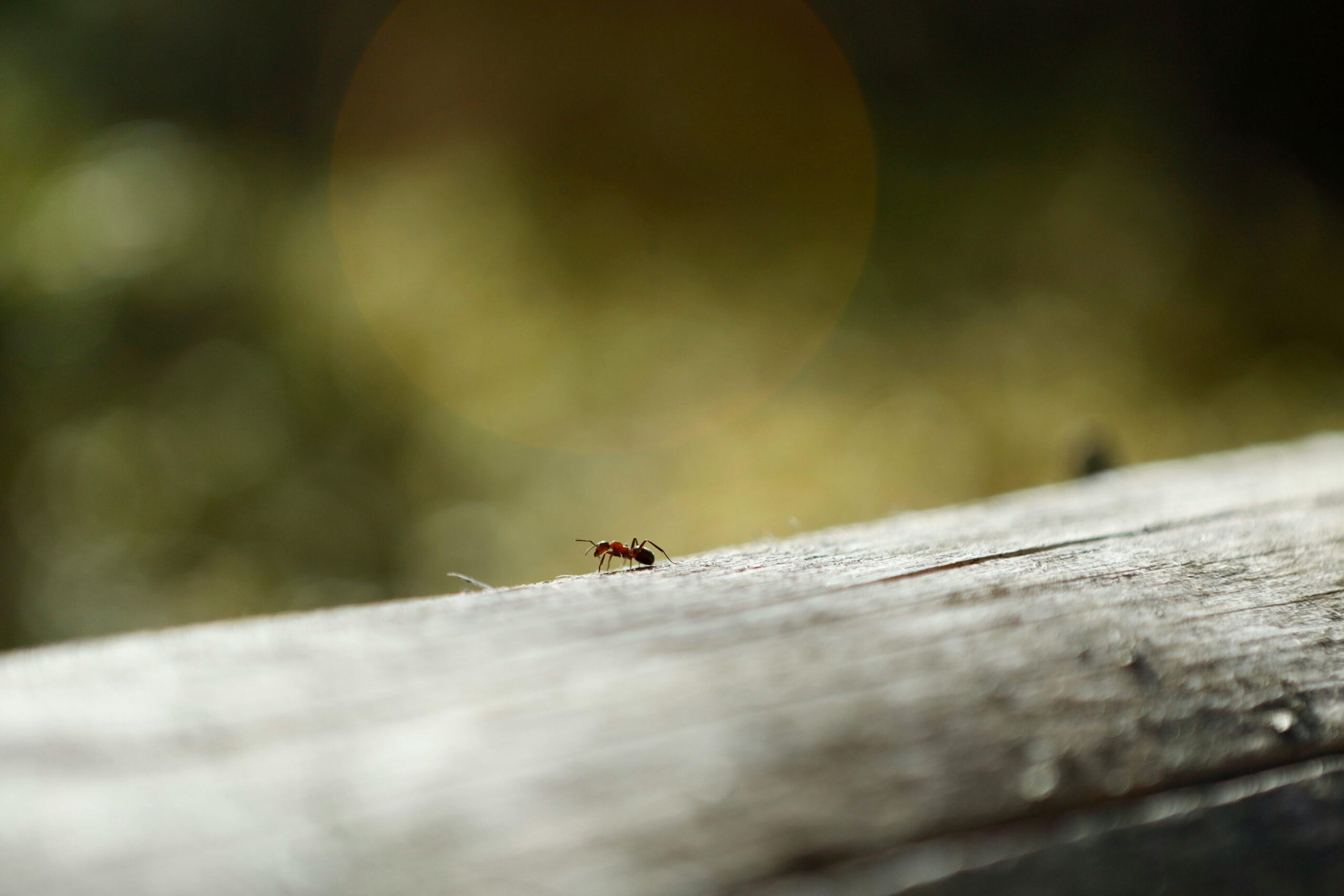
One of the quickest ways to confirm what you’re dealing with is to take a macro view of the ant you find. The high‑resolution photo above highlights the mandibles, petiole shape, and body segmentation—key identifiers that separate carpenter, odorous, and pavement ants. A simple magnifying glass or your phone’s macro camera mode can give you the detail you need without calling a professional right away.
Quick “Self‑Check” Checklist
- Do you see a regular trail of ants moving toward a specific spot?
- Can you match the size and color of the ant to one of the species described?
- Is there moisture or wood decay nearby? (Carpenter ant clue)
- Do you notice a sweet or vinegar‑like smell when ants are crushed?
- Are there soil piles or sand deposits along baseboards?
- Is the activity near a concrete slab, driveway, or outdoor mulch?
If you answer “yes” to two or more of these items, it’s time to act. Early detection lets you address the problem with targeted treatments—whether that means sealing cracks, reducing moisture, or calling Anthem Pest Control for a professional inspection. Remember, the sooner you spot the signs, the easier it is to keep your Decatur home ant‑free.
Seasonal Ant Activity Patterns in Decatur, GA
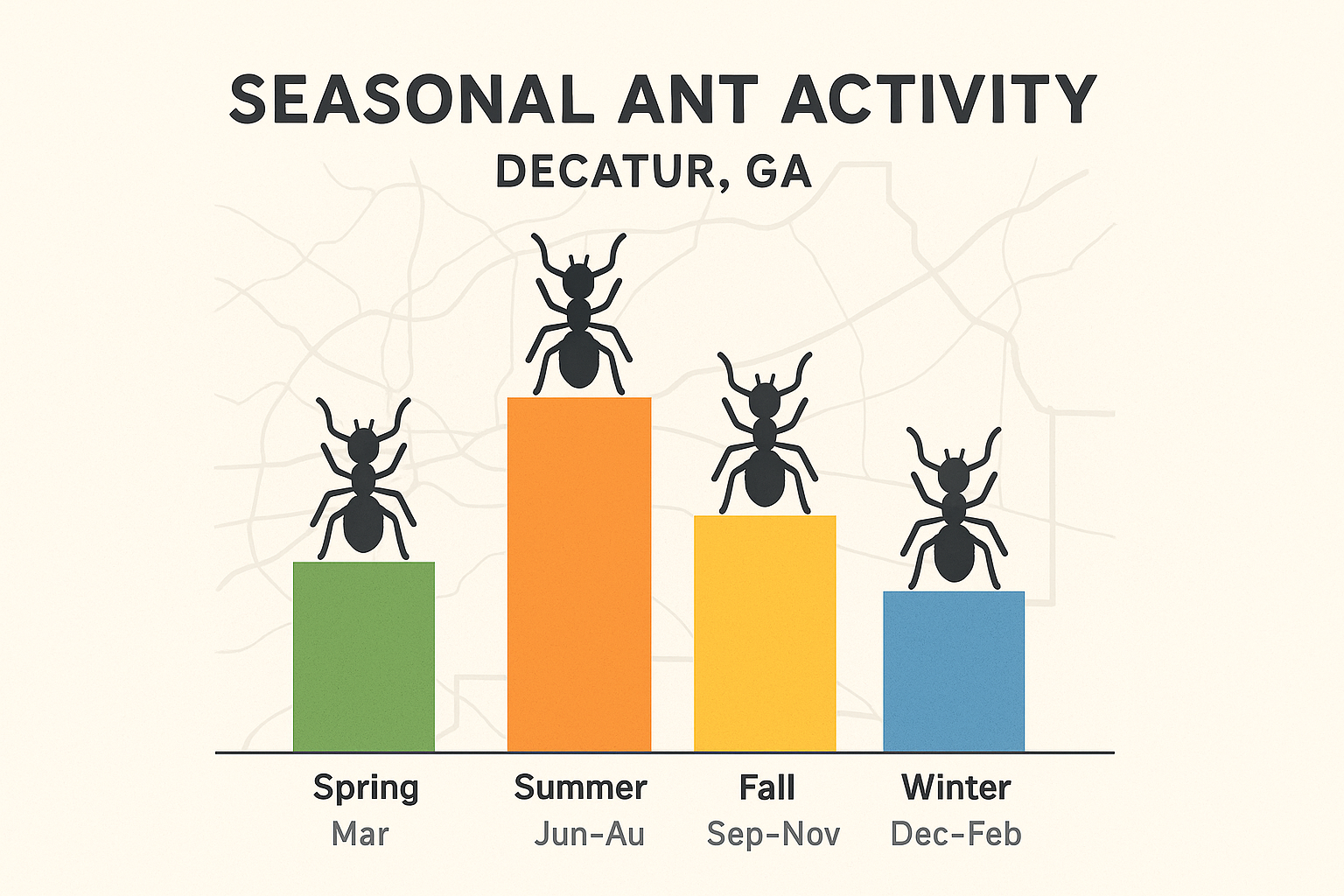
Ant colonies in Decatur follow a classic temperate‑zone life cycle. Workers emerge from the nest when soil temperatures rise above 55 °F, and the queen ramps up egg production as humidity climbs. In the cooler months, brood development slows, foraging ants retreat deeper underground, and activity drops to a near‑standstill.
Seasonal Activity Overview
Because temperature and moisture are the primary drivers, ant activity in Decatur follows a predictable seasonal pattern—one that a professional ant inspection Decatur homeowners rely on takes into account when identifying active nests. The chart below condenses decades of field observations into a simple month-by-month guide, highlighting when you’re most likely to see visible trails, foraging swarms, or interior incursions.
| Month | Activity Level |
|---|---|
| January | Low |
| February | Low |
| March | Moderate |
| April | High |
| May | High |
| June | High |
| July | High |
| August | High |
| September | Moderate |
| October | Low |
| November | Low |
| December | Low |
Why Spring and Summer Dominate
From March through August, daytime temperatures regularly sit between 70 °F and 85 °F, and the region’s summer rains keep the ground moist. These conditions trigger workers to expand their foraging radius, while the queen accelerates brood production, creating a surge of new workers every few weeks. The combination of abundant food sources—outdoor picnics, garden seedlings, and sugary spills—and optimal climate means colonies grow fastest during this window, and you’ll notice longer trails along foundations, windowsills, and mulch beds.
Homeowner Monitoring Tips During Peak Months
During the high‑activity window, a quick visual sweep can reveal early warning signs. Walk the perimeter of your home after a rainstorm and look for thin, continuous lines of ants marching toward moisture sources such as downspouts or potted plants. Inside, inspect kitchen counters, pantry shelves, and bathroom sinks for tiny foragers trailing away from food crumbs or leaky faucets. Mark any active trails with a piece of masking tape so you can track whether they disappear after a treatment or persist, indicating a hidden nest.
Early Spring and Late Summer Checks
In early March, colonies are just emerging, so a single ant sighting often signals the start of a new infestation. Conduct a brief inspection of garden beds and mulch, where workers first establish satellite nests. Conversely, in late August the heat can push ants indoors seeking cooler shelter; check window sills, HVAC vents, and crawl spaces for sudden spikes in activity. Adjust your monitoring frequency accordingly—once a week in March and May, then twice a month through September.
Scheduling Professional Inspections and Treatments
Armed with the seasonal chart, you can align a professional inspection with the colony’s most vulnerable stage—just as the queen is laying eggs but before workers have fully expanded their foraging network. Most homeowners find that a pre‑summer inspection in late April catches colonies early enough for a targeted baiting program, while a follow‑up treatment in early September eliminates late‑season survivors before they overwinter. Timing the service to these windows maximizes efficacy and often reduces the number of applications needed.
Why Local Expertise Matters
Decatur’s microclimate—humid summers, occasional winter freezes—creates a unique ant profile that national guidelines may overlook. Anthem Pest Control’s technicians combine that local knowledge with proven baiting and barrier strategies, ensuring your home receives a treatment plan timed precisely to the ants’ seasonal rhythm.
How a Certified Technician Conducts an Ant Inspection
When a homeowner in Decatur calls Anthem Pest Control to schedule an ant inspection Decatur residents trust, the first thing they’ll notice is the professionalism of the technician who arrives at the door. Before stepping onto the property, the technician identifies themselves, displays a company badge, and dons the appropriate safety gear—gloves, a mask, and protective eyewear. A brief, friendly rundown of what the inspection will cover is given, so the homeowner knows exactly what to expect and feels confident that the process is transparent from the start.

Exterior Assessment
The technician begins outside, scanning the foundation, siding, and any gaps where ants could slip inside. They check for cracks, damaged caulking, and areas where landscaping touches the house—common highways for ant colonies. Moisture sources such as leaky gutters, standing water, or damp mulch are flagged because moisture attracts many ant species, especially carpenter ants that need it for nesting.
Interior Walkthrough
Inside the home, the inspection follows a logical path: entry points, kitchens, bathrooms, and utility spaces. The technician looks for ant trails, tiny pinprick holes, and signs of damage like sawdust or wood discoloration. Kitchens receive extra attention because food residues and sugary spills are prime attractants. Bathrooms and utility rooms are inspected for hidden moisture that can sustain a colony without the homeowner’s knowledge.
Detection Tools in Action
Modern pest‑control professionals rely on a handful of reliable tools to locate hidden activity:
- Flashlight: A high‑intensity LED light reveals dark crevices and ant trails that the naked eye might miss.
- Moisture Meter: This handheld device pinpoints areas of elevated humidity within walls or under flooring, guiding the technician to potential nesting sites.
- Bait Stations: Strategically placed bait stations allow technicians to confirm species identification and monitor activity levels without immediate treatment.
Documentation and Reporting
Every step of the inspection is recorded in a detailed report. The technician takes high‑resolution photos of problem areas, notes the species identified, and logs the exact locations of entry points and moisture hotspots. This report is shared with the homeowner either digitally or in print, complete with a clear, prioritized action plan that outlines recommended treatments, preventive measures, and any follow‑up inspections.
Why Certification Matters
All Anthem Pest technicians hold industry‑recognized certifications and are trained in EPA‑approved practices. This means they use products that are both effective against ants and safe for families, pets, and the environment. Certification also ensures the technician stays current on the latest ant biology, resistance trends, and integrated pest‑management (IPM) techniques—so the homeowner receives a solution that tackles the root cause rather than just a temporary fix.
Putting It All Together
By following this systematic, step‑by‑step approach, a certified technician not only pinpoints the exact source of an ant problem but also equips the homeowner with the knowledge needed to prevent future invasions. The combination of thorough exterior and interior assessments, precise detection tools, meticulous documentation, and certified, EPA‑compliant practices builds trust and delivers lasting peace of mind for Decatur residents.
Ant Inspection Pricing Tiers and What’s Included
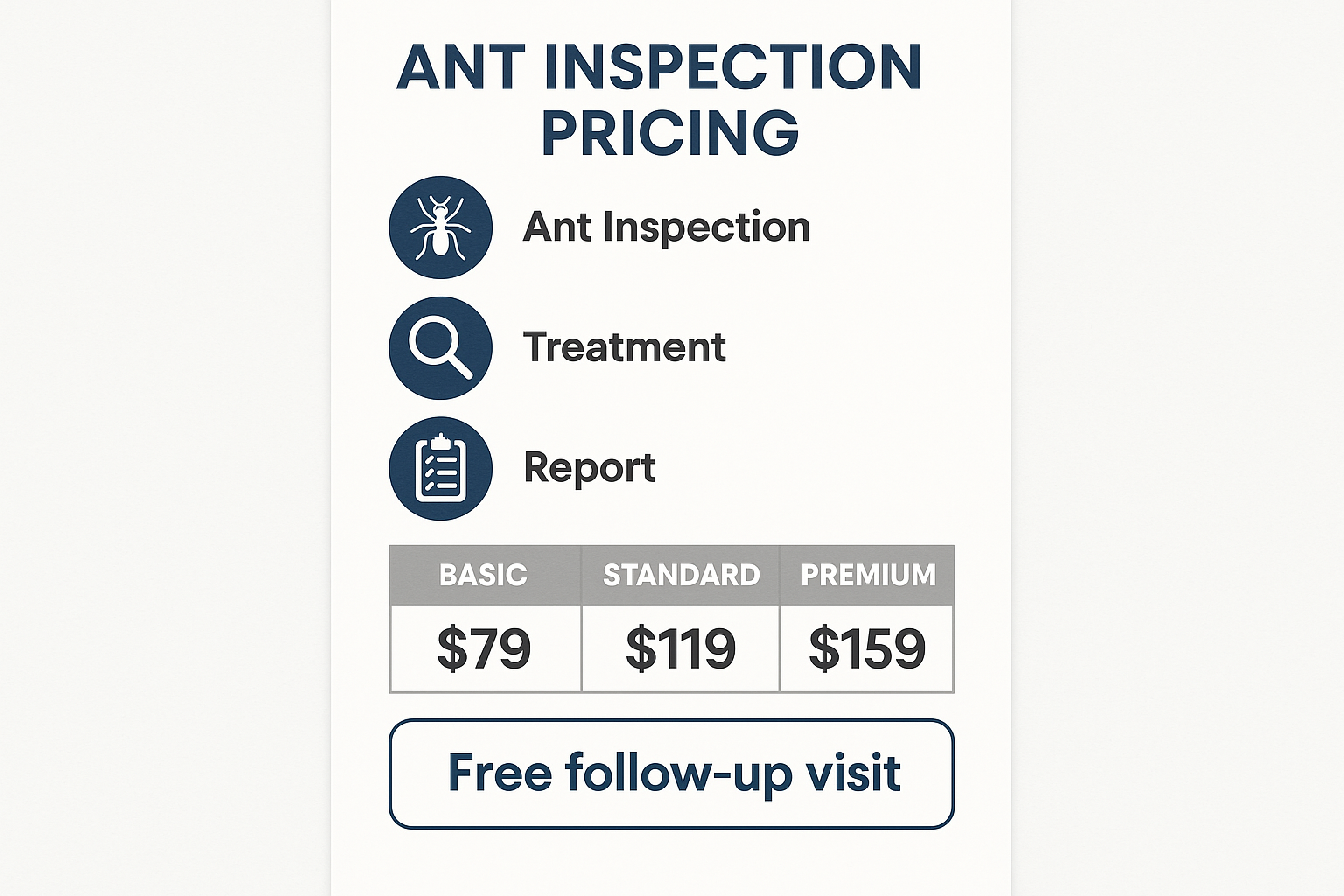
At Anthem Pest Control, we believe you should know exactly what you’re paying for before any work begins. That’s why our ant inspection Decatur packages are laid out in three clear tiers—Basic, Standard, and Premium—each with a fixed price and a defined set of deliverables.
Below is a quick visual comparison, followed by a detailed look at what each tier includes.
Tier Details
| Tier | Price | Key Services |
|---|---|---|
| Basic | $79 | Visual inspection, 1 bait station, species ID |
| Standard | $119 | All Basic services, detailed report, 2 follow‑up calls, 2 bait stations |
| Premium | $159 | All Standard services, custom treatment plan, up to 4 bait stations, priority scheduling |
Here’s what you get at each level:
- Basic ($79)
- Visual inspection – Technician checks interior, exterior, and entry points for ant trails.
- One bait station – Placed at the hottest activity spot to deliver poison to the colony.
- Species identification – We name the ant species and explain its habits.
- Standard ($119)
- All Basic services.
- Detailed written report – Includes photos, findings, and actionable recommendations.
- Two follow‑up phone calls – We review bait performance and answer any questions.
- Two bait stations – An extra station for larger or multiple colonies.
- Premium ($159)
- All Standard services.
- Custom treatment plan – Tailored chemicals and placement for your specific infestation.
- Up to four bait stations – Covering multiple entry points and high‑traffic zones.
- Priority scheduling – Same‑day or next‑day service and a protective barrier around vulnerable openings.
Free Follow‑Up Visit
The free follow‑up visit is more than a courtesy—it’s a safety net. After the initial bait or treatment, ants can rebound if a colony was missed or if environmental conditions change. Our technician returns, checks bait activity, replaces stations if needed, and fine‑tunes the plan at no extra charge. That extra check dramatically boosts long‑term control and protects your investment.
Choosing the Right Tier
Which tier fits your home? If you live in a small condo or have a single‑room infestation, the Basic package often provides enough bait to knock out the problem quickly. Larger homes, multi‑story houses, or severe colonies benefit from the Standard or Premium options, where additional bait stations and a written report give you a roadmap for ongoing prevention. Finally, factor in budget—Basic starts at $79, Standard at $119, and Premium at $159—so you can select the level of service that matches both your pest pressure and your wallet.
Effective Treatment Methods and Prevention Strategies
Chemical Barriers: Perimeter Sprays and EPA‑Registered Products
When ants march into a home, they’re looking for a clear path to food and water. A well‑applied chemical barrier creates an invisible wall that stops that traffic before it even begins. Professional crews typically use EPA‑registered perimeter sprays that are formulated to stay active for weeks, even after rain. These products are applied around the foundation, entry points, and any cracks or gaps where ants could slip through.
Safety considerations are paramount. While the chemicals are safe when used as directed, homeowners should keep children and pets away from treated zones until the spray dries. Wearing gloves and a mask during any DIY application is essential, and it’s wise to read the label for ventilation requirements.
Baiting Systems: How Stations Work and Placement Best Practices
Ant bait stations are a “Trojan horse” strategy. Workers place a small amount of attractant—usually a sugary or protein‑rich paste—inside a sealed station. Foraging ants carry the bait back to the colony, where the slow‑acting insecticide spreads, eventually collapsing the nest.
- Placement: Position stations along ant trails, near entry points, and in concealed areas like under appliances or behind cabinets.
- Height: Keep bait stations low to the ground (2–4 inches) where most ant species travel.
- Monitoring: Check stations weekly. Replace empty or contaminated stations, and note any reduction in ant activity to gauge effectiveness.
Eco‑Friendly Alternatives: Diatomaceous Earth, Botanical Repellents, and IPM
For homeowners who prefer a greener approach, several low‑toxicity options can complement or replace chemical treatments.
- Diatomaceous earth (DE): This fine powder is made from fossilized algae. When ants crawl over it, the microscopic shards abrade their exoskeletons, causing dehydration. Sprinkle DE in wall voids, under sinks, and along baseboards.
- Botanical repellents: Essential oils such as peppermint, tea tree, and citrus contain compounds that ants dislike. Mix a few drops with water in a spray bottle and apply to door frames, windowsills, and other entry points.
- Integrated Pest Management (IPM): IPM combines monitoring, cultural controls, and targeted treatments. By regularly inspecting for ant activity, sealing entryways, and using baits only when needed, you reduce reliance on broad‑spectrum chemicals.
When DIY Solutions Are Appropriate—and Their Limitations
DIY methods can be effective for minor, isolated incursions. If you spot a single line of ants on a kitchen counter or a small trail near a window, a bait station or a DE dusting may be enough. However, DIY has clear limits:
- It’s difficult to locate the hidden nest, especially with subterranean species like carpenter ants.
- Over‑use of sprays can lead to resistance or unintended harm to beneficial insects.
- Homeowners may miss structural issues—such as moisture‑wicking wood—that fuel ant colonies.
When ants reappear after a few weeks, or when you notice multiple trails, it’s a sign that professional intervention is warranted.
Professional Treatment Advantages
Seasoned pest‑control technicians bring three key benefits to the table:
- Expert application: Trained pros know the exact formulation, dosage, and placement needed for each ant species, ensuring maximum efficacy while minimizing exposure.
- Warranty and follow‑up: Many companies, including Anthem Pest Control, offer service guarantees and scheduled re‑inspections, so you’re covered if the problem resurfaces.
- Ongoing monitoring: Professionals can set up a long‑term baiting program and adjust tactics as seasonal activity shifts, providing a proactive shield rather than a one‑time fix.
Prevention Checklist: Simple Steps to Keep Ants Out
- Seal cracks and gaps: Use caulk or expanding foam around windows, doors, utility penetrations, and foundation seams.
- Manage moisture: Fix leaky pipes, ensure proper drainage away from the house, and use dehumidifiers in damp basements.
- Store food properly: Keep pantry items in airtight containers, wipe crumbs promptly, and clean pet food dishes after each use.
- Landscape wisely: Trim vegetation at least 12 inches from the foundation, keep mulch away from the siding, and avoid stacking firewood directly against the house.
- Regular inspections: Conduct a quick visual sweep each month, focusing on kitchen corners, bathroom cabinets, and outdoor patios.
Timing Your Treatment With Seasonal Ant Activity
Ants are most active when temperatures rise above 70°F, typically from late spring through early fall in Decatur. Aligning your treatment plan with this window maximizes bait uptake and barrier effectiveness. If you’ve noticed increased activity in Part 3’s seasonal overview, schedule a professional inspection early in the season. Early intervention prevents colonies from establishing deep nests, making later control efforts far less costly.
Protect Your Home with Anthem Pest Control Today
Understanding exactly which ant species is invading your kitchen, knowing the seasonal patterns that trigger their activity, and getting a professional inspection are the first three steps to a pest‑free home. Without accurate identification, you might waste money on the wrong treatment. Ignoring seasonal spikes lets colonies grow unchecked, and DIY fixes often miss hidden nests, leading to recurring problems. A thorough, science‑based treatment eliminates the source, not just the visible workers, and protects your home for the long haul.
Why Anthem Stands Out in Decatur
- Local expertise: Our technicians live and work in Decatur, so they know the neighborhoods, building styles, and the ant species most common to the area.
- Certified professionals: Every technician is EPA‑registered and trained in the latest integrated pest management techniques, ensuring safe and effective results.
- Transparent pricing: You’ll receive a clear, itemized quote before any work begins—no hidden fees, no surprise charges.
- Free follow‑up visit: After the initial treatment, we return at no extra cost to verify that the ants are gone and to address any lingering concerns.
Take the Next Simple Step
Ready to put an end to ant invasions before they become a full‑blown infestation? Scheduling a free, no‑obligation quote takes just a few minutes. Our friendly team will walk you through what to expect, answer any questions, and set up a convenient appointment time.
Call us today at 877‑371‑8196 or visit Anthem Pest Control to request your quote. Whether you need a one‑time inspection or a year‑round prevention plan, we tailor our services to fit your home’s unique needs.
Don’t let ants compromise your comfort, safety, or peace of mind. Schedule your free ant inspection Decatur homeowners trust and protect your Decatur home with the trusted experts at Anthem.