Identifying Stink Bugs and Why They Matter in Georgia
Common Species in Georgia
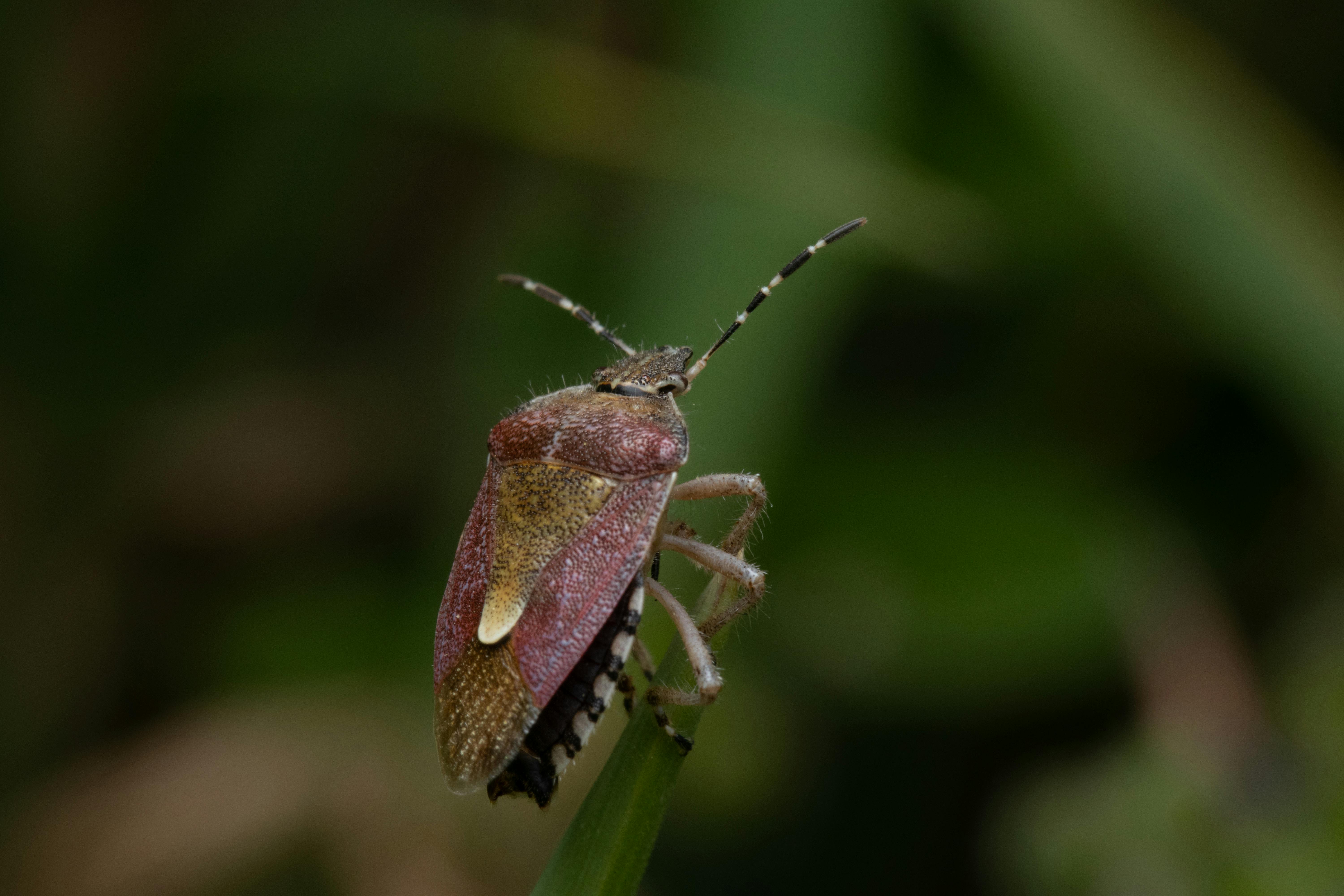
Georgia’s warm climate welcomes two main stink-bug groups: the invasive brown marmorated stink bug (Halyomorpha halys) and several native species such as the green stink bug (Acrosternum hilare) and the southern green stink bug (Nezara viridula). The brown marmorated stink bug (BMSB) arrived in the state in the early 2000s and has since become the most frequently reported nuisance pest, especially in suburban neighborhoods and orchards—one of the main reasons stink bug control cost Sugar Hill homeowners often varies by season and infestation pressure.
How to Spot a Stink Bug
Even a quick glance can reveal a stink bug’s identity if you know the visual cues:
- Size: Adults range from ½ to ¾ inch (12–19 mm) long.
- Shape: Shield‑shaped, roughly triangular when viewed from above.
- Coloration: BMSBs are mottled brown with lighter “marbled” patches; native green stink bugs are, as the name suggests, bright green with occasional darker markings.
- Stink glands: A small, darkened area on the underside of the thorax releases the notorious odor when the bug is disturbed.
When you see a bug that matches these traits gathering on sunny windowsills or fruit trees in late summer, you’re likely looking at a stink bug.
Where They Slip Inside
Stink bugs are opportunistic house‑guests. As temperatures drop in autumn, they hunt for warm refuge. Typical entry points include:
- Cracks around door frames and foundation walls.
- Unsealed window screens or gaps between panes.
- Vents, especially attic and dryer vents that lack proper mesh.
- Gaps around utility penetrations—pipes, cables, and HVAC ducts.
Because they can flatten their bodies to slip through openings as small as 1 mm, a thorough inspection of these vulnerable spots is essential before the first frost.
Health and Safety Concerns
While stink bugs are not disease vectors, they can still affect your household’s health and comfort:
- Allergic reactions: Some people experience skin irritation or respiratory discomfort after contact with the bug’s defensive spray.
- Food contamination: Stink bugs often invade stored grains, fruits, and vegetables. Their secretions can leave an unpleasant odor and taste, rendering food unfit for consumption.
- Psychological nuisance: Large congregations on walls or windows can create a “creepy‑crawl” feeling, especially for families with young children.
For a detailed overview of health guidance, see the CDC’s page on stink bugs: CDC – Stink Bugs.
Why Early Identification Saves You Money
Spotting a stink bug before it establishes a foothold dramatically reduces treatment costs. Early detection allows:
- Targeted sealing of entry points, which is far cheaper than a full‑scale structural treatment.
- Timely application of perimeter sprays when populations are still low, limiting the amount of pesticide needed.
- Prevention of food loss—once a pantry is contaminated, you may need to discard entire batches of staples.
At Anthem Pest Control, we train our technicians to recognize the subtle signs of a budding infestation. By catching the problem early, we can design a customized, cost‑effective plan that protects your home through the winter and keeps the next season’s invasion at bay.
Seasonal Activity Patterns in Sugar Hill, GA
Life‑Cycle Overview
Stink bugs spend the coldest months tucked away in protected cracks, leaf litter, or the spaces under your home’s foundation. As temperatures climb above 55 °F in early spring, they awaken, mate, and begin laying eggs on the underside of leaves—an early phase that often influences stink bug control cost Sugar Hill homeowners face later in the year. The summer months are their breeding blitz, with multiple generations emerging between June and August. When autumn arrives and daytime highs dip below 70 °F, the bugs abandon their summer hide-outs, seeking warm shelters inside homes to ride out the winter. This cyclical pattern—overwintering, spring emergence, summer breeding, and fall aggregation—drives when you’ll see the most activity around your house.
Monthly Activity Chart
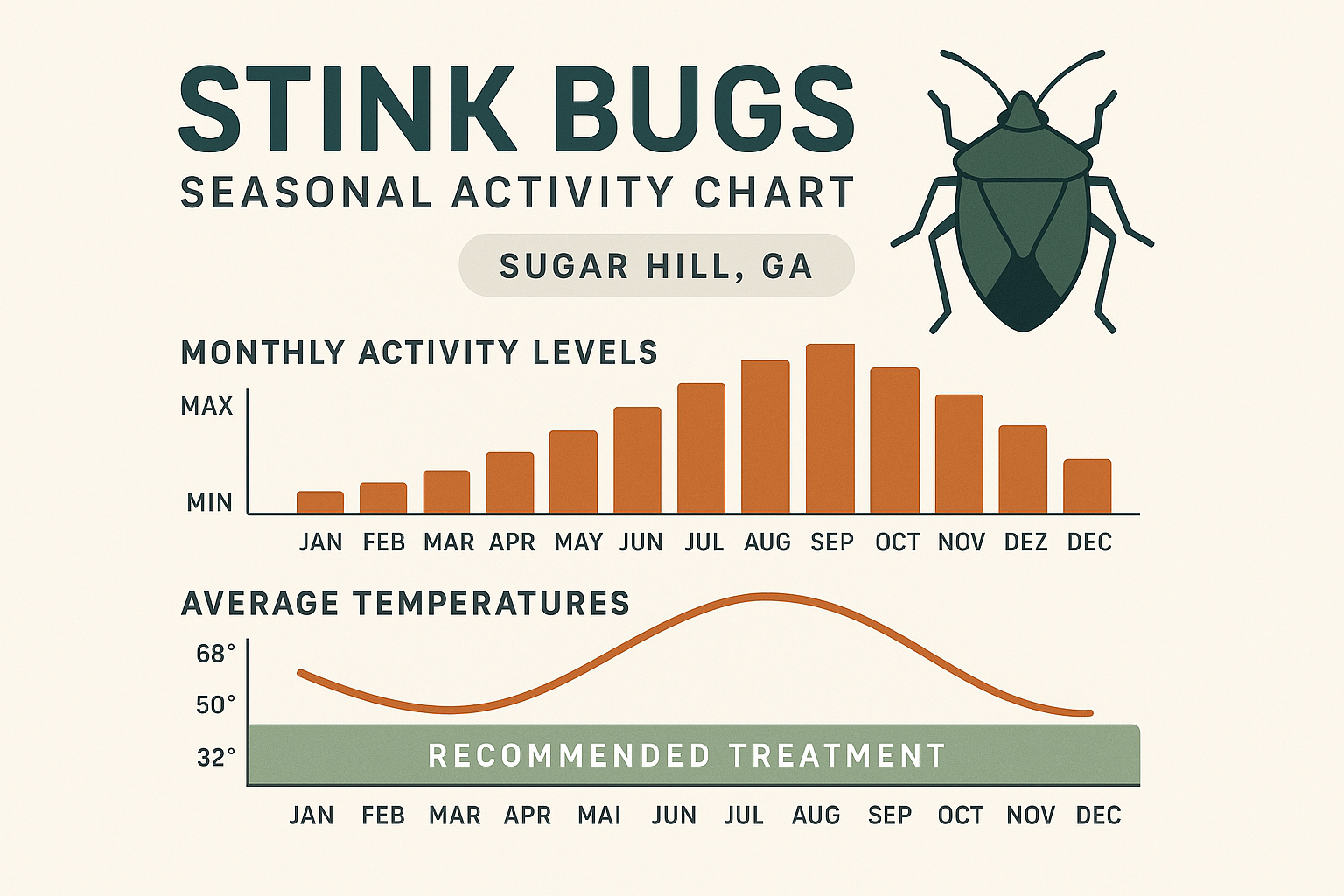
The chart above visualizes the typical rise and fall of stink bug numbers throughout the year. Peaks appear in June, July, and August, while the lowest counts occur from December through February. Notice the secondary bump in early May—this is the first wave of adults emerging from overwintering sites.
Temperature and Bug Activity
Stink bugs are cold‑blooded; their metabolism and movement are directly tied to ambient temperature. In Sugar Hill, average monthly highs hover around 55 °F in March, jump to 78 °F in July, and retreat to 61 °F in October. Below 50 °F, bugs remain largely dormant; above 80 °F, activity spikes dramatically, accelerating feeding and reproduction. The table below pairs typical monthly averages with the corresponding activity level you can expect on the exterior of your home.
| Month | Avg High (°F) | Activity Level |
|---|---|---|
| January | 44 | Very Low (overwintering) |
| February | 48 | Very Low |
| March | 55 | Low (early emergence) |
| April | 65 | Moderate (first breeding) |
| May | 73 | High (peak emergence) |
| June | 81 | Very High (multiple generations) |
| July | 84 | Very High |
| August | 83 | Very High |
| September | 76 | High (pre‑fall aggregation) |
| October | 66 | Moderate (searching for shelter) |
| November | 55 | Low (final entry) |
| December | 46 | Very Low |
Best Times to Inspect and Treat
Targeted inspections give you the greatest chance of catching stink bugs before they establish a foothold inside. Based on the life‑cycle and temperature data, the two most effective windows are:
- Early May – Bugs are finishing their first emergence and beginning to reproduce. A thorough exterior sweep (checking eaves, window frames, and vent openings) lets you seal entry points before populations explode.
- Late September – Adults are searching for winter shelters. This is the ideal moment to apply a perimeter treatment and reinforce barriers, reducing the number that can slip inside for overwintering.
When Weather Throws a Curveball
Unseasonal temperature swings can shift these timelines. A warm spell in March, for example, may push emergence up to early April, meaning you’d want to start scouting sooner. Conversely, a cool, wet August can suppress breeding activity, allowing a later September treatment to remain effective. Keep an eye on local forecasts: if a prolonged heatwave (>85 °F) is predicted, schedule an extra inspection within a week to catch any surge in activity.
Understanding these seasonal rhythms lets you act with confidence, rather than reacting after a stink bug invasion has already taken hold. By aligning inspections with the bug’s natural calendar, you protect your home while keeping treatment costs predictable and efficient.
Treatment Options – DIY vs. Professional Services
DIY Approaches
Many homeowners start with the tools they already have. A strong vacuum can pull adult stink bugs and nymphs out of wall voids, window sills, and light fixtures before they have a chance to breed. Sealing cracks, gaps around utility lines, and poorly fitted screens blocks the insects’ favorite entry points, turning your home into a less inviting “bug hotel.” For those who prefer a chemical touch, insecticidal soaps and low‑risk sprays—often based on pyrethrins or neem oil—can be applied to outdoor vegetation and indoor surfaces where bugs congregate.
- Vacuuming: Quick removal, no chemicals.
- Sealing entry points: Long‑term barrier.
- Insecticidal soaps: Low toxicity, best for foliage.
- Low‑risk sprays: Often plant‑based, safe for pets when used as directed.
Safety First: Using Pesticides at Home
Even “low‑risk” products can become hazards if misused. Always read the label, wear protective gloves, and keep children and pets out of treated areas until the product dries. The U.S. Environmental Protection Agency provides clear guidance on safe pesticide handling—see their Pesticide Safety page for dosage limits, ventilation tips, and disposal instructions. Store any leftover chemicals in their original containers, locked away from accidental exposure.
Why DIY May Fall Short
While a DIY regimen can reduce a few stink bugs, it rarely achieves the comprehensive coverage needed for an infestation. Home‑grown treatments often miss hidden cracks behind baseboards, inside attics, or within crawl spaces, allowing a breeding population to persist. Over time, bugs can develop resistance to the same active ingredients you repeatedly apply, diminishing effectiveness. Finally, indoor spraying without professional training risks contaminating air ducts, upholstery, and food‑preparation surfaces, potentially creating health concerns for your family.
Professional Pest‑Control Solutions
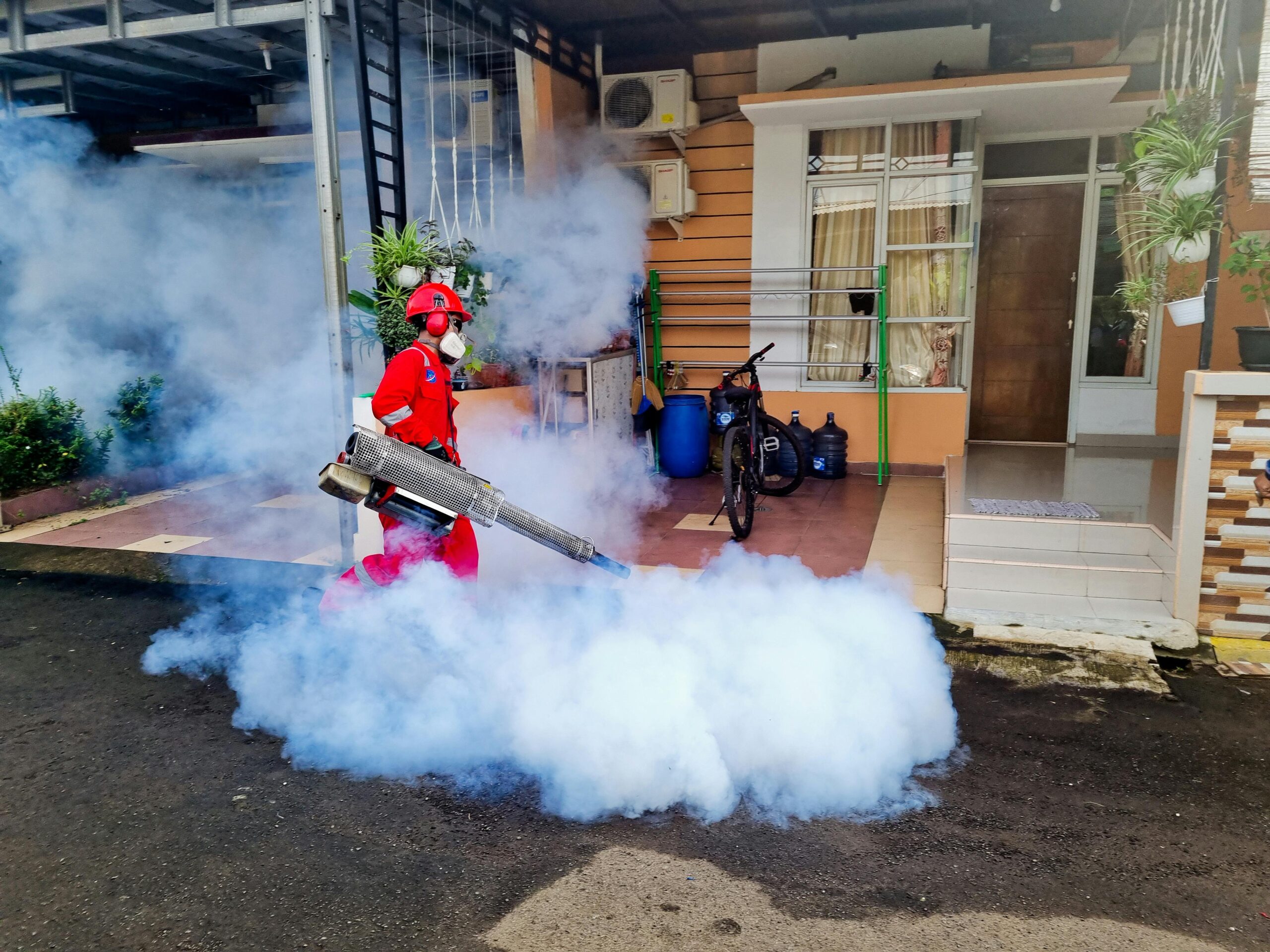
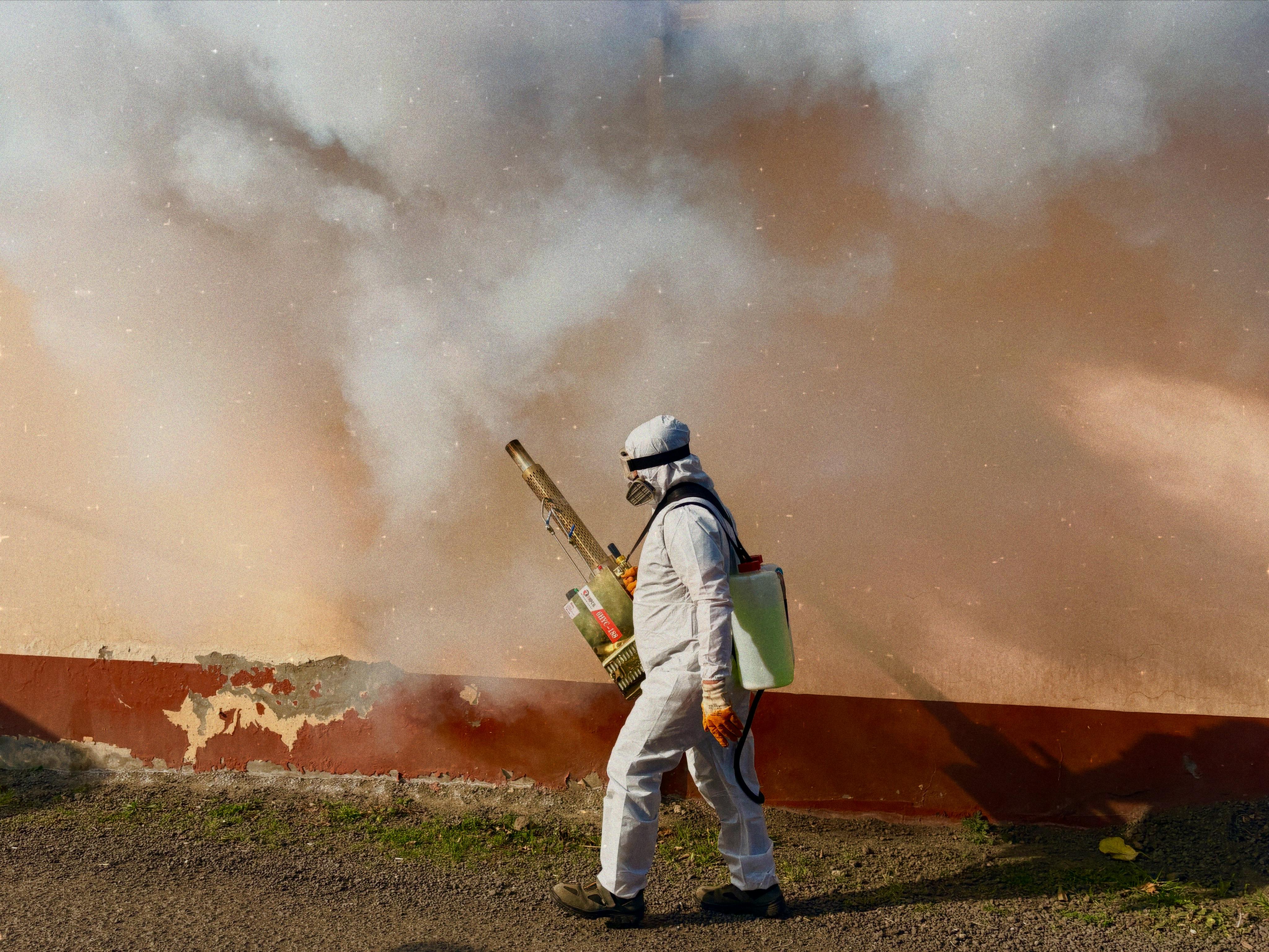
Licensed technicians bring a systematic approach that tackles the problem from the outside in. Exterior perimeter treatments create a chemical “moat” around the home, targeting bugs before they reach doors and windows. Inside, residual sprays are applied to cracks, crevices, and voids where stink bugs hide, offering weeks of protection after a single visit. Many companies, including Anthem Pest Control, integrate these actions into an Integrated Pest‑Management (IPM) plan—combining monitoring, habitat modification, and targeted chemicals to keep populations below damaging levels.
What a Certified Technician Brings
A certified applicator knows exactly where stink bugs are likely to hide and which products will work without jeopardizing indoor air quality. They follow state‑mandated pesticide regulations, calibrate equipment for precise dosage, and wear personal protective equipment that most homeowners skip. The result is a thorough, uniform coverage that addresses both visible insects and the unseen eggs hidden in wall voids.
Why Choose Anthem Pest Control
- Licensed applicators: Every technician holds the state‑required certification and ongoing training.
- EPA‑approved products: We use chemicals vetted for effectiveness and safety, applying them at the optimal concentration.
- Local expertise: Our teams understand Sugar Hill’s climate, common entry points, and the seasonal patterns that drive stink bug activity.
- Integrated Pest‑Management focus: We combine prevention, monitoring, and targeted treatment to keep bugs away year after year.
- Transparent pricing: No hidden fees—just a clear estimate and a detailed service plan.
Understanding Stink Bug Control Costs in Georgia
When it comes to protecting your home from stink bugs, knowing exactly what you’re paying for can be the difference between a one-time fix and a long-term solution. Understanding stink bug control cost Sugar Hill homeowners typically face helps you compare options confidently and choose the plan that matches your budget and your pest-pressure level. At Anthem Pest Control, we keep our pricing transparent so you can make informed decisions without surprises.
1. Per‑treatment fee
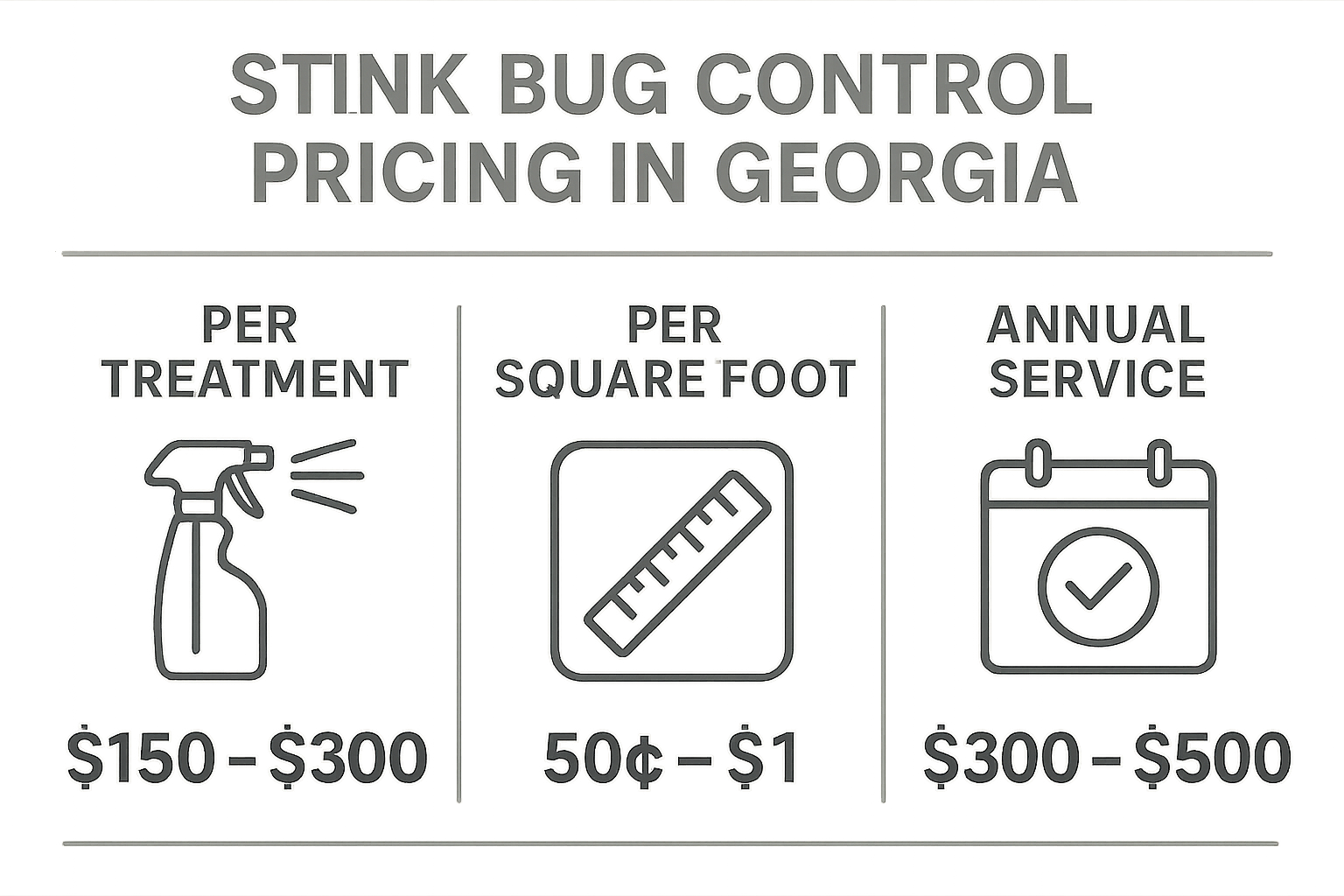
A per‑treatment fee is the simplest model: you pay a flat rate each time a technician visits your property. In Georgia, most providers charge between $120 and $250 per visit for a standard residential treatment. This fee usually includes a thorough inspection, the application of a residual insecticide around entry points, and a post‑treatment report. It works well for homeowners who experience occasional invasions and prefer to handle each outbreak as it arises.
2. Per‑square‑foot rate
With a per‑square‑foot rate, the cost scales to the size of the area being treated. Typical rates in the Sugar Hill area range from $0.15 to $0.30 per square foot. For a 2,000‑square‑foot home, that translates to roughly $300‑$600 per service. This model is popular for larger properties or for those who want a clear connection between the scope of work and the price. It also encourages technicians to focus on thorough coverage, especially around vulnerable zones like eaves, windows, and foundation cracks.
3. Annual service packages
Annual packages bundle multiple visits—often four to six—into a single yearly contract. Prices typically fall between $600 and $1,200 for a standard home, depending on the frequency of visits and the level of protection included. These packages often feature a guaranteed “bug‑free” window, priority scheduling, and a complimentary follow‑up inspection after each treatment. For homeowners with chronic stink bug activity, the package delivers predictable budgeting and continuous defense.
Factors that Influence Your Quote
- Property size: Larger homes or properties with extensive landscaping require more product and labor, raising the per‑treatment or per‑square‑foot cost.
- Infestation severity: A light, seasonal presence may be handled with a single spray, while a heavy, year‑round infestation often demands higher‑dose applications and additional follow‑up visits.
- Treatment frequency: Homeowners who opt for quarterly or semi‑annual visits typically receive a volume discount, but the total annual spend can still be higher than a one‑off treatment if the pest pressure is low.
According to the NPMA 2023 cost survey, the national average for residential stink bug control ranges from $150 to $350 per treatment, with annual packages averaging $850. Georgia’s pricing aligns closely with these benchmarks, though local climate and the prevalence of the brown marmorated stink bug can push costs toward the higher end of the spectrum.
Tips for Evaluating Quotes
- Look for a written guarantee that outlines what happens if bugs return within a specified period.
- Confirm the number of follow‑up visits included; a single application may not be sufficient for severe infestations.
- Ask whether the company uses environmentally‑safe, low‑toxicity products—especially important for families with children or pets.
- Check that the quote breaks down labor, materials, and any additional fees so you can see exactly where your money is going.
Protect Your Home Today with Anthem Pest Control
Quick Recap
Stink bugs may seem harmless until they breach your windows, leave a bitter odor, and damage fruit and ornamental plants. The fastest way to keep them out is to act early, target the insects during their peak activity in late summer and early fall, and select a treatment that matches the level of infestation.
- Spot the insects early—look for the characteristic shield‑shaped bodies on windows and walls.
- Treat during peak activity (late July through early October) when bugs are most vulnerable.
- Select the right method—spray barrier for outdoor perimeters, indoor fogging for infestations, or a combination.
When you address stink bugs promptly, you also prevent secondary problems like mold growth from the moisture they bring and avoid costly damage to garden produce. A proactive approach means fewer repeat visits, lower overall costs, and a healthier environment for your family.
Why Professional, EPA‑Compliant Service Matters
Choosing Anthem Pest Control means you get a team trained in the latest EPA‑approved methods, so you can breathe easy knowing the chemicals are safe for children, pets, and the environment while still delivering a knockout blow to the bugs.
Ready for a Free, No‑Obligation Quote?
Our technicians will inspect your home, identify entry points, and design a customized plan that fits your budget. The assessment is completely free and carries no obligation—just a clear picture of what needs to be done.
Give us a call today at 877‑371‑8196 or visit Anthem Pest Control to schedule your free quote. We’ll walk you through the process, answer any questions, and set a treatment window that works with your schedule.
Don’t wait for the next wave of stink bugs to take over—protect your home now, understand stink bug control cost Sugar Hill, and enjoy peace of mind all season long.