Why Gnats Are a Growing Concern for Sugar Hill Homeowners
Gnats are tiny, soft-bodied flying insects that belong to several families, including fungus gnats, black-fly gnats, and leaf-litter gnats. Though each species varies in size and habit, they all share a rapid, erratic flight pattern that makes them especially noticeable around homes—often prompting homeowners to research gnat control cost Sugar Hill when infestations become persistent.
In a typical Sugar Hill yard, gnats thrive in moist soil, compost piles, decaying leaves, and any standing water left after a summer rain. The larvae feed on fungal growths in the soil, while adults are attracted to the same damp environments, turning a garden bed into a breeding ground.
Homeowners most often notice gnats for three reasons:
- Itchy, red welts after a brief landing on skin.
- Swarming clouds that make outdoor dining or patio time uncomfortable.
- Visible infestations around houseplants, windowsills, and trash cans.
Beyond annoyance, gnats can pose genuine health and property risks. Some species carry bacteria that may contaminate food or skin wounds, while fungus gnats can damage ornamental plants by feeding on roots, weakening foliage and reducing curb appeal.
Sugar Hill’s humid subtropical climate—warm summers, frequent rain, and lush, shaded yards—creates the perfect moisture envelope for gnat development. Popular local landscaping practices such as mulching, ornamental water features, and dense planting further trap humidity, allowing populations to explode within weeks of a rain event.
According to the University of Georgia Extension’s regional pest guide, gnats rank among the top three nuisance insects reported by homeowners in the Atlanta metropolitan area, underscoring why proactive control is essential for Sugar Hill residents.
The peak gnat activity in Sugar Hill typically occurs from late spring through early fall, aligning with the region’s rainy periods. During these months, homeowners may notice a sudden increase in indoor sightings near kitchen sinks, bathroom drains, and potted plants. Ignoring the problem can lead to larger colonies that migrate indoors, increasing the need for professional treatment and driving up control costs.
Spotting Gnats Early – Identification and Warning Signs
Gnats are tiny, often overlooked insects that can quickly become a nuisance when they find a welcoming environment around your home. Knowing what they look like and where they tend to appear gives you a head start on preventing a full‑blown infestation.
Visual characteristics you can trust
Most garden and fungus gnats in Sugar Hill measure just 1‑3 mm long—about the width of a pinhead. Their wings are delicate, veined, and usually held in a “V” shape when at rest. Common species differ in hue: fungus gnats sport a dark, almost black body with a faint gray tint, while fruit‑fly gnats often appear lighter, with a tan or brownish abdomen. These subtle color cues help you tell a harmless midge from a gnat that could bite.
Where gnats make their first appearance
Gnats love moisture, so they’re first spotted near houseplants, in mulched flower beds, or along damp patios. If you notice a faint, fluttering cloud hovering around a potted fern or a newly watered garden bed, you’re likely looking at a gnat congregation. Drainage channels, especially those that stay wet after a rain, are also prime real estate for these insects.
Behavioral clues that scream “gnat alert”
Unlike flies that dart away, gnats tend to linger. They hover near indoor lights at dusk and often form tiny swarms just before sunset. In the early evening, you might see them clustering around outdoor seating or patio umbrellas—an unmistakable sign that they’ve found a reliable water source nearby.
Warning signs of an emerging infestation
- Increased reports of tiny, itchy bites, especially on ankles and wrists.
- Swarms gathering around outdoor furniture, grills, or fire pits.
- Presence of white, worm‑like larvae in the top inch of potting soil.
- Sticky residue on windowsills where gnats have been trapped.
Simple DIY checks you can run today
Before calling a professional, try these quick, low‑cost inspections:
- Sticky traps: Place yellow adhesive cards near suspect plants or patio corners. A sudden increase in captured insects confirms activity.
- Soil moisture test: Stick a finger into the potting mix; if it feels soggy beyond the top two inches, you’ve created a perfect larval habitat.
- Visual inspection of drainage areas: Look for standing water in gutters, downspouts, or under decks. Even a shallow puddle can sustain a gnat population.
For a deeper dive into species identification and lifecycle details, consult the UGA Extension guide on gnats. Armed with these observation skills, you’ll catch gnats before they turn a simple annoyance into a costly problem that requires professional treatment.
Seasonal Gnat Activity in Sugar Hill
In Sugar Hill, gnat numbers follow a predictable rhythm that mirrors the local climate. A simple seasonal chart shows almost no activity during the frosty months, a steady climb as temperatures climb in spring, a sharp peak in midsummer, and a gradual decline as the leaves turn in fall. Understanding this pattern lets you plan treatments when they’ll be most effective and avoid spending on unnecessary applications.
Why temperature, humidity, and rainfall drive the cycle
Gnats thrive in warm, moist environments. When daytime highs consistently sit above 65°F (18°C), their life cycle—from egg to adult—accelerates dramatically. Spring showers raise soil moisture, creating ideal breeding grounds in damp leaf litter and standing water. Summer’s combination of heat and high humidity shortens the development time to just a few days, causing the population explosion you notice around July and August. As autumn approaches, cooler nights and reduced rain limit breeding sites, and the insects naturally die off.
Optimal timing for preventive treatments
Early spring (late March – early April) is the sweet spot for a preventive spray. Applying a barrier before the first major rainstorm stops gnats from establishing new colonies, saving you from a full‑blown summer infestation. If you already see activity in May, a light “boost” treatment can keep numbers low.
Mid‑summer (mid‑July) is the second critical window. By this point the population is at its height, and a targeted application—especially around outdoor gathering areas, decks, and near standing water—helps bring the count down before the fall decline begins. This two‑step approach usually reduces the total number of treatments needed, which translates directly into lower costs.

Quick reference table
| Month | Action Level |
|---|---|
| January | Monitor only |
| February | Monitor only |
| March | Preventive treat (late month) |
| April | Preventive treat |
| May | Boost if activity observed |
| June | Boost if needed |
| July | Mid‑summer treatment |
| August | Maintain, spot‑treat |
| September | Monitor, light treat |
| October | Monitor only |
| November | Monitor only |
| December | Monitor only |
By aligning your pest‑control schedule with this seasonal guide, you’ll address gnats when they’re most vulnerable, keep treatment costs predictable, and enjoy a bite‑free backyard throughout the year. If you need a professional assessment or want to lock in the right timing, give Anthem Pest Control a call at 877‑371‑8196 or visit anthempest.com.
Comparing Gnat Treatment Plans – What’s Right for You?
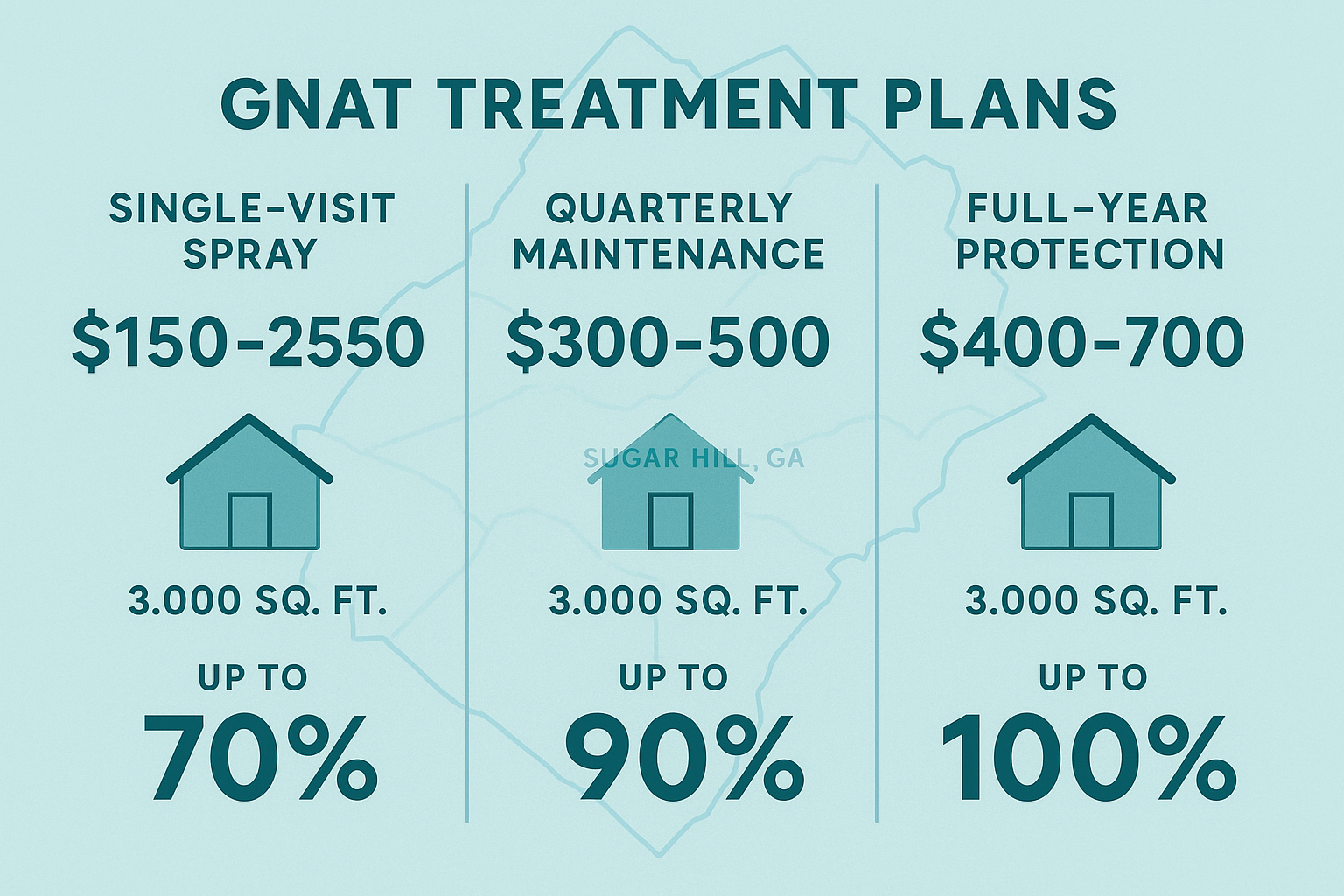
When gnats start buzzing around your patio or kitchen, the right treatment plan can make the difference between a quick fix and long-term peace of mind. At Anthem Pest Control, we offer three distinct options that balance price, coverage, and durability—helping homeowners better understand gnat control cost Sugar Hill properties may face. Below you’ll see how each plan stacks up, so you can match the service to your budget, property size, and tolerance for those tiny flyers.
Three Service Options
1. Single‑Visit Spray – A one‑time application that targets the most active gnat hotspots on your property. Ideal for homeowners who need immediate relief after a sudden infestation.
2. Quarterly Maintenance – Four visits per year, timed to coincide with the peak gnat seasons in Sugar Hill (late spring, midsummer, early fall, and late fall). Each visit refreshes the barrier and addresses new breeding sites.
3. Full‑Year Protection – A comprehensive program that includes monthly inspections, barrier reapplications, and a supplemental indoor treatment. This is the most hands‑off option, keeping gnats at bay year‑round.
Pros and Cons
- Single‑Visit Spray
- Pros: Lowest upfront cost, fast results, no ongoing commitment.
- Cons: Protection typically lasts 2–4 weeks; may require repeat visits during peak months.
- Quarterly Maintenance
- Pros: Aligns with seasonal spikes, spreads cost over the year, maintains a consistent barrier.
- Cons: Requires you to be present for four scheduled visits; slightly higher total cost than a single spray.
- Full‑Year Protection
- Pros: Highest overall effectiveness (up to 95% reduction), minimal homeowner effort, includes indoor treatment for indoor‑flying gnats.
- Cons: Largest upfront investment; best suited for larger properties or those with chronic gnat issues.
Seasonal Alignment
Gnats are most active when temperatures hover between 68°F and 85°F and when moisture levels rise after rain. Our Quarterly Maintenance plan is timed to hit the spring emergence (April‑May), the midsummer surge (July‑August), the early fall lull (September), and the late‑fall buildup (October). By refreshing the barrier at these intervals, we cut the population before it can explode. Full‑Year Protection, with its monthly touch‑points, captures any off‑peak spikes caused by unexpected rainstorms or irrigation leaks, ensuring you never face a surprise swarm.
Decision‑Making Checklist
- What is your budget ceiling for pest control this year?
- How many square feet does your property cover (including yard, deck, and any outbuildings)?
- Do you prefer a single, low‑cost visit or a set‑and‑forget approach?
- How tolerant are you of occasional gnats during peak months?
- Do you have standing water sources (birdbaths, ponds) that might need extra attention?
- Will you be home during scheduled visits to allow access for our technicians?
Match your answers to the plan that best fits. If cost is the primary driver and you can tolerate a short‑term flare‑up, the Single‑Visit Spray may be enough. If you want steady protection without thinking about it, the Full‑Year Protection delivers the highest reduction rate. For most homeowners in Sugar Hill, the Quarterly Maintenance strikes the sweet spot—balanced pricing, seasonal coverage, and a noticeable drop in gnat activity throughout the year.
Professional Application Methods – Sprays and Spot Treatments
When gnats become a nuisance around your home, a licensed technician from Anthem Pest Control brings a science‑based approach that far exceeds a quick DIY spray from the garage. Our crews follow a proven protocol that combines residual insecticides, precise timing, and targeted spot treatments to keep those tiny flyers at bay while protecting your family and pets.

Standard Spray Application
Our standard spray covers the entire perimeter of your property, focusing on areas where gnats typically rest or breed. Using an EPA‑approved residual insecticide, the technician creates a thin, invisible barrier that continues to work for weeks. The spray is calibrated to cover roughly 30–40 sq ft per minute, ensuring no blind spots. Timing is crucial: we apply the treatment in the early evening, after the sun sets but before the gnats become most active. This window maximizes product uptake and minimizes drift, delivering consistent protection throughout the night.
Spot Treatments for Localized Hotspots
Not every gnat problem spreads across the whole yard. Often, the insects congregate around potted plants, compost piles, or poorly drained basins. In those cases, our technicians perform a spot treatment—directly applying a concentrated dose to the affected zone. This method uses a finer mist or a handheld applicator, allowing us to treat the exact source without over‑spraying surrounding areas. Spot treatments are especially effective for indoor plant stands or balcony containers where gnats love to lay eggs.
Safety First: What Our Technicians Do
We treat safety as a non‑negotiable part of every service. Our crews wear certified protective gear, including gloves, goggles, and respirators, to guard against accidental exposure. All chemicals are EPA‑registered and applied at the label‑specified rate, which guarantees efficacy while minimizing risk. Before we start, we:
- Ask about children, pets, and any recent outdoor activities.
- Cover or move food, dishes, and toys from the treatment zone.
- Provide clear post‑treatment instructions, such as keeping pets indoors for 30 minutes.
Why Choose a Pro Over DIY?
Homeowners often wonder if a store‑bought aerosol can do the job. The reality is that professional application offers three clear advantages:
- Consistent coverage: Our equipment delivers a uniform coat that a handheld can never match.
- Warranty and follow‑up: Every treatment comes with a service guarantee and a scheduled re‑inspection to confirm the gnats stay gone.
- Long‑term peace of mind: With a licensed technician, you avoid the guesswork of dosage, timing, and safety—saving time, money, and potential health hazards.
By trusting Anthem Pest Control’s licensed professionals, you get a tailored solution that eliminates gnats efficiently, safely, and with a warranty that DIY methods simply can’t provide.
When Fumigation Is Needed – Advanced Gnat Control
For most Sugar Hill homes, regular sprays and traps keep gnats at bay. However, when a colony multiplies faster than your standard treatments can handle, a more aggressive approach—smoke fumigation—becomes the logical next step. This method penetrates dense vegetation, hard‑to‑reach eaves, and large outdoor spaces where gnats thrive.
What fumigation entails
Fumigation uses either thermal fogging or a smoke generator to disperse a fine, insect‑killing mist. The equipment heats a specially formulated solution until it vaporizes, creating a cloud that drifts through the target area. Unlike a surface spray, the fog seeps into cracks, soil, and canopy foliage, reaching gnats where they hide and lay eggs.
Situations that warrant fumigation
- Large outdoor gatherings where swarms could spoil a party or wedding.
- Commercial properties such as restaurants, event venues, or hotels that must meet strict health standards.
- Persistent colonies that survive multiple conventional treatments and reappear season after season.
- Heavily vegetated yards, wetlands, or drainage areas that act as natural breeding grounds.
Process overview
Pre‑treatment preparation: We clear the immediate area of food, pets, and delicate plants, then seal doors and windows to contain the fog. Application: Using a calibrated smoke machine, we release a controlled plume that blankets the infestation zone for a set duration, typically 15–30 minutes. Post‑treatment ventilation: After the fog settles, we open all exits and run fans to circulate fresh air, ensuring the space is safe for occupants within a few hours.
Safety and environmental considerations
Modern fumigants are designed to break down quickly, leaving no harmful residues. Still, proper PPE, precise dosing, and strict adherence to local EPA guidelines are non‑negotiable. Certified technicians monitor wind direction, temperature, and humidity to maximize efficacy while minimizing drift onto neighboring properties.
Why hire certified professionals
Only licensed operators can access the approved chemicals and equipment needed for safe smoke fumigation. Anthem Pest Control’s technicians undergo rigorous training, carry liability insurance, and stay current with state regulations—giving you peace of mind that the job is done correctly and responsibly.
The image above illustrates the smoke machine in action, showing how the mist envelops a home’s exterior. When gnats overwhelm your yard, this visual cue reminds homeowners that a targeted fumigation can swiftly restore comfort without resorting to endless spray cycles.
Protect Your Home Today with Anthem Pest Control
Early detection of gnats, timing your treatment to the seasonal surge, and choosing a plan that fits your home’s unique layout are the three pillars of successful gnat management. Catching the insects before they breed eliminates the nuisance and prevents the tiny bites that can turn a summer evening into an itchy ordeal.
Why Anthem Pest Control Is the Right Partner in Sugar Hill
Anthem’s technicians combine local knowledge of Sugar Hill’s humid climate with a nationwide network of specialists. Our technicians perform a thorough on‑site inspection, identifying breeding sites and sealing entry points to keep gnats out for good. That means you get solutions that are proven for Georgia’s weather patterns, backed by the research and resources of a national leader.
Transparent Pricing, Safe Products, and a Satisfaction Guarantee
- Clear, upfront quotes – no hidden fees, just a simple breakdown of what each treatment includes.
- Eco‑friendly, EPA‑registered products that protect your family, pets, and the surrounding environment.
- 100 % satisfaction guarantee – if gnats return within the warranty period, we’ll re‑treat at no extra cost.
Take the Next Step – Get a Free, No‑Obligation Quote
Ready to enjoy a gnat‑free yard and indoor space? Contact Anthem Pest Control today for a complimentary assessment. Our friendly team will walk you through the recommended plan, explain the pricing, and schedule a service window that works with your calendar. We also offer same‑day appointments for urgent situations, so you won’t have to wait weeks for relief.
Call us at 877‑371‑8196 or visit Anthem Pest Control to request your free quote. Choose from several payment plans, including credit‑card, ACH, or a convenient monthly option. We’re happy to answer any questions and help you protect your home before the next swarm arrives.
Get your free gnat-control quote now and experience the peace of mind that comes with professional, reliable pest protection—along with clear, upfront insight into gnat control cost Sugar Hill homeowners can trust.