
Understanding Tick Risks in Druid Hills, GA

Common Tick Species in Georgia
Georgia’s warm climate and abundant green spaces make it a prime habitat for several tick species. The most frequently encountered are the Lone Star tick (Amblyomma americanum) and the Blacklegged tick, also known as the Deer tick (Ixodes scapularis). Lone Star ticks thrive in tall grasses, brushy edges, and shaded garden beds, while Blacklegged ticks prefer wooded areas and leaf litter. Both species are active from early spring through late fall, so homeowners should stay vigilant year‑round.
Health Risks from Tick Bites
Ticks are more than a nuisance; they are vectors for serious illnesses. In Druid Hills, the most concerning diseases include:
- Lyme disease – transmitted primarily by Blacklegged ticks; early symptoms can mimic the flu.
- Rocky Mountain spotted fever – carried by the Lone Star tick; can cause high fever, rash, and organ complications.
- Ehrlichiosis and Anaplasmosis – also associated with Lone Star ticks, leading to fatigue, muscle aches, and sometimes severe complications.
While not every bite results in infection, the risk escalates when ticks remain attached for more than 24 hours. Prompt removal and medical evaluation are essential if you develop a rash, fever, or joint pain after a bite.
How Ticks Find Their Way Into Your Property
Ticks rarely travel on their own; they hitch rides on animals that move between wild habitats and residential yards. Common pathways include:
- Pets – dogs and cats can pick up ticks during walks or outdoor play and bring them indoors.
- Wildlife – raccoons, opossums, and deer frequently traverse backyards, dropping ticks along the way.
- Vegetation – dense shrubs, leaf piles, and tall grass provide ideal resting spots for questing ticks.
Even well‑maintained lawns can become a bridge if they border wooded edges or have untreated mulch beds.
Early Warning Signs of a Tick Infestation
Spotting ticks before they bite is the first line of defense. Look for these indicators:
- Visible ticks crawling on walls, furniture, or in pet bedding.
- Increased reports of unexplained bites or “red bumps” on family members.
- Pets scratching more than usual or showing tiny, engorged ticks attached to their skin.
- Clusters of small, dark specks in leaf litter or mulch, which are often detached tick shells.
Why Early Detection Matters
Detecting ticks early cuts the window for disease transmission. The longer a tick remains attached, the higher the chance it will inject pathogens. Early removal not only protects your family’s health but also reduces the need for extensive chemical treatments later on. Professional tick management, such as the services offered by Anthem Pest Control, combines targeted applications with habitat modification to keep tick populations low and your yard safe.
By understanding which tick species are common, recognizing the health threats they pose, and staying alert to early signs, Druid Hills homeowners can take proactive steps that safeguard both their homes and their loved ones.
Seasonal Tick Activity Patterns in Georgia
Understanding the tick life cycle is the first step to timing your defenses. Ticks hatch from eggs as larvae, which are tiny six‑legged critters that cling to small mammals or birds. After a blood meal, they molt into nymphs, the eight‑legged stage most responsible for transmitting diseases to humans because they’re small enough to go unnoticed. A second meal triggers the final molt into adult ticks, which seek larger hosts—often us—before laying the next batch of eggs. Temperature and humidity are the master switches: warm, moist conditions accelerate development, while dry, cold weather stalls activity.
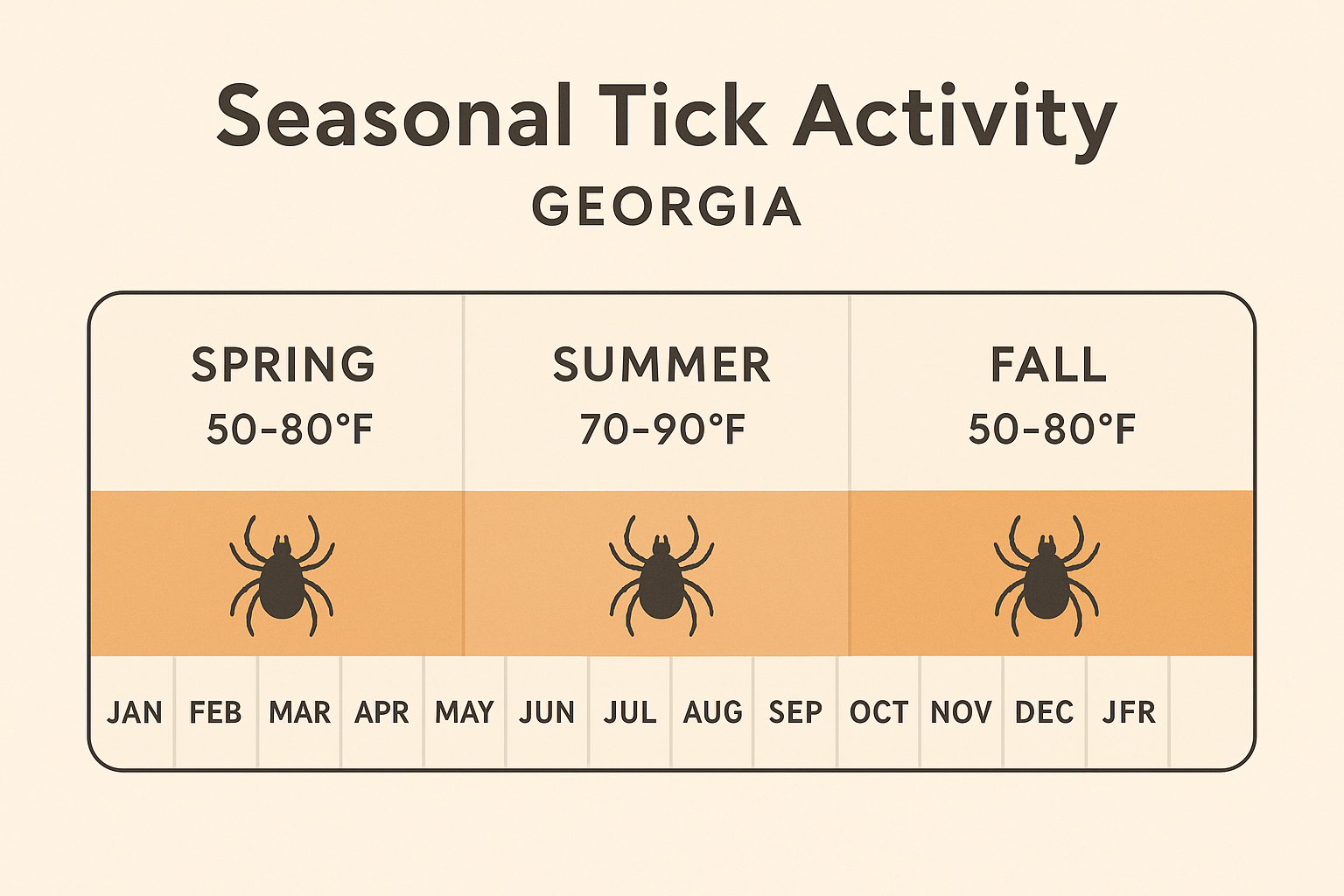
When Are Ticks Most Active in Georgia?
| Month | Activity Level |
|---|---|
| January – February | Low |
| March | Moderate |
| April – May | High (Spring peak) |
| June – July | High (Summer peak) |
| August | Moderate |
| September – October | High (Fall peak) |
| November – December | Low |
Georgia’s climate creates three distinct windows of heightened risk:
- Spring (April‑May): Rising temperatures awaken nymphs, which are most likely to bite after a night’s quest for a host.
- Summer (June‑July): Warm, humid days keep both nymphs and adults active, especially in shaded, damp lawns.
- Fall (September‑October): Adults quest for a final blood meal before winter, often coinciding with leaf‑fall and cooler evenings.
Linking Tick Peaks to Your Outdoor Routine
These peaks line up with the times many homeowners are outdoors. In spring, you might be planting garden beds or raking early‑season leaves—activities that bring you close to low‑lying grass where nymphs wait. Summer hikes, bike rides, or family barbecues on the patio expose you to tall, moist turf where adults linger. Fall yard clean‑up, especially when pulling back leaf litter, can disturb hidden ticks and increase contact.
Seasonal Self‑Checks and Landscape Tweaks
To stay ahead of the curve, incorporate these simple habits:
- Weekly self‑inspections: After any outdoor activity, scan your body—especially behind knees, under arms, and around the scalp. Use a hand‑held mirror for hard‑to‑see spots.
- Maintain short grass: Keep lawn height under 3 inches. Short grass reduces humidity at ground level, making it less hospitable for ticks.
- Remove leaf litter and brush: Clear fallen leaves, tall weeds, and woodpiles where ticks hide. A clean perimeter creates a natural barrier.
- Create a dry buffer zone: Place gravel or wood chips between wooded areas and your yard to interrupt tick migration paths.
By aligning your treatment schedule with these seasonal patterns—ideally applying a professional tick control in early spring, a mid‑summer follow‑up, and a final fall touch‑up—you give Anthem Pest Control the best chance to keep your home tick‑free all year long.
Professional Tick Treatment Methods

Core Treatment Options
Licensed pest‑control companies typically rely on three proven approaches: perimeter barrier sprays, spot treatments, and smoke or thermal applications. A perimeter barrier creates a continuous chemical shield around the property’s foundation, driveway, and any structures where ticks are likely to crawl onto humans or pets. Spot treatments target high‑risk zones—such as leaf piles, shaded garden beds, or fence lines—where ticks congregate. Smoke and thermal devices, on the other hand, penetrate dense vegetation and hidden micro‑habitats that sprays can’t reach, delivering a short burst of heat or insecticidal vapor that kills ticks on contact.
How a Smoke Machine Works
During a professional visit, a certified technician will set up a portable smoke generator around the home’s exterior. The device releases a fine, pesticide‑laden vapor that drifts into cracks, under decks, and into the understory of shrubs. Because the smoke is heavier than air, it settles into the low‑lying areas where adult ticks and nymphs hide. The process typically lasts 10‑15 minutes, after which the vapor dissipates, leaving a residual layer of protection that remains effective for several weeks.
Integrated Pest Management (IPM) Benefits
Modern tick control isn’t just about spraying chemicals; it’s an integrated pest management strategy that blends three pillars:
- Chemical control: EPA‑approved acaricides applied as barriers or spot treatments.
- Mechanical control: Landscape trimming, leaf removal, and debris clearance to eliminate tick habitats.
- Habitat modification: Creating dry, sunny zones around the home’s perimeter, installing wood chip or gravel barriers, and managing wildlife attractants.
When these elements work together, tick populations drop dramatically, and the risk of re‑infestation is minimized.
Safety Considerations
Professional services prioritize safety. All products used are EPA‑registered for residential use, meaning they meet strict toxicity and environmental standards. Technicians will:
- Provide a detailed list of active ingredients and their target pests.
- Advise homeowners on pet and child protection—usually requiring pets to stay indoors for 2‑4 hours after application.
- Recommend homeowner preparation steps, such as moving outdoor furniture, covering food, and securing irrigation systems.
These protocols reduce the chance of accidental exposure while ensuring the treatment remains fully effective.
One‑Time vs. Ongoing Treatment
A single, high‑dose application can knock down a tick population quickly, but ticks have a life cycle that spans several months. Without follow‑up, surviving eggs or newly hatched nymphs can repopulate the yard within weeks. Ongoing programs—typically quarterly or seasonal—maintain the barrier, address new hotspots, and adjust the IPM plan as the landscape changes. Homeowners who opt for a recurring schedule often see a 70‑90% reduction in tick encounters compared to a one‑time service.
Choosing a licensed professional like Anthem Pest Control means you get a tailored mix of barrier sprays, targeted spot work, and smoke‑based treatments, all backed by safety protocols and an IPM framework that DIY kits simply can’t match.
Tick Control Pricing Options for Druid Hills Residents
Understanding how much tick control will cost you is the first step toward a pest‑free yard. At Anthem Pest Control we offer three transparent packages that let you choose the level of protection that matches your budget and lifestyle.
1. One‑Time Treatment
This entry‑level option is perfect for homeowners who need immediate relief after spotting a tick problem. Our technicians apply a full‑coverage spray to every exterior surface, then walk the perimeter to seal entry points. The service includes a single follow‑up visit within 30 days to assess effectiveness and apply a touch‑up if needed.
2. Quarterly Barrier
For families who want consistent protection throughout the tick season, the quarterly barrier spreads four treatments over the year. Each visit reinforces the chemical barrier, addresses new growth in landscaping, and includes a brief inspection for signs of re‑infestation. Two re‑treatments are covered if ticks reappear between scheduled visits.
3. Annual Subscription
The most comprehensive plan bundles six treatments—four during peak season and two “off‑season” visits to keep the barrier strong. In addition to unlimited re‑treatments, you receive an annual property inspection, a detailed tick‑risk report, and priority scheduling for any emergency calls.
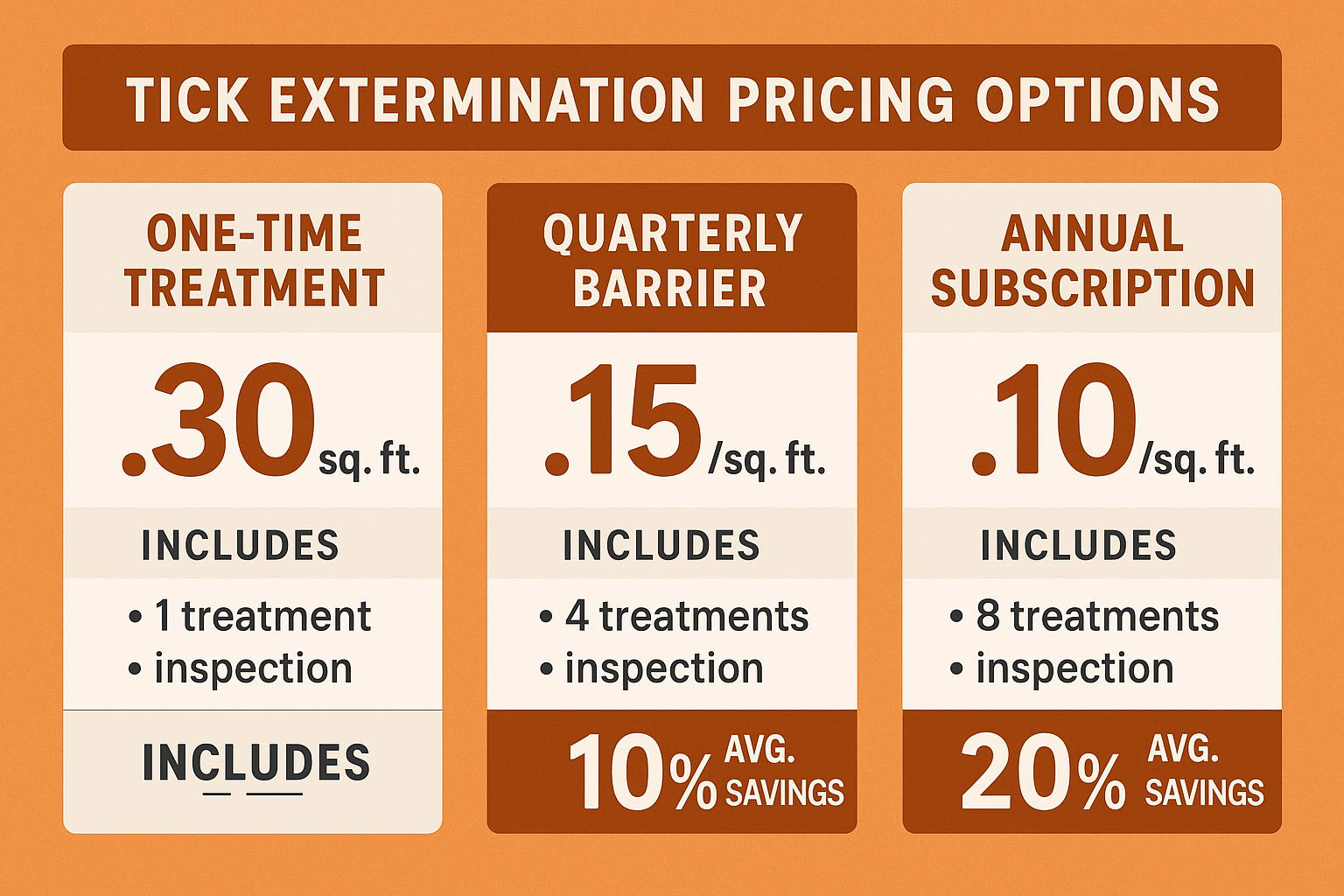
Cost per Square Foot & Services Included
| Package | Cost / 1,000 sq ft | Visits Included | Re‑treatments | Average Savings vs. One‑Time |
|---|---|---|---|---|
| One‑Time Treatment | $120 | 1 | 0 | — |
| Quarterly Barrier | $95 | 4 | 2 | ≈20 % |
| Annual Subscription | $80 | 6 | Unlimited | ≈33 % |
Typical Price Ranges for Druid Hills Homes
Most Druid Hills residences fall between 1,500 sq ft and 3,200 sq ft. Based on the table above, you can expect the following rough price bands:
- One‑Time Treatment: $180 – $384
- Quarterly Barrier: $143 – $304
- Annual Subscription: $120 – $256
These figures are averages; your final quote will reflect the exact square footage measured during the initial walkthrough.
Factors That Influence the Final Cost
Property size. Larger yards require more product and longer crew hours, raising the per‑square‑foot cost slightly.
Landscape complexity. Features such as dense shrubbery, stone walls, or multiple elevation changes increase the time needed to achieve uniform coverage.
Infestation level. A light, early‑season tick presence usually needs only a standard barrier, while heavy infestations may call for additional pre‑treatment steps like targeted spot‑sprays or habitat modification.
Access restrictions. Homes with limited driveway access or gated communities might incur a small travel surcharge, but Anthem Pest typically absorbs these costs for Druid Hills customers.
Stay Updated with Current Pricing
Tick‑control costs can shift with seasonal demand and regulatory changes. For the most up‑to‑date figures, consult the Anthem Pest tick control cost guide. Our team also provides a free, no‑obligation estimate that breaks down every line item, so you know exactly what you’re paying for.
Choosing the right package means balancing immediate relief with long‑term peace of mind. Whether you opt for a single treatment to knock out an unexpected outbreak or an annual subscription that keeps your yard safe year‑round, Anthem Pest Control guarantees transparent pricing and reliable results for every Druid Hills homeowner.
Secure a Tick‑Free Home with Anthem Pest Control
Why ticks demand immediate attention
Ticks are more than a nuisance; they transmit Lyme disease, Rocky Mountain spotted fever, and other illnesses that can affect both people and pets. Their activity spikes in spring and early summer, precisely when families begin to enjoy backyards and local parks. Missing this seasonal window can mean weeks of exposure and a higher risk of bite‑related infections.
Anthem’s professional edge
Anthem Pest Control brings EPA‑approved, low‑toxicity treatments that target ticks at every life stage while protecting your family’s health. Our technicians follow a strict safety protocol, applying products that break the tick life cycle without leaving harmful residues. Transparent pricing means you know exactly what you’re paying for—no hidden fees, no surprise add‑ons.
Benefits you’ll notice right away
After Anthem’s treatment, you’ll see fewer tick sightings on lawns, patios, and pet bedding within days. Homeowners report reduced skin irritations on kids and pets, and a noticeable decline in the “tick‑check” routine after outdoor play. Because we target the tick’s breeding sites, the protection lasts for months, giving you confidence to enjoy your yard without constant worry.
Local expertise that matters in Druid Hills
We’ve mapped tick hotspots throughout Druid Hills, GA, and our service plans reflect those patterns. Whether you live near the historic park trails or a densely wooded cul‑de‑sac, we customize applications to match the micro‑climate of your property. This localized approach maximizes effectiveness and reduces the number of treatments needed over the year.
Free, no‑obligation quote
Ready to protect your home? Request a personalized, no‑cost estimate today. Our team will assess your property, discuss any specific concerns—such as pets that spend time outdoors—and recommend a schedule that fits your lifestyle and budget.
Take the next step
Don’t let ticks linger on your porch, lawn, or pet bedding. Call 877‑371‑8196 now or visit Anthem Pest Control to lock in a tick‑free season. A quick call can secure a healthier environment for your family and give you peace of mind throughout the year.