Common Household Spiders in Georgia
Georgia’s warm, humid summers and mild winters create a perfect backdrop for a thriving spider community. The state’s mix of pine forests, wetlands, and suburban gardens supplies abundant insects—spiders’ primary food source—allowing populations to spill over into homes. Understanding which species are most likely to appear inside your house helps you spot potential problems early and choose the right treatment.

Southern House Spider (Kukulcania hibernalis)
Often mistaken for a brown recluse, the Southern house spider is larger—about 1½ inches across when its legs are spread. Its body is dark brown with a velvety sheen, and it builds loose, tangled sheet webs in corners and under furniture. You’ll most frequently find it in basements, crawl spaces, and behind wall voids where humidity stays high.
Although its bite can cause mild irritation, it’s not medically significant for most people. The spider’s presence is more of a nuisance than a health threat, but its web can trigger dust allergies for sensitive occupants.
Black Widow (Latrodectus mactans)
The iconic black widow is instantly recognizable by its glossy black body and the bright red hourglass marking on the underside of the abdomen. Females measure 1¼ inches in length, while males are much smaller and less noticeable. Their irregular, sticky webs are usually found in dark, undisturbed areas such as closets, garage shelves, and behind outdoor furniture stored indoors.
A bite from a female black widow can deliver neurotoxic venom, causing muscle cramps, sweating, and, in rare cases, severe systemic reactions. Prompt medical attention is advised if you suspect a bite, especially for children, the elderly, or anyone with a compromised immune system.
Brown Recluse (Loxosceles reclusa)
The brown recluse is a small, violin‑shaped spider measuring roughly ¼ to ½ inch. Its pale, creamy‑tan coloration is marked by a dark, fiddle‑shaped pattern on the dorsal side of the cephalothorax. Unlike the Southern house spider, it prefers tight, dry spaces and constructs a scant, irregular web in corners of closets, attics, and under stored boxes.
Its bite can be dangerous, producing necrotic lesions that may take weeks to heal. While severe reactions are uncommon, any bite that results in a growing ulcer or fever should be evaluated by a healthcare professional.
European Garden Spider (Araneus diadematus)
Also known as the “cross‑spider,” this species boasts a round, orange‑brown abdomen adorned with a distinctive white cross pattern. Adults range from ½ to ¾ inch in body length, and they spin classic circular orb webs in window frames, doorways, and light‑filled corners of rooms.
European garden spiders are harmless to humans; they rarely bite, and when they do, the bite feels like a mild pinprick. Their primary impact is visual—they can be startling for those uneasy around any spider, but they actually help control other indoor insects.
Why Identification Matters
Knowing the size, coloration, and web type of each species lets you quickly determine whether a spider is a benign house guest or a potential health risk. For instance, spotting a shiny black abdomen with a red hourglass signals a black widow, prompting immediate professional removal. Conversely, a harmless orb‑weaver can be left alone, as it contributes to a healthier indoor ecosystem by preying on flies and moths.
Health and Psychological Considerations
Beyond bites, spider webs can collect dust and allergens, aggravating asthma or allergic rhinitis. The mere sight of a spider—especially a black widow or brown recluse—can trigger anxiety or phobias, impacting a homeowner’s sense of safety. Addressing these concerns early with proper identification and targeted treatment reduces both physical risks and the mental discomfort associated with unwanted eight‑legged visitors.
For a complete list of local pest specialists who can verify spider species and recommend safe control measures, visit Angi Georgia Pest Control Listings.
Spotting Early Signs of a Spider Infestation
Spiders are quiet tenants; they often go unnoticed until they’ve built a sizable web or their numbers swell. By learning the subtle clues they leave behind, you can intervene before the situation escalates into a full‑blown infestation.
Visual Signs to Watch For
Most homeowners first notice the classic, tangled web in a corner of the ceiling or behind a bookshelf. However, spiders also spin delicate sheet‑like webs in dark crevices, under appliances, and inside cabinet gaps. These webs may be nearly invisible in low light, so use a flashlight and look for fine silk threads that catch dust.
Behavioral Clues: Insect Activity
Spiders are natural predators, so a sudden surge in insects—such as flies, ants, or small beetles—can be a red flag. When prey populations rise, spiders follow suit, establishing new hunting grounds. If you notice more insects crawling along baseboards or around window sills, it may indicate that spiders are already setting up shop nearby.
Physical Evidence: Cast Skins, Egg Sacs, and Droppings
Shedding is a normal part of a spider’s life cycle. Tiny, translucent exoskeletons (called exuviae) often accumulate near webs or along walls. Egg sacs—silky, round or oval structures—are another giveaway, especially in corners or under furniture. Lastly, spider droppings appear as small, dark specks resembling pepper; spotting them on surfaces or in dust piles signals active feeding.
Seasonal Triggers
In Buford, heavy rains in late summer and early fall push many outdoor spiders indoors seeking shelter. Likewise, the cooler months of November and December can drive species that prefer milder temperatures into homes. Keeping an eye on weather patterns helps you anticipate when spider activity might spike.
DIY Inspection Checklist
- Living Room & Family Areas: Examine ceiling corners, light fixtures, and behind sofas for webs or egg sacs.
- Kitchen: Look under the sink, behind the refrigerator, and inside pantry shelves for fine silk or shed skins.
- Bathrooms: Check vent covers, tile grout lines, and under the tub for damp‑friendly spider hideouts.
- Bedrooms: Inspect closets, under the bed, and around window frames where spiders love undisturbed corners.
- Basement & Garage: Scan stored boxes, pipe openings, and corners where moisture accumulates.
- Exterior Perimeter: Seal cracks, clean gutters, and remove debris that could serve as entry points.
When to Call a Professional
If you discover multiple egg sacs, extensive webbing, or a persistent increase in insect prey, it’s time to enlist a pest‑control specialist. Professionals have the tools to identify species, apply targeted treatments, and address underlying entry points that DIY methods often miss.
Conversely, a few isolated webs or a single shed exoskeleton can usually be managed with a thorough cleaning, vacuuming, and sealing of cracks. Use a high‑efficiency vacuum to remove webs and droppings, then apply a spider‑specific indoor spray to corners and crevices. If the problem recurs after several weeks, schedule an inspection with Anthem Pest Control—our local experts can tailor a safe, affordable plan that keeps your home spider‑free year round.
Seasonal Spider Activity in Georgia
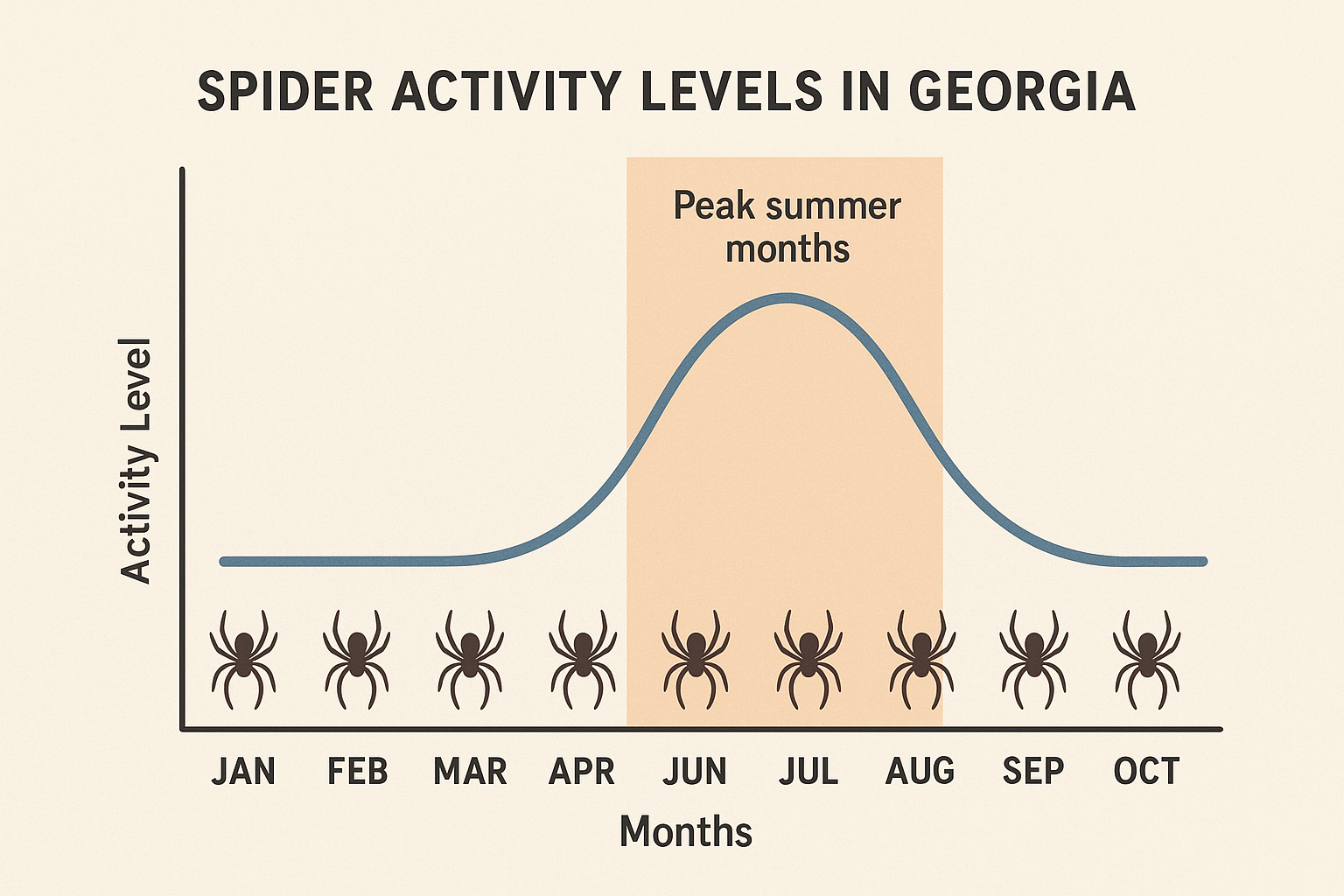
Georgia’s climate creates a predictable rhythm for spider populations, and the chart above captures that cycle in a single glance. From the chill of December through February, activity levels sit near the bottom of the scale—spiders are either dormant or hidden deep in protected crevices. As March rolls in, the chart begins to climb, reflecting the first wave of adult emergence. Activity rises steadily through April and May, reaches a sharp apex in July and August, then tapers off in September before dropping to winter lows once more.
Why summer drives the spike
The summer surge isn’t a coincidence; it’s a direct response to Georgia’s warm, humid conditions. Most common household spiders—such as the Southern house spider (Kukulcania hibernalis) and the orb‑weaver—thrive when nighttime humidity climbs above 60 %. Moist air softens their silk, making it easier to spin webs that can capture the abundant flying insects that also love the heat. In addition, higher temperatures accelerate spider metabolism, shortening the time it takes for eggs to hatch and allowing multiple generations to develop within a single season.
Temperature shifts and indoor migration
When daytime highs exceed 85 °F, many ground‑dwelling species retreat to cooler, shaded areas—often the interior of homes. Conversely, an early frost in late October can force spiders that have been living outdoors to seek shelter inside walls, attics, and basements. This temperature‑driven migration explains why homeowners frequently notice increased spider activity in basements during the first cool snap of autumn, even though the overall seasonal chart shows a decline.
Optimal timing for inspections and treatments
- Early spring prep (mid‑March to early April): Conduct a thorough perimeter inspection. Apply a pre‑emptive perimeter barrier to stop spiders from establishing outdoor webs that could later migrate indoors.
- Midsummer control (late June to early August): Target the peak activity window with a focused interior treatment. This is the most effective moment to reduce adult populations before they lay the next generation of eggs.
- Fall follow‑up (late September to early October): Perform a secondary treatment to address any survivors that have moved inside as temperatures begin to drop. This step also helps seal off entry points before the winter lull.
Linking seasonal trends to homeowner responsibilities
Understanding the spider calendar empowers homeowners to act proactively. Before the summer surge, seal cracks around windows, doors, and utility penetrations—spiders can slip through openings as small as a pencil lead. Trim vegetation that brushes the house, because overhanging branches create a humid bridge that invites spiders to the foundation. Inside, declutter basements and storage areas; fewer hiding spots mean fewer places for spiders to set up shop during a temperature‑driven retreat.
By aligning inspections and treatments with the natural ebb and flow of spider activity, Georgia homeowners can keep these eight‑legged guests at bay while minimizing chemical use. A well‑timed approach not only cuts down on the number of applications needed but also reduces the chance of a surprise spider sighting during the high‑humidity months when the pests are most active.
Treatment Options, Methods, and Pricing for Spider Control
Overview of Common Treatment Methods
When a spider infestation takes hold in a Buford home, professional technicians have four primary tools at their disposal: chemical sprays, insecticidal dusts, bait stations, and smoke‑machine fogging. Chemical sprays are fast‑acting liquids applied to cracks, baseboards, and other entry points where spiders hide. Dusts consist of fine powders that cling to surfaces and remain active for weeks, targeting spiders that walk through them. Bait stations contain a slow‑acting attractant that spiders carry back to their nests, while smoke‑machine fogging releases a fine mist that penetrates deep into wall voids and attics, coating hidden webs with residual insecticide.
Pros and Cons of Each Method
- Chemical Sprays – Pros: Immediate knock‑down, visible results after a single visit. Cons: Requires careful application around pets and children; effectiveness wanes after a few weeks.
- Insecticidal Dusts – Pros: Long‑lasting residual action, excellent for voids and wall cavities. Cons: May be messy to apply; less visible, so homeowners sometimes doubt it’s working.
- Bait Stations – Pros: Low toxicity, discreet placement, targets colony founders. Cons: Slower to see results, best for moderate infestations.
- Smoke‑Machine Fogging – Pros: Penetrates hard‑to‑reach areas, covers large surface area quickly. Cons: Requires evacuation of the home during treatment, higher upfront cost.
Integrated Pest Management (IPM) Approach Used by Anthem Pest Control
Anthem Pest Control doesn’t rely on a single tactic. Our certified technicians follow an Integrated Pest Management (IPM) framework that starts with a thorough inspection, identifies spider species, and pinpoints the conditions that invite them inside. From there we combine the most suitable methods—often a blend of dusts for hidden spaces and a targeted spray for high‑traffic zones—while minimizing chemical exposure. IPM also includes sealing entry points, reducing outdoor lighting that attracts insects (spider prey), and educating homeowners on clutter reduction. This holistic strategy keeps spiders at bay long after the last visit.
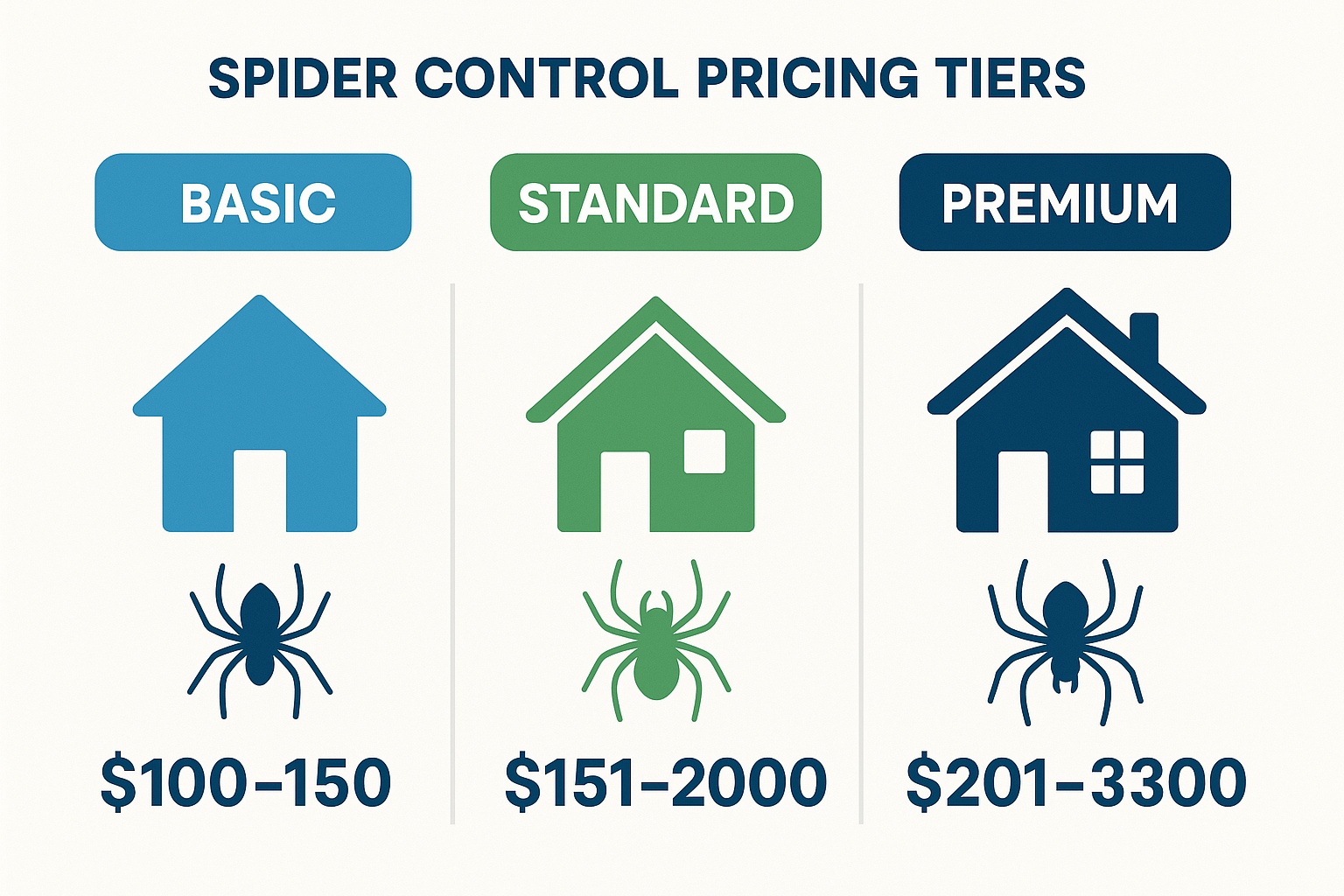
Pricing Infographic Breakdown
| Tier | Price Range | Typical Use‑Case |
|---|---|---|
| Basic | $100‑$150 | Light, occasional sightings; single‑visit treatment |
| Standard | $151‑$200 | Moderate activity; two‑visit plan with follow‑up |
| Premium | $201‑$300 | Heavy infestation; comprehensive IPM program with warranty |
What’s Included in Each Tier
- Basic – One thorough interior spray, a dust application in key voids, and a 30‑day follow‑up call.
- Standard – Two visits: initial spray + dust, plus a second visit for fogging or bait placement; includes a 60‑day warranty on re‑infestation.
- Premium – Three visits covering spray, dust, fogging, and bait stations; full IPM assessment, sealing of entry points, and a 90‑day unlimited service guarantee.
How Homeowners Can Choose the Right Tier
Start by gauging the severity of the problem. If you’ve only spotted a few lone spiders in corners, the Basic tier usually suffices. Notice webs forming in multiple rooms, especially in basements or attics? The Standard tier adds that extra layer of protection with a second visit and more thorough coverage. When webs blanket ceilings, you’re dealing with a heavy infestation that threatens to spread to neighboring homes—this is where the Premium tier’s full‑scale IPM plan shines. Our technicians will walk you through a quick assessment during the initial call, helping you match the tier to your specific needs.
Safety First: EPA‑Approved Products and Homeowner Protection
All chemicals used by Anthem Pest Control are EPA‑registered, meaning they have passed rigorous safety and efficacy tests. Technicians wear protective gear, apply products according to label directions, and schedule treatments at times that minimize disruption to families and pets. For households with young children or sensitive pets, we can prioritize dusts and bait stations, which pose the lowest direct exposure risk. Transparency is built into every quote—no hidden fees, no surprise chemicals—so you know exactly what’s being applied and why.

Protect Your Home with Expert Spider Control
Understanding what you’re dealing with is the first step toward a spider‑free home. In Buford, Georgia, the most common invaders are the black‑widow, brown recluse, and the ubiquitous house spider. You can spot them by their distinctive body shapes—black‑widows flaunt a shiny, hour‑glass abdomen, while brown recluses have a violin‑shaped mark on the cephalothorax. House spiders are smaller, often pale, and spin irregular webs in corners, basements, and attics.
Key signs of a spider infestation
- Unusual webbing in hidden areas such as under cabinets, behind picture frames, or in crawl‑space vents.
- Frequent sightings of spiders during evening hours, especially near lights.
- Small, brownish droppings that look like pepper grains near entry points.
- Occasional bites that cause localized redness or a mild rash.
Seasonal timing you should know
Spiders are most active in late summer through early fall when temperatures drop and insects, their primary food source, become plentiful. This is also the time they seek shelter inside homes to overwinter. Early‑spring treatments can interrupt their life cycle before eggs hatch, while a fall service helps eliminate adults that have moved indoors.
Treatment options at a glance
- Targeted spot‑treatments – applied directly to webs, cracks, and entry points.
- Barrier sprays – create a protective perimeter around the home’s foundation.
- Indoor residual sprays – continue to work for weeks, reducing hidden populations.
- Integrated Pest Management (IPM) – combines sanitation, exclusion, and low‑toxicity products for long‑term control.
Why choose a professional service?
Attempting DIY solutions often leads to incomplete coverage and repeated sightings. Certified technicians bring three critical advantages:
- Safety: Trained to apply products that are effective yet safe for children, pets, and the environment.
- Thoroughness: Use specialized equipment to locate hidden nests, seal entry gaps, and treat hard‑to‑reach spaces.
- Guaranteed results: Most companies, including Anthem Pest Control, stand behind their work with service warranties and follow‑up visits.
Because spider activity in Buford fluctuates with humidity and outdoor lighting, a one‑time treatment may not be enough. Anthem Pest Control offers seasonal follow‑up visits and a customized prevention plan that keeps your home sealed, reduces insect prey, and minimizes the chance of new spiders moving in.
If you’re ready to safeguard your home from unwanted eight‑legged guests, let Anthem Pest Control handle the job with expertise and transparent pricing. Our certified technicians use the latest IPM techniques to eliminate spiders while protecting your family and pets.
Our pricing is upfront, with no hidden fees, so you know exactly what you’re paying for before any work begins. We provide a detailed service report after each visit, giving you peace of mind that the job is done right.
Call us today at 877‑371‑8196 for a free, no‑obligation quote, or schedule service online. Taking action now prevents a small problem from becoming a seasonal invasion.