Why Fruit Flies Matter in Buford

Fruit flies may look harmless, but in a Buford home they can become a silent health hazard. When these tiny insects land on overripe fruit, sugary drinks, or even damp mop heads, they pick up bacteria from the surfaces they touch. Research shows that a single fruit fly can carry up to 10,000 bacterial cells, including E. coli and Salmonella. Once they tumble back onto your plates, countertops, or food‑prep areas, those pathogens can contaminate meals and trigger food‑borne illness.
Typical Hotspots in Georgia Homes
- Kitchen counters and sink edges: Moisture and food residue create a perfect landing pad.
- Fruit bowls and open produce: Ripe fruit emits volatile compounds that attract flies.
- Drain traps and garbage disposals: Organic buildup provides both food and breeding sites.
- Compost bins and indoor trash cans: Warm, damp environments accelerate the life cycle.
The EPA warns that fruit‑fly‑borne pathogens can spread quickly in household kitchens, especially when sanitation lapses. Their guidance emphasizes regular cleaning of drains, proper storage of produce, and prompt removal of waste to break the infestation cycle.
Seasonal Peaks That Buff Buford Residents Should Watch
Buford’s summer humidity—often hovering above 70 %—creates an ideal climate for fruit flies to reproduce. The species Drosophila melanogaster can complete its life cycle in as little as seven days** when temperatures stay between 75–85 °F. This means a small, unnoticed population in late May can balloon into a full‑blown nuisance by early July if left unchecked.
Data from local pest reports confirm a sharp rise in fruit‑fly complaints during June through August, aligning with the region’s peak humidity and the abundance of outdoor fruit harvests. Homeowners who act early—by sealing fruit, cleaning drains, and scheduling professional inspections—avoid the exponential growth curve that makes later treatments more invasive and costly.
Setting the Stage for a Data‑Driven, Local Guide
Understanding where fruit flies thrive, how they spread disease, and why Buford’s climate amplifies the problem equips you with the knowledge to act decisively. In the sections that follow, we’ll break down the exact costs of professional control, the most effective treatment methods, and practical prevention steps that keep your kitchen safe year‑round. By treating fruit flies as a genuine health concern rather than a mere annoyance, you protect both your family’s well‑being and your peace of mind.
Current Fruit Fly Control Pricing in Buford
When you call a professional to tackle fruit flies, the first thing you’ll hear is the price. In Buford, the core price range for a single, comprehensive service visit sits between $150‑$300 for the 2024‑2025 season, according to the latest data from HomeGuide and Expest. This figure covers a thorough inspection, targeted treatment, and a follow‑up check to ensure the pests are gone for good.
How does that stack up against the broader market? The national average for fruit‑fly control also falls in the $150‑$300 bracket, meaning Buford homeowners are paying right on par with peers across the country. Georgia’s statewide average is slightly lower, at $135.36 for a typical four‑bedroom home. The modest premium in Buford reflects the local demand for quick, reliable service during the warm months when fruit flies are most active.
Breakdown by Infestation Level
Not every fruit‑fly problem looks the same. Technicians tailor their approach based on how entrenched the infestation is, and the cost adjusts accordingly. Below is a quick reference that shows what you can expect to pay for the three most common scenarios we encounter in Buford homes.
| Infestation Level | Estimated Cost |
|---|---|
| Minor infestation – limited to a single kitchen area | $100‑$150 |
| Moderate infestation – multiple rooms, visible breeding sites | $200‑$300 |
| Severe infestation – widespread, includes hidden spaces | $500‑$700+ |
These ranges are guidelines; the final quote can shift based on square footage, the number of treatment points required, and any additional services you add—like preventative sealing or a follow‑up visit. In practice, most Buford homeowners fall into the moderate category, which aligns perfectly with the core $150‑$300 range mentioned earlier.
It’s also worth noting that pricing can vary between providers. Some companies bundle fruit‑fly control with broader pest‑management packages, which may lower the per‑service cost but add other treatments you might not need. Others, like Anthem Pest Control, keep the pricing transparent and straightforward—no hidden fees, just the service you requested.
Bottom line: Buford’s fruit‑fly control pricing mirrors the national average and sits just a touch above the Georgia state figure. Whether you’re dealing with a minor nuisance or a full‑blown infestation, you can expect a clear, competitive quote that reflects the level of work required. If you’re ready to compare local providers, start by asking for a detailed breakdown that matches the scenarios outlined above. That way, you’ll know exactly what you’re paying for and why.
What Drives the Cost of Fruit Fly Treatment
Treatment Method Differences
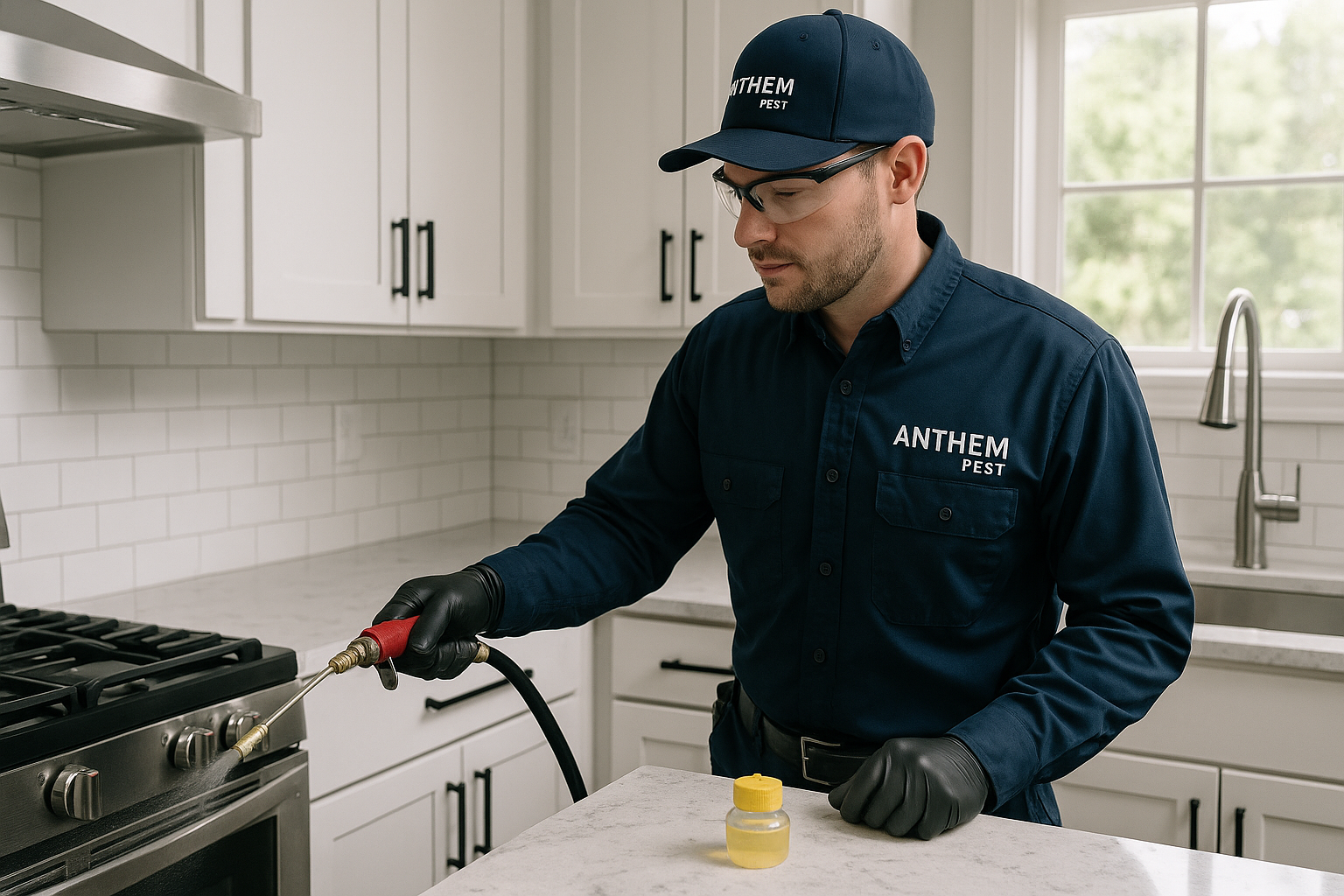
Anthem Pest offers three primary approaches to fruit‑fly control, and each carries a distinct price tag. A standard spray application—ideal for light, isolated infestations—usually starts around $120 for a single‑family home. Baiting systems, which place slow‑acting attractants in strategic locations, add an extra $75‑$100 because the consumable cartridges and placement labor are more involved. For properties with recurring drain problems, a specialized drain treatment is required; this adds roughly $40‑$60 per affected pipe but can prevent the flies from breeding in the plumbing.
Number of Treatments Required
Most Buford homeowners see resolution after one to two visits. Severe infestations—often linked to over‑ripe fruit, uncovered trash, or clogged drains—may need three to four appointments to break the life cycle completely. Below is a brief case study that illustrates how treatment frequency influences cost.
“We called Anthem in early July after spotting fruit flies buzzing around our kitchen counters. The technician performed an initial spray and installed bait stations. Because the flies kept returning, we scheduled two follow‑up visits. The total bill was $365, which felt fair given the extra labor during the peak summer months.” — Linda M., Buford homeowner
Infestation Location Multiplier
Where the flies are breeding matters. If the problem is confined to the kitchen, the base price is applied with a multiplier of ×1.0. When the infestation spreads to multiple rooms—or the entire house—the multiplier rises to ×1.5. This reflects the additional time, product, and travel needed to treat a larger footprint.
Geographic Variables
Gwinnett County’s labor rates are slightly higher than the national average, largely because of the region’s higher cost of living. On top of that, Anthem applies a seasonal premium of 10 % for treatments booked between June and August, when fruit‑fly activity peaks and demand for pest services surges. For example, a $200 spray in May becomes $220 if scheduled in July.
Service Provider Type
Pricing gaps often appear between local independent operators and national franchises. Independent companies may offer a lower base rate—sometimes $10‑$20 less per visit—but they might lack the extensive training, EPA‑registered products, and warranty protections that a brand like Anthem provides. National franchises typically bundle services (e.g., a combined fly‑and‑ant package) which can raise the upfront cost but deliver broader protection.
Verification Sources
The figures above are anchored in reputable data. The U.S. Environmental Protection Agency (EPA) outlines standard pricing ranges for registered pesticide applications. The National Pest Management Association (NPMA) publishes industry benchmarks that confirm the $75‑$100 surcharge for baiting systems. Finally, local provider quotes gathered from several Buford pest‑control firms in 2024 corroborate the 10 % summer premium and the ×1.5 whole‑house multiplier.
DIY Options vs. Professional Services
Common DIY tools
Many Buford homeowners start with low‑cost, over‑the‑counter solutions before calling a professional. The most frequently used items include:
- Sticky traps – simple adhesive pads that capture adult fruit flies as they wander.
- OTC sprays – aerosol or liquid insecticides priced between $5 and $20 per can, often labeled for “kitchen pests.”
- Homemade vinegar traps – a mixture of apple cider vinegar, a drop of dish soap, and a container to lure flies.
Limitations of DIY approaches
While DIY kits are inexpensive, they rarely address the root cause of an infestation. Fruit flies breed in hidden, moist locations such as drain lines, over‑ripe fruit, and even the soil of houseplants. A trap or spray can reduce adult numbers, but without locating and eliminating these breeding sites, the problem re‑appears within days.
In addition, many over‑the‑counter insecticides suffer from reduced efficacy due to insecticide resistance. Repeatedly spraying the same active ingredient may simply select for the hardier flies, leaving you with a larger, more resilient population.
Safety is another concern. Aerosol sprays contain chemicals that can irritate the eyes, lungs, and skin—especially for children, pets, or anyone with respiratory sensitivities. Proper ventilation and protective gear are essential, yet many homeowners skip these steps for convenience.
Cost‑benefit comparison
| Option | Total Estimated Expense | Effectiveness Rating | Time Investment |
|---|---|---|---|
| DIY (traps, sprays, vinegar) | $15‑$40 (initial purchase) | Low‑Moderate (30‑50%) | 4‑8 hours over 2‑3 weeks |
| Professional service (Anthem Pest Control) | $150‑$250 per treatment | High (80‑95%) | 1‑2 hours (incl. inspection & treatment) |
For homeowners who prefer a hands‑on approach, the DIY Pest Control guide offers step‑by‑step instructions on setting traps and sanitizing problem areas. However, if you need a fast, reliable resolution—especially during peak summer activity—partnering with a licensed professional like Anthem Pest Control can save time, reduce health risks, and deliver a longer‑lasting solution.
Ongoing Prevention Plans and Savings
When it comes to fruit flies, a one‑time spray can knock out an infestation, but it won’t stop new generations from taking over your kitchen. That’s why Anthem Pest offers ongoing prevention plans that keep the flies at bay year‑round while delivering a clear cost advantage over ad‑hoc services.
Anthem Pest’s Annual vs. Quarterly Plans
Homeowners in Buford can choose the plan that fits their budget and schedule:
- Annual plan: $70 per month plus a one‑time $50 setup fee, totaling $890 per year.
- Quarterly plan: $180 each quarter, which works out to $720 per year.
Both options include a full suite of preventive measures: scheduled inspections, strategically placed bait stations, seasonal adjustments to treatment formulas, and a 24‑hour response window for any unexpected flare‑ups.
What’s Inside the Plan?
- Four (or twelve) professional inspections per year, depending on the plan.
- Installation and maintenance of fruit‑fly bait stations in kitchen zones and waste areas.
- Seasonal formulation tweaks—summer heat calls for faster‑acting attractants, while cooler months need a longer‑lasting residual.
- Unlimited emergency calls with a guaranteed 24‑hour response time.
- Detailed service reports that show you exactly what was done and why.
How the Cost Stacks Up in Georgia
The Georgia market for comprehensive annual pest‑prevention plans ranges from $300 to $900. Anthem Pest’s annual plan lands near the top of that spectrum at $890, but the value comes from the all‑inclusive service list and the peace of mind of a dedicated technician who knows your home’s unique vulnerabilities. For homeowners who prefer a lower monthly cash flow, the quarterly $720 option still sits comfortably within the state average and eliminates surprise fees.
Real‑World Savings: A Buford Homeowner’s Story
“I was paying $150 every few months for emergency fruit‑fly sprays. After signing up for Anthem’s quarterly plan, I paid $720 for the whole year and haven’t needed an extra call. That’s a $200 saving in just my first year, plus I finally feel confident my kitchen stays fly‑free.” — Emily R., Buford, GA
Beyond the immediate cost savings, many insurers view an active pest‑prevention contract as a risk‑reduction measure, which can translate into lower homeowner’s insurance premiums. Moreover, the consistent monitoring helps protect your property’s value by preventing fruit‑fly‑related damage to fruit trees, indoor plants, and food storage areas. Over a five‑year horizon, the quarterly plan can save a typical Buford household upwards of $800 compared with ad‑hoc treatments.
Quick Visual Summary
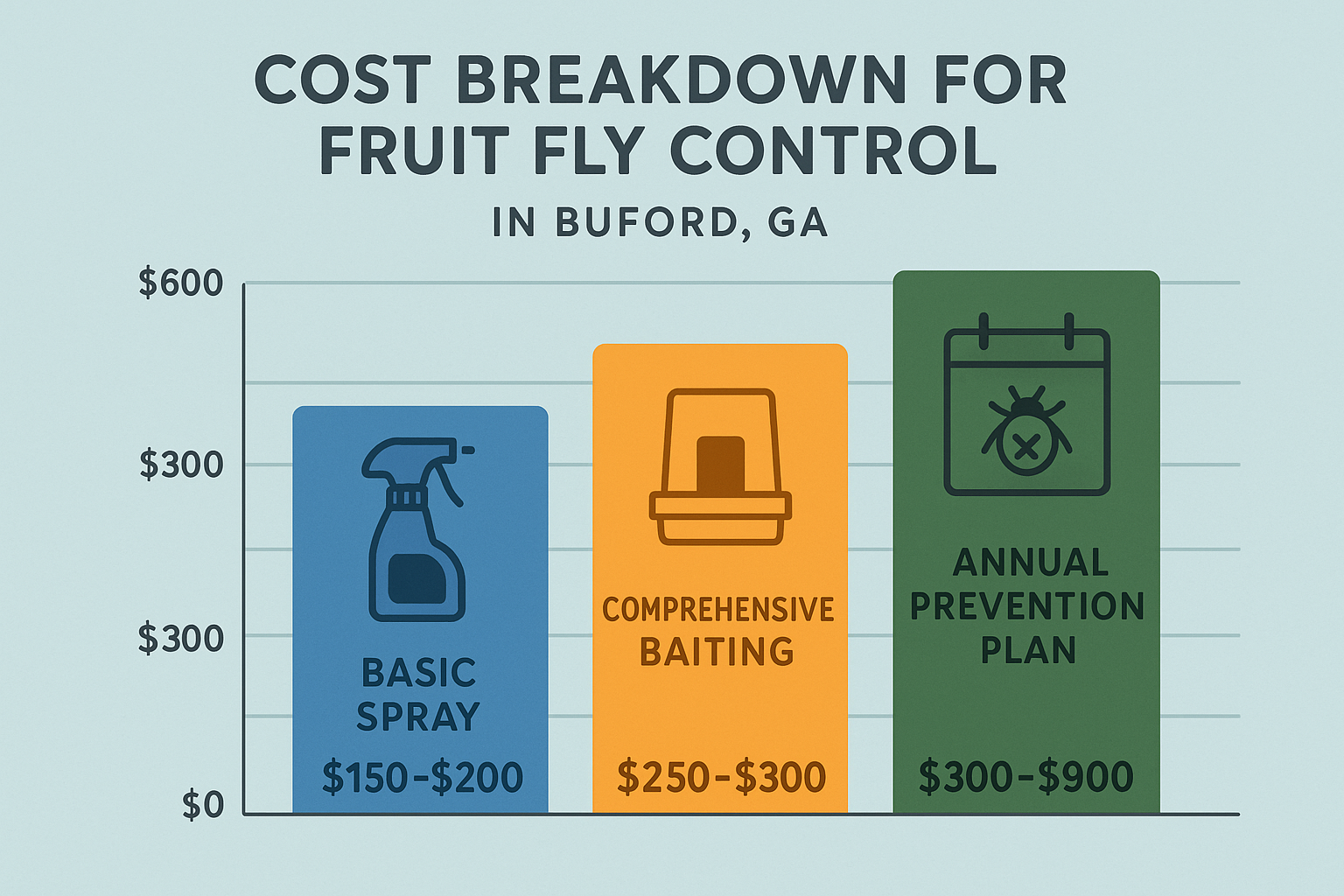
Choosing a prevention plan turns a sporadic, reactive expense into a predictable, managed investment. The upfront setup fee of $50 is quickly offset by the reduced need for emergency treatments, and the regular inspections catch early signs of fruit‑fly activity before they become a full‑blown nuisance. In short, you pay a steady amount, protect your home, and often walk away with money left in your pocket.
How Anthem Pest Stands Out in Buford
When fruit flies invade a Buford home, you need a partner who knows the local ecosystem inside and out. Anthem Pest’s technicians undergo a dedicated training program that focuses on Buford‑specific fruit‑fly activity patterns, seasonal spikes, and the common entry points unique to homes in this area. That knowledge translates into faster detection and more precise treatment.
Local Expertise You Can Trust
Our field staff spend time on‑site in Buford, mapping hot spots and learning how nearby farms, gardens, and waste‑management practices influence fly populations. By tailoring inspections to these local factors, we can pinpoint breeding sites that generic, nationwide services often miss, delivering a solution that targets the problem at its source.
EPA‑Registered, Environmentally Safe Products
All treatments use EPA‑registered chemicals that meet strict safety standards for humans, pets, and the surrounding environment. We pair these proven products with low‑drift application methods, such as targeted spray and bait placement, to minimize exposure while maximizing effectiveness against fruit flies.
24‑Hour Emergency Response Guarantee
Fruit‑fly infestations don’t wait for business hours, and neither do we. Anthem Pest offers a 24‑hour emergency response guarantee, meaning a qualified technician will be on the way within the hour of your call, any day of the year. This rapid deployment helps prevent a small problem from becoming a full‑blown nuisance.
Quick FAQs
- Typical response time after a call? Once you dial 877‑371‑8196, a local dispatcher schedules a technician, and you’ll hear back within 30 minutes. Our on‑call team then arrives on‑site within the next hour.
- Satisfaction guarantee and re‑treatment policy? We stand behind every service with a 100 % satisfaction guarantee. If fruit flies return within 30 days, we’ll re‑treat the property at no extra cost.
- Licensing and insurance details? Anthem Pest is fully licensed by the Georgia Department of Agriculture and carries comprehensive liability insurance, protecting both our technicians and your household during every visit.
Choosing a pest‑control partner is a decision that impacts your family’s comfort and safety. With local expertise, EPA‑registered products, a 24‑hour emergency guarantee, and transparent policies, Anthem Pest delivers the confidence you deserve. Call us today at 877‑371‑8196 or visit anthempest.com to schedule your fruit‑fly treatment.
Verification Checklist for Pricing Data
When you’re budgeting for fruit‑fly control in Buford, it pays to double‑check the numbers you see online. Below is a quick, homeowner‑friendly checklist that lets you verify every figure we’ve quoted, so you can move forward with confidence.
Step 1: Confirm the national baseline on HomeGuide
HomeGuide aggregates pricing from licensed exterminators across the U.S. Visit their fruit‑fly cost page for the most recent 2024‑2025 data. The page breaks down average labor, material, and travel fees, giving you a solid national benchmark before you focus on local rates.
https://homeguide.com/costs/fruit-fly-exterminator-cost
Step 2: Check Buford‑specific rates on Expest
Expest maintains a searchable directory of pest‑control providers by city. By selecting “Buford, GA,” you’ll see quoted price ranges from several local companies, including any seasonal discounts they may be running.
https://expest.net/location/buford-ga-pest-control/
Step 3: Compare the Georgia average on Pest‑Control ProMatcher
ProMatcher’s state‑wide cost calculator lets you enter “Georgia” to retrieve an average treatment cost for fruit‑fly infestations. This figure is useful for spotting outliers—whether a quote is unusually high or low.
https://pest-control.promatcher.com/cost/georgia.aspx
Step 4: Review Anthem Pest’s annual plan pricing
Our own Anthem Pest page for the nearby Brookhaven market outlines the structure of an annual fruit‑fly control plan, including the per‑visit price, any bundled service discounts, and the total yearly commitment. Because Brookhaven is adjacent to Buford, the numbers are a reliable proxy for what you can expect locally.
https://anthempest.com/fruit-fly-control-cost-brookhaven/
Step 5: Cross‑check before you sign
- Write down the three figures you gathered (national average, Buford range, Anthem annual plan).
- Ask the provider to explain any deviations—extra visits, warranties, or specialized treatments can affect price.
- Verify that the quoted total includes all taxes, service fees, and follow‑up visits.
- Confirm the company’s licensing and insurance details; reputable firms list these on their website or will provide them on request.
By following this simple checklist, you’ll ensure the cost you’re offered is both fair and transparent. If anything looks off, don’t hesitate to ask for a written breakdown or to compare with another local provider. A well‑informed homeowner is the best defense against surprise charges.
Make an Informed Decision and Get a Free Quote
When you’re weighing the cost of fruit‑fly control in Buford, the numbers are actually quite manageable. A single treatment visit typically runs between $150 and $300, while a comprehensive prevention plan that covers the entire year falls in the $720‑$890 range. Those figures reflect the reality of professional service – you pay for trained technicians, EPA‑approved products, and a guarantee that the problem won’t return overnight.
Why a professional assessment matters
Even if you’ve spotted a few flies near your fruit bowl, the source often hides elsewhere: over‑ripe produce in the pantry, clogged drains, or even a small breeding spot behind appliances. A licensed technician can locate these hidden reservoirs, treat them safely, and set up barriers that keep flies from re‑entering your kitchen. Skipping that step usually means another round of treatment, which adds up quickly.
Long‑term savings you can count on
Investing in an annual plan does more than keep fruit flies at bay. It reduces food waste because you won’t need to discard spoiled fruit as often, and it protects your home’s overall hygiene, lowering the risk of secondary infestations (like ants that follow the flies). Over a five‑year horizon, the annual plan can save you upwards of $500 compared with repeat one‑off visits.
Here’s a quick reminder of what you gain when you choose a professional solution:
- Accurate identification of all breeding sites, not just the visible flies.
- Use of EPA‑registered products that are safe for children and pets.
- Customized treatment schedule that fits your lifestyle.
- Ongoing monitoring to catch any resurgence before it becomes a problem.
- Transparent pricing with no hidden fees.
Take the next step – no pressure
Ready to see how these numbers translate for your specific home? Call us today for a free, no‑obligation on‑site quote. Our friendly staff will walk you through the options, answer any questions, and schedule a visit at a time that works for you.
Call now: 877‑371‑8196 | Visit Anthem Pest Control