Introduction to Termite Control Costs in Grayson
Living in Grayson means enjoying Georgia’s warm, humid summers—but it also means sharing your home with one of the state’s most persistent invaders: termites. The combination of high humidity, abundant wood, and mild winters creates an ideal breeding ground for these silent destroyers, and a single undetected colony can chew through structural timber before you even notice a problem.
Understanding the true cost of termite control isn’t just about comparing price tags; it’s about protecting your investment and avoiding surprise repairs down the line. Transparent pricing lets you budget confidently, weigh the value of different treatment plans, and choose a solution that fits both your home’s needs and your wallet.
This guide is designed to give Grayson homeowners a complete picture of what to expect when tackling termite threats. We’ll break down the factors that drive pricing, explore the most common species in the area, and compare the pros and cons of various treatment options—from liquid barriers to baiting systems. You’ll also find a curated list of local providers, warranty considerations, and a clear comparison of DIY versus professional approaches.
By the end of this article, you’ll have a decision‑making framework that makes it easy to:
- Identify the termite species most likely to affect your property.
- Understand the cost drivers behind each treatment method.
- Choose a reputable Grayson‑based pest control company.
- Evaluate warranties and long‑term protection plans.
- Decide whether a DIY solution can truly meet your needs.
- Find answers to the most common FAQs about termite control.

Termite Threat Landscape in Grayson
Grayson sits in Gwinnett County, an area where termites thrive. The two culprits you’ll most likely encounter are the Eastern Subterranean Termite (Reticulitermes flavipes) and the Western Drywood Termite (Incisitermes minor). Subterranean termites build hidden colonies underground and travel through moist soil to reach wood, while drywood termites live entirely inside the timber they consume.
How the species differ
Each species attacks wood differently, so we inspect foundations for mud tubes and wood cores for drywood signs.
- Eastern Subterranean Termite – builds underground networks visible as mud tubes; Western Drywood Termite – lives inside dry timber, leaving frass pellets.
Climate factors that fuel infestations
Termites love moisture, and Grayson’s climate provides plenty. The 2024 average humidity is about 71 % and annual rainfall totals roughly 52 inches, creating a damp environment that keeps soil‑borne termites active year‑round.
Why Georgia ranks among the nation’s worst
The EPA’s 2024 Termite Damage Report places Georgia in the top 5 states for reported termite damage. The combination of warm temperatures, high humidity, and a wealth of hardwood construction gives termites a perfect breeding ground, and homeowners often discover damage only after significant structural components have been compromised.
Seasonal activity peak
Local climate data shows that termite activity in Grayson climbs sharply from May through July, coinciding with the highest monthly rainfall (averaging 6 inches) and humidity above 75 %.
Real‑world cost implication
Consider a typical 1,800‑sq‑ft home in Grayson. If a subterranean colony goes undetected for a few years, the termites can hollow out support beams, joists, and foundation piers. Repair estimates from local contractors routinely exceed $5,000 for structural remediation, not including the cost of a full‑scale treatment plan.
A professional termiticidal barrier or bait system typically ranges from $2,500 to $4,000, a fraction of the $5,000+ repair bill that can arise from untreated damage.
Understanding the species present and the climate that nurtures them helps you see why proactive inspections and timely interventions are essential. At Anthem Pest Control, we combine local expertise with proven treatment protocols to keep your home safe before damage—and costly repairs—become inevitable.
Core Factors Influencing Treatment Costs
Infestation Severity
Termite damage can range from a few isolated tunnels to a full‑scale colony chewing through structural wood. Most pest professionals break severity into three tiers:
- Small – a few active zones, typically limited to a single room or section of a crawl space. Cost bracket: $250‑$1,000.
- Medium – multiple active zones spread across walls, floors, or a larger portion of the foundation. Cost bracket: $400‑$1,000.
- Large – colony extends throughout the home, often requiring extensive barrier work or fumigation. Cost bracket: $1,000‑$3,000 [2].
Home Size & Layout
Pricing isn’t just about square footage; it’s also about how that space is built. Contractors often charge by the linear foot for barrier treatments, which means a sprawling ranch with a long perimeter can cost more than a compact two‑story house of the same square footage. Crawl spaces, slab foundations, and pier‑and‑beam designs each demand different access points, influencing labor time and material usage.
Treatment Method Cost Ranges
Choosing the right method hinges on the infestation level and homeowner preference:
- Liquid barrier – $3‑$12 per linear foot, applied around foundations and crawl spaces.
- Bait systems – $800‑$1,500 for installation plus ongoing monitoring fees (often $50‑$100 per visit).
- Spot treatment – $250‑$700 for localized applications, ideal for early‑stage or isolated activity.
- Fumigation – $1,200‑$2,500+ for whole‑home tenting, reserved for severe, widespread infestations.
Service Frequency Options
Many homeowners opt for a one‑time eradication, but preventative plans can spread costs over time. Annual contracts typically include a spring inspection and retreat, while quarterly or monthly plans add more frequent monitoring, often at a discounted per‑visit rate.
Inspection Fees
Before any treatment, a qualified technician will assess the property. Expect an inspection charge of $75‑$150, which many companies waive if you move forward with a full treatment package.
Quick Reference Table
| Factor | Typical Cost Range | Key Considerations |
|---|---|---|
| Infestation severity | $250‑$3,000 | Small, medium, large categories |
| Home size & layout | $3‑$12/linear foot | Perimeter length, crawl space access |
| Treatment method | $250‑$2,500+ | Barrier, bait, spot, fumigation |
| Service frequency | One‑time to annual plans | Upfront vs. spread‑out payments |
| Inspection fee | $75‑$150 | Often credited toward treatment |
Remember to verify the latest 2025 Georgia EPA termite treatment cost averages before signing a contract. Understanding these variables helps you compare quotes confidently and choose the solution that fits both your home’s needs and your budget.
Detailed Breakdown of Treatment Options & Prices
When it comes to protecting a Grayson home from silent, wood‑eating invaders, knowing how each treatment works—and what it costs—helps you choose the right solution without surprise bills.
Liquid Barrier (Termidor, Premise)
A liquid barrier is applied to the soil around the foundation, forming a continuous chemical wall that termites cannot cross. Products like Termidor and Premise release a low‑dose insecticide that spreads through the colony, killing workers and soldiers on contact. For a typical 2,000‑sq‑ft residence in Grayson, the full application runs between $1,200 and $2,000. The USDA reports a 100 % success rate when the barrier is installed correctly, making it the go‑to preventive method for new construction or homes with a history of activity.
Bait Systems (Sentricon, Termite Bait)
Bait stations are placed strategically in the yard and connected to a monitoring cable. Each station contains cellulose material laced with a slow‑acting growth regulator; foraging termites feed on the bait, share the toxin, and eventually collapse the colony from within. Installation costs range from $800 to $1,500, with annual monitoring fees of $70–$200. This approach shines when you prefer a less‑invasive solution that targets the colony directly, especially for homes on larger lots where a soil barrier might be difficult to maintain.
Spot Treatment
Spot treatments address localized damage—think a porch column, a damaged sill, or a small crack where termites have already breached the wood. A technician applies a concentrated foam or spray directly to the affected area, creating an immediate kill zone. Prices typically fall between $250 and $700, depending on the size and accessibility of the hotspot. For Grayson homeowners who catch an infestation early, spot treatment can be a cost‑effective stop‑gap before a full‑scale program is needed.
Fumigation/Tenting
Fumigation, often called tenting, involves covering the entire structure with an airtight tarp and releasing a gas that penetrates every void, destroying the colony in one sweep. Because the gas must reach all wood, occupants must vacate the home for several days, and the process requires a licensed contractor and a permit. The price tag ranges from $1,200 to $2,500+, scaling with home size and colony severity. This method is ideal for large, established colonies or when termites have infested multiple rooms, floors, or the attic.
Real‑World Example from Grayson
John Miller, a Grayson homeowner with a two‑story slab‑on‑grade house, discovered extensive termite activity in both the kitchen cabinets and the upstairs bedroom floor joists. After a thorough inspection, his pest professional recommended full‑house fumigation. John agreed, vacated for three days, and paid $2,200 for the complete service. Within weeks, the colony was eradicated, and a new liquid barrier was installed as a preventive follow‑up, giving him peace of mind for the next decade.
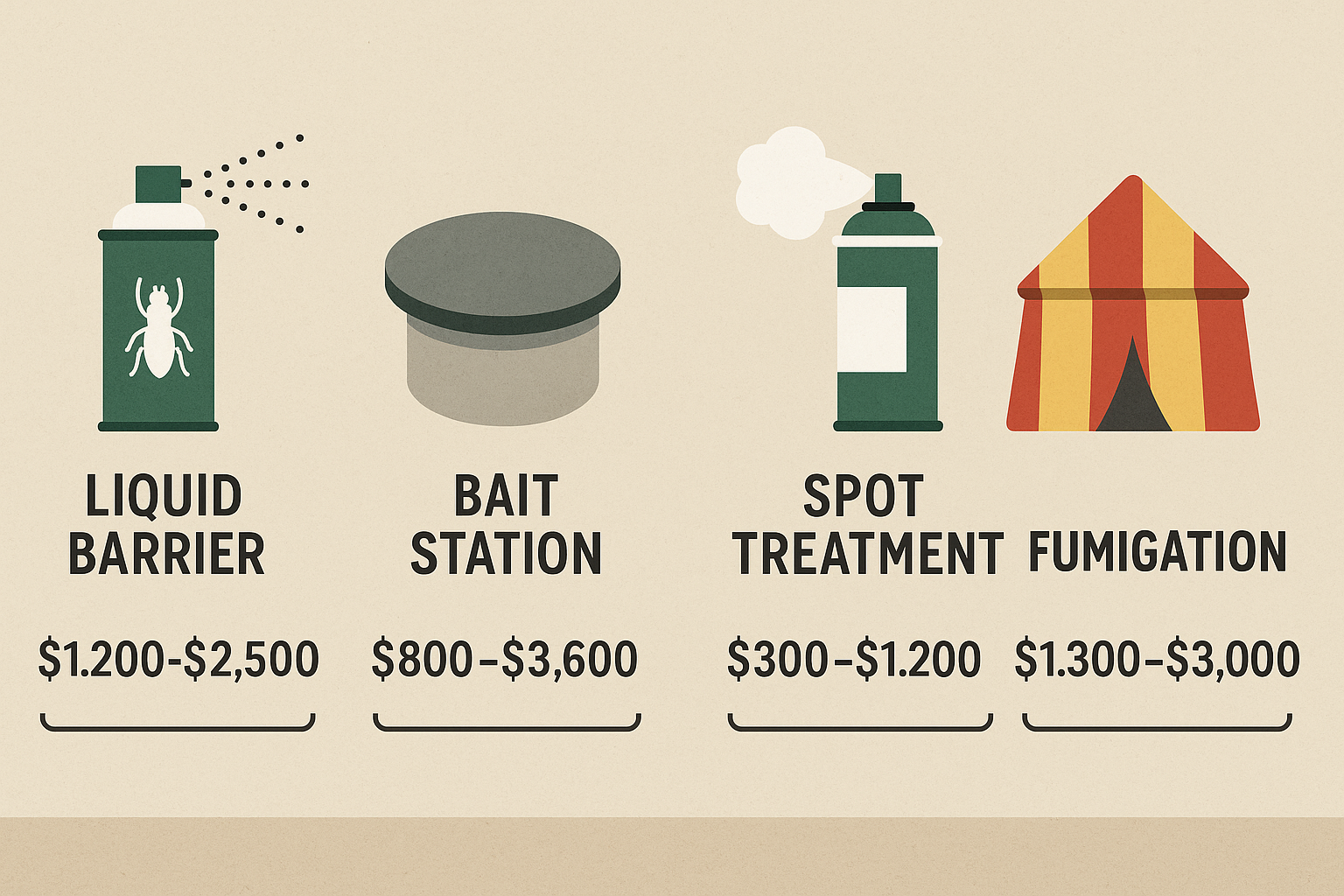
Choosing the right method hinges on the infestation’s size, the home’s construction, and your budget. A liquid barrier offers long‑term protection for new builds, bait systems provide colony‑wide control with minimal disruption, spot treatments handle isolated damage, and fumigation delivers a definitive finish when termites have spread throughout the structure. Anthem Pest Control can assess your Grayson property, explain each option in detail, and tailor a plan that fits both your home’s needs and your wallet.
Local Grayson Providers and Typical Benefits
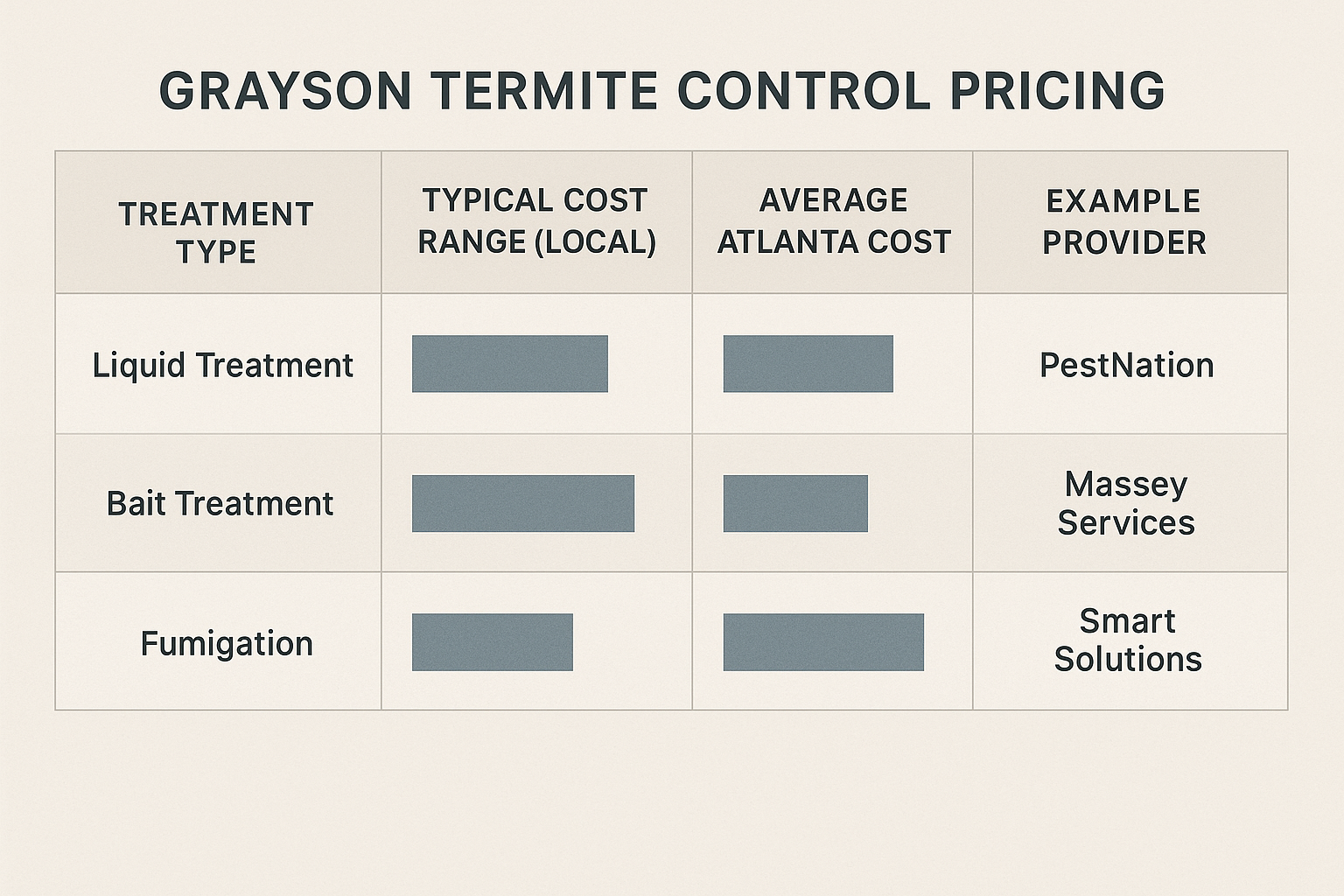
Homeowners in Grayson, Georgia, have a handful of reputable companies that specialize in termite mitigation. While the exact price you pay will depend on the size of your property, the extent of the infestation, and any additional warranty you select, the businesses listed below tend to fall within the ranges shown. All of them offer a free or low‑cost initial inspection, which is the first step in locking in a reliable quote.
PestNation
Offering a complimentary inspection, PestNation focuses on a liquid barrier application that penetrates the soil and creates a long‑term barrier against termites. The treatment typically runs between $300 and $1,200, depending on the square footage and the depth of the barrier. Visit their website
PestZone
PestZone is known for its bait‑system approach, which places “satellite” stations around the perimeter of a home to intercept foraging termites. Installation of a full bait network generally costs between $1,000 and $1,800. The system requires periodic checks, but the initial out‑date is often the most significant expense.
Arete Pest Control
If you need a targeted, spot‑treatment for a localized intrusion, Arete offers a “spot‑apply” service that targets the exact area where termites have been detected. Pricing for this service falls in the range of $250 to $600, making it a good option for homeowners who only need a focused application.
Masse Services
For severe infest — especially in older homes with extensive wood‑frame structures — Masse Services recommends a full‑house fum — which releases a gas that penetrates every void. The method is the most comprehensive, and the price reflects that, ranging from $1,800 to $2,500 (source [3]).
Smart Solutions
Smart Solutions also provides a free inspection and bundles its treatment with a warranty package that covers future termite activity. The bundled offers start at $400 and can climb to $900
Overall, most local providers sit within a similar range to the Atlanta average, with the exception of comprehensive options like fum — which naturally command a higher price. Before you lock in a contract, be sure to verify each company’s current rates on their official website or by calling their office, as promotions and seasonal discounts can shift the final amount. Understanding what’s included in a termite service agreement can save you from surprise invoices down the road. Most reputable companies in Grayson, including Anthem Pest Control, offer standard warranties that last either five or ten years. A five‑year warranty typically covers the original treatment area against any new termite activity, while a ten‑year plan extends that protection to adjacent structures and often includes a complimentary inspection after the first three years. Both options usually guarantee that any re‑treatment needed because of a failure of the original application will be performed at no additional charge. Because termites operate underground, many homeowners opt for a bait‑station monitoring system. The service fee for ongoing monitoring ranges from $70 to $200 per year, depending on the number of stations and the frequency of inspections. Anthem’s technicians visit quarterly to replace bait, record activity, and adjust station placement, ensuring the colony stays trapped before it can cause costly damage. Even with a solid warranty, a few expenses can slip under the radar: Before you sign, read the fine print. Look for exclusions such as damage caused by moisture intrusion, wood that was already compromised, or DIY alterations to the bait network. Ask the technician to clarify how often inspections are included and whether the warranty requires annual monitoring fees to remain valid. Keeping a written record of all service dates helps you prove eligibility if a claim arises. For instance, a Grayson homeowner who signed a five‑year warranty avoided a $1,200 out‑of‑pocket bill when a secondary infestation was detected during a routine check. The warranty covered the additional treatment and the follow‑up inspection, turning what could have been a major surprise into a routine service call. When termites start gnawing at the wooden frames of your home, the instinct to save money often leads homeowners toward DIY treatments. Common kits—foam sprays, bait stations, and liquid concentrate—are sold at hardware stores for anywhere between $10 and $100. In practice, these products deliver an estimated 30 % to 70 % success rate, depending on the severity of the infestation and how meticulously the homeowner follows the label directions. Professional termite control, on the other hand, brings EPA‑approved chemicals, structured inspection protocols, and a warranty that often covers re‑treatment for five years. Trained technicians apply liquid barriers, bait networks, or foam injections with calibrated equipment, ensuring the active ingredient reaches the hidden galleries where termites thrive. The upfront price ranges from $800 to $3,000, but the guarantee of near‑100 % eradication and long‑term protection translates into a stronger return on investment for most homeowners. To visualize the financial gap, consider the typical out‑of‑pocket expense for a single treatment cycle. A homeowner who purchases a $75 bait kit may need to replace it every few months, pushing the annual spend to roughly $150‑$300. In contrast, a licensed provider bundles inspection, treatment, and a warranty into one package, often completing the job in a single visit. While the DIY route may appear cheap, the limited effectiveness often leads to repeated purchases and structural damage that can cost thousands. Investing in a professional service upfront usually eliminates the need for follow‑up treatments and protects the home’s value, making the higher initial spend a sensible long‑term choice. When it comes to termites, the cheapest quote isn’t always the safest choice. A solid provider backs its work with proper credentials, proven products, and clear guarantees. Use the checklist below to separate reputable companies from fly‑by‑night operators. During the free inspection, bring a short list of questions. The answers will reveal how knowledgeable and transparent the provider is. A reputable company, like Anthem Pest Control, offers a no‑cost, no‑obligation inspection. This visit lets the technician pinpoint the exact infestation level, identify vulnerable entry points, and generate an accurate, customized quote. Because the inspection is free, you can compare multiple providers side‑by‑side without any financial risk. Take the checklist and question guide with you, and you’ll walk away with the confidence that the service you choose will protect your home, your family, and your budget. For a typical 2,000‑sq‑ft home, most Grayson providers quote between $1,200 and $2,000 for a full termite‑inspection and treatment package. The range reflects differences in product choice, soil‑type preparation, and whether a bait‑system or liquid barrier is installed. For a detailed breakdown, see the recent market survey from the Georgia Pest Management Association. Prices also shift with wood type, existing damage, and whether a moisture test is needed. Liquid barriers usually hit the higher end; bait stations fall near the lower end. We recommend scheduling a professional inspection once a year, preferably in the spring before termite activity peaks. If you opt for a bait‑system, quarterly monitoring visits are standard to check station activity and replace bait as needed. Regular inspections catch early infestations and keep your warranty valid. Missing the yearly visit can let a colony expand, potentially adding $3,000‑$5,000 in damage before signs appear. An annual check also keeps your service agreement active, which many insurers require for coverage. Most termite warranties cover the cost of retreatment for up to five years, but they usually exclude new colonies that develop outside the originally treated perimeter. The guarantee often requires homeowners to maintain annual inspections and to follow any recommended preventive measures, such as moisture control. Some companies also offer a transferable warranty, allowing you to pass the protection to a new homeowner if you sell the property, but only with proof of annual inspections and a small fee. When you weigh the numbers, three factors shape the final bill for termite control in Grayson: the extent of infestation, the type of treatment—whether a liquid barrier, bait system, or a combination—and any added warranties that protect you for years to come. Local pricing typically ranges from $1,200 to $3,500, but those drivers explain why a one‑size‑fits‑all quote rarely exists. That’s why a professional inspection matters. Anthem Pest Control brings local expertise, EPA‑approved products, and a transparent pricing model that lets you see exactly what you’re paying for — no hidden fees, no surprise treatments. Our technicians evaluate your home, recommend the most cost‑effective plan, and back it with a multi‑year warranty so you stay protected long after the job is done. We also provide a detailed report outlining treatment zones, expected timelines, and maintenance steps, so you know exactly how we safeguard your foundation. Ready to lock in a safe, affordable solution? Call us today at 877‑371‑8196 for a free, no‑obligation inspection and a personalized quote. Or simply click Visit Anthem Pest Control to request your free estimate online.How Grayson prices compare to the Atlanta average
Company
Typical Service
Price Range (USD)
PestNation
Liquid barrier
$300 – $1,200
PestZone
$1,000 – $1,800
Arete Pest Control
Spot treatment
$250 – $600
Masse Services
Full‑house fum
$1,800 – $2,500
Smart Solutions
Atlanta average Warranty, Monitoring, and Hidden Costs
DIY vs. Professional Solutions
DIY Options
Professional Advantages
Option
Typical Cost Range
Effectiveness
DIY
$100‑$300
30 %‑70 %
Professional
$800‑$3,000
90 %‑100 %
Choosing the Right Service for Your Home
Quick‑Start Checklist
Questions to Ask Your Inspector
Why a Free Inspection Matters
Frequently Asked Questions
What is the average cost for a 2,000‑sq‑ft home in Grayson?
How often should I schedule inspections?
Do warranties cover future termite activity?
Conclusion and Call to Action