Fruit Fly Nuisance in Grayson, GA
In the Southeast, the most common culprits are the Drosophila melanogaster and the Drosophila suzukii (also known as the spotted wing fruit fly). Both species thrive on ripening fruit, sugary drinks, and even damp organic debris. For Grayson homeowners, these tiny insects can appear harmless at first glance, but their rapid breeding cycle turns a few stray flies into a full‑blown nuisance in days.
Why summer and fall feel like a fruit‑fly festival
Grayson’s warm, humid summers create the perfect incubator for fruit flies. Outdoor barbecues, picnics, and family gatherings often leave open containers of fruit, soda, or leftovers—prime feeding stations. As temperatures dip into the fall, humidity remains high, allowing a second surge that can linger well into November.
Health risks you shouldn’t ignore
Fruit flies are more than an eyesore; they are vectors for bacteria such as E. coli and Salmonella. When they land on exposed food, they can transfer pathogens that cause stomach upset or food‑borne illness. Moreover, their constant presence compromises kitchen hygiene, encouraging the growth of mold and accelerating spoilage of stored pantry items.
The hidden cost of waiting
Delaying treatment lets populations explode exponentially—each female can lay up to 500 eggs in a single batch. An unchecked infestation quickly spreads from the kitchen to trash cans, drains, and even indoor plants. The longer you wait, the more intensive (and expensive) the control measures become, often requiring multiple visits and stronger chemical applications.
This section sets the stage for the rest of the article, which will break down the specific cost factors you’ll encounter in Grayson and highlight the most effective local solutions. Understanding the urgency now helps you choose a proactive approach, keeping your home safe, clean, and fruit‑fly free.
Fruit Fly Biology and Seasonal Peaks
Life Cycle at a Glance
Fruit flies (Drosophila melanogaster) move through four distinct stages: egg, larva, pupa, and adult. Under the warm, humid conditions typical of Grayson, a full cycle can close in just 7‑10 days. Females lay up to 500 eggs on fermenting organic matter, and within 24 hours the eggs hatch into tiny, voracious larvae that feed for 3‑4 days before spinning a puparium. The pupal stage lasts another 2‑3 days, after which an adult emerges ready to reproduce.
Common Breeding Hotspots Inside the Home
Because the life cycle is so rapid, fruit flies exploit any moist, sugary environment. The most frequent indoor breeding sites include:
- Kitchen drains and garbage disposals – lingering food particles create a perfect nursery.
- Overripe or rotting fruit left on countertops, in fruit bowls, or tucked away in cabinets.
- Compost bins – especially those kept indoors or under the sink.
- Pet food dishes that are not emptied promptly.
Eliminating these micro‑habitats is the first line of defense before any professional treatment.
High‑Risk Zones in Grayson
| Zone | Notable Neighborhoods | Typical Hotspots |
|---|---|---|
| Downtown Grayson | Historic district, Riverfront Apartments | Restaurant waste, shared laundry rooms |
| East Grayson | Lakeview Estates, Oakridge | Backyard compost, pet feeding stations |
| Lake Lanier Communities | Lakefront Condos, Lakeside Villas | Outdoor grills, poolside snack areas |
Seasonal Surge: What the Numbers Say
USDA Extension data confirms that “Fruit fly populations in the Southeast increase 45 % during July–September.” This spike aligns with peak summer humidity and the abundance of ripe fruit from local gardens and farmers’ markets.
Why Timing Matters for Professional Intervention
During the July‑September window, the rapid 7‑10‑day life cycle means an infestation can explode before a homeowner even notices the first adult flies. Scheduling a treatment early in the season—ideally before the 45 % surge—allows Anthem Pest Control to target larvae hidden in drains and compost before they emerge as adults. Early intervention not only reduces the number of chemicals needed but also shortens the overall eradication timeline, keeping your home comfortable and fruit‑fly free.
Cost Drivers for Fruit Fly Control
When you call a professional service in Grayson, the price you see on the estimate isn’t arbitrary. It reflects a combination of factors that determine how much work is needed, what materials are used, and when the job is performed. Understanding these variables helps you gauge whether a quote is fair and lets you take steps to keep the bill as low as possible.
Infestation Severity Tiers
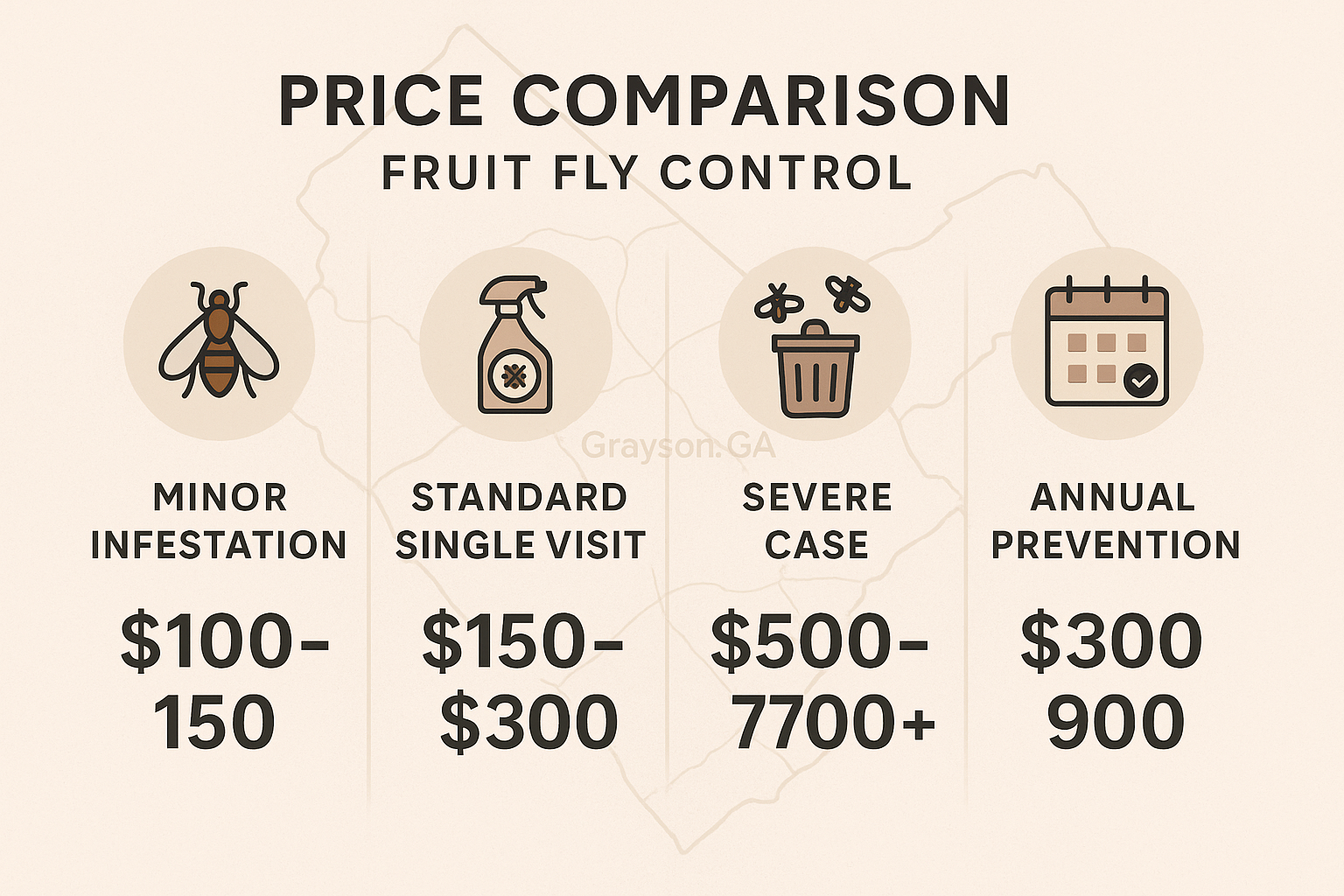
Anthem Pest categorizes fruit‑fly problems into three severity levels, each with a typical price band:
- Minor (100‑150 USD) – A few flies trapped in kitchen drains or fruit bowls. One or two technician visits with a basic spray usually suffice.
- Moderate (150‑300 USD) – Visible activity in multiple rooms, plus breeding in garbage disposals or floor drains. This tier often requires a combination of spray and bait stations.
- Severe (500‑700+ USD) – Large colonies spreading across a home, possibly reaching basement or attic spaces. Intensive treatment, multiple visits, and specialized drain products drive the higher cost.
Treatment Methods
Different control techniques carry distinct material and labor costs:
- Basic Spray – Quick application of an EPA‑approved residual insecticide. Ideal for minor infestations; low material cost.
- Bait Stations – Disposable stations placed near food prep areas. Slightly higher price because each station adds material expense.
- Drain Treatment – Specialized foams or enzymes that break down organic buildup where flies breed. This method raises the bill due to the extra product and the time spent accessing each drain.
- Combination Packages – A blend of spray, bait, and drain treatment. Most effective for moderate to severe cases but also the most expensive option.
Property Characteristics
Every home is unique, and size or layout can shift the price:
- Square Footage – Larger homes need more product and longer technician time, increasing labor charges.
- Multi‑Unit Dwellings – Apartments or duplexes often require separate treatment plans for each unit, adding both material and coordination costs.
- Basement Access Challenges – Tight crawl spaces or limited stairways mean technicians spend extra time setting up equipment, which is reflected in the estimate.
Seasonal Labor Rates
Georgia’s summer months bring higher demand for pest services, and technician wages rise to match market rates. As a result, a summer appointment can be $20‑$40 more per hour than an off‑season visit. If your schedule allows, booking in the cooler months may shave a few dollars off the total.
Our pricing references the latest Perplexity report values for regional pest‑control costs. While those figures provide a solid baseline, we always cross‑check with EPA guidelines and Georgia labor statistics to ensure compliance and accuracy before finalizing any quote.
Quick Tip: Clear away rotting fruit, clean sink drains, and empty trash bins before the technician arrives. A cleaner environment reduces the amount of product needed, which can lower your final bill by up to 20 % for minor and moderate cases.
Grayson Pricing vs Regional Benchmarks
When you’re budgeting for fruit‑fly control, knowing how local rates stack up against nearby towns and the overall national average helps you avoid overpaying and ensures you’re getting a fair deal. Below, we break down the typical cost ranges you’ll encounter in Grayson and compare them with three reference points: the neighboring city of Buford, the larger hub of Lawrenceville, and the U.S. average reported by HomeGuide.
Benchmarking also reveals hidden fees that some companies hide behind “service call” or “inspection” charges. By looking at a side‑by‑side comparison, you can spot when a quote includes extra labor, travel, or follow‑up visits that push the final bill beyond the baseline range.
| Location | Minor Infestation | Standard Infestation | Severe Infestation |
|---|---|---|---|
| Grayson, GA | $100‑$150 | $150‑$300 | $500‑$700+ |
| Buford, GA | ~$100‑$150 | $150‑$300 | ~$500‑$700+ |
| Lawrenceville, GA | $120‑$180 | $200‑$350 | $550‑$800+ |
| National Avg. | $200 (single visit) | ||
What the numbers tell you: Grayson’s pricing sits almost exactly in line with Buford, reflecting a shared labor pool and comparable competition among local exterminators. Lawrenceville’s slightly higher range is typical for a larger market where demand pushes prices upward.
Why regional prices differ
Two key factors drive these variations. First, the local labor market influences hourly rates; areas with higher living costs or a tighter supply of qualified technicians tend to charge more. Second, competition levels matter—a town with several licensed pest‑control firms, like Grayson and Buford, can keep prices competitive, while fewer providers in a city such as Lawrenceville give each business more pricing power.
Anthem Pest Control follows the same pricing structure, and because we operate locally we can pass the savings directly to you. Our estimates are upfront, with no surprise add‑ons, so the numbers you see in the table are exactly what you’ll pay for a standard treatment.
Local Service Providers and Their Offerings
GA Pros / Georgia Seasonal Pest Control Pros
GA Pros specializes in seasonal gnat and fruit‑fly plans that align with Grayson’s warm summer months. Their standard package includes a thorough inspection, a targeted treatment using low‑odor, pet‑safe insecticides, and a follow‑up visit to verify results. Homeowners can choose a single‑visit option priced between $150‑$300, or add quarterly follow‑ups for an additional $75 per visit. Eco‑friendly formulations are available on request, and the company emphasizes minimal disruption to landscaping.
To schedule service, call (813) 548‑4022. The team typically visits once every 3‑4 weeks during peak fruit‑fly activity, then transitions to a maintenance schedule once populations are under control.
Maryloué Pest Services
Maryloué offers a comprehensive fly‑control program that begins with an on‑site assessment to locate breeding sites such as overripe fruit, compost piles, or damp drains. Their treatment protocol combines a fast‑acting adulticide with a residual larvicide that remains effective for up to 30 days. Prices range from $200‑$350 per visit, and every service includes a one‑year guarantee that covers re‑treatments if fruit flies return.
The company promotes pet‑safe options, using botanical‑based products whenever possible. Service frequency is customized after the initial assessment—most homeowners receive two to three treatments in the first month, followed by monthly checks during the high‑risk season. More information can be found at Maryloué’s fly‑control page.
PestNation & Massey Services
PestNation, operating under the Massey Services brand, brings a broader pest‑management portfolio to Grayson. Their fruit‑fly solutions are quoted on a case‑by‑case basis, reflecting property size, commercial versus residential use, and existing pest pressures. Typical pricing falls between $250‑$400 per visit, with discounts available for multi‑year contracts.
Clients benefit from integrated pest‑management (IPM) practices, including habitat modification, exclusion techniques, and the option to use low‑toxicity, pet‑friendly products. Large homes or small businesses often receive a bi‑monthly schedule during summer, while smaller residences may opt for a single intensive treatment followed by a seasonal check.
Explore their service details at Massey Services – Grayson area.
Why Get Multiple Quotes?
Each provider structures its packages differently—some charge per visit, others bundle follow‑ups into an annual plan. By requesting at least three written quotes, you can compare coverage, product choices, and warranty terms side by side.
DIY vs Professional Treatment – Cost‑Benefit Analysis
Typical DIY Toolkit
Most homeowners start with low‑cost, readily available tools that can be assembled in a weekend. Common items include:
- Fruit‑fly traps (plastic or glass containers with funnel openings) – $5‑$10 each.
- Apple‑cider vinegar traps – a bottle of vinegar plus a few drops of dish soap, usually under $5.
- Over‑the‑counter aerosol sprays or foggers labeled for fruit flies – $10‑$20 per can.
- Sticky cards or paper strips for monitoring – $3‑$7 per pack.
Seasonal DIY Expense
When you add up the price of traps, a couple of bottles of vinegar, and one or two spray cans, the total outlay for an entire fruit‑fly season in Grayson typically falls between $30 and $50. This figure assumes you replace traps only once or twice and that you purchase the most economical brands available at local hardware stores or online.
Effectiveness Comparison
According to EPA indoor pest‑control guidelines, DIY methods achieve roughly a 60 % success rate. They work well for isolated sightings but often miss hidden breeding sites, such as over‑ripe produce in the pantry or damp drains. In contrast, professional fruit‑fly programs—usually a combination of targeted bait stations, residual sprays, and thorough source elimination—report success rates near 90 %. The higher efficacy stems from licensed technicians’ ability to locate and treat concealed hotspots that DIY kits overlook.
Safety Considerations
While DIY products are inexpensive, they introduce potential hazards:
- Chemical exposure: Aerosol sprays contain pyrethroids or other insecticides that can irritate eyes, skin, and respiratory passages, especially in poorly ventilated kitchens.
- Child‑ and pet‑friendly options: Vinegar traps are non‑toxic, but they require careful placement to avoid accidental spills.
- Ventilation requirements: Professional applicators use low‑odor, EPA‑approved formulations and follow strict ventilation protocols, reducing the risk of lingering fumes.
When DIY May Be Sufficient
If you notice only a handful of flies near a fruit bowl or a single kitchen area, a well‑placed vinegar trap combined with diligent sanitation can often curb the problem. Regularly discarding rotting produce, cleaning drain traps, and maintaining dry surfaces are low‑effort steps that amplify DIY success.
When to Call a Pro
Consider professional intervention when you encounter any of the following:
- Persistent flies despite multiple DIY attempts.
- Infestations spreading to multiple rooms, bathrooms, or outdoor patios.
- Recurring issues after seasonal clean‑ups, indicating hidden breeding sites.
- Households with young children, seniors, or pets who may be sensitive to over‑the‑counter insecticides.
In these scenarios, the added cost of a professional service—typically $120‑$180 per treatment in Grayson—pays off through faster elimination, comprehensive source removal, and a safety net that DIY solutions simply cannot match.
Ongoing Prevention Plans and Long‑Term Savings
When it comes to fruit‑fly infestations, the most cost‑effective strategy isn’t a one‑time spray—it’s a subscription‑style prevention plan that keeps the pests out before they become a problem. In Grayson, Georgia, Anthem Pest offers annual or quarterly packages ranging from $300 to $900 per year. These plans bundle fruit‑fly control with treatments for other common invaders such as ants, mosquitoes, and cockroaches, giving homeowners a single, predictable bill instead of a series of surprise invoices.
How the ROI Works
Consider a typical scenario: a homeowner enrolls in a quarterly plan that costs $250 per visit. Over a year, that’s $1,000 in scheduled services. By staying on schedule, the household avoids a severe fruit‑fly outbreak that would otherwise demand an emergency treatment costing roughly $700. The net effect is a savings of $200–$300 annually—and that’s before you factor in the added peace of mind that comes from knowing your home is continuously monitored.
Anthem Pest’s Grayson Packages
| Plan | Annual Cost | Visits per Year | Included Services |
|---|---|---|---|
| Basic | $300 | 4 | Fruit‑fly + ant control |
| Standard | $600 | 6 | Fruit‑fly, ant, mosquito & rodent monitoring |
| Premium | $900 | 8 | All Standard services + bed‑bug inspection & termite guard |
Each package comes with guaranteed visits on the schedule you choose, plus priority scheduling for any unexpected spikes in pest activity. For Grayson residents, Anthem Pest also offers a “no‑surprise” clause: the price you lock in at the start of the contract stays fixed for the entire term, even if market rates rise.
Why a Contract Beats Ad‑Hoc Calls
- Locked‑in rates: Budget‑friendly pricing eliminates the guesswork of emergency fees.
- Reduced emergency call‑outs: Regular monitoring catches early signs of fruit‑fly breeding before populations explode.
- Continuous oversight: Technicians track seasonal trends, adjusting treatments to keep your home a step ahead of pests.
In short, a prevention contract transforms a reactive expense into a proactive investment. By paying a modest, predictable amount each quarter, Grayson homeowners not only sidestep costly emergency treatments but also enjoy a healthier, pest‑free environment year after year.
Getting Accurate Quotes – Homeowner Checklist
Before you sign on with a pest‑control company, take a moment to gather the information that will let you compare offers side‑by‑side. This short checklist walks you through the exact steps you need to take so every estimate you receive is clear, comparable, and trustworthy.
1. Identify infestation hotspots
Walk through your home and note where fruit flies are most active. Common breeding zones include the kitchen sink and drains, overripe fruit or compost bins, and any open trash containers. Jot down the room, surface, and time of day you see the most activity – this detail helps technicians size the job correctly.
2. Contact at least three local providers
Use the phone numbers and website URLs you gathered in Part 5 to contact three different pest‑control companies. Asking multiple providers prevents you from settling for the first price you hear and gives you a realistic market range.
3. Verify license and insurance
Every reputable service in Georgia must hold a valid pest‑control license and carry liability insurance. Verify both by visiting the Georgia Department of Agriculture licensing page and entering the company’s name or license number.
4. Ask about guarantees, pet‑safe products, and follow‑up visits
Ask each provider whether they back their work with a satisfaction guarantee, what chemicals they use around pets and children, and how many post‑treatment inspections are included. These factors often affect the total cost more than the headline price.
5. Request a written estimate that breaks down costs
Insist on an itemized quote that separates labor, materials, travel fees, and any applicable taxes. A transparent estimate makes it easy to spot hidden charges and compare apples‑to‑apples across companies.
Quick tip: Take photos of problem areas and attach them to your email inquiries. Visual evidence speeds up the assessment and can prevent a technician from needing an on‑site “walk‑through” just to confirm the problem.
Conclusion and Next Steps with Anthem Pest Control
Fruit‑fly treatment costs in Grayson typically fall into these ranges:
- Minor issue: $100‑$150 – a quick, targeted spray.
- Standard problem: $150‑$300 – broader coverage of entry points.
- Severe infestation: $500‑$700+ – extensive treatment with follow‑up visits.
- Prevention plans: $300‑$900 per year – scheduled inspections that keep flies from returning.
Choosing a Grayson‑based provider like Anthem Pest matters because we understand the local climate swings, common housing styles, and the seasonal peaks when fruit flies appear. That local knowledge lets us focus on the exact outdoor habitats and indoor vulnerabilities that matter most in your neighborhood.
Opting for an annual prevention contract often saves money over time. Instead of paying for emergency visits each summer, a scheduled plan spreads the cost throughout the year and reduces the need for costly, ad‑hoc treatments.
Ready for a personalized, no‑obligation quote? Call Anthem Pest today at 877‑371‑8196 or visit our website. We’ll help you choose the right solution for your budget and keep your home fruit‑fly free.