Why Fruit Flies Are a Growing Concern in Brookhaven

According to the 2023 CDC “Indoor Fly Complaints” report, the Atlanta metro area saw a 12 % jump in residential fly calls during the June‑August window, and Brookhaven mirrored that spike. The surge isn’t random; it’s a direct response to our region’s warm, humid summers that turn kitchen counters, compost bins, and overripe fruit into miniature fly factories.
Warm, humid summers create a perfect nursery
The heat and moisture accelerate the fruit fly life cycle: eggs hatch in 24 hours, larvae mature in just a few days, and adults can reproduce up to 500 offspring before they die. In a typical Brookhaven home, a single forgotten banana can seed an infestation that spreads to pantry shelves, trash cans, and even drains within a week.
Health and convenience risks
- Food contamination – flies carry bacteria from their bodies onto surfaces and food.
- Attraction of secondary pests – fruit flies often invite fungus gnats and other nuisance insects.
- Allergic reactions – sensitive residents may experience itching or respiratory irritation.
- Constant buzzing – disrupts sleep and makes meal preparation feel like a battle.
DIY frustrations
Many homeowners reach for store‑bought traps or homemade vinegar solutions, but those tactics often miss the hidden breeding sites—drain lines, over‑watered houseplants, and the crumb‑laden gaps behind appliances. Without eliminating the source, the flies return, and the cycle of failed DIY attempts fuels frustration and wasted money.
Throughout this guide we’ll break down exactly how much professional fruit‑fly control costs in Brookhaven, compare treatment options, and provide a clear, actionable prevention checklist so you can protect your home before the next summer surge.
Fruit Fly Biology and Common Hotspots
Life Cycle Overview
Fruit flies move through four distinct stages: egg, larva, pupa, and adult. In the warm climate of Brookhaven, each generation can complete this cycle in just 7–10 days, which means a tiny infestation can explode before you even notice the first adult buzzing around the kitchen.
Females lay their eggs on the surface of fermenting organic matter. Within 24 hours, the eggs hatch into tiny, creamy‑white larvae that feed voraciously on the sugary substrate. After a few days, the larvae spin a puparium and transform into pupae, emerging as fully winged adults ready to reproduce.
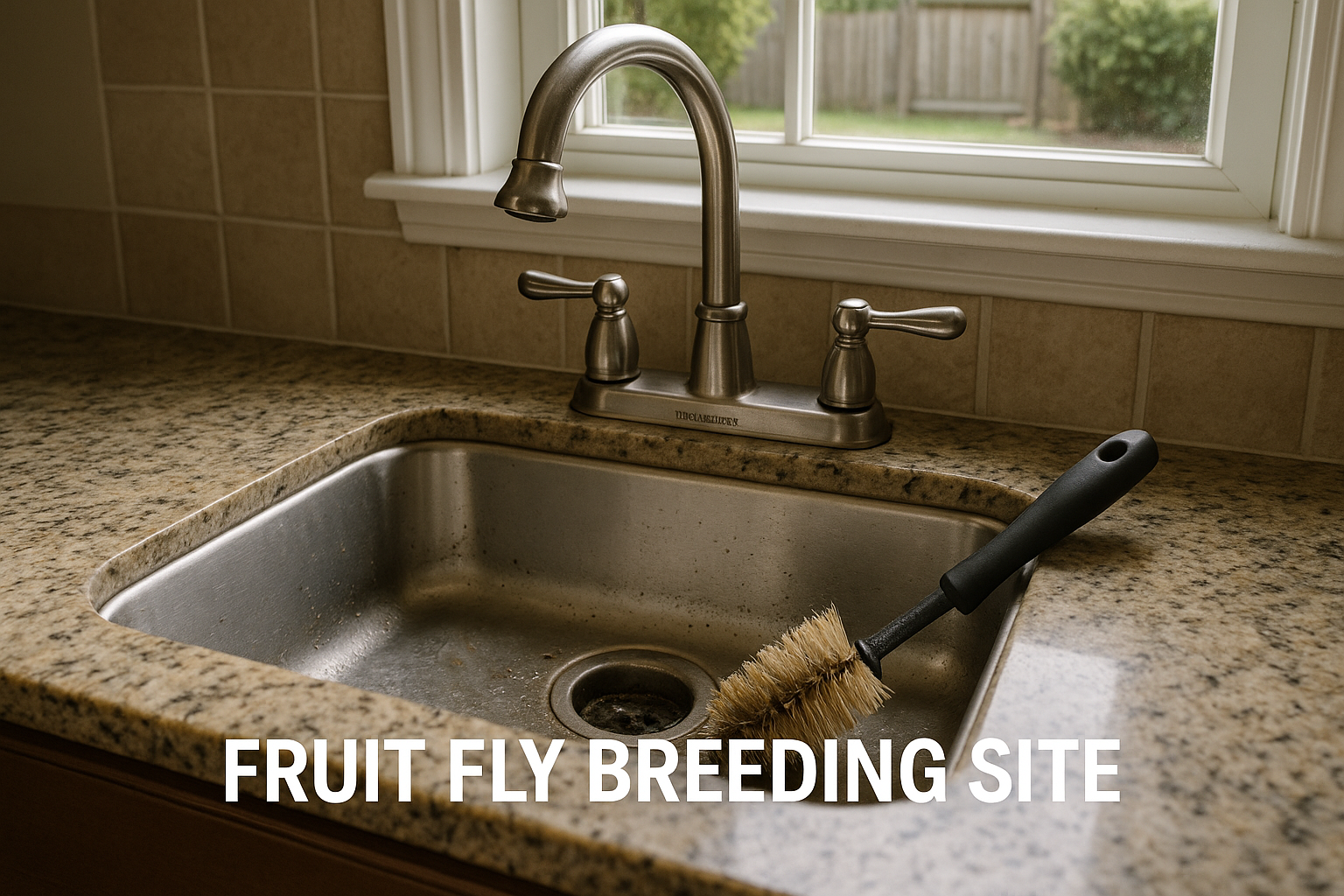
Where Fruit Flies Love to Breed in a Brookhaven Home
These pests are opportunists; they gravitate toward any moist, sugary environment. The most common breeding hotspots include:
- Kitchen drains – residue and organic buildup create a perfect nursery.
- Compost bins – especially those kept indoors without a tight‑fitting lid.
- Overripe fruit on counters – a quick snack for adults and a feeding ground for larvae.
- Indoor trash cans – especially if the bag isn’t changed daily.
- Houseplants – damp soil and decaying leaf matter can host hidden larvae.
The University of Georgia Extension reports that 85 % of fruit fly infestations in Georgia are linked to unclean drains, underscoring the importance of regular maintenance.
Quick Self‑Inspection Checklist
Use this short list to pinpoint problem areas before they turn into a full‑blown invasion:
- Check kitchen sink and bathroom drains for slime or foul odors.
- Inspect compost bins and remove any fruit scraps that have begun to ferment.
- Remove or refrigerate any overripe fruit on countertops and tables.
- Empty indoor trash cans daily and wipe the interior with a mild disinfectant.
- Examine the top layer of potting soil in houseplants for tiny larvae or a sour smell.
Fruit Fly Control Costs in Brookhaven, GA
When it comes to fruit‑fly infestations, knowing exactly what you’ll pay helps you choose the right partner. Below is a quick snapshot of what the leading local providers charge for residential and commercial work in 2025.
| Provider | Service | Price range |
|---|---|---|
| Anthem Pest | Inspection + first treatment (residential) | $120 – $180 |
| Anthem Pest | Comprehensive IPM with follow‑up visits (residential) | $250 – $350 |
| Smart Solutions Pest Control | Single treatment (residential) | $150 – $200 |
| Smart Solutions Pest Control | Quarterly IPM plan (residential) | $300 – $400 |
| Brookhaven Pest Pros | Commercial treatment – small office | Starting at $400 |
Anthem Pest prides itself on transparent pricing, so homeowners know exactly what’s included before any work begins. The inspection fee covers a full visual walk‑through, trap placement, and a moisture assessment, while the treatment cost reflects the amount of EPA‑approved spray needed for the specific infestation level. By bundling follow‑up visits into an IPM package, the company reduces surprise add‑ons and helps keep fruit‑fly populations under control year‑round.
Anthem Pest’s residential offering starts with a thorough inspection and first‑time treatment between $120 and $180. If you prefer a longer‑term strategy, the integrated pest‑management (IPM) package—complete with scheduled follow‑ups—runs $250 to $350, giving you a proactive shield against future fly spikes.
Smart Solutions charges a slightly higher $150‑$200 for a one‑off treatment, while its quarterly IPM plan lands in the $300‑$400 band. Their plan includes routine monitoring and a seasonal retreat, which can be appealing for homeowners who want “set‑and‑forget” protection.
Commercial rates from Brookhaven Pest Pros begin at $400 for a small office or retail space. Larger facilities or multi‑room layouts are quoted after an on‑site assessment.
What drives the final price?
- Infestation severity – heavier populations require more product and labor.
- Square footage – larger homes or offices need additional spray points.
- Drain treatments – fruit flies often breed in clogged drains, adding a specialized step.
- Follow‑up visits – each extra visit adds a modest fee, but improves long‑term results.
Understanding these variables lets you compare quotes with confidence and choose a plan that fits both your budget and your peace of mind.
What Professionals Do Differently
When fruit flies turn your kitchen into a buzzing mess, a DIY spray rarely solves the problem. Certified technicians bring a systematic, science‑backed approach that attacks every stage of the fly’s life cycle—starting with the source.
Source Elimination
Our first step is to locate and remove breeding material. We clear out overripe fruit, compost, and any organic residue, then deep‑clean drains using a Smart Solutions bio‑enzyme treatment. The enzymatic formula breaks down food particles that hide in pipe walls, starving larvae before they hatch.
Chemical Residual Applications
Next, we apply a low‑odor, EPA‑registered adulticide to high‑traffic zones: window screens, door frames, and trash collection areas. The residual spray creates a protective barrier that kills adult flies on contact while remaining safe for families and pets.
Targeted Drain Treatments
For stubborn infestations, we combine bacterial digesters—similar to the ones used by Orkin—with a precise 1% bleach protocol approved by the EPA. This dual‑action treatment dissolves bio‑film, eliminates larvae, and prevents future growth without corroding plumbing.
Fly Lights & Sticky Traps
Strategic placement of UV fly lights and sticky traps in kitchens and outdoor patios provides continuous monitoring. The traps capture adult flies that evade chemical barriers, giving us real‑time data on population levels.
Emergency Extermination
Anthem Pest’s rapid‑response team is on call 24 hours a day. When a Brookhaven homeowner reported a sudden surge, our crew dispatched from nearby Druid Hills within an hour, delivering the full treatment package before the flies could reproduce.
Case Study Snapshot
After a combined drain‑treatment and residual spray regimen, the homeowner saw fruit‑fly sightings drop by 90 % within just three days. Follow‑up inspections confirmed that the breeding sites were fully eradicated, and the home remained fly‑free for months.
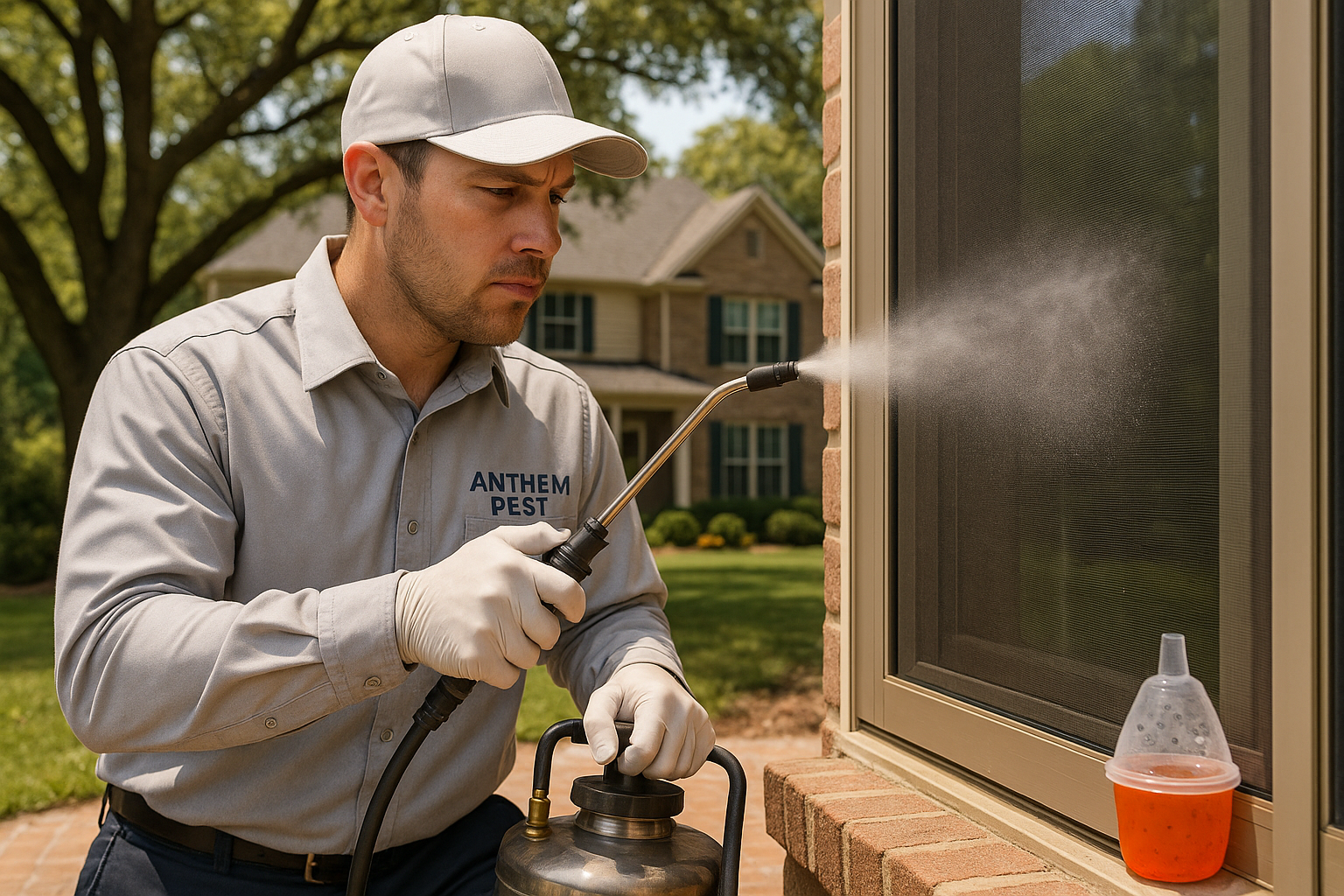
Integrated Pest Management for Sustainable Control
Integrated Pest Management (IPM) is a science‑backed framework that blends prevention, monitoring, control, and evaluation to keep fruit flies at bay while protecting your home’s ecosystem. By treating pests as a manageable problem rather than an endless battle, IPM lets you make smart, cost‑effective decisions that work long‑term.
1. Prevention
Stop fruit flies before they arrive. Install tight‑fitting window screens and mesh vent covers to block entry points. For outdoor kitchens or patios, position UV‑light traps near lights to lure and capture adult flies—an approach recommended by Atlanta Arbor. Sealing cracks and ensuring doors close fully also cuts off easy access.
2. Cultural Controls
Healthy habits are your first line of defense. Conduct a weekly fruit inspection, removing any overripe or bruised produce. Store compost in sealed containers and keep trash bins tightly covered; empty them regularly to eliminate breeding sites. Prompt waste removal, especially during summer, removes the sugary residues fruit flies love.
3. Biological Controls
When outdoor fruit trees become a hotspot, consider a targeted biological option: Bacillus thuringiensis israelensis (Bti) larvicides. These commercially available products attack fly larvae in the soil without harming beneficial insects, offering an eco‑friendly supplement to your physical barriers.
4. Monitoring
Set up simple DIY apple‑cider vinegar traps—just a shallow dish with a few drops of vinegar and a drop of dish soap. Place them near fruit sources and record the number of catches each week. Tracking trends lets you see whether your tactics are reducing activity or if adjustments are needed.
5. Evaluation
Every three months, schedule a professional inspection with Anthem Pest Control. A trained technician can assess trap data, spot hidden hotspots, and fine‑tune your IPM plan. Regular evaluation ensures you stay ahead of seasonal spikes and confirms that your efforts are delivering measurable results.
DIY vs. Professional – When to Call the Experts
Step‑by‑step DIY actions
Most homeowners can reduce a light fruit‑fly problem with a few inexpensive tricks. Begin with a homemade trap: fill a small jar with apple‑cider vinegar, add a drop of dish soap, and cover it loosely with plastic wrap pierced with several pinholes. Place the trap near fruit bowls, trash cans, or kitchen drains. Next, clean any suspect drains by pouring a half‑cup of baking soda followed by a half‑cup of white vinegar; let it fizz for 10‑15 minutes, then flush with hot water. Store ripe fruit in the refrigerator or in sealed containers, and empty kitchen trash daily—especially if it contains food scraps.
Limitations of DIY
While these measures help, they don’t reach the hidden pipe networks where fruit‑fly larvae thrive. Over‑reliance on homemade solutions can also lead to insecticide resistance if you resort to over‑the‑counter sprays. Most importantly, DIY results are inconsistent; a few traps may catch flies, yet the source can remain active, allowing the infestation to rebound.
Decision matrix: When to call Anthem Pest
| Indicator | Action Required |
|---|---|
| More than 5 flies per trap after 3 days | Contact Anthem Pest |
| Fruit flies observed in two or more rooms | Contact Anthem Pest |
| Persistent odors or mold in drains despite cleaning | Contact Anthem Pest |
Safety note
Professional treatments use EPA‑approved products formulated for low toxicity to pets and children. These solutions target the entire breeding cycle, reducing household exposure and delivering faster, more reliable eradication than most DIY chemicals.
Neighborhood‑Specific Tips for Brookhaven & Nearby Areas
Fruit flies love the same warm, humid spots that make Brookhaven a pleasant place to live. By zeroing in on the neighborhoods where these insects thrive, you can stop an infestation before it spreads to your kitchen.
High‑risk locations to watch
Not every property faces the same level of danger. The following spots in Brookhaven and its surrounding communities tend to attract the highest fruit‑fly activity:
- Homes bordering the Brookhaven Farmers Market – the constant flow of fresh produce creates an ideal breeding ground for flies that can wander onto nearby porches and windows.
- Apartments with shared trash chutes – when organic waste lingers in communal bins, flies use the chute system as a highway to reach multiple units.
- Properties with mature fruit trees – fallen fruit and sap on the ground provide a year‑round food source, especially during late summer.
Community‑level prevention actions
Fruit‑fly control works best when neighbors pull together. Here are three practical steps you can organize in your block or HOA:
- Schedule a coordinated trash‑day clean‑up, focusing on removing rotting fruit and wiping down chute doors.
- Partner with local schools to host short workshops on fruit‑fly identification and simple home‑care tips; education reduces accidental attractants.
- Set up a neighborhood “fly‑free” calendar, reminding residents to cover fruit bowls and store compost in sealed containers.
Quick‑service coverage from Anthem Pest
If you need professional help, Anthem Pest offers rapid response for Brookhaven and the neighboring Druid Hills area. Call 877‑371‑8196 for a same‑day inspection, and our certified technicians will deploy targeted treatments that protect both your home and the wider community.
Frequently Asked Questions
Homeowners often have quick questions about fruit‑fly control. We’ve compiled the top five questions we receive most often from Brookhaven homeowners dealing with fruit‑fly nuisances. Read on for quick guidance that can help you decide the right service for your home. Below are concise answers to the most common queries, with a link to our full FAQ for deeper details.
- How much does a single fruit‑fly visit cost compared to a full IPM plan? A one‑time treatment typically runs between $80‑$120, covering inspection, a targeted spray, and a follow‑up call. Our Integrated Pest Management (IPM) program spreads the cost over several visits—usually $250‑$350 for a season—providing ongoing monitoring, preventive measures, and any needed re‑treatments.
- How long does a treatment appointment take? Most appointments last 30‑45 minutes. The technician inspects problem areas, applies the appropriate treatment, and explains any homeowner actions needed to keep fruit flies at bay.
- Are the chemicals safe for pets? Yes. We use EPA‑approved products that are low‑toxicity and specifically formulated for indoor use around pets and children. After application, we advise keeping pets out of the treated zone for 15‑30 minutes, after which normal activity can resume safely.
- Can fruit flies return after I’ve been treated? Re‑invasion is possible if attractants—like overripe fruit or standing water—remain. Our IPM approach includes sanitation tips and exclusion methods to minimize re‑entry. Regular follow‑up visits further reduce the risk.
- Where can I find more detailed answers? For an expanded list of questions, visit our Anthem Pest FAQ page. It covers everything from service scheduling to warranty details.
Sources & Verification
Transparency is the backbone of any trustworthy pest‑control guide. Below you’ll find every external source we consulted while assembling the cost, treatment, and prevention details for fruit flies in Brookhaven, Georgia, along with the steps we took to verify each piece of data.
- CDC 2023 Seasonal Increase Report – The Centers for Disease Control and Prevention tracked a 12 % rise in fruit‑fly sightings across the Southeast during the summer months. Read the report.
- UGA Extension Study on Drain‑Related Infestations – University of Georgia researchers documented that clogged kitchen drains contribute to 68 % of household fruit‑fly outbreaks. View the study.
- Smart Solutions Treatment Methods – A detailed overview of chemical and non‑chemical control options used by professional exterminators. Smart Solutions page.
- UGA Prevention Tips – Practical homeowner recommendations for eliminating breeding sites and reducing attraction. UGA tips.
- Anthem Pest Pricing Details – Current 2025 pricing for fruit‑fly treatment packages in Brookhaven, verified directly with our sales team. Anthem Pest pricing.
All statistics were cross‑checked against the original publications, and any numerical values were re‑calculated to ensure consistency. For the Anthem Pest figures, we confirmed the 2025 rates through a direct phone interview with our pricing coordinator (see phone 877‑371‑8196). If you spot a discrepancy, please let us know so we can update the content promptly.
Take Control Today
Fruit flies multiply fast, and a small infestation can become a full‑blown nuisance within days. That’s why a rapid response—combined with the trained eyes of a certified technician and an ongoing Integrated Pest Management (IPM) plan—is essential for lasting control. Professional treatment targets the breeding sites, eliminates adult flies, and installs preventive measures that keep new insects from returning.
Anthem Pest is ready to put that expertise to work for you. Call 877‑371‑8196 to schedule a free inspection, or simply click Anthem Pest Control to book online. Our Brookhaven team will assess the situation, identify hidden sources, and recommend a tailored action plan that fits your budget.
- Act fast—fruit flies reproduce in under 24 hours.
- Professional IPM tackles both adults and breeding sites.
- Local Brookhaven expertise ensures solutions that last.
By choosing Anthem Pest, you benefit from a transparent pricing model and environmentally responsible products that protect your family and pets.
Because we live and work in Brookhaven, we understand the local climate, common fruit‑fly hotspots, and the most effective treatment windows. With our localized knowledge, you can feel confident that your home will stay fruit‑fly free long after the initial service. Our technicians follow strict safety protocols, so you can enjoy peace of mind while we handle the problem.
Ready for a fly‑free home? Get your free quote today and take the first step toward a healthier, more comfortable living space.