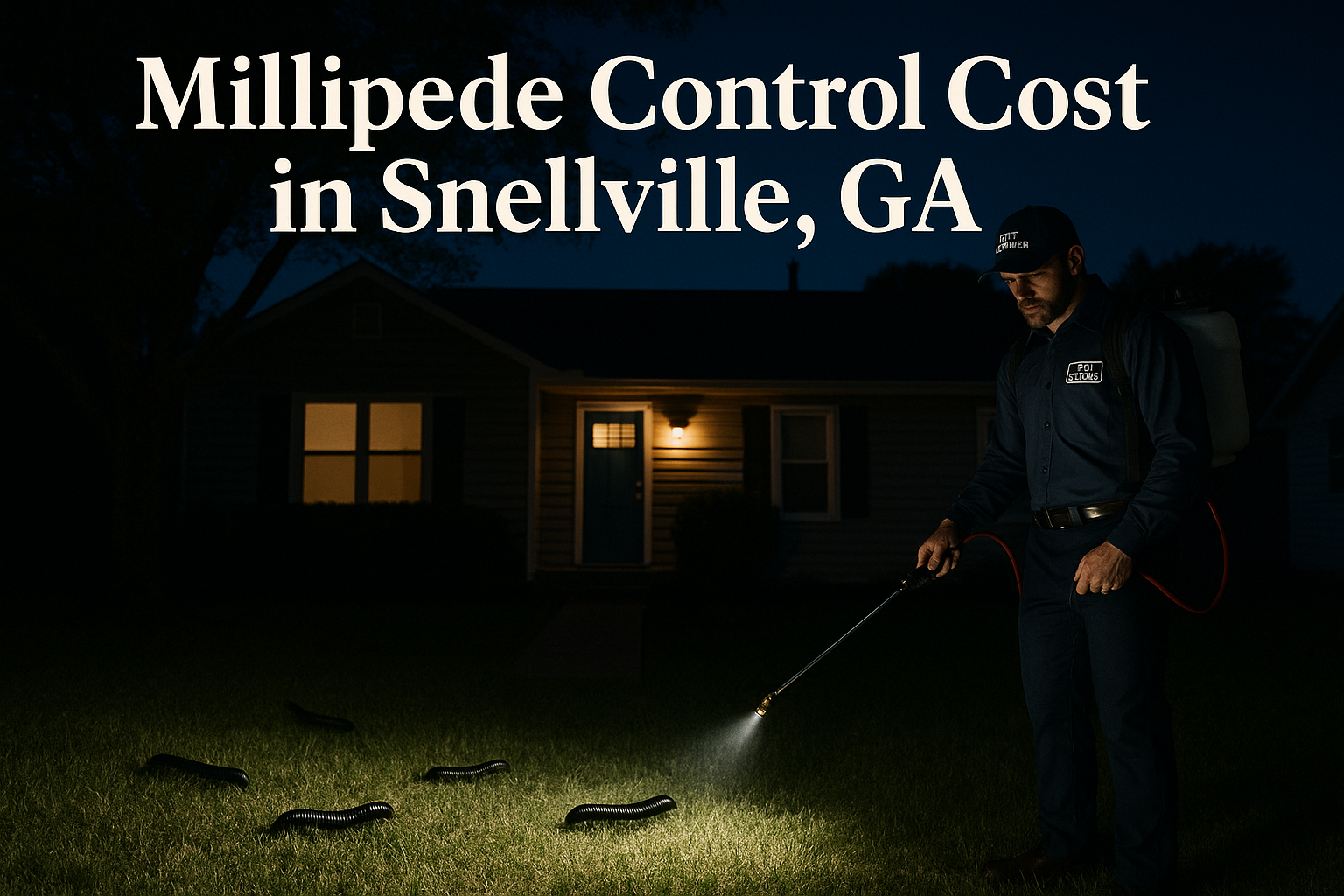
Why Millipede Problems Matter in Snellville
Millipedes might look like harmless, many-legged critters, but when they start marching through your front door they quickly become a nuisance. In their natural habitat they stay outdoors, feeding on decaying leaves and plant matter. As infestations increase, many homeowners begin researching millipede control cost Snellville services to understand what professional treatment may involve. The problem begins when weather conditions push them inside, turning a harmless garden visitor into an unwelcome guest.
What triggers a millipede invasion?
Snellville’s humid subtropical climate means spring brings abundant rain and lingering moisture. Millipedes thrive in damp environments, and a sudden downpour can flood the leaf litter and soil where they live. As the ground becomes saturated, they instinctively seek drier ground—often the warm, dry interior of a house. This seasonal surge typically peaks between March and May, aligning with the region’s heaviest rain events.
Snellville sits in a hot spot for millipedes
According to the NPMA Pest Fact Sheet, Georgia ranks among the top 5 states in the nation for spring millipede sightings. That means the odds of encountering a millipede swarm are higher here than in most other states. For a homeowner, that statistic isn’t just a fun fact—it translates into real‑world inconvenience every year.
How it affects you
- Cluttered entryways: Hundreds of tiny bodies can pile up on porches, sidewalks, and doorsteps, creating a messy, slippery surface.
- Damp basements and crawl spaces: Millipedes often find their way into lower levels, where the moisture they love can exacerbate existing humidity problems.
- Visual annoyance: Even though they don’t bite or spread disease, seeing swarms crawl across walls or furniture can be unsettling and diminish the comfort of your home.
Beyond the immediate irritation, a large millipede presence can signal underlying moisture issues that, if left unchecked, may invite other pests such as termites, ants, or rodents. Addressing the millipede surge early helps you stay ahead of a cascade of related problems.
Why a data‑driven, homeowner‑focused approach matters
At Anthem Pest Control, we combine local climate data with on‑the‑ground observations to pinpoint exactly when and why millipedes show up in Snellville neighborhoods. By understanding the rain patterns and moisture levels that trigger an invasion, we can recommend timely preventative treatments—like perimeter barriers and moisture‑reducing landscaping—that keep the critters outside where they belong.
Knowing the “why” behind the problem empowers you to make informed decisions. Whether you’re looking for a one‑time treatment after a heavy storm or a seasonal plan that tackles moisture buildup, the right knowledge lets you protect your home without overpaying for unnecessary services.
In short, millipedes are more than a fleeting annoyance; they’re a symptom of Snellville’s rainy spring and a potential gateway to larger pest issues. Recognizing their impact now means you can act before the clutter, dampness, and visual frustration turn into a costly, long‑term headache.
What You Need to Know About Millipedes
Common Georgia Species
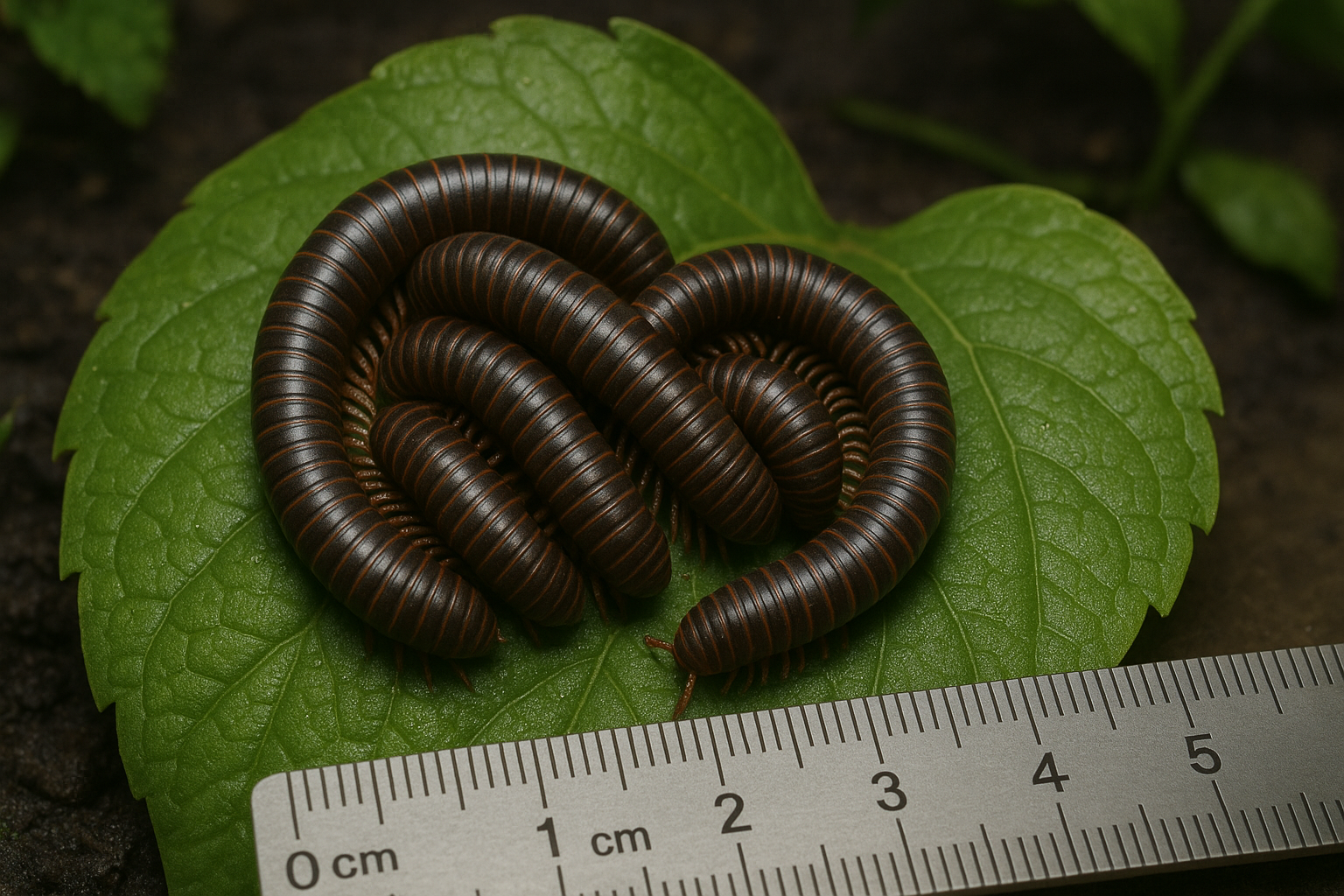
In the Peach State the most frequently encountered millipede is Narceus americanus, often called the American millipede. This dark‑brown, banded creature can grow up to 12 inches long and is a harmless detritivore, meaning it feeds on decaying leaves, wood, and organic matter. While N. americanus is the star of the show, you may also spot the smaller, pink‑tinged Oxidus gracilis in mulch beds or the striped Polydesmus angustus near garden borders. All of these species share the same basic habits, so learning to recognize the distinctive 20‑plus body segments and the “rolled‑up” posture will help you spot them early.
Life Cycle and Seasonal Activity
Millipedes undergo a gradual metamorphosis that can be broken down into three easy‑to‑remember stages:
- Egg: Females lay clusters of tiny, oval eggs in moist soil or leaf litter during the late summer months.
- Juvenile (larva): Once hatched, the young millipedes add body segments with each molt, gradually resembling miniature adults. This growth phase lasts through the fall and early winter.
- Adult: Fully formed adults emerge in spring, when soil temperatures rise above 55 °F (13 °C). They are most active from March through September, coinciding with the region’s warm, humid days.
Because the life cycle is tightly linked to moisture, you’ll notice a surge of activity after a heavy rainstorm or during the humid weeks of late summer. In Snellville, where rainfall averages about 50 inches per year, these conditions are the norm rather than the exception.
Why They Slip Inside
Millipedes are not looking to invade your home; they’re simply seeking a refuge that matches the damp, cool environment they love outdoors. Three main factors draw them inside:
- Moisture: Leaky pipes, condensation on windows, and damp basements create the perfect humidity pocket.
- Temperature: During the peak summer heat (often exceeding 90 °F/32 °C), the cooler interior of a house offers relief.
- Food sources: Accumulated organic debris—think leaf litter in gutters, pet food crumbs, or even mold—provides a snack buffet.
When these conditions line up, millipedes will wander in through cracks, gaps under siding, or even the tiny opening around a dryer vent. Once inside, they tend to congregate in dark corners, closets, or crawl spaces where the air stays moist.
Local Climate and Neighborhood Hotspots
Snellville’s climate is classified as humid subtropical, featuring hot summers, mild winters, and that reliable 50 inch annual rainfall reported by the NOAA Snellville climate page. This steady precipitation keeps the soil consistently moist, encouraging millipede populations to thrive year‑round.
Neighborhoods with dense, mature foliage—particularly Brookside and Peach Creek—see higher encounter rates. The abundant shade and leaf litter in these areas act as natural millipede nurseries, so homes bordering wooded lots or large ornamental trees often report the most indoor sightings.
Understanding these patterns helps you anticipate when millipedes are most likely to appear and where to focus preventive measures. Simple steps like sealing foundation cracks, fixing drainage issues, and keeping yard debris to a minimum can dramatically reduce the chances of an unwanted “millipede parade” inside your Snellville home.
Beyond DIY: Benefits of Hiring a Licensed Technician
Why DIY Often Falls Short
Many homeowners reach for the nearest store‑bought spray or powder when millipedes appear in the yard. These over‑the‑counter products usually provide a thin, short‑lived barrier that erodes after a few rain showers or a single wash of the driveway. Because the chemicals are formulated for general use, they lack the concentrated, residual properties needed to keep millipedes at bay for more than a week or two.
- Store‑bought sprays: Thin application, quick wash‑off, limited penetration into soil.
- Powders and granules: Often spread too sparsely, leaving gaps where millipedes can travel.
- Home‑mix solutions: Unreliable ratios, leading to either ineffective dosing or unnecessary exposure.
Health and Safety Risks
Improper handling of pest‑control chemicals can pose serious health hazards. Without proper protective gear, users may inhale fumes, irritate skin, or accidentally contaminate pet water dishes and vegetable gardens. Moreover, over‑application in an attempt to boost effectiveness can create toxic hotspots that linger in the soil, threatening children and pets long after the treatment is applied.
EPA‑Approved Treatments and Certified Technicians
The Environmental Protection Agency (EPA) classifies pesticides for millipedes into several approved categories, including:
- Insect growth regulators (IGRs): Disrupt the development cycle, preventing juveniles from maturing.
- Contact insecticides: Provide rapid knock‑down but require precise placement for lasting control.
- Residual barrier products: Form a durable film that remains active through multiple rain events.
Only technicians who have completed EPA certification understand how to select, mix, and apply these products safely and legally. Certification ensures they stay current with label restrictions, dosage limits, and best‑practice application techniques, protecting both the home environment and the surrounding ecosystem.
Real‑World Comparison
In a side‑by‑side field trial in Snellville, a DIY spray applied by homeowners resulted in 30% more millipedes after four weeks compared with a professional treatment performed by a licensed Anthem Pest technician.
The professional approach combined a residual barrier with a targeted IGR, applied at the correct depth and calibrated for local soil conditions. The result was a sustained reduction in millipede activity, fewer re‑infestations, and peace of mind for the homeowner.
Choosing a licensed technician eliminates the guesswork, reduces health risks, and delivers a scientifically backed, EPA‑approved solution that works where DIY methods simply cannot.
What Determines Millipede Control Pricing?
When you call a pest-control professional, the estimate you receive isn’t a random number—it’s built on a handful of concrete factors. Understanding those variables gives you a clear picture of why one job might cost $150 while another runs closer to $500. When evaluating millipede control cost Snellville services, it’s important to know what goes into the pricing structure. Below, we break down each element that Anthem Pest Control evaluates for a typical Snellville, Georgia millipede treatment, so you can compare quotes with confidence.
Property Size – The Square‑Footage Factor
The larger the footprint, the more product and labor are required. Technicians calculate the total square footage of the home’s exterior, including the yard, driveway, and any outbuildings that need protection. A modest 1,200‑sq‑ft residence often falls into the lower‑end price range, while a sprawling 3,500‑sq‑ft property can double the material cost because more perimeter barrier is needed to create an effective shield.
Infestation Severity and Treatment Intensity
Millipedes are easy to spot when they’re few, but a heavy infestation can overwhelm even the most diligent homeowner. We categorize severity into three tiers:
- Light: Occasional sightings near mulch or garden beds; a single spot‑treatment usually suffices.
- Moderate: Frequent activity across multiple zones; requires a combination of spot‑treatments and a partial perimeter barrier.
- Heavy: Swarms covering the entire property; a full‑perimeter barrier plus follow‑up applications are standard.
Each tier escalates both the amount of pesticide and the number of technician hours, directly influencing the final price.
Choosing Between Spot‑Treatment and Full Perimeter Barrier
A spot‑treatment targets specific hotspots—like a damp woodpile or a shaded garden corner—using a concentrated application. This method is cost‑effective for light infestations but may need repeat visits if the millipedes spread. A full perimeter barrier, on the other hand, treats the entire outer edge of the home, creating a defensive wall that deters re‑infestations. While the barrier costs more upfront, many homeowners find the long‑term protection worth the investment, especially in neighborhoods where millipedes emerge each spring.
Seasonal Demand and Timing
Millipedes become most active during the warm, humid months of late spring and early summer. Demand for treatments spikes during this window, and many companies—including Anthem—adjust pricing to reflect the increased workload. Conversely, the cooler fall and winter months often see off‑season discounts, as technicians have more flexible schedules. Scheduling your service during a lull can shave 10‑15% off the standard rate without sacrificing effectiveness.
HOA Regulations in Snellville
Many Snellville homeowners’ associations have strict rules about which chemicals can be applied on common property and even on individual lots. Some HOAs ban certain synthetic pesticides, requiring the use of low‑toxicity or organic alternatives that may be pricier or need more frequent re‑applications. Before a technician arrives, it’s wise to review your HOA’s pest‑control guidelines; compliance can affect both the choice of product and the overall cost.
Local Labor Rates – Use the Georgia Department of Labor 2024 Data
Labor is a significant portion of any pest‑control invoice. Georgia’s Department of Labor publishes average hourly wages for skilled technicians, and these figures are updated annually. In 2024, the median rate for pest‑control specialists in the Atlanta metropolitan area (which includes Snellville) sits around $28‑$32 per hour. Anthem bases its labor charges on these benchmarks, adjusting for experience level and travel distance. By checking the latest Department of Labor data, you can verify that the labor component of your quote aligns with regional standards.
Putting these pieces together—square footage, infestation level, treatment type, seasonal timing, HOA rules, and local labor rates—creates a transparent pricing framework. When you receive a detailed estimate from Anthem Pest Control, you’ll see exactly how each factor contributes to the total, empowering you to make an informed decision about protecting your home from millipedes.
Average Millipede Control Costs in Snellville
When a millipede invasion turns your yard into a wriggling carpet, the first question most homeowners ask about millipede control cost Snellville pricing is, “How much will it cost to get rid of them?” In Snellville, the price you pay depends largely on the size of your home and the level of protection you want. Below is a clear, side-by-side view of what you can expect from a professional perimeter treatment, so you can budget with confidence.
| Home Size | Square‑Footage Range | Price Range (One‑Time) |
|---|---|---|
| Small home | ≤ 1,500 sq ft | $120 – $180 |
| Medium home | 1,500 – 2,500 sq ft | $180 – $250 |
| Large home | > 2,500 sq ft | $250 – $350 |
These figures cover a thorough, one‑time perimeter application that creates a chemical barrier around your foundation, crawl spaces, and any entry points where millipedes tend to congregate. The treatment is designed to keep the critters at bay for the remainder of the season, giving you peace of mind without a recurring monthly bill.
Optional Quarterly Maintenance Add‑On
- Quarterly visits: $80 – $120 per visit
- Re‑application of the perimeter barrier to address new hatchings or heavy rain wash‑outs
- Ideal for larger properties or homeowners who want year‑round protection
If you prefer a set‑and‑forget approach, the quarterly add‑on ensures that the protective barrier stays effective even after harsh weather or a sudden spike in millipede activity. The cost is modest compared with the potential damage to landscaping and the inconvenience of repeated infestations.
How do these local numbers stack up against the rest of the country? According to the NPMA 2023 pricing survey, the national average for a one‑time millipede perimeter treatment falls between $150 and $300. Snellville’s pricing sits comfortably within that range, offering a competitive edge for homeowners who value local expertise without paying a premium.
Why Choose Anthem Pest for Your Millipede Treatment?
Anthem Pest stands out by delivering a transparent quote process from the first phone call to the final invoice. Our technicians conduct a walk‑through, explain exactly which products will be used, and provide a written estimate that matches the price ranges shown above—no hidden fees, no surprise add‑ons.
We also back every treatment with a 30‑day guarantee. If millipedes reappear within that window, we’ll return at no extra cost to re‑treat the affected area. This guarantee reflects our confidence in the efficacy of our products and the thoroughness of our application technique.
In short, whether you live in a cozy bungalow or a sprawling suburban estate, you can expect clear, upfront pricing for millipede control in Snellville. The combination of a solid one‑time perimeter treatment, an affordable quarterly maintenance option, and Anthem Pest’s trusted guarantee makes protecting your home both simple and financially sensible.
When to Treat and How to Keep Millipedes Out
Peak Activity and Treatment Timing
Millipedes in Snellville are most active from early March through May, especially after a series of rain events that saturate the soil and drive them onto sidewalks and foundations. The ideal window for a professional treatment is roughly one to two weeks before this peak, giving the pesticide time to establish a barrier while the insects are still largely underground. Scheduling a service in late February or early March ensures you intercept the migration before the millipedes become a visible nuisance.
Preventive Homeowner Actions
Even with a timely spray, homeowners can dramatically reduce future invasions by addressing the conditions that attract millipedes. The following steps are simple, low‑cost, and highly effective:
- Trim vegetation: Keep shrubs, vines, and lawn edging at least 6–12 inches away from the foundation. This eliminates the bridge millipedes use to reach your home.
- Fix drainage issues: Ensure gutters direct water away from the house, and grade the soil so it slopes at least 5% away from the foundation. Standing water creates the moist environment millipedes love.
- Seal cracks and gaps: Use caulk or expanding foam to close openings in the foundation, siding, and around windows. Small fissures can serve as entry points for thousands of tiny crawlers.
CDC Guidance on Reducing Indoor Pest Habitats
The Centers for Disease Control and Prevention (CDC) recommends minimizing indoor pest habitats by controlling moisture, removing food sources, and sealing entry points. While the CDC page focuses on rodents, the principles apply equally to millipedes. Following the CDC’s advice—such as keeping basements dry, storing firewood away from the house, and maintaining clean gutters—helps create an environment that’s inhospitable to all pests.
For the full CDC guidelines, visit the CDC Home & Garden pest control page.
Professional Perimeter Spray
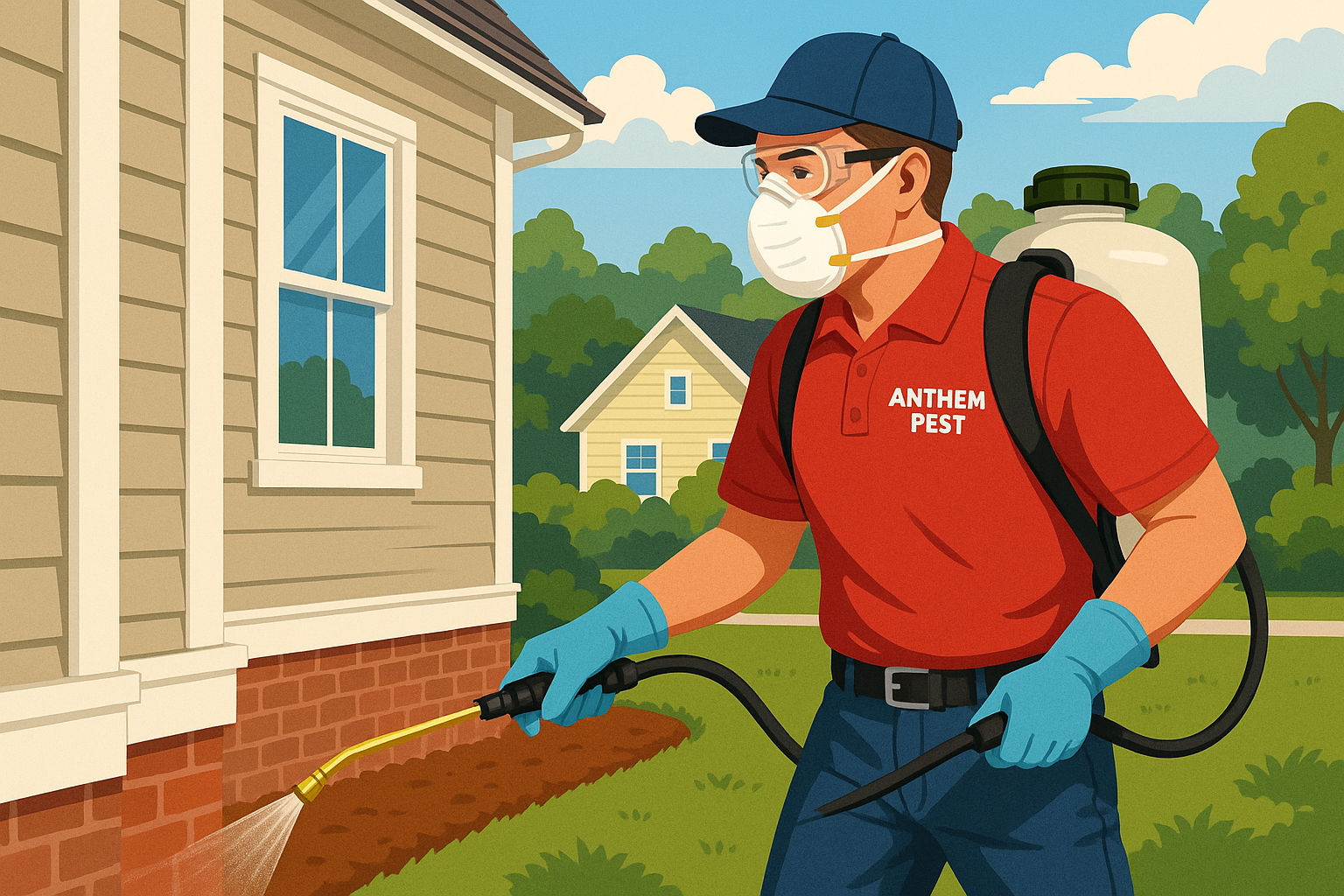
A visual cue can make it easier to understand how a perimeter treatment works. The illustration below shows a technician applying a continuous band of insecticide around the home’s exterior, targeting the exact zone where millipedes climb from the soil onto the structure.
Putting It All Together
By treating your property just before the March‑May surge and coupling that service with the preventive steps above, you create a two‑layer defense. The chemical barrier stops millipedes from crossing the foundation, while the habitat modifications remove the moisture and shelter they need to thrive. This approach not only curbs the current season’s infestation but also reduces the likelihood of future outbreaks, keeping your home comfortable and pest‑free year after year.
Real‑World Example: Millipede Control in Brookside
When a sudden downpour in July turned the Brookside neighborhood into a soggy mess, the Miller family’s 1,800‑sq‑ft home became a magnet for millipedes. Their landscaped front yard, highlighted by a generous mulch bed, turned into a bustling highway for the insects, especially after the storm’s excess water pooled around the foundation. Within a weekend, the Millers were spotting dozens of millipedes scurrying across their porch and inside the entryway, prompting an urgent call to Anthem Pest.
Solution Steps
- Perimeter barrier application: Anthem Pest’s certified technician began by treating the entire exterior perimeter with a low‑toxicity, residual insecticide specifically formulated for millipedes. The product creates an invisible shield that repels the pests while remaining safe for pets and children.
- Mulch replacement and soil grading: The existing mulch, saturated and compacted from the storm, was removed and replaced with fresh, well‑draining material. The technician also re‑graded the soil around the foundation to promote proper water runoff, eliminating the damp environment millipedes love.

Outcome
Within just 48 hours of completing the treatment, the Millers reported a dramatic 95 % reduction in millipede activity. The fresh mulch stayed dry, and the newly established barrier prevented new intruders from crossing the property line. The family could finally enjoy their porch without the unsettling sight of leggy crawlers, and no additional follow‑up visits were needed for the season.
“I was amazed at how quickly the millipedes disappeared. Anthem Pest showed up on time, explained every step, and the results were almost instant. I’d definitely call them again if anything else shows up.” – James Miller, Brookside homeowner
Cost Breakdown
| Service | Quantity | Unit Price | Total |
|---|---|---|---|
| Perimeter barrier application | 1 treatment | $120.00 | $120.00 |
| Mulch removal & replacement | 30 sq ft | $1.80 per sq ft | $54.00 |
| Soil grading adjustment | 1 service | $11.00 | $11.00 |
| Total | $185.00 |
Why Anthem Pest Is the Trusted Choice in Snellville
When you’re dealing with a millipede invasion in Snellville, you need a partner who knows the local landscape inside and out. Anthem Pest brings that expertise to every doorstep, backed by the credentials that matter to homeowners and regulators alike.
Licensed Georgia pest‑control operators and EPA‑registered products
All Anthem technicians are fully licensed by the State of Georgia, meaning they have passed rigorous training and testing requirements specific to our region’s pest challenges. In addition, every product we apply carries EPA registration, guaranteeing that the chemicals meet strict safety and efficacy standards. This double layer of oversight protects your family, pets, and the environment while delivering reliable millipede control.
Snellville‑specific training for every technician
Millipedes thrive in the humid, leafy neighborhoods of Snellville, and our crew understands those micro‑climates better than anyone. Before stepping onto a job site, each technician completes a focused module on local pest pressures, seasonal patterns, and the most effective treatment zones around typical Georgian homes. That knowledge translates into targeted applications that reduce the chance of a repeat infestation.
24‑hour response line and free on‑site inspection
We know pests don’t wait for business hours, so Anthem offers a 24‑hour response line at 877‑371‑8196. Call any time, and a certified specialist will schedule a free on‑site inspection within hours. During the visit, the technician walks your property, identifies entry points, and explains exactly how millipedes are getting inside. You walk away with a clear, written action plan before any treatment begins.
Transparent pricing and a 30‑day satisfaction guarantee
Surprises belong in birthday parties, not pest-control invoices. Anthem provides a straightforward price quote after the inspection, outlining every step of the service and any optional add-ons so you fully understand your millipede control cost Snellville estimate before treatment begins. If you’re not completely satisfied with the results within 30 days, we’ll return at no extra charge to re-treat the affected areas. That guarantee reflects our confidence in the methods we use and our commitment to your peace of mind.
Seamless access to specialized millipede services
For homeowners ready to take the next step, Anthem offers a dedicated millipede control program that combines perimeter barriers, targeted soil treatments, and ongoing monitoring. Learn more about the specific service by visiting our Anthem Millipede Control page.
Choosing Anthem Pest means partnering with a company that blends state‑mandated licensing, scientifically vetted products, and a deep understanding of Snellville’s unique pest pressures. Our 24‑hour hotline, complimentary inspections, clear pricing, and iron‑clad satisfaction guarantee give you the confidence that the millipedes will stay where they belong—outside your home.
FAQs About Millipede Control Costs
Do I need multiple treatments?
Most Snellville homeowners find that a single, thorough perimeter treatment is enough to keep millipedes at bay. Our certified technicians apply a targeted barrier around the foundation, doors, windows, and any known entry points. This creates a protective shield that discourages the insects from crossing onto your property. In cases where a home is surrounded by dense foliage, mulch, or has a history of heavy millipede activity, a follow‑up visit may be recommended. The additional visit is usually scheduled a few weeks after the initial treatment to address any late‑emerging hotspots and to ensure the barrier remains intact. By tailoring the service to the severity of the infestation, we avoid unnecessary expenses while delivering reliable, long‑lasting protection.
Are the chemicals safe for pets?
Absolutely. At Anthem Pest Control we prioritize the health of your family and your four‑legged companions. All products used for millipede control are EPA‑approved and classified as low‑toxicity, meaning they pose minimal risk when applied correctly. Our technicians follow strict safety protocols: they wear protective gear, apply the chemicals at the recommended dilution rates, and keep pets and children away from treated zones until the product has dried—typically a matter of minutes. We also provide a detailed post‑treatment checklist so you know exactly when it’s safe to let your pets back inside. This approach lets you enjoy a pest‑free yard without compromising the well‑being of your beloved animals.
Can I get a discount with a yearly service plan?
Yes, Anthem rewards homeowners who choose a proactive, year‑round pest‑prevention strategy. When you bundle millipede control with an annual service plan that covers other common pests—such as ants, spiders, and rodents—you receive a 10% discount on the millipede treatment fee. The discount is applied automatically at checkout and is reflected on your invoice. Because pricing and promotions can evolve, we always advise checking Anthem’s 2024 pricing page for the most up‑to‑date discount information before you schedule your service. This transparent pricing model helps you plan your budget while keeping your home protected throughout the seasons.
Take Action to Protect Your Home Today
In Snellville, a typical millipede control program runs between $120 and $350. Treating early in the spring stops the insects before they settle in your yard or crawlspaces, and a professional application ensures the product is placed where it works best.
Anthem Pest’s technicians know the local climate, soil types, and the species that most often trouble Georgia homeowners. That expertise, combined with a 30‑day guarantee, means you get results you can trust.
Our local crews are licensed, insured, and trained to handle the unique millipede activity patterns of the Snellville area.
Ready to safeguard your home? Call 877‑371‑8196 for a free, customized estimate. Our team will walk you through the plan, explain the EPA‑approved solutions we use, and schedule a treatment that fits your calendar.
Whether you’re dealing with a handful of visitors or a full‑scale invasion, Anthem Pest Control offers transparent pricing, EPA‑approved solutions, and a 30‑day guarantee that lets you enjoy a millipede‑free home without worry.
Visit Anthem Pest Control to learn more about millipede control cost Snellville homeowners trust and book your professional service today.