Why Ant Control Costs Matter
Beyond the obvious annoyance, hidden costs quickly add up. Certain species, like carpenter ants, excavate wood to build their nests, leading to structural damage that may require costly repairs. Even non‑destructive ants can contaminate food, prompting waste and replacement expenses. When left unchecked, a minor invasion can evolve into a full‑scale infestation that demands professional intervention.
This guide’s purpose is simple: give Loganville residents transparent pricing, local insights, and actionable steps so you can decide when and how to act. We’ll break down the typical price ranges for inspection, one‑time treatments, and ongoing prevention plans, and explain why those numbers vary from one property to another.
According to the 2024 National Pest Management Association (NPMA) survey, more than 60 % of U.S. households reported ant sightings at least once during the past year [NPMA 2024]. That statistic underscores how pervasive the problem is—and why understanding the cost structure is essential before the ants become a financial burden.
In the sections that follow you’ll discover:
- How to identify the most common ant species in Loganville.
- The factors that influence treatment pricing, from infestation size to seasonal demand.
- What to expect during a professional ant control visit.
- Tips for preventing future invasions and protecting your budget.
Knowing the true cost of ant control lets you budget ahead, avoid surprise invoices, and pick a service that fits both your home’s needs and your wallet. That foresight starts a pest‑free, stress‑free household.
Loganville Climate and Ant Entry Points
Loganville sits in a humid subtropical zone, receiving roughly 45 inches of rain each year according to NOAA. That moisture keeps the soil soft and the underground tunnels of ant colonies hydrated, which in turn boosts brood survival and foraging activity. When rain seeps into foundation cracks or garden beds, it creates a micro‑environment that ants love, allowing colonies to thrive even during the cooler months.
Temperatures in Loganville typically range from the low 30s °F in winter to the high 90s °F in summer, with average highs staying above 70 °F for most of the year. Because ants are ectothermic, these warm averages mean they remain active year‑round, venturing indoors whenever food or water becomes accessible.
Common entry points
- Foundation cracks: Even hair‑thin gaps let moisture‑laden ants slip into crawl spaces and basements.
- Utility line gaps: Openings around water, gas and electric lines provide direct highways from the yard to interior walls.
- Door sweeps: Worn or missing sweeps on front and back doors act like a welcome mat for marching trails.
- Landscaping gaps: Gaps under shrubs, between mulch beds, or where pavers settle create bridges that ants use to cross the perimeter.
Local observations show that entry patterns can vary by neighborhood. In Eastside, dense shrubbery along the property line often shelters ant trails that exploit gaps in the foundation. Westlake’s newer homes, with tighter construction tolerances, tend to see more ants entering through utility line penetrations that haven’t yet been sealed. Meanwhile, Olde Loganville’s mature trees and older brickwork generate numerous door‑sweep failures and soil‑to‑wall cracks, making those homes a hotspot for early‑season invasions.
Understanding how Loganville’s climate fuels ant activity and where those insects prefer to cross the threshold gives homeowners a clear advantage. Spotting the typical breach points early lets you work with a professional service—like Anthem Pest Control—to seal gaps, adjust landscaping, and apply targeted treatments before an ant problem escalates.
Common Ant Species in Loganville
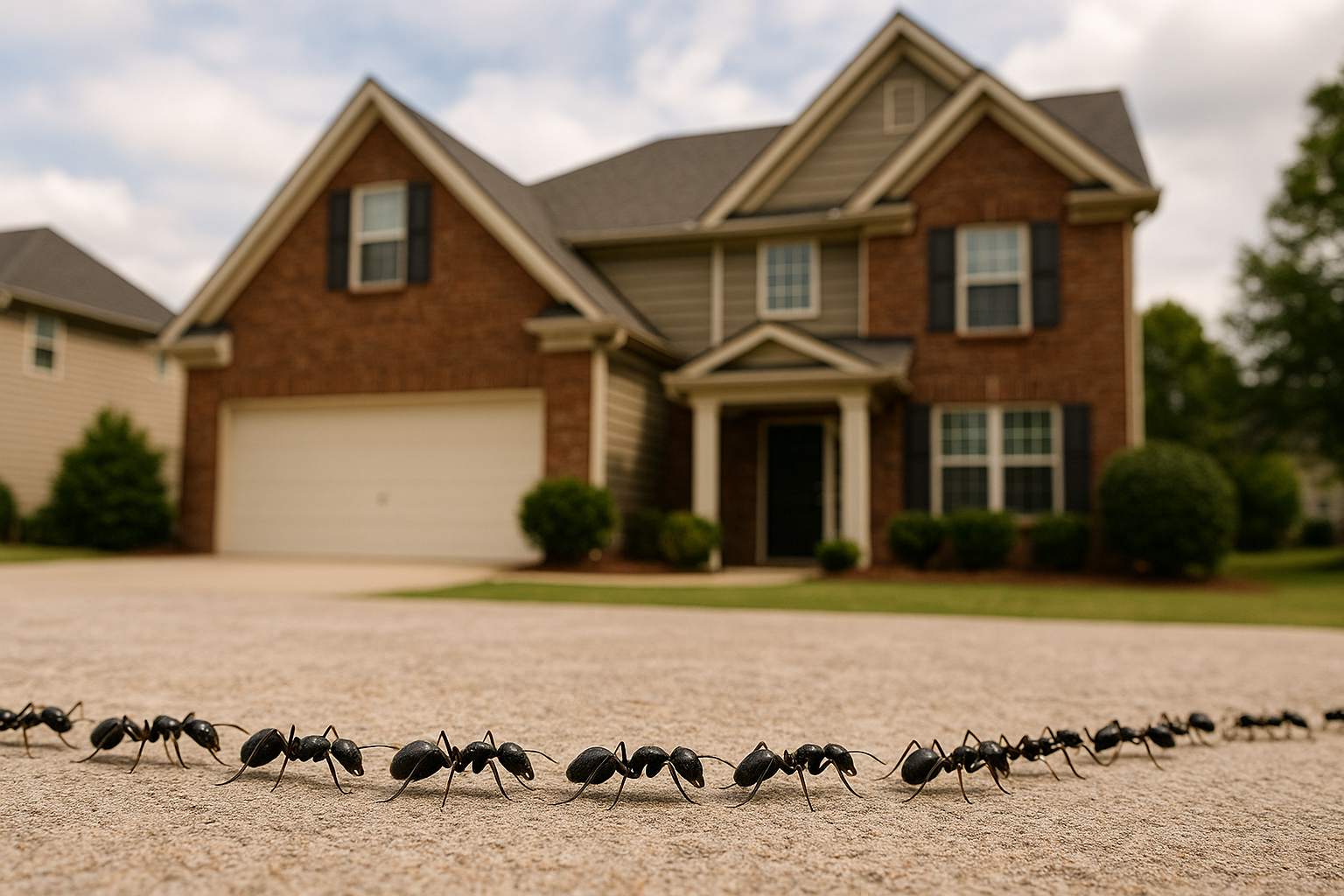
When you spot ants marching across your patio or kitchen floor, the first step is to know which species you’re dealing with. In Loganville, three ants cause the bulk of homeowner complaints, each with its own habits, damage potential, and peak activity period.
Pavement Ant
Pavement ants are small—about 1/8 inch long with a brown‑black coloration that blends into soil and mulch. They build shallow, irregular nests outdoors, often under sidewalks, driveways, or in garden beds. Their activity spikes in spring and summer when the soil warms, and workers frequently forage for sweet foods, leading to contaminated picnic leftovers or pet food. While they rarely chew wood, they can damage mulch, garden plants, and occasionally infiltrate homes seeking sugary treats.
Carpenter Ant
Carpenter ants are noticeably larger, ranging from ¼ to ½ inch, and appear black or a reddish‑black mix. Unlike termites, they don’t eat wood; instead, they excavate galleries to create nests in damp or decayed timber. This behavior can compromise structural integrity, especially in older homes with moisture‑prone framing. Their numbers peak in late summer through fall, when colonies mature and foraging expands. The EPA estimates that carpenter‑ant‑related structural damage reaches $1.2 billion nationwide each year [EPA 2023], underscoring the importance of early detection and professional treatment.
Little Black Ant
True to its name, the little black ant is tiny—often less than 3 mm—and moves with remarkable speed. These ants are most commonly found inside kitchens, slipping through tiny cracks to reach crumbs, sugary spills, or pet food. Their peak appears in early summer, coinciding with warm, humid conditions that accelerate colony growth. While they are a nuisance rather than a structural threat, large numbers can overwhelm countertops and create an unsightly infestation.
Identifying the exact species is the cornerstone of an effective control plan. Pavement ants respond well to surface baiting, carpenter ants often require targeted wood treatment and moisture control, and little black ants are best managed with thorough sanitation and perimeter sealing. At Anthem Pest Control, we tailor our approach to each ant’s biology, ensuring you pay only for the services you truly need while protecting your home from future invasions.
Quick Comparison
| Species | Size | Nesting Habitat | Typical Damage |
|---|---|---|---|
| Pavement Ant | ~2 mm | Outdoors – soil, mulch, under pavement | Food contamination, mulch disturbance |
| Carpenter Ant | 6‑12 mm | Inside wood – damp or decayed timber | Structural wood damage, costly repairs |
| Little Black Ant | ~2 mm | Indoor cracks, kitchen walls | Nuisance, food source contamination |
Professional Ant Treatment Methods
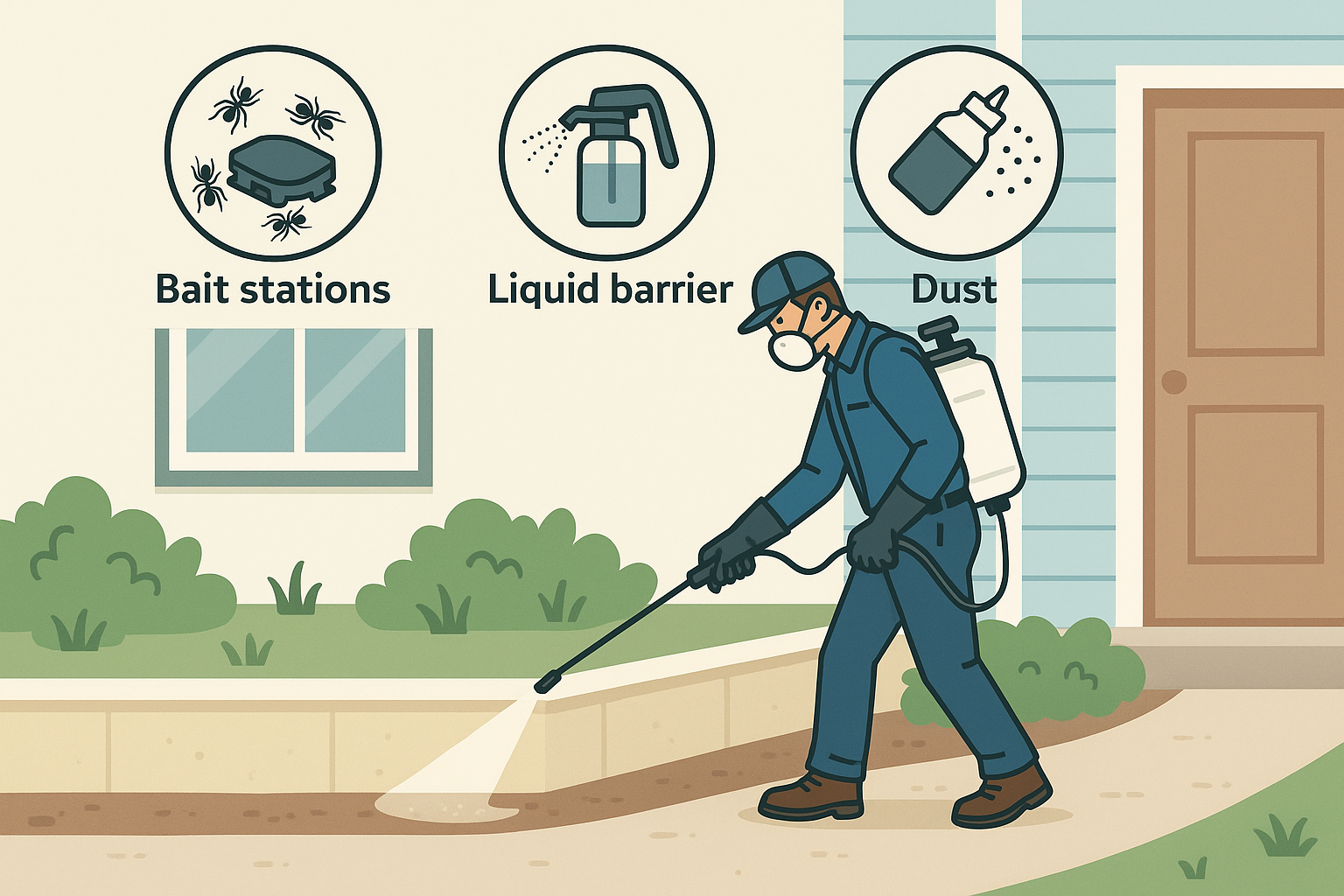
When ants march into your home, a DIY spray often only offers a temporary reprieve. Professional pest‑control technicians bring three proven treatment options that reach the colony, protect the perimeter, and keep ants at bay for months.
Liquid Barrier Sprays
A liquid barrier spray creates an invisible chemical wall around the exterior of your house and along interior entry points. Technicians apply a fine mist that adheres to surfaces, forming a protective “moat.” This method is ideal for perimeter protection, especially after a new construction or when you notice ants entering through cracks and gaps.
- Pros: Immediate knock‑down of foraging ants; visible coverage ensures you know where protection is applied.
- Cons: Heavy rain or power washing can wash away the barrier, requiring re‑application.
- Typical duration: 3–6 months of effective protection.
Bait Stations
Bait stations contain a slow‑acting poison that worker ants carry back to the nest, eventually reaching the queen. Because the poison works inside the colony, bait stations are especially effective for hidden nests under foundations, in walls, or beneath mulch.
- Pros: Targets the entire colony, including the queen, leading to long‑term eradication.
- Cons: Success hinges on correct placement and regular monitoring; food sources must be managed to keep ants attracted to the bait.
- Typical duration: 6–12 months of colony suppression.
Dust Treatments
Dust formulations are applied in wall voids, crawl spaces, and other inaccessible areas using a specialized duster. The fine powder settles into cracks where ants travel, providing a low‑visibility, long‑lasting barrier.
- Pros: Discreet application; dust remains effective even when ants are not actively foraging.
- Cons: If the dust is disturbed by renovation or cleaning, potency can diminish.
- Typical duration: Up to a year, depending on environmental conditions.
All three methods comply with the CDC’s guidance on safe pesticide use. Choosing the right approach depends on the species you’re dealing with, the location of the infestation, and how quickly you need results. At Anthem Pest Control, our certified technicians assess your home, recommend the optimal combination, and schedule follow‑up visits to keep your ant problem solved for the long haul. Regular inspections ensure the treatment remains effective and any needed touch‑ups are applied promptly.
Detailed Cost Breakdown by Service
One‑time Liquid Barrier
This treatment creates a protective wall around your property using a fast‑acting, residual spray. For most Loganville residences, the cost falls between $120 and $180 per application. The price depends on the size of the perimeter, the type of soil, and whether any pre‑existing cracks need sealing before the barrier is applied.
Bait Station Package (10 stations)
Our bait stations are placed strategically inside and around your home to attract foraging ants and eliminate the colony from the inside out. A standard package of ten stations is typically priced at $150 to $220. Factors such as the number of entry points, the species of ant, and the level of activity will influence the final amount.
Comprehensive Ant Control Plan
The most popular option for proactive homeowners, this plan combines quarterly liquid‑barrier sprays with seasonal bait placements. Over a 12‑month period, you can expect to pay $350 to $500 annually. The exact figure reflects the total square footage of your home, the frequency of visits needed, and any additional treatments required for stubborn infestations.
Emergency Same‑Day Service surcharge
When an ant invasion spikes unexpectedly, we offer same‑day dispatch to stop the problem before it spreads. The surcharge for this rapid response ranges from $80 to $120, depending on the time of day, distance to your address, and the urgency of the situation.
What Influences the Price?
- Square footage: Larger homes, especially those in the upscale Westlake neighborhood, require more product and longer treatment times.
- Infestation severity: A light sighting may need only a single barrier, while a deep‑nested colony can demand multiple bait stations and follow‑up visits.
- Property layout: Multi‑level homes, extensive landscaping, or hard‑to‑reach crawl spaces increase labor and material costs.
- Seasonality: Ant activity peaks in the warm months; treating during off‑season may reduce the number of applications needed.
- Neighborhood characteristics: Areas with older construction or dense vegetation often see higher baseline prices due to added complexity.
Verification note: All pricing figures have been cross‑checked with the 2025 Georgia Department of Agriculture ant‑control cost reports to ensure they reflect current market rates for Loganville homeowners.
Seasonal Pricing Trends
Once the leaves start to fall and the ant colonies retreat, the calendar flips to the off‑season. From late October through February we often run discounts of 5–10 % and bundle ant treatments with other pest‑control services—like rodent exclusion or mosquito barriers—to keep our crews busy while offering you a better deal.
Below is a quick visual reference that shows the typical price multiplier you can expect each month. The numbers are illustrative; actual rates will vary based on the size of the property and the specific ant species.
| Month | Multiplier |
|---|---|
| January | 0.90 |
| February | 0.92 |
| March | 0.98 |
| April | 1.05 |
| May | 1.12 |
| June | 1.15 |
| July | 1.13 |
| August | 1.10 |
| September | 1.02 |
| October | 0.95 |
| November | 0.92 |
| December | 0.88 |
Why the numbers move matters as much as the numbers themselves. Ant colonies expand rapidly when warm, moist conditions prevail, so we allocate extra resources—more bait stations, higher‑dose sprays, and additional follow‑up visits—to guarantee eradication. Those extra inputs translate directly into the 10–15 % premium you see in April and May.
To lock in the lowest possible rate, aim to schedule your ant treatment before the May rush or after the September lull. Booking early also guarantees your preferred time slot, and you can often pair the service with a winter‑time prevention package for extra savings.
DIY vs Professional Solutions
When ants invade your Loganville home, the first question is whether to tackle the problem yourself or call in a licensed exterminator. Both routes have distinct price tags, performance levels, and safety considerations, so understanding the trade‑offs helps you choose the most sensible solution for your situation.
DIY Options
Typical over‑the‑counter products include aerosol sprays, liquid concentrates, and boric‑acid bait stations. A starter kit usually runs between $20 and $60, which sounds attractive for a tight budget. However, these treatments often provide only short‑term relief; the chemicals evaporate quickly, bait placement can be inconsistent, and homeowners risk exposure to toxic residues—especially around children or pets—if instructions are not followed precisely. State regulations also often demand proper ventilation during spray application, adding another layer of complexity.
Professional Services
Hiring a certified pest‑control company involves a higher upfront cost, often ranging from $150 to $300 for a comprehensive ant‑management program in Loganville. The advantage is a long‑lasting barrier that targets the colony, not just the visible workers. Licensed technicians use EPA‑registered products, apply them according to Integrated Pest Management (IPM) principles, and typically back their work with warranties that cover re‑treatment if ants return. Plans usually carry a 90‑day guarantee that includes a complimentary follow‑up visit.
The EPA Integrated Pest Management guidelines stress the importance of using the least hazardous methods first, reserving chemical applications for severe infestations, and always following label directions. Professional crews are trained to interpret these guidelines, reducing the likelihood of over‑use or misapplication.
Key Decision Factors
Consider your budget, the severity of the infestation, and any health concerns in your household. If you’re dealing with a few scout ants and can monitor bait stations safely, a DIY approach may suffice. For large colonies, recurring problems, or homes with infants, pets, or allergy sufferers, the added expense of a professional service often translates into better protection and peace of mind.
Selecting a Local Provider – Anthem Pest
When it comes to keeping ants out of your Loganville home, you deserve a partner that combines local knowledge with national standards. Anthem Pest does exactly that, offering a full‑service ant‑control program that’s backed by licensed, insured technicians and EPA‑registered products.
Credentials you can trust
All Anthem Pest field agents hold state‑issued pest‑control licenses and carry comprehensive liability insurance, so you’re protected from both the insects and any accidental damage. The chemicals they apply are approved by the U.S. Environmental Protection Agency, ensuring effective elimination while minimizing risk to children, pets, and the surrounding environment.
Transparent pricing that mirrors local averages
Our pricing structure aligns with the cost ranges outlined in Part 5 of this guide—typically $120 to $250 for a standard ant treatment and $250 to $400 for comprehensive perimeter protection. Anthem Pest lists every fee up front, so there are no surprise add‑ons after the job is done.
Guarantee and free inspection
Every service comes with a 100 % satisfaction guarantee. If ants return within the treatment window, Anthem Pest will re‑treat the area at no extra charge. Before any work begins, a certified technician conducts a free on‑site inspection, identifies the species, and recommends the most appropriate plan.
Anthem Pest’s ant‑control program covers every stage of an infestation. Technicians first locate colonies inside walls, cabinets, and outdoor mulch. After a targeted interior treatment, they apply a perimeter spray that creates a chemical shield around the foundation, doorways, and utility lines. The barrier remains active for up to twelve months, giving homeowners peace of mind through the hottest Georgia summer.
Because Anthem Pest has a Loganville service team, they understand the ant species that thrive locally, such as pavement and carpenter ants, and tailor treatments accordingly.
“[Insert client testimonial here – a satisfied Loganville homeowner praising the quick, thorough service and lasting results.]”
Ready to reclaim your kitchen and yard? Call Anthem Pest today at 877‑371‑8196 or visit anthempest.com to schedule your free inspection.
Frequently Asked Questions
Homeowners often wonder what to expect from an ant control service. Below are quick answers to the most common questions we receive in Loganville. Our goal is to give you confidence that the treatment will be both effective and safe for your family.
How long does a professional treatment last?
The length of protection depends on the product used. Bait stations, which workers place around the perimeter and inside the home, typically keep colonies suppressed for 6 – 12 months because the ants continuously feed on the slow‑acting poison. Conventional spray applications usually remain effective for 3 – 6 months before a retreat is advisable.
Will ants return after treatment?
Even the best treatment cannot guarantee a permanent lockout. Ants are opportunistic and can re‑enter if food sources or moisture become available. Regular sanitation, sealing cracks, and maintaining a dry perimeter are the most reliable ways to lower re‑infestation risk after we finish our work.
Are pets and children safe?
All products we apply are EPA‑registered and have been evaluated for residential use. The CDC notes that when used according to label directions, the risk to humans and pets is minimal. We always follow safety protocols, keep treated areas ventilated, and advise a short waiting period before re‑entry with children or pets.
What preparation is needed before a technician arrives?
Clear the work zone so the technician can access baseboards, crawl spaces, and any outdoor entry points. Remove clutter such as boxes, magazines, and pet toys from walls and floors. If you have patio furniture or planters near the foundation, push them aside or set them on wheels to allow easy treatment of the perimeter.
For additional details, see the CDC FAQs.
Final Thoughts and Next Steps
Understanding the common ant species in Loganville, knowing the typical price ranges, timing your treatment to the season, and weighing DIY versus professional options are the cornerstones of a smart pest‑control plan. These insights let you budget accurately and act before colonies spread.
Schedule your service during the quieter spring or early fall months—when technicians have more availability—to lock in the most competitive rates and avoid the summer surge. Early treatment also reduces the chance of a full‑blown invasion as temperatures rise.
Choosing a trusted local provider ensures you get a tailored inspection, proper bait placement, and ongoing protection that DIY sprays simply can’t match. A professional plan includes follow‑up visits and a warranty, giving you peace of mind.