Moth Damage Frustrations and Article Overview
Imagine pulling your favorite sweater out of the closet only to discover a series of tiny, irregular holes—those unmistakable signs of a moth invasion. Or opening a pantry shelf to find clusters of silvery‑gray larvae munching through cereal, crackers, and spices. That sudden, silent damage can feel like a personal violation of your home’s comfort.
In Loganville, two culprits are responsible for most of the trouble: the clothes moth (Tineola bisselliella), which targets natural fibers in wardrobes, and the pantry moth (Plodia interpunctella), the notorious pantry invader that feasts on stored food products. Both species thrive in the warm, humid climate of our region, making early detection essential.
Understanding the cost of control isn’t just about budgeting; it’s about making an informed decision that stops the damage before it spreads. Transparent pricing lets homeowners weigh the value of professional treatment against DIY attempts, ensuring they choose a solution that truly protects their belongings and peace of mind.
This article will walk you through everything you need to know, including:
- How to identify the specific moth species in your home
- Key factors that influence treatment pricing
- Typical rates you can expect from Loganville providers
- Seasonal timing that maximizes effectiveness
- DIY versus professional options and when each makes sense
- Local insights from Anthem Pest Control to help you act quickly
When a moth infestation goes unchecked, the hidden costs pile up—replacing ruined garments, discarding contaminated food, and even repairing structural damage from larvae that tunnel into insulation. That’s why having a clear, itemized cost estimate from a trusted local provider like Anthem Pest can save you both time and money.

Identifying the Moths Threatening Loganville Homes
Moth infestations often go unnoticed until damage is evident. In Loganville, two species dominate homes: the clothes moth that targets fabrics, and the pantry moth that spoils stored foods.
Clothes Moth (Tineola bisselliella)
The clothes moth begins as a tiny egg laid on natural fibers such as wool, cashmere or silk. Within a week it hatches into a voracious larva that feeds for 2‑4 weeks, creating the characteristic irregular holes and silky tunnels in garments. The larva spins a cocoon, pupates, and emerges as a winged adult ready to lay thousands more eggs. The most damaging phase is the larval stage, when the insect’s mouthparts can shred delicate fibers in just a few days.
Pantry Moth (Plodia interpunctella)
Pantry moths follow a similar four‑stage cycle, but they target stored food. An adult female deposits eggs on the surface of grains, cereals, nuts or dried fruit. The larvae hatch and burrow into the product, feeding and growing for three to six weeks while producing webbing and frass. Once fully grown they exit the food, spin a silken cocoon, and become flying adults that can quickly infest other pantry items. The larval feeding period is when pantry goods become contaminated and unsellable.
According to the Georgia Department of Agriculture’s 2023 pest report, roughly 12,000 moth‑related complaints were logged statewide, underscoring how common these pests have become in residential settings. These numbers translate to thousands of households facing costly repairs each year.
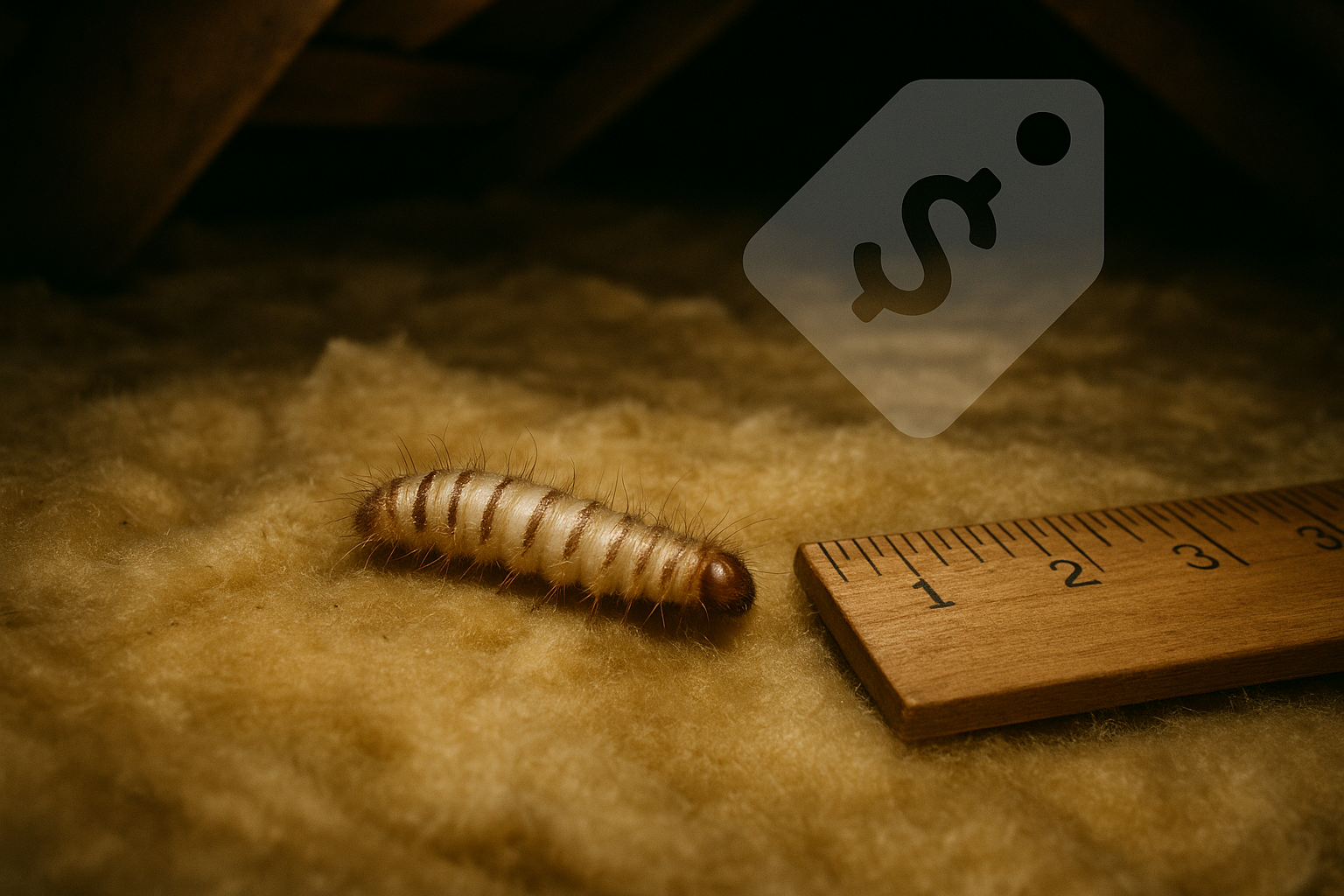
In Loganville’s Eastside neighborhood, a homeowner discovered a cluster of larvae in a wool coat drawer and, before treatment, lost about $200 worth of garments. The damage was visible as ragged holes and silken tunnels, a clear reminder that early detection can protect both clothing and pantry staples from costly loss.
Prompt professional treatment not only stops the current outbreak but also prevents future generations of moths from rebuilding, safeguarding your budget and peace of mind.
What Determines Moth Control Pricing
When you call a professional like Anthem Pest Control, the quote you receive isn’t a random number. It’s built on a handful of concrete factors that reflect the work required, the products used, and the level of protection you’ll get. Understanding these variables helps you compare quotes and choose the right plan for your home.
Inspection fee
Most companies charge an upfront inspection fee ranging from $75 to $130. This cost covers a thorough walkthrough, identification of moth species, and a detailed report of hot spots. The fee is usually applied toward the total service price if you proceed with treatment.
Infestation severity
The depth of the problem directly influences labor and material costs. A light infestation (a few nests) may add $100–$150, while a moderate situation (multiple rooms) can push the price to $200–$300. A severe
Treatment type options
- Chemical sprays: Standard, fast‑acting solutions; typical cost $150–$250 per treatment.
- Heat treatments: Raises ambient temperature to lethal levels; ideal for delicate fabrics, costing $300–$500.
- Pheromone/monitoring traps: Non‑chemical, preventative approach; usually $80–$120 for a full‑home setup.
Square footage of the home and affected areas
Pricing scales with the size of the space that needs coverage. A 1,500‑sq‑ft home generally falls in the $200–$350 range, whereas larger properties (2,500 sq ft +) can climb to $400–$600 because more product and travel time are required.
Seasonal demand fluctuations
During peak moth season (late summer to early fall), demand spikes and many providers raise rates by 10–15 %. Scheduling treatment in the off‑season can lock in lower prices and still be effective, especially when combined with preventative measures.
Follow‑up visits and warranty considerations
Most reputable services include at least one follow‑up visit to ensure the infestation is eradicated. This can add $50–$100 per visit. Extended warranties or annual service contracts often bundle these visits for a flat yearly fee, providing predictable budgeting.
| Factor | Typical Cost Range |
|---|---|
| Inspection fee | $75–$130 |
| Infestation severity | Light: $100–$150; Moderate: $200–$300; Severe: $400+ |
| Treatment type | Chemical: $150–$250; Heat: $300–$500; Traps: $80–$120 |
| Square footage | 1,500 sq ft: $200–$350; 2,500 sq ft+: $400–$600 |
| Seasonal demand | Peak season surcharge: +10–15 % |
| Follow‑up visits | $50–$100 per visit |
Source: 2024 EPA pest‑control cost data.
Average Moth Control Costs for Loganville Homeowners
Inspection – the first step
A professional moth inspection in Loganville typically runs between $75 and $150. This fee covers a thorough walk‑through of your home, identification of the species involved, and a detailed written report that outlines infestation hotspots, risk factors, and recommended treatment options. Most homeowners find the report invaluable because it transforms vague concerns into a clear action plan.
One‑time treatment pricing
When it comes to eradicating an active moth problem, the cost varies based on the method you choose and the size of your home. Expect to pay anywhere from $200 to $500 for a single treatment.
- Chemical spray: Ideal for larger homes or severe infestations. Prices cluster around the $250‑$350 range.
- Heat treatment: Targets larvae hidden deep in fabrics, carpets, and insulation. Because equipment and labor are more intensive, heat treatments often sit at the higher end of the spectrum, $400‑$500 for an average‑sized house.
Ongoing prevention packages
To keep moths from returning, many Loganville homeowners opt for quarterly prevention plans. These packages typically cost $120 to $250 per quarter and include:
- Strategically placed monitoring traps.
- Annual re‑treatment of vulnerable rooms (closets, attics, and laundry areas).
- Seasonal education on proper storage and cleaning practices.
Spreading the expense over four payments makes it easier to budget while ensuring continuous protection.
Real‑world quote from a Loganville resident
“I called Anthem Pest after noticing moths chewing through my winter coats. They performed a full‑home heat treatment for $320. The results were immediate – no more moths, and my clothes were safe again. The technician explained every step, and I felt confident the problem was truly solved.” – Sarah J., East Loganville
Geographic price variations within Loganville
Loganville isn’t a monolith when it comes to pricing. East Loganville features older, denser housing stock with tighter wall cavities and more concealed spaces where moth larvae can hide. Those structural nuances often require additional labor, driving inspection and treatment fees toward the upper end of the ranges above.
Conversely, West Loganville consists largely of newer construction with open floor plans and modern insulation. The reduced complexity means technicians can complete inspections and treatments more quickly, resulting in slightly lower costs for the same level of service.
Putting the numbers into perspective
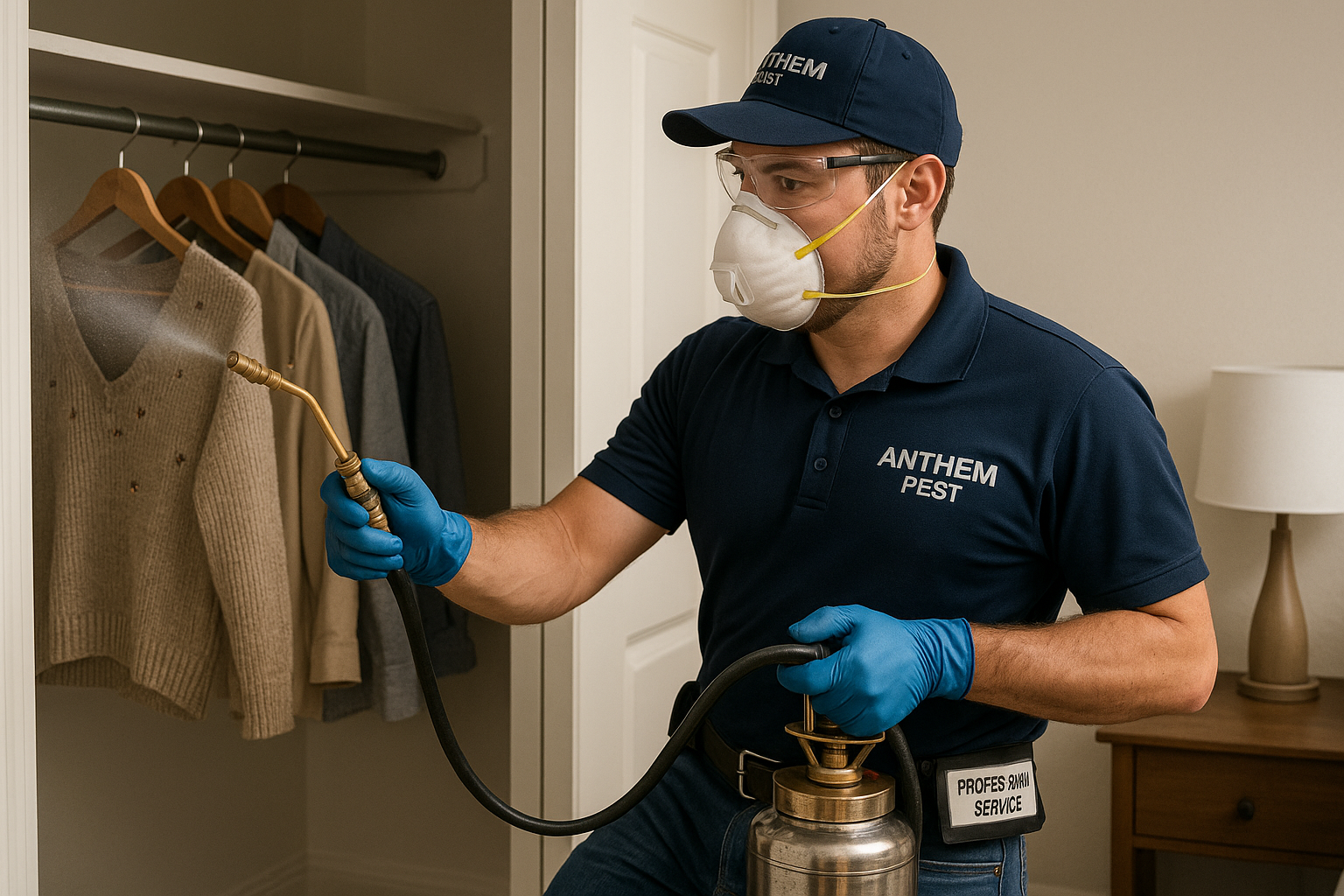
If you add the median figures together—$115 for inspection, $350 for a one‑time heat treatment, and $185 for a quarterly prevention package—you arrive at an annual investment of roughly $1,000. For many homeowners, this upfront cost is far less stressful than dealing with repeated fabric damage, lost clothing, and the hidden expense of professional cleaning.
Anthem Pest Control keeps pricing transparent, so you’ll never encounter surprise fees. By understanding the breakdown—inspection, treatment, and prevention—you can make an informed decision that fits both your budget and your peace of mind.
Best Timing and Discounts for Moth Control
In Loganville, moths reach their peak activity from late summer through early fall. During this window—typically August to October—adult moths are laying eggs and larvae are feeding aggressively on fabrics, stored foods, and even outdoor foliage. Treating while larvae are actively munching gives the highest chance of breaking the life cycle and preventing a full‑blown infestation.
While it might seem logical to wait until the problem is obvious, scheduling treatment during the off‑season can save you both money and hassle. Pest‑control providers experience a lull in demand from December through February, which translates into lower labor costs and the ability to offer promotional pricing.
- Lower demand = lower prices: Companies can allocate more time per job, reducing overhead.
- Proactive protection: Treating before the next surge means you’ll be ahead of the curve when moths return in late summer.
- Flexible scheduling: Off‑season appointments often come with more convenient time slots.
According to the 2023 National Pest Management Association (NPMA) survey, treatments booked during the winter months enjoy an average **15% price reduction** compared with peak‑season rates. This discount reflects both the reduced workload for technicians and the desire of providers to keep their crews busy year‑round.
For Loganville homeowners, the sweet spot for both effectiveness and savings is **January – February**. By scheduling a professional moth control service in these months, you capture the winter discount and give your home a protective barrier well before the larvae begin their rapid summer expansion. Early treatment also means you’ll avoid the rush‑hour pricing and limited technician availability that often accompany the late‑summer surge.
In short, plan your moth control service for the quiet months of January and February. You’ll lock in a 15% discount, enjoy more flexible appointment options, and enter the upcoming moth season with a fortified home—saving time, stress, and money in the long run.
DIY Moth Control vs Professional Services
When moths start nibbling at your wardrobe or pantry, the first question is whether you can handle the problem yourself or if you should call in a licensed exterminator. The answer depends on three factors: cost, how well the method works, and how safe it is for your family and home.
What a typical DIY kit costs
Retail DIY moth‑control kits usually sit between $20 and $80. A $20‑$30 kit often contains a handful of pheromone traps, a small aerosol spray, and a packet of mothballs. Mid‑range kits ($40‑$60) add sticky boards, a larger spray can, and detailed instructions. The premium $70‑$80 packages may include a portable heat‑treatment lamp or a larger supply of traps for extensive closets. While the price looks attractive, the contents are limited to surface‑level treatments that target adult moths only.
Why a professional service can be worth the investment
Licensed companies such as Anthem Pest Control bring three advantages that DIY kits can’t match. First, professionals use integrated pest‑management (IPM) strategies that combine chemical, mechanical, and environmental controls, delivering a higher efficacy rate—often 80‑90 % reduction after the first visit. Second, technicians follow strict safety protocols, wearing protective gear and applying products that are approved for indoor use, which minimizes exposure risks. Third, most services include a warranty and a follow‑up visit, guaranteeing that any resurgence is addressed at no extra charge.
Safety guidance from the CDC
The 2024 CDC pesticide‑safety page reminds homeowners that “all pesticides should be read, applied, and stored according to label directions, and children and pets should be kept away from treated areas until the product has dried or ventilated” (CDC, 2024). Ignoring these guidelines can lead to respiratory irritation, skin reactions, or accidental ingestion—issues that are far less likely when a trained professional handles the chemicals.
Decision matrix: When to call a pro
| Scenario | DIY feasible? | Professional recommended |
|---|---|---|
| Large infestation covering multiple rooms | No | Yes |
| Visible structural damage (e.g., moth‑eaten insulation) | No | Yes |
| Households with pets or young children | Limited | Yes |
| Need for heat treatment or whole‑home fumigation | No | Yes |
In short, if your moth problem is small, isolated, and you’re comfortable following CDC safety steps, a DIY kit can save you a few dollars. But for anything beyond a single closet—especially when safety, thoroughness, and a guarantee matter—partnering with a licensed provider like Anthem Pest Control ensures the job is done right the first time.
Cost Variations Across Loganville Neighborhoods
Eastside – Older Homes, Higher Risk
Homeowners on the Eastside of Loganville typically live in houses built before the 1990s. Those older structures often have gaps around windows, older insulation, and wood framing that invites pantry and carpet moths alike. Because the insects have more places to hide, Anthem Pest usually recommends a full‑home treatment that covers storage areas and closets. In our records, the average bill for an Eastside job falls between $350 and $450, depending on square footage and infestation severity. For example, the Johnson family, who own a 1,800‑square‑foot ranch‑style home built in 1978, called us after discovering moth larvae in their pantry. After a thorough inspection, we applied a targeted spray and placed pheromone traps throughout the house. Their final invoice was $398, reflecting the extra time spent sealing entry points and treating the attic.
West Loganville – Newer Constructions, Lower Risk
Newer homes in West Loganville—most built after 2005—benefit from tighter construction standards, better insulation, and fewer hidden voids. Moth colonies therefore tend to be smaller and easier to eradicate. Anthem Pest’s standard package for these properties usually runs $250 to $350. Take the case of the Patel family, who moved into a 2,100‑square‑foot townhome last year. They noticed a few moths near their clothing closet and scheduled a quick inspection. Our technician confirmed a light infestation limited to a single bedroom. The treatment, which included a spot‑on spray and a set of sticky traps, cost the Patels $272.
Downtown Loganville – Mixed Housing Stock
Downtown Loganville presents a blend of historic bungalows, renovated condos, and newer apartments. Because the neighborhood’s housing stock is so varied, treatment costs also hover in the middle range, typically $300 to $400. A recent job illustrates this balance: the Miller family lives in a 1950s bungalow that was partially remodeled in 2018. Their moth problem was discovered in both the kitchen pantry and a walk‑in closet. Anthem Pest performed a comprehensive treatment, including dusting, spraying, and installing pheromone traps. The final price was $341, reflecting the mixed‑age structure and the need for both preventive sealing and active eradication.
Anthem Pest’s Value Proposition for Moth Control
When a moth infestation threatens your wardrobe or pantry, you need a partner who combines expertise, safety, and clear pricing. Anthem Pest delivers exactly that in Loganville, Georgia, offering a service package that justifies every dollar you spend.
All technicians are EPA‑certified, background‑checked, and receive specialized training on moth identification, life cycles, and the most effective treatment protocols. This means the person at your door can differentiate a harmless pantry moth from a carpet‑destroying variant and apply the right solution the first time.
Anthem Pest only uses EPA‑registered chemicals that meet strict safety standards, and we supplement them with industry‑grade heat‑treatment equipment when heat is the most efficient way to eradicate larvae hidden in fabrics or insulation. The combined approach eradicates the problem without exposing your family or pets to unnecessary chemicals.
We stand behind our work with a 30‑day satisfaction guarantee and an itemized invoice that shows exactly what you’re paying for—no hidden fees, no surprise add‑ons. If any moth activity reappears within the guarantee window, we’ll return at no extra charge and re‑treat until the issue is resolved.
Because we operate out of Loganville, our technicians know the specific moth species that thrive in our climate and the seasonal patterns that influence infestations, allowing us to tailor treatments for maximum effectiveness.
“Anthem came the same day we called, identified the pantry moths, and had our kitchen moth‑free in 48 hours. Their tech explained every step, and the price matched the detailed quote we received.” – J. Miller, Loganville
“We were skeptical about heat treatment, but Anthem’s crew used it safely on our attic insulation and eliminated the carpet moths without any lingering odors. The LOGAN20 discount made it even sweeter.” – S. Patel, Loganville
Loganville homeowners can claim an exclusive 20% discount with code LOGAN20 when they schedule a moth‑control service online or over the phone. Call us today at 877‑371‑8196 or visit anthempest.com to lock in your savings and protect your home.
Frequently Asked Questions About Moth Control
How long does a professional moth treatment last?
Most residential moth programs are effective for 6‑12 months, depending on the product used and whether a follow‑up visit is scheduled. EPA‑registered insecticides retain residual activity for up to a year when applied to closets, baseboards, and storage areas, but heavy traffic or frequent laundering can shorten that window.
Are pets safe during and after treatment?
Yes—when EPA‑registered products are applied according to label directions, they are considered pet‑safe. The EPA states that proper ventilation and keeping pets away from treated zones until the product dries (usually 30‑60 minutes) eliminates any health risk (EPA, 2023). Anthem Pest always follows these guidelines to protect your family and furry companions.[1]
Can moths return after treatment?
Re‑infestation is possible if the underlying food source—such as contaminated fabrics, stored grains, or pet hair—is not removed. Studies from the National Pest Management Association (NPMA) show a 30% recurrence rate when only chemicals are used without preventive measures (NPMA, 2022). Our integrated packages combine treatment with thorough cleaning and sealing of entry points, dramatically lowering the chance of a comeback.[2]
Do I need to discard infested items?
Not always. Small items can often be frozen or dry‑cleaned to kill larvae. Large, heavily damaged textiles may need to be discarded, especially if the infestation is severe. The CDC recommends isolating and laundering affected fabrics at 140°F (60°C) to ensure complete eradication (CDC, 2021).[3]
How soon will I see results?
Visible improvement usually appears within 48‑72 hours as adult moths stop emerging. Full control, including the elimination of hidden larvae, may take up to two weeks, after which a final inspection confirms success.
Take Action with Anthem Pest Today
In Loganville, a typical moth inspection runs about $79‑$99. If treatment is needed, most homeowners spend between $250‑$450 for a full‑service application, while an annual prevention plan usually costs $120‑$180 per year. These figures give you a clear picture of what to expect before any work begins.
Addressing a moth problem early can save you from costly fabric damage and the need for repeated visits. The longer an infestation goes unchecked, the more structural and personal belongings you risk losing, and the higher the eventual treatment bill will climb.
Ready to protect your home? Call us today at 877‑371‑8196 to schedule a free, no‑obligation inspection. Our certified technicians will assess the situation, explain your options, and provide a transparent quote.
At Anthem Pest, we combine local expertise with safe, effective solutions that fit your budget. Our team uses industry‑approved products, follows strict safety protocols, and guarantees satisfaction—so you can enjoy a moth‑free home without stress.
Visit Anthem Pest Control to learn more and book your inspection now.