Detecting Ant Activity in a Druid Hills Kitchen

Imagine stepping into your Druid Hills kitchen after dinner and spotting a thin line of tiny black ants marching across the countertop, disappearing into a crack near the sink. The sight is enough to make any homeowner pause, wonder where they came from, and start searching for an ant exterminator near me Druid Hills residents trust to stop the infestation before it spreads.
The reason you’re seeing them isn’t random. Druid Hills sits in the humid Southeast, where average summer humidity hovers above 70 % and temperatures rarely dip below 60 °F. Those warm, moist conditions create an ideal pantry for ant colonies, especially species that thrive on sweet spills, protein crumbs, and even the dampness under your dishwasher.
In this part of the South, the most common kitchen invaders are odorous house ants, which emit a faint citrus smell when crushed, and carpenter ants, which prefer moist wood but will wander into food‑rich areas. Both species are attracted to sugary spills, pet food, and even the occasional grease ring left on the stove. Recognizing the size and behavior of each helps narrow down the treatment approach.
This guide walks you through every step, from identifying the species you’re dealing with to choosing the right professional service. You’ll learn:
- How to spot common ant species in Druid Hills kitchens.
- The pros and cons of DIY treatments versus licensed exterminators.
- What to expect during a professional inspection and follow‑up.
- Typical pricing structures and what’s included.
- The best times of year to act for maximum impact.
- Key questions to ask when selecting a local provider.
- Answers to the most frequent homeowner FAQs.
Catching an ant trail early can save you time and money. The longer a colony establishes itself behind walls or under cabinets, the more treatment sessions are required, and the higher the cost. A quick visual check each week—looking for tiny trails, disturbed crumbs, or ant‑filled entry points—lets you call a qualified Druid Hills exterminator before the problem spreads.
Identifying the Ants You’re Dealing With
Before you call a professional, it helps to know which ant is marching through your home. In Druid Hills, three species dominate the neighborhood landscape, and each brings its own set of clues—and challenges. Spotting the size, color, and where they’re nesting can save you time, money, and a lot of frustration.
Carpenter Ants
Carpenter ants are the giants of the ant world in Georgia, measuring roughly ½ to ¾ inch long. Their bodies are a glossy black or deep brown, and they often have a slightly larger head than the rest of the colony. Unlike termites, they don’t eat wood; instead, they excavate it to build galleries for their nests. Over time, these tunnels weaken structural members such as joists, window frames, and doorways. Homeowners may first notice sagging floors, hollow‑sounding wood, or sawdust piles near the affected area.
Pavement Ants
Pavement ants are smaller—about ⅛ inch long—and range in color from light to dark brown. True to their name, they establish colonies under concrete surfaces: sidewalks, driveways, and the foundations of houses. While they rarely cause physical damage, their presence can be a constant nuisance, especially when they enter kitchens in search of crumbs. Their trails often follow the edges of patios or the seams of foundation walls, making them easy to locate during a visual inspection.
Odorous House Ants
Also about ⅛ inch in length, odorous house ants are dark brown and emit a distinctive rotten‑egg odor when crushed—a handy field test for identification. These ants favor warm, moist environments and are attracted to sugary foods, pet food, and even spilled beverages. Their nests are usually hidden in wall voids, under appliances, or in decaying wood. Although they don’t chew through structures, the sheer numbers can contaminate food supplies and create a sticky, unsightly mess.
| Species | Size | Color | Typical Nest Location | Damage Potential |
|---|---|---|---|---|
| Carpenter Ant | ½–¾ in. | Black or dark brown | Wooden structures, tree stumps, rotting logs | High – structural weakening |
| Pavement Ant | ⅛ in. | Light to dark brown | Under sidewalks, driveways, foundations | Low – mainly nuisance |
| Odorous House Ant | ⅛ in. | Dark brown | Wall voids, under appliances, decaying wood | Moderate – food contamination |
According to the 2024 EPA Ant Control Overview, Georgia reports over 12 million ant‑related service calls annually, with carpenter ants accounting for roughly 28 % of those encounters, pavement ants 22 %, and odorous house ants 18 %. Those numbers underscore why accurate identification is the first step toward an effective, targeted treatment plan.
The Limits of Home Remedies
Many Druid Hills homeowners reach for the kitchen cabinet first when ants start marching across the countertops. Common DIY options—such as a vinegar‑water spray, a borax‑sugar bait, or a dusting of diatomaceous earth—can knock back a small trail for a few days. The reality, however, is that these shortcuts rarely address the colony’s nest, so the problem often resurfaces once the treatment wears off.

DIY vs. Professional Solutions
- Vinegar sprays: Quick kill on contact but no residual effect.
- Borax‑sugar mixtures: Attracts foragers, yet many colonies develop tolerance.
- Diatomaceous earth: Works on contact but is easily swept away or dampened.
Professional pest control goes beyond surface treatment. Licensed technicians deploy:
- Bait stations: Slow‑acting insecticides that workers carry back to the nest, eliminating the queen.
- Perimeter sprays: Residual barriers that stop foraging ants from entering the home.
- Targeted liquid applications: Direct injections into cracks, voids, and known nesting sites.
| Method | Typical Success Rate | Duration of Control |
|---|---|---|
| DIY (vinegar, borax, diatomaceous earth) | ≈ 45 % | Days to 2 weeks |
| Professional (licensed technician) | ≈ 78 % higher than DIY | Weeks to several months |
The National Pest Management Association (NPMA) recently published a study showing that homes treated by licensed technicians achieve a **78 % higher success rate** than those relying solely on over‑the‑counter remedies. The gap widens when you factor in follow‑up visits and the expertise to locate hidden nests.
Safety Considerations
While a vinegar spray feels harmless, many DIY products contain powdered boric acid or silica‑based diatomaceous earth, which can irritate skin, eyes, or lungs if mishandled. Children and pets are especially vulnerable to accidental ingestion or contact. Professional treatments, on the other hand, use EPA‑registered products applied in calibrated doses, and technicians are trained to protect occupants during and after application.
Fulton County regulations reinforce this safety net: any pesticide application inside a residence must be performed by a **licensed applicator**. The rule is designed to prevent untrained homeowners from exposing families to harmful chemicals and to ensure that treatments meet state‑approved efficacy standards.
In short, DIY methods can buy you a few hours of relief, but they rarely eradicate the source and can introduce health risks. When ants become a persistent nuisance, calling a certified provider like Anthem Pest Control guarantees a scientifically backed, safer, and long‑lasting solution.
Step‑by‑Step Service Overview
Initial inspection
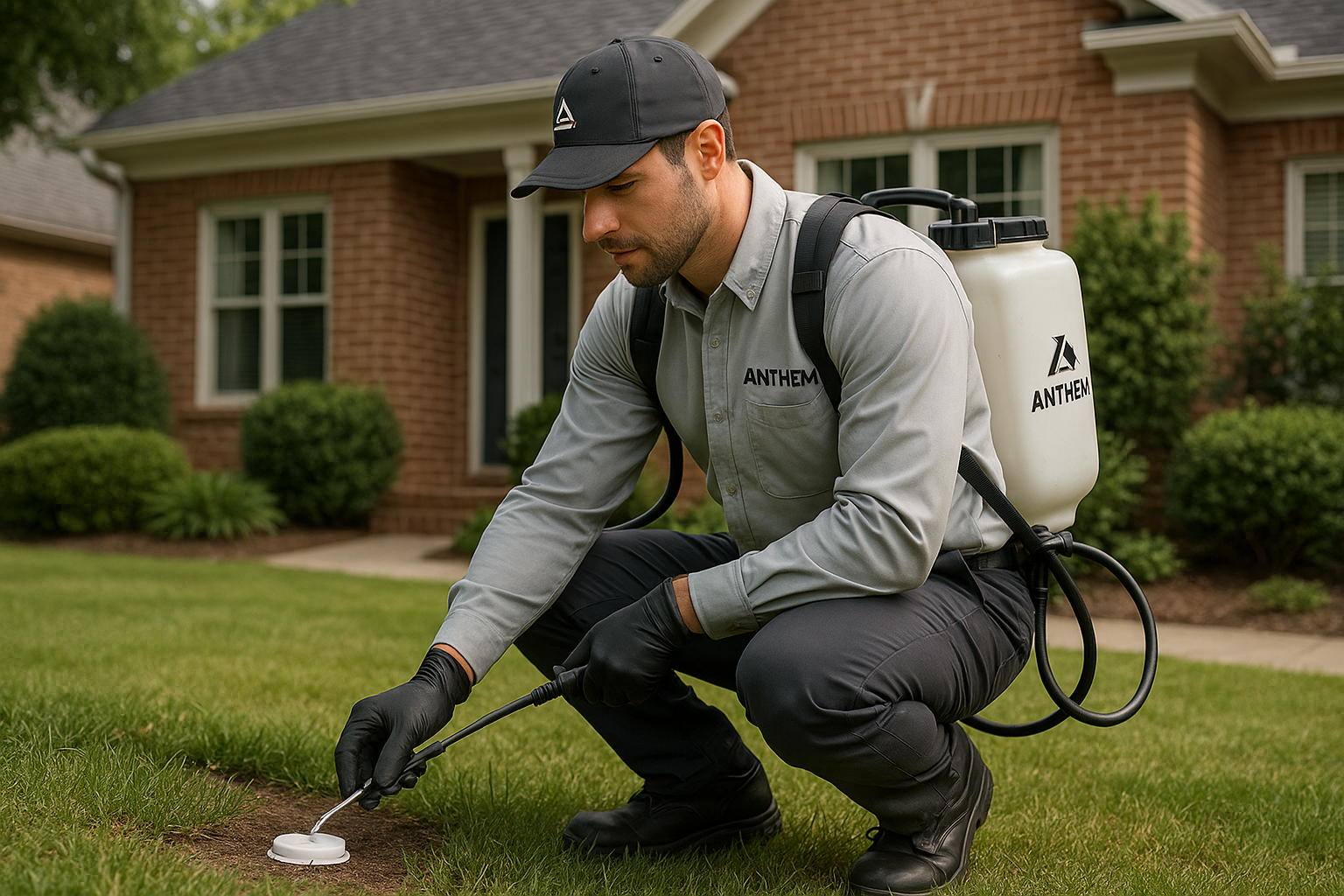
When an Anthem Pest technician arrives at your Druid Hills home, the visit follows a predictable, transparent process designed to eliminate ants while keeping your family safe.
The first 15‑20 minutes are devoted to a thorough initial inspection. Technicians conduct a visual survey of interior and exterior entry points, check for moisture hotspots, and use a magnifying lens to pinpoint the exact ant species.
Moisture assessment matters because many ant colonies, especially carpenter and odorous house ants, thrive near leaks or damp wood. Identifying the species tells us whether we need baits, sprays, or a dust barrier, and it informs the timeline for colony collapse.
Customized treatment plan
Based on the inspection, the technician crafts a treatment plan. When you hire an experienced ant exterminator near me Druid Hills homeowners rely on, sugar-attracting ants get gel baits and bait stations, while aggressive foragers receive a low-odor spray on cracks, baseboards, and the exterior perimeter.
When a dry‑wood ant or carpenter ant is detected, we may add a dust formulation in voids and wall cavities. Every product choice complies with EPA regulations and is safe for children and pets when applied as directed.
Execution
During execution, the technician places bait stations at least 12 inches apart along ant trails, ensuring they’re out of reach of children and pets. Targeted sprays are applied only to active pathways, and any dust is puffed into concealed spaces using a hand‑held duster.
Safety precautions include wearing gloves, using low‑odor formulations, and confirming that no food or utensils are left uncovered. Technicians also seal obvious entry gaps with silicone or foam to reduce future invasions.
Follow‑up
After treatment, a post‑service walk‑through confirms that all stations are correctly positioned and that no spray residue remains on countertops or play areas. The technician records any observations in the client notes section of the checklist.
Ant colonies don’t disappear instantly. Bait stations need 1–2 weeks to attract foragers, allowing the poison to travel back to the queen. During this window, we ask you to keep bait stations undisturbed and avoid heavy cleaning of treated zones.
If activity persists after two weeks, a follow‑up visit is scheduled at no extra charge. The technician may add fresh bait or apply a supplemental spray, ensuring the colony is fully eradicated.
Example checklist used by Anthem Pest technicians
| Inspection Point | Action Taken | Client Note |
|---|---|---|
| Exterior entry doors | Apply perimeter spray | Close doors after treatment |
| Moisture‑prone areas | Seal leaks, place dust | Monitor for dampness |
| Kitchen countertops | Place bait stations | Keep food covered |
| Baseboard cracks | Targeted spray | Avoid cleaning for 24 hrs |
| Garage and storage | Inspect for satellite nests | Remove clutter if advised |
Understanding Ant Control Costs
When you’re dealing with an ant invasion, the first question on most homeowners’ minds is, “How much will it cost to get rid of them?” Many begin searching for an ant exterminator near me Druid Hills residents recommend, hoping to find transparent pricing and fast relief. Knowing the price range up front helps you budget wisely and avoid surprise fees later. Below is a clear snapshot of what Druid Hills residents typically pay for professional ant services in 2024.
Typical price ranges in Druid Hills
- Inspection: $75 – $120 – includes a thorough walk‑through, species identification, and a written treatment plan.
- One‑time treatment: $150 – $300 – covers the application of targeted baits or sprays, depending on the ant type.
- Annual maintenance plans: $200 – $400 – scheduled visits that keep colonies from re‑establishing and often include follow‑up inspections.
These figures come from the 2024 Fulton County Pest‑Control Market Survey published by Local Consumer Reports. The survey compiled invoices from dozens of licensed operators, giving a reliable benchmark for homeowners comparing quotes.
Anthem Pest’s flat‑rate advantage
Anthem Pest Control differentiates itself with a true flat‑rate pricing structure. What you see on the estimate is what you pay—no hidden travel surcharges, no per‑square‑foot add‑ons, and no surprise “service fees” after the job is done. The flat rate covers the entire service area of an average single‑family home (up to 2,500 sq ft) and includes all necessary materials, from ant‑specific baits to protective barriers.
Discounts that keep your budget happy
Homeowners can further reduce costs through Anthem’s built‑in discounts. Seniors receive a 10 % reduction on any service, and customers who lock in a multi‑year contract (two or three years) save an additional 5 % to 12 % compared with year‑by‑year billing. These savings are applied before taxes, so the final invoice reflects the discount directly.
What influences the final price?
Even with flat‑rate pricing, a few variables can shift the total amount:
- Infestation severity: Large, established colonies may require multiple treatment applications, which can bump the cost toward the upper end of the range.
- Property size: Homes larger than 2,500 sq ft or properties with extensive landscaping may need extra bait stations or perimeter treatments.
- Species involved: Some ants, like carpenter ants, demand more intensive work than common pavement ants, influencing labor time and product selection.
By understanding these factors and the transparent pricing Anthem Pest offers, you can make an informed decision that balances effective ant control with a budget you’re comfortable with.
When to Act and How to Keep Ants Out
Seasonal Peaks for Common Ants in Druid Hills
Ant activity isn’t random; each species has a predictable window when colonies expand and foraging intensifies. In the Druid Hills area, you’ll typically see:
- Carpenter Ants: April – June. Workers swarm inside walls and wood structures as queens lay eggs for the summer brood.
- Pavement Ants: September – October. After the heat of summer fades, these ants move outdoors to establish new nests under sidewalks, driveways, and garden mulch.
- Odorous House Ants: Two peaks—April – June and again September – October. The first surge follows spring rains; the second aligns with cooler, moist fall conditions.
Targeting these windows with treatment or intensified prevention can dramatically cut the chance of a full‑blown infestation.
Proactive Prevention Steps for Homeowners
Even the best treatment won’t protect a home that invites ants back in. Follow these three core habits year‑round, and especially during the peak months listed above:
- Seal entry points. Inspect the foundation, windows, and door frames for cracks or gaps. Use silicone caulk or expanding foam to close openings larger than 1/8 inch.
- Store food airtight. Keep pantry items, pet food, and sugary snacks in sealed containers. Wipe down countertops and sweep floors nightly to eliminate crumbs that act as ant magnets.
- Maintain the yard. Trim tree branches and shrubs away from the house, remove leaf litter, and keep mulch at least three inches from the foundation. Regularly clear debris where moisture can collect, because damp spots are perfect nesting sites.
Local Success Story: A Druid Hills Homeowner’s 90% Reduction
When the Johnson family noticed a steady stream of carpenter ants crawling along their kitchen baseboards in early May, they called Anthem Pest Control. Our technician performed a targeted spring treatment focused on interior wood voids and exterior foundation cracks. Simultaneously, we walked the Johnsons through the three prevention steps above, helping them reseal a gap behind the dishwasher and replace pantry jars with airtight containers.
Over the next two months, the family reported a dramatic drop in sightings. By the end of September—right before the pavement ant peak—ant activity was down roughly 90 percent compared with the previous year. The Johnsons now schedule a brief “maintenance check” each fall, reinforcing the same preventive habits that kept their home ant‑free.
For more information on the health implications of ant infestations, visit the CDC Healthy Water & Pests – Ants page.
Key Factors for Selecting an Ant Exterminator
Choosing the right ant exterminator can feel like searching for a needle in a haystack, especially when every company promises quick results. To keep the process simple, use this quick‑reference checklist and see how Anthem Pest measures up against each item.
Essential Checklist
- State licensing – verifies the company meets Georgia’s legal standards and has passed required training.
- Insurance coverage – protects you from liability if a technician is injured on your property.
- Local customer reviews – real feedback from Druid Hills homeowners reveals reliability and effectiveness.
- Response time – fast scheduling limits the window for ants to spread and cause damage.
- Warranty terms – a solid guarantee shows confidence in the treatment’s longevity.
If a provider checks every box, you’re already ahead of the game. Let’s see how Anthem Pest stacks up.
Why Anthem Pest Stands Out
Anthem Pest holds a Georgia state license (License #XXXX), proving full compliance with state regulations. All treatments are applied with EPA‑registered products, so you get proven efficacy without compromising family or pet safety. Our technicians follow EPA‑compliant safety protocols at every step, from initial inspection to post‑treatment cleanup. To back our work, we offer a 5‑year guarantee on ant control—if the pests return within that period, we’ll retreat at no extra cost. Transparent pricing, no hidden fees, and a dedicated local support line mean you’ll always know what’s happening and when.
Each of these criteria protects you from hidden costs, sub‑par service, or unsafe chemicals. A licensed and insured firm reduces legal risk, while local reviews give you a realistic picture of punctuality and results. Fast response time prevents colonies from establishing deep nests, and a clear warranty ensures you won’t be left paying for repeat visits.
Anthem Pest’s Druid Hills crew knows the local ant species, allowing precise targeting and faster eradication.
Ready to protect your home? Call 877‑371‑8196 or visit anthempest.com to schedule a free inspection. Our Druid Hills team is on standby to respond within 24 hours. We guarantee a same‑day inspection and a written estimate before any treatment begins.
FAQ – Ant Control in Druid Hills
Homeowners often have the same pressing questions when an ant invasion appears. Below are concise, expert‑backed answers that help you decide the best course of action.
Do ants cause structural damage?
Yes. While most household ants are merely a nuisance, carpenter ants (Camponotus spp.) excavate galleries inside wood to build their nests, which can weaken structural members over time. Other species, such as pavement or odorous house ants, do not chew wood but can contaminate food surfaces. EPA Unchecked colonies can spread to load‑bearing beams, leading to expensive repairs.
How long until I see results?
Professional baiting programs usually produce a noticeable decline in activity within 7–10 days. Complete eradication often requires 2–3 weeks, as colonies need time to consume the bait and workers to disappear from the site. We check bait stations weekly to ensure the colony consumes enough product.
Are treatments safe for pets?
We use EPA‑registered products that are applied strictly according to label directions. Technicians follow pet‑safety protocols, such as limiting indoor exposure time and using low‑toxicity formulations, to ensure your furry family members remain unharmed. Pets should stay off treated areas for a few hours after application.
Can I get a same‑day service?
Many local providers, including Anthem Pest, prioritize urgent ant infestations. Same‑day appointments are available in most cases, especially when the infestation poses a health or structural risk. Calls placed before noon often receive same‑day visits, usually within 3‑4 hours.
What if ants return?
Our service agreement includes a warranty that covers a free re‑treatment within the designated service window. For long‑term protection, we recommend a maintenance plan that schedules periodic inspections and preventative applications. After the warranty, discounted follow‑ups are available to address any resurgence.
For personalized advice or to schedule an inspection, call us at 877‑371‑8196 or visit anthempest.com.
Professional Ant Control Benefits and Next Steps
When you call a professional, you get more than a quick spray. A licensed exterminator can accurately identify the ant species, apply a treatment plan that delivers higher success rates, and follow strict safety compliance to protect your family and pets. You also benefit from transparent pricing and seasonal maintenance programs that keep colonies from returning.
Anthem Pest’s technicians live in Druid Hills, so they know the neighborhood’s unique ant hotspots and the best times of year to intervene. Their early‑detection approach means they can spot a budding infestation before it spreads, saving you both time and money.
Safety and affordability are at the core of everything we do. All treatments are EPA‑registered and applied by technicians trained in Integrated Pest Management, so you get effective control with minimal chemical exposure. Our pricing structure is straightforward—no hidden fees, just the service you need at a price that fits a typical household budget.
Ready for a free, no‑obligation inspection? One of our friendly specialists will walk through your home, explain what they find, and outline a customized action plan. You’ll know exactly what steps are needed and how much they’ll cost before any work begins.
Give us a call at 877‑371‑8196 or visit our website to schedule that inspection. Whether you need a quick fix or a long‑term prevention strategy, we’ll provide a clear quote and answer any questions you may have.
Visit Anthem Pest Control today and connect with a trusted ant exterminator near me Druid Hills homeowners rely on to protect their homes from ants for good.