House Fly Annoyance and Health Risks in Loganville Homes

Picture this: you’re preparing dinner in your Loganville kitchen, and a chorus of flies darts around the sink, lands on the cutting board, and then spirals toward the open patio doors. By the time you sit down to eat, you’ve watched a dozen of them buzz over your plates, linger on the fruit bowl, and settle on the soda cans left on the table. In the heat of a Georgia summer, that scene isn’t rare—it’s becoming a daily nuisance for many homeowners, prompting many to research house fly control cost Loganville providers charge during peak season.
Beyond the irritation, house flies are efficient mechanical carriers of disease. As they hop from garbage to food, they can transfer harmful bacteria such as E. coli and Salmonella. The EPA residential pest management guidelines warn that a single fly can spread pathogens from a single piece of contaminated waste to multiple meals, putting families at risk of food‑borne illnesses.
Local data underscores the growing problem. The 2024 Georgia Extension Service report notes a 22 % rise in fly‑related complaints across Loganville compared to the previous year (Georgia Extension Service, 2024). Warm, humid conditions combined with increased outdoor dining and open‑air trash receptacles have created an ideal breeding ground for these pests.
This guide is designed to give Loganville homeowners clear, transparent cost information for house fly control and practical, low‑cost prevention steps you can start today. Knowing what you’re up against—and how much it will cost to eliminate it—helps you protect both comfort and health without surprise fees.
Consider the Miller family on Oak Street. During July and August, they routinely spot up to 30 flies per day buzzing around their kitchen and patio. Those numbers may seem small, but each fly represents a potential vector for disease and a constant source of annoyance that can quickly turn a summer gathering into a stressful experience.
Understanding House Flies in Loganville
Biology and Life Cycle
House flies (*Musca domestica*) develop through egg, larva, pupa and adult stages. A female can deposit 150‑200 eggs on a moist surface; they hatch in 12‑24 hours. Larvae feed on decaying matter for 3‑5 days, then pupate for 2‑4 days. In Loganville’s warm summer, the whole cycle can finish in 7‑10 days, allowing several generations within a typical 2‑3‑week period. This speed means a single unnoticed breeding site can quickly become a swarm.
Common Breeding Sites in Georgia
Because flies can lay eggs on almost any damp organic matter, homeowners often overlook the smallest sources. Flies thrive where organic material stays damp. In our state the biggest attractors are:
- Compost piles that aren’t turned regularly.
- Pet waste left uncovered.
- Unsealed trash cans with
Common Treatment Options for House Flies
Inspection & Identification
Before any spray or trap is applied, a certified technician conducts a thorough walk-through of the property. The goal is to locate breeding hotspots such as uncovered trash cans, pet waste, or damp organic material, and to pinpoint entry points like screen gaps or vent openings. When evaluating house fly control cost Loganville homeowners can expect, inspection fees typically range between $75 and $100 per hour, according to the Georgia Pest-Control Association, and include a detailed report with a customized action plan.
Chemical Treatments
When flies are already active, residual sprays, bait stations, or foggers can provide rapid knock‑down. These products are formulated to remain effective for several days, targeting adult flies while also disrupting the life cycle. The average cost for a single chemical treatment in the area is $120–$180, covering labor, EPA‑approved insecticides, and any necessary safety equipment. Most homeowners see noticeable results within 24‑48 hours.
Non‑Chemical Solutions
For those who prefer a low‑toxicity approach, sanitation upgrades and mechanical devices are the mainstay. Upgrading kitchen exhaust fans, sealing cracks, and installing fly traps or UV‑light attractors can dramatically reduce populations without chemicals. Equipment costs range from $30 to $70 per unit, and many of these tools are reusable for years when maintained properly. Pairing these tools with regular cleaning amplifies their effectiveness.
Integrated Pest Management (IPM)
IPM blends inspection, targeted chemical applications, and non‑chemical preventative measures into a single, year‑long service package. By addressing the problem at its source and using chemicals only when necessary, IPM delivers consistent control while minimizing exposure risks. In Loganville, a typical annual IPM package is priced between $250 and $350, which includes quarterly inspections, two chemical treatments, and the installation of traps or UV devices as needed.
Case Study: Loganville Homeowner Saves $50
Mrs. Thompson, a homeowner in south‑central Loganville, initially requested three separate chemical treatments after a summer fly surge. The quoted total was $540. After consulting with Anthem Pest, she switched to the company’s IPM package, which covered all required services for $290. By bundling the work, Mrs. Thompson saved $50 compared to the itemized approach and enjoyed a longer‑lasting reduction in fly activity thanks to the added sanitation upgrades.
Below is a quick visual reference that breaks down the typical costs you can expect for each treatment option. Use it as a checklist when you talk to local providers to ensure you’re getting the right balance of service and value.
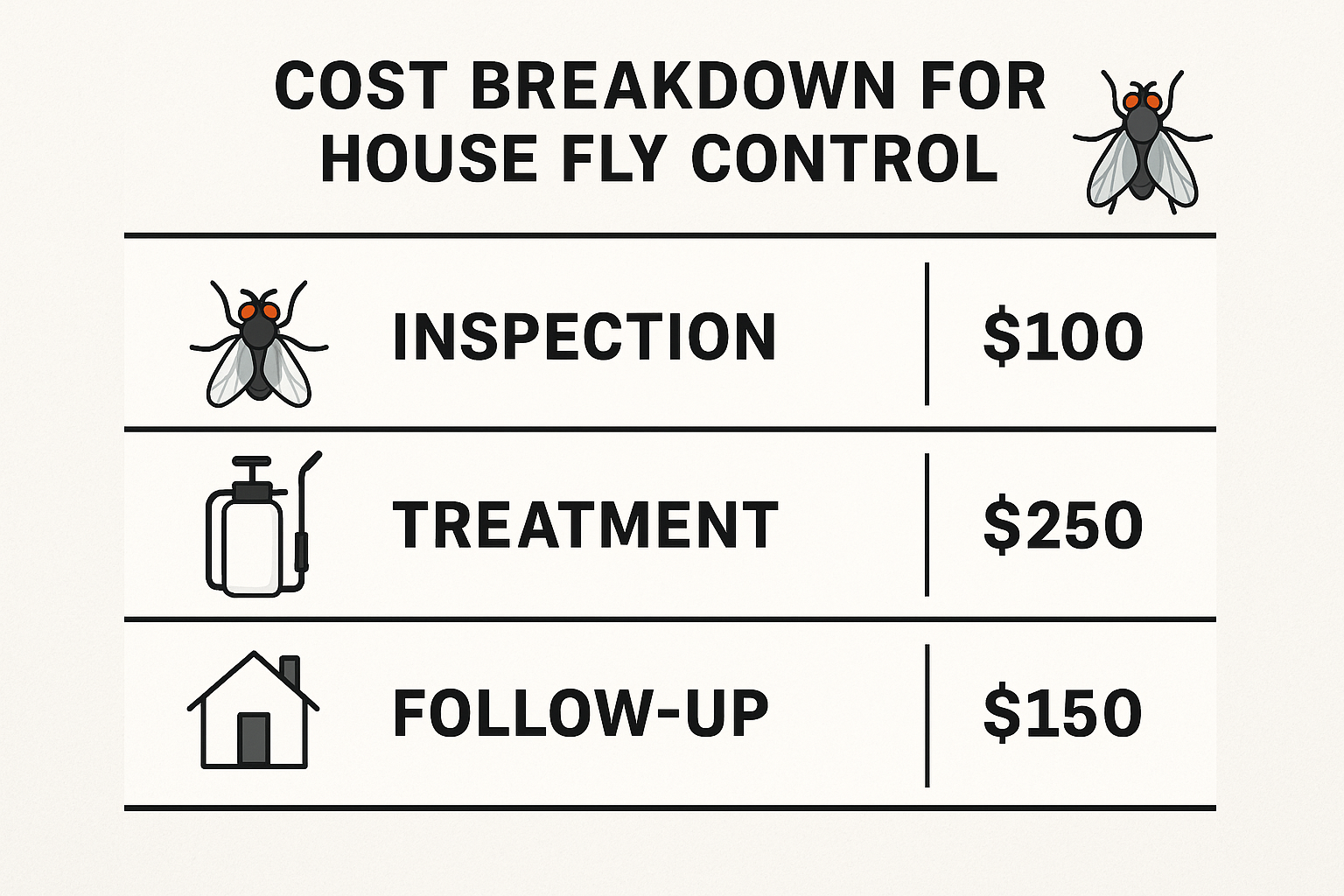
| Treatment Type | Typical Cost (per service) | What’s Included |
|---|---|---|
| Inspection & Identification | $75‑$100 (hourly) | Full property walkthrough, hotspot mapping, action plan |
| Chemical Treatment | $120‑$180 | Residual spray or fogger, labor, safety gear |
| Non‑Chemical Solutions | $30‑$70 | Fly traps, UV‑light devices, basic sanitation upgrades |
| Integrated Pest Management (IPM) | $250‑$350 (annual) | Quarterly inspections, two chemical treatments, traps/UV devices, sanitation guidance |
Detailed Cost Breakdown for Loganville Homeowners
Understanding exactly where your money goes makes it easier to decide between a DIY fix and a professional service. When reviewing house fly control cost Loganville providers outline, you’ll notice that the local climate encourages house flies to multiply quickly, so a clear pricing roadmap helps you budget for both immediate relief and long-term prevention without any hidden surprises.
Initial Inspection
The first step is a thorough on‑site inspection. Anthem Pest Control technicians travel to your address, evaluate fly activity, identify breeding hotspots, and deliver a written report with recommended actions. Loganville homeowners typically see a charge of $80 – $100. This fee covers travel time, the expert’s assessment, and the detailed inspection report.
Standard One‑Time Treatment
A one‑time treatment targets adult flies and immature stages using EPA‑approved chemicals and specialized equipment. The service includes applying residual sprays, setting fly traps, and treating interior and exterior entry points. Expect a cost range of $130 – $180, which reflects labor, materials, and the technician’s expertise.
Follow‑Up Visits
Flies often rebound after a single application, especially during the hot summer months. Most Loganville pest plans recommend two to three follow‑up visits to monitor progress, re‑apply residuals, and adjust trap placement. Each follow‑up is billed at $70 – $90, ensuring the infestation stays under control throughout the peak season.
Annual Maintenance Packages
For homeowners who prefer a hands‑off approach, an annual maintenance package bundles quarterly visits, seasonal fly traps, and preventive sanitation advice. This comprehensive service typically falls between $250 – $350 per year, delivering consistent protection while spreading costs over four visits instead of a single large invoice.
Additional Fees
Special circumstances may trigger extra charges. If your property lies in a rural part of Loganville, a travel surcharge of $15 – $25 is added to offset longer drive times. Emergency, same‑day service—useful for sudden infestations—carries an extra fee of $50 – $75 on top of the regular treatment price.
All the figures above align with the Georgia Department of Agriculture pest‑control licensing price tables (2024). The state‑mandated tables provide a baseline that reputable companies like Anthem Pest adhere to, ensuring transparent and competitive pricing for Loganville residents.
| Cost Component | DIY Approximation | Professional Service (Anthem Pest) |
|---|---|---|
| Initial Inspection | Free (self‑assessment) | $80 – $100 |
| One‑Time Treatment | $30 – $60 (store‑bought spray & traps) | $130 – $180 |
| Follow‑Up Visits (2‑3) | $0 (no professional follow‑up) | $140 – $270 total |
| Annual Maintenance Package | $120 – $180 (DIY traps & periodic sprays) | $250 – $350 |
| Additional Fees (rural travel, emergency) | N/A | $15 – $25 travel, $50 – $75 emergency |
| Total Annual Cost | $150 – $240 | $530 – $845 |
While the DIY route can appear cheaper on paper, it often lacks the systematic inspection, professional-grade chemicals, and guaranteed follow‑up that keep flies from returning. Professional service consolidates all necessary steps into a single, accountable plan, reducing the risk of repeated treatments and the hidden time cost of trial‑and‑error. For Loganville homeowners who value peace of mind and long‑term effectiveness, the investment in a licensed professional typically pays off during the hottest months when flies are most active.
How Anthem Pest Delivers Value in Loganville
Local expertise that matters
For more than 15 years Anthem Pest has been a fixture in Loganville, McDonough, and Covington. During that time we’ve mapped every fly hotspot—from the humid backyards near the railroad tracks to the sun‑baked patios that attract swarms in midsummer. That deep, on‑the‑ground knowledge lets us target the exact breeding sites that generic, out‑of‑state services simply miss.
Certified technicians and EPA‑approved products
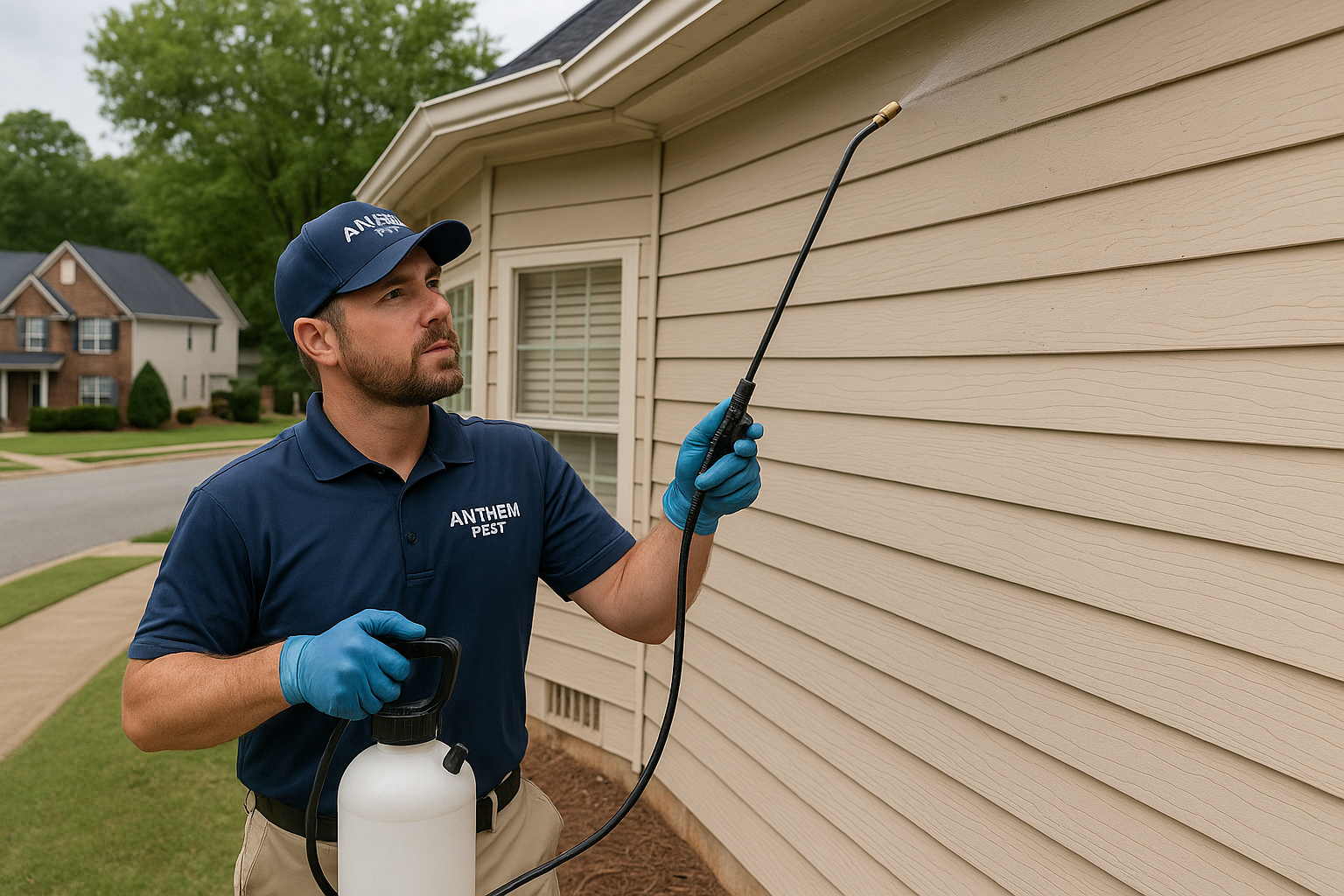
All of our field agents are fully certified and undergo continuous training on the latest Integrated Pest Management (IPM) techniques. We pair that expertise with EPA‑approved formulations that are both effective against house flies and safe for children, pets, and the surrounding environment. When you see our uniform, you can trust that a qualified professional is handling every spray, bait, and inspection.
100 % satisfaction guarantee
We stand behind every treatment with a 100 % satisfaction guarantee. If flies return within the agreed‑upon service window, we’ll re‑treat at no extra charge until the problem is resolved. This promise eliminates the guesswork and gives homeowners peace of mind that the job is truly finished.
Transparent pricing—no hidden fees
Anthem Pest believes that pricing should be as clear as the sky on a summer evening. You receive an upfront quote that breaks down labor, product costs, and any optional add‑ons before any work begins. There are no surprise surcharges, and you can review the estimate at any time via our online portal. For a quick look at a typical residential fly‑control package, visit our online quote tool.
Real‑world proof: IPM case study
Part 3 of this guide highlighted an IPM case study where Anthem Pest reduced a homeowner’s annual fly‑control expense by 35 % while cutting chemical usage in half. The study demonstrated how strategic monitoring, targeted treatments, and homeowner education combine to deliver lasting results without inflating costs.
What Loganville residents are saying
“Anthem Pest cleared the flies from our backyard in two visits and kept them away all summer. Their staff was friendly and the price matched their promise of no surprises.” – J. Miller, Loganville resident.
Why value matters more than price alone
Choosing a pest‑control partner based solely on the lowest dollar amount can backfire when hidden fees, ineffective products, or repeat visits become the norm. Anthem Pest’s value proposition blends local knowledge, certified expertise, guaranteed results, and crystal‑clear pricing—all backed by glowing customer testimonials. The result is a cost‑effective solution that protects your home, your family, and your peace of mind throughout the fly‑season.
Seasonal Timing and Prevention Tips
In Georgia, house flies thrive when the weather warms up. The peak fly season stretches from May through September, with the highest activity usually in July and August. Knowing the right windows for treatment and daily habits that keep flies out can save you both annoyance and money.
Optimal Treatment Calendar
| Month | Action |
|---|---|
| Early June | First professional treatment – target emerging fly populations |
| Mid‑July | Follow‑up visit – reinforce barriers before the midsummer surge |
| Late August | Final treatment – curb the late‑season rebound and protect fall |
Sticking to this three‑step timeline gives the pesticide a chance to work before flies reach their breeding peak, reducing the number of applications you’ll need later.
Daily Prevention Checklist
- Secure trash bins with tight‑fit lids; flies love the scent of rotting waste.
- Clean pet waste daily and eliminate standing water around the yard—both are perfect breeding sites.
- Inspect window and door screens regularly; repair any tears or gaps that let flies slip inside.
- Use fly‑proof lighting outdoors—yellow‑tinted bulbs attract far fewer insects than white LEDs.
These simple habits create an environment where flies struggle to survive, meaning you’ll rely less on chemical treatments and keep your pest‑control costs down.
Local Resources
Stay up‑to‑date with region‑specific advice from the Loganville Extension Office pest bulletin. The bulletin often includes alerts about unusually warm weeks that can trigger early fly activity, letting you adjust your schedule accordingly.
By aligning professional treatments with the calendar above and following the checklist each day, you’ll enjoy a fly‑free home throughout the hottest months—without breaking the bank.
Frequently Asked Questions about Fly Control
Will fly treatment affect pets?
Anthem uses EPA‑approved products that are formulated for low toxicity. When applied exactly as the label directs—typically a thin mist or spot treatment on interior surfaces—the chemicals pose no danger to healthy dogs or cats. The active ingredients break down quickly, and pets can safely move about the home after the spray dries, usually within 30 minutes. Always keep pets off freshly treated areas until the label‑specified re‑entry time has passed. (EPA source)
How long does a treatment last?
Typical fly‑control applications leave a residual barrier that remains effective for 2–4 weeks, depending on the product’s chemistry and local humidity or temperature. In hot, humid summers the barrier may degrade faster, while cooler, dry periods can extend its life. Anthem schedules follow‑up visits—often at 2‑week intervals—to refresh the residual and ensure continuous protection throughout the season. If you notice a resurgence of flies before the next appointment, simply call us and we’ll assess whether an extra spot‑treatment is needed.
Can I combine fly control with other pest services?
Yes—you can bundle fly control with any of Anthem’s other residential programs. Adding ant, mosquito or rodent services to the same service window not only simplifies scheduling but also unlocks a discount of up to 15 % on the combined package. Our technicians coordinate treatments so that each product’s residual doesn’t interfere with the other, delivering comprehensive protection without extra hassle.
Take Action with Anthem Pest Today
When it comes to fly control in Loganville, the numbers are straightforward:
- Inspection: $80‑$100
- One‑time treatment: $130‑$180
- Annual IPM package: $250‑$350
Those are the upfront prices you’ll see on the invoice—no hidden DIY costs, no surprise fees.
What sets Anthem Pest apart is our Loganville‑specific expertise. Our technicians know the local fly habits, use EPA‑approved products, and follow a proven Integrated Pest Management (IPM) protocol that protects your family, pets, and the environment. Every job is backed by a satisfaction guarantee, and if flies return within the treatment window we’ll re‑treat at no extra charge, giving you confidence in the investment.
The summer fly season peaks from May through September, which is why we recommend a pre‑season inspection. Catching the issue early lets us target breeding sites before they become a nuisance, saving you time, chemicals, and money.
Because we’re based right here in Loganville, we respond quickly, schedule appointments that suit your calendar, and stay up‑to‑date with the latest regional pest trends.
Ready to reclaim your home? Give Anthem Pest a call for a free, no‑obligation quote. Our local team will design a customized plan that fits your budget and lifestyle.
Call now at 877-371-8196 or visit Anthem Pest Control today to get a clear estimate on house fly control cost Loganville homeowners can expect for reliable, long-term protection.