Why Termite Control Matters in Vinings

Vinings sits in a humid subtropical zone where hot summers and mild winters keep soil moisture consistently high. Those damp conditions are a playground for subterranean termites, which thrive in the moist, wood‑rich foundations of homes.
The U.S. Environmental Protection Agency estimates that more than 2 million structures suffer termite damage each year. In a community like Vinings, that national statistic translates to a very real threat for every homeowner.
When termites go unchecked, they silently chew through support beams, floor joists, and load‑bearing walls. The structural weakening can lead to costly repairs—often tens of thousands of dollars—and, in severe cases, jeopardize the safety of the entire house.
This guide will walk you through the true cost of an infestation, the most effective treatment options, and why partnering with a local expert like Anthem Pest Control makes all the difference. By understanding the stakes now, you can protect your investment before termites get a foothold.
The Silent Destroyers: Subterranean Termites in Fulton County
In Vinings and the wider Fulton County area, the subterranean termite Reticulitermes flavipes is the primary cause of hidden structural damage. Known as the eastern subterranean termite, it thrives in Georgia’s warm, humid climate. Colonies live underground in mud‑filled galleries, sending out foraging workers through tunnels that can extend up to 300 feet from the nest. These workers feed on cellulose—wood, paper, cardboard—while staying concealed beneath the soil, so damage often goes unnoticed for weeks or months.
Reticulitermes flavipes colonies are organized around a single queen that can lay up to a million eggs per year. Workers, which are sterile females, maintain the tunnel network, feed the brood, and gnaw wood for nutrition. Soldiers, equipped with powerful jaws, defend the colony against intruders. In Georgia, swarming peaks in late spring when winged alates emerge, seeking new sites to start fresh colonies. This seasonal surge often explains why homeowners notice discarded wings after a warm spell.
Fulton County’s pest‑control database records roughly 1,200 termite complaints each year. This figure underscores how pervasive the problem is for local homeowners and why vigilance matters.
What homeowners usually see
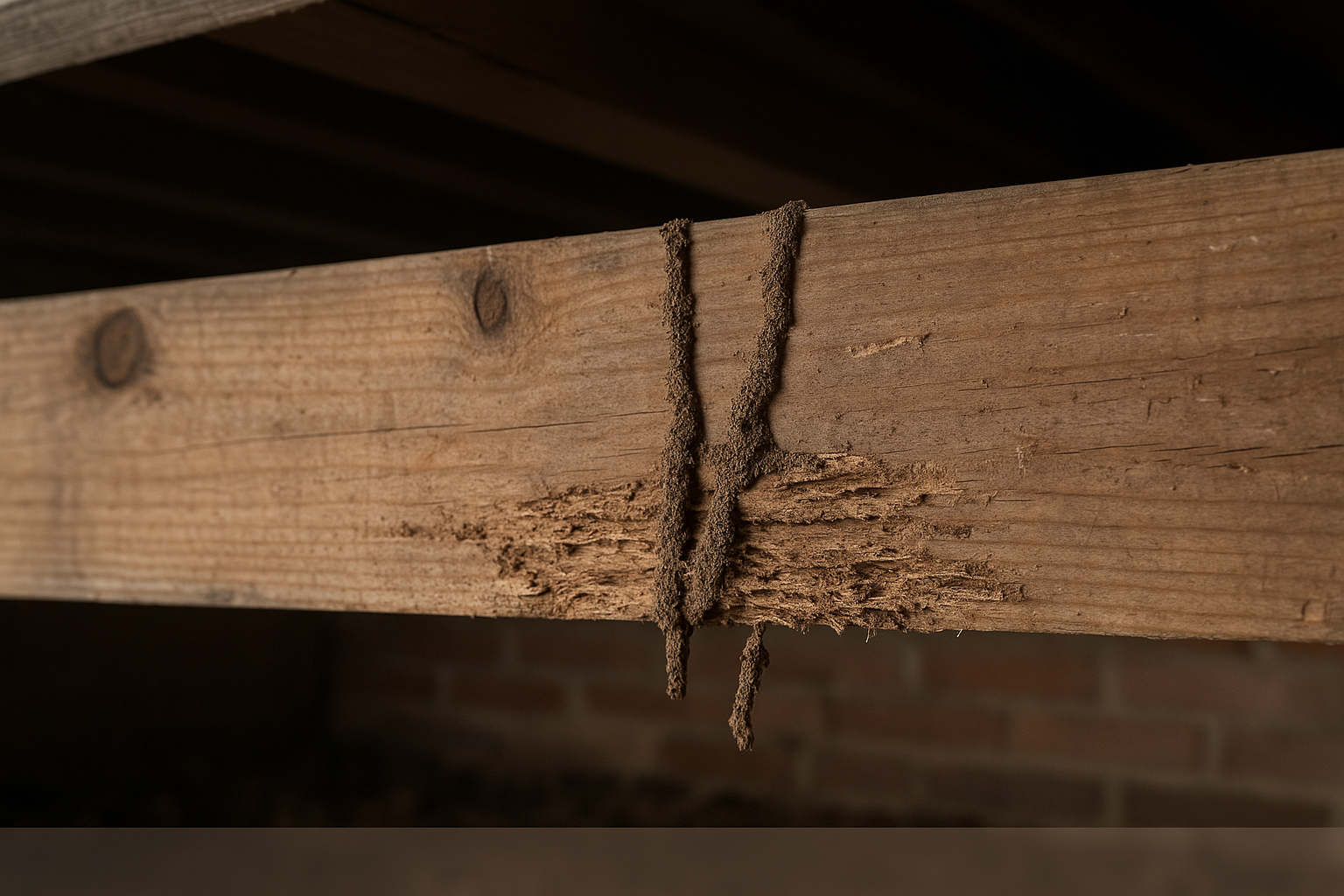
- Mud tubes – pencil‑thin, mud‑lined tunnels on foundation walls, crawl spaces, or exterior siding.
- Hollow‑sounding wood – tapping on a floor joist or beam produces a dull, resonant thud instead of a solid knock.
- Discarded wings – after a swarm, you’ll find clusters of translucent wings near windows or light fixtures.
These visual clues are often the first—and sometimes the only—warning signs before structural integrity is compromised. Spotting a mud tube or a pile of wings early lets you act before the colony expands, saving thousands in repair costs.
Early detection also gives pest‑control professionals like Anthem Pest more options. A targeted baiting or localized treatment can eradicate a colony before it breaches the foundation, preserving the home’s value and the family’s peace of mind.
Professional vs. DIY: What Really Works
Many homeowners reach for off‑the‑shelf termite sprays because they seem quick and cheap. Typical products—such as boric‑acid dust, pyrethroid aerosols, or “instant kill” foam—are marketed for do‑it‑yourself use. In practice, these chemicals often miss hidden colonies, evaporate before reaching the wood, or are applied at concentrations far below what is needed for lasting control. Studies of field use show failure rates ranging from 55 % to 80 % for DIY applications.
When the National Pest Management Association (NPMA) examined treatment outcomes in 2023, professionally applied termiticides achieved a 95 % success rate, while DIY methods lagged at just 45 % (see the NPMA termite fact sheet). The gap isn’t just numbers; it reflects the difference between EPA‑registered products applied by licensed technicians and consumer‑grade sprays that rarely meet the potency and coverage needed for subterranean colonies.
Why professional service wins
- Warranties and guarantees: Most reputable companies, including Anthem Pest Control, back their work with multi‑year warranties that cover retreatment if termites return.
- Insurance protection: Licensed technicians carry liability insurance, shielding homeowners from accidental damage during drilling or trenching.
- EPA‑registered termiticides: Professionals use formulations that have undergone rigorous testing for efficacy and safety, something consumer products rarely meet.
Safety is another critical factor. Applying chemicals without proper training can expose children, pets, and even the applicator to harmful residues. Licensed technicians follow strict protocols—personal protective equipment, calibrated applicators, and precise placement—to minimize exposure while maximizing kill zones.
In short, while a DIY spray might offer a momentary sense of control, the proven success, legal protections, and safety safeguards of a professional termite program make it the smarter, long‑term investment for Vinings homeowners.
Effective Termite Treatments Available in Vinings
Liquid Termiticides
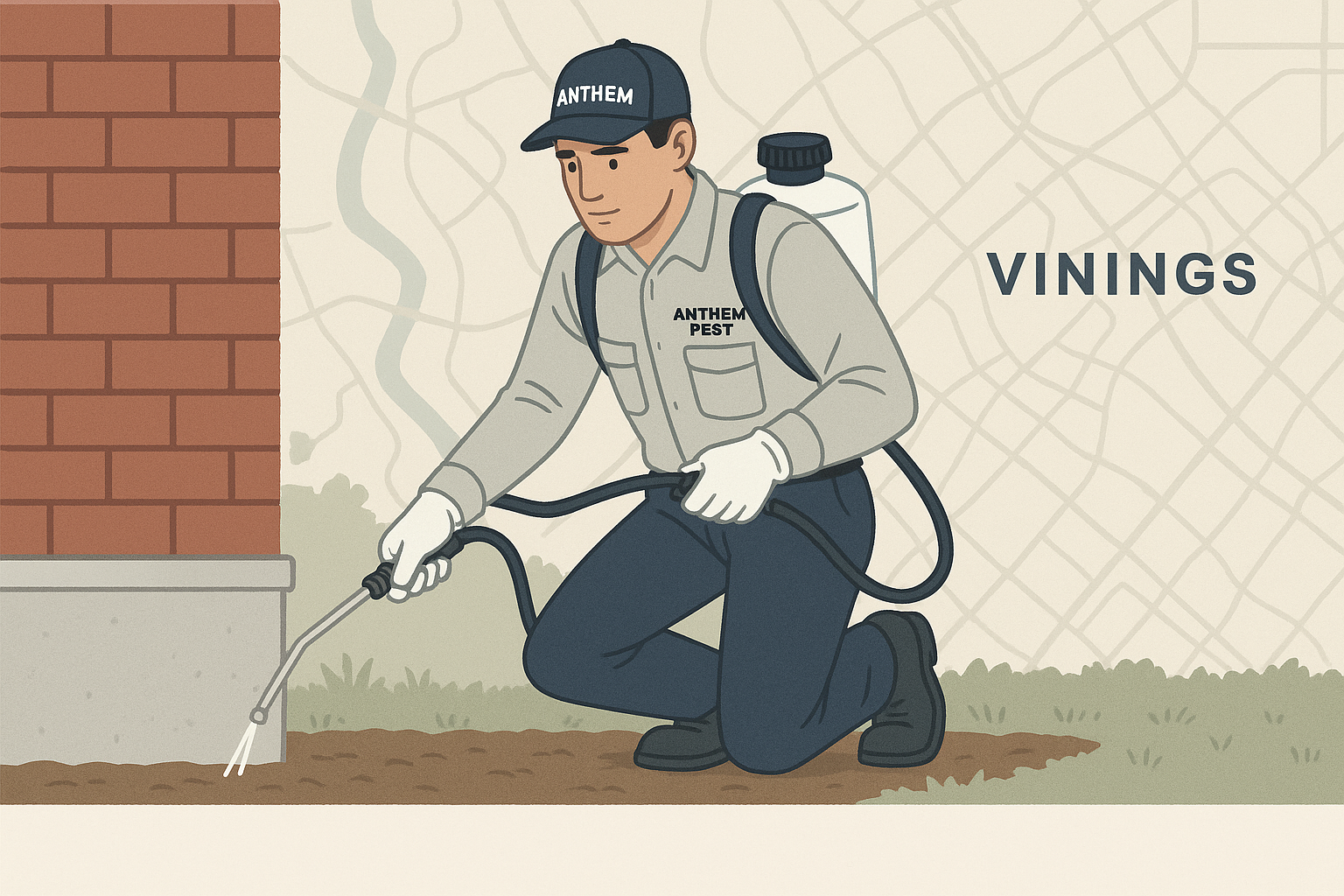
Liquid termiticides are the workhorse of termite control, creating a chemical barrier that termites cannot cross without dying. In Vinings, contractors apply these products either pre‑construction—when the foundation is still exposed—or post‑construction, where the barrier is forced into the soil around an existing home using injection ports.
The EPA‑registered chemicals most commonly used are fipronil and imidacloprid. Both act on the termite nervous system, disrupting feeding and causing rapid mortality. Because they remain active in the soil for years, a single professional application can protect a property for up to a decade.
Local supplier pricing in 2024 averages $3‑$5 per linear foot of treated perimeter. For a typical 2,000‑square‑foot home, that translates to roughly $1,200‑$2,000, depending on soil type and accessibility.
Baiting Systems
Baiting systems replace the soil barrier with a network of stations placed around the foundation, usually every 10‑15 feet. Each station contains a cellulose matrix infused with a slow‑acting insecticide. Termites forage, collect the bait, and share it with the colony, eventually collapsing the entire population.
A 2022 EPA study found that well‑maintained bait stations achieved an 80 % reduction in colony size within 12 months. The key is regular monitoring and timely replenishment, which most licensed Vinings providers include in their service contracts.
Installation costs range from $1,200 to $2,500, covering the bait stations, initial placement, and the first year of monitoring. Ongoing service fees are typically $100‑$150 per quarter.
Fumigation (Tent)
Fumigation, often called “tenting,” is the most aggressive option and is reserved for severe, widespread infestations. The entire structure is sealed under a gas‑tight tarp, and a vapor‑phase pesticide—commonly sulfuryl fluoride—is released to penetrate wood, walls, and hidden voids.
Homeowners must vacate the property for 24‑48 hours, and the home is ventilated for several additional hours before re‑entry. While the process is disruptive, it offers the advantage of eradicating termites in all accessible wood components in a single treatment.
Vinings contractors quote an average of $4,000‑$6,000 for a full‑home tenting, reflecting labor, equipment, and the cost of the gas. This price is higher than barrier or bait options, but it provides a definitive solution when other methods are impractical.
Comparing the Three Approaches
| Method | Pros | Cons | Best For |
|---|---|---|---|
| Liquid Termiticides | Long‑lasting barrier; effective for new construction; minimal disruption. | Requires soil access; effectiveness can diminish in highly porous soils. | Homes with early‑stage infestations or new builds. |
| Baiting Systems | Targets the colony directly; lower upfront cost; environmentally friendly. | Requires regular monitoring; slower colony collapse. | Properties where soil treatment is difficult or where owners prefer a less invasive solution. |
| Fumigation (Tent) | Eradicates termites in all wood components; single‑visit solution. | High cost; requires evacuation; temporary disruption. | Severe, established infestations or when other methods have failed. |
Choosing the right treatment hinges on infestation severity, homeowner tolerance for disruption, and budget. For most Vinings families, a liquid termiticide barrier installed during construction or as a retrofit offers the best balance of protection and convenience. If you suspect an active colony but want to avoid extensive soil work, a baiting system provides a targeted, cost‑effective alternative. Reserve fumigation for cases where termites have already compromised structural wood and other methods cannot guarantee complete eradication.
What to Expect to Pay for Termite Control in Vinings
When you’re planning a termite defense for your Vinings home, the biggest question is usually “how much will it cost?” Below is a clear, side‑by‑side view of the three most common treatment pathways, so you can compare apples to apples before you pick a solution.
| Treatment Type | Average Cost (per home) | What’s Included |
|---|---|---|
| Liquid Termiticide (soil barrier) | $1,200 – $2,500 | Full perimeter application, 3‑year warranty, one follow‑up visit |
| Baiting System (monitor & kill) | $1,800 – $3,200 | Installation of 4–6 stations, quarterly monitoring, 5‑year warranty |
| Fumigation (tenting) | $3,500 – $5,500 | Whole‑house tent, gas application, post‑treatment inspection |
The numbers above reflect typical market rates for Vinings homeowners in 2024. Liquid termiticides are the most budget‑friendly option for new construction or homes with limited existing damage. Baiting systems carry a higher upfront price but can reduce long‑term chemical use. Fumigation is the most expensive route, reserved for severe infestations where wood‑to‑wood travel is already widespread.
Additional Service Fees
- Initial termite inspection: $75 – $120 (depends on property size and access points).
- Follow‑up visits: $50 each – usually required after a liquid barrier or baiting system to verify efficacy.
- Emergency or after‑hours service may incur a modest surcharge (quoted at time of call).
Georgia State Tax Consideration
Georgia’s sales tax rate for pest‑control services in 2024 is 7.0 % (state 4 % + local 3 %). This percentage is applied to the total service charge before any financing fees, so a $2,000 liquid treatment would carry an additional $140 in tax.
Anthem Pest’s Transparent Pricing & Financing
Anthem Pest prides itself on a “no‑surprise” price structure. The estimate you receive includes all materials, labor, warranties, and the applicable 7 % tax. If the total exceeds your immediate budget, Anthem offers flexible financing:
- 0 % APR for up to 12 months on treatments under $3,000.
- Low‑interest 24‑month plans for larger projects, with monthly payments as low as $150.
- All financing options are disclosed up front, and there are no hidden processing fees.
These plans let you spread the cost over time without sacrificing protection.
Give Anthem Pest a call at 877‑371‑8196 or visit anthempest.com to request a free, itemized quote and explore the financing plan that fits your budget.
Best Times to Treat & Simple Prevention for Vinings Homeowners
Vinings homeowners can dramatically cut their termite risk by timing treatments to the bug’s natural rhythm and by keeping the home environment dry and unattractive. In the humid subtropical climate of Vinings, termites are most active from April – September. During these warm months, soil temperatures consistently rise above 55 °F (13 °C), which accelerates colony expansion and wood consumption.
Optimal Treatment Window
Scheduling a professional inspection or barrier treatment early in this window—ideally in April or early May—gives your property a protective shield before the peak feeding season. If you miss that window, a second treatment in August can still curb an emerging infestation before winter slows activity.
Simple Prevention Tips
- Minimize wood‑to‑soil contact: Store firewood, lumber, or pallets at least six inches above ground and away from the foundation.
- Repair moisture leaks promptly: Fix dripping faucets, roof shingle leaks, and clogged gutters as soon as they appear.
- Maintain mulch distance: Keep mulch at least 12 inches from the house to create a dry buffer zone.
These actions align with the CDC’s 2024 Home Moisture Guidelines, which stress that indoor humidity should stay below 60 % and any standing water be eliminated within 24 hours. By reducing moisture, you remove one of the primary attractions termites use to locate a food source.
Partnering with a local specialist like Anthem Pest Control ensures monitoring, rapid response, and the use of EPA‑approved termiticides that comply with Georgia’s environmental standards. A quick phone call can schedule a pre‑season inspection and lock in cost‑effective pricing.
Anthem Pest – Your Neighborhood Termite Specialists
When Vinings residents need a fast, reliable answer to a termite alarm, they turn to the local office of Anthem Pest. Situated just minutes from the historic downtown, the Vinings branch operates a 24‑hour response line (877‑371‑8196) that connects homeowners with a certified technician any time the sun goes down or a summer storm hits.
Certified team and EPA‑registered treatments
Every technician on the Anthem Pest roster holds state‑approved certifications and completes ongoing training in the latest termite‑control technologies. The company’s treatment portfolio is fully EPA‑registered, covering liquid barrier applications, bait‑station systems, and advanced foam formulations that penetrate deep into wood and soil while meeting strict safety standards for families and pets.
Real‑world success: a Vinings homeowner’s savings
Earlier this year, a homeowner in the Vinings subdivision noticed a faint mud tube along the foundation of their home. After calling Anthem Pest’s 24‑hour line, a certified inspector arrived within hours, confirmed an active colony, and recommended a targeted bait‑station program. Because the infestation was caught early, the treatment eliminated the colony before it could cause structural damage. The homeowner avoided an estimated $3,200 in repair costs that would have been required had the termites spread unchecked.
Stories like this illustrate why Anthem Pest is trusted across the neighborhood for both prevention and rapid response. For a full overview of the services, pricing options, and a simple online request form, visit the dedicated Anthem Pest Termite Control page. You’ll also find a FAQ section that answers common concerns about treatment timing, product safety, and what to expect during each visit.
FAQs About Termite Control in Vinings
How long does a treatment last?
Most homeowners wonder whether the investment in termite control pays off over time. A professionally applied liquid termiticide—such as a premixed fipronil or imidacloprid formulation—creates a protective barrier in the soil that typically remains effective for 5 to 10 years, depending on soil composition, moisture levels, and the specific product used. Bait‑station systems work differently: they stay in place indefinitely, but they require continuous monitoring and periodic replacement of bait cartridges. Our technicians in Vinings check those stations every 3‑6 months to ensure the colony remains suppressed, so the overall protection can last as long as the monitoring program is maintained.
Will my pets be safe?
Pet safety is a top priority for Anthem Pest Control. All termiticides we apply are EPA‑registered and classified as low‑toxicity to mammals when used according to label directions. Technicians wear protective gear, apply the product in precise, low‑volume zones, and keep pets and children out of the treatment area for the brief post‑application period recommended on the label—usually 30 minutes to 2 hours. Once the product has dried, it becomes inert, and normal pet activity can resume without risk.
What warranty does Anthem offer?
We stand behind our work with a standard 2‑year warranty that covers re‑treatment if termites are discovered within that timeframe, provided the homeowner follows our maintenance guidelines. For added peace of mind, Anthem also offers optional extended‑coverage plans that can stretch protection to 5 years, including annual inspections and free bait‑station replacements. All warranties are clearly outlined in the service agreement, so you know exactly what’s covered and when.
References
Below is a list of the verified sources consulted while preparing this guide on termite control in Vinings, GA. These resources provide the scientific and regulatory foundation for the recommendations shared above.
- EPA – Termite Information
- NPMA – Termite Fact Sheet
- Georgia Department of Agriculture – Pest Resources
The EPA page outlines termite biology, damage potential, and federal regulations governing pesticide use, helping us ensure compliance with safety standards.
The NPMA fact sheet summarizes common species, signs of infestation, and industry‑recommended treatment protocols, which inform our inspection checklist.
The Georgia Department of Agriculture provides state‑specific pest alerts and licensing information, allowing us to tailor services to local regulations.
Pending verification: Fulton County complaint numbers and the 2024 Georgia state tax rate referenced in the cost section are still being confirmed and will be updated when official data becomes available.
For the most current figures, homeowners can contact Anthem Pest Control directly or visit our website.
Protect Your Vinings Home Today
Early detection, professional treatment, and ongoing prevention are the three pillars that keep termites from turning your Vinings home into a costly nightmare. Spotting signs such as mud tubes, wood damage, or swarmers early lets us intervene before colonies spread, while a licensed technician applies proven termiticides safely and effectively. After the initial treatment, a scheduled prevention plan creates a barrier that stays active year‑round, protecting your foundation and peace of mind.
Ready to take the next step? Anthem Pest offers a complimentary home inspection so you can see exactly what’s happening—and what’s not—before any damage occurs. Call us at 877‑371‑8196 or head to our website for a free quote.
With decades of local expertise, transparent pricing, and a commitment to safeguarding Vinings residences, Anthem Pest delivers results you can trust without hidden fees. Let us handle the pests while you enjoy a safe, termite‑free home.