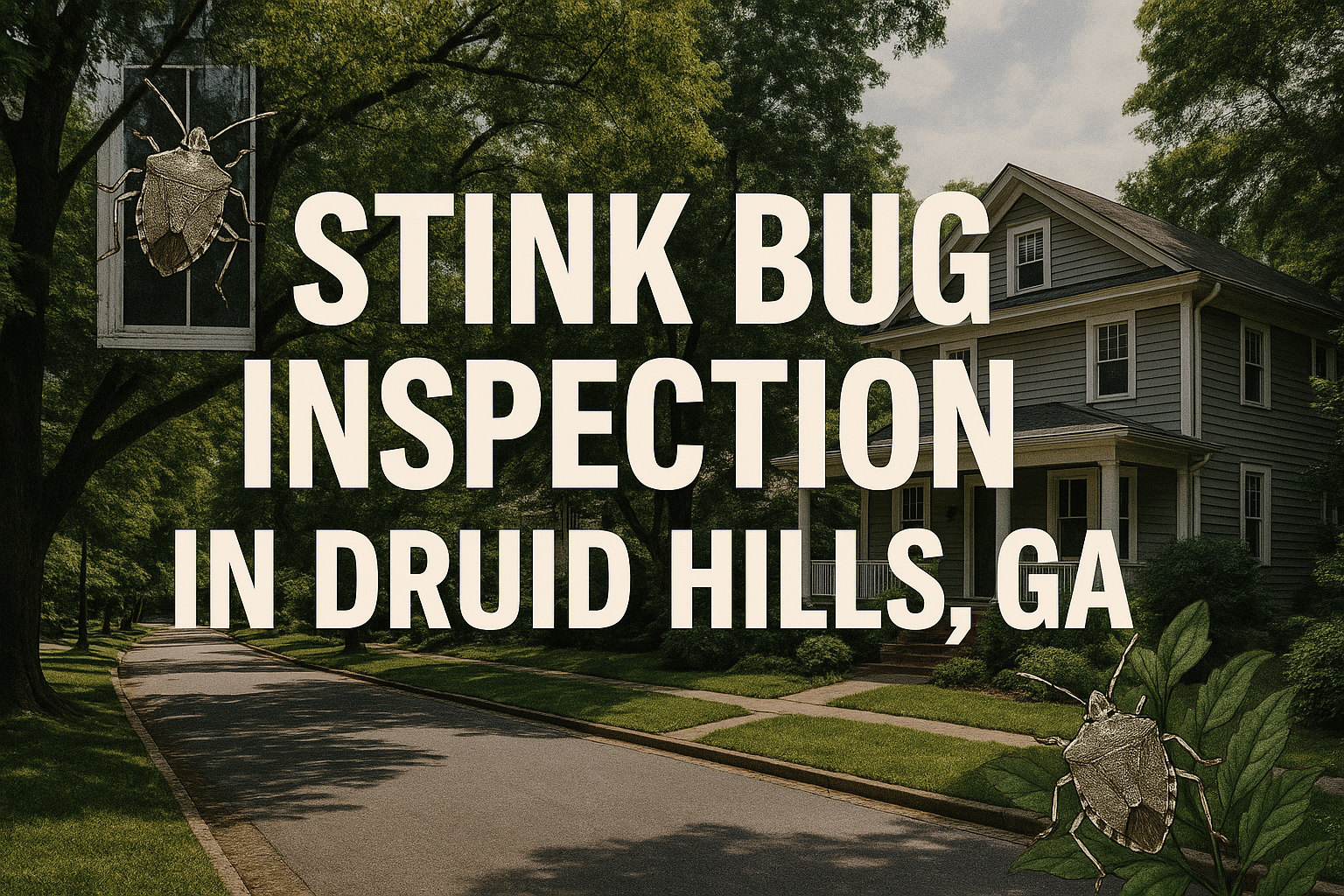
Stink Bug Surge in Druid Hills – Why It Matters

Stink bug inspection Druid Hills homeowners rely on is becoming increasingly important as brown marmorated stink bugs (Halyomorpha halys) surge across Metro Atlanta neighborhoods. If you’ve been strolling through Druid Hills lately, you’ve probably heard the buzz — and the unmistakable scent — of this sudden influx. Reports show a sharp increase in sightings, with homeowners discovering dozens of bugs per night in kitchens, attics, and even vehicles.
According to recent reports from the Georgia Department of Agriculture, sightings have jumped 45 % since early September, with homeowners flagging dozens of bugs per night in kitchens, attics, and even car interiors.
Druid Hills sits just a stone’s throw from Piedmont Park, the BeltLine’s verdant corridors, and a network of mature oak and magnolia trees that serve as perfect staging grounds for these invaders.
Add to that the historic bungalows and Victorian homes that line Ponce de Leon Avenue – structures built before modern sealing methods – and you have a perfect recipe for easy entry points.
The region’s humid subtropical climate, with warm summers and mild winters, lets stink‑bugs survive year‑round, reproducing quickly when temperatures stay above 70 °F. A single female can lay up to 400 eggs, meaning an unnoticed population can explode within weeks.
For homeowners, the surge isn’t just a nuisance. Stink bugs can damage fruit trees, ornamental shrubs, and even the fabric of your home’s exterior when they congregate in large numbers, while their defensive odor can linger in closets and upholstery.
Neighbors are already sharing sightings on local Facebook groups, and the collective pressure is pushing the city’s public health office to issue seasonal advisories.
Ignoring the problem can lead to higher control costs later, as larger infestations demand more intensive treatments and may require multiple visits.
That’s why this guide matters. We’ll walk you through exactly what a professional stink‑bug inspection looks like, point out the early warning signs you can spot yourself, outline the most effective treatment options, and tell you the precise moment to pick up the phone and call Anthem Pest Control.
Brown Marmorated Stink Bug Basics
Physical description
The brown‑marmorated stink bug (Halyomorpha halys) is a compact, shield‑shaped insect about a half‑inch long. Its dorsal surface blends brown‑gray tones with a faint, mottled pattern that can look almost metallic in bright light. When pressed or threatened, it releases a pungent odor that many describe as “rotten‑egg” or “cabbage‑like.”
Life cycle
Stink bugs pass through three distinct stages: egg, nymph, and adult. Females lay clusters of 10‑30 eggs on the undersides of leaves in late spring. Nymphs molt five times before reaching maturity, typically by midsummer. In Georgia, adults overwinter in protected crevices—attics, wall voids, or garden debris—and emerge each spring to start a new generation. The species can produce two to three generations per year depending on temperature.
Feeding habits
Both nymphs and adults feed by piercing plant tissue with their needle‑like mouthparts. They favor soft‑fruited crops such as apples, peaches, and grapes, but they also damage ornamental shrubs, roses, and tomato vines. At night, adult bugs are attracted to bright indoor lights, often ending up in kitchens or pantry cabinets where they can quickly become a nuisance.
EPA complaint data
According to the 2024 EPA pest‑complaint database, Georgia logged roughly 2 – 3 million stink‑bug related calls last year. That volume makes the brown‑marmorated stink bug one of the most frequently reported nuisance insects in the state, outpacing many native species and underscoring the need for early detection.
Real‑world example
Just last summer, a Druid Hills homeowner opened a kitchen cabinet to retrieve a baking sheet and discovered a cluster of about 150 brown‑marmorated stink bugs hiding among the flour packets. The sudden influx triggered an immediate call to Anthem Pest, where a technician identified the infestation, sealed entry points, and applied a targeted indoor treatment to prevent further spread.
Why Druid Hills Is a Stink Bug Hotspot
Climate creates a perfect hideaway
Stink bugs thrive when temperatures stay warm enough for them to stay active, yet mild enough in winter to survive without freezing. Druid Hills experiences long, sunny summers with average highs in the high 80s °F and winters that rarely dip below 30 °F. This seasonal pattern gives the insects a reliable “over‑wintering” window, allowing populations to build up year after year. The National Weather Service climate summary for Druid Hills confirms that the area receives over 50 inches of rain annually, providing the moisture stink bugs need for egg development.
Neighborhood traits that invite infestation
Beyond the weather, the built environment in Druid Hills plays a big role. Many homes feature historic brick foundations and mature oak or magnolia trees that offer shade and shelter. Close‑set windows and expansive eaves create tiny gaps where bugs can slip inside during the cooler evenings of late summer. The abundant foliage not only supplies food sources but also serves as a bridge for stink bugs moving from tree to house. These architectural quirks, common in older neighborhoods, essentially turn every yard into a potential staging ground.
How Druid Hills compares to nearby areas
When you look at the Georgia Department of Agriculture pest report, the neighboring city of Decatur records roughly 15 % fewer stink‑bug incidents. The difference aligns closely with Decatur’s slightly cooler average winter lows and a higher proportion of newer construction that typically includes tighter sealing and fewer large, mature trees. This contrast underscores how even small shifts in micro‑climate and housing stock can dramatically affect pest pressure.
Understanding these local factors helps homeowners anticipate when stink bugs are most likely to appear and why a proactive inspection in Druid Hills is essential for keeping your home bug‑free.
What a Professional Inspection Involves
When you call Anthem Pest for a stink‑bug inspection, our technicians follow a proven, four‑step process that leaves no stone unturned. The goal is simple: locate every egg mass, nymph, or adult before the bugs spread to your walls, windows, or pantry.
1. Exterior sweep for egg masses and adult activity
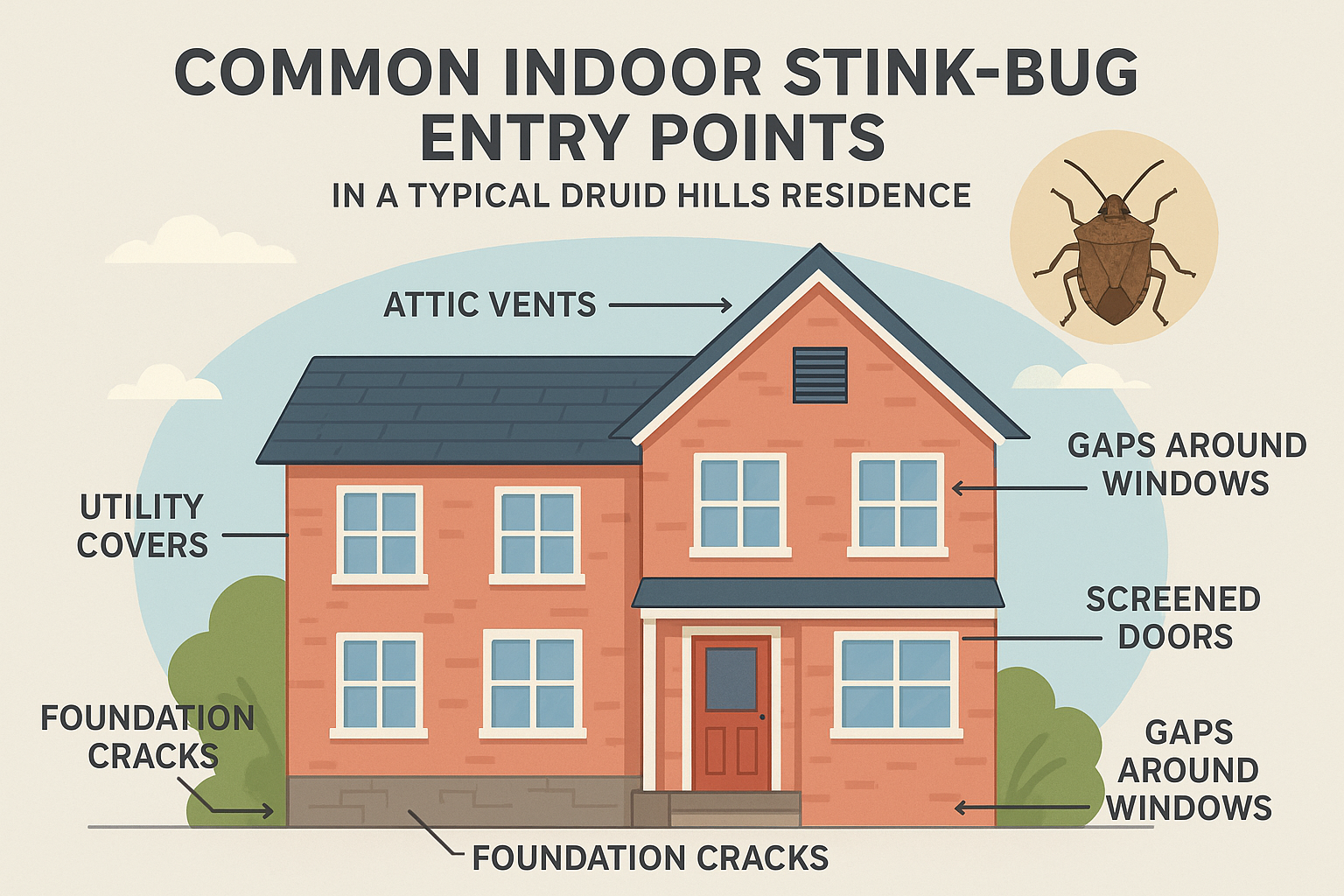
Our first move is a thorough walk‑around of your home’s perimeter. We examine foundation cracks, siding seams, and any vegetation that brushes against the house—think lilacs, boxwoods, and ivy. Stink‑bug females lay their eggs in protected, moist spots, so we look for clusters of tiny, pear‑shaped shells on the soil surface, under mulch, or tucked into the undersides of leaves. Spotting a few eggs early can prevent an entire generation from moving indoors.
2. Interior visual check of high‑risk rooms
Next, we head inside. Kitchens, basements, and attics are the most common entry points because they offer food, moisture, and darkness. Using a flashlight, we scan baseboards, window sills, and the tops of cabinets for hidden bugs or shed skins. In the attic, we pull down insulation panels to expose any insects nesting behind the roof sheathing.
3. Handheld UV light reveals concealed bugs
Stink bugs are masters of camouflage, often hiding in tiny cracks or behind siding where ordinary light can’t reach. Our technicians employ a handheld UV light that makes the insects fluoresce, exposing them in seconds. This step is especially valuable for older homes in Druid Hills where wood siding can develop numerous micro‑gaps.
4. Documentation and customized treatment plan
Every finding is recorded in a detailed, written report. We photograph egg masses, note the exact locations of adult activity, and map out the infestation’s scope. From this data we craft a treatment plan tailored to your property—whether that means a perimeter spray, targeted spot treatments, or a follow‑up inspection.
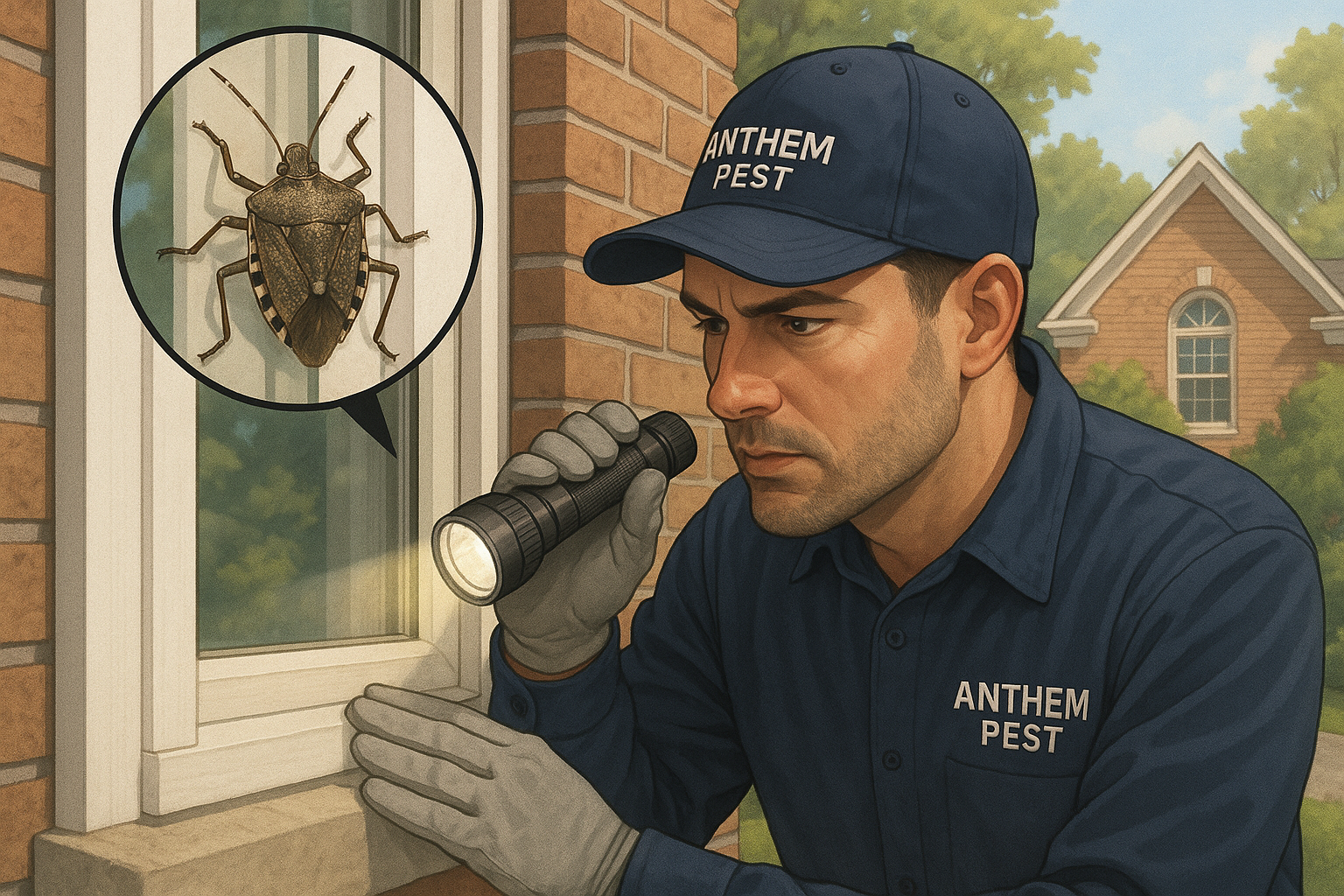
Example case: During a recent inspection of a historic bungalow in Druid Hills, our UV light uncovered a cluster of stink bugs concealed behind deteriorating wood siding. The technician documented the exact seams, and we applied a targeted perimeter spray that eliminated the hidden population without over‑treating the entire property.
Pricing note: A full inspection typically costs between $79 and $99 and includes the comprehensive written report described above. This transparent fee ensures you know exactly what was found and how we plan to protect your home.
Early Warning Signs Homeowners Can Spot
Visual cues you’ll notice first
When a stink‑bug colony begins to settle in, the first clues are often subtle. Tiny dark specks—about the size of a grain of rice—appear on interior walls, especially near windows or baseboards. Those specks can be dead insects, shed exoskeletons, or even tiny droppings. If you brush them away, a faint, sweet‑like odor may linger in the air; many people describe it as a mix of cilantro and coriander, and the scent intensifies when the bugs are crushed. Outdoor lighting is another magnet: you’ll see clusters of the bugs fluttering around porch lights or garage lamps at dusk, often gathering in the corners of windowsills.
Damage indicators on plants and produce
Stink bugs feed by piercing fruit and foliage, leaving behind a tell‑tale mess. Look for stained or punctured peaches, berries, or tomatoes in your kitchen; the affected spots often turn a reddish‑brown color, soften quickly, and may cause the fruit to drop prematurely. In the garden, ornamental shrubs can wilt unexpectedly, and leaves may show small, discolored patches that later turn brown or yellow. Occasionally you’ll notice wilting buds or a faint “spotted” pattern on foliage—both are early signs that a colony is feeding nearby.
What the numbers say
According to the CDC pest‑related health bulletin, 42 % of infestations are first detected after homeowners notice the distinctive odor. That means the smell is often the earliest alarm bell, even before you see the insects themselves, and it can linger for days in warm kitchens or damp basements.
Spotting any of these signs—dark specks, an unusual sweet smell, clusters of bugs near lights, or unexplained plant damage—should prompt you to schedule a professional stink‑bug inspection. Early detection lets Anthem Pest Control confirm the species, map the infestation, and implement safe, effective treatment before the problem spreads throughout your home or garden.
When to Call a Professional
Spotting a few stink bugs is usually nothing to worry about, but there comes a point when DIY measures stop working and the infestation can start affecting your home’s comfort and your garden’s harvest. Knowing the exact thresholds helps you avoid costly damage and unnecessary stress. These guidelines let you act before the bugs become a full‑blown infestation that can compromise both indoor comfort and outdoor yields.
Thresholds that signal professional help
- More than 10 bugs indoors: If you count ten or more stink bugs inside your living spaces, they’re likely breeding and spreading faster than traps or sprays can contain.
- Repeated sightings after DIY attempts: When you’ve tried household sprays, sticky traps, or sealing cracks and the bugs keep returning, it indicates hidden entry points only a trained technician can locate.
- Visible damage to garden produce: Stink bugs feeding on tomatoes, peppers, or beans leave yellowed, wilted fruit. When the damage becomes noticeable across multiple plants, it’s time to protect your harvest with a professional treatment plan.
Seasonal windows for calling a pro
- Early spring (April‑May): This is when overwintering stink bugs emerge and begin colonizing homes. A pre‑emptive treatment can stop the first wave before it spreads.
- Late summer (August‑September): The second generation peaks, often overwhelming homeowners who thought the problem had passed. Prompt intervention prevents a late‑season surge that can linger into fall.
“We recommend a follow‑up treatment within 30 days of the first inspection during peak season.” – Anthem Pest
If any of the above signs line up for you, pick up the phone and schedule an inspection. A certified Anthem Pest technician will pinpoint entry routes, assess garden damage, and apply a targeted, low‑toxicity solution that protects your family and your plants while keeping future invasions at bay.
Treatment Options and Pricing
When stink bugs infiltrate a Druid Hills home, the goal is to eliminate the current population while preventing future invasions. Anthem Pest offers a clear menu of both chemical and non‑chemical solutions, so you can choose the approach that fits your comfort level, budget, and the severity of the infestation.
Chemical Control Methods
For most homeowners, a targeted chemical treatment provides the fastest knock‑down of stink bugs inside and around the house. Anthem Pest’s technicians apply products that are EPA‑registered, low‑odor, and safe for families and pets when used as directed.
- Perimeter spray: A broad‑area application around the foundation, siding, and entry points creates a protective barrier that stops bugs from crossing onto the home.
- Indoor residual treatment: A fine mist is placed on interior walls, baseboards, and ceiling corners. The residue remains active for weeks, catching any bugs that slip past the exterior shield.
- Spot‑on aerosols: For isolated hot spots—such as a kitchen cabinet or attic nook—technicians can apply a quick‑acting aerosol that kills on contact without the need for a full‑home spray.
Non‑Chemical Strategies
Some homeowners prefer to avoid chemicals altogether. Anthem Pest combines several non‑chemical tactics that are especially effective for light to moderate infestations or for families with heightened sensitivities.
- Thorough vacuuming: High‑efficiency vacuums pull bugs and their eggs from cracks, wall voids, and upholstery, reducing the immediate population without chemicals.
- Exclusion sealing: Certified technicians locate and seal cracks, gaps around windows, doors, and utility penetrations. This blocks the primary entry routes stink bugs use to migrate from the yard.
- Heat treatment: In severe cases, a controlled‑heat system raises interior temperatures to a level that is lethal to bugs but safe for structural components, eradicating hidden colonies in walls and attics.
Transparent Pricing from Anthem Pest (2024)
Anthem Pest believes homeowners should know exactly what they’re paying for. Below is the 2024 pricing sheet for stink‑bug services in Druid Hills, presented as a range to reflect home size and infestation level.
- Basic perimeter spray: $149 – $199 per home
- Full‑home treatment (perimeter + indoor residual): $299 – $399
- Follow‑up visit (30‑day re‑inspection and touch‑up): $79
Current promotions for Druid Hills residents include a 10 % discount on the first full‑home treatment when you schedule before the end of May, and a bundled “Season‑Shield” package that adds mosquito control at no extra cost. Verify the latest offers on the Anthem Pest website or by calling 877‑371‑8196.
Choosing the right plan hinges on infestation severity, your comfort with chemicals, and long‑term prevention goals. A perimeter spray may suffice for a single summer wave, while a full‑home treatment paired with exclusion sealing offers the most comprehensive protection for homes that have seen repeated stink‑bug activity. Whatever you decide, Anthem Pest’s transparent pricing and locally trained technicians ensure you receive effective, affordable control without surprise fees.
Prevention Tips for Homeowners
Stink bugs can slip through the tiniest openings, but a few inexpensive fixes keep them out all year long. Below are the most effective steps you can take before the bugs even think about setting up camp in your Druid Hills home.
Seal the entry points
- Inspect the exterior for cracks wider than ¼ in. (about the width of a pencil). Fill them with a quality silicone or acrylic caulk—this takes minutes and costs pennies per tube.
- Install door sweeps on all exterior doors. A snug sweep blocks the gap that bugs love to crawl under.
- Check every screen on windows, porches, and vents. Repair tears with screen repair kit or replace damaged screens entirely; a tight screen is a bug‑proof screen.
Landscape management
- Trim tree and shrub branches so they clear the house by at least 6 in. Direct contact gives stink bugs a bridge to your roof and siding.
- Harvest fallen fruit, nuts, and vegetable debris promptly. Stink bugs feed on these items and use them as staging areas before moving indoors.
- Keep mulch a few inches away from the foundation. This reduces moisture that attracts the insects and makes it harder for them to crawl up walls.
Seasonal checklist
Use this simple calendar to stay ahead of the infestation cycle:
- Early spring – Walk the perimeter, reseal any new cracks, and give screens a fresh look.
- Mid‑summer – After any professional treatment, monitor sticky traps or light traps for lingering bugs.
- Fall – Conduct a thorough clean‑up: remove leaf litter, store firewood away from the house, and do a final seal‑up before temperatures drop.
For a printable version of these steps, check out Anthem Pest’s DIY prevention guide. Following these low‑cost measures can dramatically lower the chance of a stink‑bug surprise, keeping your home comfortable and bug‑free.
Frequently Asked Questions
Do stink bugs carry diseases?
According to the Centers for Disease Control and Prevention, stink bugs are not known to transmit any diseases to humans. While they can be a visual nuisance and emit an unpleasant odor when disturbed, there is no scientific evidence linking them to illness.
Are stink bugs harmful to pets?
The National Pest Management Association notes that stink bugs are merely a nuisance for pets. They do not possess venom or toxins that would harm dogs, cats, or other household animals. However, a curious pet might try to bite or chew a bug, which could result in a minor mouth irritation.
Can I treat stink bugs myself?
Homeowners can attempt DIY control, but there are pros and cons. Over‑the‑counter sprays may provide short‑term relief, yet they often lack the residual activity needed for a full‑season solution and can pose health risks if applied incorrectly. Improper use near children or pets can lead to skin irritation or respiratory issues. Professional pest control offers targeted treatments, such as perimeter sprays and indoor crack‑and‑crevice applications, that are EPA‑registered and applied by trained technicians. If the infestation is limited to a few entry points, sealing gaps and reducing outdoor lighting may suffice. When populations are widespread, or if you’re uncomfortable handling chemicals, it’s wise to call a licensed service like Anthem Pest Control for a thorough inspection and safe, effective treatment plan.
Final Takeaways and How to Get Help
Quick recap: you can spot stink bugs by their shield‑shaped, brown‑gray bodies and the characteristic odor they emit when crushed. Druid Hills’ dense foliage and warm evenings make homes especially inviting. A thorough inspection walks through exterior entry points, checks siding, windows, and indoor hiding spots, and looks for the tell‑tale “scent glands.” Warning signs include clusters on sunny walls, damaged fruit, and a lingering musty smell. Early summer is the prime time to act, and treatment options range from targeted sprays to perimeter barriers, followed by simple prevention steps such as sealing cracks and removing debris.
Choosing a certified professional gives you peace of mind—one inspection can uncover hidden colonies, and a customized plan protects your home year‑round.
If you’d like a free, no‑obligation quote for a Druid Hills stink‑bug inspection, simply reach out. Our technicians are locally trained, friendly, and ready to answer any questions.
Call Anthem Pest at 877‑371‑8196 or schedule online today. Visit Anthem Pest Control