Why Cockroach Control Matters in Vinings
Cockroaches are among the most common indoor pests in suburban Georgia, especially in neighborhoods like Vinings where homes are close to wooded areas and have well‑maintained lawns. Their ability to slip through tiny cracks means they often go unnoticed until numbers swell.
These insects carry bacteria that can contaminate surfaces and food, triggering allergic reactions and asthma attacks. Children are especially vulnerable because their immune systems are still developing. According to the CDC, cockroach allergens are a leading cause of indoor asthma exacerbations.
Health Risks
- Allergic reactions and asthma triggers, especially in children (CDC).
- Contamination of food and kitchen surfaces.
- Spread of bacteria such as Salmonella and E. coli.
Beyond health, roaches can spoil pantry items, leave droppings on countertops, and chew through fabrics, upholstery, and even wiring. Their secretions attract other pests and can cause costly damage to electronics.
Property Concerns
- Food spoilage and pantry contamination.
- Staining and damage to fabrics, upholstery, and wallpaper.
- Chewing of electrical wiring, which can lead to short circuits.
The region sits in a humid subtropical zone, with hot summers, mild winters, and year‑round moisture. Warm temperatures above 75°F and high humidity give cockroaches the perfect breeding environment. Moisture in basements, kitchens, and even outdoor mulch provides the water they need to reproduce quickly.
Seasonal patterns in Vinings amplify the problem. Spring rains raise humidity levels, while summer heat accelerates breeding cycles, often resulting in visible sightings by late June. Without timely intervention, a few hidden insects can multiply into a full‑blown infestation within weeks, overwhelming DIY measures and jeopardizing the comfort of your home.
Because the climate constantly favors rapid population growth, a data‑driven, professional treatment plan is essential. Anthem Pest Control uses inspection data, targeted baits, and ongoing monitoring to keep infestations below the threshold that threatens health and property.
The Usual Suspects – German, American, and Oriental Cockroaches
German Cockroach
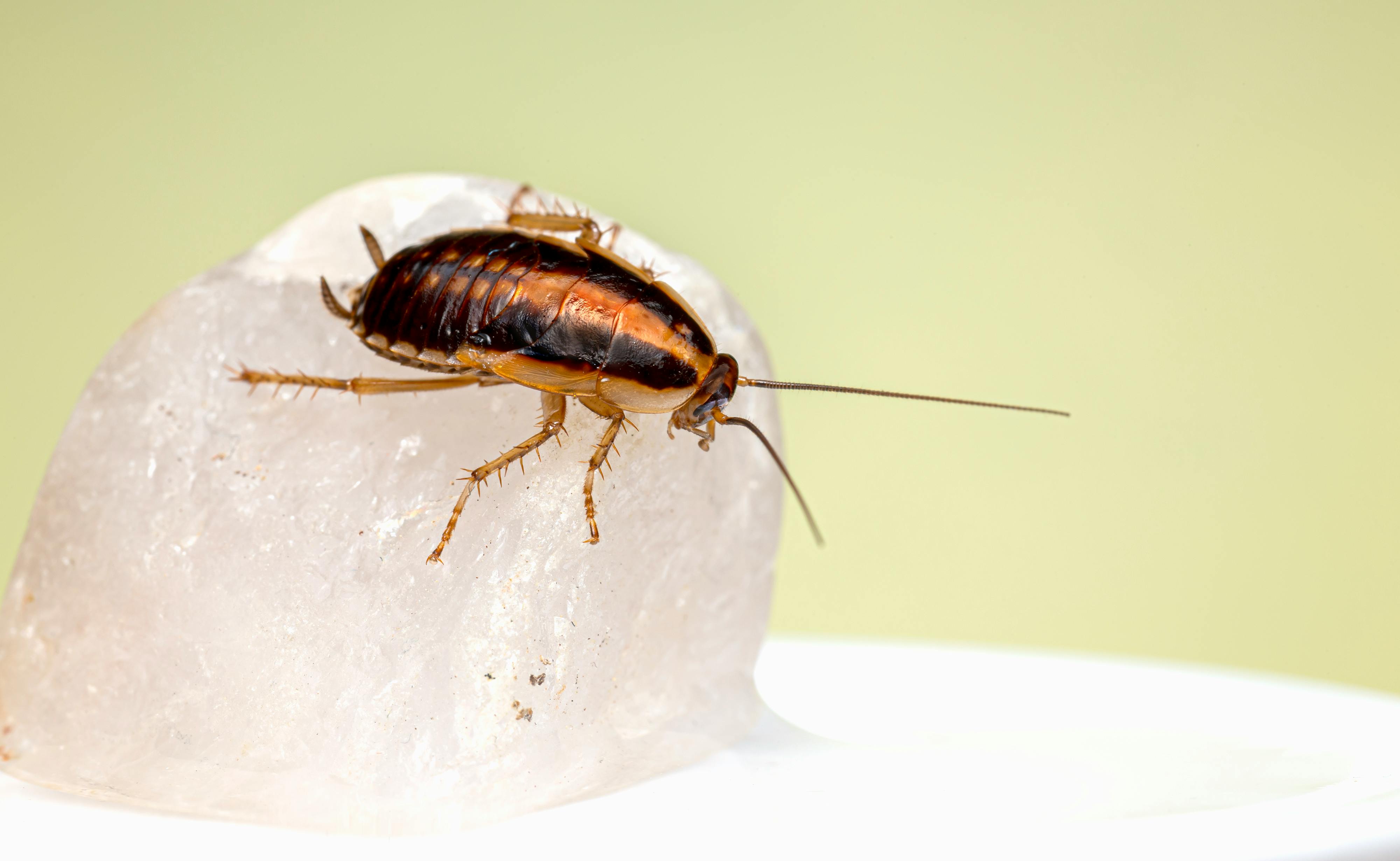
The German cockroach is the smallest of the three, measuring roughly ½‑¾ inch long. Its body is a light tan color marked by two parallel dark stripes on the pronotum, which makes it instantly recognizable under a kitchen light. These pests love warm, humid indoor environments—think kitchen cabinets, pantry shelves, and any spot where food crumbs linger. In Vinings, they reach a seasonal peak during the summer months when indoor temperatures rise and moisture levels stay high. Nationwide, German cockroaches account for more than 80 % of indoor infestations (NPMA), so spotting one early can prevent a full‑blown invasion.
American Cockroach
Often called the “waterbug,” the American cockroach is noticeably larger, ranging from 1 to 1½ inches. Its body is a reddish‑brown hue with a distinctive yellowish margin along the edges. Unlike the German, it prefers damp, semi‑outdoor habitats—basements, crawl spaces, sewer lines, and any pathway that connects the outdoors to your home. When those areas stay warm and moist, especially after a rainy season, the American cockroach will wander indoors in search of food and shelter.
Oriental Cockroach
The Oriental cockroach sports a dark brown to almost black coloration and measures about 1‑1¼ inches. It thrives in cool, damp locations such as crawl spaces, under sinks, and around leaky pipes. Because it prefers lower temperatures, you’ll see a spike in activity during the cooler months of fall and winter, when it seeks the relative warmth of indoor plumbing and basement corners.
Visual cue example: One of the easiest ways to confirm an infestation is to locate the egg case, or ootheca. These brown, capsule‑shaped casings are often tucked away in kitchen cabinets, behind appliances, or in the cracks of pantry shelving. Finding even a single ootheca signals that a breeding population is present.
Quick Identification Checklist for Homeowners
- Size: German (½‑¾ in), American (1‑1½ in), Oriental (1‑1¼ in)
- Color pattern: Light tan with dark stripes (German), reddish‑brown with yellow edge (American), dark brown/black (Oriental)
- Preferred habitat: Kitchens & warm rooms (German), basements/sewers & outdoor pathways (American), cool, damp crawl spaces & under sinks (Oriental)
- Seasonal activity: Summer peak (German), year‑round but more active in warm, damp periods (American), cooler months (Oriental)
- Look for oothecae in cabinets, behind appliances, or in pipe crevices
Entry Points and Harborage Hotspots
Cockroaches are infiltrators. In Vinings they usually arrive from the outside, exploiting any opening larger than a crack. Common routes include foundation fissures, gaps around water/electrical lines, vent louvers, delivery boxes left on the porch, and even pet doors that swing open for a few seconds each day. Once inside, they follow the path of least resistance toward food, water, and shelter.
Vinings has a few quirks that make these entry points more attractive. Older homes built along Old 85 often have settled foundations and worn‑out caulking, creating a network of tiny tunnels. The area around The Shops at Vinings generates constant deliveries, leaving cardboard boxes and paper debris that can be propped against walls, effectively bridging the gap between the street and your siding. Additionally, vegetation near Vinings Overlook creates “bridge habitats” where outdoor roach colonies can crawl along vines and shrubbery right up to your foundation.
Inside the house, roaches gravitate toward dark, damp harborage spots where they can hide during the day. Kitchen cabinets, especially the back corners, are prime real estate because crumbs and grease linger. Under sinks, both kitchen and bathroom, provide moisture and a concealed route to plumbing. Bathroom vanity cracks, basement wall voids, and gaps around appliances such as refrigerators, dishwashers, and laundry machines all serve as safe houses. Even a small gap behind a toaster can become a permanent residence if it’s not sealed.
Quick Inspection Checklist
- Check foundation walls for cracks wider than 1 mm.
- Inspect gaps around utility lines and vent openings.
- Look under delivery boxes and pet doors for roach trails.
- Open kitchen cabinets and pull out shelves to view back corners.
- Examine under all sinks for moisture and debris.
- Survey bathroom vanity seams and tile grout lines.
- Probe basement walls and floor joist spaces for voids.
- Slide a flashlight behind appliances to spot gaps.
- Listen for rustling sounds at night in quiet rooms.
- Record any droppings or shed skins you find.
From Baits to Integrated Pest Management (IPM)
When cockroaches set up shop in a Vinings kitchen, a one‑size‑fits‑all approach rarely works. Below is a quick tour of the tools you’ll encounter—from simple gel baits you can place yourself to a full‑scale IPM program that keeps roaches out for good.
Gel Baits
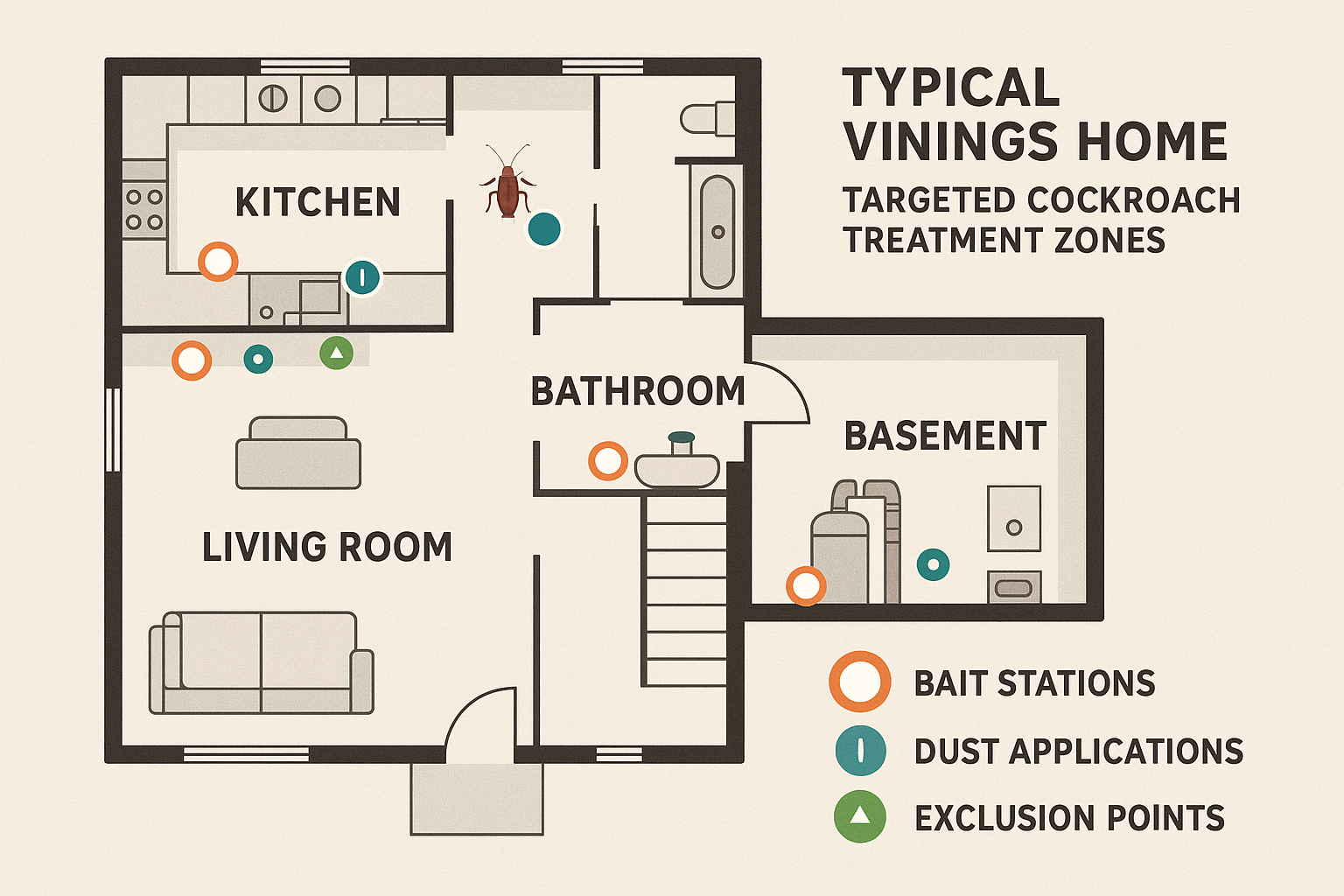
Gel baits combine a sweet attractant with a slow‑acting insecticide that roaches ingest and share with the colony. The key is placement: slip a pea‑sized dab behind the refrigerator, under the stove, and in any crack where you’ve seen droppings. A single kit (usually 2‑3 tubes) costs $30‑$50 and can protect a 1,500‑sq‑ft home for up to three months. In field trials, properly placed gel eliminates 80‑90 % of a local infestation within four weeks, making it the most cost‑effective first line of defense.
- Apply the gel in dark, moist areas where roaches travel.
- Replace baits every 30 days or when they become dry.
- Keep baits out of reach of children and pets.
Insecticide Dusts
Dust formulations such as silica‑based or boric‑acid powders are ideal for voids that liquids can’t reach. Sprinkle a thin layer into wall cavities, behind baseboards, and beneath appliances. Because the dust works by abrasion, roaches pick it up as they crawl, leading to dehydration and death. Safety matters: wear gloves, a dust mask, and keep children and pets out of the treated area until the dust settles. One pound of professional‑grade dust runs $20‑$40 and can treat multiple rooms for a season.
- Use a duster or small brush for even application.
- Avoid excessive dust; a light coating is sufficient.
- Store remaining dust in a sealed container away from food.
Professional Fogging & Sprays
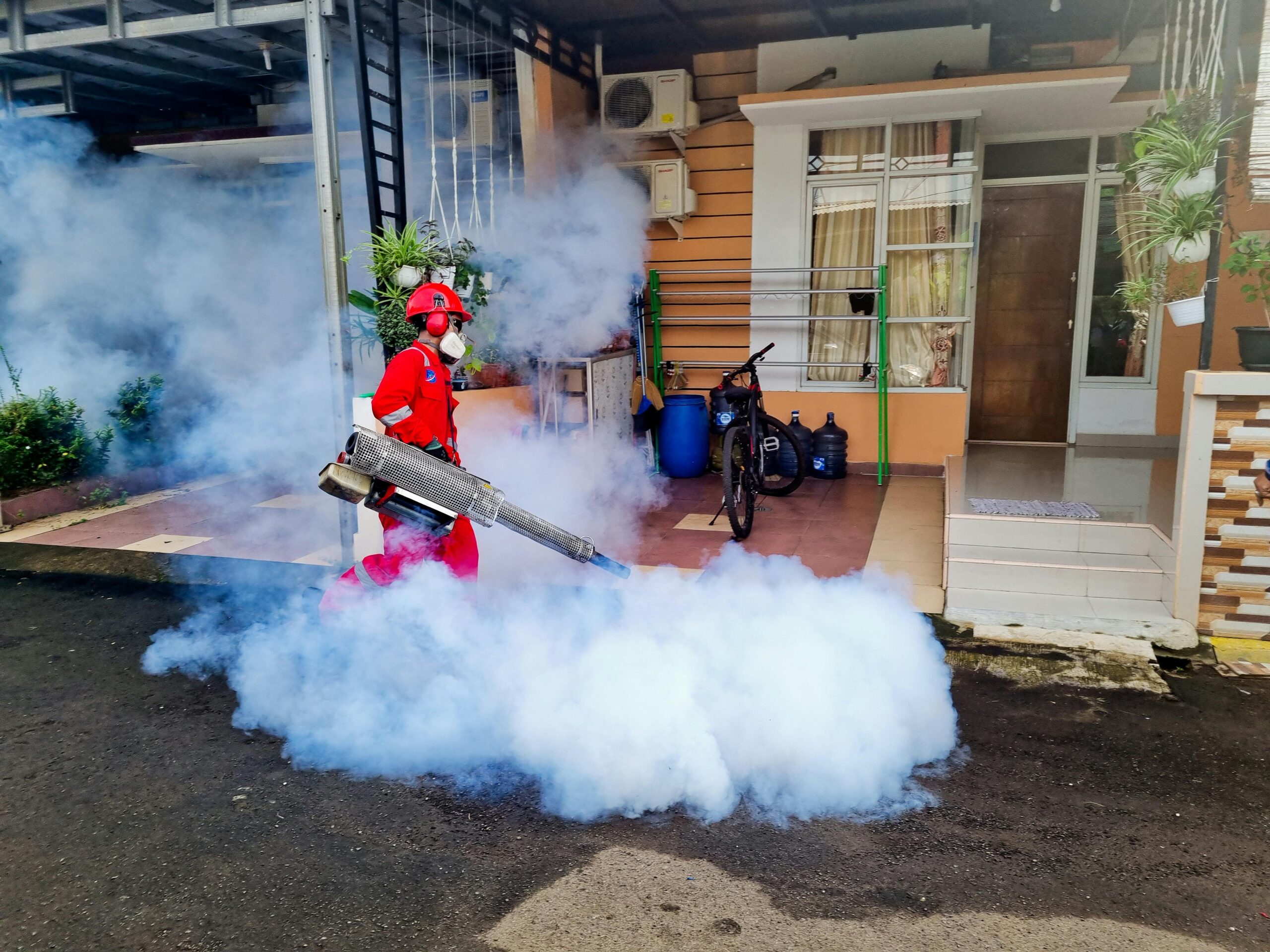
When an infestation spreads across several rooms or you spot roaches in hard‑to‑reach places, a licensed technician may recommend fogging or residual spray. Foggers disperse a fine mist that coats surfaces, while sprays leave a lasting barrier on cracks and crevices. In Vinings, the average price per visit is $150‑$250, inclusive of labor, equipment, and a one‑month warranty. Homeowners should clear countertops, cover food, and seal pet bowls at least 30 minutes before the technician arrives. After treatment, keep the area ventilated for an hour to reduce indoor residue.
- Remove all dishes, utensils, and open food containers.
- Turn off HVAC systems during application to prevent spread.
- Vacuum or sweep floors after the fog settles to remove excess particles.
Integrated Pest Management (IPM)
IPM is a systematic, long‑term strategy that blends sanitation, exclusion, monitoring, and targeted chemical use. The cycle looks like this:
- Inspection & Identification: Locate entry points, harborages, and food sources.
- Sanitation: Eliminate crumbs, fix leaks, and store food in sealed containers.
- Exclusion: Seal cracks, install door sweeps, and repair vent screens.
- Monitoring: Place sticky traps in corners and check weekly.
- Targeted Treatment: Apply gel baits, dusts, or sprays only where traps indicate activity.
- Evaluation & Adjustment: Review trap counts after two weeks and adjust placements or product types as needed.
By tackling the problem at its source, IPM can slash annual pest‑control costs by 30‑50 % compared with repeated chemical sprays. Homeowners who follow the IPM steps often see roach numbers drop to zero after the first season and stay low for years, especially when they partner with a local expert like Anthem Pest Control.
For detailed safety standards, see the EPA indoor pesticide guidelines for residential use.
What You’ll Pay for Cockroach Control in Vinings
Understanding the cost of professional cockroach control helps you budget confidently and avoid surprise fees. Below is a clear breakdown of the most common services offered by Anthem Pest in Vinings, Georgia.
- One‑time inspection fee: $75‑$120
This fee covers a thorough visual inspection of every room, a moisture assessment (since damp areas attract roaches), and a detailed written report outlining hotspots and recommended treatments. - Follow‑up treatment package (baits + dust): $150‑$300
The package typically includes two to three visits over a two‑week period. Technicians place gel baits in hidden corners, apply dust in wall voids, and seal entry points. Materials are included in the price, so you won’t pay extra for the bait stations or dust. - Quarterly maintenance plan: $180‑$250 per quarter
For homeowners who want long‑term protection, this plan provides scheduled bait replacement, routine monitoring, and a quick‑response visit if activity spikes. The recurring cost spreads the expense across the year and keeps roach populations from rebuilding.
DIY kit cost comparison
A typical over‑the‑counter cockroach kit runs between $25 and $60. While the upfront price looks attractive, DIY solutions often require repeated applications, careful placement, and a keen eye for hidden infestations. Most homeowners find the efficacy lower than professional treatments, which can lead to hidden populations resurfacing and ultimately higher long‑term costs.
Anthem Pest guarantee
Anthem Pest stands behind its work with a 30‑day free re‑treatment guarantee. If roaches reappear within a month of the initial service, a technician will return at no extra charge to re‑treat the affected area. This guarantee reinforces confidence in the treatment’s effectiveness and protects your investment.
Ready for a pest‑free home? Call us today at 877‑371‑8196 or visit anthempest.com for a free, no‑obligation quote. Our Vinings team is prepared to assess your situation, explain the best plan for your budget, and get your kitchen, bathroom, and living spaces roach‑free.
Simple Steps to Keep Cockroaches Out
Daily Sanitation
Consistent housekeeping is the single most effective barrier against roaches. A few quick habits each day create an environment they can’t tolerate:
- Wipe down kitchen counters and stovetop after every meal preparation.
- Sweep or vacuum crumbs from floors, especially under appliances and around the dining area.
- Store all dry goods, pet food, and snacks in airtight containers; avoid leaving bags open.
- Empty trash cans nightly and keep lids tightly sealed.
- Rinse dishes promptly; a dirty sink is a roach magnet.
Seasonal Focus
Roach activity shifts with the weather. Tailor your preventive chores to the season for maximum impact.
- Spring deep‑clean: As temperatures rise, roaches emerge from hidden cracks. Vacuum baseboards, wall crevices, and the space behind refrigerators and stoves. Use a crevice tool to pull out dust, hair, and food particles that serve as food sources.
- Summer humidity control: Warm, moist air fuels breeding. Run dehumidifiers in damp areas like basements and laundry rooms. Ensure bathrooms and kitchens are vented to the outside, and fix any leaking pipes or condensation problems.
- Fall sealing: When cooler weather arrives, roaches look for warm entry points. Inspect the exterior for gaps around windows, doors, and utility lines. Apply a silicone‑based caulk to seal cracks, and install door sweeps to block the path.
Over‑the‑Counter Helpers
When you need a little extra protection, these readily available products work well when applied correctly:
- Boric acid powder: Lightly dust the area under the refrigerator, behind the toilet, and along baseboards. The fine particles cling to roaches’ legs, and once ingested they disrupt the insect’s digestive system.
- Diatomaceous earth (food‑grade): Sprinkle a thin layer in crawl spaces, under cabinets, and in any voids where roaches travel. The microscopic silica spikes puncture their exoskeletons, leading to dehydration.
Local Resources
Vinings homeowners have a few community tools that keep pest awareness high:
- The Vinings Homeowners Association Pest‑Watch Newsletter circulates quarterly tips, local infestation alerts, and recommended service providers.
- Community pest‑alert meetings, usually held at the Vinings Community Center, let neighbors share sightings and coordinate neighborhood‑wide treatments.
30‑Second Habit Checklist for Busy Homeowners
When time is tight, run through this rapid mental audit before you leave the house or head to bed:
- Counter surfaces clear and wiped?
- Trash can sealed and emptied?
- Food stored in sealed containers?
- Floor visible debris swept or vacuumed?
- Any water sources (sink, pet bowl) turned off or drained?
- Exterior doors closed with sweeps engaged?
Even a half‑minute of focused attention each day can break the cycle before roaches ever get a foothold.
Quick Answers for Concerned Homeowners
How long does a treatment last?
Most professional cockroach programs rely on two core products: bait stations and residual dusts. A well‑placed bait station typically remains effective for 2 to 3 months, because the attractant and insecticide stay potent until the food source is depleted. Dust formulations such as silica‑based or boric‑acid powders can cling to cracks, voids, and wall voids for up to 6 months, delivering a slow‑acting kill as roaches walk through them. To keep protection active, Anthem Pest recommends a follow‑up inspection every 30 days during the first quarter after treatment, then quarterly monitoring thereafter.
Are the chemicals safe for kids and pets?
All products we apply are EPA‑registered and come with detailed safety data sheets (SDS). When used according to label directions, the active ingredients pose minimal risk to humans and animals. Key safety steps include placing bait stations out of reach of children and pets—usually behind appliances, under sinks, or in low‑traffic wall voids—and applying dusts only in concealed spaces such as baseboards, crawl‑space gaps, and behind cabinets. Our technicians wear the recommended personal protective equipment (gloves, goggles, and respirators) during application, and we advise a short “no‑entry” window (typically 15 minutes) before allowing normal household traffic.
What if I rent vs. own?
Renters and landlords have distinct needs, and our service contracts reflect that flexibility. For landlords, we offer a “tenant‑friendly” plan that includes a one‑time treatment plus a 90‑day warranty, allowing the property to stay pest‑free between tenant turnovers. Short‑term contracts (single‑visit or 3‑month packages) are ideal for renters who need immediate relief without a long‑term commitment. In both scenarios, we provide a detailed report that landlords can share with tenants to demonstrate compliance with local health codes.
EPA label note for Georgia: State regulations require that all residential cockroach products carry the EPA’s “Restricted Use” designation for certain high‑toxicity ingredients. This means only certified applicators may handle them, and the label must be followed precisely—especially regarding placement, re‑entry intervals, and disposal. Anthem Pest’s technicians are fully licensed in Georgia, ensuring every application meets or exceeds these legal standards.
Protect Your Home with Anthem Pest Control Today
By now you know the most common cockroach species lurking in Vinings, the cracks and gaps they use to slip inside, the treatment methods that eliminate them, how transparent pricing works, and the daily habits that keep them out.
- Species identification: German, American, and Oriental roaches.
- Entry points: utility lines, door sweeps, and kitchen cracks.
- Treatment options: targeted baits, gel applications, and full‑home fogging.
- Pricing: flat‑rate plans with no hidden fees.
- Preventive habits: proper sanitation, moisture control, and routine inspections.
When a problem arises, Anthem Pest’s 24‑hour response line connects you with locally trained technicians who know Vinings’ unique pest patterns. Our team has a proven track record of reducing infestations quickly and safely, backed by dozens of satisfied neighbors. We’ve served Vinings families for over a decade, earning a 4.9‑star rating on local review sites.
Ready for a free, no‑obligation inspection? Call us at 877‑371‑8196 and we’ll schedule a visit, assess your home, and provide a personalized quote—no pressure, just expertise.
Visit Anthem Pest Control to learn more about our services and schedule your inspection today. Our technicians will walk you through every step, ensuring you understand the treatment plan and long‑term prevention strategy.