Why Ticks Are a Growing Concern in Chamblee
Chamblee’s geography makes the tick problem especially acute. The city sits on the edge of the South River floodplain, is bordered by mature oak‑hickory woods, and boasts dozens of community parks and trail systems. Warm, humid summers and mild winters give ticks a longer breeding season, while leaf litter and tall grasses provide perfect hiding spots. Every weekend hike, backyard barbecue, or family walk with a dog becomes a potential encounter.
- Climate: Average high of 88°F in July and over 70% humidity create ideal conditions for tick development.
- Landscape: Wooded buffers and unmanaged brush around homes serve as tick reservoirs.
- Recreation: Popular parks and trail networks increase human‑tick contact.
For homeowners, the priority is clear: safeguard loved ones and pets without inflating the household budget. That’s why this guide focuses on data‑driven, locally‑tailored strategies—offering transparent pricing, safe treatment options, and practical prevention tips that fit a typical Chamblee family’s financial plan.
By understanding the numbers behind the surge and the local factors that fuel it, you can make informed decisions that keep your yard tick‑free and your family protected.
Tick Threats Specific to Chamblee
Species Overview
The two ticks that cause the most trouble in Chamblee are the Lone Star tick (Amblyomma americanum) and the Black‑legged, or deer, tick (Ixodes scapularis). Lone Star ticks are recognizable by the single white spot on the adult female’s back and are most active from late spring through early fall. Black‑legged ticks, the primary carriers of Lyme disease, thrive in wooded edges and humid leaf litter.
Local Incidence Rates (2022)
The CDC recorded an average of 12.4 reported cases per 100,000 residents for Lone Star‑associated illnesses and 8.7 cases per 100,000 for Black‑legged tick‑borne diseases in the Chamblee‑Atlanta region during 2022. These figures are higher than the national average, underscoring the need for vigilant monitoring.
High‑Risk Locations
- Chattahoochee River Park – dense vegetation and riverine moisture create ideal tick habitat.
- Ashford Park – shaded trails and leaf‑covered play areas attract both species.
- Typical backyard gardens – especially those bordering wooded lots or containing tall grasses.
Homeowner Anecdote
Last summer, a Chamblee homeowner was pulling weeds in a raised garden bed when an engorged Lone Star tick clung to the back of her hand. The bite swelled within hours, prompting a call to Anthem Pest Control, who performed a targeted perimeter treatment and gave her a tick‑identification kit.
Health Risks to Watch
Both ticks can transmit serious illnesses. Lone Star ticks are linked to Southern tick‑associated rash illness (STARI) and can trigger a severe allergic reaction to red meat. Black‑legged ticks carry Lyme disease, anaplasmosis, and babesiosis. Prompt removal and professional yard treatment are the best defenses.
Overview of Tick Control Options

Chemical Barrier Sprays
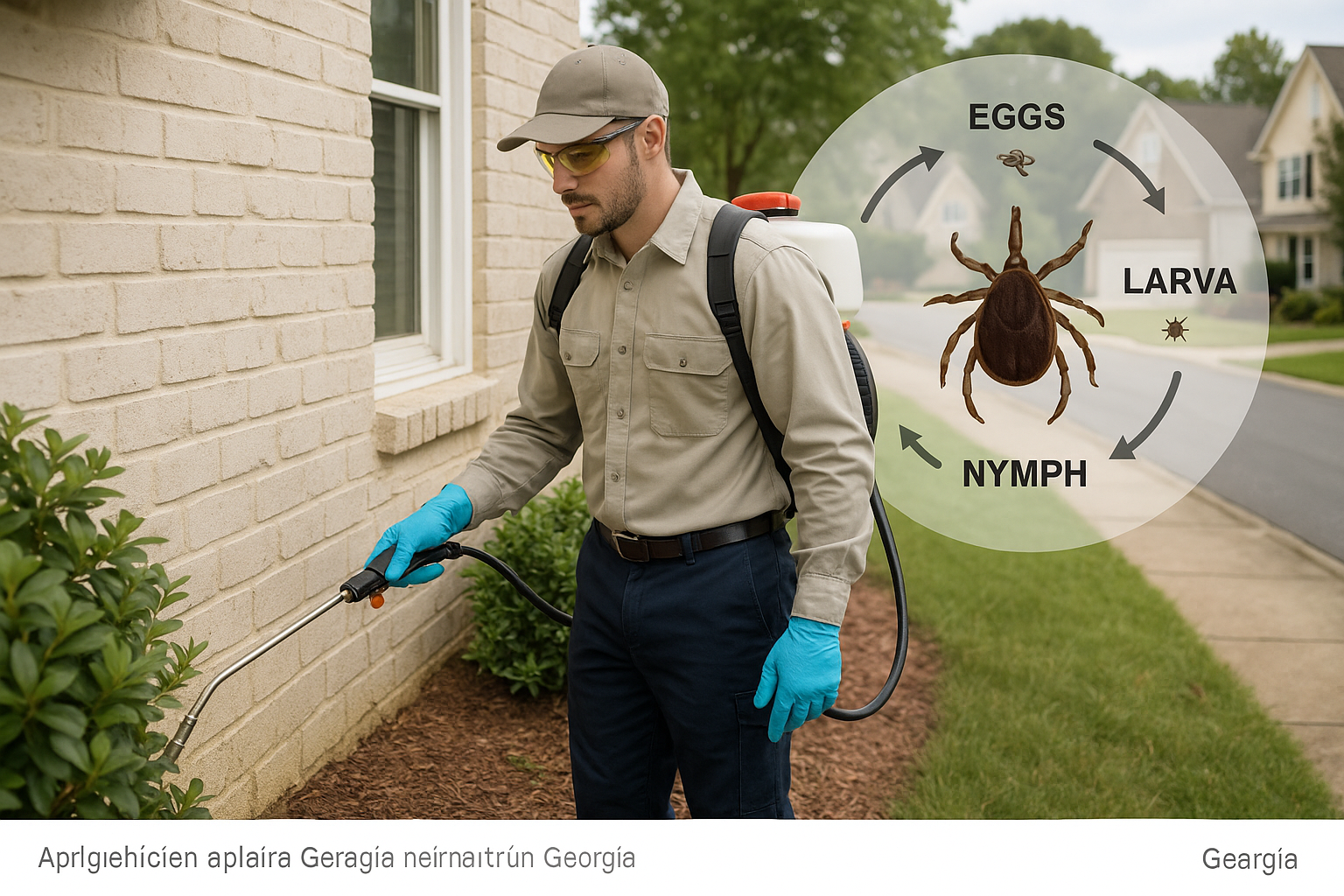
Barrier sprays form a thin, invisible wall around your home’s perimeter. Applied with a misting wand, the chemicals coat the soil, vegetation, and hardscape, killing adult ticks and nymphs on contact. Because the spray targets the stages that roam the yard, homeowners notice a rapid drop in tick activity.
- Pros: High immediate effectiveness; covers large areas quickly; reduces both adult and nymph populations.
- Cons: Higher material cost; may require professional equipment; re‑application every 4‑6 weeks during peak season.
- Safety notes: Keep children and pets off treated zones for at least 24 hours; choose EPA‑registered products to minimize environmental impact.
Granular Larvicides
Granular products are spread over soil, mulch, and leaf litter where ticks lay eggs and larvae develop. The granules dissolve slowly, releasing an insecticide that interferes with the early life stages before they emerge as biting nymphs.
- Pros: Targets the hidden egg and larval stages; ideal for flower beds, garden borders, and shaded areas.
- Cons: Slower visible results; may need multiple applications (typically every 2‑3 months) to keep the cycle broken.
- Safety notes: Apply when children and pets are not in the area; water the treated spot to activate the granules and reduce drift.
Organic Treatments
For eco‑conscious homeowners, essential‑oil‑based or botanical sprays (e.g., cedar oil, rosemary extract) offer a natural alternative. These products disrupt tick respiration and repel them without synthetic chemicals.
- Pros: Lower toxicity; suitable for families with young children or sensitive pets; often approved for organic landscaping.
- Cons: Generally less potent than synthetic options; may require more frequent re‑applications (monthly) during hot, humid periods.
- Safety notes: Verify that the product is labeled for tick control; avoid use on edible plants unless explicitly approved.
Typical Application Schedule
Most professionals recommend a seasonal plan:
- Early spring (March‑April): Apply a barrier spray to pre‑empt the first wave of adult ticks.
- Late spring (May‑June): Add granular larvicides to mulch and garden beds.
- Mid‑summer (July‑August): Perform a second barrier spray or refresh organic treatments, especially after heavy rains.
- Fall (September‑October): Final touch‑up to reduce overwintering eggs.
Detailed Cost Breakdown for Professional Services
Transparent Pricing Tiers
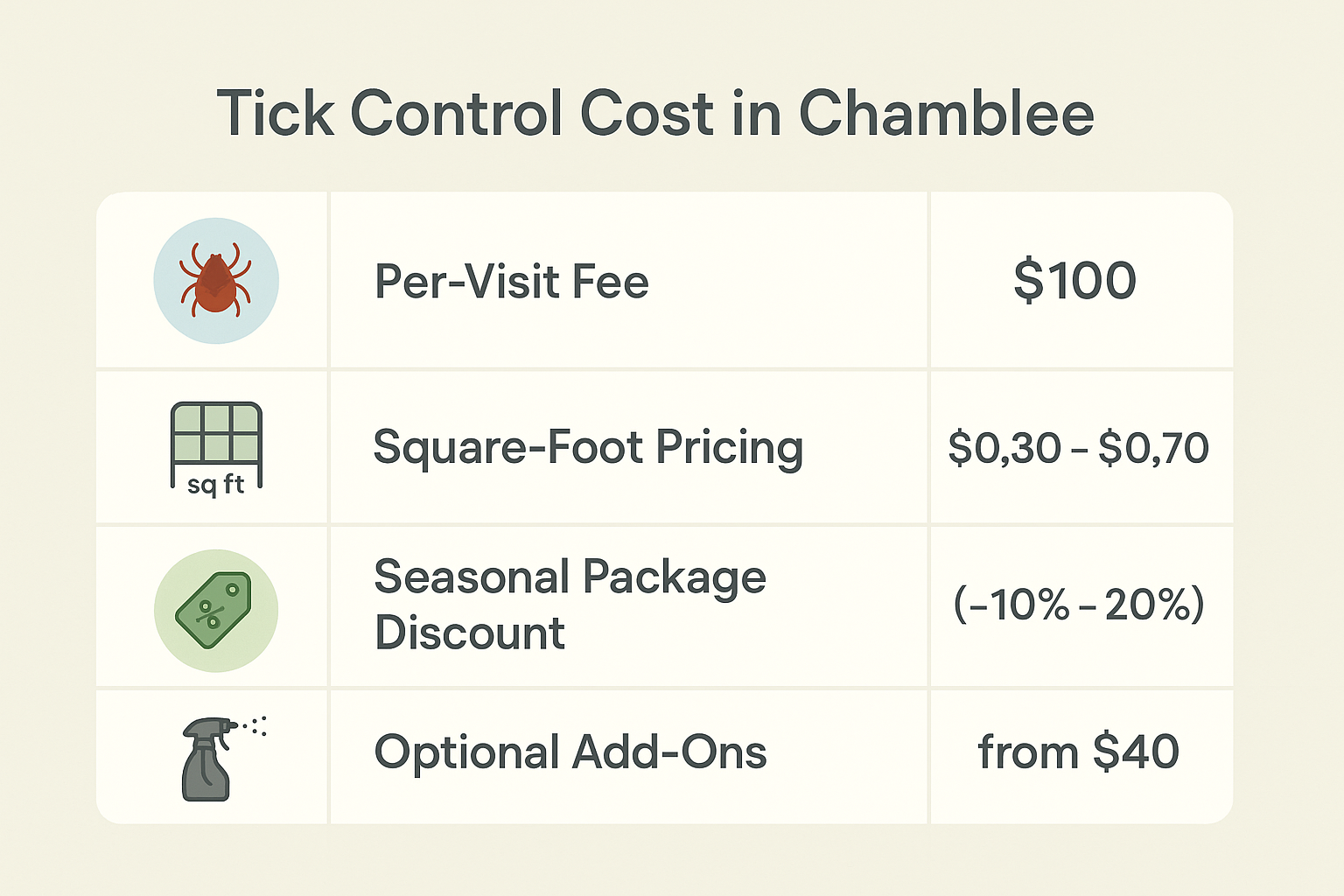
Anthem Pest structures its tick control service fees based on the size of the property you need covered. The three tiers are:
- $129 for properties up to 5,000 sq ft
- $199 for homes ranging from 5,001 sq ft to 10,000 sq ft
- $249 for any property larger than 10,000 sq ft
Each tier includes a comprehensive initial treatment that targets adult ticks, nymphs, and larvae throughout the designated square footage. The price covers the labor, equipment, and a standard, EPA‑approved formulation.
Additional Fees You Might Encounter
Most homeowners find that a single treatment does the heavy lifting, but a few optional add‑ons can enhance protection, especially if you have pets, a large yard, or a high tick‑pressure area.
- Extra Visits: $45 per additional service call (useful for multi‑season follow‑ups).
- Follow‑up Treatments: $30 per visit after the initial treatment, typically scheduled 4–6 weeks later.
- Pet‑Safe Formulation Surcharge: $20 to switch to a pet‑friendly pesticide that meets the strictest safety standards.
These fees are optional, clearly listed before any work begins, and you can decide which ones fit your situation.
Sample Invoice
Below is a realistic example of how Anthem Pest itemizes a tick control job for a 7,200 sq ft home. The numbers illustrate the base tier price plus two common add‑ons.
| Service | Square Footage | Unit Price | Total |
|---|---|---|---|
| Initial Tick Treatment (Tier 2) | 7,200 sq ft | $199 | $199 |
| Follow‑up Visit (1) | 7,200 sq ft | $30 | $30 |
| Pet‑Safe Formulation | — | $20 | $20 |
| Subtotal | — | — | $249 |
All amounts are listed before tax, and the invoice clearly separates each line item. This transparency lets you see exactly where your money goes.
No Hidden Charges – What That Means for You
Anthem Pest’s pricing model eliminates the guesswork. The base tier covers everything needed for a full‑property treatment, and any extra services are presented as distinct, optional line items. Because the rates are verified on Anthem Pest’s official website, you can trust that the quoted price you receive over the phone matches the final bill you’ll sign.
In short, you pay for the square footage you own, choose any supplemental protection you need, and receive a clean, itemized invoice—no surprise fees, no vague “service charges,” just straightforward, affordable tick control for your Chamblee home.
Factors That Influence Tick‑Control Pricing
When you request a tick control estimate, the number you see on the invoice is the result of a detailed assessment, not a flat fee. Anthem Pest Control evaluates each property on several measurable variables, and the EPA’s guidelines on pesticide application rates also play a crucial role in determining labor and material costs.
Property size and square‑footage category
Our technicians first categorize your yard by its total square footage. A small suburban lot (under 5,000 sq ft) typically requires one‑to‑two applicator passes, while larger properties (5,000–10,000 sq ft) may need three or more. The more ground we must cover, the higher the labor hours and the quantity of pesticide required, which directly raises the price.
Infestation severity
We grade tick pressure as low, moderate, or high based on field sampling. A low‑severity yard might need a single, standard‑rate treatment, whereas a high‑severity site often demands a higher concentration of active ingredient and a follow‑up retreat. Because EPA‑approved products have specific maximum application rates, increasing severity can mean using the upper limit of those rates, adding to material costs.
Landscape complexity
Dense foliage, mulched flower beds, and hardscape obstacles such as patios or retaining walls create hidden pockets where ticks thrive. Navigating these areas takes extra time and may require specialized equipment or spot‑treatments. Each additional maneuver translates into extra labor charges and, in some cases, a supplemental amount of pesticide to ensure thorough coverage.
Seasonal demand
Spring brings a surge in tick activity, so demand for treatments spikes. During peak months, we allocate more crew resources, which can modestly increase the hourly rate. Conversely, fall maintenance often enjoys lower demand, allowing us to offer more competitive pricing while still adhering to EPA safety standards.
Required pre‑treatments
Before any pesticide is applied, we may need to perform yard cleanup—removing tall weeds, leaf litter, or debris that shield ticks from contact. These preparatory steps are essential for efficacy but add a separate line item for labor and disposal. Ignoring pre‑treatments can lead to ineffective results and the need for costly re‑applications.
EPA recommended application rates
The EPA’s recommended application rates dictate the maximum amount of active ingredient per acre. Our pricing model respects these limits, calculating the exact volume needed for your property’s size and infestation level. When a higher rate is warranted—such as with a high‑severity infestation—we adjust the material cost accordingly while staying within legal safety thresholds.
In short, each factor—size, severity, landscape, season, and prep work—adds a measurable component to the final quote. By breaking down the pricing this way, Anthem Pest Control ensures you understand exactly why you’re paying for a safe, effective, and EPA‑compliant tick control program.
How Anthem Stacks Up Against Local Competitors
Choosing the right tick control provider in Chamblee isn’t just about the headline price. Homeowners need to weigh response times, technician qualifications, and the transparency of the billing process. Below is a quick look at how Anthem Pest compares with two well‑known local firms.
Competitor A – Georgia Pest Solutions
Georgia Pest Solutions advertises a $149 basic package for tick control, which typically includes a single treatment and a follow‑up inspection. Their quote is solid for a one‑time service, but additional visits or supplemental products can increase the final bill.
Competitor B – Southside Exterminators
Southside Exterminators charges $179 per visit. This rate covers a comprehensive tick treatment and a detailed report, but the per‑visit model means recurring costs for homeowners who need quarterly maintenance.
Key Service Differences
- 24‑hour response guarantee: Both Georgia Pest and Southside Exterminators promise a next‑day visit after a service request.
- Licensed technicians: All three companies employ state‑licensed professionals, ensuring compliance with Georgia’s pest‑control regulations.
- Transparent, itemized billing: Each provider breaks down labor, chemicals, and any add‑ons, helping you see exactly where your money goes.
Anthem’s Added Value
- Same‑day scheduling: If you call before noon, we often dispatch a crew the same day, cutting down the window where ticks can spread.
- Pet‑safe options: Our formulations meet EPA standards for pets, and we offer a “Pet‑First” treatment plan that avoids high‑toxicity chemicals.
- Locally trained staff: Anthem technicians receive Chamblee‑specific training, so they know the local tick species and the most effective control tactics for our climate.
| Provider | Price | Response Guarantee | Pet‑Safe Options | Scheduling Flexibility |
|---|---|---|---|---|
| Georgia Pest Solutions | $149 (basic package) | 24‑hour | Standard | Next‑day |
| Southside Exterminators | $179 per visit | 24‑hour | Standard | Next‑day |
| Anthem Pest Control | Competitive (custom quote) | 24‑hour | Pet‑First program | Same‑day (if requested before noon) |
Seasonal Timing and Savings Opportunities
Treating too early or too late means the chemicals miss the peak activity, forcing repeat visits and inflating your bill. By aligning service with the pre‑nymph burst in March‑April or the adult drop‑off in October‑November, you maximize kill rates and minimize residual re‑infestations.
Anthem rewards proactive homeowners with an “early‑bird” discount. Schedule your first tick treatment before March 1 and you’ll receive a straight 10 % off the standard $199 price, dropping the cost to $179. The discount applies to any single‑visit service, making it a quick win for budget‑savvy families.
For families that prefer set‑and‑forget protection, Anthem offers a bundled yearly plan that includes four seasonal treatments. The package is priced at $699, which is essentially four $199 visits less a 10 % bundle discount. This saves you $79 compared with paying for each visit separately.
Here’s a simple side‑by‑side view of the numbers:
| Option | Price | Savings vs. Standard |
|---|---|---|
| Baseline (single visit) | $199 | $0 |
| Early‑bird (pre‑March booking) | $179 | $20 |
| Bundle (4 yearly visits) | $699 | $97 |
As you can see, the early‑bird option trims $20 off a single service, while the annual bundle shaves nearly $100 off the total cost, delivering both convenience and savings. Beyond the dollars, correct timing reduces the likelihood of a secondary infestation, meaning fewer emergency calls and less disruption to your outdoor activities. In practice, homeowners who follow Anthem’s seasonal schedule report up to 30 % fewer tick sightings during the summer months.
DIY Solutions vs Professional Tick Control
When you shop for a DIY tick‑control kit, you’re typically looking at a price tag between $30 and $60. That range covers most over‑the‑counter options you’ll find at big‑box stores or online.
- Ortho Home Defense – $30
- Spectracide Yard Spray – $35
- TERRO Tick & Flea Spray – $40
- Nixalite Outdoor Tick Treatment – $45
- Safer Brand Tick & Flea – $50
- EcoSmart Tick Control – $60
These products typically require multiple applications throughout the tick season to maintain any level of control.
The CDC reports that professional barrier treatments can reduce tick encounters by up to 85 %. Moreover, professional treatments often include a perimeter barrier and targeted spot‑treatments that DIY sprays simply cannot match. In real‑world terms, that’s a dramatic gap compared with most DIY sprays, which often provide only short‑term knock‑down.
Handling chemicals yourself also raises safety questions. A homeowner may inadvertently expose children, pets, or themselves to concentrated pyrethroids, especially if the product isn’t applied correctly. Licensed technicians are trained to calibrate equipment, choose the right formulation, and follow state‑mandated safety protocols.
Time is another hidden cost. DIY requires research, precise mixing, and re‑application every few weeks during peak season. A professional service is essentially set‑and‑forget: the technician completes the treatment in a single visit and schedules annual follow‑ups, freeing you for the things that matter.
For most Chamblee homeowners, the modest extra expense of a professional tick‑control program—typically $120‑$180 per year—pays off in higher efficacy, safer application, and far less hassle. DIY kits can work for a small yard, but if you want reliable protection, let Anthem Pest handle the job.
Frequently Asked Questions About Tick Treatments
How long does a professional treatment last?
A typical tick control application protects your yard for 8‑12 weeks. The exact duration depends on the product used, local weather, and tick pressure. Most homeowners see a noticeable drop in tick activity for at least two months before the next boost is needed.
Is the spray pet‑safe?
Yes—when we use EPA‑approved formulations, the spray is safe for dogs and cats. To be extra cautious, we ask that pets stay indoors for about 30 minutes after treatment while the coating dries and settles.
Will it affect beneficial insects?
Barrier sprays are designed to target ticks on the ground and low‑lying vegetation. When applied correctly, the impact on pollinators such as bees and butterflies is minimal, preserving the helpful insects that support a healthy garden.
Do I need yearly re‑treatment?
Annual tick control is the best way to maintain consistent protection. A yearly schedule aligns with tick life cycles and seasonal peaks, ensuring your yard stays a safe play area for the whole family.
Protect Your Home with Anthem Pest Today
When it comes to tick control in Chamblee, you deserve transparent pricing, local expertise, and a solution that safeguards the health of your family and pets. Anthem Pest combines clear cost estimates with years of neighborhood experience, ensuring every treatment targets the exact species on your property while minimizing chemical exposure. Our licensed technicians perform a thorough inspection, identify hot spots, and apply EPA‑approved treatments that keep ticks at bay for months.