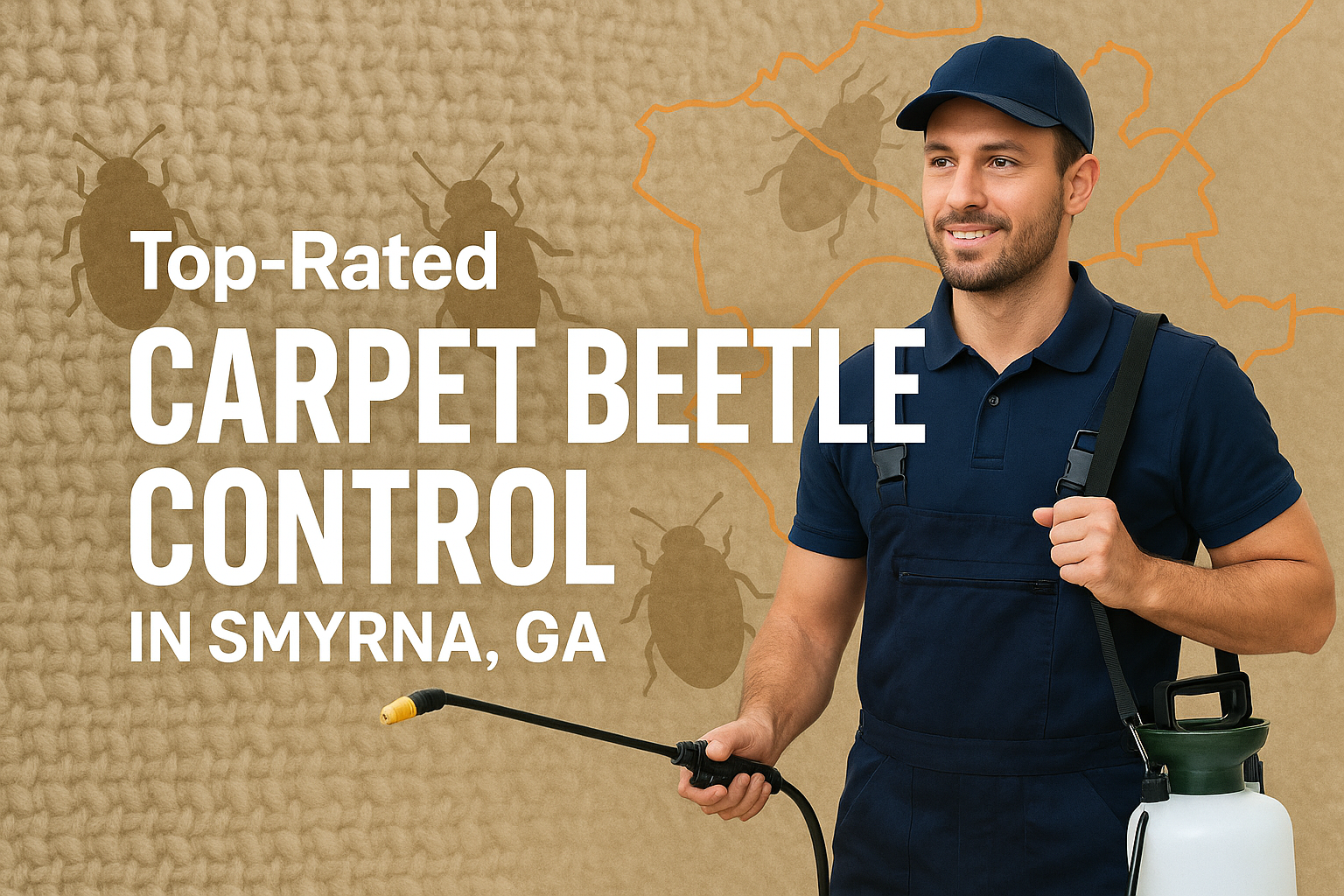
Why Carpet Beetles Threaten Smyrna Homes

In the humid Southeast, carpet beetles thrive, and Smyrna is no exception. Warm summers, mild winters, and abundant organic debris let these insects multiply and slip unnoticed into closets, basements, and attics, making professional carpet beetle control Smyrna GA a priority for homeowners.
Recent neighborhood reports confirm the surge. Homeowners in Burnt Hickory, East Cobb, and Oak Hill have called pest‑control services at an unprecedented rate, citing mysterious holes in rugs and a fine, powdery residue on furniture. According to the 2023 Georgia Extension survey, 18 % of Georgia households—roughly one in five—reported visible carpet damage caused by beetle larvae. That statistic translates to dozens of Smyrna homes dealing with the same problem each year.
Beyond the obvious aesthetic damage, carpet beetles pose hidden health risks. As larvae grow, they shed skins and fecal pellets that become airborne allergens. Sensitive residents may experience sneezing, itchy eyes, or skin irritation, especially during the peak activity months of May through September.
Property damage extends far beyond carpets. Upholstered chairs, draperies, wool blankets, and even stored seasonal items such as quilts or heirloom clothing are vulnerable. A single infestation can chew through a square foot of fabric in weeks, turning cherished belongings into ragged patches.
Because Smyrna’s older housing often features natural‑fiber carpets and cellulose attic insulation, the insects find both food and shelter in the very materials that keep homes comfortable. The city’s proximity to wooded areas also increases the chance
Carpet Beetle Biology & Life Cycle
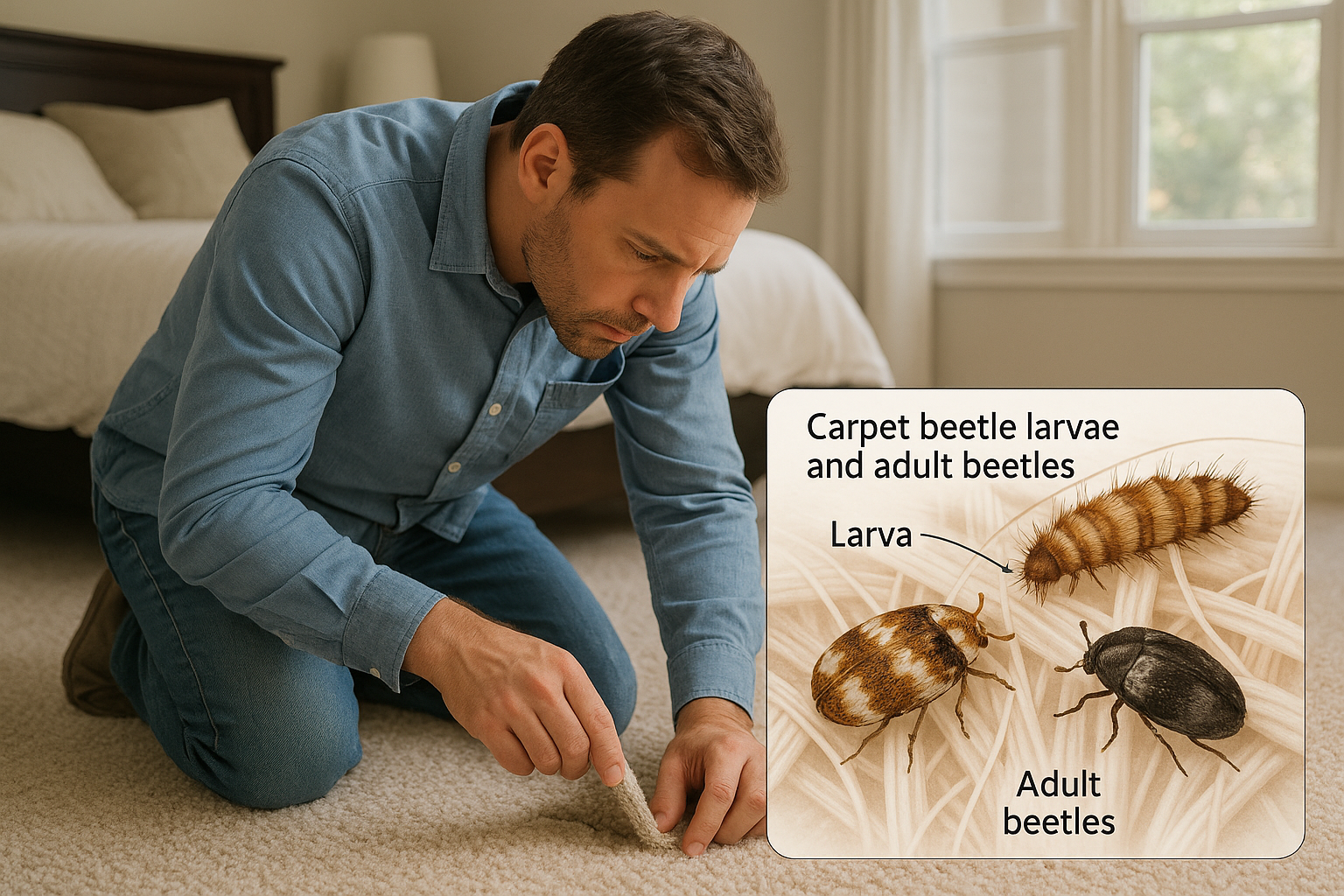
In Georgia’s warm, humid homes you’ll most often encounter two carpet‑beetle species: the Varied carpet beetle (Anthrenus verbasci) and the Black carpet beetle (Attagenus unicolor). Both look harmless as adults, but their larvae are the real culprits behind the dreaded holes in wool blankets, silk curtains, and pet fur.
Egg stage
Females lay small, oval eggs (about 0.5 mm) in dark, undisturbed corners—often near natural‑fiber items, under baseboards, or inside stored clothing. In the mild climate of Smyrna, eggs hatch in roughly 5–10 days.
Larval stage
The larva is a soft, elongated grub covered in bristly hairs that can range from 6 mm to 12 mm as it matures. This is the only stage that feeds, and it prefers protein‑rich natural fibers such as wool, silk, fur, feathers, and even dried insect parts. A single larva can chew through up to ½ ounce of fabric each month (USDA/UGA Extension), which translates to a noticeable gap in a sweater after just a few weeks.
- Duration: 3–6 months in Georgia, depending on temperature and food availability.
- Why damage occurs: The larvae’s mandibles grind fibers while the hairs irritate the skin of pets and humans, making the infestation noticeable.
Pupal stage
When the larva is ready to transform, it spins a silken cocoon in a protected crevice and becomes a pupa. The pupal phase lasts about 10–14 days in the Georgia climate. The insect does not feed during this time, but it is vulnerable to moisture and extreme temperatures.
Adult stage
Emerging adults are small, rounded beetles—about 2–4 mm long—colored tan to black depending on the species. Adults live for 2–4 weeks, during which they focus on mating and dispersal. They do not chew fabrics; instead, they wander through homes in search of mates and suitable oviposition sites. Their primary role in damage is indirect: a single female can lay 50–100 eggs, spreading the infestation to new rooms or neighboring houses.
Understanding that the destructive phase is the larva helps homeowners target treatments where the grub is feeding—usually in carpet seams, under furniture, or inside stored textiles. Early detection and professional intervention can stop the life cycle before the larvae cause costly damage.
How to Detect Carpet Beetles in Your Home
Carpet beetles thrive in the warm, humid climate of Smyrna. Spotting the first sign—often a tiny brown speck or a strand of silky webbing—can save you months of damage to clothing, rugs and upholstery. Below is a quick‑reference guide that lets you walk through every room with confidence.
Visual clues to watch for
- Small, brown‑to‑black specks that look like pepper grains.
- Silky, white or tan webbing along baseboards, under furniture or in closets.
- Irregular, ragged holes in carpet or fabric.
- Shed skins (exuviae) that appear as translucent, papery shells.
- Adult beetles fluttering near windows or light fixtures.
Step‑by‑step inspection checklist for Smyrna homes
- Start in the master bedroom closet: pull back hanging clothes, shake out blankets, and examine the floor for specks or webbing.
- Move to the living‑room area: slide furniture away from walls, lift rugs, and look under the couch cushions.
- Check the attic or crawl space: use a flashlight to scan insulation, stored boxes, and roof joists.
- Inspect pet bedding and favorite animal‑hide spots; larvae love the protein in fur and feathers.
- Finish at entryways and windows: look for adult beetles attracted to light and for any webbing on window sills.
According to 2024 NOAA data, Smyrna’s average relative humidity hovers around 70 %. That moisture level creates an ideal environment for beetle eggs to hatch and for larvae to develop quickly, especially in hidden corners where air circulation is poor. Because humidity stays high well into the fall, regular inspections are essential year‑round.
Case study: The Johnson family moved into a newly renovated home in East Cobb in March. During their first week, a routine closet sweep revealed dozens of tiny, cream‑colored larvae hidden behind stored winter coats. By contacting Anthem Pest Control within 48 hours, they prevented a full‑scale infestation and saved several heirloom blankets from irreversible damage.
What Carpet Beetles Can Destroy
Carpet beetles may be small, but the damage they leave behind is anything but. Their larvae chew through natural fibers, turning a plush rug or a favorite blanket into a patchwork of holes. Common household items that fall victim include:
- Carpets and area rugs – especially those with wool or silk blends.
- Upholstered furniture – sofas, armchairs, and dining chairs lose softness as larvae tunnel into the fabric.
- Blankets, throws, and bedding – daily use makes them prime feeding grounds.
- Clothing and linens – wool sweaters, cotton shirts, and delicate curtains can develop holes.
- Stored food – dried herbs, grains, and pet food attract adult beetles that lay eggs, leading to destructive larvae.
If left unchecked, the infestation can spread to every room in the house.
Beyond the obvious visual loss, the economic impact is staggering. The U.S. Environmental Protection Agency estimates that carpet beetle damage costs homeowners between $15 million and $30 million each year (EPA Economic Impact Report). That figure includes replacement costs, cleaning expenses, and lost value of damaged goods.
Health concerns add another layer of worry. As larvae grow, they shed skins and produce frass (fine, powdery droppings). These particles can become airborne, triggering allergic reactions in sensitive individuals—especially children and pets with asthma or skin sensitivities. Prolonged exposure may lead to sneezing, itchy eyes, and dermatitis.
Understanding the breadth of destruction helps homeowners recognize early signs and act quickly. A professional inspection can pinpoint infestations before they spread, protecting both your belongings and your family’s health, and keeping your home safe for years to come.
Effective Carpet Beetle Control Strategies
Professional Extermination
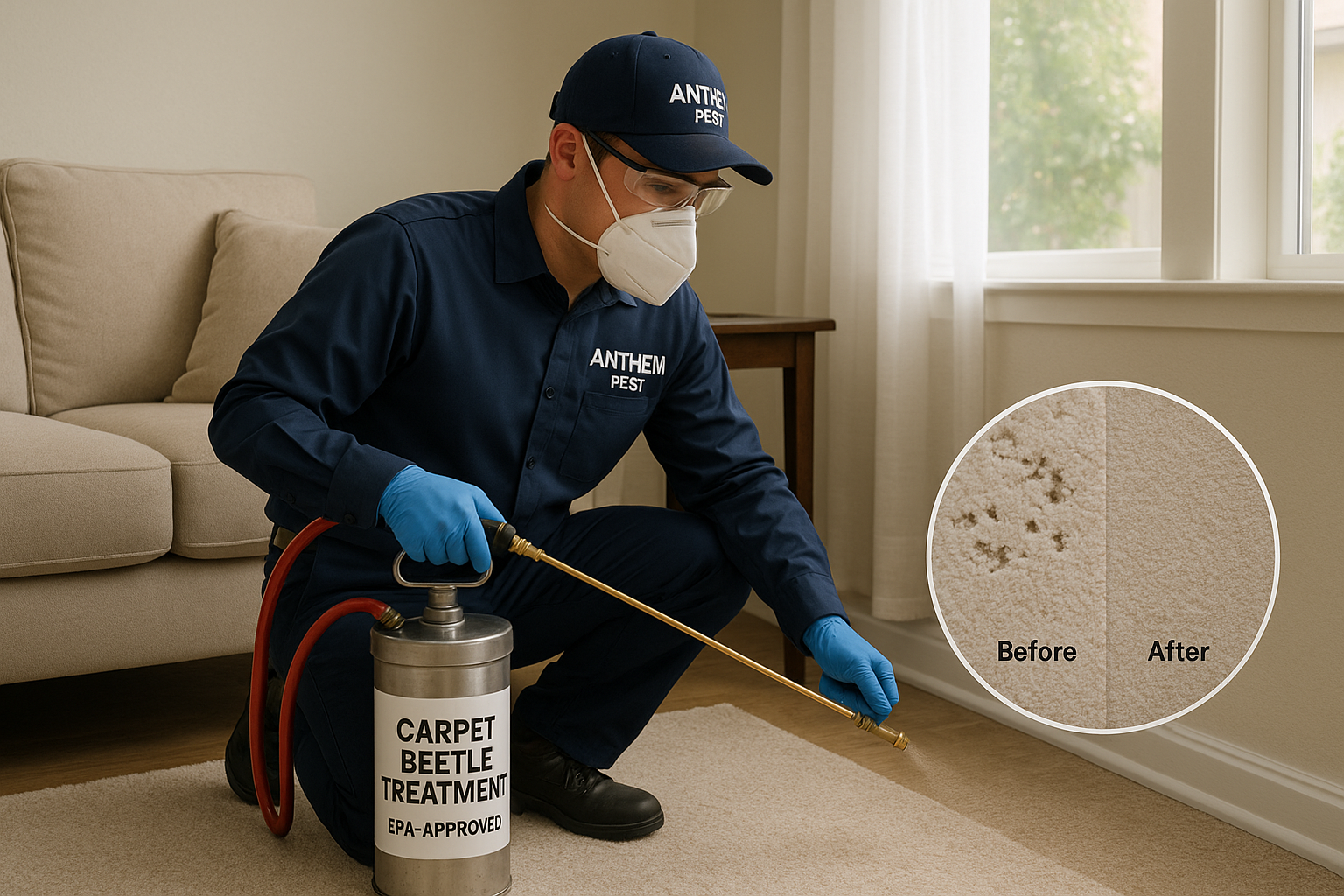
When carpet beetles have taken hold, a licensed professional can eradicate the infestation quickly and safely. Anthem Pest follows a three-step protocol that starts with a thorough inspection of your 2,000‑sq‑ft Smyrna home. Technicians locate active larvae, adult beetles, and breeding sites, then apply EPA‑approved insecticide sprays directly to those hotspots. Spot-treatments focus on closets, under carpets, and upholstered furniture, while a heat-treatment option raises interior temperatures to a lethal 120–130°F, providing effective carpet beetle control Smyrna GA without chemicals.
After the initial visit, a follow‑up appointment ensures any survivors are caught before they reproduce. For a full‑service treatment, expect a price range of $150 – $350 per treatment, depending on the severity of the infestation and the size of the property. All Anthem Pest technicians hold a Georgia state pesticide applicator license, which requires an annual licensing fee of $200 (2024 data) to stay current with state regulations and continuing‑education requirements.
DIY Methods
Homeowners can take immediate action while waiting for a professional visit. Start by vacuuming carpets, rugs, and upholstery daily to remove adult beetles and larvae before they embed themselves in fibers. Follow up with a steam‑cleaning session; the high temperature penetrates deep into padding and kills any hidden stages. For cracks, baseboards, and voids, sprinkle a thin layer of insecticidal dust such as diatomaceous earth. This natural powder desiccates beetles on contact, but remember it works best when moisture is low and the dust remains undisturbed.
While DIY steps can reduce numbers, they rarely eliminate an established colony. Without the targeted application of a professional-grade insecticide and a systematic follow‑up, surviving beetles can quickly rebuild the population. Use DIY tactics as a supplement, not a substitute, for professional treatment.
Integrated Pest Management (IPM)
For long‑term protection, combine sanitation, moisture control, and monitoring. Regularly wash or dry‑clean stored fabrics, wool blankets, and pet bedding—common food sources for beetle larvae. Keep humidity below 50 % by using dehumidifiers in basements and attics; moisture encourages beetle development and makes insecticidal dust less effective. Install pheromone‑based monitoring traps in closets and near windows; these traps capture adult beetles, giving you an early warning of a resurgence.
When an IPM program is paired with a professional treatment, you’ll see fewer repeat visits and lower overall costs. Anthem Pest can help set up a customized IPM plan, calibrating trap placement, recommending cleaning schedules, and advising on the best moisture‑control solutions for your specific home layout.
How Much Does Carpet Beetle Control Cost in Smyrna?
When a carpet beetle infestation shows up, the first question homeowners ask is “how much will it cost to get rid of them?” Knowing the price range helps you budget for both treatment and any follow‑up work needed to keep the pests from returning.
Anthem Pest Control believes that clear pricing eliminates surprise bills and lets you decide which service level fits your budget. Our Smyrna technicians start with a thorough inspection, then present a written estimate that breaks down every step—from initial treatment to optional yearly protection.
Typical Service Costs in Smyrna
| Service | Cost Range (USD) |
|---|---|
| Inspection | $75 – $100 |
| Initial treatment | $150 – $350 |
| Follow‑up visit | $80 – $120 |
| Preventive annual plan | $200 – $400 |
According to the 2023 NPMA pricing survey, the national average for a single carpet beetle treatment falls between $250 and $500. Smyrna’s rates sit comfortably within that band, often a few dollars lower on the inspection and follow‑up visits because local providers like Anthem Pest Control benefit from a competitive market and streamlined service routes.
Because Smyrna’s climate is humid but not extreme, pest professionals can use targeted spot treatments instead of full‑home applications. That efficiency translates into lower labor costs without compromising effectiveness.
What Influences the Final Price?
Several variables can push the cost up or down. A larger home or a multi‑story building requires more product and longer labor hours, so the inspection and treatment fees rise accordingly. The severity of the infestation matters, too—light spotting may be handled with a single spray, while a heavy infestation could need multiple applications and specialized dusts.
The type of treatment you choose also affects pricing. Conventional chemical sprays are generally less expensive than eco‑friendly or heat‑based options, which require specialized equipment. Finally, access difficulty—tight crawl spaces, heavily carpeted rooms, or historic homes with delicate fabrics—can add extra labor time, reflected in higher follow‑up or preventive plan costs.
By understanding these components, you can ask the right questions, compare quotes, and feel confident that the price you pay reflects the level of protection your home truly needs.
Proactive Steps to Keep Carpet Beetles at Bay
Late spring and early summer are the critical window when adult carpet beetles take to the air in Smyrna. By the time the sun feels warm on your porch, the insects are looking for a place to lay eggs, and your home can become their next buffet. Acting before they settle in gives you the biggest advantage, so let’s focus on the tasks that keep those beetles out before they ever set foot inside.
Seasonal Timing Matters
Carpet beetle adults typically emerge in May and peak in June. This is the perfect moment to run a quick “spring sweep” of your house: vacuum every carpet, rug, and upholstered piece, and inspect stored clothing or blankets for any tiny, speck‑like insects. A thorough check now prevents a massive infestation later in the year.
Home Maintenance Essentials
- Vacuum frequently. Use a HEPA‑filter vacuum on carpets, under furniture, and in closets at least twice a week during the emergence period.
- Seal natural‑fiber items. Store wool sweaters, silk curtains, and feather pillows in airtight containers or vacuum‑sealed bags.
- Deploy natural repellents. Cedar blocks or lavender sachets placed in closets and drawers deter beetles without chemicals.
- Repair leaks promptly. Moisture attracts beetles and encourages mold, which they love. Fix any dripping pipes or roof leaks before humidity rises.
- Control indoor humidity. Keep home humidity below 50 % with dehumidifiers or proper ventilation, especially in basements and attics.
Neighborhood‑Specific Advice
Oak Hill residents: Heavy spring rains can saturate attic insulation, creating a perfect breeding ground. After a downpour, pull back a small section of insulation and look for beetle larvae or shed skins. If you spot any, vacuum the area and consider a professional treatment.
Burnt Hickory homeowners: This area benefits from a proactive schedule. Arrange a quarterly professional inspection—especially after the first summer heat wave—to catch early signs before they spread to neighboring homes.
Homeowner Prevention Checklist
- Daily
- Wipe down kitchen counters and dining tables to remove food crumbs.
- Spot‑check closets for stray fibers or shed skins.
- Weekly
- Vacuum all carpeted areas, rugs, and upholstery.
- Swap out and wash pillowcases, blankets, and pet bedding.
- Inspect stored seasonal clothing for holes or beetle activity.
- Seasonal (Late Spring/Early Summer)
- Conduct a full attic and basement sweep for moisture and beetle signs.
- Seal any cracks around windows, doors, and utility entries.
- Place cedar blocks or lavender sachets in high‑risk storage spaces.
- Schedule a professional inspection if you live in Oak Hill or Burnt Hickory.
Why Choose Anthem Pest for Carpet Beetle Problems
When carpet beetles invade your home, you need a partner who knows the local landscape inside and out. Anthem Pest has been protecting Smyrna families for more than 20 years, and that longevity translates into a deep understanding of the neighborhood’s climate, building styles, and the hidden pathways these pests use, making them the trusted choice for carpet beetle control Smyrna GA.
All of our technicians are licensed and trained to the highest state standards, and every treatment is applied with EPA‑registered products that are proven safe for children, pets, and the environment. We back every service with a 100 % satisfaction guarantee, so if the beetles return within the warranty period, we’ll re‑treat at no additional cost.
Our service begins with an on‑site inspection. A technician walks through each room, uses a UV flashlight to spot hidden larvae, and maps the infestation hotspots. From there we design a customized treatment plan that targets the exact species of carpet beetle present, whether they’re feeding on wool, silk, or stored food particles. The plan includes a briefing so you know exactly what will be applied and when.
Neighborhoods We Serve
- Burnt Hickory
- East Cobb
- Oak Hill
- West Cobb
Because we operate in Smyrna and its neighboring districts, we stay up‑to‑date on the latest county regulations and seasonal beetle activity patterns. This local focus lets us time applications for maximum effectiveness—typically just before the warm months when beetles emerge from wall voids. Homeowners also appreciate that our crews use fast‑drying formulations that won’t disrupt daily life.
“Anthem Pest showed up on schedule, explained each step, and my home has been beetle‑free ever since. I finally feel confident about the safety of my kids and pets.” – Jenna M., Smyrna, GA
Ready to reclaim your carpets and upholstery? Call us today at 877‑371‑8196 or visit anthempest.com to schedule a free inspection. Our transparent pricing, rapid response, and local expertise make us the trusted choice for carpet beetle control in Smyrna and the surrounding communities.
Quick Answers About Carpet Beetles
How long does treatment last?
When a certified technician applies an EPA‑approved insecticide and follows our prevention protocol, the barrier usually lasts six to twelve months. Duration varies with foot traffic, humidity, and how often you clean and vacuum. Pairing treatment with seasonal inspections keeps protection active for the full year. If you notice new activity before the 12‑month window, contact us for a touch‑up.
Are treatments safe for pets?
Yes. We use low‑toxicity, EPA‑registered products that are formulated specifically for indoor use around families and animals. Our technicians are trained to apply the chemicals in a way that minimizes residue on surfaces where pets roam. After application, we advise keeping pets out of treated rooms for a short drying period—usually 30 minutes to an hour—before they return to normal activities. We also recommend keeping pet food sealed and washing bedding regularly to further reduce exposure.
Can carpet beetles return?
Re‑infestations are possible if the source of food or shelter is not addressed. That’s why we recommend ongoing monitoring, regular vacuuming of upholstery and carpets, and an annual inspection by a professional. These steps dramatically lower the odds of a repeat problem and give you peace of mind throughout the year. A simple visual check of closets and stored items each spring can catch early signs before they spread.
Sources & References
All data and statistics referenced in this guide are drawn from reputable, government‑backed or industry‑verified sources. Below are the three primary URLs we consulted, each linked directly to the original material.
- EPA – Pesticide Regulations and Safety Data – provided the damage‑cost estimate and safety guidelines for the products we recommend.
- NPMA – Carpet Beetle Fact Sheet – supplied the national pricing comparison used in our cost analysis.
- University of Georgia Extension – Carpet Beetle Guide – offered species‑specific information and consumption rates referenced throughout the article.
Each source was selected for its authority and relevance to Smyrna homeowners. The EPA provides federal compliance standards, the NPMA offers industry‑wide cost benchmarks, and the UGA Extension delivers region‑specific biology and control recommendations.
The EPA figures stem from a 2022 national pest‑damage survey; NPMA pricing uses USDA’s 2021 commodity price data; UGA Extension blends USDA consumption numbers with NOAA humidity averages for beetle life‑cycle modeling.
Take Action to Protect Your Home Today
Early detection and swift treatment are your best defense against carpet beetles. A quick visual inspection, followed by a targeted professional treatment, stops an infestation before it damages fabrics, carpets, and stored items. Ongoing prevention—regular cleaning, proper storage, and periodic pest checks—keeps the beetles from returning.
Anthem is ready to help you safeguard your home. Call us today for a free, no‑obligation inspection and a personalized quote that fits your budget. We also offer flexible scheduling to fit your busy lifestyle and a satisfaction guarantee for peace of mind. Our certified technicians use safe, effective methods tailored to Smyrna homes, providing reliable carpet beetle control Smyrna GA for lasting results.
Reach us at 877-371-8196 or email us through our website. We’ll answer your questions, schedule a visit, and walk you through the next steps—no pressure, just clear guidance.
Ready to protect your family and belongings? Visit Anthem Pest Control now.