Introduction – Why Termites Matter in Dunwoody
Imagine spotting a few delicate, ivory-colored wings tucked behind cracked plaster, or noticing a faint, honey-colored tunnel in a hollow piece of pine. Those subtle clues often signal a termite colony working unseen—one that a professional termite exterminator Dunwoody homeowners trust can identify early, before it turns sturdy framing into a costly mess.
This guide is designed to help Dunwoody homeowners quickly locate qualified termite exterminators, compare the most effective treatment options, and implement preventive steps before damage escalates into thousands of dollars in repairs.
Dunwoody’s unique housing landscape—ranging from vintage Brookhaven bungalows built in the 1960s to the newer, energy‑efficient homes of Peachtree Corners—creates a patchwork of vulnerabilities. Older timber frames often harbor dry‑termite colonies, while expansive concrete slabs and landscaped yards in newer builds attract subterranean species seeking moisture.
What follows is a step‑by‑step roadmap: first, we’ll walk you through the most common signs that termites have already invaded your property. Next, we compare chemical barriers, baiting systems, and emerging eco‑friendly treatments, weighing cost, speed, and long‑term protection. Finally, we provide a checklist for ongoing monitoring and seasonal maintenance.
By understanding why termites are a particular menace in Dunwoody, you’ll be better equipped to act before the first bite of wood goes unnoticed, saving both the integrity of your home and your peace of mind.
Because termite activity can vary block by block, relying on a national chain alone often misses the subtle patterns unique to our neighborhoods. Local experts know the soil composition, humidity trends, and historic infestation hotspots that shape the most effective defense strategy for Dunwoody homes.
How to Identify Termite Activity
As a homeowner in Dunwoody, spotting termites early can save you from costly structural repairs. The insects leave unmistakable clues; learning to read them turns a routine walk‑through into an early‑warning system.
Visual signs to watch for
- Mud tubes – smooth, pencil‑diameter tunnels running from soil up onto concrete foundations, walls, or wooden supports.
- Discarded wings – translucent, paper‑like wings gathered near light fixtures or window sills after a swarming event.
- Hollow‑sounding wood – tap a wooden beam; a dull thud often means the interior has been hollowed out by termites.
- Buckling or uneven floors – sections that feel soft or rise up can indicate hidden galleries beneath the subfloor.
- Frass pellets – tiny, sand‑like droppings pushed out of galleries, usually found near wooden joists or in crawl‑space corners.
- Paint bubbles or cracks – moisture from termite activity can lift paint, creating raised spots.
Simple inspection steps
Grab a flashlight, a screwdriver, and a rubber mallet, then follow these quick tests:
- Tap test: Lightly knock on joists, baseboards, and support beams. A solid sound means intact wood; a hollow echo suggests damage.
- Screwdriver probe: Gently press a flat‑head screwdriver into suspect wood. Easy penetration often signals termite tunnels.
- Flashlight sweep: Examine basements, crawl spaces, and under‑sink cabinets. Look for mud tubes, frass, or moisture stains.
- Moisture check: Termites favor damp areas. Feel for overly wet spots on concrete walls or in soil grading around the home.
Seasonal cue
In late spring, winged reproductives—known as swarmers—take flight to start new colonies. Their appearance near windows or porch lights is a clear sign to increase vigilance and schedule a professional inspection.
Quick‑reference checklist
- Inspect foundation for mud tubes.
- Collect any discarded wings.
- Tap wood surfaces for hollow sounds.
- Probe suspect wood with a screwdriver.
- Flashlight crawl spaces and basements.
- Watch for swarmer flights in late spring.
Why Local Expertise Matters
Neighborhood nuances matter, too. The newer subdivisions of Brookhaven and Peachtree Corners feature homes built on raised slabs with moisture‑wicking foundations, while historic downtown contains older crawl‑space structures with vintage timber framing. Each construction style presents a different entry point for subterranean termites. A Dunwoody‑based professional can spot tell‑tale signs—such as sagging floors in a Brookhaven ranch‑style home or mud tubes along the brick veneer of a downtown Victorian—and tailor the treatment plan to the exact building type.
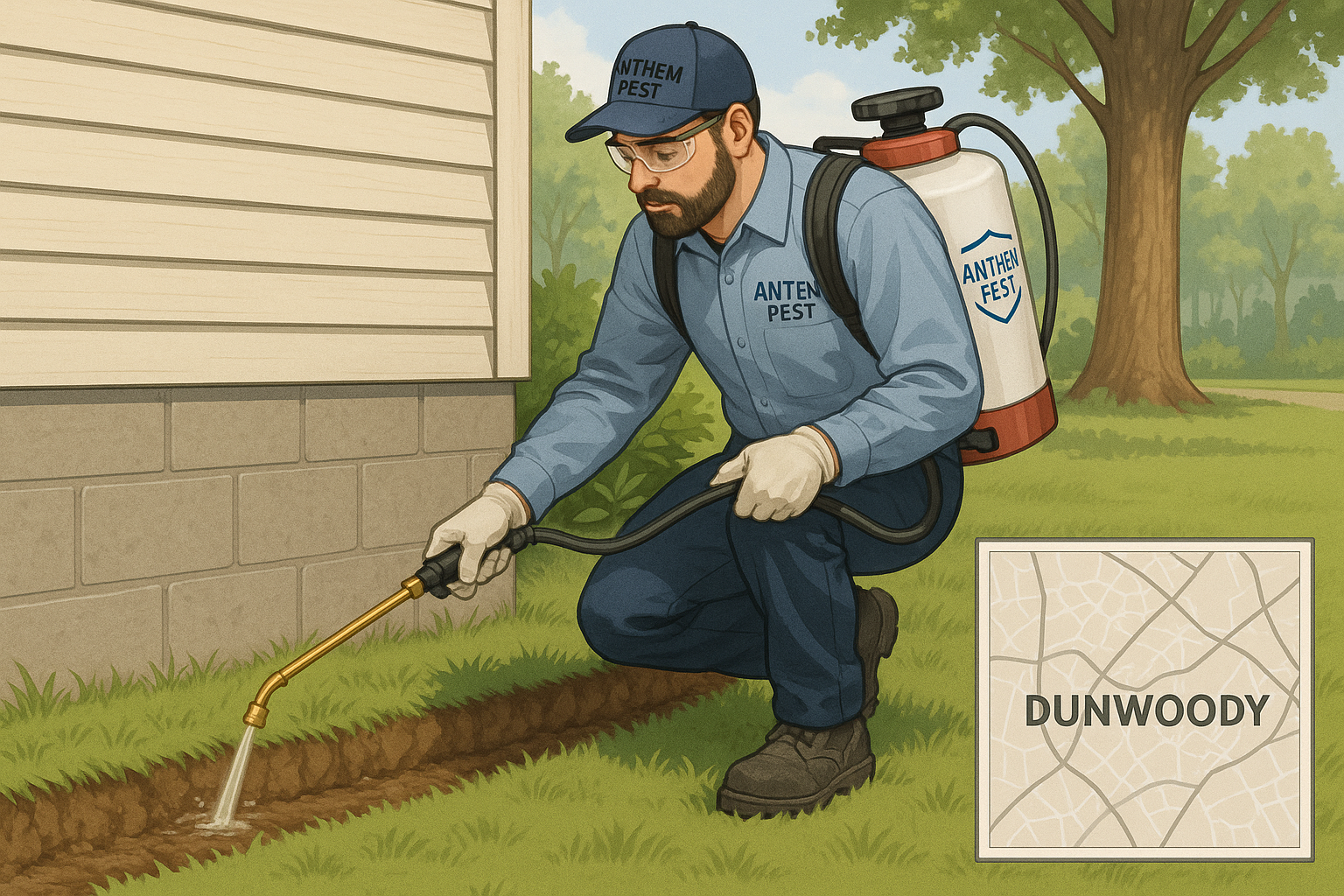
Regulatory compliance is another reason to stay local. Georgia requires every pest‑control operator to hold a State Pest Control License, and any termiticide applied must be EPA‑registered. This dual requirement protects homeowners from untrained technicians and unapproved chemicals. Anthem Pest Control, for example, keeps its technicians up‑to‑date with the latest state licensing renewals and EPA product certifications, ensuring every spray meets legal and safety standards.
- Georgia State Pest Control License – validates training, insurance, and background checks.
- EPA‑registered termiticides – guarantees the product has been evaluated for effectiveness and human safety.
- Local knowledge of soil and construction – optimizes product placement and reduces retreat rates.
“Termiticides must be applied in accordance with the label directions, including proper soil moisture conditions and depth, to achieve the intended level of control.” – Choosing the Right Exterminator
Credentials Checklist
Before you hand over a key, make sure the company can prove it’s qualified. A reliable termite exterminator should provide:
- State license number – verifies compliance with Georgia’s pest‑control regulations.
- EPA registration number – shows the chemicals they use are approved for residential use.
- NPMA membership – indicates adherence to the National Pest Management Association best‑practice standards.
Request a Written Inspection Report
A thorough inspection isn’t just a quick glance. Ask for a detailed, written report that includes:
- Exact locations of termite activity and any structural damage.
- A step‑by‑step treatment plan, complete with product names and application methods.
- Recommended follow‑up visits and a timeline for preventive measures.
This documentation protects you from surprise charges and ensures you understand every step of the process.
Understanding Pricing Models
Termite control pricing varies by method. Knowing the typical range helps you compare quotes without getting blindsided.
| Treatment Type | Price Range | Typical Application |
|---|---|---|
| Per‑square‑foot soil treatment | $3 – $5 / ft² | Foundation barrier applied around the entire home |
| Bait stations (3‑5 units) | $150 – $250 each | Strategically placed stations monitored monthly |
| Whole‑home fumigation | $2,500 – $4,000 | Complete enclosure and gas treatment for severe infestations |
Why Anthem Pest Stands Out
Anthem Pest Control builds trust through transparency. After the inspection, you’ll receive a clear, itemized quote that matches the price ranges above—no hidden fees, no surprise add‑ons. Their 24‑hour emergency line means you can reach a certified technician any time a termite swarm or damage is discovered, keeping your home safe even after hours.
When you compare companies, match their credentials, demand a written report, and line up their pricing against the table above. If the numbers line up and the service feels straightforward, you’ve likely found a partner who respects both your home and your budget.
Treatment Options Explained
When termites threaten a Dunwoody home, a trusted termite exterminator Dunwoody typically relies on one of three proven strategies: a soil-termite barrier, baiting stations, or whole-structure fumigation. Each method creates a different kind of “wall” against the colony, and the right choice depends on the extent of the infestation, the homeowner’s budget, and how quickly results are needed.
Soil‑Termite Barrier
Liquid termiticides such as fipronil and imidacloprid are applied to the soil around a foundation, forming a continuous chemical shield that termites cannot cross without dying. The product penetrates the soil, creating a zone of protection that lasts several years when applied correctly. This method is ideal for new construction or for homes where the foundation is still intact but vulnerable.

| Pros | Cons |
|---|---|
|
|
Baiting Systems
Cellulose bait stations are placed strategically around the perimeter and connected to a monitoring schedule. Each station contains a slow‑acting insecticide that termites share with the colony, eventually collapsing it from the inside. Monitoring occurs every few weeks, and stations are replaced until no activity is detected—usually a timeline of 6 to 12 months for full eradication.
| Pros | Cons |
|---|---|
|
|
Fumigation
Whole‑structure fumigation is reserved for severe cases where extensive damage or multiple entry points make barriers or baits impractical. A gas—usually sulfuryl fluoride—is sealed inside the home for 24‑48 hours, killing termites in all life stages. Because the gas is hazardous, homeowners must vacate the property, and professional crews follow strict safety protocols before re‑entry.
| Pros | Cons |
|---|---|
|
|
Local Case Study
In a recent Dunwoody project, a homeowner initially opted for a baiting system after a first termite sighting. Six months later, a second infestation appeared in a different wing of the house, indicating that the colony had spread beyond the bait stations’ reach. Anthem Pest Control switched the treatment to a liquid soil‑termite barrier, applying fipronil around the entire foundation. Within weeks, follow‑up inspections showed no new activity, and the homeowner avoided the costly repairs that would have followed another round of baiting.
Anthem Pest’s Local Service Offering
Anthem Pest Control is a nationwide pest‑management firm that prides itself on protecting families and homes with science‑backed, environmentally responsible solutions. Our mission in Dunwoody, GA, is simple: deliver fast, transparent, and affordable termite protection so you can sleep easy knowing your foundation is safe. We also offer a complimentary follow‑up visit within 30 days to verify that the treatment is holding and to answer any questions you may have.
What We Cover in Dunwoody
Our service radius includes the entire city of Dunwoody and the surrounding neighborhoods, so whether you live on a historic bungalow or a modern 2,000 ft² ranch, you’re within our reach. We dispatch locally trained technicians who know the soil type, common termite species, and building practices unique to this area.
Core Termite Services
- Comprehensive Inspection – A certified inspector uses moisture meters, infrared cameras, and wood‑sampling techniques to locate active colonies and assess risk.
- Barrier Treatment – A liquid termiticide is applied to the foundation, crawl spaces, and interior voids, creating a continuous chemical shield that repels for years.
- Baiting Systems – Strategically placed bait stations attract foraging termites, delivering a slow‑acting active ingredient that eliminates the colony from within.
- Warranty Options – All treatments come with a 5‑year guarantee; if termites reappear, we re‑treat at no extra cost.
Transparent Pricing Example
To illustrate our straightforward pricing, a typical 2,000 ft² home in Dunwoody would receive:
- Full‑perimeter barrier treatment: $3,200
- Standard baiting package (three stations, installation, and monitoring): $250
These figures include the initial inspection, all labor, and the first year of warranty coverage. No hidden fees appear on your final invoice.
Learn More
Ready to see the exact steps we’ll take for your home? Visit our dedicated termite page for detailed service descriptions, FAQs, and a quick online quote: Anthem Pest Termite Control.
Frequently Asked Questions
How long does a termite treatment last?
- Most termiticides come with a 1‑ to 5‑year warranty, depending on the product and installation method.
- Longevity improves when the soil moisture level stays stable and the treated area isn’t disturbed.
- Regular inspections every 12 months help catch any new activity before the warranty expires.
- Extreme weather, landscaping changes, or foundation repairs can shorten the effective period.
- Professional monitoring can alert you to activity between inspections, extending the effective protection window.
Will my pets be safe?
- We use EPA‑approved low‑toxicity termiticides that are labeled safe for dogs, cats, and other household pets.
- After application, keep pets indoors for the manufacturer‑specified re‑entry time—usually 2‑4 hours.
- Avoid letting pets drink from treated soil or chew on treated wood until the label clearance period passes.
- All residues are invisible and non‑volatile, so normal indoor activity resumes once the waiting period ends.
- Store any remaining product out of reach of pets and children, and follow label disposal instructions.
Can I do DIY treatment?
- DIY kits often contain weaker chemicals that may not penetrate deep enough to reach hidden colonies.
- Improper placement can create gaps, allowing termites to bypass the barrier and cause future damage.
- Professional technicians guarantee proper soil moisture, coverage, and equipment calibration for lasting protection.
- Choosing a licensed provider protects you from liability, ensures warranty coverage, and saves time.
- A licensed technician can identify hidden moisture sources that attract termites, something DIY kits cannot detect.
Protect Your Home – Get a Free Inspection Today
Spotting termites before they cause structural damage saves you thousands and protects the safety of your family. Because Dunwoody’s climate encourages rapid colony growth, early detection paired with a technician who knows local soil and building styles is essential.
Anthem Pest offers a complimentary, no‑obligation inspection so a certified professional can evaluate your home’s vulnerable points and explain what you’re dealing with. The appointment takes less than an hour, and you’ll walk away with a clear, written report and recommended next steps.
When treatment is needed, Anthem relies on EPA‑approved products that target termites while protecting pets and indoor air quality, and their pricing is transparent with no hidden fees. Their technicians are licensed, insured, and trained to apply the most effective barrier or bait system for your property’s specific conditions.
Ready to protect your home with a trusted termite exterminator Dunwoody homeowners rely on? Call us today at 877-371-8196 to schedule your free inspection, or simply visit Anthem Pest Control to book online.