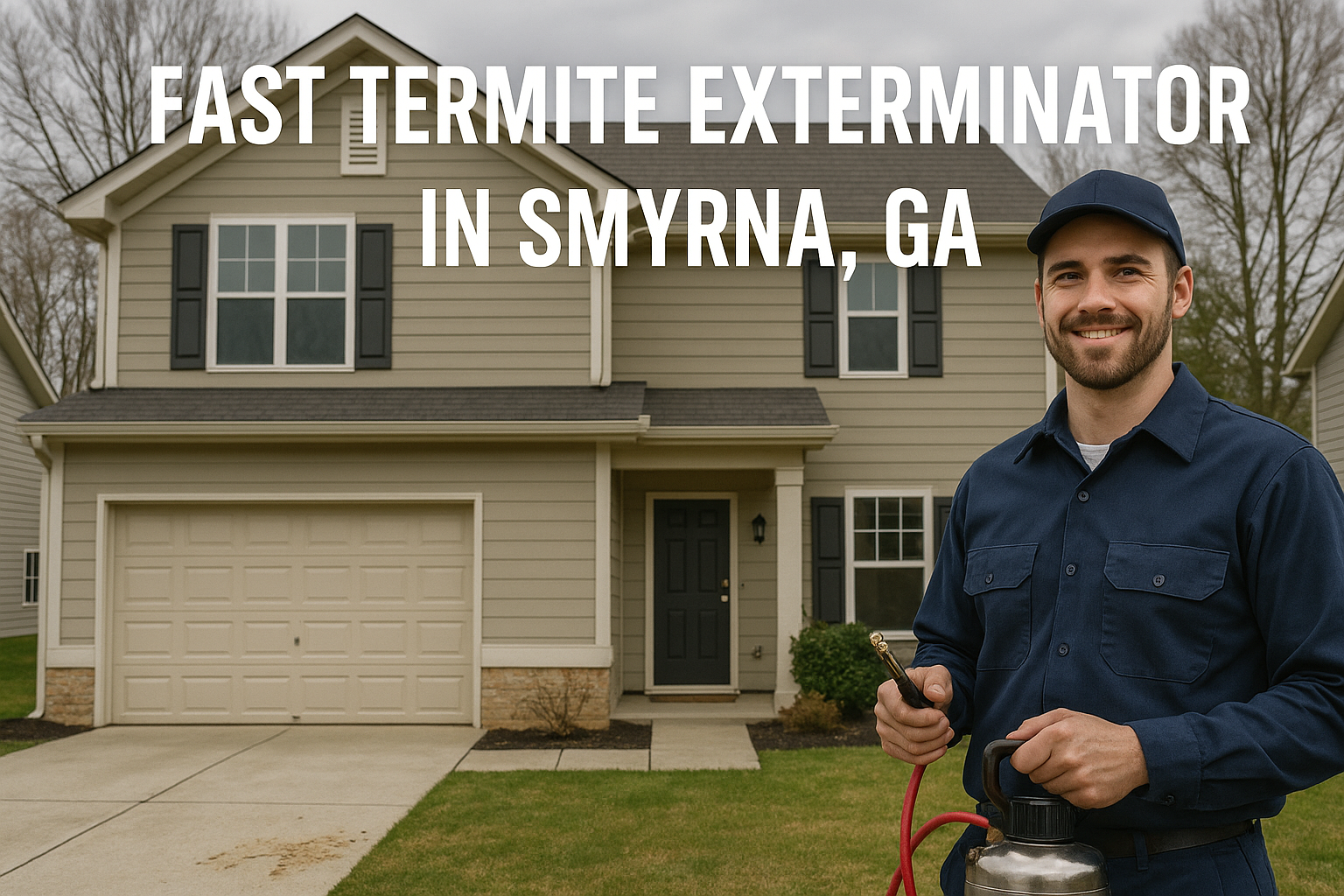
Why Fast Termite Extermination Is Critical for Smyrna Homeowners
Fast termite exterminator Smyrna GA Smyrna sits in a humid subtropical climate—hot, moist summers and mild winters that keep wood constantly damp. Average annual rainfall exceeds 50 inches, and nighttime humidity often stays above 70 %. Those conditions are a termite’s dream, providing the moisture they need to thrive and the warmth to reproduce year‑round.
Termite colonies don’t wait for you to notice the damage. A single colony can swell to millions of workers within a few months, and it can spread three to five feet a year through soil, wood, and even concrete cracks. Because the insects work underground and behind finished surfaces, homeowners often discover the problem only after structural members—like joists or support beams—have been silently compromised.
The EPA estimates that termites cause roughly $5 billion in property damage across the United States each year. The Southeast, including Georgia, bears a disproportionate share of that loss because the region’s climate and abundant timber create ideal feeding grounds. In practice, an untreated infestation can shave 5‑10 % off a home’s resale value, turning a seemingly minor pest problem into a costly financial hit.
That’s why early detection and rapid treatment aren’t luxuries—they’re essential safeguards for your investment. A prompt inspection can locate hidden activity before it reaches the point of structural failure, and a fast‑acting treatment—whether a liquid barrier, bait system, or localized foam—can eradicate the colony before it spreads further. Acting quickly not only minimizes repair expenses but also preserves the market appeal of your Smyrna home.
In Smyrna, the most common culprit is the eastern subterranean termite (Reticulitermes flavipes), which thrives in the region’s clay soils and can infiltrate homes through even the smallest foundation cracks. Because these insects are active year‑round, waiting for a “seasonal lull” provides no protection. Homeowners who partner with a local, EPA‑registered provider gain access to region‑specific monitoring tools, such as soil moisture probes and bait stations calibrated for Georgia’s termite pressure.
Urgent Takeaways
- Humid climate fuels termite growth.
- Colonies expand 3‑5 ft yearly, unseen.
- EPA: $5 billion damage; Southeast hit hardest.
- Untreated bugs can drop home value 5‑10 %.
- Quick inspection + treatment saves money.
Smyrna’s Termite Landscape: Species, Seasons, and Hotspots

Primary Termite Species in Georgia
The Georgia termite scene is dominated by two subterranean species. The Eastern Subterranean Termite (Reticulitermes flavipes) is native to the Southeast and thrives in soils with moderate moisture. Colonies can range from a few hundred thousand workers to over a million, building extensive underground networks that seek out any cellulose source. The Formosan Subterranean Termite (Coptotermes formosanus), an invasive pest from Asia, prefers consistently damp conditions and can establish colonies exceeding three million individuals—making it one of the most destructive termites in the United States.
Why Georgia Ranks 4th Nationwide
According to the NPMA 2024 ranking, Georgia holds the fourth spot in the nation for termite activity. The state’s warm, humid climate, abundant hardwood forests, and a high density of older wood‑frame homes create an ideal environment for both Eastern and Formosan termites to flourish. This ranking underscores the importance of proactive inspections for every homeowner in Smyrna.
Local Hotspots in Smyrna
- Burnt Hickory – A mix of newer developments and mature landscaping, providing ample moisture and wood‑frame structures that attract foraging termites.
- East Cobb – Known for its larger lot sizes and older trees, creating shaded, damp micro‑climates perfect for subterranean colonies.
- Old Fourth Ward – Features historic homes with original wood framing and dense plantings, making it a perennial termite magnet.
Seasonal Activity and Weather Influence
Termite foraging in Smyrna peaks from April through September. As temperatures rise, soil moisture levels increase, prompting colonies to extend their mud tubes and search for food. Heavy rain can temporarily flood tunnels, but it also raises ground humidity, which stimulates activity once the soil dries. Conversely, a dry winter slows movement, giving homeowners a window to schedule pre‑emptive treatments before the summer surge.
Red Flags: How to Identify Termite Damage Before It Spreads
Spotting termite activity early can save a Smyrna homeowner thousands in repairs. The key is to recognize the subtle clues termites leave behind and act before the colony expands.
- Mud tubes on foundations or walls
- Wood that sounds hollow when tapped
- Discarded wings gathered near light fixtures
- Buckling or uneven flooring
- Piles of frass (dry, pellet‑like droppings)
Mud tubes are the highways termites build to travel between the soil and wood. A visible tube usually means a sizable, established colony is already feeding nearby. Hollow‑sounding wood indicates internal galleries where workers have eaten away at structural fibers, a sign the infestation has progressed beyond surface damage. Discarded wings are the remnants of swarmers that have just taken flight; finding them near lights means a new generation is trying to establish a nest in your home. Buckling or uneven flooring occurs when termites undermine joists and subflooring, creating weak spots that warp under weight. Finally, frass piles are the waste termites expel as they chew; a noticeable mound signals active feeding and a growing population.
Case Study – Smyrna, GA: When Jane M., a homeowner in East Smyrna, noticed a thin line of mud tubes crawling across the attic rafters, she called Anthem Pest Control immediately. Within 48 hours, a certified technician confirmed a small but active colony and applied a targeted baiting system. By acting fast, Jane avoided a full‑scale structural repair that could have cost upwards of $8,000. Quick inspection tips:
- Tap wood with a screwdriver; a dull thud often means it’s been hollowed out.
- Pull back a section of drywall in crawl spaces to expose hidden mud tubes.
- Check for excess moisture near foundations—termites thrive in damp environments.
- Look for wing clusters around outdoor lights and indoor lamps.

What Happens When You Wait? Financial Impact of Late Treatment
Termite damage doesn’t stay small. The University of Georgia Extension reports that a homeowner who catches a minor infestation early faces repair costs of roughly $1,200‑$2,500. Let the colony grow, and you could be looking at full structural replacement bills ranging from $10,000‑$30,000. Those numbers aren’t theoretical—they’re the real‑world price tags many Smyrna families end up paying.
A 2022 CDC/USDA survey of Southeast homeowners found the average termite‑related repair expense sits at about $7,500. That figure includes everything from joist reinforcement to wall replacement. The longer the delay, the more likely the damage spreads to load‑bearing components, driving the cost upward dramatically.
| Time to Treat | Estimated Repair Cost (if untreated) | Potential Savings with Early Treatment |
|---|---|---|
| Within 1 month of detection | $1,200‑$2,500 | Up to $7,300 saved |
| 1‑3 months | $5,000‑$12,000 | Up to $10,000 saved |
| Beyond 6 months | $15,000‑$30,000 | Up to $30,000 saved |
Beyond the immediate repair bill, delayed treatment erodes your home’s resale value. Real estate appraisers consistently deduct 5‑10 % from a property’s market price when visible termite damage is present. By acting within the first month, you not only avoid costly repairs but also protect the equity you’ve built over years of homeownership.
In short, early extermination is an investment that pays for itself many times over. A prompt call to Anthem Pest Control can stop the infestation before it becomes a financial nightmare, keeping both your budget and your home’s value intact.
From Call to Cure: Anthem Pest’s Rapid 24‑Hour Response in Smyrna

Step 1: 24‑hour phone triage – immediate scheduling and preliminary assessment
When a homeowner in Smyrna spots the first sign of termite activity, the clock starts ticking. Anthem Pest’s dedicated call center answers every inquiry within minutes, and a trained specialist conducts a rapid triage over the phone. Within 24 hours the technician confirms the address, gathers key details about the infestation’s location, and secures a same‑day appointment. This front‑line assessment lets the team prepare the right tools and EPA‑registered products before even stepping onto the property.
Step 2: Same‑day on‑site inspection by a licensed technician
On the scheduled day, a state‑licensed technician arrives equipped with moisture meters and infrared cameras. The moisture meter pinpoints hidden damp wood—prime termite feeding grounds—while the infrared camera reveals voids and tunnels concealed behind walls or under concrete slabs. By combining visual inspection with these high‑tech devices, Anthem Pest can confirm the extent of the infestation in under an hour, eliminating guesswork and preventing unnecessary treatment.
Step 3: Immediate treatment plan – EPA‑registered termiticides, low‑odor formulations, and customized application
Armed with precise data, the technician presents a tailored treatment plan on the spot. A professional fast termite exterminator Smyrna GA exclusively uses EPA‑registered termiticides that meet federal safety standards, choosing low‑odor, low‑toxicity formulations that protect children, pets, and indoor air quality. Depending on the infestation pattern, the application may involve a liquid barrier, a foam injection, or a bait‑station network. Every product is applied according to the label’s strict dosage and timing requirements, ensuring maximum efficacy while staying fully compliant with EPA regulations.
Step 4: Follow‑up monitoring – quarterly inspections and warranty coverage
Termination of the initial treatment is just the beginning of the protection cycle. Anthem Pest schedules quarterly follow‑up inspections to verify that the barrier remains intact and that no new colonies have emerged. During each visit, the technician checks bait stations, retests moisture levels, and documents any changes. Homeowners also receive a written warranty that covers re‑treatment if termites return within the guaranteed period, reinforcing the company’s confidence in its rapid response process.
Anthem Pest is fully licensed by the Georgia Department of Agriculture and holds certifications from the National Pest Management Association (NPMA). All technicians complete annual safety training that emphasizes child‑ and pet‑friendly practices, such as using low‑odor formulations and restricting entry to treated zones until the product has cured. This commitment to safety, combined with a 24‑hour response window, gives Smyrna homeowners the peace of mind that a termite problem will be identified, treated, and monitored before it can cause structural damage.
Choosing the Right Treatment: Baiting vs. Liquid Barriers
When termites invade a Smyrna home, the first step is picking a treatment that matches the structure, soil conditions, and your timeline. Two proven strategies dominate the market—bait stations and liquid termiticides—each with distinct mechanics, costs, and long‑term benefits.
Termite Bait Stations
Bait stations are placed around the perimeter of a house and contain a cellulose core laced with a slow‑acting growth regulator. Workers locate the bait, share it with the colony, and eventually cripple the queen’s reproductive capacity. The system provides continuous monitoring because each station can be inspected and re‑baited as needed.
Pros: Ongoing surveillance, minimal disruption to landscaping, and the ability to eradicate hidden colonies without flooding the soil. Cons: It can take several months to see a full knock‑down, and success hinges on active foraging behavior—some colonies may ignore the stations altogether.
Liquid Termiticides
Liquid barriers involve applying a termiticide—often a polymer‑based or non‑repellent formulation—directly into the soil beneath and around a structure. The chemical creates an invisible wall that termites cannot cross without dying, delivering an immediate knock‑down of foraging activity.
Pros: Rapid results, proven efficacy against both subterranean and dry‑wood species, and a clear visual confirmation of coverage. Cons: Over time, soil movement or landscaping changes may degrade the barrier, necessitating a re‑application every few years.
Foam Injection for Hard‑to‑Reach Voids
In older Smyrna homes with crawl spaces, wall voids, or dense clay soils, foam‑based termiticides can be injected into concealed cavities. The expanding foam carries the active ingredient deep into cracks and gaps where traditional sprays or granules can’t reach, providing a supplemental line of defense.
| Service | Key Benefits | Price Range |
|---|---|---|
| Bait Station System | Continuous monitoring, minimal landscaping impact, colony eradication over time | $2,200 – $3,500 |
| Liquid Barrier Application | Immediate knock‑down, broad soil coverage, effective for most species | $2,500 – $5,000 |
| Foam Injection (supplemental) | Reaches hidden voids, ideal for older homes with complex crawl spaces | Included in liquid barrier price or $300 – $600 extra |
| Initial Inspection | Identifies species, infestation level, and best treatment path | $99 – $149 |
How to Decide Which Option Fits Your Home
- Property Age: Older homes with extensive voids often benefit from foam injection plus a liquid barrier.
- Soil Type: Sandy or loamy soils allow easier diffusion of liquid termiticides, while heavy clay may impede penetration, making bait stations more reliable.
- Budget & Timeline: If you need fast relief, a liquid barrier (or foam combo) delivers results in days. Bait stations spread costs over time but require patience.
- Desired Monitoring: Homeowners who prefer ongoing checks and a non‑invasive footprint usually opt for bait stations.
By weighing these factors against the price brackets above, Smyrna homeowners can choose a solution that protects their investment without surprise costs or delays.
Seasonal Strategies: When to Act and How to Keep Termites Out
In Smyrna, Georgia, fast termite exterminator Smyrna GA services are essential because termites don’t wait for winter to start a party. Their activity spikes when the weather warms, typically from April through September. The first weeks of summer are especially dangerous because soil moisture and warm temperatures create the perfect feeding ground for colonies looking to expand into your home.
Because the beetles and workers are most aggressive during this window, the smartest move is to book a professional inspection right at the season’s opening—early April, or as soon as the soil thaws. A second check‑up before any major landscaping or construction project (such as a new patio or deck) gives you a chance to spot hidden galleries before soil is moved around your foundation.
Even if you love DIY, a few simple habits can dramatically lower the chance of an infestation. Below is a quick, homeowner‑friendly checklist you can start implementing today.
- Eliminate excess moisture: Fix leaky gutters, repair foundation cracks, and use a dehumidifier in crawl spaces.
- Keep wood at least 6 inches from soil: Store firewood, lumber, and mulch on raised platforms or concrete pads.
- Trim vegetation away from foundations: Prune shrubs, vines, and trees so they don’t touch the house.
- Ensure proper drainage: Grade the yard so water flows away from the home, and install French drains if needed.
- Seal cracks and openings: Use caulk or expanding foam on foundation seams, window frames, and utility penetrations.
The National Pest Management Association (NPMA) offers a detailed seasonal guide that walks you through each month’s specific risks and preventive actions. You can read the full guide here.
While these DIY steps form a solid first line of defense, pairing them with regular professional monitoring from a fast termite exterminator Smyrna GA gives you the best odds of staying termite‑free. Anthem Pest Control can schedule quarterly inspections, apply targeted treatments, and provide a written prevention plan that aligns with the seasonal checklist you’ve just adopted.
Local Success: Smyrna Homeowners Who Got Fast Relief
When termites strike, Smyrna families need a solution that works fast and lasts. Below are two recent stories that illustrate how Anthem Pest’s rapid‑response program turns a growing infestation into a solved problem—often before the homeowner even notices the damage spreading.
Burnt Hickory homeowner – “Within 48 hours after the first visit, we saw no new mud tubes and the infestation was halted.” The family first noticed a network of fresh mud tubes along their foundation. Anthem’s technician applied a targeted termiticide and set up a monitoring system. By the second day, the tubes had dried out and no new activity appeared. The homeowner reported a clean yard and peace of mind, confirming the treatment’s immediate impact.
East Cobb resident – “The liquid barrier eliminated the buzzing swarm in the attic; we saved over $8,000 in potential repairs.” After spotting a swarm of winged termites, the homeowner called Anthem. A professional‑grade liquid barrier was sprayed around the home’s perimeter and into the attic space. The barrier created an invisible wall that stopped termites from entering, preventing costly wood replacement and structural repairs.
Both cases share clear, measurable results:
- Visible termite activity dropped to 0 % within two days.
- Estimated repair costs avoided: $8,000 + for the East Cobb home.
- All work backed by Anthem’s 5‑year warranty, giving homeowners long‑term protection.
These testimonials reinforce why Smyrna homeowners trust Anthem Pest for fast, effective termite relief. The combination of rapid treatment, transparent pricing, and a solid warranty means you can stop termites before they cause expensive damage.
FAQ – Fast Termite Extermination in Smyrna
How quickly can treatment start?
We understand that termites don’t wait. After you call, a certified technician can be at your door the same day for a thorough inspection. In most cases, we schedule the actual treatment within 24 hours of the inspection, so your home is protected without delay.
Are the chemicals safe for kids and pets?
All products we apply are EPA‑registered and formulated for low odor and low toxicity. Our technicians follow strict safety protocols, including wearing protective gear and sealing treated zones. We recommend that children and pets remain out of the treated area for a short period—typically a few hours—until the product has dried and ventilation is complete.
How long does a liquid barrier last?
A professionally applied liquid termiticide creates a protective barrier that usually remains effective for 5‑7 years. We perform annual monitoring visits to confirm the barrier’s integrity, and many of our warranties extend coverage beyond the standard lifespan when additional treatments are needed.
What warranty does Anthem offer?
Anthem provides up to a 5‑year termite protection warranty. If termite activity reappears within the warranty period, we will retreat the affected area at no extra charge, giving you peace of mind and long‑term protection.
How often should inspections be scheduled?
We recommend at least one comprehensive inspection each year, ideally before the spring and summer peak seasons. Regular inspections catch early signs of activity, allowing us to intervene before damage escalates.
Protect Your Smymma Home Today – Call Anthem Pest
Smyrna’s warm, humid climate creates the perfect breeding ground for termites, and a small colony can cause major damage in weeks. Acting fast isn’t just smart—it’s essential to keep your home’s structure safe.
Why Choose Anthem Pest?
- 24‑hour response: Our team is on call day and night, so you never wait long for treatment.
- Transparent pricing: No hidden fees—what we quote is what you pay.
- Locally‑trained technicians: Professionals who know Smyrna’s pest patterns and the best local solutions.
With a comprehensive warranty and ongoing monitoring, you gain lasting peace of mind. Our follow‑up visits ensure any new activity is caught early, protecting your investment year after year.
Ready for a free, no‑obligation inspection? Call us at 877‑371‑8196 and a certified technician will schedule a visit at your convenience.
Protect your home before the next swarm arrives. Visit Anthem Pest Control