Moth Challenges for Marietta Homeowners

When you hear “moth” in Marietta, you might picture the occasional fluttering insect near a porch light. In reality, many of us are battling a silent invasion inside our kitchens, closets, and attics. Georgia’s warm, humid climate creates the perfect breeding ground for both pantry and clothing moths, and Marietta’s historic homes add another layer of complexity.
Why Marietta feels the moth pressure isn’t a mystery. The city sits in the heart of the Piedmont plateau, where average summer humidity hovers around 70 %. Moist air speeds up the life cycle of moths, allowing eggs to hatch in days rather than weeks. Combine that with the older construction typical of many Marietta neighborhoods—think hardwood floors, plaster walls, and built‑in cabinetry—and you have a haven where larvae can hide in cracks, crevices, and even the tiniest gaps in pantry shelving.
Recent data underscores how widespread the issue has become. According to the 2023 Georgia pest‑survey, 22 % of households reported seeing pantry moths at least once in the past year. That translates to roughly one in five families dealing with contaminations, ruined food, and the frustration of endless cleaning cycles.
But it’s not just the pantry that’s at risk. Marietta’s older homes often feature wool‑rich draperies, antique rugs, and cedar closets—ideal food sources for the webbing moth and clothes moth. These species lay their eggs on natural fibers, and the larvae spin protective silk tunnels that can go unnoticed for months. By the time a homeowner spots the tell‑tale webbing, the infestation may already be well established.
That’s why we’ve put together this guide. Our purpose is simple: break down the costs, treatment options, and prevention strategies that matter most to Marietta residents. Whether you’re a first‑time homeowner or a long‑time resident of a historic district, you’ll find actionable insights that help you stop moths before they turn your pantry into a buffet and your closets into a nursery.
Ready to take control? In the sections that follow, we’ll walk you through the most effective treatment methods—from targeted pheromone traps to professional heat‑treatment—and show you how to budget for each option. We’ll also share practical, low‑cost steps you can start today—like proper food storage, seasonal cleaning routines, and simple home‑maintenance tweaks—that dramatically reduce the likelihood of a moth resurgence.
Stay with us, and you’ll learn how to protect your home’s food supply, preserve your cherished fabrics, and keep your Marietta house free of those unwanted winged guests. The next few minutes could save you time, money, and a lot of frustration—so let’s dive into the details that will keep your home moth‑free.
Common Moth Species Targeting Marietta Homes
When a moth finds its way indoors, it’s usually one of two culprits that cause the most trouble for Marietta homeowners: the clothes moth (Tineola bisselliella) and the pantry moth (Plodia interpunctella). Both species thrive in the warm, humid climate of North Georgia, but they attack very different parts of your household. Knowing which moth you’re dealing with—and where it’s in its life cycle—helps you catch an infestation early, before damage becomes costly.
Clothes Moth (Tineola bisselliella)
The clothes moth prefers dark, undisturbed corners of closets, wardrobes, and storage boxes where natural fibers lie untouched. Female moths lay clusters of 30‑70 eggs on or near suitable food sources—think wool, silk, cashmere, fur, and even carpet fibers. Each egg hatches in about 4‑10 days, releasing a tiny, voracious larva that begins feeding immediately. The larva spins a silken tunnel as it chews through the fabric, leaving irregular holes that are often the first sign of an infestation.
The larval stage lasts anywhere from 2 weeks to 6 months, depending on temperature and food availability. When ready to pupate, the larva seeks a protected crevice, forms a cocoon, and transforms into an adult moth in roughly 10‑14 days. Adult clothes moths live only 2‑3 weeks, during which they focus solely on reproduction—no feeding, no damage. Understanding this cycle lets you target the vulnerable larval stage with professional treatments or thorough cleaning before the adults emerge.
Pantry Moth (Plodia interpunctella)
Also known as the Indian meal moth, the pantry moth is a kitchen invader. It’s attracted to stored dry goods—cereals, flour, nuts, dried fruit, pet food, and even birdseed. A female can lay up to 400 eggs directly onto the food surface or nearby packaging. Eggs hatch in 3‑4 days, releasing larvae that immediately begin tunneling into the product, creating a web of silk and frass that’s easy to miss until the infestation is well established.
Pantry moth larvae develop quickly, usually reaching maturity within 2‑6 weeks under typical kitchen temperatures. They then spin a cocoon inside the food package or nearby cracks, emerging as adult moths in 7‑10 days. Adults are small, with a distinctive copper‑colored forewing and a pale, speckled hindwing. They live for about a week, during which they mate and continue the egg‑laying cycle. Because the larvae feed inside food containers, the damage is often hidden until you see clumped debris or see the adults fluttering near pantry shelves.
Nationwide Impact
According to the U.S. Environmental Protection Agency, indoor moth pesticide applications range between 1‑2 million treatments each year across the United States. This figure underscores how common moth problems are, even in well‑maintained homes, and highlights the importance of early detection and professional intervention.
Visual Cues That Differentiate the Two Species
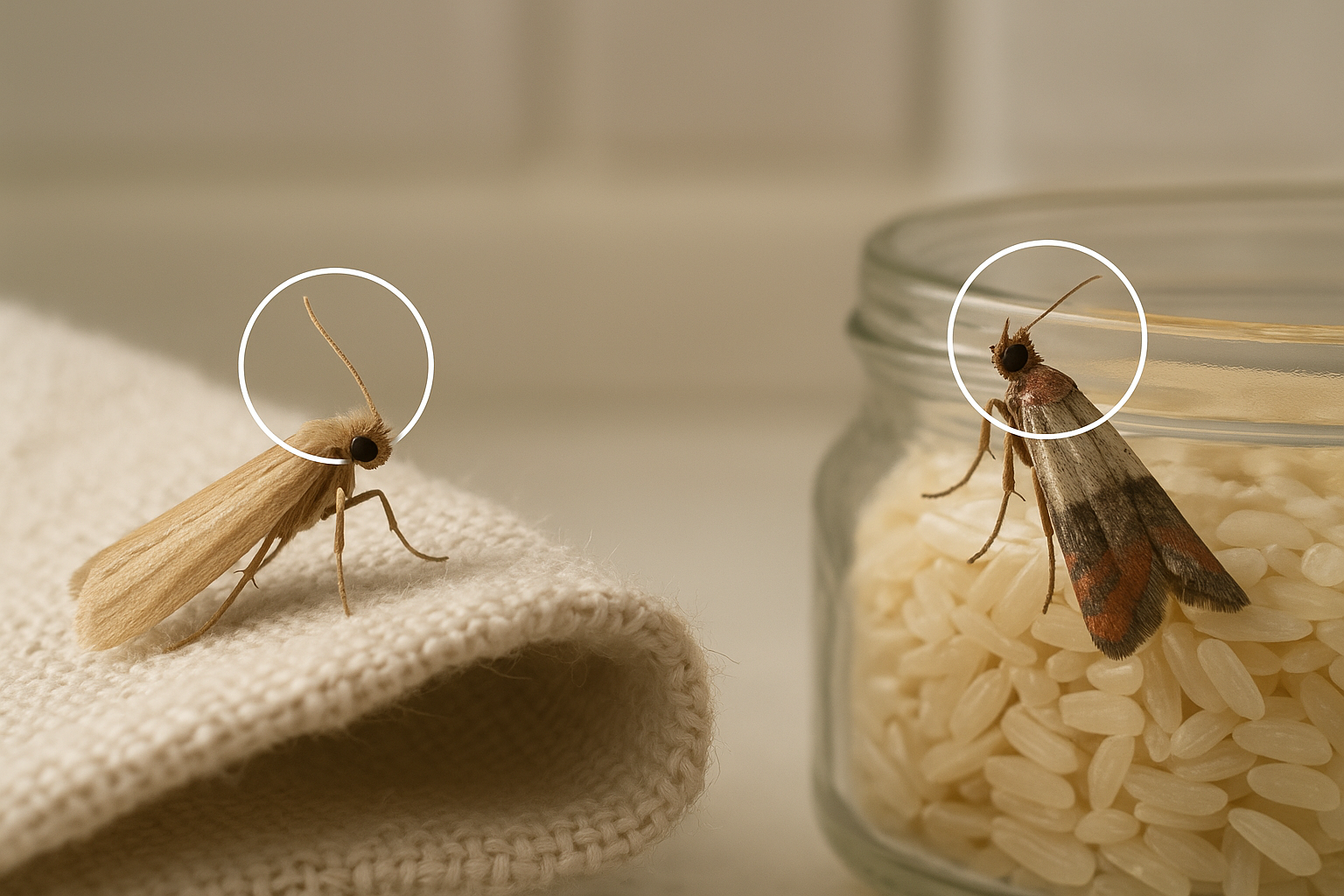
- Clothes moth: Adults are tan‑brown, about ½ inch long, and lack the bright markings of pantry moths. Look for silky tunnels and irregular holes in natural fabrics, plus clusters of tiny, white eggs near seams.
- Pantry moth: Adults display a striking copper‑orange front wing with a silver‑gray fringe on the hind wing. Infestations reveal webbing, clumped food particles, and larvae hidden inside grain or cereal boxes.
Spotting these tell‑tale signs early lets Anthem Pest Control tailor a treatment plan that targets the specific life stage of the moth you’re battling—whether it’s a thorough closet vacuum and heat treatment for clothes moths, or a pantry sweep, disposal of contaminated goods, and a targeted spray for pantry moths. Knowing the enemy is the first step toward a moth‑free home.
Seasonal Peaks and Local Factors
Why Marietta’s Climate Favors Moths
Marietta sits in a humid subtropical zone, meaning hot, moist summers and relatively mild winters. Moths thrive when temperatures stay between 68°F and 86°F and relative humidity hovers around 60‑80%. Those conditions accelerate egg development, larval growth, and adult emergence. Unlike northern regions where a hard freeze halts breeding, Marietta’s occasional frost is brief, allowing moths to seek shelter indoors and continue their life cycle year‑round.
During summer, the combination of outdoor heat and indoor climate control creates a perfect bridge: adults lay eggs on stored fabrics, pantry goods, or carpet fibers, and the next generation hatches within weeks. When winter arrives, the milder nights prevent a complete die‑off, so a small population remains hidden in closets or basements, ready to explode once temperatures climb again.
CDC Seasonal Data Highlights
The Centers for Disease Control and Prevention (CDC) tracks indoor pest activity across the United States. Their 2024 seasonal pest trends report shows a distinct spike in moth sightings from May through September, aligning with Marietta’s peak humidity months. CDC Seasonal Pest Trends 2024 notes that indoor moth activity can be up to 3 times higher during these months compared to the rest of the year.
Month‑by‑Month Action Calendar
Staying ahead of a moth infestation is easier when you follow a simple, repeatable schedule. Below is a month‑by‑month checklist that balances inspection, cleaning, and targeted treatment.
| Month | Inspection Focus | Recommended Action |
|---|---|---|
| January | Check closets, basements, and stored linens for webbing. | Vacuum thoroughly; apply a light residual spray in hidden corners. |
| February | Inspect pantry items for larvae or webbing. | Discard infested packages; use pheromone traps near storage areas. |
| March | Examine outdoor lighting and eaves for adult moth activity. | Seal cracks; consider a perimeter barrier treatment. |
| April | Review laundry room and dryer vents. | Clean lint traps; apply a preventive aerosol in vent shafts. |
| May | Full‑home sweep for webbing on fabrics and carpets. | Deep‑clean carpets; spot‑treat with a professional-grade insecticide. |
| June | Monitor indoor humidity with a hygrometer. | Run dehumidifiers; increase ventilation in attics and crawl spaces. |
| July | Set up pheromone traps in bedrooms and closets. | Replace traps weekly; document capture counts. |
| August | Inspect stored seasonal clothing. | Wash or dry‑clean items; apply a fabric‑safe spray if needed. |
| September | Check outdoor sheds and garages for moth larvae. | Treat with a granular barrier product; clear clutter. |
| October | Perform a final interior sweep before cooler weather. | Apply a residual indoor treatment to high‑risk zones. |
| November | Seal any newly discovered entry points. | Use caulk or weather‑stripping around doors and windows. |
| December | Review the year’s trap data and plan next‑year adjustments. | Schedule a professional inspection with Anthem Pest Control. |
Adapting to Rainfall and Humidity Surges
Marietta’s summer thunderstorms can push indoor humidity above 80%. When you notice condensation on windows or a persistent damp smell, increase your dehumidifier run time and open windows briefly after rain passes. A quick “humidity check”—using a portable hygrometer—should become part of your weekly routine during May‑August. If levels stay high, add an extra spot‑treatment in closets and pantry corners, as moisture accelerates egg hatch rates.
Conversely, during a dry spell, moths may seek out the few remaining moist micro‑habitats, concentrating activity in basements and crawl spaces. In those periods, focus inspections on foundation walls and under‑floor insulation, and consider a targeted perimeter spray to block their entry.
By aligning your home‑care tasks with Marietta’s climate rhythms, you keep moths from gaining a foothold before they become a visible problem. Consistency, a bit of data‑driven observation, and the right professional support—like Anthem Pest Control’s year‑round monitoring—are the keys to a moth‑free home.
DIY vs. Professional Moth Treatment
What you can do yourself
Homeowners often start with low‑cost, do‑it‑yourself solutions because they’re easy to find at a local hardware store. The most common DIY tools are pheromone traps that lure adult moths into a sticky surface, cedar blocks or sachets that emit a natural repellent scent, and homemade sprays made from ingredients such as vinegar, essential oils, or diluted boric acid. These options require minimal equipment and can be set up in a single afternoon.
DIY methods work best when the infestation is limited to a few hidden pockets—like a single closet or a small pantry. They are also attractive to families on a tight budget, as the upfront cost is typically under $30 for a starter kit. However, the effectiveness of these measures varies widely, and they often need to be combined with diligent cleaning and regular replacement to keep the moth population in check.
Professional moth control at a glance
When a moth problem spreads beyond a single area, or when you’ve tried DIY tactics without lasting results, a licensed pest‑control service can provide a comprehensive solution. Professionals use targeted insecticides, area‑wide fogging, and, when appropriate, heat or cryogenic treatments that penetrate deep into wall voids, insulation, and stored‑product containers. The treatment plan is customized after a thorough inspection, ensuring that hidden larvae and eggs are addressed—not just the visible adults.
Anthem Pest Control, for example, follows an Integrated Pest Management (IPM) approach: first confirming the species, then applying the least toxic product that will still achieve a high kill rate, and finally recommending preventive steps such as proper food storage and regular vacuuming.
Pros and cons: DIY vs. professional
| DIY | Professional | |
|---|---|---|
| Cost | Low upfront expense (typically $10‑$30 for traps or sprays) | Higher initial cost ($150‑$400 depending on treatment scope) |
| Effectiveness | Reduces adult moths by ~30% (NPMA 2023) | Achieves 85‑95% reduction in all life stages (NPMA 2023) |
| Time investment | Requires ongoing monitoring and frequent trap replacement | One‑time application with follow‑up visit; less homeowner effort |
| Safety | Homemade sprays may contain irritants; traps are generally safe but can be mishandled | Licensed technicians use EPA‑approved products, apply them with protective gear, and follow strict safety protocols |
| Long‑term prevention | Relies on homeowner vigilance; gaps in cleaning can reignite infestations | Includes structural recommendations, sealing cracks, and ongoing monitoring plans |
Effectiveness in numbers
The National Pest Management Association’s 2023 Moth Control Effectiveness Study provides a clear benchmark: DIY pheromone traps and homemade sprays typically knock adult moth counts down by about 30 percent after four weeks of consistent use. In contrast, a professionally applied treatment—whether a residual insecticide, a targeted fogger, or a heat treatment—delivers an 85 to 95 percent reduction across all life stages, including hidden larvae and eggs. This dramatic difference matters because moths reproduce quickly; a small surviving population can rebuild within weeks.
Safety considerations for kids and pets
When children or pets roam the home, safety becomes a top priority. DIY sprays often use essential oils or vinegar, which are low‑toxicity but can cause skin irritation or respiratory discomfort if applied in excess. Pheromone traps are generally safe, yet the sticky glue can be a choking hazard if a curious pet gets a paw on it.
Professional pest control teams are trained to assess household occupants and select the least hazardous product that still meets efficacy goals. Products are applied in controlled amounts, and technicians provide clear post‑treatment instructions—such as keeping pets out of treated rooms for a specified period. This structured approach dramatically reduces the risk of accidental exposure compared with the trial‑and‑error nature of many DIY recipes.
Bottom line for the homeowner
If you’re dealing with a minor, isolated moth sighting and want to keep costs low, a DIY kit can buy you a few weeks of relief while you tighten up food storage and cleaning habits. However, for anything beyond a single closet—especially if you have children, pets, or a history of recurring infestations—professional treatment delivers the speed, thoroughness, and safety guarantees that DIY methods simply can’t match. Partnering with a trusted provider like Anthem Pest Control ensures you get a data‑backed reduction in moth numbers, a clear prevention roadmap, and peace of mind for the whole family.
Professional Moth Control Costs in Marietta
Anthem Pest’s Transparent Pricing Tiers
When it comes to moth infestations, knowing exactly what you’ll pay helps you decide whether to act now or wait for the next season. Anthem Pest Control keeps its pricing simple and upfront, so Marietta homeowners can compare costs without hidden fees. Below we break down the three core service levels, the factors that can push a quote higher, and a realistic example based on a typical 2,000‑sq‑ft home in West Cobb.
Anthem Pest structures its moth‑control fees into three distinct packages:
- Inspection – A thorough visual and trap‑based assessment of your property. Prices range from $75 to $100, depending on home size and travel distance.
- Single‑Visit Treatment – One‑time application of EPA‑approved moth control products, targeting adult moths and larvae. The cost falls between $150 and $250.
- Annual Protection Plan – Four scheduled visits, seasonal monitoring, and a warranty that covers re‑treatment if moths return. This comprehensive plan runs $400 to $600 per year.
Key Variables That Influence the Final Quote
Even with transparent tiers, the exact amount you’ll pay can shift based on three primary variables:
- Square footage – Larger homes require more product and longer labor time. Anthem typically adds $0.05‑$0.10 per square foot beyond the base 1,500 sq ft.
- Infestation severity – Light sightings may be handled with a single spray, while a heavy outbreak that has penetrated closets, attics, and wall voids can double the material cost.Why Anthem Pest Is the Local Moth Expert
AI-generated image When a moth infestation sneaks into a Marietta home, the difference between a quick fix and a lingering problem often comes down to who you call. Anthem Pest isn’t just another national brand—it’s a neighborhood ally that has spent more than a decade mastering the quirks of Georgia’s climate, construction styles, and the stubborn species that love to call our closets and attics home. That local focus translates into faster response times, treatment plans that fit our community’s needs, and a reputation built on real results rather than generic promises.
15+ Years of Local Service and Certified Expertise
Since 2008, Anthem Pest has been a fixture on Marietta streets, delivering pest‑control solutions that respect both the homeowner’s budget and the environment. All technicians are EPA‑registered and undergo continuous training to stay current with the latest integrated pest‑management (IPM) strategies. This means they can identify the exact moth species—whether it’s the pantry moth that threatens your stored grains or the carpet moth that targets wool fabrics—and apply the most effective, least intrusive treatment.
Beyond certification, the company’s deep roots in the area give its staff an insider’s knowledge of common entry points in older homes, the seasonal spikes that drive moth activity, and the best times to deploy preventive measures. That local intelligence is something a distant call center simply can’t replicate.
Customer Trust Backed by Numbers
In 2024, Anthem Pest earned a 4.8 out of 5 rating on Google, based on more than 200 verified homeowner reviews. Clients repeatedly praise the company for its punctuality, thoroughness, and the visible decline in moth sightings after treatment. One reviewer wrote, “We thought we’d have to throw out our entire wardrobe, but Anthem’s team identified the problem, set traps, and the moths were gone within weeks.” Such feedback isn’t just a badge—it’s proof that the company’s methods work and that neighbors are comfortable recommending the service to friends and family.
Professional Moth Treatment Process
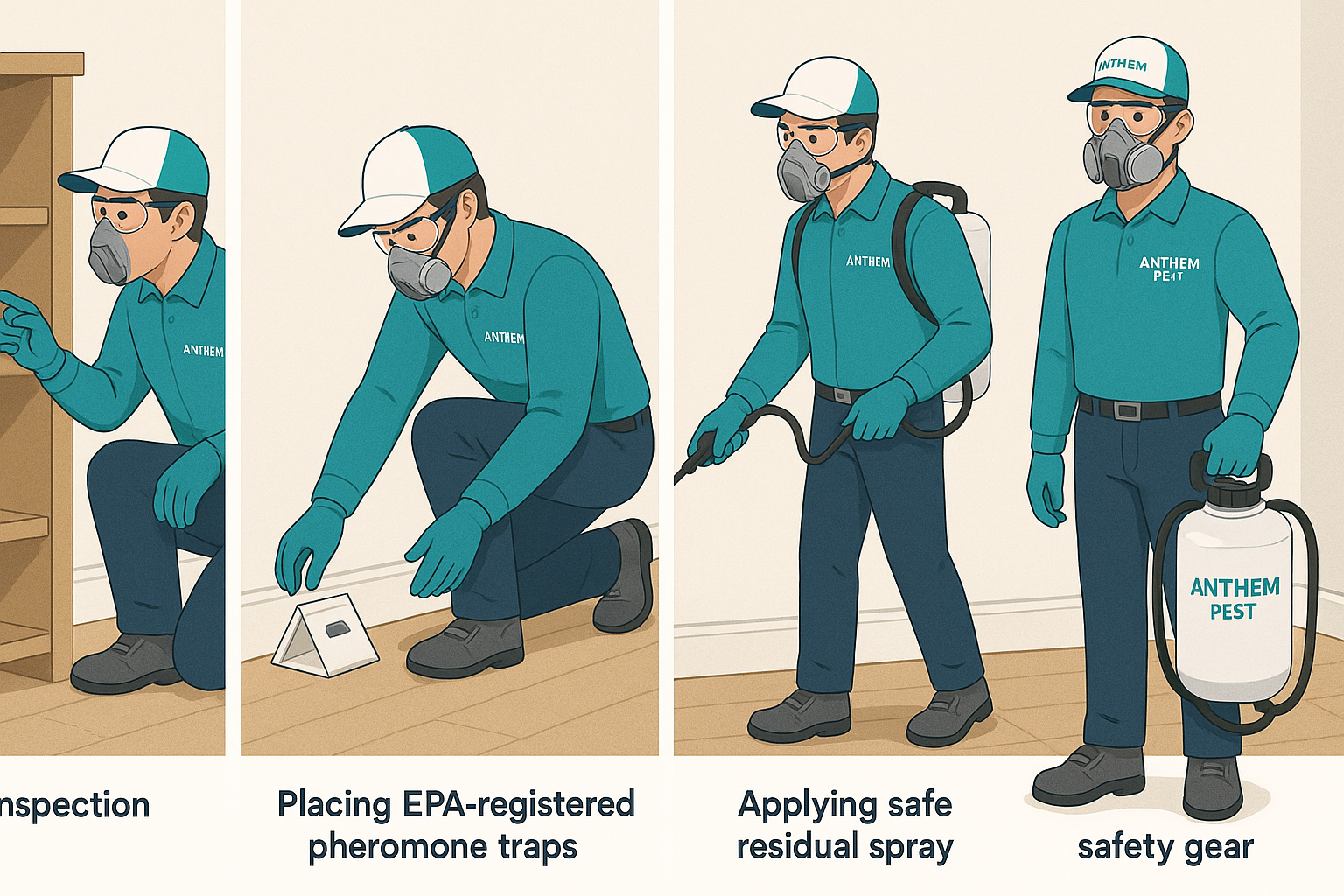
Anthem Pest follows a three‑step protocol designed to eradicate moths at every life stage while minimizing disruption to your daily routine:
- Comprehensive Inspection: A certified technician conducts a room‑by‑room walkthrough, looking for signs of larvae, adult moths, and damage. They also check for conditions that attract moths, such as excess moisture or food spillage.
- Pheromone Trap Placement: Strategically positioned traps capture adult moths, providing immediate monitoring data and reducing the breeding population.
- Targeted Residual Spray: Using EPA‑registered, low‑odor products, the technician applies a residual barrier to baseboards, closets, and other vulnerable areas. The formulation remains active for weeks, killing any moths that cross the treated zones.
After the initial visit, Anthem Pest schedules a follow‑up check to ensure the infestation is fully suppressed and to advise homeowners on preventive steps—like proper food storage and seasonal wardrobe rotation—to keep moths at bay year after year.
Get in Touch Today
Ready to protect your home from moth damage? Call Anthem Pest at 877‑371‑8196 or visit anthempest.com to schedule a free inspection. With a proven track record, certified technicians, and a community‑focused approach, Anthem Pest is the trusted partner Marietta homeowners rely on for lasting moth control.
Long‑Term Prevention Strategies
Airtight Food Storage & Indoor Habits
Even the smallest pantry crumb can become a feast for pantry moths. Store dry goods—flour, cereal, grains, pet food—in sealed, food‑grade containers made of glass, heavy‑wall plastic, or metal. Look for containers with a tight‑locking lid and a gasket seal; these block the moth’s ability to sniff out a food source.
Vacuum your kitchen and pantry weekly, paying special attention to corners, baseboards, and the undersides of shelves. The suction pulls up any stray larvae or eggs before they hatch. After vacuuming, empty the canister or bag outside and discard the contents immediately.
Rotate clothing and textiles regularly. Moths love undisturbed fabrics, especially those stored for months. Every three months, pull out seasonal items, shake them out, and give them a quick brush or a brief tumble in the dryer on low heat. This disrupts any hidden larvae and reduces the chance of a full‑blown infestation.
Control indoor humidity with a dehumidifier or by running exhaust fans in kitchens, bathrooms, and basements. Moth larvae thrive in moist environments; keeping relative humidity below 50 % makes your home less inviting.
Moisture Management & Ventilation
Seal any cracks or gaps around windows, doors, and utility penetrations. Even a tiny opening can let in adult moths seeking a place to lay eggs. Use weather‑stripping, caulk, or expandable foam to close these entry points.
Ensure that crawl spaces and attics are properly vented. Stagnant air encourages mold and mildew, which in turn attract moths. Installing ridge vents, soffit vents, or a small mechanical ventilator can keep air moving and dry.
Landscaping & Exterior Maintenance
Trim vegetation—shrubs, vines, and tree branches—so they sit at least two feet away from the house foundation. Overhanging foliage creates a bridge for moths to reach your exterior walls and windows.
Remove leaf litter, fallen fruit, and dead wood from the perimeter of your property. These materials serve as outdoor breeding sites for moths and other pests. A clean, well‑maintained yard reduces the overall pest pressure on your home.
Keep firewood stacked off the ground and covered with a tarp. Wood piles are a favorite hideout for many moth species, especially the larger carpenter moths that can damage structural timber.
Printable “Moth‑Proof Home Checklist”
For a quick, at‑a‑glance reference, download our Moth‑Proof Home Checklist. Tailored specifically for East Cobb and Kennesaw residents, the PDF walks you through each indoor habit and exterior task, helping you stay on top of prevention all year long.
Neighborhood Spotlight – Real‑World Success Stories
East Cobb Family Saves $200 with Early Detection
When the Martinez family first noticed a few moths fluttering around their pantry, they called Anthem Pest before the problem spread. Our technician performed a quick visual inspection, identified a small infestation, and applied a targeted treatment that eliminated the moths in a single visit. Because the issue was caught early, the family avoided a full‑scale fumigation that can cost upwards of $400.
“We were relieved to see the moths disappear after just one service. Saving $200 felt like a win for both our wallet and our peace of mind.” – Emily Martinez, East Cobb homeowner
Brookfield Multi‑Unit Building Adopts an Integrated Pest‑Management Plan
Property manager James Whitaker oversees a 30‑unit complex in Brookfield, where seasonal moth spikes used to trigger emergency calls and tenant complaints. After consulting with Anthem Pest, he signed up for an Integrated Pest‑Management (IPM) plan that includes quarterly inspections, preventive barrier treatments, and resident education workshops. The annual cost of $1,200 spreads across all units, averaging just $40 per apartment—a fraction of the expense incurred during a full infestation.
The IPM approach has delivered measurable benefits: no reported moth sightings in the past year, a 30% reduction in tenant turnover related to pest concerns, and a clear, documented maintenance schedule that satisfies local housing regulations. Whitaker notes that the proactive plan not only protects the building’s reputation but also frees his staff from time‑consuming emergency responses.
What Other Homeowners Are Saying
- Linda G., Marietta – “Anthem Pest arrived on time, explained every step, and the treatment left no lingering chemicals. I felt confident the moths wouldn’t return.”
- Ramon T., East Cobb – “The technician’s early‑detection advice saved us from a costly overhaul. Their transparency on pricing is refreshing.”
- Sarah L., Brookfield – “Living in a building with the IPM plan gives me peace of knowing the common areas stay moth‑free without extra hassle.”
Frequently Asked Questions About Moth Control
Below are the most common questions homeowners ask about moth control, with concise answers backed by EPA guidelines and our field experience.
Are EPA‑registered sprays safe for children and pets?
Yes. EPA‑registered products undergo rigorous testing to ensure they meet strict safety standards when used as directed. Professional applicators follow label instructions, apply the correct dosage, and target areas where exposure is minimal. In a typical home treatment, the spray is applied to cracks, crevices, and baseboards—places that children and pets rarely touch. After application, we advise keeping kids and animals away from treated zones for the short drying period noted on the label, usually 30 minutes to an hour. For detailed safety data, see the EPA’s pesticide registration guidelines.
How often should I schedule treatments for recurring moth infestations?
Most homeowners benefit from a quarterly schedule during peak seasons (spring through fall). This four‑times‑a‑year plan disrupts the moth life cycle before eggs hatch and larvae mature. If you’ve experienced a severe outbreak, an initial intensive treatment followed by a bi‑monthly follow‑up for the first two months can bring the population under control faster. After the infestation is suppressed, we usually recommend semi‑annual maintenance—once in spring and once in late summer—to keep the environment hostile to new moths.
What results can I expect after a professional treatment, and how long do they last?
A properly applied professional treatment typically reduces visible moth activity within 24‑48 hours. Larvae and eggs hidden in wall voids or stored‑product areas may take a few days to succumb, but you’ll notice fewer adult moths and less damage to fabrics or pantry goods. The protective barrier we create can remain effective for 8‑12 weeks, depending on weather, ventilation, and how well you maintain a clean environment. Regular cleaning, proper food storage, and prompt removal of infested items extend the longevity of the treatment.
Can I combine DIY prevention with professional services for better protection?
Absolutely. Professional treatment provides the heavy‑duty knock‑down, while DIY steps keep moths from returning. Simple actions—vacuuming closets, storing clothing in sealed bags, using cedar or lavender sachets, and rotating pantry stock—complement the chemical barrier we install. Additionally, applying a low‑toxicity DIY spray (such as a boric‑acid dust) to rarely accessed corners can add an extra layer of defense without interfering with the professional product. When you pair these habits with our scheduled visits, you create a multi‑tiered approach that dramatically lowers the chance of a repeat outbreak.
Take Action for a Moth‑Free Home Today
Quick Recap
- Early identification: Spotting moth activity at the first sign prevents a full‑blown infestation.
- Seasonal action plan: Align inspections and treatments with peak moth seasons for maximum effectiveness.
- Professional treatment benefits: Licensed technicians use targeted, safe products that reach hidden larvae and prevent re‑infestation.
Ready to protect your pantry, closets, and upholstery? Anthem Pest invites you to schedule a free, no‑obligation inspection. Our local experts will assess your home, pinpoint problem areas, and provide a personalized quote—so you know exactly what’s needed before any work begins. Call us today at 877‑371‑8196 or fill out our online request.
Choosing Anthem means partnering with a team that combines decades of experience with transparent pricing and a genuine dedication to Marietta homeowners. We use EPA‑approved solutions that are tough on moths yet safe for children, pets, and the environment. Our technicians stay up‑to‑date on the latest control methods, ensuring you receive the most effective, affordable service available.
Take the first step toward a moth‑free home—Visit Anthem Pest Control and let us help you enjoy a clean, comfortable living space.