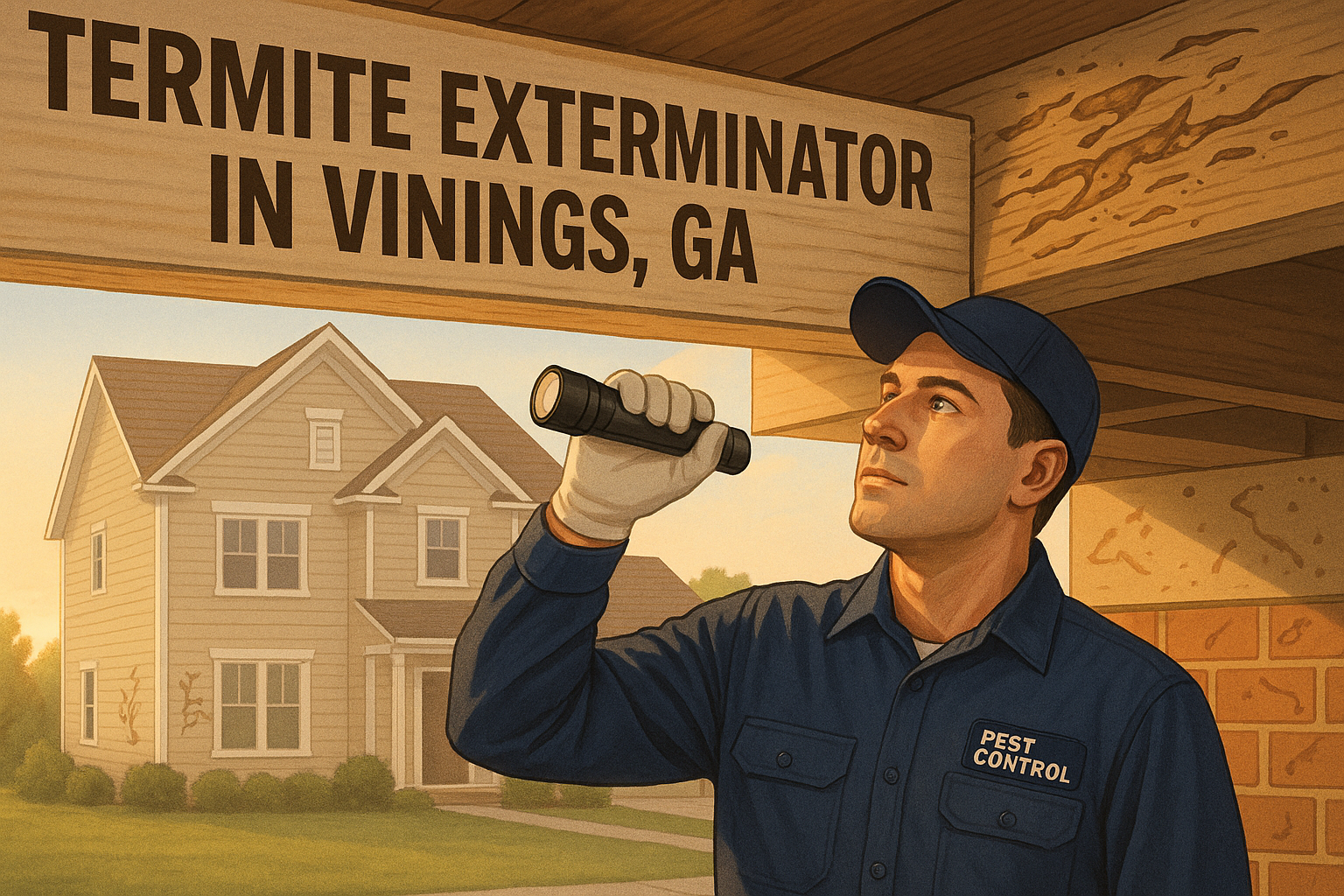
Why Immediate Termite Action Matters in Vinings

A 2023 USDA report revealed a roughly 12 % jump in termite activity across Fulton County, the region that includes Vinings. That uptick means more families are confronting tell‑tale mud tubes, hollow‑sounding wood, and the unsettling sound of insects chewing through their foundations. The increase is linked to milder winters and higher humidity—conditions that turn Vinings’ beautiful lawns into a perfect breeding ground for subterranean termites.
The financial stakes are just as alarming. According to the EPA termite control guidelines, untreated structural damage can easily surpass $5,000 per home, and in severe cases the bill climbs into the tens of thousands once foundation repairs, flooring replacement, and cabinetry restoration are required. Most homeowners discover the damage only after it has compromised load‑bearing beams, a situation that insurance policies rarely cover because termites are considered a preventable risk.
That’s where Anthem Pest Control steps in. With a dedicated Vinings office, our certified technicians blend local knowledge with data‑driven treatment plans. Our mission is simple: deliver safe, affordable, and transparent termite solutions that protect your property before the damage becomes irreversible. We rely on EPA‑approved, low‑toxicity products and continuously monitor regional activity trends to stay one step ahead of the infestation.
In the sections that follow, you’ll learn how to spot early warning signs, understand the most effective treatment options for Georgia’s climate, compare pricing models, and follow a step‑by‑step timeline for a complete termite eradication and prevention program. By the end, you’ll have a clear action plan and the confidence to choose a local partner who backs every job with a satisfaction guarantee.
- Identify early signs: Learn the subtle clues that indicate a hidden colony.
- Choose the right treatment: Compare liquid barriers, baiting systems, and eco‑friendly alternatives.
- Estimate costs: Understand what you’re paying for and why transparent pricing matters.
- Plan ongoing prevention: Set up a schedule that keeps termites out year after year.
What Makes Vinings a Hotspot for Termters?
Climate that fuels subterranean termites
Vinings sits in the heart of Fulton County, where summers are warm and humid and winters remain mild. Those conditions keep soil temperatures above 55 °F for most of the year—exactly the range where subterranean termites thrive. Moisture in the air translates to higher ground‑level humidity, allowing colonies to stay active year‑round instead of going dormant like they would in colder climates.
Soil conditions that help mud‑tube construction
The local soil is a mix of loam and clay, retaining moisture longer after a rainstorm. This moisture‑rich environment makes it easy for termites to build their signature mud‑tubes, the protective tunnels they use to travel between the colony and food sources. When the ground stays damp, those tubes remain intact, giving the insects uninterrupted access to the wooden structures above.
Older wooden homes amplify the problem
Neighborhoods such as River Trail and Vinings Crossing feature many homes built in the 1970s and 1980s. Those houses often contain solid‑wood framing, joists, and siding that provide an abundant food source. Over time, natural wear and small cracks become entry points, allowing termites to infiltrate without being noticed.
Local statistics and a real‑world example
According to the Vinings Police Department’s 2023 open‑data report, 1,200 termite complaints were logged across the community. That figure represents roughly 8 % of all pest‑related calls in Fulton County for the year, underscoring the severity of the issue.
| Area | Complaints Reported | Share of County Total |
|---|---|---|
| Vinings | 1,200 | 8 % |
| Fulton County (overall) | 15,000 | 100 % |
One illustrative case involved a 3‑bedroom home in Vinings Crossing. During a routine inspection, technicians discovered 15 feet of hidden damage behind baseboards and under the kitchen floor—damage that had accumulated over several years before any visible signs appeared.
These environmental and structural factors create a perfect storm for termite activity. Homeowners who ignore the subtle warning signs risk extensive structural damage and costly repairs. Proactive, annual inspections are the most effective defense, allowing a qualified team—such as Anthem Pest Control—to locate colonies early, treat them safely, and implement preventive barriers before the insects can establish a foothold.

Red Flags Every Homeowner Should Spot
Termites work silently, but they leave unmistakable clues. Spotting these early can save you from costly structural damage. Below is a quick‑reference checklist you can print, post on your fridge, and use during routine home inspections.
- Mud tubes along foundation walls and crawl spaces – Look for smooth, pencil‑thin tunnels that connect the soil to the wood. They’re the highways termites use to travel unseen.
- Winged swarmers (alates) near windows or lights in spring – These pale, delicate insects are the reproductive caste. A sudden appearance of dozens around exterior lights signals an active colony nearby.
- Hollow‑sounding wood when tapped – If a piece of wood sounds like a drum rather than a solid block, termites may have hollowed out galleries inside. Check door frames, baseboards, and support beams.
- Visible galleries inside wood – Small, maze‑like tunnels just beneath the surface are a tell‑tale sign. Use a flashlight to peer into any exposed wood for these patterns.
- Frass (pellet‑shaped droppings) – Look for tiny, mud‑colored pellets near wooden structures, especially in attics, decks, or crawl spaces. Frass is the waste termites push out as they chew.
For convenience, we recommend downloading our printable Termite Detection Checklist. Print it, stick it on your fridge, and tick off each item during your monthly walk‑through.
“The most reliable visual indicators of termite activity include mud tubes, winged alates, hollow‑sounding wood, and frass deposits. Homeowners should inspect these areas regularly, especially after periods of rain or high humidity.” – EPA, Termite Identification Guide (2022)
Keep this list handy and involve every family member in the inspection routine. Early detection not only protects your home’s value but also gives us, at Anthem Pest Control, a head start in crafting a targeted, affordable treatment plan. If any of these red flags appear, give us a call at 877‑371‑8196 or visit anthempest.com for a fast, local response.
Termite Treatment Methods: Bait Stations, Liquid Barriers, and Fumigation
When termites invade a Vinings home, the choice of treatment can feel overwhelming. The three most common options—liquid termiticides, baiting systems, and whole‑structure fumigation—each have distinct workflows, cost structures, and long‑term effectiveness. Understanding how they work helps you pick a solution that fits your budget, your schedule, and your comfort with chemicals.
Liquid Termiticides
Liquid termiticides such as fipronil and imidacloprid are applied to the soil around a home’s foundation, creating a continuous chemical barrier that termites cannot cross. Professionals drill small holes at regular intervals, inject the termiticide, and then back‑fill the holes to ensure even distribution. Once set, the barrier protects the structure for 5 – 10 years, making it a popular “set‑and‑forget” choice for homeowners who want long‑term peace of mind.
Environmental considerations are front‑and‑center with liquid treatments. Modern formulations are designed to target termites while minimizing impact on non‑target insects, pets, and groundwater. Still, proper installation and strict adherence to label directions are essential to avoid runoff. If you have a garden or children who play outdoors, ask your technician about the specific product’s safety profile.
Baiting Systems
Bait stations work on a different principle: they attract foraging termites, deliver a slow‑acting insecticide, and then spread the toxin through the colony. After installation, the stations are checked every 30 – 60 days. Technicians replace or reposition stations based on monitoring data, allowing the colony to be eliminated from the inside out.
Typical pricing for a full‑home baiting program ranges from $1,200 – $1,800 (NPMA 2024 market report). Because the active ingredient is contained within the bait, chemical exposure to occupants and pets is minimal—a key advantage for eco‑conscious families. The downside is that baiting can take **several weeks to months** to show visible results, especially in large or deeply entrenched colonies.
Fumigation (Tenting)
Whole‑structure fumigation, often called “tenting,” is reserved for severe infestations where termites have colonized the interior framing, subfloor, or attic. The home is sealed with a gas‑tight tent, and a fumigant—typically sulfuryl fluoride—is released to penetrate every wood component. After a prescribed exposure period (usually 24‑48 hours), the tent is aerated and the house is safe to re‑enter.
Because every inch of the home is treated, fumigation offers the most immediate eradication. However, it is also the most disruptive: you must vacate the property, remove plants and pets, and arrange for temporary housing. Average costs fall between $3,500 – $5,000 (NPMA 2024 report), reflecting the labor‑intensive setup and the need for licensed fumigation specialists.
Quick‑Reference Comparison
| Method | Pros | Cons | Price Range (USD) | Time to Effect |
|---|---|---|---|---|
| Liquid Termiticides | Long‑term protection (5‑10 yr); works on contact Relatively low disruption |
Potential soil/groundwater concerns Requires professional installation |
$1,500‑$2,500 | Immediate (within days) |
| Baiting Systems | Low chemical exposure Colony elimination from within Easy to monitor |
Slower visible results (weeks‑months) Requires regular inspections |
$1,200‑$1,800 | 4‑12 weeks |
| Fumigation (Tenting) | Complete eradication of active colonies Effective for severe infestations |
High disruption; you must vacate Higher upfront cost |
$3,500‑$5,000 | 1‑2 days (post‑treatment) |
Choosing the right method depends on the severity of the infestation, your budget, and how much inconvenience you’re willing to tolerate. At Anthem Pest Control, we assess each home individually, explain the data‑driven pros and cons, and help you decide whether a liquid barrier, a baiting program, or a one‑time fumigation best protects your Vinings property.
For a deeper dive into pricing benchmarks and market trends, see the NPMA 2024 market report.
Step‑by‑Step Blueprint to Find a Local Exterminator
Finding a trustworthy termite exterminator in Vinings doesn’t have to feel like searching for a needle in a haystack. Follow this straightforward, data‑driven process to narrow the field, verify credentials, and land on a provider that backs its promises with proven results—like Anthem Pest, the local favorite for prompt, science‑based service.

1️⃣ Search Google and filter by rating
Start with a simple query: “termite exterminator near me Vinings GA.” Google will return a mix of paid ads and organic listings. Focus on the Google My Business cards that display a star rating of 4.5 or higher. Those high‑scoring profiles usually indicate consistent customer satisfaction and a track record of reliable service. Jot down the top three companies that meet this benchmark.
2️⃣ Verify state licensing
Georgia requires every pest‑control technician to hold a valid license from the Department of Agriculture. Use the official Georgia pest‑control license lookup to confirm each company’s license number and expiration date. A licensed provider demonstrates compliance with state regulations, ongoing training, and accountability—essential safeguards for your home.
3️⃣ Confirm insurance and EPA‑approved products
Before you hand over a contract, ask for proof of liability insurance and workers’ compensation. This protects you if an accidental spill or injury occurs during treatment. Additionally, request a list of the chemicals they intend to use. Reputable firms, including Anthem Pest, rely exclusively on EPA‑approved products that are effective against termites yet safe for families, pets, and the environment.
4️⃣ Request a free inspection quote
Most local exterminators will offer a no‑cost, on‑site inspection to assess damage and outline a treatment plan. Take advantage of this opportunity to compare how each company communicates findings, pricing, and timelines. Anthem Pest stands out by providing a completely free inspection, allowing you to gauge the scope of work without any financial pressure.
5️⃣ Choose the provider that combines convenience and credibility
After you’ve completed the first four steps, the decision should be clear. Anthem Pest’s Vinings office is reachable at 877‑371‑8196, and their local team is known for rapid response, transparent reporting, and data‑driven recommendations. Homeowners consistently praise their prompt arrival times and the thoroughness of their termite reports—key factors that translate into long‑term protection for your property.
Understanding the Cost Breakdown for Termite Services
When you call a termite professional in Vinings, the first number you’ll hear is often the inspection fee. Most local companies charge between $75 and $100 for a thorough visual and moisture assessment, and many will waive that fee if you sign a treatment contract. This upfront cost covers the technician’s travel time, a detailed report, and a recommendation tailored to your home’s construction type.
What Makes Up the Treatment Price?
Beyond the inspection, the total bill splits into three main components:
- Materials: This includes the termite bait stations or liquid barrier chemicals that create a long‑lasting shield around your foundation.
- Labor: Skilled technicians install the bait or apply the barrier, calibrate monitoring devices, and ensure every entry point is treated.
- Follow‑up visits: Most plans schedule quarterly checks for bait systems or annual re‑applications for liquid barriers to keep the protection active.
Vinings Price Snapshot
| Provider | Price Range (USD) |
|---|---|
| Anthem Pest | $1,200 – $1,600 |
| Competitor X | $1,300 – $1,800 |
| Competitor Y | $1,500 – $2,000 |
Anthem Pest’s baiting systems sit at the lower end of the local market while still delivering the same EPA‑approved products and certified technicians. The modest price gap often reflects the company’s commitment to transparent pricing—no hidden fees, no surprise add‑ons.
Warranty Options: 5‑Year vs. 10‑Year Protection
Both warranty tiers cover the core treatment and include scheduled re‑applications. The 5‑year plan typically handles one re‑application and basic monitoring, whereas the 10‑year plan adds an extra visit, unlimited bait replacements, and coverage for any structural damage caused by active termites. Homeowners who choose the longer warranty gain peace of mind and often avoid costly repairs down the line.
Choosing Anthem Pest means you get clear, upfront numbers, a competitive price point, and warranty terms that protect your investment for up to a decade. For Vinings homeowners, that combination of value and accountability makes it easy to feel confident about the termite solution you’re buying.
Keeping Your Home Termite‑Free Year‑Round
After a successful termite treatment, the real work begins—maintaining a dry, barrier‑free environment that doesn’t invite new colonies. The good news is that most of these steps cost little more than a weekend of DIY effort, and they pay off in peace of mind.
1. Eliminate Wood‑to‑Soil Contact
Termites travel from the ground to any wood that touches the soil. Installing a concrete footer beneath exterior walls or adding metal flashing where wood meets the foundation creates an impermeable break. Even a thin strip of flashing can stop hungry workers from crossing that invisible line.
2. Control Moisture at the Source
Leaky gutters, clogged downspouts, and foundation cracks are the silent water providers that keep termites thriving. Repair any drips, redirect runoff away from the house, and seal cracks with hydraulic cement. A dry perimeter is the single most effective deterrent.
3. Keep Combustible Materials Away from the Foundation
Mulch, firewood, and lumber should sit at least 12 inches from the house. These items act like bridges, offering both shelter and a direct food source. If you need mulch for landscaping, choose a stone or rubber alternative near the foundation.
4. Schedule Professional Annual Inspections
A licensed technician can spot early warning signs that the naked eye misses—tiny mud tubes, subtle wood damage, or hidden moisture pockets. Make an appointment once a year, ideally before the spring surge, to keep your protection plan current.
These practices align with the CDC’s “Home Maintenance for Pest Prevention” (2023), which recommends regular moisture management and structural barriers as core defenses against termites. Following the CDC guide not only safeguards your home but also protects your investment.
Take the Next Step to Protect Your Vinings Home
We’ve walked through the most critical steps to keep termites at bay: spot the signs early, choose a treatment backed by science, understand transparent pricing, and commit to ongoing prevention. Skipping any of these pieces can turn a small nuisance into thousands of dollars in structural damage.
Why Anthem Pest Control is your best ally – our technicians live in the Vinings area, so we know the local termite pressure patterns better than anyone. In 2023‑2024 we leveraged real‑time data to fine‑tune our inspection routes and treatment protocols, delivering faster, more accurate results. Plus, we offer a free, no‑obligation inspection so you can see the problem before it spreads.
- Local expertise: neighborhood‑specific knowledge.
- Data‑driven approach: the latest 2023‑2024 trends guide every decision.
- Transparent pricing: no hidden fees, just clear estimates.
- Complimentary inspection: schedule it today, risk‑free.
Ready to act? Call 877‑371‑8196 now or visit Anthem Pest Control to book your complimentary inspection. A quick call can prevent costly repairs down the road.
Help your neighbors stay protected, too—share this guide with other Vinings homeowners. When the whole community takes preventive steps, termites find fewer places to hide, and your home stays safe.
Remember, a proactive approach today saves you time, stress, and money tomorrow.