Why Termite Inspections Matter for Georgia Homeowners

Common Georgia Termites
Georgia’s warm, humid climate is a playground for two primary culprits: the Eastern Subterranean termite (Reticulitermes flavipes) and the more aggressive Formosan termite (Incisitermes minor). The Eastern Subterranean is the state’s workhorse, building hidden mud tubes from soil to wood. Formosan colonies, though less numerous, can grow to millions of individuals and devour wood at a frightening rate. Both species thrive in the pine‑rich soils and abundant moisture that characterize Peachtree City and its surrounding neighborhoods.
Damage Potential: More Than Just an Eyesore
A single termite colony can silently hollow out joists, beams, and support posts, leaving a home structurally compromised. Homeowners often discover the damage only after a roof sag or a cracked wall appears—repairs that can easily exceed $10,000. Beyond the immediate repair bill, termite damage drags down property values. Real‑estate appraisers routinely deduct a percentage from a home’s market price if evidence of infestation is found, making a timely inspection a financial safeguard.
Georgia’s Climate: A Year‑Round Invitation
Unlike northern states where cold winters slow termite activity, Georgia’s mild winters and high humidity keep colonies active throughout the year. Moisture from frequent rain, irrigation systems, and even underground springs creates the perfect environment for termites to forage and reproduce. This means that a “summer‑only” inspection schedule leaves a dangerous gap; regular, ideally bi‑annual, checks are essential to stay ahead of the infestation cycle.
Legal and Insurance Implications
Many mortgage lenders and homeowner’s insurance policies in Georgia require proof of a pest‑free condition before closing a sale or renewing coverage. A documented inspection report from a licensed professional can satisfy these requirements, preventing delays in closing or claim disputes. In some counties, local ordinances even mandate routine inspections for rental properties, making compliance a matter of both safety and legality.
The Professional Inspection Experience
When a certified technician arrives, you can expect a systematic walk‑through of the entire property. The inspector will:
- Probe foundation walls, crawl spaces, and basements for mud tubes and frass.
- Use a moisture meter to locate damp wood—prime termite feeding sites.
- Examine exterior wood, decks, and siding for signs of entry.
- Provide a written report that outlines findings, risk levels, and recommended next steps.
This thorough approach not only identifies current infestations but also highlights conditions that could invite termites in the future.
EPA Guidance on Prevention and Control
“Integrated pest management (IPM) is the most effective, environmentally responsible approach to termite control. Regular monitoring, moisture reduction, and targeted treatments reduce reliance on broad‑spectrum chemicals.” – U.S. Environmental Protection Agency
Following EPA recommendations, Anthem Pest Control combines visual inspections with moisture management and, when necessary, low‑toxicity termiticides. This balanced strategy protects your home while minimizing impact on pets, children, and the surrounding ecosystem.
In short, a proactive termite inspection is not a luxury—it’s a critical component of home ownership in Peachtree City. By understanding the local species, recognizing the financial stakes, and partnering with a trusted professional, Georgia homeowners can keep their foundations solid and their peace of mind intact.
Spotting the Early Warning Signs of an Infestation
Termites work silently, and by the time you notice a sagging floor or a cracked wall, the colony may have already caused thousands of dollars in damage. Catching the problem at the first hint can save you both money and the peace of mind that comes with a solid, pest‑free home. Below are the tell‑tale signs that most homeowners overlook until it’s too late.
Visual clues you can see from the outside
Look for mud tubes winding along foundations, crawl spaces, or the siding of your house. These pencil‑thin tunnels are the highways termites use to travel between the soil and the wood they’re eating. Also scan for wood that appears cracked, warped, or has a “squeezed” look—especially near the base of columns, deck posts, or porch steps. When you tap a suspect beam, a hollow sound often indicates that the interior has been hollowed out by termites.
Behavioral clues that appear in the summer
Late summer, after a rainstorm, is prime time for swarmers—winged termites that leave the colony to start new families. If you see a sudden cloud of tiny, light‑brown insects buzzing around windows, light fixtures, or doorways, you’re likely witnessing a swarm. These swarms are a clear alarm bell; they mean an active colony is already established somewhere on your property.
Interior signs you might miss
Inside the house, keep an eye on the frames around windows and exterior doors. Small piles of fine, pellet‑shaped droppings—known as frass—often accumulate there. Frass looks like sand or sawdust and may be tinged with a faint, sweet odor. You might also notice paint bubbling or peeling in localized spots; termites can push moisture up through the wood, causing the finish to lift.
Termite damage vs. carpenter‑ant damage
Carpenter ants also hollow out wood, but they leave behind larger, more irregular galleries and usually work in damp, decaying wood rather than sound structural timber. Termite tunnels are uniform, smooth, and packed tightly together, while carpenter‑ant tunnels appear more jagged. Additionally, carpenter ants produce larger, black droppings, whereas termite frass is finer and more uniform.
Simple DIY inspection checklist (run it each season)
- Walk the perimeter and inspect the foundation for mud tubes or wet spots.
- Tap exposed wooden beams; listen for a hollow thud.
- Check window and door frames for frass or tiny piles of sawdust.
- Look for winged insects on sunny days after rain.
- Examine outdoor wood piles, decks, and fence posts for damage or tunnels.
- Note any bubbling paint or unexpected moisture stains on interior walls.
For a more detailed guide straight from the experts, visit the EPA’s termite identification page. If any of these signs appear, don’t wait—contact Anthem Pest Control at 877‑371‑8196 for a professional inspection and prompt treatment.
Seasonal Pest Activity in Peachtree City, GA
Understanding the rhythm of local pests makes it easier to schedule inspections before problems become costly. Below is a quick‑read chart that maps out the typical activity levels for termites and a few “side‑kick” pests throughout the year. Use the color‑coded bars to spot when the bugs are most active and plan your professional check‑ups accordingly.
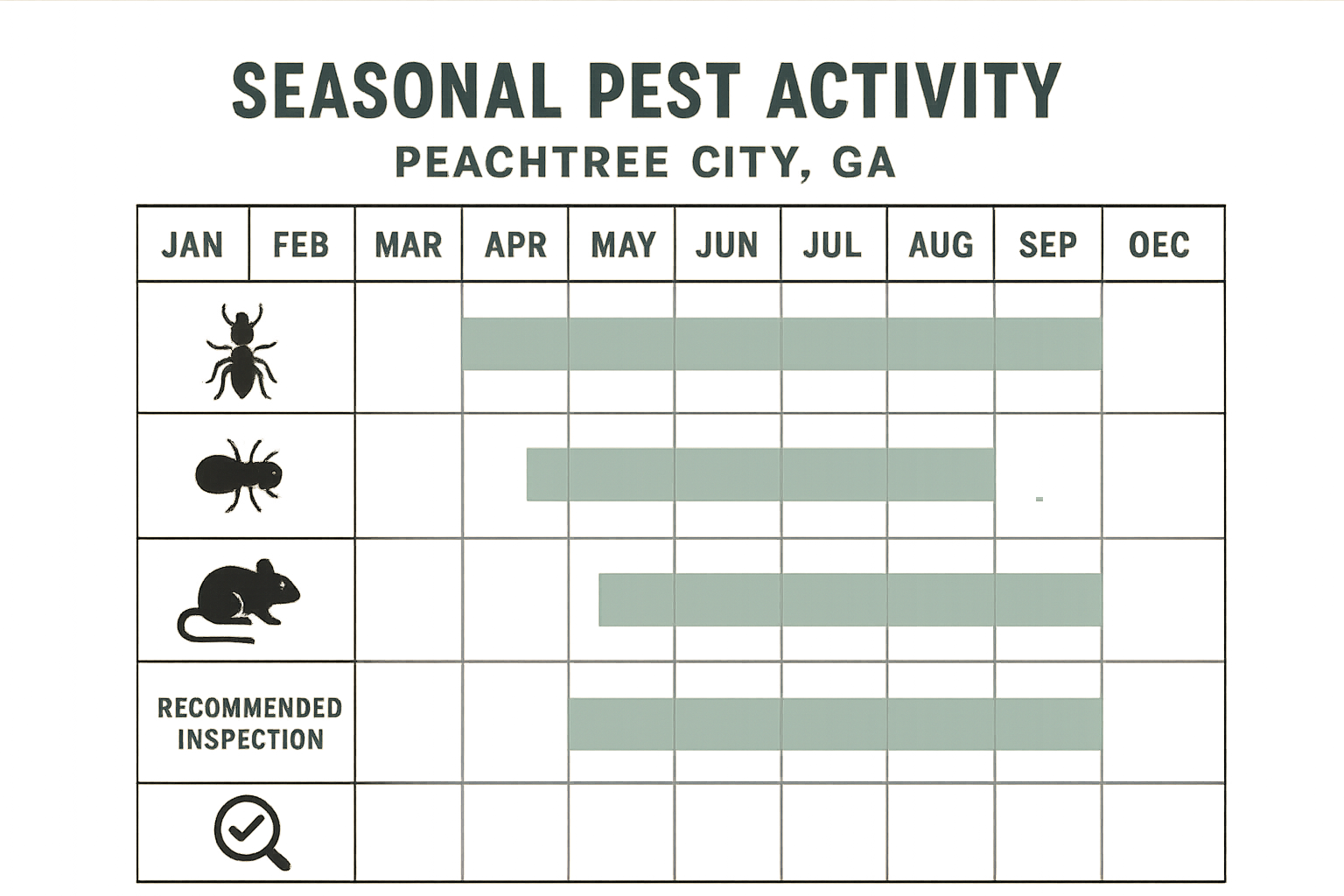
| Month | Termite Activity | Secondary Pests (Ants, Rodents) |
|---|---|---|
| January | Low | Rodent nesting peaks |
| February | Low | Rodents still active |
| March | Medium (early swarming) | Carpenter ants emerge |
| April | High (swarm onset) | Ant foraging increases |
| May | High (peak swarm) | Ants & rodents both active |
| June | High | Ants dominate |
| July | High | Ants continue; rodents seek water |
| August | Medium‑High | Rodent activity spikes with heat |
| September | Medium (declining swarm) | Ants taper, rodents persist |
| October | Low | Rodent nesting peaks again |
| November | Low | Rodents seeking indoor shelter |
| December | Low | Rodents remain indoors |
Peak Termite Months
Termites in Peachtree City typically launch their swarming flights from late April through early September. During this window, winged alates leave colonies to mate, which is the perfect moment for a professional inspection—any missed swarm can translate into hidden colonies inside your walls.
Secondary Pest Peaks to Watch
While termites dominate the warmer months, ants (especially carpenter and odorous house ants) reach their highest foraging rates in May‑July. Rodents, on the other hand, love the cooler months; they seek warmth and food in October‑December, often forcing homeowners to address structural gaps after the termite season has waned.
Optimal Inspection Windows
- Early Spring (mid‑March to early April): Inspect before termites take off. Catch early colonies and prevent a massive swarm later.
- Late Fall (late October to early November): Conduct a post‑season sweep. This catches any lingering termites and lets you seal entry points before rodents move in.
Quick Homeowner Tips for High‑Risk Periods
- Keep gutters and downspouts clear to eliminate excess moisture—termites love damp wood.
- Remove wood debris, firewood, and tree stumps from the perimeter; they act as bridges for both termites and carpenter ants.
- Seal cracks around foundations, windows, and utility entries to block rodents seeking shelter.
- Maintain a tidy yard: trim vegetation away from the house and store compost in sealed containers.
Treatment Options and What They Cost in Georgia
Liquid Barrier Injection
Liquid barrier injection is the classic “soil treatment” many homeowners picture when they think of termite control. A technician drills a series of evenly spaced holes around the foundation, then pumps a termiticide into the soil at a depth of 12‑18 inches. The chemical forms a continuous, invisible shield that termites cannot cross without dying.
Typical chemicals used in Georgia include fipronil, imidacloprid, and chlorantraniliprole. These ingredients are chosen for their long‑lasting residual activity, often protecting a home for up to five years with a single application. Because the barrier is applied below grade, it remains effective even after landscaping changes or minor foundation repairs.
- Pros: Immediate protection, no visible equipment after treatment, low maintenance for the homeowner.
- Cons: Requires professional equipment, effectiveness can be reduced in highly porous soils, and the initial cost is higher than baiting.
Bait Station Systems
Bait stations work from the opposite direction—rather than blocking termites, they lure them to a slow‑acting toxin that spreads through the colony. Technicians place plastic stations about 10‑15 feet apart around the perimeter and in interior locations where activity is suspected. The stations contain cellulose material infused with a low‑dose active ingredient such as hexaflumuron.
After placement, the stations are monitored every 30‑45 days. If termites are detected, the bait is replenished until the colony collapses. This method can take several months to achieve full eradication, but it offers a highly targeted approach that minimizes chemical exposure to the surrounding environment.
- Pros: Environmentally friendly, adaptable to changing termite activity, lower upfront expense.
- Cons: Requires ongoing monitoring and maintenance, longer time to complete eradication, effectiveness can vary with soil moisture and temperature.
Effectiveness, Longevity, and Maintenance
Both methods are EPA‑registered and have proven success rates when applied correctly. Liquid barriers provide instant, long‑term protection but can be compromised by soil erosion or new construction. Bait stations, while slower, continue to protect as long as they are actively monitored and refilled; many homeowners keep stations in place for 3‑5 years.
From a homeowner’s perspective, the liquid barrier is essentially “set it and forget it,” whereas bait stations demand a quarterly check‑in. If you prefer a hands‑off solution and have a stable foundation, the barrier may be the better fit. If you’re environmentally conscious and willing to schedule regular visits, baiting offers a flexible alternative.
Cost Comparison
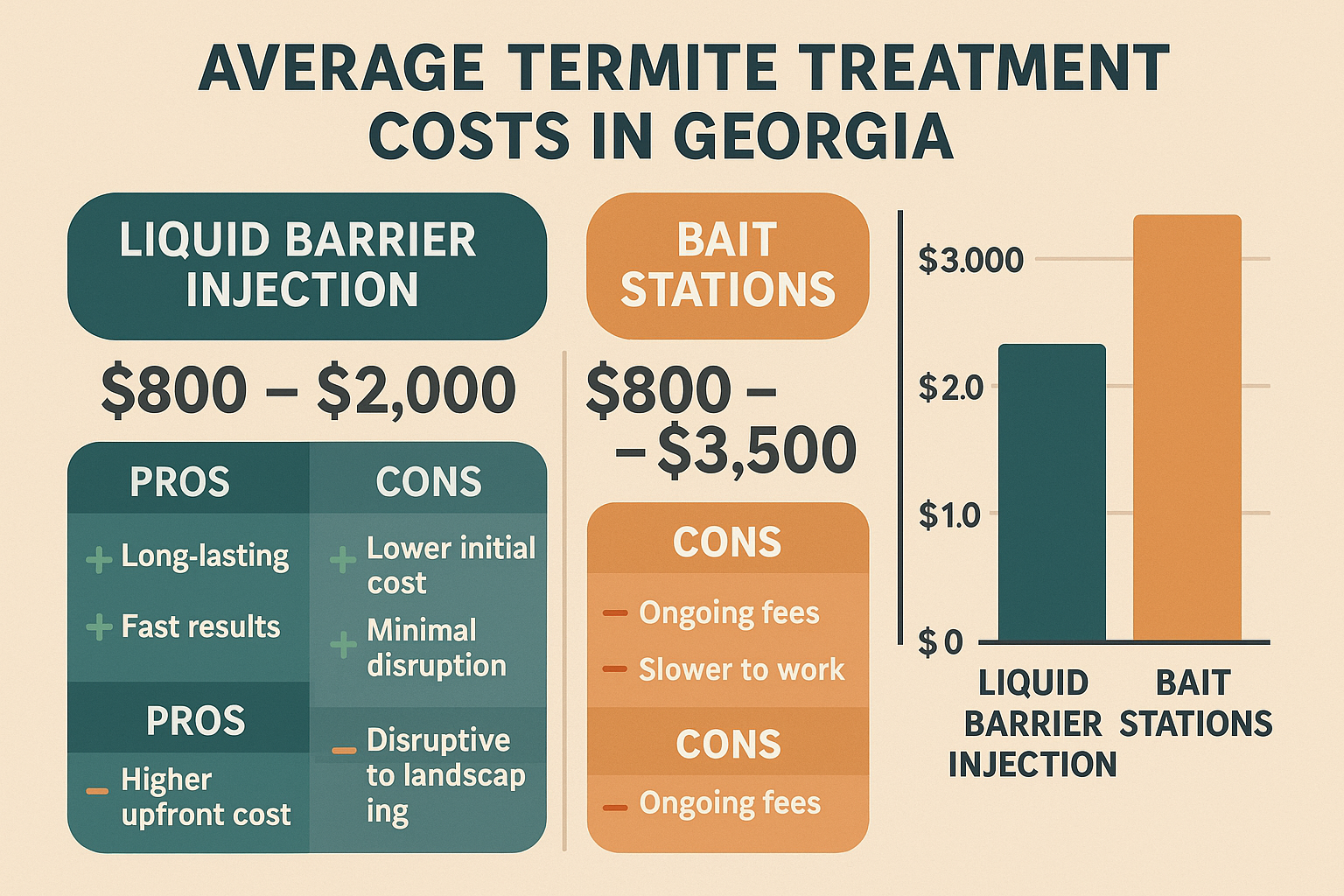
In Georgia, the price you’ll pay depends on several variables, but typical ranges look like this:
| Method | Typical Price Range | Key Advantages | Key Disadvantages |
|---|---|---|---|
| Liquid Barrier Injection | $2,200 – $4,500 | Immediate, long‑lasting protection; low homeowner maintenance | Higher upfront cost; may need re‑treatment in very sandy soils |
| Bait Station System | $1,800 – $3,200 (initial setup) + $150‑$250 per monitoring visit | Targeted, less chemical use; adaptable to colony movement | Requires regular monitoring; full eradication can take months |
Factors That Influence the Final Price
Several site‑specific elements can shift these numbers up or down:
- Home size: Larger square footage means more perimeter drilling or additional bait stations.
- Soil type: Sandy or highly porous soils may require deeper injections or more frequent bait replacements.
- Infestation severity: A light, localized colony costs less than a widespread, multi‑nest situation.
- Access and landscaping: Complex foundations, extensive landscaping, or hard‑to‑reach areas increase labor time.
Budgeting and Financing Tips
Most reputable pest companies, including Anthem Pest Control, offer transparent quotes and flexible payment plans. Ask about:
- Seasonal discounts—many providers lower prices during off‑peak months.
- Bundled services—combining termite treatment with other pest prevention can reduce overall cost.
- Financing options—0% APR for 12‑month plans are common for larger projects.
- Warranty coverage—ensure the quoted price includes a guarantee period; a solid warranty protects your investment.
By understanding the two main treatment pathways, their pros and cons, and the variables that affect pricing, you can make an informed decision that fits both your budget and your peace of mind.
Choosing a Professional and Maintaining a Termite‑Free Home
When termites start whispering under your floorboards, the right pest‑control partner can make the difference between a quick fix and a costly rebuild. Selecting a reputable company ensures the treatment follows the latest industry standards and that you’re protected long after the technician leaves.

Key qualifications to look for
- Proper licensing: Georgia requires pest‑control operators to hold a state license. Verify the license number on the company’s website or request it during the estimate.
- EPA‑approved products: Effective termite control relies on chemicals that have passed rigorous EPA testing. Ask which products will be used and whether they are approved for residential use.
- Local experience: Termite species and soil conditions vary by region. A company that has served Peachtree City for several years will know the hotspots and the most successful treatment protocols.
Questions to ask during the estimate
- What warranty does the treatment include, and how long does it last?
- Are follow‑up inspections part of the package, and how often are they scheduled?
- Will you receive a written service agreement that outlines the scope, products, and any guarantees?
- How do you handle unexpected findings, such as a hidden colony discovered after the initial work?
Transparent pricing is a hallmark of trustworthy service. A detailed quote should break down labor, product costs, and any optional add‑ons. Insist on a written agreement that spells out the total price, payment schedule, and cancellation policy—this protects you from surprise fees later.
Ongoing maintenance tips for a termite‑free home
- Control moisture: Repair leaky gutters, direct downspouts away from foundations, and use dehumidifiers in basements.
- Maintain wood‑to‑soil clearance: Keep wooden siding, firewood piles, and landscaping mulch at least six inches above ground level.
- Schedule annual inspections: Even after a successful treatment, a yearly professional check catches new activity before it spreads.
- Trim vegetation: Overgrown trees and shrubs can bridge the gap between soil and your home, giving termites a highway to your structure.
Professional monitoring doesn’t end when the spray dries. Many companies install bait stations that require quarterly checks and occasional re‑baiting. These stations act as an early‑warning system, allowing technicians to intervene before a colony expands.
Anthem Pest Control brings more than 15 years of Southern‑Georgia experience, a fully licensed team, and EPA‑registered products to every job. Their service guarantee includes a 5‑year warranty on all termite treatments, written agreements with clear pricing, and complimentary annual follow‑up inspections for residential customers. When you choose Anthem, you gain a partner who monitors your home year‑round, not just a one‑time exterminator.
Protect Your Home Today with Anthem Pest Control
Termites may be invisible, but the damage they cause isn’t. An untreated infestation can weaken structural beams, compromise foundations, and lead to costly repairs that far exceed the price of early detection. By catching these pests before they establish a colony, you protect not only the integrity of your Peachtree City home but also its resale value and your family’s peace of mind.
Why a Professional Inspection Matters
Georgia’s climate creates the perfect environment for subterranean and dry‑wood termites. A certified technician from Anthem Pest Control brings local expertise, advanced detection tools, and a deep understanding of the species most common in the area. Our inspectors can pinpoint hidden activity, differentiate between harmless wood‑eating insects and destructive termites, and recommend the most effective treatment—whether that’s a targeted bait system, liquid barrier, or a combination approach tailored to your property.
Take the First Step – No‑Obligation Inspection
We’re offering a free, no‑obligation termite inspection for homeowners who want to stay ahead of the problem. Scheduling is simple: click the link below or give us a call, and one of our friendly specialists will arrange a convenient time to assess your home. There’s no pressure to purchase a service; you’ll receive a clear, written report outlining any findings and the best next steps.
Contact Anthem Pest Control
Ready to safeguard your home? Visit Anthem Pest Control for a free quote, or call us directly at 877‑371‑8196. Our team guarantees safe, effective, and affordable solutions, backed by transparent pricing and a commitment to customer satisfaction. Feel free to reach out for more information, request a detailed estimate, or simply ask any questions you may have.