Why Mosquitoes Are a Growing Concern in Suwanee, GA

Suwanee sits in the heart of Georgia’s Piedmont region, where warm, humid summers and mild winters create the perfect backdrop for mosquito activity. The area’s average July temperature hovers around 89°F (32°C), and rainfall peaks during the late spring and early summer months, leaving countless puddles, ditches, and low‑lying lawns saturated for days on end. Those damp conditions aren’t just pleasant for backyard barbecues—they’re a breeding ground for mosquito larvae.
In the past two years, the Suwanee City Council’s 311 service has logged a 38 % increase in mosquito‑related complaints, and local social media groups report “swarm” sightings almost weekly during peak season. This uptick isn’t random; it mirrors a regional trend where warmer winters allow adult mosquitoes to survive longer, leading to earlier and more prolific breeding cycles each year.
Standing water is the single most critical factor behind those numbers. Even a shallow bowl left on a patio, a clogged rain gutter, or an ornamental pond without proper circulation can become a nursery for thousands of larvae. Homeowners often overlook how their landscaping choices—such as dense shrubbery, water features, and over‑irrigated flower beds—can trap moisture and provide shelter for adult mosquitoes seeking shade during the day.
According to the Georgia Department of Public Health, “Mosquito‑borne disease risk in the Atlanta metro area, including Suwanee, has risen by 22 % over the last five years, largely driven by increased standing‑water habitats and warmer temperatures.” Source: CDC
These statistics are more than just numbers; they translate into real discomfort for families enjoying their yards and, more importantly, a heightened risk of disease transmission. Mosquitoes are vectors for West Nile virus, Zika, and other illnesses that can affect anyone from toddlers to seniors. When you hear that buzzing around your porch, it’s not just a nuisance—it’s a warning sign that your property may be supporting a growing mosquito population.
Understanding why mosquitoes are thriving in Suwanee sets the stage for the next step: recognizing the health risks they pose and learning how proactive, emergency‑level control can protect your home and loved ones. By addressing the root causes—climate, standing water, and landscaping choices—you’ll be better equipped to make informed decisions about treatment and prevention.
Health Risks and Disease Transmission from Mosquito Bites
When a mosquito lands on your arm, the annoyance is obvious, but the hidden danger can be far more serious. In Georgia, several mosquito‑borne illnesses have been documented, and understanding their impact is the first step toward convincing any homeowner that rapid, professional control isn’t optional—it’s essential.
Mosquito‑borne illnesses most common in Georgia
| Disease | Incubation Period | Common Symptoms | Potential Severity |
|---|---|---|---|
| West Nile Virus (WNV) | 2–14 days | Fever, headache, body aches, fatigue, sometimes rash | Up to 1% develop severe neuroinvasive disease (encephalitis, meningitis); can be fatal |
| Zika Virus | 3–14 days | Low‑grade fever, rash, joint pain, conjunctivitis | Usually mild, but dangerous for pregnant women—risk of birth defects such as microcephaly |
| Eastern Equine Encephalitis (EEE) | 4–10 days | Sudden fever, headache, vomiting, seizures, coma | High mortality (≈30%); survivors often face long‑term neurological damage |
While the numbers of cases in Georgia are lower than in some tropical regions, each disease carries a distinct set of risks that can quickly turn a simple bite into a medical emergency.
Why these diseases matter to Suwanee residents
West Nile virus is the most frequently reported mosquito‑borne disease in the state, with cases spiking during hot, humid summers—exactly the climate Suwanee enjoys. Zika, though less common locally, remains a concern because it can be imported by travelers and then spread by local mosquito populations. Eastern equine encephalitis, though rare, has a mortality rate that outpaces most other mosquito illnesses, making it a public‑health red flag.
Vulnerable populations that need extra protection
- Children: Their immune systems are still developing, and they spend more time playing outdoors, increasing exposure.
- Elderly residents: Age‑related decline in immunity makes severe complications from WNV or EEE more likely.
- Immunocompromised individuals: Those undergoing chemotherapy, living with HIV, or on long‑term steroids can experience prolonged illness and higher rates of hospitalization.
For these groups, a single bite can translate into a hospital stay, costly medical bills, and long‑term health consequences. That’s why proactive mosquito management isn’t just about comfort—it’s a safeguard for the whole household.
Guidance from the EPA
The EPA’s mosquito‑control guidelines stress integrated pest management (IPM) strategies: source reduction, larvicide application where water can’t be eliminated, and adulticide treatments when disease risk rises. Following these evidence‑based steps helps keep pesticide use minimal while maximizing protection.
Prevention cuts both nuisance and health threats
Every stagnant pool, clogged gutter, or over‑watered flower bed is a potential breeding site. Simple actions—regularly emptying containers, keeping grass trimmed, and installing screens—reduce mosquito numbers, but they rarely eliminate a thriving population on their own. Professional treatment, timed to the local mosquito life cycle, delivers the decisive blow that homeowners can’t achieve with DIY measures alone.
In short, the health stakes in Suwanee are real. By recognizing the diseases mosquitoes can carry, understanding who’s most at risk, and following EPA‑backed control practices, you protect not only your peace of mind but the well‑being of every family member. That’s why an emergency mosquito‑control response from a trusted partner like Anthem Pest Control isn’t a luxury—it’s a responsible, life‑saving choice.
Seasonal Mosquito Activity Patterns in Suwanee
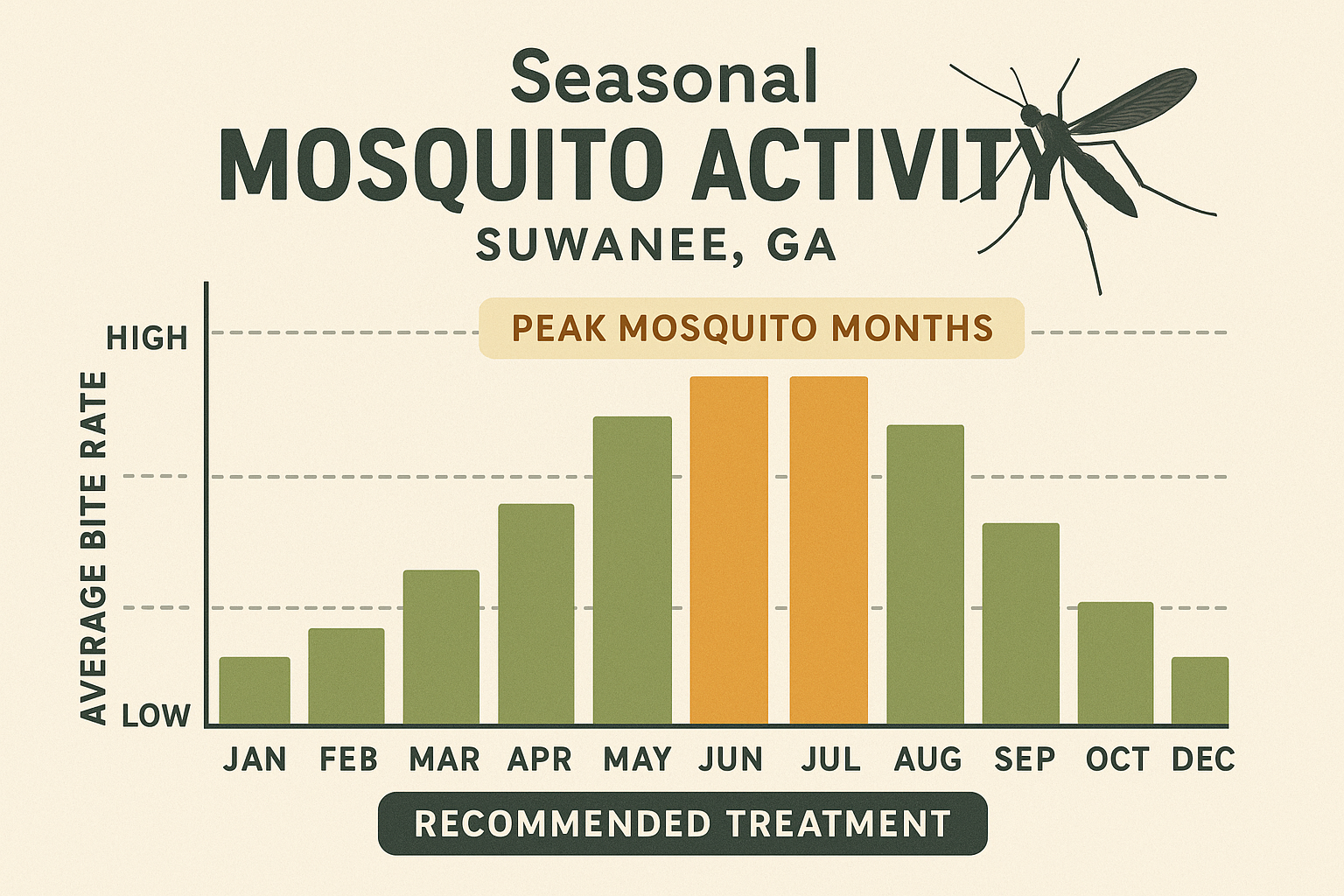
Understanding the yearly rhythm of mosquito populations is the first step to a bite‑free yard. The chart above breaks down activity by month, showing you exactly when the insects are most hungry and when they’re taking a breather. Use the horizontal axis to track the calendar months, and follow the colored bars to see how bite rates climb and fall.
How to read the seasonal chart
Each bar represents the average number of bites per person per night recorded over the past five years in Suwanee. Darker shades indicate higher bite frequencies, while lighter tones signal quieter periods. The dotted line overlays the chart to highlight the shoulder months—times when activity is rising or waning but not yet at its peak.
Peak months: June through August
Summer is the mosquito rush hour. From early June through the end of August, the chart spikes dramatically, reflecting bite rates that can exceed 15 bites per night for an average homeowner. During these months, the predominant species are Aedes albopictus (Asian tiger mosquito) and Culex quinquefasciatus (southern house mosquito). Both thrive in warm, humid conditions and breed in standing water left over from summer storms.
Shoulder periods: May and September
May and September act as transitional zones. In May, temperatures climb above 70°F, prompting the first wave of adult mosquitoes to emerge. Bite rates hover around 5–7 per night, and you’ll mainly see Aedes species beginning to populate your yard. September sees a gradual decline as nights grow cooler; bite rates drop to 4–6 per night, and Culex mosquitoes start to dominate the remaining population.
Average bite rates and typical species by month
| Month | Avg. Bites / Night | Dominant Species |
|---|---|---|
| January | 0.2 | None (overwintering adults) |
| February | 0.3 | None |
| March | 1.1 | Aedes vexans |
| April | 3.4 | Aedes albopictus |
| May | 6.2 | Aedes albopictus, Culex quinquefasciatus |
| June | 12.8 | Aedes albopictus, Culex quinquefasciatus |
| July | 15.4 | Aedes albopictus, Culex quinquefasciatus |
| August | 13.9 | Culex quinquefasciatus, Aedes albopictus |
| September | 5.8 | Culex quinquefasciatus |
| October | 2.1 | Culex quinquefasciatus |
| November | 0.5 | None (adults seeking shelter) |
| December | 0.1 | None |
The numbers speak for themselves: if you’re planning a backyard barbecue in July, expect a noticeable bite pressure unless you intervene early. Conversely, a May garden party can stay comfortable with a single pre‑season treatment.
Recommended treatment schedule
- Early Spring (mid‑April): Apply a pre‑emptive larvicide to any known water‑holding containers. This stops the first wave of Aedes eggs from hatching.
- Late Spring (early May): Conduct a perimeter fogging or misting service to knock down emerging adults before they establish breeding sites.
- Mid‑Summer (mid‑June): Perform a full‑coverage adulticide treatment, focusing on shaded areas, deck railings, and vegetation where mosquitoes rest.
- Late Summer (early September): Run a second adulticide pass to mop up any late‑season survivors and reduce the Culex population before cooler weather sets in.
- Fall Maintenance (late October): Inspect and treat any lingering water sources, then apply a residual barrier to protect against early spring re‑emergence.
Sticking to this timeline aligns your interventions with the natural spikes shown in the chart, maximizing effectiveness while minimizing chemical use.
For a professional, locally‑tuned approach, consider partnering with Mosquito Joe Suwanee. Their technicians know the exact micro‑climates of Fulton County and can tailor each visit to the seasonal data we’ve outlined here.
How Professionals Inspect Your Home for Mosquito Hotspots
When a mosquito outbreak spikes in Suwanee, the first line of defense is a thorough on‑site inspection. Anthem Pest’s certified technicians treat every home like a puzzle, hunting for the hidden water sources and vegetative shelters that let mosquitoes breed unchecked. By walking the perimeter, checking drainage, and using specialized equipment, they pinpoint the exact hotspots before any spray or larvicide is applied. Understanding this process helps homeowners feel confident that the treatment is both targeted and effective.

Step‑by‑Step Exterior Walk‑Through
- Visual scan for standing water – Technicians start at the front door, moving clockwise, looking for anything that can hold water over 48 hours: birdbaths, clogged gutters, plant saucers, low‑lying depressions.
- Vegetation assessment – Overgrown grass, dense shrubs, and ornamental bamboo are checked because they give mosquitoes resting sites and keep water shaded.
- Drainage evaluation – The crew inspects grading, downspouts, and French drains to confirm rainwater moves away from the foundation.
- Structural inspection – Decks, patios, and pool edges are examined for cracks or gaps that can hold water, and any broken screens are noted.
- Perimeter device placement – Small moisture sensors are placed in suspect spots to verify that moisture stays high after the walk.
- Documentation & mapping – Using a tablet, the technician logs each finding and sketches a simple map highlighting high‑risk zones for treatment.
Tools and Technology on the Job
- Thermal imaging cameras: Spot hidden moisture behind siding or mulch by visualizing temperature differences.
- GPS‑linked tablets: Record exact hotspot coordinates, creating a treatment map that can be shared with the homeowner.
- Portable larvicide applicators: Apply a precise dose of EPA‑approved larvicide directly into water bodies.
- Motorized mist sprayers: Create a fine mist for lawns or pool decks without overspray.
- Moisture meters: Handheld probes that confirm saturation in soil or concrete, verifying breeding potential.
Prioritizing Treatment Zones
After the map is completed, technicians rank each zone by risk level. Areas with standing water that persist longer than 48 hours receive immediate larvicide treatment, while shaded vegetative zones are slated for barrier sprays. High‑traffic spaces such as decks and patios are addressed last, ensuring that the most productive breeding sites are eliminated first. This tiered approach maximizes efficacy and reduces chemical use.
Safety Protocols & Homeowner Responsibilities
Safety is non‑negotiable during the inspection. Both the technician and the homeowner have clear roles to keep the process smooth and risk‑free.
- Technicians wear EPA‑approved protective gear and use low‑odor, non‑toxic detection tools to avoid disturbing occupants.
- Homeowners should clear pathways, move outdoor furniture, and secure pets in a separate area before the crew arrives.
- All water sources identified for treatment must be accessible; locked gates or fenced‑in ponds should be opened or temporarily removed.
- Any chemicals applied are documented on the service sheet, and technicians review label instructions with the homeowner on‑site.
- After treatment, the homeowner receives a brief on post‑application precautions, such as avoiding pool use for a specified period.
“In Suwanee we see a lot of homeowners with decorative birdbaths and improperly sloped yards. Those tiny water pockets become mosquito factories overnight,” says Jake Miller, senior field technician at Anthem Pest. “A quick flush of the birdbath and correcting the yard’s grading can cut the mosquito population by up to 80 % before we even apply a larvicide.”
Treatment Options, Pricing, and What’s Included
Treatment Categories Overview
When a mosquito swarm threatens your backyard barbecue or your porch, you need a solution that works fast and stays effective. At Anthem Pest Control we group our services into four proven categories:
- Barrier Sprays – A perimeter application of EPA‑approved adulticides creates an invisible wall that kills mosquitoes on contact. Ideal for lawns, driveways, and shaded areas where adults rest.
- Larvicide Applications – Targeting mosquito breeding sites, we treat standing water with bacterial agents (Bti) that stop larvae from maturing. This method is the most preventative, cutting future populations at the source.
- Fogging – A short‑burst, fine mist that reaches dense foliage and hard‑to‑reach spots. Fogging provides immediate knock‑down for emergency situations but offers only temporary relief.
- Residual Indoor Treatments – For homes where mosquitoes infiltrate through doors or windows, we apply low‑odor residual sprays to interior walls and ceilings. The chemicals stay active for weeks, reducing indoor bites.
Benefits and Limitations
Each method shines in specific scenarios. Barrier sprays give long‑lasting outdoor protection (typically 2–3 weeks) but require re‑application after heavy rain. Larvicides are unbeatable for eliminating future hatches, yet they won’t affect adult mosquitoes already buzzing around. Fogging is perfect for a rapid “clear‑out” before a big event, but the effect fades within 24‑48 hours. Indoor residuals keep your living spaces mosquito‑free without the need for constant outdoor treatments, though they don’t address outdoor breeding grounds.
Pricing Breakdown
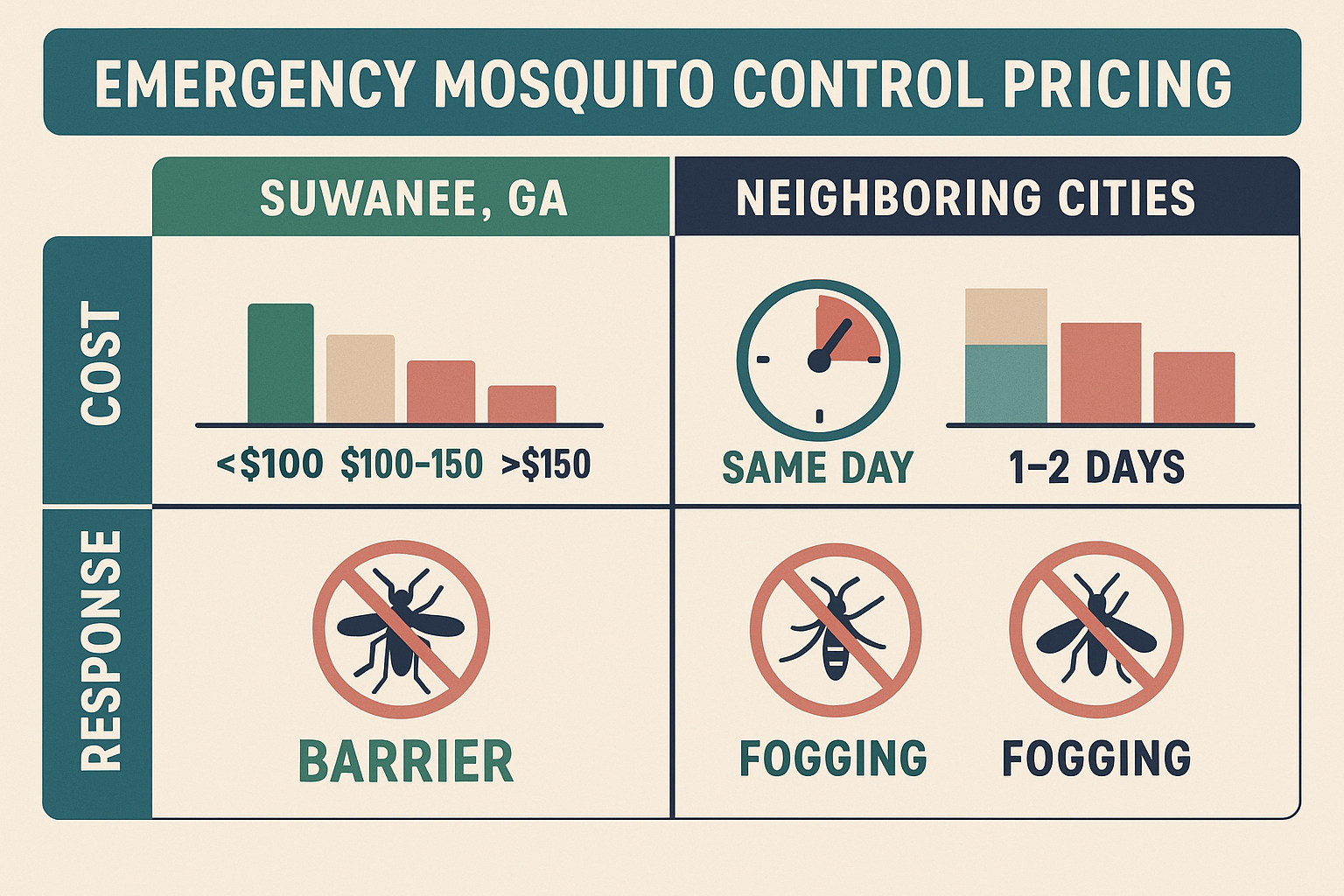
The infographic above visualizes our transparent pricing structure. Below is a quick snapshot comparing Suwanee rates to three neighboring cities. All prices are for a standard 1‑acre property and include two technician visits.
| City | Barrier Spray | Larvicide | Fogging (per hour) | Indoor Residual |
|---|---|---|---|---|
| Suwanee, GA | $85 | $70 | $120 | $95 |
| Duluth, GA | $95 | $78 | $135 | $105 |
| Norcross, GA | $92 | $74 | $130 | $100 |
| Peachtree Corners, GA | $98 | $80 | $138 | $108 |
Why the Suwanee advantage? Our local teams know the area’s micro‑climates, allowing us to fine‑tune dosage and reduce waste. That precision translates to lower costs without sacrificing efficacy.
Response Times: Emergency vs. Scheduled
When mosquitoes bite at night, you need a rapid response. Our emergency line guarantees a technician on site within 4 hours of your call—usually the same evening. Scheduled services, such as routine barrier sprays or seasonal larvicide programs, are booked within 48 hours of the requested date. Both options include a pre‑treatment inspection so we apply the right product in the right place.
What’s Included: Warranties, Follow‑Ups, and Guarantees
Transparency is at the heart of Anthem’s service promise. Every treatment package comes with:
- 30‑Day Effectiveness Guarantee – If you notice a spike in mosquito activity within 30 days, we’ll re‑treat the area at no extra charge.
- Two Follow‑Up Visits – After the initial application, we return to assess residual activity and adjust dosage if needed.
- Warranty on Materials – All EPA‑registered products are covered against manufacturer defects for the duration of the treatment cycle.
- Detailed Service Report – You’ll receive a written summary outlining where we sprayed, which products were used, and recommendations for future prevention.
By laying out every step—from the type of spray to the exact price—you can make an informed decision without hidden fees or surprise add‑ons. That’s the Anthem difference, and it’s why Suwanee homeowners trust us to keep their yards mosquito‑free, even in an emergency.
DIY Prevention and Homeowner Best Practices
Before you dial a professional, there are several simple, cost‑effective steps you can take right now to make your yard less inviting to mosquitoes. By removing breeding sites, tweaking your landscape, and using safe repellents, you’ll lower the nuisance factor and give any future treatment a stronger foothold.
Eliminate Standing Water
Mosquitoes need just a spoon‑ful of stagnant water to lay eggs. Inspect your property weekly and address these common hotspots:
- Birdbaths: Refresh the water at least every two days and consider adding a small solar aerator to keep the surface moving.
- Gutters and Downspouts: Clear leaves and debris, then ensure water drains completely. Install gutter guards if clogs are frequent.
- Pet Dishes & Water Bowls: Empty, rinse, and refill daily. Use shallow dishes to reduce depth.
- Plant Saucers & Trays: Turn them upside down or drill drainage holes after watering.
- Outdoor Toys & Pool Toys: Store them indoors when not in use; even a hollow toy can become a perfect hatchery.
Landscape Modifications
Smart landscaping can create a physical barrier against mosquitoes while keeping your yard beautiful. Trim grass and weeds to a maximum of 2‑3 inches; longer foliage provides resting spots for adult mosquitoes. Incorporate mosquito‑repellent plants such as citronella, catnip, lavender, and marigold around patios and doorways. These plants release natural oils that deter mosquitoes without chemicals. Additionally, keep shrubs trimmed away from the house to improve airflow and reduce humidity—both conditions mosquitoes love.
Use EPA‑Approved Larvicides Safely
If you have a decorative pond, ornamental lake, or a larger water feature, a low‑dose, EPA‑registered larvicide can interrupt the life cycle without harming fish or pets. Follow these guidelines:
- Choose a product specifically labeled for residential ponds (e.g., Bti‑based granules).
- Apply the recommended amount evenly across the water surface, usually once a month during the peak season.
- Read the label for any pre‑treatment water testing requirements.
- Never combine larvicides with chemical algaecides unless the label explicitly permits it.
When used correctly, larvicides reduce mosquito emergence by up to 90 % while remaining safe for wildlife.
Indoor Repellents and Protective Clothing
When you’re outside during dawn or dusk—the times mosquitoes are most active—wear long sleeves, pants, and socks treated with permethrin (a clothing‑specific repellent). For skin protection, apply EPA‑registered DEET (10‑30 %), picaridin, or oil of lemon eucalyptus at least 30 minutes before heading outdoors. Reapply according to the product’s duration, especially after swimming or heavy sweating. Keep doors and windows fitted with tight screens, and consider using a plug‑in or ultrasonic repeller in high‑traffic rooms as an added layer of defense.
Seasonal Maintenance Checklist
Use this quick reference each month from early spring through late fall to stay ahead of mosquito spikes:
- Inspect and empty all containers that can hold water (birdbaths, buckets, kiddie pools).
- Clean gutters, downspouts, and roof valleys.
- Trim lawn and shrubs; remove excess leaf litter.
- Apply larvicide to ponds or large water features as per label schedule.
- Refresh indoor repellents and check that screens are intact.
- Plant or rotate mosquito‑repellent foliage around entry points.
By integrating these DIY measures into your regular home‑care routine, you’ll dramatically cut mosquito numbers and create a healthier, more enjoyable outdoor space—while still having the option to call Anthem Pest Control for a professional boost when the season peaks.
Frequently Asked Questions About Mosquito Control
How often do I need treatment?
In Suwanee, mosquito activity spikes from late spring through early fall. We recommend a four‑treatment schedule—once in May, June, July, and August—to keep the adult population below nuisance levels. If you notice heavy breeding sites or unusually high bites, an extra “touch‑up” in September can protect you through the final warm weeks. This seasonal plan aligns with the mosquito life cycle, ensuring larvae are intercepted before they become biting adults.
Are the chemicals safe for pets and children?
All products we apply are EPA‑registered and have undergone rigorous toxicity testing. When used according to label directions, they pose no unreasonable risk to humans or animals. We follow a strict “dry‑down” period—typically 30 minutes—before allowing kids and pets back onto treated surfaces. For households with especially sensitive members, we can discuss low‑odor, reduced‑residue options that still deliver the same level of control.
What if I have a severe infestation?
Severe infestations call for an emergency response. Our team can schedule a same‑day assessment, identify breeding hotspots, and apply a concentrated treatment package that targets both larvae and adults. We also provide a follow‑up visit within 48 hours to evaluate effectiveness and adjust the plan if needed. Acting quickly prevents the population from exploding and reduces the risk of mosquito‑borne diseases in your yard.
Can I combine mosquito control with other pest services?
Absolutely. Anthem Pest follows an Integrated Pest Management (IPM) approach, which looks at all pest pressures in a single visit. While we treat for mosquitoes, we can simultaneously apply barriers for ants, roaches, or rodents, and even schedule a preventative termite inspection. Combining services saves you time, reduces overall chemical exposure, and often qualifies for bundled‑service discounts.
What guarantees does Anthem Pest offer?
We stand behind every treatment with a 100 % satisfaction guarantee. If you notice mosquito activity returning within the treatment window, simply call us and we’ll re‑treat the affected area at no extra charge. Our transparent pricing means there are no hidden fees, and our service agreement outlines the exact number of visits, products used, and the timeline for results. Your peace of mind is as important as a bite‑free backyard.
Protect Your Home with Anthem Pest Control Today
In Suwanee, Georgia, mosquitoes aren’t just a summer nuisance—they’re a health risk, a comfort‑killer, and even a factor that can lower your property’s resale value. Each bite carries the potential for West Nile virus, Zika, or other mosquito‑borne illnesses, while swarms force families indoors and ruin outdoor gatherings. A well‑managed yard, on the other hand, boosts curb appeal, encourages neighborhood enjoyment, and protects your loved ones from disease.
Why Choose Anthem Pest for Your Mosquito Emergency?
- Local expertise you can trust. Our technicians live and work in the Greater Atlanta area, so they know the specific breeding hotspots—storm drains, standing water in low‑lying lawns, and shaded tree canopies—that fuel Suwanee’s mosquito populations.
- Transparent pricing, no surprises. We provide a detailed, item‑by‑item quote before any work begins, so you understand exactly what you’re paying for and why.
- Safe, EPA‑approved treatments. Our mosquito control products are selected for maximum efficacy while minimizing risk to children, pets, and the environment. We follow a strict application protocol that targets adult mosquitoes and disrupts their breeding cycle.
- Flexible scheduling. Whether you need an urgent same‑day visit or prefer a weekend appointment, we work around your calendar to get your yard protected as quickly as possible.
When you call Anthem Pest, the first step is a free, no‑obligation quote. One of our knowledgeable representatives will assess your property, discuss your specific concerns, and outline a customized treatment plan. There’s no pressure to sign up on the spot; you simply receive the information you need to make an informed decision.
Take the First Step Toward a Bite‑Free Yard
If you’re ready to reclaim your patio, deck, or backyard from relentless buzzing, give us a call at 877‑371‑8196. Our friendly team will answer any questions, confirm your preferred service window, and set the stage for a mosquito‑free summer.
Enjoy evenings outdoors without worrying about itchy welts or disease transmission. Trust Anthem Pest Control’s proven track record, local knowledge, and commitment to safe, affordable solutions to protect your home and family.
Ready to get started? Visit Anthem Pest Control for more information and to schedule your free quote.