Understanding the Rat Problem in Woodstock, GA
Woodstock sits in the foothills of the Appalachian Mountains, where the climate is a blend of warm, humid summers and relatively mild winters. This combination creates an ideal environment for rodents that thrive on moisture and readily available food sources. The area’s average annual rainfall, abundant vegetation, and proximity to the Etowah River provide rats with both shelter and nourishment year‑round, making the town a natural magnet for these pests.
Local data underscores the scale of the issue. According to Total Animal Control, Woodstock receives roughly 150–200 rodent‑related service calls each month, with a noticeable spike during the late summer and early fall. Over the past year, complaints have risen by about 12%, indicating that more homeowners are encountering rat activity in their yards and homes.
The two species most frequently spotted in Woodstock are the roof rat (Rattus rattus) and the Norway rat (Rattus norvegicus). Roof rats prefer elevated habitats—attics, trees, and dense shrubbery—because they are excellent climbers. Norway rats, on the other hand, are ground‑dwelling and favor burrows near garbage, sewer lines, and low‑lying vegetation. Understanding which species you’re dealing with helps determine the most effective control strategy.
Urban development has unintentionally opened the door for rats. New construction often leaves gaps in foundations, while landscaping practices such as mulching, dense planting, and ornamental water features create hidden pathways and nesting sites. Storm‑drain systems, utility openings, and even pet doors become convenient entry points when they’re not properly sealed. As Woodstock continues to grow, these micro‑habitats multiply, giving rats more opportunities to infiltrate homes.
Quick Facts
- Population density: Approximately 2,200 residents per square mile, increasing the likelihood of shared waste and food sources.
- Seasonal peaks: Late July through October, when food stores are abundant and temperatures are optimal for breeding.
- Average sightings per household: 1–2 per year in established neighborhoods; higher in newer developments with ongoing construction.
- Common entry points: Gaps under doors, unsealed utility penetrations, and overgrown vegetation touching the home’s exterior.
Homeowners should take rat activity seriously. Rats are carriers of diseases such as leptospirosis, hantavirus, and salmonella, which can contaminate food, surfaces, and even water supplies. Their gnawing habit can compromise insulation, electrical wiring, and structural wood, leading to costly repairs. Moreover, a small infestation can quickly balloon into a full‑blown colony if left unchecked.
Recognizing the local conditions that favor rats—climate, geography, and urban growth—empowers you to act before damage occurs. Early detection, proper sealing of entry points, and professional pest management are the most reliable ways to protect your Woodstock home from the hidden hazards that rats bring.
Identifying Signs of a Rat Infestation
Rats are stealthy, but they don’t stay completely hidden. The first clue often appears as a visual hint—tiny, dark pellets that look like grain or black pepper. You’ll typically find droppings along baseboards, under kitchen appliances, or near food storage areas. Look for gnaw marks on wood, plastic, or even drywall; rats love to chew to keep their teeth from over‑growing. Shredded insulation, especially in attics or crawl spaces, is another tell‑tale sign, as is any evidence of burrows or small holes near the foundation.
When the sun sets, the house may start to “talk.” Listen for scratching, scurrying, or faint squeaks coming from walls, ceilings, or the attic. These noises are usually louder at night when rats are most active. If you hear a rapid, repetitive scratching that sounds like a tiny woodpecker, you’re likely hearing a rat running along its established pathways.
Rats also give off a distinctive smell. A strong, sharp odor reminiscent of ammonia or a sour, musty stench can linger in closets, basements, or near nesting sites. This odor isn’t just unpleasant—it’s a chemical warning that rats are marking territory and communicating with each other. If you notice an unusual, lingering smell that doesn’t dissipate with regular cleaning, it’s worth investigating further.
Finally, watch for behavioral clues that affect your home’s daily life. Food that suddenly disappears from pantry shelves, chewed or frayed wiring behind appliances, and unexplained gnawed holes in cabinets are red flags. Rats are opportunistic feeders, and they’ll chew through electrical cords to create pathways or to sharpen their teeth, creating a fire hazard you don’t want to ignore.
| Inspection Item | Where to Look | What to Do If Found |
|---|---|---|
| Droppings | Baseboards, pantry corners, under appliances | Wear gloves, clean with disinfectant, note locations for a professional |
| Gnaw Marks | Wooden beams, plastic containers, drywall | Seal small holes, repair damage, schedule an inspection |
| Shredded Insulation | Attic, crawl spaces, wall cavities | Replace insulation, block entry points, call a pest specialist |
| Burrows or Holes | Foundation, garden beds, near utility lines | Fill holes with steel wool and caulk, keep landscaping trimmed |
| Auditory Signs | Walls, ceilings, attic during night hours | Record sounds, share with exterminator for accurate identification |
| Ammonia‑like Odor | Closets, basements, hidden corners | Ventilate area, locate source, contact a professional |
| Chewed Wiring | Behind appliances, near outlets | Turn off power, replace damaged cords, request a thorough inspection |
Health Risks and Property Damage from Rats
Disease Transmission
Rats are more than a nuisance; they’re carriers of serious illnesses. According to the CDC, common rodent‑borne diseases include leptospirosis, hantavirus, and salmonella. Leptospirosis can enter the bloodstream through cuts or mucous membranes after contact with contaminated urine, leading to fever, muscle pain, and even kidney failure. Hantavirus, though rarer, is transmitted when aerosolized particles from dried droppings are inhaled, causing severe respiratory distress. Salmonella from rat‑contaminated food can result in intense gastrointestinal upset, especially dangerous for children and the elderly.
Allergic Reactions
Even if you never get sick, rat urine and dander can trigger allergic responses. Proteins in their urine settle on surfaces, and when disturbed they become airborne, irritating eyes, nose, and throat. Homeowners often report chronic sneezing, itchy skin, or asthma flare‑ups that improve only after the rodent problem is addressed.
Structural Damage
Rats chew relentlessly—wood, drywall, and even concrete. Their gnawing weakens load‑bearing beams, compromises roof trusses, and creates gaps that let moisture in, accelerating rot. Perhaps more insidious is their attraction to electrical wiring. A single bite can strip insulation, expose live wires, and spark a fire. In homes where insulation has been shredded, energy bills climb because heated or cooled air escapes more easily.
Food Contamination
Rats are opportunistic feeders. They’ll raid pantry shelves, gnaw through packaging, and leave droppings and urine on food items. This not only makes meals unsafe but can also lead to costly waste. A single infestation can force you to discard an entire cupboard’s worth of non‑perishable goods.
Cost Impact: Repair vs. Early Intervention
Repairing rat‑induced damage quickly adds up. Replacing a section of compromised framing can run $1,500–$3,000, while rewiring a kitchen may exceed $2,500. Insulation replacement and mold remediation after water intrusion can push the bill past $4,000. In contrast, a professional rodent‑exclusion and control service typically costs between $150 and $300 for a single‑family home in Woodstock, Georgia. Acting early not only stops the health threat but also protects your wallet.
| Scenario | Typical Cost Range | Potential Long‑Term Impact |
|---|---|---|
| Professional rat control (single treatment) | $150 – $300 | Prevents disease spread and structural damage |
| Structural wood repair | $1,500 – $3,000 | May require repeated repairs if infestation persists |
| Electrical rewiring | $2,500 – $5,000 | Fire risk if not addressed promptly |
| Insulation replacement & mold remediation | $3,000 – $6,000 | Higher energy bills and health hazards |
Understanding these risks makes it clear why swift action isn’t optional—it’s essential for protecting both your family’s health and the integrity of your home.
Effective Treatment Methods for Woodstock Homeowners
When rats start making a home in your Woodstock house, a quick, thorough response is essential. At Anthem Pest Control we begin every job with a detailed inspection, then move through a proven sequence of exclusion, trapping, sanitation, and, when needed, targeted chemicals. Below is a step‑by‑step guide that mirrors what our certified technicians do on the ground, so you know exactly what to expect.

Inspection and Assessment
The first hour of any rat control job is spent locating the problem. Our technicians walk the interior and exterior, looking for:
- Fresh droppings and gnaw marks that pinpoint activity hotspots.
- Small openings—often less than a quarter‑inch—in foundations, walls, and utility penetrations.
- Signs of nesting material such as shredded paper, fabric, or insulation.
By mapping these clues, we can prioritize high‑risk entry points and focus treatment where it matters most, saving you time and money.
Exclusion: Sealing the Way Out
Rats are master squeezers; even a tiny gap can become a highway. Effective exclusion includes:
- Sealing gaps: Expanding foam, steel wool, and cement are used to close cracks around pipes, vents, and foundation seams.
- Door sweeps: Installing sweeps on exterior doors eliminates the space under the door frame that rats love to slip through.
- Vent covers: Mesh or metal covers protect attic and crawl‑space vents without restricting airflow.
These physical barriers are the most reliable long‑term solution because they remove the rat’s ability to re‑enter after you’ve cleared the infestation.
Trapping: Snap, Live‑Catch, and Bait Stations
Traps work best when placed along walls, behind appliances, and near identified hotspots. Here’s a quick rundown of the options:
| Trap Type | Pros | Cons |
|---|---|---|
| Snap Traps | Instant kill, low cost, no chemicals | Requires careful placement, may be unsettling to view |
| Live‑Catch Traps | Humane, reusable, good for indoor use | Must be checked frequently, relocation may be illegal in some areas |
| Bait Stations | Effective for hidden populations, minimal handling | Contains poison—requires professional placement and monitoring |
We typically recommend a blend of snap traps for immediate reduction and bait stations for residual control, all placed by a certified technician to ensure safety.
Sanitation: Removing the Attractants
Even the best traps won’t keep rats away if food and shelter are abundant. Simple sanitation steps include:
- Storing pantry items in airtight containers.
- Cleaning up crumbs and spills promptly, especially in kitchens and dining areas.
- Securing garbage in bins with tight‑fitting lids and removing trash regularly.
- Eliminating standing water and fixing leaky pipes that provide a water source.
When homeowners adopt these habits, the rats lose the incentive to stay, making any chemical or mechanical treatment far more effective.
Chemical Options: Rodenticides and Safety
Rodenticides are powerful tools, but they come with strict safety protocols. Professional application offers several advantages:
- Correct product selection based on the species and infestation size.
- Strategic placement in tamper‑resistant bait stations to protect children and pets.
- Compliance with Georgia’s pesticide regulations and EPA guidelines.
- Follow‑up monitoring to confirm that the poison is working and to remove any dead rodents promptly.
Because misuse can lead to accidental poisoning, we never advise DIY rodenticide use. Our licensed technicians handle the product, ensuring a controlled, legal, and effective outcome.
Smoke Machines: Disruption and Deterrence
One of the newer, less‑known tactics is the use of smoke machines. By releasing a fine, non‑toxic smoke in attics, crawl spaces, or wall voids, we achieve two things:
- Rats are forced to vacate the area to avoid the irritant smoke.
- The smoke temporarily disrupts scent trails, making it harder for surviving rats to re‑establish a colony.
After the smoke treatment, we immediately follow up with exclusion and trapping to seal the exit points the rats used. This method is especially useful in hard‑to‑reach spaces where traditional traps can’t be placed.
Combining these strategies—inspection, exclusion, targeted trapping, diligent sanitation, professional chemical use, and occasional smoke treatment—creates a layered defense that keeps Woodstock homes rat‑free year after year. When you call Anthem Pest Control, you’re getting a team that follows this exact protocol, backed by local expertise and a commitment to safety.
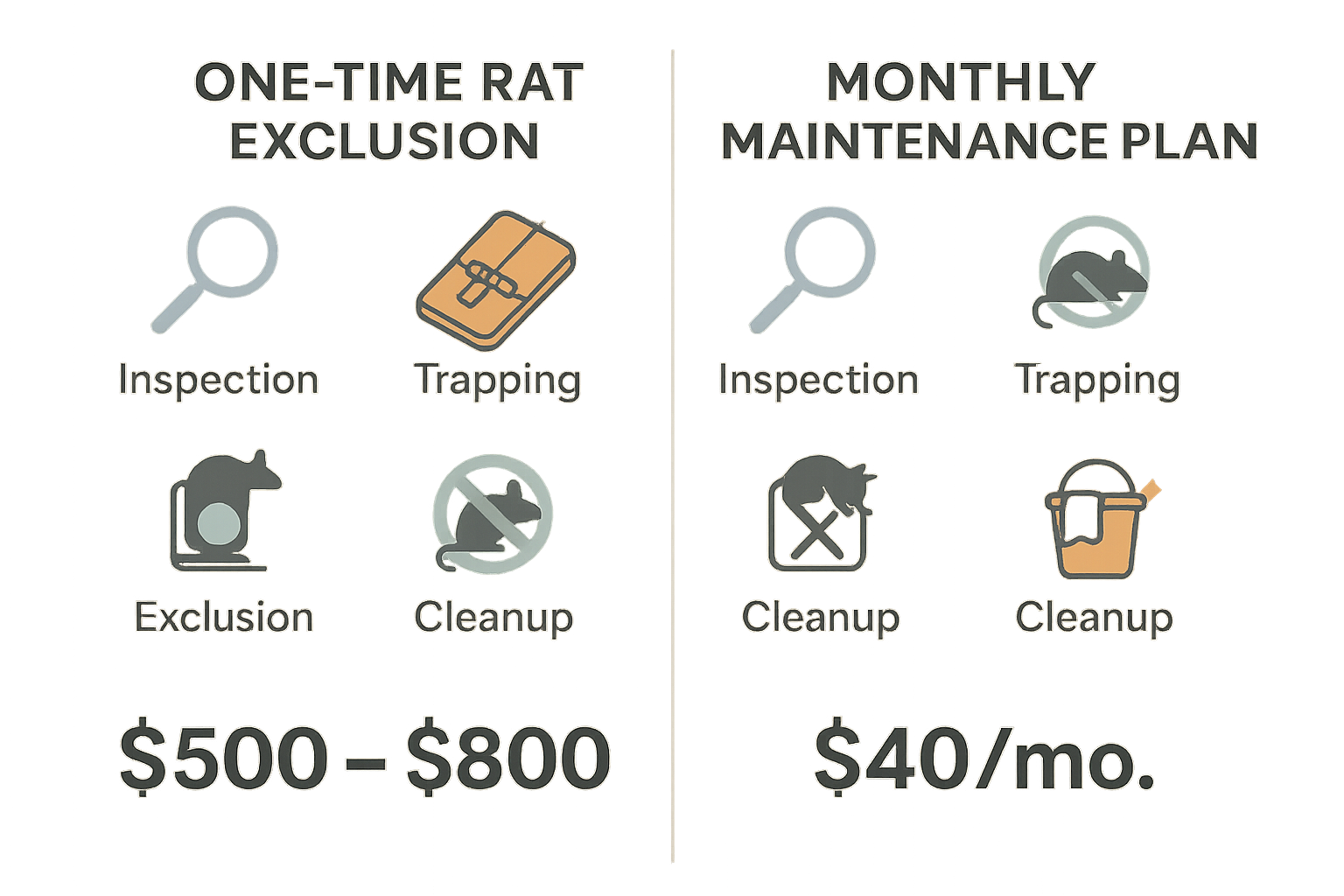
Cost Comparison: One‑Time Exclusion vs. Monthly Maintenance
What a one‑time exclusion service includes
When you schedule a one‑time exclusion, our technicians start with a thorough inspection of your Woodstock home. We identify every possible entry point—cracks in the foundation, gaps around utility lines, and vent openings. Each opening is sealed with steel‑wool, caulk, or metal flashing, and we set up an initial set of traps to capture any rats already inside. The goal is to create a solid barrier that stops new invaders, while the traps handle the current population.
What a monthly maintenance plan looks like
The monthly plan spreads the same core activities over a year. Every 30 days we return for a quick visual check, reset or replace traps, and re‑apply exclusion materials that may have shifted with weather or home activity. This ongoing attention catches any new gaps that appear after renovations, landscaping changes, or seasonal wear, giving you continuous protection without the need for a large upfront payment.
Pricing ranges from local competitors
| Service Type | Price Range | What’s Included |
|---|---|---|
| One‑time exclusion | $250 – $400 | Inspection, sealing of entry points, initial trapping |
| Monthly maintenance | $80 – $120 per month | Regular inspections, trap resetting, ongoing exclusion updates |
Benefits of each option
- One‑time exclusion: Ideal for homeowners who prefer a single, predictable expense. You get a solid barrier and immediate reduction in activity, which can be especially appealing after a sudden infestation.
- Monthly maintenance: Provides long‑term peace of mind. Small, recurring fees spread out the cost, and the regular visits ensure that any new entry points are sealed before rats can exploit them.
Best Value for a typical 2,000‑sq‑ft home
Recommendation: For most Woodstock families with an average‑sized home, the monthly maintenance plan delivers the best value. Over a 12‑month period, the total cost ($960 – $1,440) stays comparable to two or three one‑time exclusions, but you gain continuous monitoring and adjustments that keep rats out year‑round.
Seasonal Activity Trends for Rats in Woodstock
Rats in Woodstock don’t stay idle all year—they follow a predictable rhythm that lines up with food availability and the weather. Understanding this cycle lets you act before a small problem balloons into a full‑blown infestation.
Peak Months: Late Summer Through Early Fall
From August to early October, rat activity hits its high gear. Outdoor gardens are bursting with fruit, fallen nuts, and compost, providing an all‑you‑can‑eat buffet. At the same time, the breeding cycle reaches its zenith; a single female can produce up to five litters a year, each with 6‑12 pups. The combination of abundant food and rapid reproduction creates a perfect storm for population spikes.
Winter Lull—But Not a Clean Slate
When temperatures dip below 50°F, rats retreat to the warmth of homes, basements, and crawl spaces. Their movement slows, but they remain a threat. Food stores in kitchens, pet feed, and even insulation become attractive shelters. A homeowner who assumes “winter is safe” often discovers gnaw marks on wiring or droppings in hidden corners once the thaw arrives.
How Weather Shapes Their Journey
Rainfall can push rats out of burrows and into structures seeking dry shelter. Conversely, a dry, hot summer may drive them deeper underground, only to emerge when humidity rises. Sudden temperature swings—common in the Appalachian foothills surrounding Woodstock—prompt rats to seek stable indoor environments, increasing the chances of indoor sightings.
Seasonal Inspection & Pre‑emptive Treatment Tips
- Early Summer (May‑June): Conduct a thorough exterior inspection. Seal gaps larger than ¼ inch and trim vegetation away from the house.
- Mid‑Summer (July): Apply a perimeter baiting program. This reduces the breeding pool before the peak months.
- Late Summer (August‑September): Schedule a professional interior treatment to target any rats that have already moved in.
- Fall (October‑November): Perform a final seal‑up and clean out any compost or leaf piles that could serve as food sources.
- Winter (December‑February): Maintain indoor sanitation and monitor for signs of activity, especially in attics and basements.

| Month | Activity Level |
|---|---|
| January | Low |
| February | Low |
| March | Moderate |
| April | Moderate |
| May | High |
| June | High |
| July | High |
| August | High |
| September | High |
| October | Moderate |
| November | Low |
| December | Low |
Prevention Strategies to Keep Rats Out

Seal Every Entry Point
Rats can squeeze through openings as small as a quarter of an inch. Walk around your home with a flashlight and note any gaps around doors, windows, utility lines, and the foundation. Install door sweeps on all exterior doors; they’re inexpensive and block the most common entry route. For cracks and holes, pack steel wool tightly into the opening, then seal it with a high‑quality caulk. The steel wool deters gnawing, while the caulk creates a weather‑proof barrier.
Landscape Management
Overgrown trees and shrubs act like highways for rodents. Trim tree branches so they end at least 2 feet below your roofline, preventing rats from using them as ladders. Remove leaf piles, wood debris, and any dense vegetation that offers cover. Finally, ensure your yard slopes away from the house; proper grading directs rainwater away and reduces moisture‑rich areas where rats like to nest.
Food Storage Tips
Even a few stray crumbs can attract a rat family. Store pantry items—cereals, grains, pet food—in airtight containers made of glass or heavy‑wall plastic. After meals, wipe down countertops and sweep floors promptly. Don’t forget to clean under appliances; rats often explore these hidden spaces for forgotten food particles.
Waste Control
Garbage is a rat magnet. Use trash cans with tight‑fitting lids and keep them away from the house’s exterior walls. If you have a compost bin, choose a sealed model and turn it regularly. Arrange for regular curbside pickup and, if possible, bring the bins to the curb only on collection day to minimize the time they sit exposed.
Routine Inspections
Prevention is a habit, not a one‑time fix. Schedule quarterly inspections of high‑risk areas: the attic, basement, crawl spaces, and garage. Look for gnaw marks, droppings, or shredded insulation. A quick 10‑minute walk-through each season can reveal early signs before an infestation takes hold.
When to Call a Professional
DIY measures cover the majority of prevention, but some situations warrant expert help. Call Anthem Pest Control if you notice:
- Repeated rat sightings despite sealed entry points.
- Evidence of structural damage, such as gnawed beams or compromised wiring.
- Signs of disease—blood‑tinged urine, large droppings, or a strong musky odor.
- Difficulty accessing hidden spaces like wall voids or deep crawl spaces.
Our technicians can perform a thorough assessment, set up bait stations safely, and apply rodent‑proofing treatments that meet local regulations. A professional intervention not only eliminates the current problem but also reinforces long‑term protection for your Woodstock home.
Why Choose Anthem Pest Control for Rodent Management
National Reach, Local Roots
Anthem Pest Control has grown from a single‑state operation into a nationwide network that serves homeowners in every corner of the United States. Our national footprint means we bring the latest industry research, bulk‑purchasing power for premium products, and a standardized quality guarantee to every job—no matter how small or remote. In Woodstock, Georgia, we pair that broad expertise with a deep understanding of the community’s unique pest pressures.
Certified Technicians & Ongoing Training
Every technician who steps onto a Woodstock doorstep is EPA‑certified, background‑checked, and equipped with a portable certification card. Anthem invests heavily in continuous education; staff attend quarterly workshops, seasonal webinars, and hands‑on field labs to stay ahead of emerging rodent behaviors and resistance patterns. This commitment ensures the team you trust knows the most effective, up‑to‑date strategies for rat control.
Safe, EPA‑Approved Treatment Methods
Our rodent‑management toolkit is built around safety and efficacy. We rely on EPA‑approved baits, traps, and exclusion materials that target rats while protecting children, pets, and the environment. One standout is our low‑odor smoke machine, which delivers a quick, residue‑free treatment that neutralizes hidden nests without the strong chemical scent that can alarm homeowners. All applications are documented, and we provide a post‑treatment safety sheet for your records.
Transparent Pricing Model
Anthem believes you should never guess the cost of a service. Our pricing structure is flat‑rate, itemized, and presented before any work begins. For a typical Woodstock home, the full rodent‑management package—including inspection, treatment, and a 90‑day guarantee—ranges from $199 to $349, depending on square footage and infestation level. Refer to our cost infographic (linked on the service page) for a clear visual breakdown of each component, so you know exactly where every dollar goes.
Customer Satisfaction Stats & Real‑World Testimonials
We let numbers speak for us: 96% of our customers report a “complete resolution” after the first visit, and our Net Promoter Score consistently exceeds 80. Homeowners share their experiences, such as:
- “Anthem’s tech arrived on time, explained the low‑odor smoke treatment, and my rats were gone within days. No hidden fees—just honest work.” – J. Martinez, Woodstock
- “I appreciated the follow‑up call and the guarantee. It gave me peace of mind that the problem was truly solved.” – L. Patel, Woodstock
Local Knowledge of Woodstock’s Rat Hotspots
Woodstock’s historic downtown, the nearby wetlands, and older residential complexes create perfect hiding places for rats. Our technicians map these high‑risk zones during the initial inspection, targeting entry points like foundation cracks, utility gaps, and overgrown landscaping. By focusing on the city’s known hotspots, we can deploy pre‑emptive measures that keep rodents out before they become a nuisance.
Take Action and Secure a Rat‑Free Home Today
Rats aren’t just a nuisance; they can chew through wiring, contaminate food, and spread diseases that put your family’s health at risk. Acting early stops the damage before it escalates, protects your property value, and gives you peace of mind knowing your home is safe.
Woodstock’s warm spring and early summer months are prime time for rat activity, which means treatment is most effective when the colonies are still establishing themselves. Anthem offers transparent pricing—single‑visit eradication starts around $150, while ongoing prevention plans can be as low as $30 per month, letting you choose the level of protection that fits your budget.
If you’ve spotted any of the signs above—droppings, gnaw marks, or sudden noises at night—let our certified technicians handle it. We’ll inspect every entry point, set up a targeted treatment, and show you how to keep rodents out for good.
Give us a call today at 877‑371‑8196 for a free, no‑obligation quote. Our team typically responds within 24 hours, schedules a same‑day inspection, and guarantees satisfaction with every service we provide.
With Anthem’s satisfaction guarantee, you won’t pay a dime unless the rats are gone and your home stays protected. We stand behind our work, offering a follow‑up visit at no extra charge if any activity reappears within 30 days.
Ready to reclaim your yard and interiors? Visit Anthem Pest Control online or call now—your rat‑free home is just one phone call away.
Don’t let a small problem turn into a costly repair. By acting now you secure a healthier environment for your family, protect your belongings, and avoid the stress of a full‑blown infestation. Let Anthem’s local expertise give you the confidence that your Woodstock home stays rodent‑free all year long.
We understand busy homeowners, so we offer flexible appointment windows—including evenings and weekends—to fit your schedule without disrupting daily life. Our technicians arrive in uniform, fully equipped, and ready to explain each step, so you always know what’s happening inside your home.