What Are Silverfish and Why They Matter in Woodstock, GA

Identifying the Little “Fish” in Your Home
Silverfish (Lepisma saccharina) are wing‑less insects that resemble tiny, silvery fish—hence the name. They measure roughly ½ to ¾ inch (12–19 mm) in length, have a flattened, elongated body covered in overlapping scales that give them a metallic sheen. Their bodies are tapered at both ends, and they move in a characteristic, wavy “fish‑like” motion. Though they thrive in dark, moist environments, they can appear in any part of a home where humidity is present.
Where Silverfish Hide Inside a House
In Woodstock homes, silverfish favor kitchens, bathrooms, basements, and any area where paper or fabric is stored. Look for them behind baseboards, under sinks, inside pantry boxes, and tucked between the pages of books or magazines. They also love the cracks and crevices of drywall, attic insulation, and even the seams of carpet or linoleum. Because they are nocturnal, you may only notice their silvery trails after the lights go out.
Why They’re More Than a Nuisance
Silverfish reproduce quickly—females can lay up to 100 eggs over a lifetime, and a single infestation can balloon in just a few months. Their diet includes starches, sugars, and proteins, so they’ll gnaw on cereal, flour, glue, and even the starch in wallpaper. The real concern for homeowners is the damage they cause to fabrics, clothing, upholstery, and, most painfully, books and important documents. Their feeding can leave unsightly yellowed spots, holes, and a lingering musty odor.
Woodstock’s Climate: A Silverfish Sweet Spot
Woodstock, GA experiences humid summers with average July humidity hovering around 70 %, and moderate winters that rarely drop below 40 % humidity. These conditions create an ideal micro‑environment for silverfish to thrive year‑round, especially in homes that lack proper ventilation or have leaky pipes. Seasonal spikes often occur after summer rains, when moisture seeps into basements and crawl spaces, prompting a surge in activity.
What You’ll Learn Next
Now that you know what silverfish look like, where they hide, and why they matter in Woodstock’s climate, the next sections will break down seasonal activity patterns, cost‑effective treatment options, and the pricing structures you can expect from a local professional like Anthem Pest Control. Understanding these basics will help you decide the right time and method to protect your home.
Spotting Silverfish – Signs, Damage, and Inspection Tips

Visual clues you can’t ignore
Silverfish are instantly recognizable once you know what to look for. Their bodies are covered in tiny, silvery scales that give them a shimmering, fish‑like appearance. When they move, they dart in a quick, undulating motion, leaving a faint, silvery trail on smooth surfaces. The most distinctive feature is their tapered, “fish‑tail” abdomen, which sets them apart from other pantry pests.
Typical damage you might discover
These nocturnal feeders love starchy and protein‑rich materials. Over time, you may notice irregular, punched‑out holes in the pages of books, especially near the spine. Wallpaper can become shredded or develop ragged edges where silverfish have gnawed. Fabrics—think cotton shirts, towels, or upholstery—may show small, greasy‑looking stains or thin, silvery threads pulled from the weave. In kitchens, you might spot faint, oily smears on pantry shelves or inside food containers.
Where they love to hide
- Cracks and crevices along baseboards or behind crown molding.
- Under appliances such as refrigerators, dishwashers, and stoves.
- Inside cardboard boxes, cereal bins, and other pantry storage.
- Near leaky pipes or areas with high humidity, like bathrooms and basements.
- Between stacked books, magazines, or paper piles.
DIY inspection checklist
Before you pick up the phone, run a quick self‑inspection using these steps:
- Turn off lights and grab a bright flashlight. Scan baseboards, under appliances, and behind cabinets for the silvery movement.
- Place sticky traps in suspected hotspots (under the sink, behind the dryer, inside pantry corners) and leave them for 48 hours.
- Open stored items—paper, clothing, food boxes—and look for tiny holes, scales, or shed skins.
- Check moisture sources. A dripping faucet or condensation can create the humid environment silverfish adore.
- Record any sightings, damage, and locations. This information helps professionals gauge the infestation’s scope.
When it’s time to call a pro
If you notice any of the following, it’s best to let Anthem Pest Control take over:
- Widespread damage across multiple rooms or repeated sightings despite DIY traps.
- Difficulty reaching suspected hideouts, such as deep wall voids or crawl spaces.
- Signs of a moisture problem that you cannot resolve on your own.
Professional technicians have the tools and expertise to locate hidden colonies, treat hard‑to‑reach areas, and implement preventive measures that keep silverfish from returning.
How Seasons Influence Silverfish Activity in Woodstock
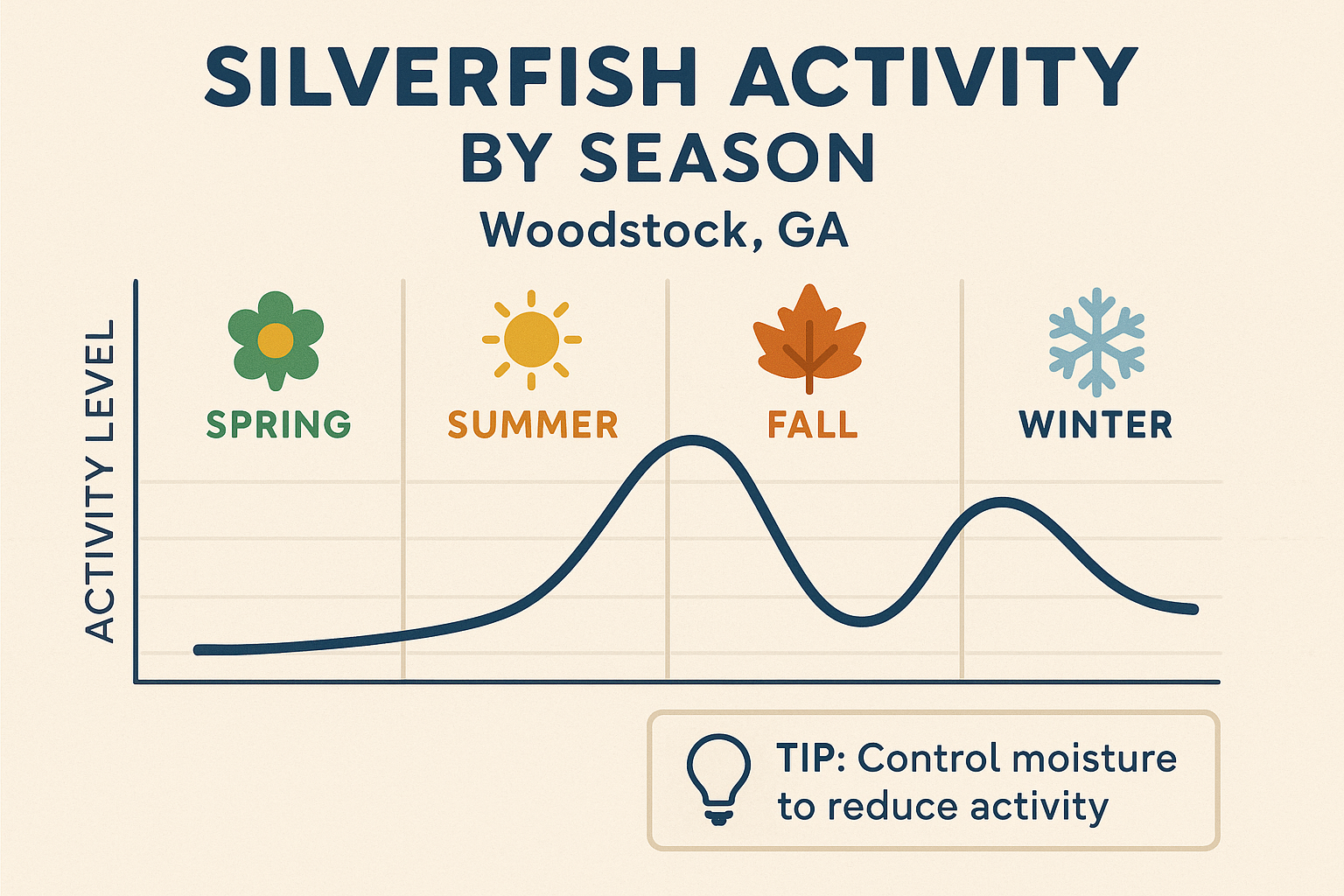
Woodstock experiences a classic four‑season climate, and each season brings a distinct indoor humidity profile. In the spring, humidity climbs as rain and melting snow seep into homes, while fall sees a secondary rise as cooler nights trap moisture inside. Summer often feels dry thanks to air‑conditioning, and winter brings low indoor humidity but a tendency for insects to seek the warmest corners of a house.
Spring and Fall Peaks: Moisture Meets Moderate Temperatures
Silverfish thrive when relative humidity stays above 60 % and temperatures hover between 68 °F and 78 °F. During spring and again in early fall, Woodstock homes naturally reach those sweet spots. Leaky pipes, damp basements, and the occasional open window let moisture accumulate, creating ideal feeding grounds for silverfish that feast on starches, paper, and glue. Homeowners often notice a sudden uptick in sightings around these times.
Summer Slowdown: Air‑Conditioning Dries Things Out
When the thermostat climbs to the high 80s, most residents crank up the AC. The cooling process removes moisture from the air, dropping indoor humidity well below the silverfish comfort zone. As a result, activity slows dramatically, and you may go weeks without seeing a single specimen.
Winter Lull: Shelter‑Seeking but Mostly Dormant
Winter brings colder outdoor temperatures, prompting silverfish to retreat deeper into walls, attics, and crawl spaces. While they remain alive, the low humidity and limited food sources keep them largely dormant. However, if a home’s heating system creates localized humidity spikes—such as a constantly running humidifier—silverfish can become active again even in the cold months.
Seasonal Prevention Tips
- Spring: Run a dehumidifier in basements and laundry rooms; fix any plumbing leaks within 48 hours.
- Fall: Seal cracks around doors, windows, and foundation vents before the first chill; inspect attic insulation for moisture buildup.
- Summer: Keep AC filters clean to maintain optimal humidity control; avoid over‑watering indoor plants.
- Winter: Use a hygrometer in heated rooms; if humidity exceeds 55 %, add a portable dehumidifier or increase ventilation.
By aligning your home‑maintenance routine with the seasonal patterns shown in the chart above, you can stay one step ahead of silverfish and keep your Woodstock residence pest‑free year‑round.
Silverfish Control Pricing in Woodstock – What to Expect
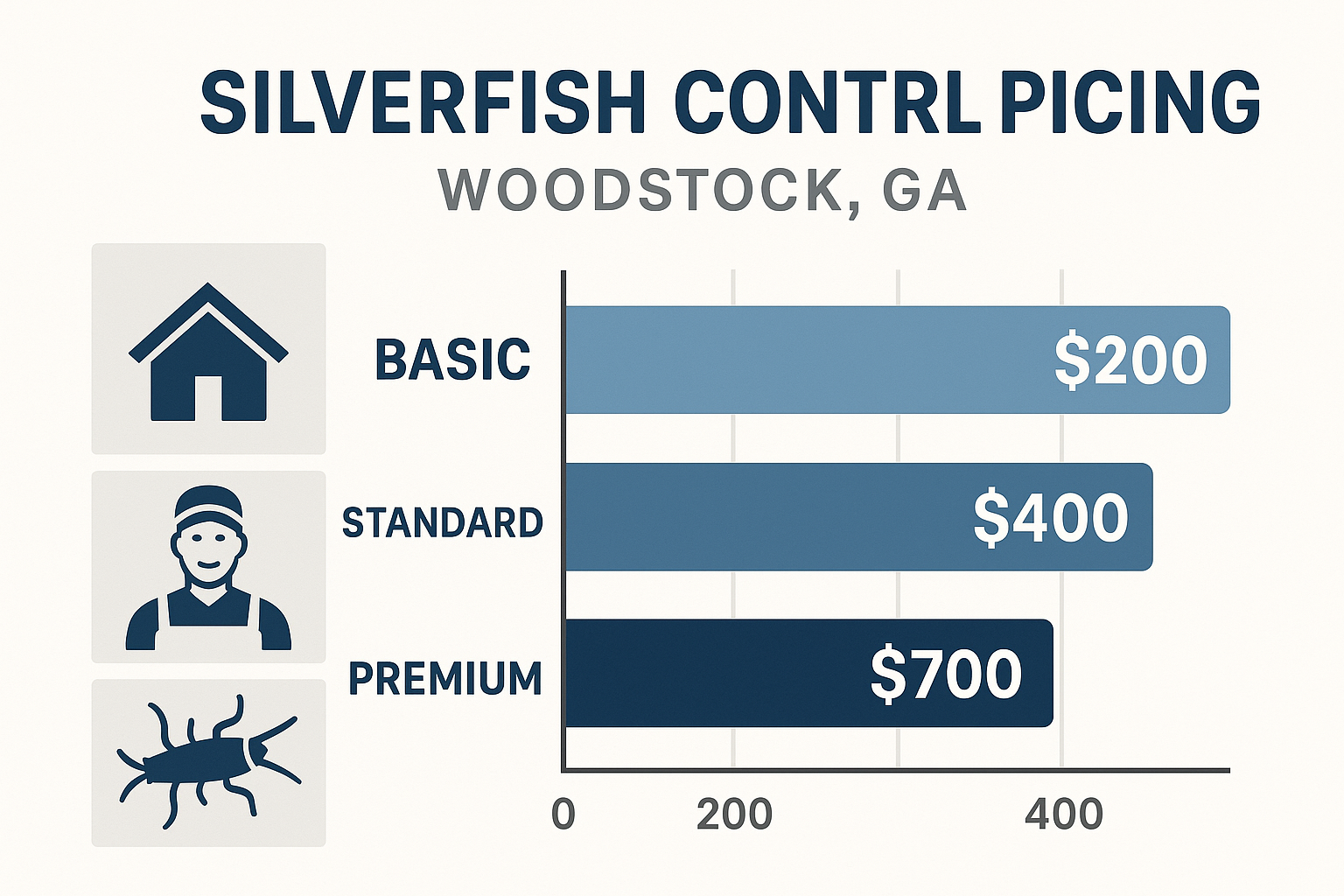
At Anthem Pest Control, we believe pricing should be as clear as a freshly swept floor—no surprises, no hidden fees. Our silverfish treatment plans are organized into three transparent tiers, so you can match the service to the severity of the problem and your budget.
Tier Breakdown
Basic – $200
Includes a thorough on‑site inspection, a single‑application residual spray, and one follow‑up visit within 30 days. A limited 30‑day warranty covers any re‑infestation that occurs from the original treatment.
Standard – $400
Adds a second, targeted treatment (often a dust or gel application) and two follow‑up visits over 60 days. This tier comes with a 60‑day warranty and a preventive checklist to keep silverfish from returning.
Premium – $700
Designed for severe or recurring infestations, the premium package combines all treatment methods (spray, dust, and bait), three follow‑up visits, and a full 90‑day warranty. It also includes a detailed home‑wide moisture‑control plan, because silverfish love damp environments.
Why Choose a Specific Tier?
- Basic: Ideal for homeowners who have spotted a few silverfish and want a quick, cost‑effective fix.
- Standard: Best for moderate infestations where silverfish are seen in multiple rooms or after a recent water event.
- Premium: Recommended for severe, long‑standing, or recurring problems, especially in older homes with hidden moisture sources.
Tier Comparison Table
| Tier | Price | Inspection | Treatment Type | Follow‑up Visits | Warranty | Ideal For |
|---|---|---|---|---|---|---|
| Basic | $200 | Yes | Residual spray | 1 (30 days) | 30 days | Minor sightings |
| Standard | $400 | Yes | Spray + dust/gel | 2 (60 days) | 60 days | Moderate infestations |
| Premium | $700 | Yes | Spray, dust, bait | 3 (90 days) | 90 days | Severe/recurring problems |
The accompanying infographic visualizes these tiers side‑by‑side, giving you a quick reference to see which package aligns with your needs and budget.
For broader market context, see the Angi Silverfish Extermination Cost guide.
Treatment Options – DIY vs. Professional Silverfish Management
DIY approaches you’ll find around the house
Most homeowners start with low‑cost solutions such as sticky traps, a sprinkle of boric acid, diatomaceous earth, or a homemade essential‑oil spray. These items are easy to purchase at a hardware store and can be applied in closets, under sinks, or along baseboards where silverfish like to hide.
Pros and cons of the do‑it‑yourself route
The biggest advantage of DIY is the price tag—most kits cost under $20 and you can treat a single room in an afternoon. However, the trade‑off is limited efficacy; silverfish can slip through tiny cracks that DIY products never reach, and over‑application of powders can create dust that irritates pets or children. Safety is another concern—boric acid and diatomaceous earth are toxic if ingested, and essential‑oil mixtures lack any proven residual action.
What Anthem Pest Control does differently
Our technicians begin with a thorough inspection to confirm you’re dealing with silverfish and not a look‑alike. We then apply targeted insecticide formulations that penetrate wall voids, floor seams, and other hidden pathways. In addition to chemical treatment, we address the moisture conditions that attract silverfish by recommending dehumidifier placement, fixing leaks, and improving ventilation. Finally, we set up a monitoring plan that includes monthly checks and a guarantee that the infestation will not return.
Why proper identification matters
Silverfish thrive in damp, dark environments, but other pests such as carpet beetles or firebrats can appear similar. Misidentifying the culprit can lead you to waste time and money on ineffective DIY measures while the real problem spreads. A professional inspection pinpoints the exact species and maps out the infestation’s hot spots, allowing us to treat only the areas that need it.
When DIY might be enough, and when to call the pros
If you spot a single silverfish in an isolated closet and the area stays dry, a modest DIY spray can knock out the stray insect without a full‑scale intervention. Conversely, if you notice activity in multiple rooms, find silverfish droppings, or discover water damage in walls, it’s a clear sign that the problem has moved beyond a one‑off encounter. Recurring sightings after a DIY attempt are a red flag that professional treatment is required.
Safety, guarantees, and long‑term protection
Anthem Pest Control is a licensed provider, meaning every product we use meets state safety standards and is applied by trained technicians. Our service includes a written guarantee and a follow‑up schedule that protects your home for months after the initial visit. Choosing a professional not only eliminates the guesswork but also safeguards your family and pets from the hazards of over‑the‑counter chemicals.
Protect Your Home Today with Anthem Pest Control
Silverfish may seem harmless, but their constant nibbling can damage books, clothing, and even wallpaper. Their activity peaks in the damp, cooler months of fall and early winter, when homes retain more moisture. Transparent pricing lets you plan ahead, so you’re never surprised by hidden fees once the treatment begins.
Why Choose Anthem Pest Control?
Anthem brings over a decade of experience to Woodstock homeowners, backed by a nationwide network that guarantees the latest, science‑based methods. Our local technicians know the area’s unique climate patterns, allowing them to target silverfish hotspots before they spread.
Our Three Transparent Pricing Tiers
- Basic Tier: One‑time inspection and a single treatment, ideal for low‑level sightings.
- Standard Tier: Quarterly follow‑ups and a preventative barrier, perfect for moderate activity.
- Premium Tier: Unlimited visits for a full year, plus a guarantee of safe, effective results.
All tiers include a satisfaction guarantee and use EPA‑approved products that protect your family and pets.
Ready for a Quick, No‑Obligation Inspection?
Our friendly team can schedule a free inspection within 24 hours, assess the severity of any silverfish presence, and recommend the right tier for lasting protection. We pride ourselves on fast response times and clear communication—so you know exactly what to expect.
If you’ve spotted silverfish or want to prevent a future infestation, let Anthem Pest Control handle the job with expertise and transparent pricing. Call us today at 877‑371‑8196 for a free, no‑obligation quote and schedule a professional inspection. Our certified technicians will assess your home, recommend the right tier of service, and ensure lasting protection.
Visit Anthem Pest Control to learn more or to book your appointment online.