Tick Threats in Residential Neighborhoods

Common Tick Species in Georgia
Georgia’s climate nurtures several tick species that regularly bite humans, making tick control Suwanee homeowners rely on an ongoing necessity. The Lone Star tick (Amblyomma americanum) thrives in warm, humid environments and is notorious for causing painful, itchy bites. The Black-legged tick (Ixodes scapularis), often called the deer tick, is the primary vector for Lyme disease in the southeastern United States. Both species are active from early spring through late fall, making suburban yards a year-round concern.
Health Risks You Can’t Ignore
Tick bites are more than a nuisance; they can transmit serious illnesses. Lyme disease is the most widely recognized, leading to fever, fatigue, and a characteristic “bullseye” rash. Rocky Mountain spotted fever, though less common in Georgia, can cause high fever, severe headache, and a petechial rash that may turn life‑threatening if untreated. Other emerging threats include ehrlichiosis and Southern tick‑associated rash illness (STARI). Early identification dramatically improves treatment outcomes.
How Ticks Invade Your Yard
Ticks don’t magically appear on your porch; they follow wildlife corridors. White‑tailed deer, raccoons, and opossums routinely pass through suburban neighborhoods, depositing ticks in leaf litter, tall grass, and brush piles. Pets act as unwitting transporters, picking up ticks during walks and bringing them inside. Even a well‑maintained lawn can become a habitat if it contains shaded patches, over‑grown edges, or accumulated leaves where humidity stays high.
Early Warning Signs for Homeowners
Spotting a tick bite early can save you a lot of worry. Look for a small, red bump that may expand into a bullseye pattern—especially if it appears within 24‑48 hours after spending time outdoors. Other clues include unexplained fever, joint pain, or a rash that spreads beyond the bite site. Regularly check yourself, family members, and pets after outdoor activities; the sooner you notice, the quicker you can act.
Why Prompt Removal Matters
Ticks transmit pathogens while they remain attached. Removing a tick within 24 hours can reduce the chance of disease transmission by up to 90 %. Use fine‑tipped tweezers to grasp the tick as close to the skin as possible, pull upward with steady pressure, and clean the area with antiseptic. After removal, keep the tick in a sealed container for identification—this information helps medical professionals choose the right treatment if symptoms develop.
Understanding the species that linger in Suwanee, the health stakes they pose, and the pathways they use to enter your property equips you to act before a bite becomes a medical emergency. The next step is to implement proactive yard management and, when needed, enlist a trusted partner like Anthem Pest Control for professional tick suppression.
Seasonal Tick Activity and Prevention Planning
Understanding the Tick Life Cycle
Ticks move through four distinct stages: egg, larva, nymph, and adult. Each stage requires a blood meal before it can molt to the next. In Georgia’s climate, temperature and humidity act like a thermostat for these tiny parasites—warmer, moist days accelerate development, while dry, cold periods stall it. Understanding this life cycle is essential for effective tick control Suwanee homeowners depend on, helping you time your defenses before the bugs even appear.
What the Data Shows
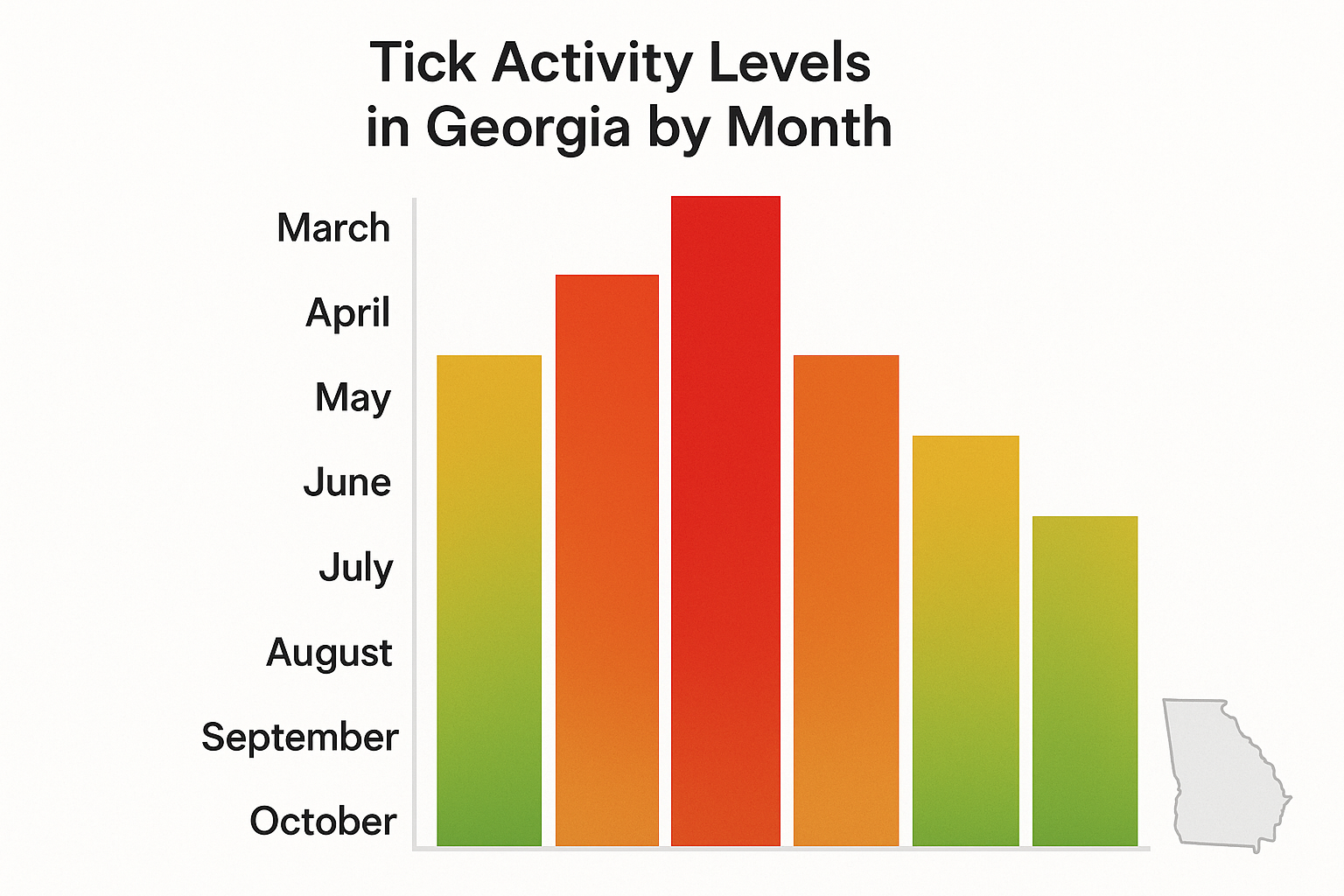
The bar chart above highlights Georgia’s tick “high‑season” as May through July. During these months, average temperatures hover between 70‑85°F and humidity stays above 60%, creating perfect breeding conditions. Conversely, March and November dip below the 60°F threshold, and the tick population drops sharply. This pattern means that early spring (late March to early April) is the ideal window to start preventive measures, while a late‑summer “booster” in August can catch any stragglers before they overwinter.
Seasonal Yard Tasks for Homeowners
- Lawn mowing: Keep grass at 2‑3 inches. Shorter blades expose the soil, making it harder for ticks to hide.
- Leaf removal: Clear fallen leaves in October and November; they retain moisture and become tick havens.
- Mulching choices: Opt for coarse, well‑draining mulch rather than thick, damp wood chips that provide shelter.
- Pet grooming: Bathe and brush dogs and cats weekly during peak months, using a tick‑preventive shampoo or spot‑on treatment.
When to Call a Professional
Anthem Pest recommends two key treatment windows:
- Early spring (late March–early April): A perimeter and yard spray applied before nymphs emerge stops the first wave of activity.
- Late summer booster (mid‑August): A second application targets adults that survived the first treatment and prevents them from laying eggs that would hatch next spring.
Our licensed technicians use EPA‑approved products that are safe for pets and children, delivering lasting protection while you focus on enjoying your outdoor space.
Simple DIY Checks You Can Do Weekly
Even with professional treatment, a quick visual inspection adds an extra layer of security. Walk the perimeter of your property, looking for small, dark specks on the grass or in leaf litter. Keep a tick‑removal tool—such as a fine‑toothed tweezer or a specialized tick hook—handy for swift removal. When working in tall grass or wooded areas, wear long sleeves, light‑colored pants, and closed‑toe shoes; ticks are easier to spot on light fabric.
By aligning your yard chores, pet care, and professional treatments with the natural rhythm of tick activity, you’ll dramatically reduce the chance of an unwanted encounter. Stay ahead of the season, and let Anthem Pest handle the heavy lifting while you keep your family safe.
Emergency Tick Removal – Step‑by‑Step Guide
Finding a tick attached to you or your pet is an alarm bell that should never be ignored, and situations like this often signal the need for immediate tick control Suwanee homeowners can trust. The longer a tick stays attached, the greater the chance it will transmit pathogens such as Lyme disease, Rocky Mountain spotted fever, or anaplasmosis. Removing the parasite within a few hours can cut the transmission window dramatically, often preventing infection before it even begins.
Tools You’ll Need
- Fine‑point tweezers or a purpose‑built tick‑removal device (the kind with a small, curved tip).
- Disposable gloves to protect your hands from saliva or bodily fluids.
- Antiseptic wipes or solution (isopropyl alcohol, hydrogen peroxide, or a commercial disinfectant).
- Sealed container – a small zip‑lock bag or a hard‑shelled vial – for preserving the tick in case you need to show it to a medical professional.
Step‑by‑Step Removal Process
- Calm the person or pet and locate the tick. Use a well‑lit area and a magnifying glass if needed. For pets, gently restrain them to keep the animal still and reduce stress.
- Grasp the tick as close to the skin as possible. With your tweezers, pinch the tick’s head (the part embedded in the skin) rather than the body. A firm, steady grip prevents the mouthparts from breaking off.
- Pull upward with steady, even pressure. Apply a slow, straight upward motion. Do not twist, jerk, or squeeze the tick’s body, as this can force infected saliva into the bite site or leave mouthparts behind.
- Disinfect the bite area and clean the tweezers. Once the tick is free, place a drop of antiseptic on the bite site and wipe the tweezers with another antiseptic wipe. This reduces the risk of secondary bacterial infection.
- Preserve the tick. Transfer the live or dead tick into the sealed container, expel as much air as possible, and label the bag with the date and location of the bite. If symptoms appear later, a professional can identify the species and assess disease risk.
Post‑Removal Monitoring
After the tick is gone, keep an eye on the bite area for at least 30 days. Early warning signs include a red expanding rash (often shaped like a bull’s‑eye), fever, chills, headache, muscle aches, or joint pain. If any of these symptoms develop, contact your healthcare provider immediately and mention the tick exposure. Early treatment is key to preventing serious complications.
When DIY Removal Isn’t Enough
Most single‑tick bites can be handled at home, but certain situations call for professional emergency service. Seek a licensed pest‑control specialist if you notice:
- Multiple ticks attached simultaneously, suggesting a heavy infestation.
- Embedded mouthparts that remain in the skin after removal attempts.
- Severe allergic reactions such as swelling, hives, or difficulty breathing.
- Uncertainty about proper removal technique, especially on hard‑to‑reach areas like the scalp or inside the ear canal.
Professional technicians have advanced tools, like high‑precision forceps and containment units, and can also assess your property for tick habitats, recommending targeted treatments to keep future invasions at bay.

Choosing the Right Emergency Tick Service – Pricing Comparison
When a tick invasion threatens your family and pets, you need a solution that’s fast, effective, and financially clear—especially when seeking professional tick control Suwanee homeowners can trust. Homeowners in Suwanee often face two pricing structures from pest-control firms: a flat-fee that bundles everything into one price, or an hourly rate that bills for every minute the technician spends on site. Understanding the differences helps you avoid surprise charges while still getting the protection your yard deserves.
Typical emergency tick service models
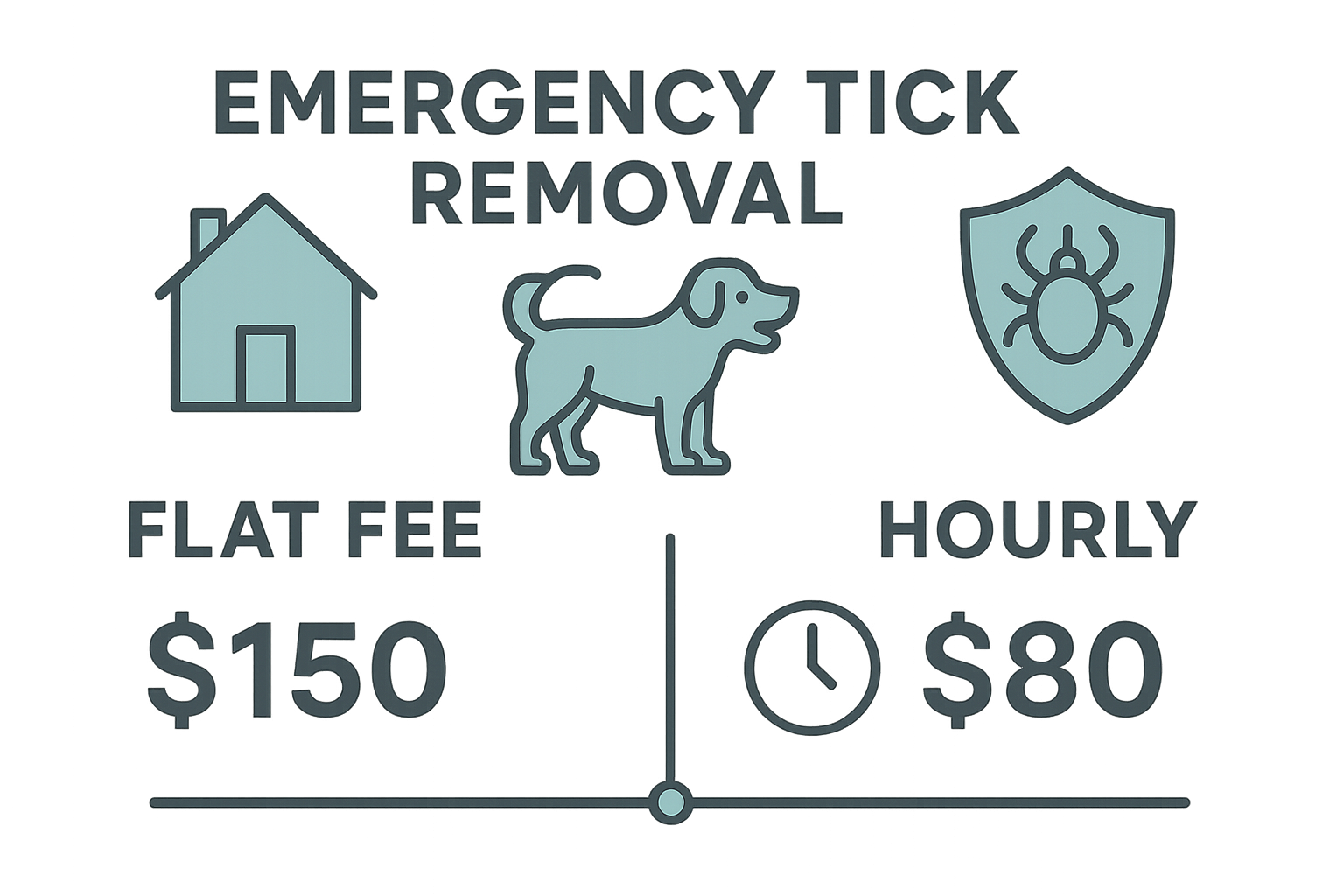
Flat‑fee model – You pay one set amount up front. The fee usually covers a full‑property inspection, immediate treatment, and a follow‑up call to confirm the ticks are gone. This approach is popular for homeowners who want a predictable budget.
Hourly model – You are billed for the technician’s time, typically at $80 per hour. The base rate does not include chemicals, equipment, or travel, so the final bill can rise quickly if the job is extensive.
Infographic breakdown
| Feature | Flat‑Fee ($150) | Hourly ($80/hr) |
|---|---|---|
| Full‑property inspection | Included | Included |
| Immediate treatment | Included | Included |
| Follow‑up call | Included | Extra $20 |
| Chemicals & equipment | Included | Additional $30‑$70 |
| Travel surcharge | None | Additional $15‑$25 |
Pros and cons of each model
- Flat‑fee: Predictable budgeting; no hidden fees; ideal for small‑to‑medium yards where treatment time is limited.
- Flat‑fee: May be less flexible for unusually large properties that require extra chemicals or extended labor.
- Hourly: Flexible for large estates or severe infestations that need more time and product.
- Hourly: Can lead to unexpected costs if the job expands beyond the initial estimate.
Factors that influence the final price
- Property size – larger lawns or multiple structures increase labor and chemical needs.
- Infestation severity – heavy tick populations require more treatment cycles.
- Presence of pets – pet‑safe products may carry a premium.
- Urgency – same‑day service often adds a rapid‑response surcharge.
- Access difficulty – steep terrain or hard‑to‑reach areas can raise travel and equipment costs.
How Anthem Pest Control structures its emergency tick service
Anthem Pest Control offers a transparent flat-fee of $150 for emergency tick removal, providing dependable tick control Suwanee homeowners can trust. The price includes a thorough inspection, immediate application of EPA-approved tick control products, and a post-treatment follow-up call—all without hidden travel or material fees. This model aligns with Anthem’s brand promise of “safe, effective, and affordable” solutions, giving homeowners confidence that the bill they see upfront is the bill they’ll pay.
Quick decision guide
- If you have a modest yard, a clear budget, and need same‑day treatment, choose the flat‑fee plan.
- If your property exceeds 2,000 sq ft, has severe tick hotspots, or requires specialty pet‑safe chemicals, the hourly model may be more adaptable.
- Compare the infographic values to your own needs—match the service scope with the pricing model that protects both your home and your wallet.
- When in doubt, call Anthem Pest Control at 877‑371‑8196 for a free estimate that confirms the flat‑fee truly covers everything you need.
Secure Your Home with Professional Tick Protection
Ticks thrive in the warm, humid months of spring and early summer, and Suwanee’s wooded yards provide the perfect corridor for them to wander onto decks, patios, and lawns. A single bite can transmit serious diseases such as Lyme, Rocky Mountain spotted fever, or ehrlichiosis, so prompt removal and ongoing prevention are not optional—they’re essential. Ignoring the seasonal peak or relying on DIY sprays often leaves hidden hotspots untreated, allowing tick populations to rebound quickly.
Why a Licensed Professional Makes a Difference
- Accurate identification: Certified technicians distinguish ticks from harmless insects and know which species pose the greatest health risk.
- EPA‑approved treatments: We apply products that are scientifically vetted for safety around children, pets, and beneficial wildlife while delivering lasting control.
- Continuous monitoring: Regular follow‑ups and seasonal adjustments keep your property protected year after year, eliminating the guesswork for you.
What Anthem Pest Control Brings to the Table
At Anthem, we combine local expertise with a transparent, flat‑fee emergency service model. Our technicians arrive equipped with the latest tick‑targeted formulations, applying them precisely where ticks hide—under leaf litter, along fence lines, and in garden beds. Because we charge a single, upfront fee, there are no surprise add‑ons; you know exactly what you’re paying for, and you receive a solution that is both effective and affordable. Our commitment to safety means we prioritize low‑toxicity options without compromising on results.
Get Your Free, No‑Obligation Quote Today
Emergency tick situations don’t wait, and neither do we. Our response team is ready to assess your property within hours, develop a customized treatment plan, and begin work the same day when possible. Scheduling a quote is quick, completely free, and carries no obligation to purchase—so you can compare options with confidence.
Ready to protect your family and pets? Call us today at 877-371-8196 or visit our website for your free, no-obligation quote and experience the peace of mind that comes with professional tick control Suwanee homeowners can trust.