Understanding Fruit Fly Problems at Home
When you see a tiny, buzzing speck over a bowl of fruit, you’re looking at a fruit fly – a member of the Drosophila genus that most homeowners encounter year‑round. Though only a few millimeters long, these insects can multiply faster than you can say “clean‑up,” turning a minor annoyance into a full‑blown infestation if left unchecked.
What Are Fruit Flies?
Fruit flies, scientifically Drosophila spp., are small, tan‑to‑brown flies with red eyes and an upright wing‑beat. They are drawn to fermenting sugars, so you’ll often find them around ripe bananas, overripe tomatoes, or the sticky residue from spilled juice. Their life cycle is rapid: under ideal conditions an adult can lay 100–150 eggs, which hatch within 24 hours. In about a week the larvae pupate and emerge as new adults ready to reproduce.
Why They Love Your Home
Several everyday factors make a typical Woodstock kitchen a perfect breeding ground:
- Moisture. Leaky pipes, damp sponges, or a wet dishcloth provide the humidity they need.
- Organic matter. Fruit skins, vegetable scraps, and sugary residues feed both adults and larvae.
- Warm temperatures. Georgia’s 70‑85 °F (21‑29 °C) climate accelerates egg development.
- Hidden harborage. Small cracks around windows, vent fans, or under appliances create safe hide‑outs.
Because these conditions are common in residential settings, fruit flies can appear even in the cleanest homes. The problem isn’t simply “dirty” – it’s the combination of moisture, food sources, and temperature that creates a perfect storm.
Beyond the Nuisance: Real Impacts
Many homeowners dismiss fruit flies as a “minor nuisance,” but the reality goes deeper:
- Health concerns. Flies can transport bacteria from garbage, drains, or decaying fruit onto food‑preparation surfaces, raising the risk of food‑borne illness.
- Comfort. A swarm makes a kitchen feel unclean, eroding confidence in the home’s hygiene.
- Economic impact. Ignoring an infestation often leads to pricier professional treatments later.
Seeing fruit flies as a maintenance issue, not an optional chore, helps protect both health and peace of mind.
What’s Next in This Guide?
Now that you know what fruit flies are, why they thrive, and what they can do, the following sections will walk you through a systematic approach:
- Identification. Visual cues that separate fruit flies from other small insects.
- Inspection. Hidden spots where flies lay eggs and early signs of activity.
- Treatment options. DIY traps, safe sprays, and professional services—including what Anthem Pest Control offers.
- Pricing breakdown. Transparent cost estimates for inspection, treatment, and prevention.
- Seasonal trends. How Georgia’s climate influences fly populations throughout the year.
- Why choose Anthem. Local expertise, safe products, and a satisfaction guarantee make us the trusted partner for Woodstock homeowners.
Armed with this roadmap, you’ll be ready to tackle fruit flies confidently, protect your family’s health, and keep your home feeling fresh all year long.
Spotting Fruit Flies and Their Warning Signs
Fruit flies may be tiny, but they’re quick to turn a tidy kitchen into a buzzing nuisance. Recognizing the first clues can save you from a full‑blown infestation and keep your family’s food safe. Below, we break down the visual and behavioral hints that tell you a fruit‑fly problem is already under way.
Physical Description: What a Fruit Fly Looks Like
Adult fruit flies are about 1/8‑inch long—roughly the size of a grain of rice. Their bodies are a tan‑brown hue with striking red eyes that catch the light. The most reliable identifier is their wing pattern: a clear wing with a distinctive dark spot near the tip, often described as a “spotted” or “banded” appearance. Unlike houseflies, fruit flies have a more delicate build and a slightly humped thorax, making them easy to spot once you know what to look for.
Typical Hotspots Around the Home
Fruit flies love moist, fermenting environments. In a typical Woodstock home you’ll find them gathering in:
- Kitchen drains and garbage disposals—food particles linger, providing a perfect breeding ground.
- Over‑ripe or rotting fruit—the scent of fermenting sugars is irresistible.
- Houseplants—especially those with soggy soil, where mold thrives.
- Bathroom drains—the combination of moisture and organic buildup mimics their natural habitat.
These locations share one thing: they’re often overlooked during routine cleaning, giving flies a safe haven to lay eggs.
Behavioral Signs: How Fruit Flies Act
Beyond appearance, fruit flies give away their presence through behavior. Look for:
- Swarming near fruit bowls—you may see a small cloud hovering over a countertop display of apples or bananas.
- Hovering around lights—like many small insects, fruit flies are drawn to bright sources, especially at dusk.
- Rapid breeding cycles—an egg can hatch into an adult in as little as 8 days. This means a few flies today can become dozens within a week if left unchecked.
Fruit Flies vs. Other Small Flies
Not every tiny flyer is a fruit fly. Here’s how to tell them apart:
| Feature | Fruit Fly (Drosophila spp.) | Fungus Gnat | Housefly (Musca domestica) |
|---|---|---|---|
| Size | ≈1/8‑inch (3 mm) | ≈1/10‑inch (2 mm) | ≈1/4‑inch (6 mm) |
| Body Color | Tan‑brown, sometimes yellowish | Dark gray or black | Gray‑black, more robust |
| Eyes | Bright red | Dark | Black |
| Wing Pattern | Clear with a dark spot near tip | Clear, no spots | Clear, larger, no spots |
| Preferred Habitat | Fermenting fruit, drains, moist soil | Moist soil, decaying plant matter | General waste, animal matter |
Fungus gnats are often found only around houseplants, and their bodies are darker with no red eyes. Houseflies are larger, have black eyes, and are less likely to hover over fruit bowls. If you see the red‑eyed, spotted‑wing insect near ripe produce or a drain, you’re most likely dealing with fruit flies.
Quick DIY Check: The Vinegar‑Apple‑Sugar Trap
When in doubt, set a simple trap and watch the results. Here’s a fast, low‑cost method:
- Fill a small jar with ½ cup apple cider vinegar.
- Add a teaspoon of sugar and a few drops of dish soap (to break surface tension).
- Cover the jar with plastic wrap and poke a few tiny holes with a toothpick.
- Place the trap near suspected hotspots—kitchen counters, drains, or fruit bowls.
- Check after 24 hours. Capturing more than a handful of flies indicates an active infestation.
If the trap yields a steady stream of captures, it’s time to act. While DIY measures can reduce numbers, professional treatment from Anthem Pest Control ensures the breeding sites are eliminated, the cycle is broken, and future invasions are prevented.
Health Risks and Home Impact
When fruit flies turn your kitchen into their runway, the problem goes far beyond a few annoying buzzes. These tiny insects are efficient carriers of disease‑causing bacteria, and their presence can quickly turn a clean home into a health hazard. Understanding the risks helps you decide whether a simple trap will suffice or if it’s time to call in a professional service.
Contamination of Food and Surfaces
Fruit flies spend most of their lives perched on decaying fruit, vegetables, and other organic matter. In doing so, they pick up E. coli, Salmonella and other pathogens on their legs, wings, and mouthparts. When a fly lands on a countertop, a sliced apple, or an open jar of jam, it can deposit these microbes in just a fraction of a second. The contamination isn’t limited to the food itself; the surrounding surfaces become a breeding ground for bacteria that can spread to utensils, cutting boards, and even your hands.
Allergic Reactions and Respiratory Irritation
Beyond bacterial threats, fruit fly debris—such as shed wings, excrement, and dead bodies—can trigger allergic reactions in sensitive individuals. The microscopic particles become airborne, irritating the eyes, nose, and throat. Homeowners with asthma or chronic sinus issues often report heightened symptoms when a swarm is present, especially in enclosed spaces like pantry closets or garbage bins.
Accelerated Spoilage and Financial Impact
Fruit flies are drawn to ripening produce and organic waste, and their feeding activity speeds up the decomposition process. A batch of strawberries that would normally last a week can turn mushy in a matter of days under a swarm. This rapid spoilage forces you to discard perfectly good food, inflating your grocery bill. Moreover, the flies lay eggs in damp, fermenting areas, creating a cycle of continuous decay that can spread to other stored items.
Psychological Discomfort
Seeing a cluster of fruit flies buzzing around the sink or hovering over a fruit bowl can be unsettling. The visual cue of a swarm often translates into a perception that the home is unclean, even if you maintain a rigorous cleaning routine. This anxiety can affect how comfortable you feel in your own kitchen, and it may even influence guests’ impressions of your household.
When to Call a Professional
While DIY traps are a good first line of defense, certain signs indicate that a professional intervention is necessary:
- Persistent swarms despite the use of commercially available traps.
- Presence in multiple rooms, not just the kitchen—such as bathrooms, laundry areas, or even living rooms.
- Secondary infestations like mold growth or a noticeable increase in other pests, suggesting that the underlying moisture or sanitation issue is more severe.
- Recurring contamination of food items and surfaces, leading to repeated illness or allergic reactions.
If you tick any of these boxes, it’s time to let a licensed pest‑control team assess the situation. Professionals can identify hidden breeding sites, apply targeted treatments that are safe for families and pets, and implement preventive measures to keep fruit flies from returning.
Bottom line for homeowners
Fruit flies may be small, but the health and home impacts they create are anything but trivial. From bacterial contamination and allergic irritation to increased food waste and lingering anxiety, the costs add up quickly. Recognizing the warning signs and acting promptly—whether by tightening your own sanitation practices or calling a trusted expert—protects both your family’s well‑being and your wallet.
Inspecting Kitchens and Drains for Breeding Sites

Fruit flies love anything that’s moist, sugary, or fermenting – and the kitchen is a goldmine of those conditions. A systematic inspection of every potential hotspot can dramatically cut down the number of flies you see buzzing around your countertops. Below is a practical, step‑by‑step guide that any homeowner can follow without special tools.
1. Remove the sink strainer and peek inside the trap
Start by pulling out the metal strainer that sits over the drain. Many fruit‑fly eggs are laid right on the surface of the water that collects in the P‑trap beneath the sink. Place a bucket or large bowl underneath, then unscrew the slip‑nut to free the trap.
Look for:
- Dark, gelatinous slime that clings to the walls of the trap.
- Small, white specks that could be eggs or early‑stage larvae.
- Any foul odor – a sign that organic matter is decomposing.
If you spot any of these, dump the contents into the trash, rinse the trap with hot water, and scrub it with a brush. A clean trap removes the immediate food source that keeps fruit flies reproducing.
2. Scrub the drain pipe and eliminate biofilm
Even after the trap is clean, a thin layer of biofilm can line the interior of the drain pipe. This slimy coating provides a perfect breeding ground. Grab a small, stiff‑bristled brush (an old toothbrush works well) and a flashlight.
Insert the flashlight into the drain to illuminate the interior, then run the brush up and down the pipe for about 30 seconds. Flush the pipe with boiling water to dislodge any remaining residue. For stubborn buildup, a mixture of equal parts white vinegar and baking soda, followed by a hot‑water rinse, works wonders.
3. Check garbage disposals, recycling bins, and compost containers
Fruit flies are opportunists. After you’ve cleared the sink, turn your attention to other sources of organic debris:
- Garbage disposal: Run cold water while turning the disposal on. Then grind a handful of ice cubes and a slice of lemon to scrape away any lingering pulp.
- Recycling bins: Rinse out cans and bottles before placing them in the bin. Empty the bin weekly and wipe the interior with a mild detergent.
- Compost containers: Keep the lid tightly sealed. If you store a kitchen compost bucket, empty it into an outdoor compost pile daily and rinse the bucket.
These actions cut off the secondary food sources that fruit flies love to exploit.
4. Inspect houseplants and pet water bowls
Moist soil in houseplants can become a hidden nursery for fruit‑fly larvae. Gently lift each pot and feel the top inch of soil. If it feels overly damp, allow it to dry out before watering again. Consider adding a layer of sand or decorative stones on top of the soil – this creates a barrier that makes it harder for flies to lay eggs.
Pet water bowls are another overlooked breeding site. Replace the water daily, scrub the bowl with dish soap, and rinse thoroughly. If you have a fountain, clean the pump and reservoir weekly to prevent slime buildup.
5. Document your findings
After you’ve completed the inspection, take clear photos of each area you cleaned or discovered a problem. Store these images in a dedicated folder on your phone or computer. When you eventually call a professional – such as Anthem Pest Control – you’ll have concrete evidence to share, which helps the technician pinpoint trouble spots faster.
When photographing:
- Use natural light or a flashlight to highlight slime or residue.
- Capture before‑and‑after shots of the drain trap and any cleaned surfaces.
- Label each photo with the location (e.g., “Kitchen sink trap – before”).
Putting it all together
By tackling each of these areas methodically, you’ll remove the majority of the environments fruit flies need to thrive. The kitchen drain is often the biggest culprit, but garbage disposals, recycling bins, compost containers, houseplants, and pet bowls all play supporting roles. A clean, dry, and well‑maintained kitchen dramatically reduces the chance of a fruit‑fly infestation taking hold.
Once you’ve finished the inspection and cleaning routine, give the space a day or two to see if fly activity drops. If you still notice a steady presence, it’s time to reach out to a local expert. Anthem Pest Control offers a targeted fruit‑fly treatment plan that builds on the groundwork you’ve already laid, ensuring the problem is eliminated at its source.
Effective Treatment Options for Fruit Flies
Fruit flies may look harmless, but a few dozen buzzing around your kitchen can quickly turn a pleasant space into a nuisance. The good news is that you have several proven ways to knock them out—ranging from simple DIY traps you can set up tonight to professional foam treatments that eradicate larvae hidden deep in drains. Below, we break down each option, show you how to apply it safely, and weigh the pros and cons so you can choose the right approach for your Woodstock home.
DIY Traps: Apple‑Cider Vinegar, Dish Soap, and a Funnel
For most homeowners, the first line of defense is a homemade trap. All you need is a small jar, a few tablespoons of apple‑cider vinegar, a splash of dish soap, and a funnel or cut‑off plastic bottle. The vinegar’s sweet scent lures the flies, while the soap breaks the surface tension so they can’t escape.
- Placement tips: Position traps near fruit bowls, trash cans, and any area where you notice the most activity. Keep them at eye level—about 3–4 feet off the floor—for optimal attraction.
- Maintenance: Replace the solution every 2–3 days. A fresh scent keeps the trap effective and prevents it from becoming a breeding ground itself.
- Safety note: This method is completely non‑toxic and safe around children and pets.
Chemical Options: Residual Insecticide Sprays
If you need a faster knock‑down, especially in hard‑to‑reach cracks and crevices, a food‑safe residual insecticide spray can be a game‑changer. Look for products labeled for fruit flies and approved for use in food‑preparation areas.
- Application: Lightly mist the spray into wall voids, under appliances, and around sink drains. The chemical forms a thin barrier that kills flies on contact and continues to work for several weeks.
- Safety: Follow label instructions—ventilate the area, wear gloves, and keep children and pets out of the treated zones until the surface is dry.
- Speed: Expect visible reduction within a few hours, but remember that chemicals alone won’t solve the underlying breeding sites.
Foam Treatment: Professional Biodegradable Foam
When fruit fly larvae have taken up residence in your drains, a standard spray won’t reach them. This is where a licensed technician from Anthem Pest Control can help. The pros use a biodegradable foam that expands inside the pipe, breaking down biofilm and flushing out larvae.
- How it works: The foam contains enzymes that dissolve organic buildup, the primary food source for larvae. As the foam expands, it lifts debris and kills any insects inside.
- Application process: A technician inserts a hose into the drain, releases the foam, and lets it sit for 15–20 minutes before flushing with hot water.
- Benefits: The treatment is safe for all household plumbing, leaves no harmful residues, and provides a deep, long‑lasting clean that DIY methods can’t match.
Biological Controls: Beneficial Nematodes and Enzymatic Cleaners
For homeowners who prefer a natural approach, biological controls can be surprisingly effective. Beneficial nematodes—microscopic, soil‑dwelling worms—hunt and kill fly larvae when introduced into drains or compost bins. Enzymatic cleaners work similarly by digesting the organic matter that larvae need to survive.
- Beneficial nematodes: Purchase a ready‑to‑use liquid from a garden center, pour it into the affected drain, and let it circulate. The nematodes seek out larvae, enter their bodies, and release bacteria that kill them within 24–48 hours.
- Enzymatic cleaners: These are liquid concentrates you mix with water and pour down the sink weekly. Over time, they keep the biofilm thin, preventing new generations of fruit flies from establishing.
- Safety profile: Both options are non‑toxic to humans, pets, and plants, making them ideal for families with young children.
Pros and Cons at a Glance
| Method | Pros | Cons |
|---|---|---|
| DIY Vinegar Trap | Low cost, non‑toxic, easy to set up | Works best for adult flies only; requires frequent replacement |
| Residual Insecticide Spray | Fast knock‑down, long‑lasting barrier | Potential chemical exposure; must follow safety precautions |
| Professional Foam Treatment | Targets hidden larvae, biodegradable, deep clean | Higher upfront cost; requires scheduling a technician |
| Beneficial Nematodes & Enzymatic Cleaners | Eco‑friendly, safe for families, prevents re‑infestation | May need multiple applications; slower visible results |
Choosing the Right Strategy for Your Home
Think of fruit fly control as a layered defense. Start with a DIY trap to catch the adults that are already buzzing around. If the problem persists, add a residual spray to block entry points and kill any newcomers. For stubborn infestations where larvae are nesting in drains, a professional foam treatment provides the deep clean that home remedies can’t achieve. Finally, reinforce your efforts with biological controls to keep the biofilm thin and prevent future generations.
At Anthem Pest Control, we combine these tactics into a customized plan that fits your budget and timeline. Whether you prefer a hands‑on approach or want a certified technician to handle the heavy lifting, we’re here to make fruit flies a thing of the past—so you can enjoy a fresh‑smelling, fly‑free kitchen again.
Pricing Overview for Fruit Fly Extermination
When a fruit‑fly infestation takes hold, the first question most homeowners ask is “how much will it cost to get rid of them?” At Anthem Pest Control we keep our pricing transparent, so you can compare a single‑visit residential treatment with the ongoing contracts many businesses prefer. In Woodstock, Georgia, a typical one‑time home service falls between $50 and $150, while a commercial agreement that includes regular monitoring and drain maintenance usually ranges from $120 to $200 per month. Those figures cover the core treatment; additional services or unusually heavy infestations can shift the final bill.

Key Factors That Influence the Final Price
Several variables determine whether your bill lands near the low end or the high end of the range. Understanding them helps you decide which options make sense for your situation.
- Severity of infestation: A light presence that’s confined to a kitchen sink may be resolved with a single foam application, while a severe outbreak spreading through multiple drains and trash areas often requires multiple visits and a more intensive treatment plan.
- Size of the property: A 1,200‑square‑foot home typically needs one or two treatment points, whereas a 5,000‑square‑foot restaurant or warehouse may need a broader spray, additional foam stations, and more extensive monitoring to ensure every breeding site is covered.
- Drain cleaning requirements: Fruit flies breed in organic buildup inside drains. If your plumbing needs deep cleaning, technicians will spend extra time clearing debris, which adds to labor costs but dramatically improves long‑term results.
- Frequency of service: One‑off treatments are billed per visit. Ongoing contracts—monthly or quarterly—include repeat inspections, preventive foam, and a guaranteed response time, which spreads the cost over time but raises the monthly rate.
What’s Included in an Anthem Pest Control Package?
Our standard residential package is designed to eliminate the problem fast and keep it from returning. It includes:
- Comprehensive inspection: A certified technician examines all potential breeding sites—kitchen sinks, garbage disposals, indoor plants, and outdoor compost bins—to pinpoint exactly where flies are emerging.
- Foam application: We use a food‑grade, fast‑acting foam that penetrates drain lines and creates a barrier that kills adult flies and larvae within minutes, reaching places that sprays can’t.
- Follow‑up visit (if needed): Should the first treatment not achieve a 90 % reduction, we schedule a complimentary revisit within 7‑10 days to finish the job.
- Preventive advice: Homeowners receive a printed checklist covering proper waste disposal, regular drain maintenance, and fruit‑fly‑proofing tips that help keep the insects at bay long after we leave.
For commercial clients, the package expands to include scheduled drain clean‑outs, documentation for health‑department compliance, and a dedicated account manager who coordinates service windows to minimize disruption to daily operations.
DIY Kit vs. Professional Service – Quick Comparison
| Option | Cost (average) | Coverage / Expected Outcome |
|---|---|---|
| DIY Kit (spray + traps) | $20‑$45 (one‑time purchase) | Targets adult flies only; limited reach in drains; results vary, often requires multiple applications and vigilant homeowner effort. |
| Professional Residential Service | $50‑$150 per visit | Foam penetrates drain lines, kills larvae and adults; includes inspection and follow‑up; typically delivers a 90 %+ reduction in a single visit. |
| Professional Commercial Contract | $120‑$200 per month | Regular monitoring, drain cleaning, documentation; maintains near‑zero fly counts year‑round; supports compliance audits and protects business reputation. |
While a DIY kit can be a tempting low‑cost entry point, it rarely addresses the root cause—organic matter inside drains. Professional treatment not only eliminates the current generation of flies but also breaks the breeding cycle, delivering a more reliable, long‑term solution. That reliability is reflected in the higher upfront price.
“We called Anthem after a weekend of fruit flies around our kitchen. Within 24 hours the foam treatment cleared the problem and the follow‑up visit ensured it never returned.” – Homeowner, Woodstock, GA
Most homeowners opt for a single treatment, but if fruit flies reappear within a month we recommend a quarterly maintenance plan that costs about $80 per visit and includes a drain‑cleaning add‑on. This proactive schedule keeps the environment inhospitable to flies and often saves money compared to repeated emergency calls.
For further validation of these figures, you can consult the HomeGuide fruit fly exterminator cost guide, which lists national averages that closely match our Woodstock pricing.
By weighing the severity of your problem, the size of the space, and the importance of a quick, thorough resolution, you can decide whether a single residential visit or a structured commercial contract best fits your budget and peace of mind.
Seasonal Activity and Timing for Woodstock, GA
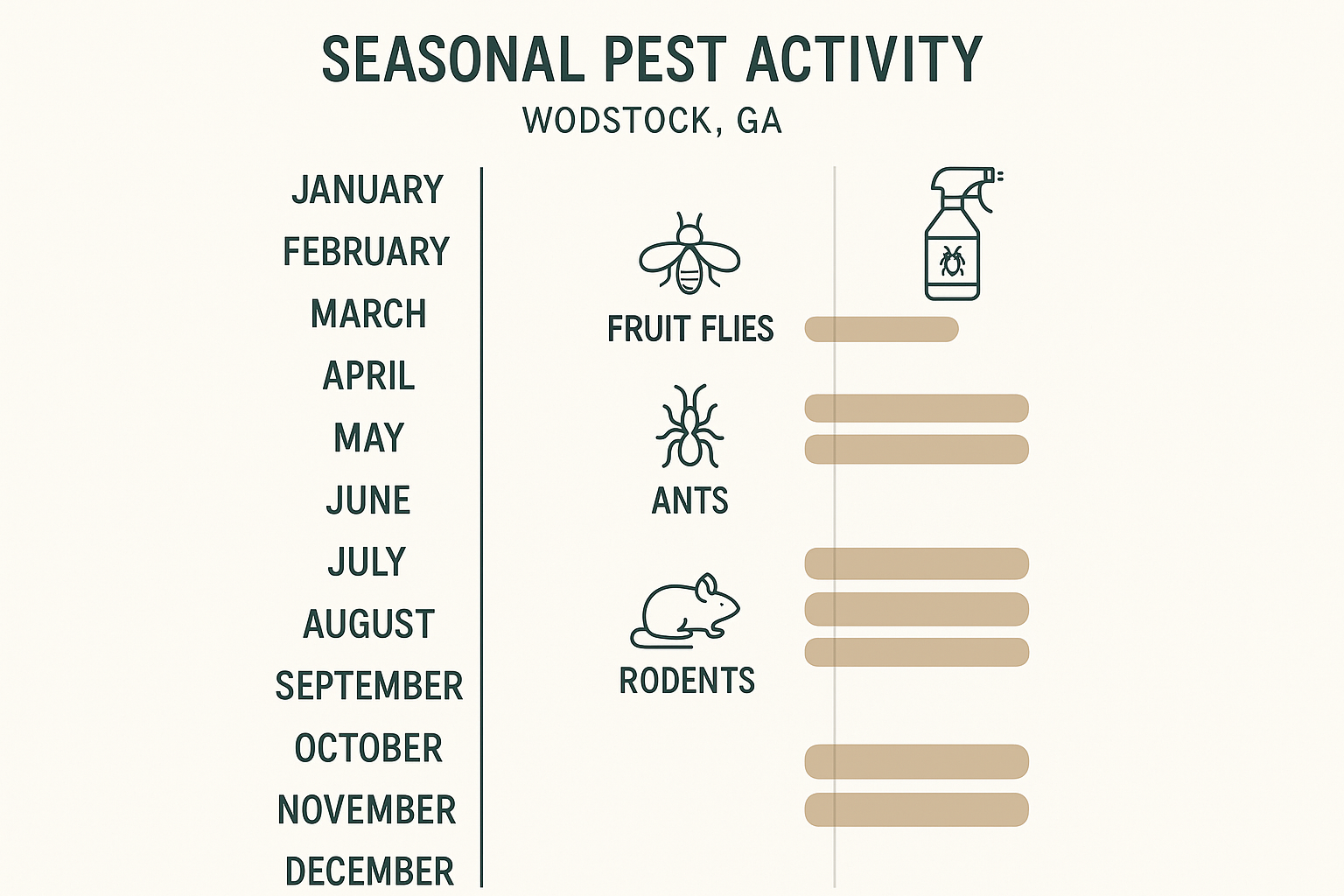
Fruit flies in Woodstock follow a predictable rhythm that mirrors the town’s warm, humid summer. The seasonal activity chart (see image below) shows a modest rise in late spring, a sharp peak from June through August, and a gradual decline as temperatures dip in September. Understanding this pattern lets homeowners intervene before the insects become a nuisance.
Why June‑August Is the Critical Window
Fruit flies thrive when two environmental factors align: temperature between 75°F and 85°F and relative humidity above 60%. During these months Woodstock’s average daytime highs sit squarely in that range, and the occasional summer rain spikes humidity levels. The combination accelerates the flies’ breeding cycle—eggs hatch in 24 hours, larvae develop in 5‑7 days, and adults emerge ready to reproduce. In short, each warm, moist day can generate a new generation, turning a small problem into a full‑blown infestation within weeks.
Pre‑emptive Actions Before the Peak Season
Taking a few simple steps in late May can dramatically reduce the number of flies that survive into summer. Focus on eliminating the conditions that attract females looking for a place to lay eggs:
- Clean drains and garbage disposals. Fruit residues and organic film provide a perfect breeding substrate.
- Remove overripe or rotting fruit. Keep countertops, countertops, and outdoor bins free of soft fruit that can attract flies.
- Seal entry points. Repair cracked screens, caulk gaps around windows, and install door sweeps to keep adult flies from entering.
- Manage compost. If you compost at home, keep the bin covered and turn it regularly to discourage fly colonization.
- Maintain yard hygiene. Clear fallen fruit from trees, clean up spilled pet food, and trim vegetation that creates damp micro‑climates.
Optimal Treatment Timing: Early‑Summer Foam Application
When prevention isn’t enough, a targeted foam treatment applied in early June offers the highest return on investment. The foam works by:
- Penetrating cracks, crevices, and drain lines where larvae develop.
- Creating a residual barrier that remains effective for 4‑6 weeks, covering the entire peak period.
- Being low‑odor and safe for families and pets when applied by certified technicians.
Schedule the foam application before the first major heat wave—ideally the week after Memorial Day. This timing ensures the product is in place when adult flies first emerge, interrupting the breeding cycle before populations can explode.
Other Pests That Share the Same Timeline
While fruit flies dominate the summer months, they aren’t the only critters taking advantage of Woodstock’s climate. Ants (especially odorous house ants) and rodents (such as roof rats) also become more active when food sources are plentiful and outdoor temperatures rise. Because these pests often use the same entry points and moisture zones, many homeowners find value in a combined service package that addresses fruit flies, ants, and rodents in a single visit. Coordinating treatments can save time, reduce chemical overlap, and provide a more comprehensive shield against summer‑season invasions.
Protect Your Home with Anthem Pest Control
After learning how to spot fruit flies, understand the inspection steps, weigh treatment options, compare pricing, and plan for the right season, the next logical step is to let a professional handle the job. Anthem Pest Control brings all those pieces together under one roof, turning a DIY checklist into a seamless, worry‑free solution.
Quick recap of what you’ve learned
- Identification: Fruit flies are attracted to fermenting fruit, drains, and overripe organic matter. Small tan or brown bodies, often seen hovering near kitchen counters, signal an early infestation.
- Inspection: A thorough walkthrough focuses on kitchens, trash areas, and hidden moisture sources. Professionals use flashlights, moisture meters, and traps to locate breeding sites that homeowners might miss.
- Treatment: Effective control combines targeted foam applications, trap placement, and sanitation guidance. Foam expands into cracks and crevices, reaching the hidden larvae where spray alone cannot.
- Pricing: Expect a transparent range between $150 and $300 for a single‑service fruit‑fly package, with discounts for bundled seasonal plans.
- Seasonal timing: Early summer and late summer are peak periods. Treating before the population explodes saves money and prevents spread to other rooms.
Why Anthem stands out
Anthem isn’t just another pest‑control name; it’s a service built on four core strengths that directly address the concerns you’ve just reviewed.
- Certified technicians: Every field agent holds state‑approved certifications and ongoing training, ensuring they recognize the subtle signs of a fruit‑fly outbreak and apply the correct dosage of foam.
- Safe foam technology: Our proprietary foam expands to fill voids, delivering a residual barrier that stays effective for weeks while remaining low‑toxicity for pets and children.
- Transparent pricing: Before any work begins, you receive a detailed estimate that breaks down inspection fees, treatment costs, and optional preventive packages—no hidden surcharges.
- 100 % satisfaction guarantee: If fruit flies return within 30 days, Anthem will revisit your home at no extra charge, re‑treating the problem until it’s gone.
Getting started is simple
Requesting a free, no‑obligation quote takes just two minutes. First, visit our online scheduling portal or call the toll‑free line. You’ll choose a convenient date, provide a brief description of the issue, and receive an email confirmation with the technician’s name. On the day of service, the technician arrives on time, conducts the full inspection we discussed, and explains the treatment plan before any foam is applied. After the job, you’ll receive a written summary and a follow‑up reminder for future seasonal checks.
Take the next step
Don’t let fruit flies turn your kitchen into a breeding ground. Call Anthem Pest Control today at 877‑371‑8196 for your free quote, or visit Anthem Pest Control to schedule online. Our experts are ready to protect your home, give you peace of mind, and keep unwanted pests out for good.