What Homeowners Need to Know About Ticks

What Is a Tick?
Ticks are tiny arachnids that thrive in warm, humid environments—exactly the conditions that make tick control Decatur homeowners depend on proactive prevention throughout much of the year. Unlike insects, ticks have eight legs and feed exclusively on blood, attaching themselves to mammals, birds, and even reptiles. The most common species you’ll encounter in Georgia and surrounding states include:
- Lone Star tick – recognizable by the single white spot on the female’s back.
- American dog tick – a robust brown tick often found on dogs and humans alike.
- Brown dog tick – prefers indoor environments and can proliferate in homes with pets.
- Blacklegged (deer) tick – the primary vector for Lyme disease.
Health Risks of Tick Bites
When a tick latches on, it can transmit a range of pathogens that cause serious illnesses. The most frequently reported diseases in the South are:
- Lyme disease – caused by Borrelia burgdorferi, leading to fever, fatigue, and a characteristic bullseye rash.
- Rocky Mountain spotted fever – a bacterial infection that can result in severe headache, high fever, and a spotted rash.
- Southern tick‑associated rash illness (STARI) – a milder rash and flu‑like symptoms, often linked to the Lone Star tick.
- Babesiosis and ehrlichiosis – less common but still dangerous, especially for immunocompromised individuals.
According to the CDC, early detection and prompt removal of ticks dramatically reduce the risk of disease transmission.
How Ticks Attach and Feed
Ticks locate a host by sensing body heat, carbon dioxide, and movement. Once they sense a potential victim, they climb onto the skin, often unnoticed, and embed their mouthparts into the epidermis. The feeding process can last from several hours to several days, during which the tick secretes saliva containing anticoagulants and, potentially, disease‑causing microbes.
The close‑up photo above illustrates how a tick’s mouthparts pierce the skin, creating a tiny, hard‑to‑see entry point. After feeding, the tick drops off and may lay thousands of eggs, restarting the cycle.
Tick Season in the South
Unlike northern states with a short summer window, the Southern tick season stretches from early March through late November. Peak activity typically occurs in:
- Spring (April‑May) – when nymphs are most active.
- Summer (July‑August) – adult ticks seek larger hosts.
- Fall (October‑November) – a secondary surge as temperatures remain mild.
Humidity and leaf litter create perfect habitats for ticks to thrive year‑round, making vigilance essential even during cooler months.
Why Early Awareness Matters
Understanding tick behavior and seasonal patterns empowers homeowners to act before infestations become a health hazard. Simple steps—regular yard maintenance, routine pet checks, and timely professional treatments—can keep tick populations below the threshold where disease transmission becomes likely.
For detailed, science‑backed guidance, the EPA provides resources on safe pesticide use and integrated pest management strategies tailored to residential settings.
Tick Activity Patterns in Decatur, Georgia
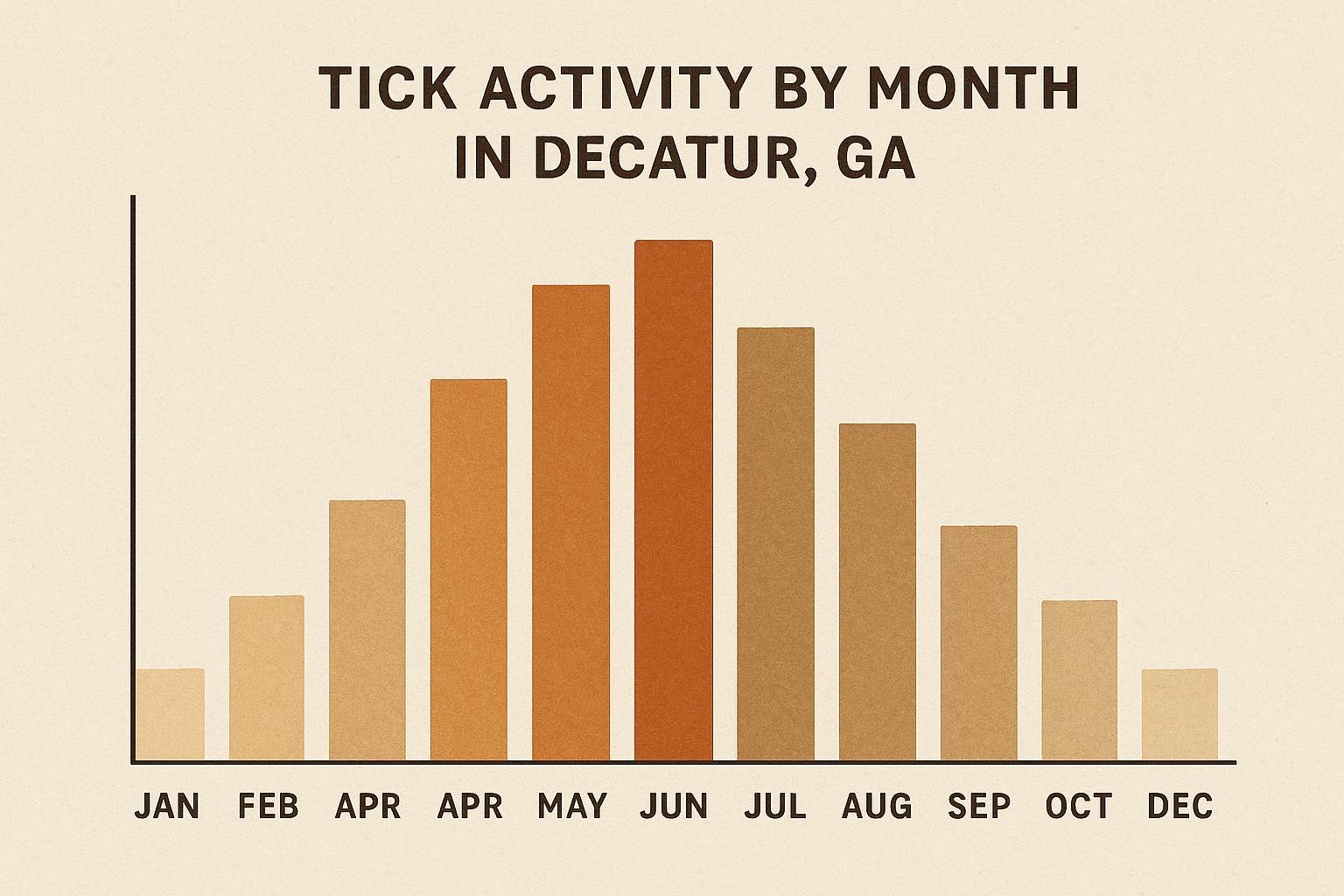
Decatur’s climate creates a distinctive rhythm for tick activity throughout the year. The bar chart above captures the average number of ticks collected each month over the past five years, highlighting a clear surge from April through August. Understanding these seasonal peaks helps homeowners schedule inspections, treatments, and preventive yard work before tick numbers climb out of control.
Why Spring and Summer See Peaks
Ticks are cold‑blooded arthropods, so temperature and humidity directly drive their life cycle. In early spring, daytime highs consistently reach the 60‑70°F range, while nighttime lows stay above 50°F, providing the ideal thermal window for larvae and nymphs to become active. Summer adds another crucial factor: elevated humidity. Moist leaf litter and dewy grass keep the micro‑environment from drying out, allowing ticks to quest for a host without risking desiccation. Simultaneously, local wildlife—white‑tailed deer, raccoons, and even backyard birds—are more active, offering abundant blood meals that accelerate population growth.
Landscaping Factors That Create Hotspots
Decatur’s suburban yards often feature the perfect tick‑friendly landscape: dense shade trees, mulched flower beds, and tall, untrimmed grasses. Leaf litter acts like a blanket, retaining moisture and sheltering ticks during the cooler parts of the day. Tall grasses and border plantings provide a bridge between wooded edges and open lawns, enabling ticks to move from forested habitats into residential zones. Even well‑intentioned garden compost piles can become micro‑habitats if they remain damp and unturned.
Practical Monitoring Tips for Homeowners
- Weekly visual sweeps: During April‑August, walk the perimeter of your property with a white glove or a piece of white cloth. Ticks are easier to spot against a light background.
- Use a tick drag: A piece of white felt or a commercial drag cloth pulled over leaf litter and low vegetation can collect questing ticks for identification.
- Check pets daily: Dogs and cats often bring ticks into the home. Examine ears, neck, and between toes each evening.
- Maintain yard hygiene: Keep grass trimmed to no more than 3 inches, remove leaf piles, and create a 3‑foot buffer of wood chips or gravel between wooded areas and play zones.
- Install barrier plants: Aromatic plants such as lavender, rosemary, or garlic can deter ticks when planted along fence lines.
For a deeper dive into data‑driven tick management, the CDC’s tick‑management guide offers nationwide surveillance maps, detailed life‑stage information, and evidence‑based control recommendations. Aligning your home‑care schedule with the seasonal trends shown above—and supplementing it with the CDC’s best practices—will dramatically lower the chance of a tick‑borne surprise.
Effective Tick Control Methods for Your Home
Chemical vs. Non‑Chemical Approaches
When it comes to tick control Decatur homeowners need around their properties, there are two broad families of solutions: synthetic acaricides and non-chemical strategies. Synthetic acaricides—such as permethrin, bifenthrin, or carbaryl—are formulated to kill ticks on contact and provide residual protection for weeks. They work by disrupting the insect’s nervous system, essentially “shutting down” the tick before it can bite. Non-chemical options include biological controls like entomopathogenic fungi (e.g., Metarhizium anisopliae) that infect and kill ticks, and cultural practices such as landscape management, proper mowing, and leaf-litter removal. While chemicals offer rapid knock-down, non-chemical methods are environmentally gentler and can be layered with sprays for a comprehensive, Integrated Pest Management (IPM) plan.

Step‑by‑Step Perimeter Spray
One of the most reliable treatments for homeowners is a perimeter spray that creates a protective barrier around the property. Follow these steps for a safe and effective application:
- Preparation: Clear the spray line of debris, trim overgrown vegetation, and wet the area lightly to improve adhesion.
- Safety Gear: Wear long sleeves, gloves, safety glasses, and a respirator rated for pesticide use. This protects you from inhalation and skin exposure.
- Mixing: Follow the product label precisely—usually a measured amount of concentrate per gallon of water. Over‑dilution reduces efficacy; under‑dilution can be hazardous.
- Application Technique: Use a low‑volume, backpack or hose‑end sprayer. Apply a uniform mist at a 45‑degree angle, covering the outer 10‑15 feet of the yard, focusing on fence lines, shrub borders, and entry points.
- Post‑Application: Keep children and pets away for at least 2‑4 hours, depending on the product’s re‑entry interval. Water the treated area lightly after the label‑specified drying time to lock the chemical into the soil.
The Role of a Certified Technician
While DIY spraying can work, a certified technician brings expertise that maximizes results and minimizes risk. Professionals are trained to read and interpret EPA‑registered product labels, select the right formulation for your specific tick species, and calibrate equipment for even coverage. They also conduct a thorough pre‑treatment inspection, identifying micro‑habitats where ticks hide—under decks, near woodpiles, or in garden beds. By entrusting the job to an Anthem Pest Control specialist, you ensure that the treatment complies with state regulations and that any residual concerns are addressed promptly.
Supplemental Measures to Strengthen Protection
Even the best spray program benefits from everyday yard habits that deny ticks a foothold. Consider adding these low‑cost, high‑impact actions:
- Tick tubes: Deploy cotton‑filled tubes inoculated with Entomophthora fungus; mice collect the material, become infected, and break the tick life cycle.
- Lawn mowing: Keep grass at 2‑3 inches; shorter blades reduce humidity and make it harder for ticks to quest.
- Leaf litter removal: Regularly rake and compost or discard leaf piles, as they create cool, moist refuges perfect for ticks.
- Pet treatments: Apply veterinarian‑approved spot‑on or oral tick preventatives to dogs and cats; this removes ticks before they can migrate into the home.
Regulatory Compliance and Resources
All pesticide applications must adhere to EPA guidelines to protect human health and the environment. For the latest standards, product registrations, and safety data, visit the EPA’s tick‑management page. Anthem Pest Control stays current with these regulations, ensuring every treatment we perform meets or exceeds federal and Georgia state requirements.
Comparing Tick Control Service Pricing
Understanding how tick control Decatur pricing is structured can turn a confusing bill into a clear investment in your family’s safety. Below is an easy-to-read infographic that breaks down the two most common options—one-time treatments versus quarterly service plans—so you can see at a glance where your money goes.

A one‑time tick treatment typically includes a single, thorough application covering up to 5,000 sq ft, followed by a post‑treatment inspection after two weeks to confirm efficacy. Quarterly plans, on the other hand, schedule four visits per year, each covering the same square footage, and incorporate a brief follow‑up check after every visit. The recurring schedule also allows technicians to adjust products as tick activity spikes, ensuring you stay a step ahead of the season’s worst infestations.
When you look beyond the headline price, the long‑term value becomes evident. While a one‑time service may appear cheaper upfront—often ranging from $150 to $250—it only protects your yard for a limited window. Quarterly plans spread the cost across four visits, typically costing $120 to $180 per visit, but the per‑visit price drops when you factor in the continuous barrier they create. Over a full year, a quarterly package usually totals $480‑$720, delivering uninterrupted protection that can prevent costly re‑treatments, property damage, and potential health issues for pets and children.
To truly gauge cost‑effectiveness, break the total price down to a per‑square‑foot figure. A one‑time service that covers 5,000 sq ft for $200 works out to roughly $0.04 per square foot for a single season. A quarterly plan at $600 for the same area drops that number to $0.03 per square foot each visit, and because the barrier is refreshed every three months, you avoid the hidden expense of emergency re‑treatments when ticks surge. Other variables—such as the presence of dense shrubbery, a dog that spends time outdoors, or a property bordering wooded land—can also tilt the scales toward a recurring plan, where the incremental cost is offset by continuous peace of mind.
| Option | Typical Price (per year) | Visit Frequency | Ideal For |
|---|---|---|---|
| One‑Time Treatment | $150‑$250 | 1 visit | New homeowners testing the yard, low‑risk properties, short‑term rentals |
| Quarterly Plan | $480‑$720 | 4 visits (spring, summer, fall, winter) | High‑risk yards, pet owners, families with children, properties with dense foliage |
| Custom Seasonal Package | Varies (usually $300‑$500) | 2‑3 targeted visits | Homeowners who want flexibility during peak tick months only |
Take a moment to match your yard’s risk level with the table above, then give Anthem Pest Control a call for a free, personalized quote. Our technicians will walk you through the exact coverage you need, answer any pricing questions, and set up a schedule that fits your lifestyle—no hidden fees, just clear, affordable protection.
Secure Your Home with Professional Tick Prevention
Ticks are more than a nuisance; they carry Lyme disease, Rocky Mountain spotted fever, and other serious illnesses that can affect both people and pets. A single bite can introduce pathogens that cause fever, fatigue, joint pain, or even long‑term neurological problems. Because tick activity peaks in spring and early summer, timely, seasonal treatment is essential to break the life cycle before the insects migrate into your yard and home.
Choosing a licensed professional like Anthem Pest Control guarantees that every step follows state regulations and EPA guidelines. Certified technicians evaluate your property, identify high‑risk zones, and apply treatments that target ticks without endangering children, pets, or the surrounding environment. The result is a proven, long‑lasting barrier that reduces the chance of a bite by up to 95 % while keeping costs predictable and affordable.
Anthem’s pricing is transparent—no hidden fees, no surprise add‑ons. You receive a detailed estimate that outlines product costs, labor, and any necessary follow‑up visits. All technicians are fully certified and undergo continuous training, ensuring they stay current on the latest tick‑control technologies. Plus, with a nationwide network of service centers, Anthem can support homeowners in Decatur and beyond, delivering the same high‑quality service wherever you live.
Ready to protect your property before the next tick season begins? Schedule a free, no‑obligation quote today so our experts can assess your yard, identify problem areas, and recommend a customized prevention plan. Call 877‑371‑8196 or visit Anthem Pest Control to request your estimate—there’s no commitment required, just a clear picture of what it will take to keep ticks out of your home.
Protect your family and pets from tick-borne illnesses with a trusted partner for tick control Decatur homeowners rely on. Anthem Pest Control offers customized tick control plans that fit your budget and schedule, backed by certified experts who use EPA-approved products. Call us today at 877-371-8196 for a free quote and take the first step toward a safer, tick-free home.