
Understanding Earwig Risks in Canton, GA
Earwigs are the slender, nocturnal insects you might spot scuttling across a garden wall or, on rare occasions, inside your kitchen. Recognizable by their elongated bodies and characteristic pair of forceps-like pincers at the abdomen’s tip, they range from half an inch to an inch long. Though most species are harmless predators of other small insects, the common European earwig (Forficula auricularia) has adapted well to residential environments—often prompting homeowners to research earwig control cost Canton options when sightings become frequent.
What an Earwig Looks Like
These insects sport a dark brown to reddish‑black exoskeleton, long antennae, and three distinct wing folds—two leathery forewings and a delicate hindwing that is rarely used. Their most distinctive feature, the cerci (the pincers), can appear intimidating but are primarily used for defense and mating rituals. You’ll often find them hiding in cool, damp places such as under mulch, leaf litter, or the cracks of a foundation.
Why They Turn Into Pests
In a well‑maintained yard, earwigs actually help by feeding on aphids, slugs, and other garden pests. Problems arise when their numbers swell and they begin to nibble on tender plant shoots, seedlings, and ornamental foliage, leaving ragged edges and stunted growth. Inside homes, a few curious earwigs may wander in during warm, humid evenings, creating a fleeting nuisance that can alarm homeowners despite the insects posing no health risk.
Local Factors That Invite Earwigs
Canton’s humid subtropical climate creates the perfect moisture reservoir earwigs crave. Summer temperatures regularly climb above 85°F, while nighttime humidity often stays above 70%, encouraging the insects to seek shelter in shaded, damp micro‑habitats. Common landscaping choices—such as wood chips, bark mulch, and dense shrub borders—provide both food sources and ideal hiding spots. Additionally, the region’s frequent rainfall and occasional storm‑driven flooding can push earwigs from natural habitats into nearby yards and basements.
Where This Guide Takes You Next
Now that you can recognize an earwig and understand why it may become a problem in Canton, the rest of this article will walk you through the essential steps to keep them at bay. We’ll cover how to identify early signs of infestation, the seasonal peaks you should watch for, proven treatment options ranging from DIY barriers to professional interventions, and a transparent look at pricing so you can budget confidently. By the end, you’ll have a clear roadmap to protect your home and garden without surprise costs.
Spotting Earwig Entry Points and Signs of Infestation

Earwigs are nocturnal hitch‑hikers that love damp, hidden cracks. Catching them before they set up camp in your home saves you both time and money. Below are the tell‑tale signs and the exact spots you should inspect around a typical Canton, GA residence.
Common entry points
These insects exploit any opening that offers moisture and shelter. In a typical suburban home you’ll find them slipping through:
- Cracks in the foundation or slab, especially where soil meets concrete.
- Gaps around exterior doors, sliding windows, and any poorly fitted frames.
- Vent openings – dryer, attic, or bathroom vents that lack proper screens.
- Damaged or loose siding, soffit, and fascia boards.
- Spaces under decks, porches, or crawl‑space access doors.
Visual clues of activity
Earwigs leave a subtle trail of evidence. Look for these indicators during a daylight walk‑around:
- Shed exoskeletons (the thin, translucent skins they discard as they grow).
- Small, dark droppings resembling tiny specks of pepper.
- Silvery‑gray foraging trails leading toward moisture sources.
- Irregular bite marks or ragged edges on tender garden foliage.
- Clusters of earwigs gathered under mulch, leaf piles, or near outdoor lights.
DIY inspection checklist
Grab a notebook, a flashlight, and a camera, then follow this step-by-step walk-through to document problem areas and better estimate earwig control cost Canton for your home:
- Start at the front door and walk clockwise around the entire exterior. Pause at each vent, utility opening, and window.
- Run a fingertip along the foundation; feel for any gaps wider than a quarter‑inch.
- Inspect baseboards and interior trim for tiny holes or accumulated shed skins.
- Lift sections of decking or porch flooring to view the space underneath.
- Check under kitchen and bathroom sinks for dampness or water pooling.
- Examine garden beds and mulch for earwig clusters or damaged leaves.
- Take a photo of each suspect area and jot a brief note (e.g., “2‑in crack near back patio”).
How to document findings for a professional
A clear record speeds up the consult with Anthem Pest Control. Capture high‑resolution photos from multiple angles, label them with the location (front‑left, garage‑ceiling), and note the date and time. When you call, you can share the photo set via email or a quick text, giving the technician a head start on a targeted treatment plan.
Seal the gaps early
Once you’ve identified problem spots, close them before earwigs move in. Use a quality exterior caulk for foundation cracks, apply weather‑stripping around doors and windows, and install fine‑mesh screens on all vents. Even a thin layer of silicone can block moisture and deny earwigs the shelter they crave, reducing the likelihood of a full‑blown infestation and keeping your treatment costs down.
By tackling these small gaps now, you not only protect your home from earwigs but also deter other moisture‑loving pests like termites and carpenter ants, giving you long‑term peace of mind.
Seasonal Earwig Activity in Georgia and Prevention Strategies
Earwigs may seem like a minor nuisance, but in Georgia their numbers can swell enough to cause real household irritation. Understanding when they are most active helps you stay one step ahead, allowing you to apply the right preventive measures at the right time and keep earwig control cost Canton manageable. Below, we break down the earwig life cycle, pinpoint the months when they’re most likely to appear, and give you practical, season-specific tactics you can start using right away.
Earwig Life Cycle and Temperature Influence
Earwigs progress through three stages: egg, nymph, and adult. Females lay eggs in moist soil or leaf litter during the warmer months, often covering them with a protective foam. As temperatures rise, the eggs hatch into nymphs that look like miniature adults but lack fully developed wings. These nymphs molt several times, each stage lasting a few weeks, before reaching full maturity. Because development is temperature‑dependent, a mild winter can accelerate the cycle, while a cold snap can stall it, leading to a sudden surge of active adults once the weather warms again. This temperature‑driven rhythm is why earwig populations in Georgia tend to peak during the late‑spring to early‑summer window.
Peak Activity Months in Georgia
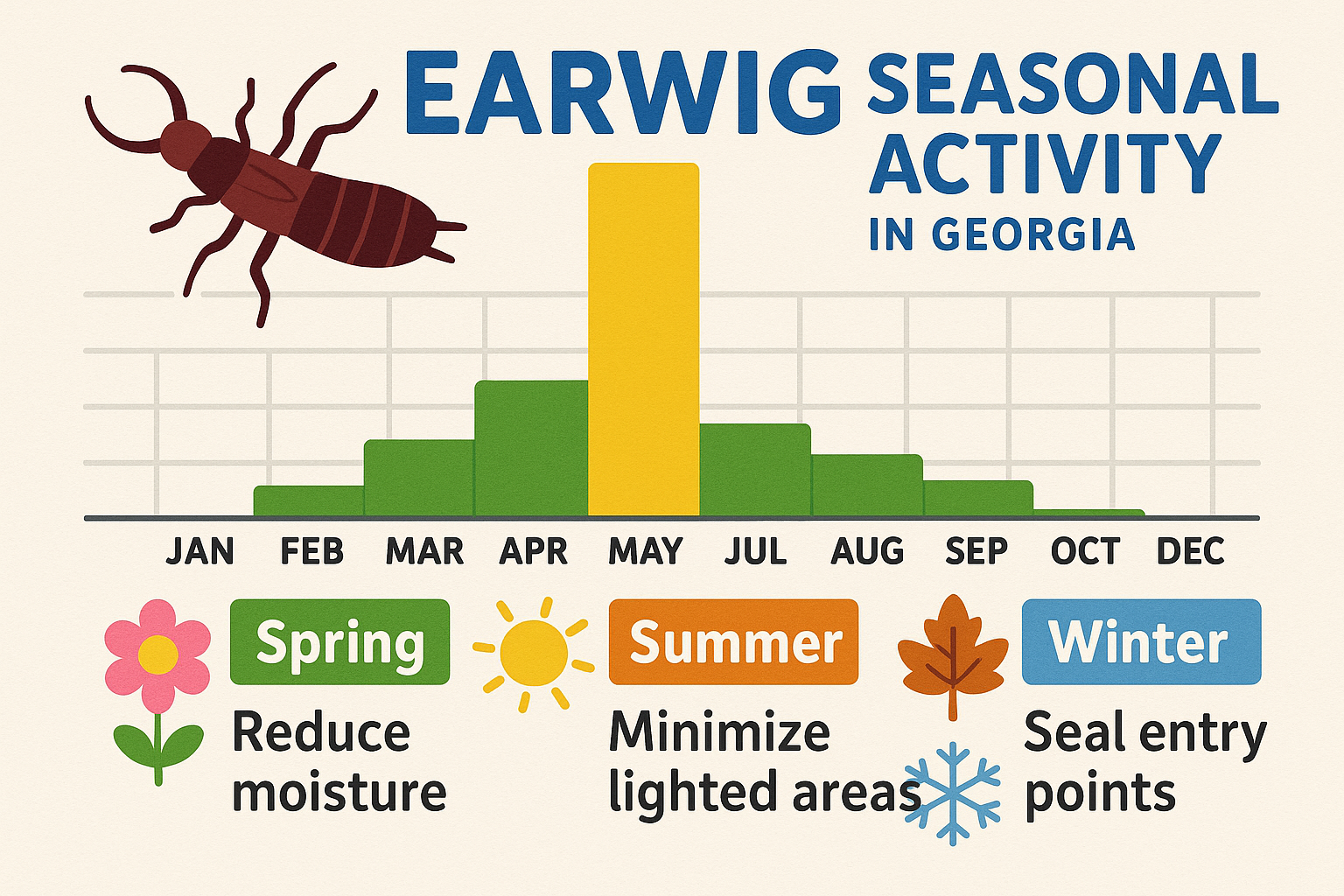
Based on field observations across the state, earwig activity follows a fairly predictable pattern. The chart below highlights the typical activity level you can expect each month. Use it as a visual cue for when to intensify your preventive actions.
| Month | Activity Level |
|---|---|
| January | Low |
| February | Low |
| March | Moderate |
| April | High |
| May | High |
| June | High |
| July | Moderate |
| August | Moderate |
| September | Low |
| October | Low |
| November | Low |
| December | Low |
Spring Prevention Tips (March–May)
- Eliminate excess moisture around the foundation by fixing leaky gutters and directing downspouts away from the house.
- Trim shrubs, vines, and other vegetation so they do not touch the exterior walls; this removes a bridge that earwigs love to cross.
- Apply a thin layer of diatomaceous earth in cracks, doorways, and other entry points; the abrasive particles dehydrate any earwig that tries to pass.
- Clear leaf litter and mulch piles near the home, as these provide ideal breeding sites for eggs and nymphs.
Summer Prevention Tips (June–August)
- Maintain proper yard drainage; standing water attracts earwigs and encourages them to seek shelter inside.
- Avoid over‑watering lawns and garden beds; excess irrigation creates the damp environment earwigs thrive in.
- Install fine‑mesh screens on vents, crawl‑space openings, and basement windows to block their entry while still allowing airflow.
Fall & Winter Prevention Tips (September–February)
- Inspect the exterior for cracks, gaps around utility penetrations, and damaged siding; reseal with caulk or weather‑stripping to shut down hiding spots.
- Store firewood, lumber, and other organic materials at least three feet away from the house and off the ground to prevent earwigs from using them as a bridge.
- Limit indoor lighting at night, especially near doors and windows; earwigs are attracted to light and may wander inside seeking it.
When chemical control becomes necessary, always follow the EPA residential insecticide guidelines for safe, effective seasonal applications. Proper timing and adherence to label instructions protect your family, pets, and the environment while keeping earwigs at bay.
Professional Perimeter Treatment for Earwigs
When earwigs wander onto your porch, patio, or garden, they’re usually coming from the same outdoor “foraging zone” that surrounds every home. Treating that zone—rather than just spraying a few indoor cracks—creates a protective barrier that stops the insects before they even think about stepping inside, helping keep earwig control cost Canton homeowners face under control. That’s why perimeter treatment is considered the gold standard for earwig control in Canton, Georgia.

What the fogger looks like and what it uses
Our certified technicians rely on a low‑pressure, thermal fogger that atomizes EPA‑approved insecticides into a fine mist. The chemicals are specifically formulated for outdoor use: they carry low toxicity for humans and pets, yet they leave a residual coating that remains active for weeks. Common active ingredients include bifenthrin or permethrin, both of which are proven to disrupt earwig nerve function without lingering odors.
Step‑by‑step: How a technician performs a perimeter fog
- Pre‑treatment inspection: The technician walks the property, identifies high‑traffic zones (doorways, windows, deck railings) and notes any obstacles that could block the mist.
- Safety precautions: Homeowners are asked to close interior doors, seal pet cages, and remove outdoor furniture that could be damaged. The technician dons protective gear and confirms that weather conditions (wind < 10 mph, no rain) are suitable.
- Calibrated fogger sweep: Using the fogger’s built‑in flow meter, the technician makes slow, overlapping passes around the foundation, along the siding, and under eaves. The mist settles into cracks, soil, and mulch—exactly where earwigs hide.
- Post‑treatment walk‑through: After the fog dissipates, the technician reviews the treated perimeter with the homeowner, points out any areas that may need future attention, and provides a written warranty.
Why go professional instead of DIY?
- Coverage consistency: A fogger creates a uniform, 360‑degree veil that handheld sprays simply can’t match.
- Liability protection: Licensed technicians follow state regulations and carry insurance, shielding homeowners from accidental exposure claims.
- Warranty & guarantee: Anthem Pest backs each perimeter treatment with a satisfaction guarantee, giving you peace of mind that DIY products lack.
Timeline for results and follow‑up
Most homeowners notice a sharp drop in earwig activity within 48 hours, as the residual insecticide begins to affect the insects that cross the treated line. Full control typically stabilizes after one week, when the remaining outdoor population has been eliminated. To keep the barrier effective, Anthem recommends a re‑treatment every three months, especially during the humid summer months when earwigs reproduce most rapidly.
Earwig Control Pricing Options in Canton, GA
At Anthem Pest Control we believe that every homeowner deserves to know exactly what they’re paying for. Our pricing philosophy is built on transparency—no hidden fees, no surprise add‑ons, and a clear breakdown of what each service delivers. Whether you’re tackling a light earwig presence or a full‑blown infestation, you’ll see the cost up front and understand the value behind each dollar.
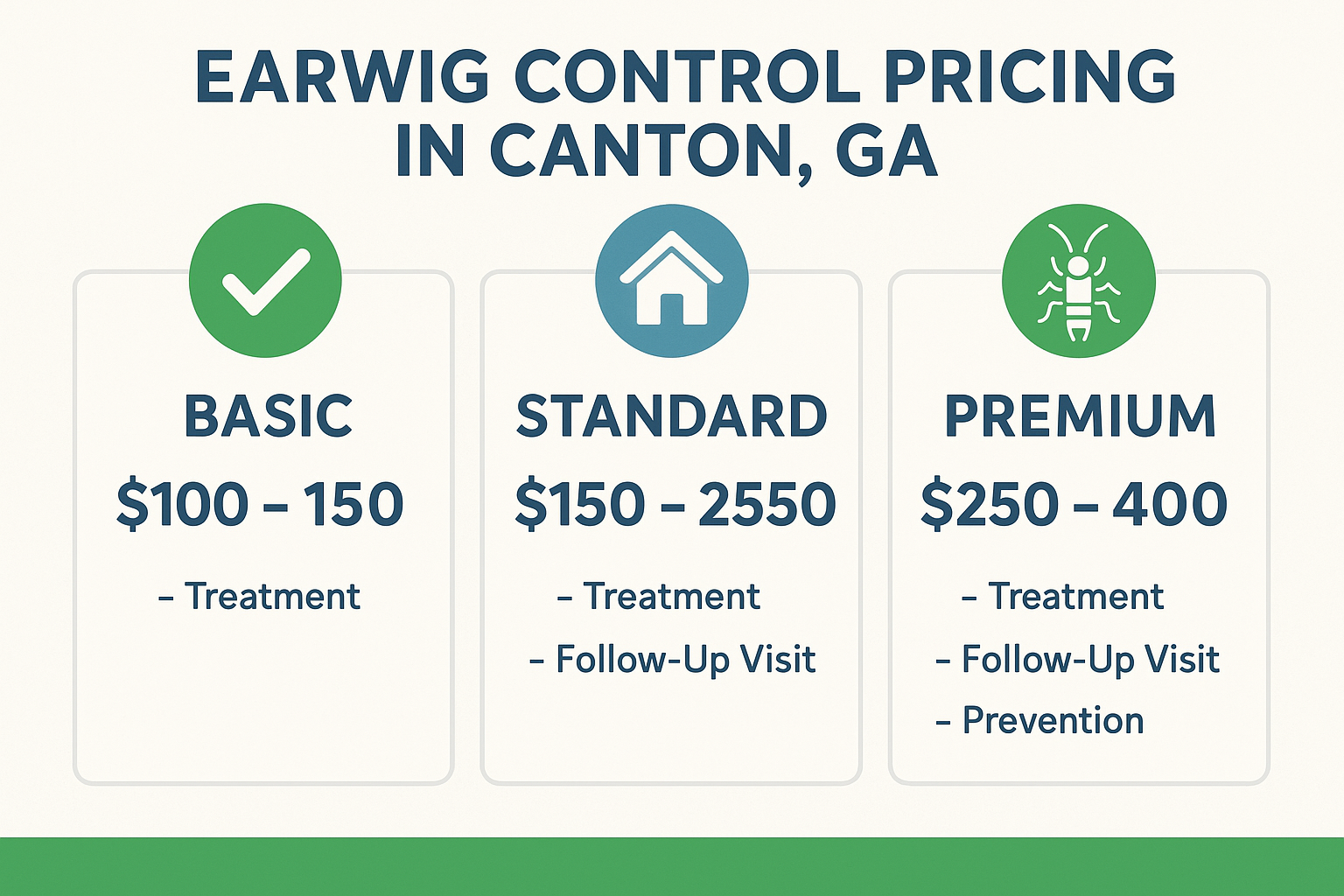
We’ve organized our earwig control into three easy‑to‑compare tiers: Basic, Standard, and Premium. Each tier is designed to match a different level of need, from a single perimeter fogging to comprehensive year‑round protection. The table below summarizes the core components and price ranges for homeowners in Canton, GA.
| Tier | Treatments per Year | Coverage | Price Range |
|---|---|---|---|
| Basic | 1 | Perimeter fogging, up to 1,500 sq ft | $79 – $99 |
| Standard | 2 | Perimeter fogging + crack sealing | $149 – $179 |
| Premium | 4 | Quarterly treatments, full interior/exterior coverage, monitoring | $229 – $259 |
Basic Tier – Essential Protection
- One perimeter fogging session covering up to 1,500 sq ft.
- Follow‑up inspection within 14 days to verify effectiveness.
- 30‑day warranty on the treatment.
Standard Tier – Balanced Care
- Two treatments per year, spaced six months apart.
- Includes professional crack sealing to block entry points.
- Post‑treatment inspections after each visit.
- 90‑day warranty for added peace of mind.
Premium Tier – Full‑Service Assurance
- Quarterly treatments covering both interior and exterior areas.
- Comprehensive monitoring with bait stations and traps.
- All crack sealing and structural exclusion work.
- Follow‑up inspections after every visit and a 12‑month warranty.
Choosing the Right Tier
Start by measuring your home’s square footage. If you have a modest‑sized property (under 1,500 sq ft) and only a few earwigs, the Basic tier often provides sufficient control. For larger homes, or if you’ve noticed earwigs entering through cracks and crevices, the Standard tier adds the necessary sealing work. Homeowners facing persistent or seasonal spikes should consider the Premium tier, which delivers continuous protection and monitoring throughout the year. Align the tier with your budget, but remember that a slightly higher upfront cost can prevent costly re‑infestations later.
Ready for a Free Quote?
Use our simple pricing guide to request a free, no‑obligation quote today. Just give us a call at 877‑371‑8196 or visit anthempest.com and let Anthem Pest Control tailor the perfect earwig control plan for your Canton home.
Protect Your Home with Anthem Pest Control
Earwigs may seem harmless, but when they invade your kitchen, basement, or garden they can become a genuine nuisance. By now you’ve learned how to spot them, when they’re most active, and what DIY steps can keep them at bay. The next logical step is to partner with a trusted, locally‑experienced professional who can turn those preventive measures into lasting protection.
Quick Recap
- Identification: Look for the distinctive pincers, nocturnal activity, and the tell‑tale “sickle‑shaped” wings tucked beneath a flattened body.
- Seasonal Prevention: Seal cracks before the warm months, eliminate standing water, and keep mulch or leaf piles away from your foundation.
- Professional Treatment: Certified technicians apply targeted, low‑toxicity products that reach hidden crevices and nesting sites—something over‑the‑counter sprays can’t achieve.
- Pricing Options: Anthem offers transparent, flat‑rate packages for single‑visit treatments, as well as seasonal plans that spread costs while delivering continuous monitoring.
Choosing Anthem Pest Control means you’re not just hiring a service; you’re gaining a partner who knows Canton’s climate, the local earwig habits, and the best timing for interventions. Our technicians are certified, background‑checked, and equipped with the latest tools to ensure every corner of your home is inspected and treated safely.
Imagine the peace of mind that comes from knowing a qualified team is safeguarding your family’s comfort—no more waking up to mysterious crunches in the pantry or discovering earwig clusters in your garden beds. That confidence is the real value of professional pest control, and it’s why homeowners across Georgia trust Anthem.
Ready to keep earwigs out of your home? Our experts are standing by to assess your property and design a customized plan that fits your budget and schedule. Call us today at 877‑371‑8196 for a free, no‑obligation quote.
Take the first step toward a pest-free household. Visit Anthem Pest Control now to get clear earwig control cost Canton details and let us handle the earwigs so you can enjoy a quieter, cleaner home.