Understanding Termite Threats and Why They Matter
Termites may be invisible to the naked eye, but their damage is anything but—making the help of a termite exterminator Suwanee homeowners trust essential. Often called “silent destroyers,” these insects work underground or inside wood, chewing away at structural components while you go about daily life. By the time you notice a sagging floorboard, weeks or months of damage have already occurred.
Understanding their biology helps you see why prevention is easier than cure. Termites live in colonies that can number from a few hundred to several hundred thousand workers, all focused on feeding on cellulose. They require moisture, a food source, and a protected tunnel system to thrive, which is why they often infiltrate homes through foundations, crawl spaces, or even wooden siding.
In U.S. residential settings, three species cause the bulk of damage—species a termite exterminator Suwanee homeowners rely on commonly identifies during inspections. Subterranean termites, the most common, build mud tubes to travel from soil to wood. Drywood termites live entirely inside the wood they consume, leaving no external signs. Formosan termites, an aggressive invasive species, can establish colonies of millions and devour structures at an alarming rate.
The three culprits can be summarized as follows:
- Subterranean termites – create mud tubes from soil to wood, thriving in moist foundations.
- Drywood termites – live entirely inside wood, leaving behind fecal pellets and hollowed galleries.
- Formosan termites – an invasive species that builds massive colonies, often causing damage faster than any native termite.
Beyond structural concerns, termites hit your wallet hard. The National Pest Management Association estimates that the average homeowner spends between $5,000 and $10,000 on repairs after a serious infestation. Moreover, untreated damage can shave 5–15 % off a property’s market value, making early action a sound financial decision.
The U.S. Environmental Protection Agency treats termites as a top‑priority pest, offering a comprehensive guide on risk factors, inspection techniques, and preventive measures. You can review the EPA’s recommendations at EPA – Termite, which emphasizes regular monitoring and sealing entry points before colonies take hold.
Early detection is the linchpin of cost‑effective control. When a colony is small, a targeted bait or localized treatment can eradicate it for a few hundred dollars. Let the infestation grow, and you’ll need extensive fumigation, structural repairs, and possibly a full replacement—costs that can exceed $20,000.
As a homeowner, the first step is a visual inspection: look for mud tubes on foundation walls, discarded wings near light fixtures, or tiny pellets on window sills. If any of these signs appear, call a licensed professional—like Anthem Pest Control—who can confirm the species, assess damage, and recommend a tailored treatment plan.
Understanding the biology, species, and financial stakes empowers you to act before termites compromise your home.
Spotting Termite Damage Before It Spreads
Termites work silently, but the damage they leave behind is anything but subtle. Knowing the visual cues early can save you from costly structural repairs. Below we break down the most reliable signs that indicate an active infestation, so you can act before the problem spreads.
Mud Tubes: The Highway of the Colony
Termites build mud tubes as protected pathways from the soil to the wood they’re eating. These tubes are typically ¼‑inch wide, tan‑gray, and feel like wet sand when you run a finger along them. Look for them along foundation walls, crawl‑space vents, and any area where wood meets concrete. Their presence means termites are actively traveling to feed, and the tunnel will often follow the lowest, most humid route.
Winged Alates (Swarmers) and Seasonal Swarming
In spring and early summer, mature colonies release winged termites—known as alates—to start new colonies. After a rainy night, you may find clusters of discarded wings near light fixtures, windows, or porch railings. The wings are transparent, veined, and about the size of a paperclip. A sudden appearance of these wings signals that a colony has reached reproductive maturity and is spreading.
Wood Damage Patterns: Listening to the Silence
Termite damage isn’t a surface scratch; it’s an internal hollowing. Tap a wooden beam or floorboard; a hollow, dull thud often means the interior has been eaten away. Look for “tent” damage—small, raised ridges on the wood surface where termites have pushed out frass (their droppings). Inside the wood, you may see a maze‑like network of galleries, which appear as smooth tunnels when you pry a small piece apart.
Close‑Up Visual Cues
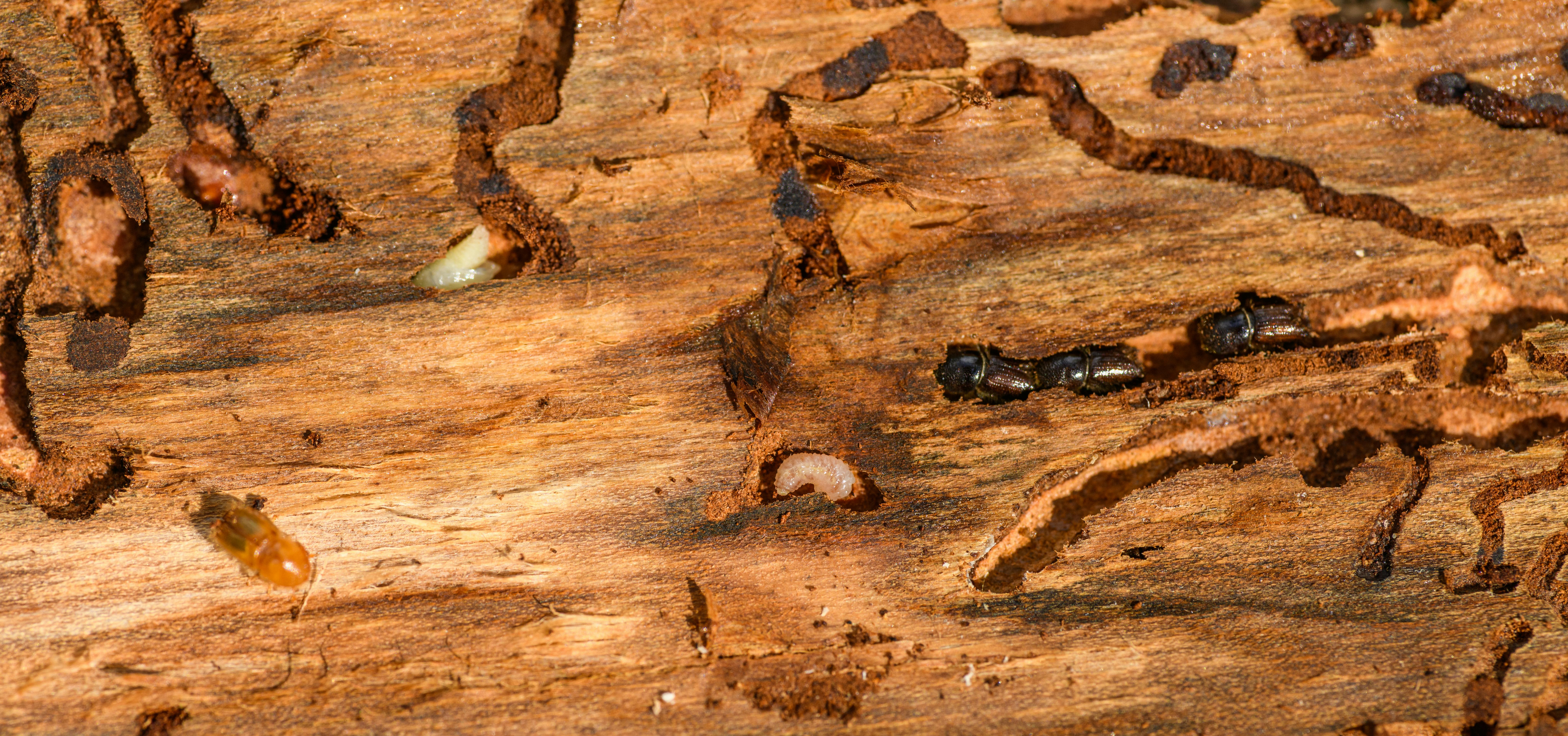
Macro photography reveals details the naked eye can miss. Look for the tiny, white, bean‑shaped termites inside the mud tubes, or the fine powdery frass they leave behind. The tubes themselves may appear slightly glossy when wet, and the edges can be ragged where the colony is expanding.
DIY Inspection Walk‑Through Checklist
- Inspect foundation walls for mud tubes, especially in damp corners.
- Check crawl‑space vents, piers, and joist pockets for wet‑sand tunnels.
- Listen for hollow sounds by tapping wooden beams, doors, and window frames.
- Look for “tent” ridges or small piles of frass on interior wood surfaces.
- Collect any discarded wings near windows or light fixtures after a rainstorm.
- Use a flashlight to examine dark, hidden areas—termite activity thrives in shadow.
- Take close‑up photos of any suspect tubes or damage to share with a professional.
If you spot any of these signs, it’s time to call a trusted exterminator. Anthem Pest Control can confirm the infestation, recommend a targeted treatment plan, and help you protect your home before the damage becomes structural. Early detection is the most effective defense against these silent destroyers.
Comparing Core Termite Treatment Methods
When termites threaten a home, the two most widely used professional solutions are a liquid termiticide barrier and a bait-station system—options a termite exterminator Suwanee homeowners trust commonly recommends. Both aim to protect the structure, but they work in very different ways, and the right choice often depends on budget, construction type, and environmental preferences.
Liquid Termiticide Barrier
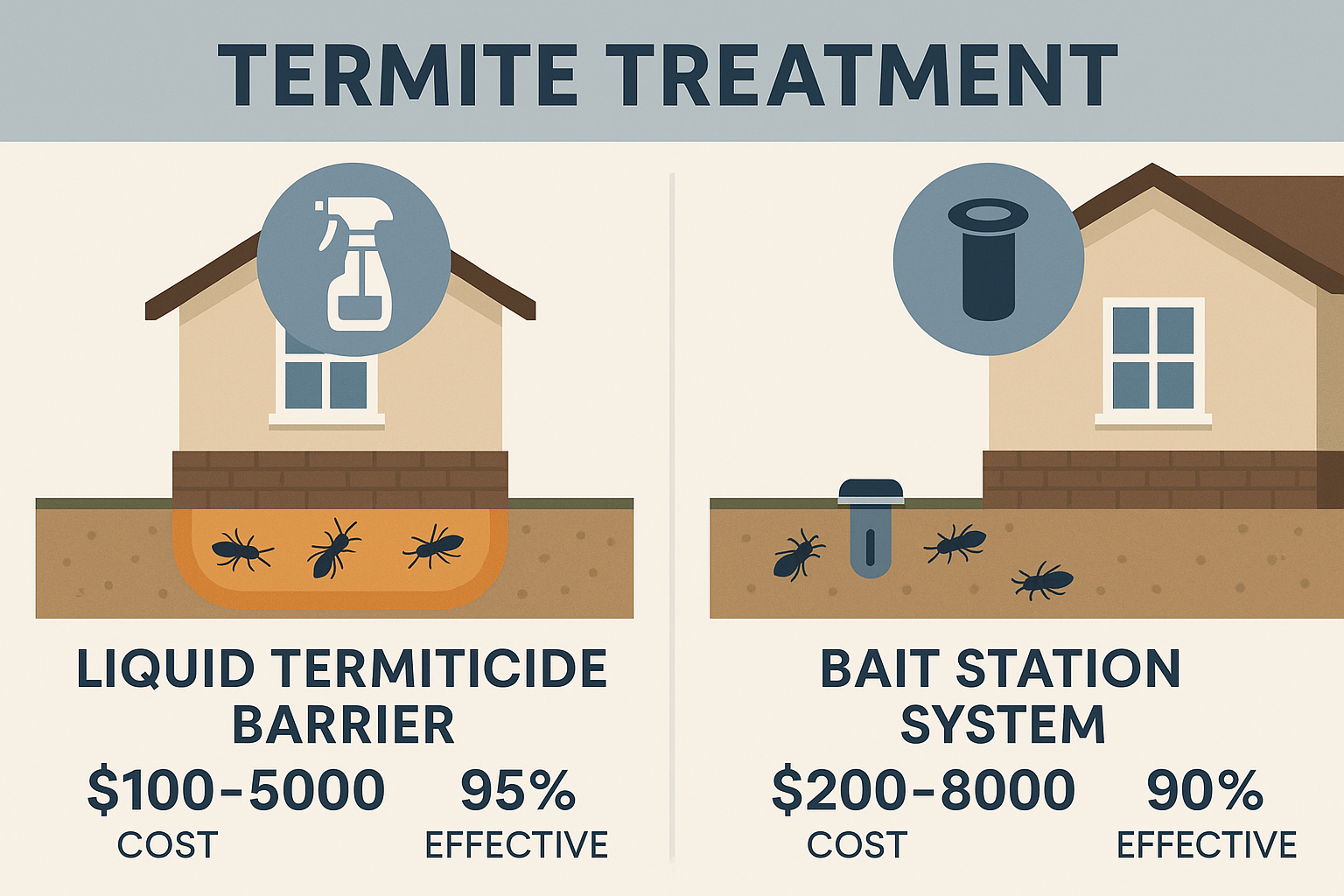
The barrier method involves drilling small holes around the foundation and injecting a liquid termiticide into the soil to a depth of 12‑18 inches. The chemical forms a continuous, invisible shield that termites cannot cross without dying. Once applied, the barrier typically remains effective for 5‑10 years, depending on soil conditions and product label.
Bait‑Station System
Bait stations are placed strategically in the yard and inside wall voids where termites travel. Each station contains a cellulose core laced with a slow‑acting growth regulator. Workers carry the bait back to the colony, eventually eliminating the queen and the entire population. Stations are checked every 3‑6 months, and additional bait may be added until monitoring shows no activity.
Cost and Effectiveness
| Method | Average Cost (USD) | Effectiveness (% of cases) |
|---|---|---|
| Liquid Termiticide Barrier | $1,800 – $3,200 | 92‑96% |
| Bait‑Station System | $1,200 – $2,500 | 88‑94% |
Pros and Cons
- Liquid Barrier – Pros: Immediate protection, long‑lasting, minimal homeowner involvement after application.
- Liquid Barrier – Cons: Higher upfront cost, soil disruption during installation, chemical exposure concerns.
- Bait Stations – Pros: Lower initial expense, targeted action with less chemical use, visible monitoring results.
- Bait Stations – Cons: Requires regular inspections, effectiveness depends on termite foraging behavior, may take several months to fully eradicate a colony.
When to Choose Which
New construction projects often favor a liquid barrier because it can be applied before the slab cures, creating a permanent shield from day one. Retrofits or homes with limited access to the perimeter may benefit from bait stations, especially if the homeowner prefers a reduced chemical footprint. Eco‑conscious owners frequently opt for bait because it uses a biologically based growth regulator rather than broad‑spectrum chemicals.
Maintenance expectations differ between the two approaches. A liquid barrier is essentially a set‑and‑forget solution; after the initial treatment, homeowners usually only need an annual visual inspection to confirm the perimeter remains intact. Bait stations, on the other hand, demand a scheduled service call every 3‑4 months so a technician can replace consumed bait, reset traps, and verify that termite activity has ceased. This ongoing involvement can be reassuring for owners who like to see tangible evidence of progress, but it also adds to the long‑term labor cost. Understanding these commitments helps avoid surprise invoices and keeps the protection plan aligned with your lifestyle.
Regardless of the method, professional application follows strict safety protocols—protective gear, calibrated equipment, and adherence to EPA guidelines. For a deeper dive into the safety steps our technicians take, see Part 5: Professional Application Safety.
Timing Your Termite Control for Maximum Effectiveness
Termite Life Cycle and Temperature Dependence
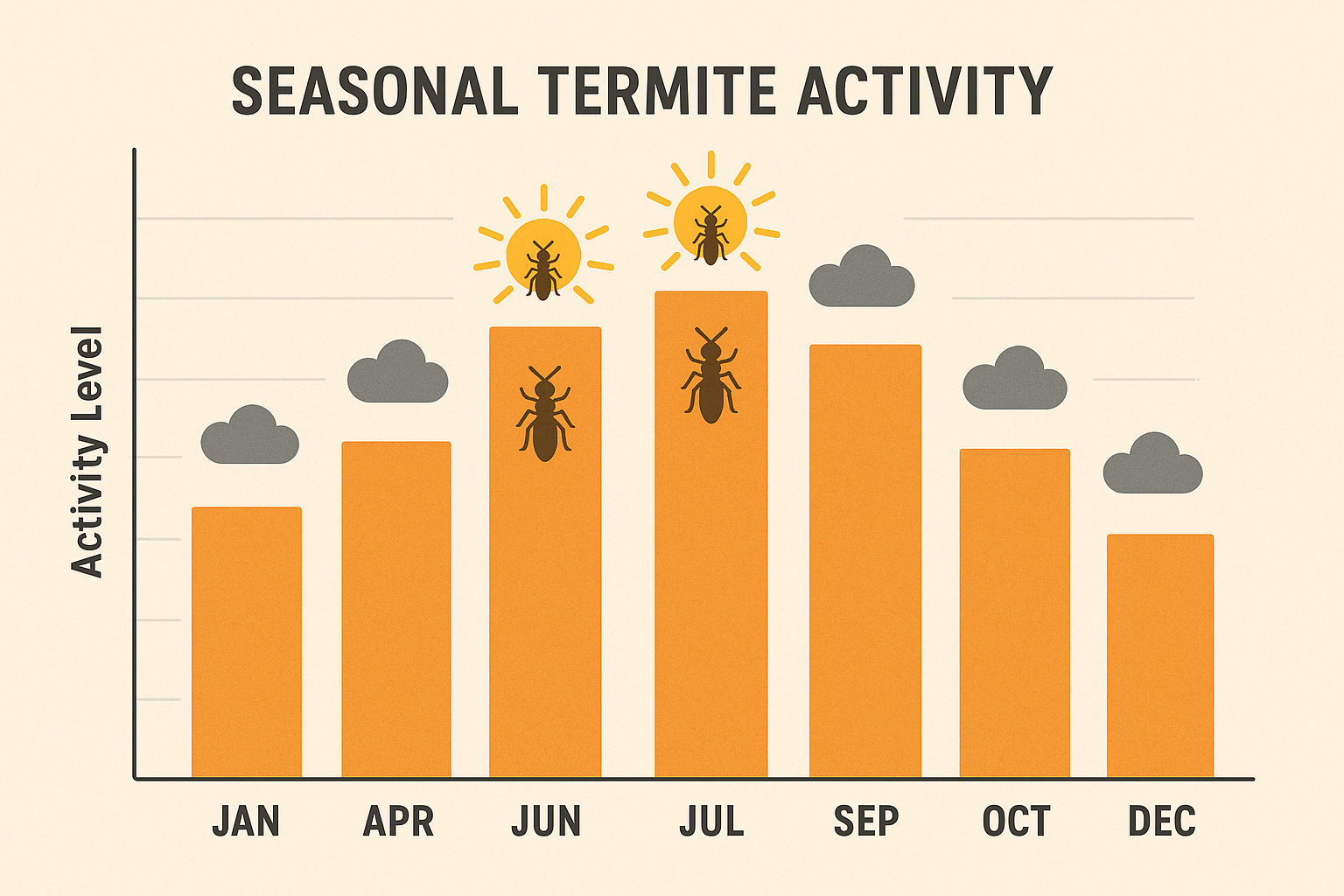
Termites move through egg, nymph, and adult stages, and each transition is driven by temperature—patterns a termite exterminator Suwanee homeowners trust carefully evaluates. In the United States, colonies thrive when soil temperatures stay above 55 °F (13 °C). Below that threshold, activity slows dramatically, and the insects focus on conserving energy rather than foraging. This temperature-dependent rhythm means that the same colony can be nearly invisible in winter but aggressively expanding once the soil warms in spring.
Reading the Seasonal Activity Chart
The chart above visualizes the typical surge in termite movement during the summer months, when soil temperatures regularly exceed 70 °F (21 °C). Activity tapers off in late fall and reaches its nadir in the coldest winter weeks. Homeowners in Suwanee, GA, will see the highest foraging rates from June through August, while early spring (March‑April) still offers enough warmth for colonies to begin feeding after winter dormancy.
Optimal Treatment Windows
Because termites are most active when they’re feeding, applying termiticides during peak activity ensures the chemicals contact the largest number of workers. Two windows provide the best results:
- Early‑spring pre‑emptive treatment (mid‑March to early May): Targets colonies emerging from winter dormancy before they can cause extensive damage.
- Late‑summer follow‑up (late July to early September): Catches the summer peak when foraging is at its highest, reinforcing any early‑spring barrier and eliminating survivors.
Scheduling both applications gives a “double‑hit” strategy that dramatically reduces the chance of re‑infestation.
Climate Zones and Timing
While Suwanee sits in USDA hardiness zone 7b, the same principles shift in warmer southern states (zones 8‑9) where soil stays above the activity threshold year‑round. In those regions, a single spring treatment often suffices, but a supplemental summer dose can still improve long‑term control. Conversely, cooler northern zones may require an additional late‑fall application to address colonies that remain active longer into the cooling season. Adjusting the calendar to local climate ensures you’re never treating when termites are dormant.
Why Regular Inspections Matter
Even the best‑timed treatment can miss hidden satellite colonies. Aligning professional inspections with the activity chart—once in early spring and again after the summer peak—lets technicians spot new mud tubes, moisture problems, or wood damage before they become costly repairs. Regular check‑ups also give you a chance to update barrier lines, address landscaping changes, and verify that the chemical barrier remains intact. In short, timing your control measures and pairing them with scheduled inspections maximizes protection while keeping your home termite‑free.
Secure Your Home Today with Anthem Pest Control
Early detection of termites and swift, professional treatment are the twin pillars of a pest‑free home. When an infestation is caught before it spreads, the damage—and the repair costs—stay minimal. That’s why Anthem Pest Control stresses regular inspections and rapid response; a small step today can prevent a costly nightmare tomorrow.
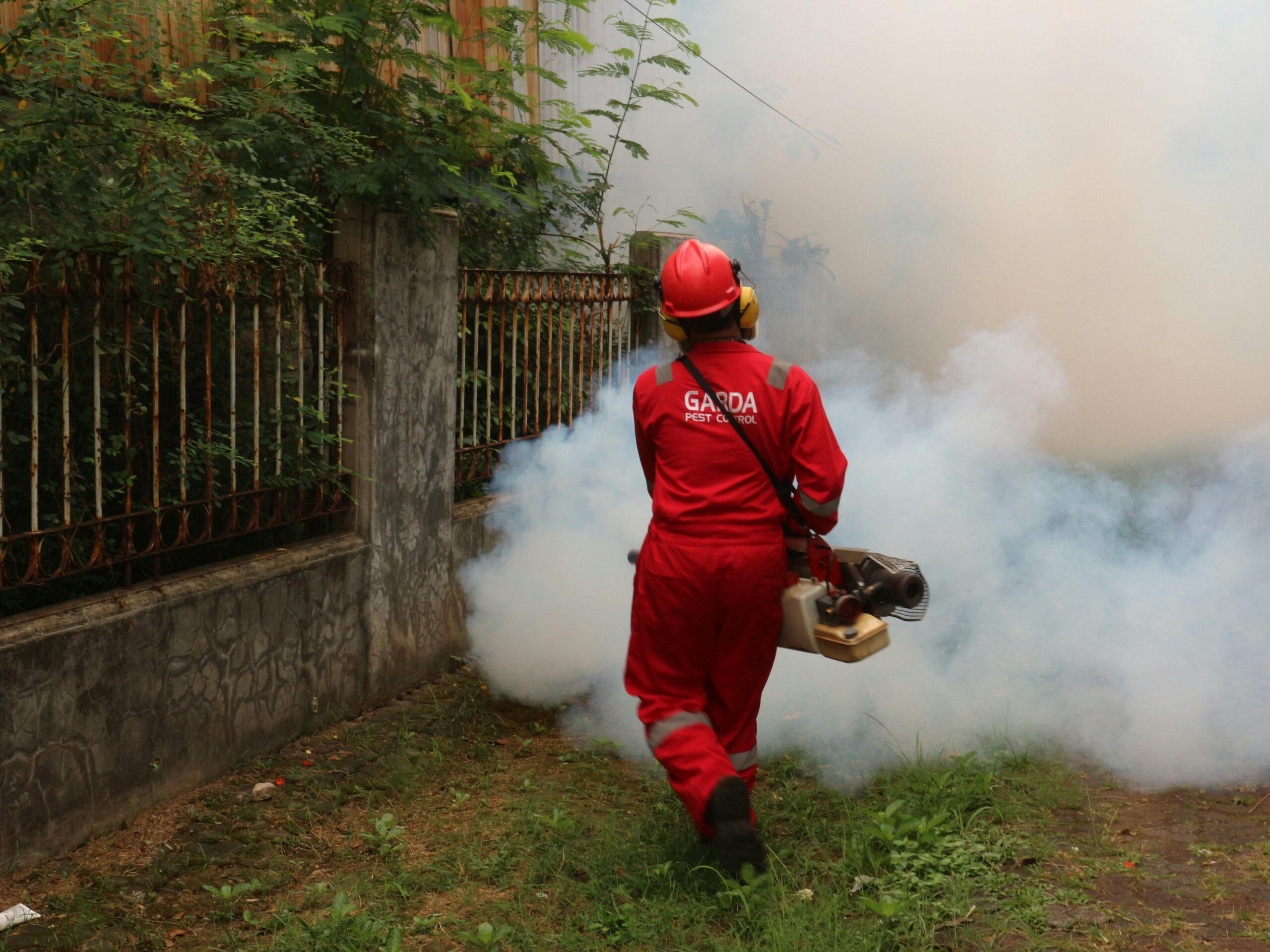
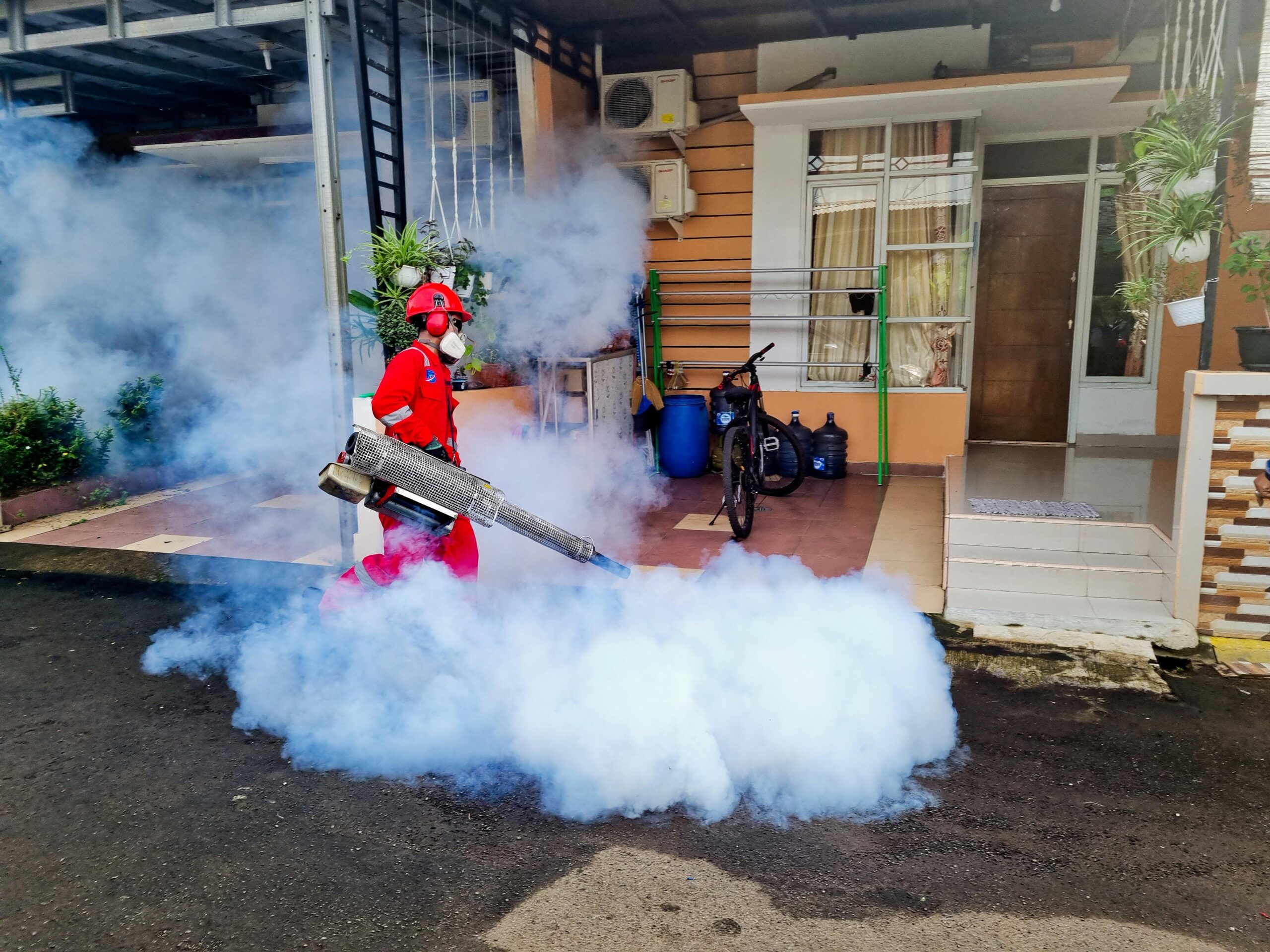
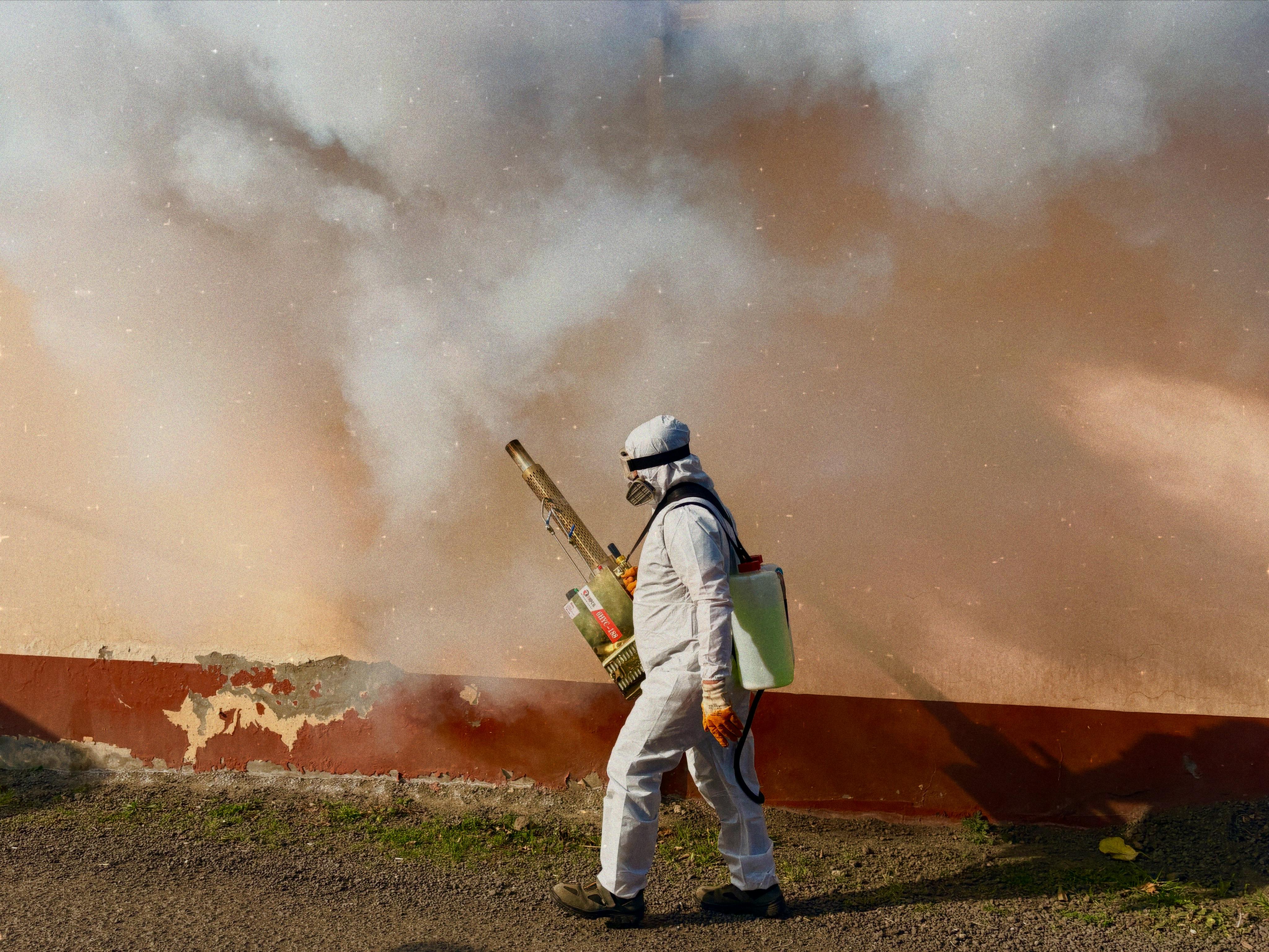
Anthem’s certified technicians are trained to use only EPA‑approved products that target termites while keeping your family and pets safe. The photo above shows a technician performing a precise fumigation, a method that penetrates hidden galleries and eliminates colonies at their source. Because every product meets strict safety standards, you can trust that the treatment won’t linger in your living spaces.
Transparency is built into every quote. Anthem offers clear, upfront pricing with no hidden fees, and you can choose the protection plan that fits your home’s layout and your budget. Whether you prefer a liquid barrier that creates an invisible shield around your foundation or strategically placed bait stations that lure termites away from the structure, the plan is fully customizable.
Even though Anthem operates nationwide, each technician brings local expertise to Suwanee, GA. They understand the regional soil composition, climate patterns, and the specific termite species that threaten homes in this area. This blend of broad resources and neighborhood know‑how ensures you receive the most effective solution for your property.
Ready to protect your home? Schedule a free home assessment today and experience Anthem’s quick response time—most appointments are booked within 24 hours. One call is all it takes to set the process in motion.
Call us now at 877-371-8196 or visit Anthem Pest Control to request your complimentary quote from a trusted termite exterminator Suwanee homeowners rely on. Let our experts give you the peace of mind that comes from knowing your home is defended by the best in the business.