Understanding the Rat Problem in Holly Springs, GA

Climate and Housing Attractants
Holly Springs enjoys a humid subtropical climate, with hot summers, mild winters, and ample rainfall throughout the year. These conditions create perfect foraging grounds for Norway and roof rats, which thrive on abundant vegetation, water sources, and warm shelter. The town’s typical single‑family homes feature crawl spaces, basements, and dense landscaping—exactly the hide‑outs rodents love. Overgrown yards, wood piles, and unsecured trash bins act like open invitations, making it easy for rats to establish colonies right next to your doorstep.
Local Rat Activity Statistics
According to the National Pest Management Association’s rodent cost study, U.S. homeowners collectively lose over $20 billion annually to rat‑related damage. In the Atlanta metropolitan area, which includes Holly Springs, reported rat sightings have risen by roughly 12 % over the past two years, and damage claims for gnawed wiring and insulation have increased in parallel. These numbers illustrate that the rat issue is not just a fleeting nuisance—it’s a growing financial burden for local families.
Health Risks and Property Damage
Rats are more than a property‑damage problem; they pose serious health threats. They can carry Leptospira bacteria (causing leptospirosis), hantavirus, and salmonella, contaminating food surfaces with urine and feces. Their constant chewing habit targets electrical wiring, which can spark fires, and they readily gnaw through insulation, plumbing, and structural wood, leading to costly repairs. A single infestation can compromise the safety of an entire household, especially where children or pets are present.
Did You Know?
- Rats can squeeze through openings as small as a quarter‑inch—roughly the size of a pencil.
- They reproduce rapidly: a pair of rats can produce up to 2,000 offspring in just one year under optimal conditions.
- Rats have a keen sense of smell and can detect food sources from up to 150 feet away.
- Even a brief power outage can trigger a surge of rat activity as they seek warmth and shelter.
Spotting Early Signs of a Rat Infestation
Rats are stealthy, but they leave a trail of evidence that even a busy homeowner can spot. Catching those clues early means you can intervene before structural damage, health risks, or costly treatments become unavoidable.
Visual clues you can’t ignore
Look for fresh droppings—dark, rice‑shaped pellets about half an inch long—along baseboards, behind appliances, and in pantry corners. Gnaw marks are another giveaway; rats favor wood, plastic, and even electrical wiring, leaving clean, crescent‑shaped teeth impressions. Open food containers that appear chewed or shredded, especially those stored in cabinets, signal a foraging rat. Outside, shallow burrows in soft soil or mulch and smooth, well‑worn pathways (runways) between walls and the ground are classic signs of an established colony.
Fresh droppings are darker and have a moist sheen, while older pellets turn lighter and crumble easily. Using a flashlight at a low angle helps you see the subtle ridges that indicate recent activity.
Audible clues that echo at night
When the lights go out, rats become active. A faint scratching or scurrying sound inside walls, ceilings, or attic spaces is often the first audible warning. High‑pitched squeaks or chattering, especially near garbage areas or pet feeding stations, indicate a busy nocturnal crew.
The best time to listen is between 10 p.m. and 2 a.m., when household noise is minimal. Press a hand against the wall and gently tap; a faint scratching response often points to a hidden nest.
Behavioral patterns to watch
Rats are opportunistic feeders. If you notice a sudden increase in activity around outdoor trash cans, compost bins, or pet food dishes after dusk, it’s a red flag. They may also be attracted to newly stored pantry items; a sudden infestation can develop within days of leaving food unsealed.
You may also notice gnawed pet toys or chewed wiring near the kitchen. These indirect signs reinforce the need for a thorough inspection.
DIY inspection checklist
- Turn on all lights and scan baseboards, under sinks, and behind appliances for droppings.
- Inspect food storage areas; check for chewed packaging or spilled crumbs.
- Examine exterior foundations, garden beds, and mulch for fresh burrows or runways.
- Listen for scratching or squeaking by tapping walls and ceilings with a rubber mallet.
- Secure garbage lids, pet food, and compost; note any signs of gnawing.
- Check attic insulation for shredded material or nesting debris.
- Look for grease or oil stains near potential entry points, which rats often leave behind.
Follow these steps quickly—about ten minutes total—to gauge the severity of a potential problem. If you find multiple clues, the infestation is likely more than a solitary intruder.
When to call a professional
Early detection is priceless, but DIY methods have limits. If you discover more than a handful of droppings, extensive gnaw damage, or active burrows, it’s time to call Anthem Pest Control. Our technicians can confirm the species, assess the extent of the colony, and implement a safe, targeted treatment plan before rats cause structural damage or spread disease.
Our integrated approach combines low‑toxicity baits, exclusion techniques, and ongoing monitoring. We provide a written report with recommended sealing of cracks and tips for proper waste management, ensuring long‑term protection.

Treatment Options and What They Cost in Holly Springs
Service Tier Overview
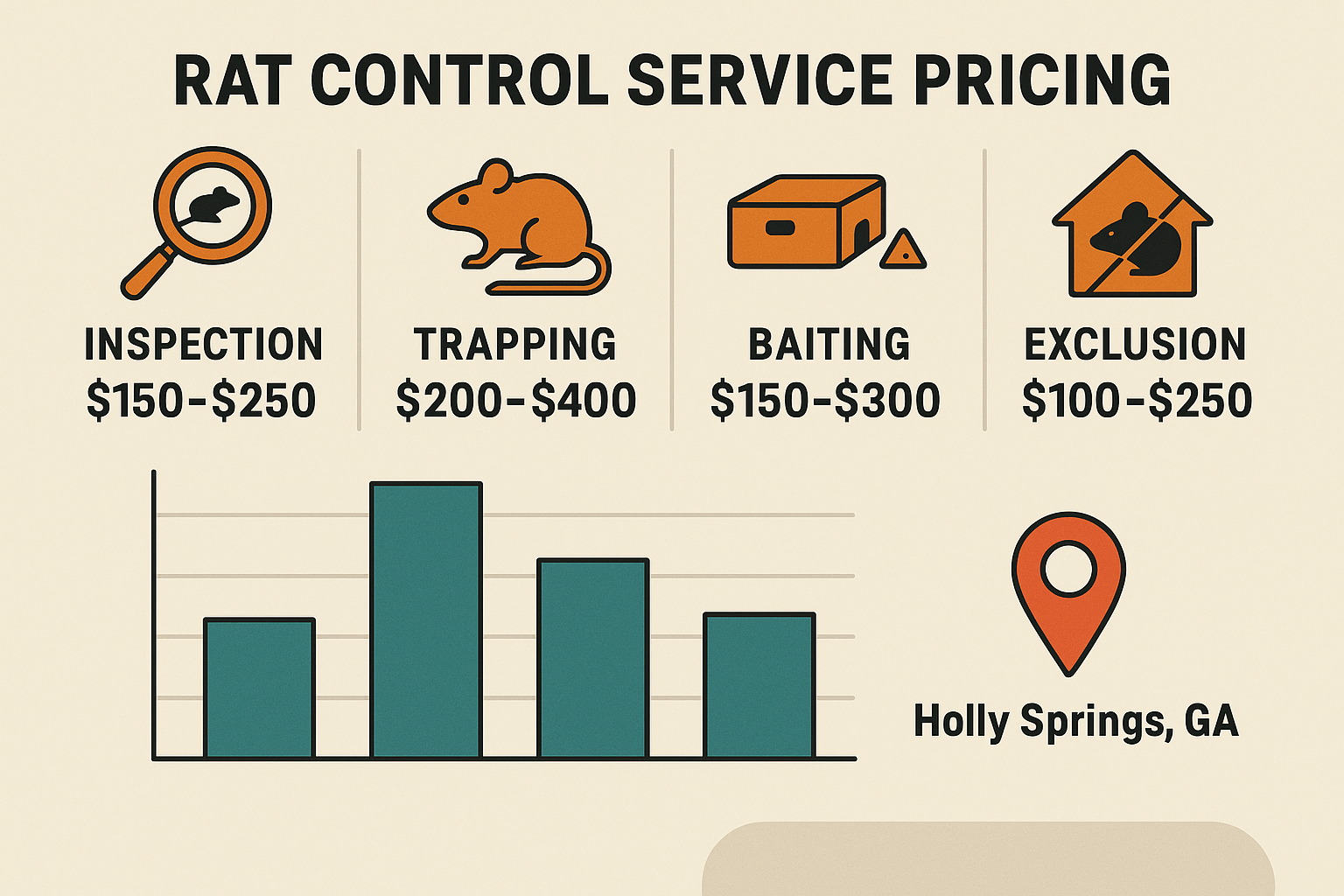
In Holly Springs, most pest‑control firms break rat management into four core tiers: Inspection, Trapping, Baiting, and Exclusion. An inspection pinpoints entry points and activity hotspots, trapping physically removes rodents, baiting delivers a poison that the rats carry back to their nest, and exclusion seals the gaps that let them back in. Together these steps form a complete, long‑term solution.
How Each Method Works
Inspection – A certified technician walks your property, uses flashlights and motion‑detecting tools, and records every potential opening. The visit usually lasts 30–60 minutes and costs a flat fee because it’s the foundation of any plan.
Trapping – Live‑catch or snap traps are placed along walls, near food sources, and in suspected burrows. Traps stay active for 1–2 weeks, after which the technician removes captured rats and resets the stations. This method is fast‑acting but requires regular monitoring.
Baiting – Professional-grade rodenticide is applied in tamper‑proof stations. The poison is slow‑acting, allowing rats to return to the nest and share the dose, which can eliminate an entire colony in 3–5 days. Safety is paramount; stations are placed out of reach of children and pets.
Exclusion – Once the rats are gone, the technician seals cracks, gaps around pipes, and vent openings with steel wool, caulk, or metal flashing. Exclusion is a one‑time effort that prevents re‑infestation for months to years, depending on maintenance.
DIY vs. Professional Services
- DIY pros: Lower upfront cost, immediate control if you’re comfortable handling traps or over‑the‑counter bait.
- DIY cons: Inconsistent placement, higher risk of accidental poisoning, and limited ability to identify hidden entry points.
- Professional pros: Trained eye for hidden activity, guaranteed product safety, and a structured exclusion plan that lasts.
- Professional cons: Higher initial expense, but the cost is offset by reduced repeat visits and longer‑term protection.
Typical Pricing for Holly Springs Homeowners
| Service Tier | Low End | High End |
|---|---|---|
| Inspection | $75 | $120 |
| Trapping (per visit) | $150 | $250 |
| Baiting (station setup) | $180 | $300 |
| Exclusion (full seal) | $250 | $450 |
Most homeowners combine two or three tiers for a comprehensive plan. A typical “Inspection + Trapping + Exclusion” package lands between $475 and $720, while a full “Inspection + Trapping + Baiting + Exclusion” solution usually runs $600–$1,050.
How Anthem Pest Control Structures Its Quotes
Anthem Pest Control delivers a single, itemized quote that mirrors the table above—no surprise add‑ons, no hidden fees. The quote starts with a mandatory inspection, then lets you choose the exact combination of trapping, baiting, and exclusion you need. All materials, labor, and follow‑up visits are bundled into the price you see on the estimate, and the company offers a 30‑day guarantee on exclusion work.
By keeping the pricing transparent and aligning each service tier with a clear benefit, Anthem helps Holly Springs homeowners make an informed decision without the guesswork.
Seasonal Rat Activity and Optimal Treatment Timing
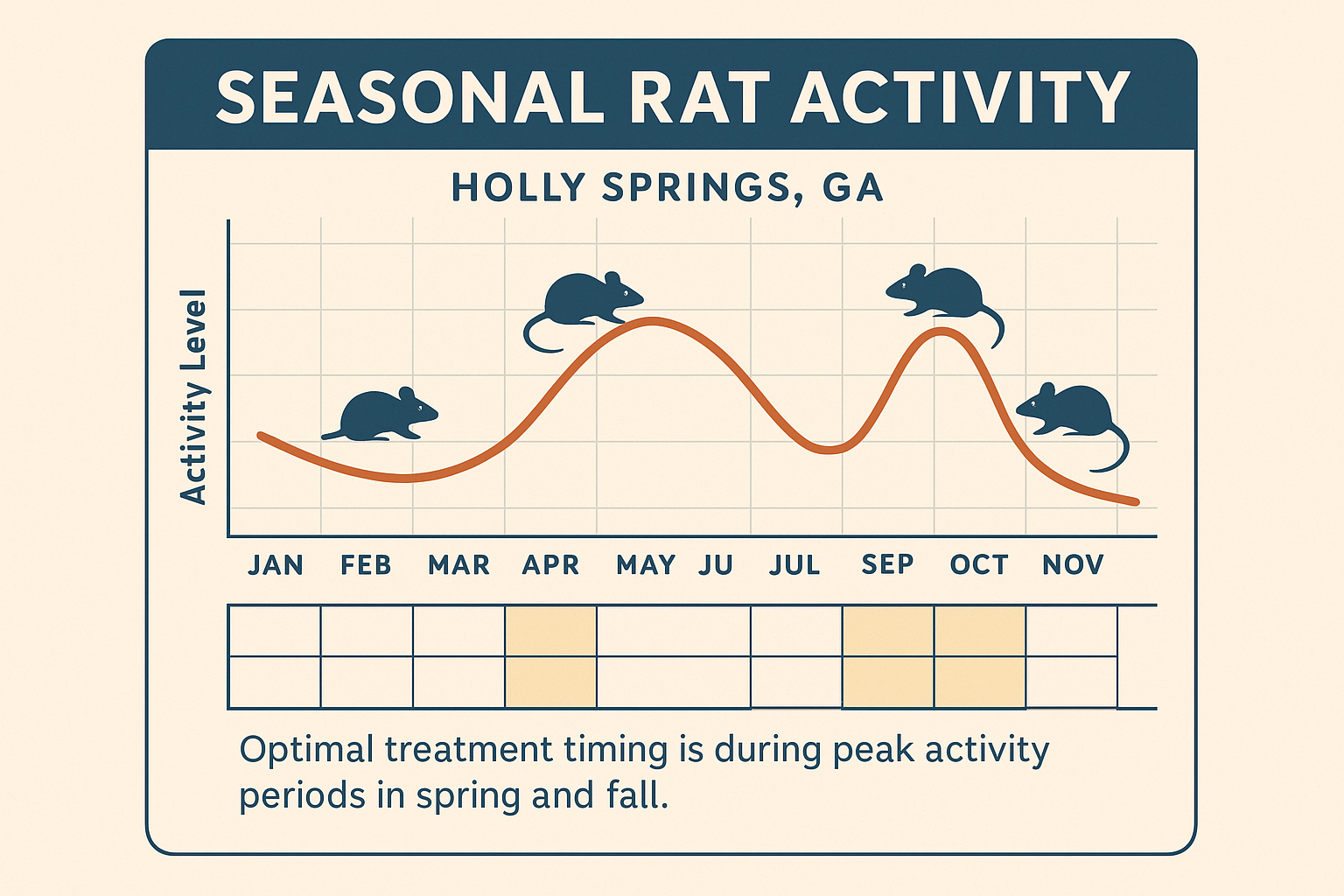
Rats in Holly Springs follow a predictable rhythm that mirrors the region’s climate. When temperatures climb in spring, females enter a rapid breeding cycle, producing litters every three weeks. The abundance of fresh vegetation and outdoor trash also boosts food sources, prompting rats to expand their foraging range and explore new entry points.
Why Spring and Fall See the Highest Activity
During spring, the combination of warm nights and plentiful nourishment fuels a population surge. By fall, the cooler weather triggers rats to seek shelter before winter, driving them into homes and garages in search of warmth. This “pre‑winter migration” often results in the most visible signs of infestation—droppings, gnaw marks, and audible scurrying.
Winter: A Low‑Activity Window for Preventive Action
Colder months slow rat metabolism, and many individuals retreat to deeper burrows. While you may notice fewer sightings, winter is an ideal time to act preventively. Treating now targets the lingering few survivors, reducing the breeding stock that will explode once spring returns.
Reading the Seasonal Activity Chart
The chart above highlights two clear peaks: March – May and September – November. Those are the windows when you’ll most likely encounter active rats. Anthem Pest recommends scheduling a full‑service treatment at the start of each peak—late February for spring and early August for fall—to stay ahead of the surge. A follow‑up inspection a month later ensures any new entrants are caught before they settle.
Seasonal Prevention Tips for Homeowners
- Seal entry points: Inspect foundations, vents, and utility openings. Use steel wool or metal flashing, as rats can chew through softer materials.
- Manage waste responsibly: Keep garbage cans tightly lidded, and store compost away from the house.
- Eliminate outdoor attractants: Remove fallen fruit, birdseed, and pet food before nightfall.
- Trim vegetation: Keep shrubs and tree branches at least two feet from the roof to reduce climbing routes.
How Anthem Pest Schedules Seasonal Inspections
Anthem Pest’s local technicians understand Holly Springs’ climate patterns. They offer a bi‑annual inspection plan that aligns with the chart’s peaks—one visit in early spring and another in late summer. Each appointment includes a thorough interior and exterior assessment, bait placement where needed, and a detailed report of any activity detected.
After the initial treatment, Anthem schedules a follow‑up within 30 days to verify success and address any lingering hotspots. Homeowners can also opt into a quarterly monitoring program, which provides peace of mind during the low‑activity winter months and catches any surprise incursions before they become full‑blown infestations.
Protect Your Home with Professional Rat Control
Quick Recap
You’ve learned how to spot the tell‑tale signs of a rat invasion—droppings, gnaw marks, noisy scurrying at night, and grease‑smudged pathways. We also covered the three main treatment routes: snap traps for immediate knock‑down, bait stations for long‑term population control, and comprehensive exclusion programs that seal entry points. Finally, we reminded you that spring and early summer are the peak seasons when rats seek shelter, making timely intervention essential.
Why a Licensed Local Expert Makes All the Difference
Choosing Anthem Pest Control means you get a Georgia‑licensed technician who knows the local rodent habits and the building codes that protect your family. Our team uses EPA‑approved products, follows strict safety protocols, and backs every job with a guarantee of results. Because we live in the same neighborhoods, we understand the specific challenges Holly Springs homeowners face—from older wood‑frame homes to newer developments near wetlands. We also provide a detailed post‑treatment report, so you know exactly what was done and how to keep rodents out for good.
Take the First Step—Free, No‑Obligation Quote
Ready to turn those warning signs into a thing of the past? Call us today at 877‑371‑8196 for a complimentary, no‑obligation quote. Our friendly staff will schedule a same‑day inspection, walk you through the recommended plan, and answer any questions about cost, safety, or timing. Our technicians arrive fully equipped, wearing protective gear, and respect your home’s cleanliness, leaving no mess behind.
Don’t let a small problem grow into a costly infestation. A swift professional response protects your property, your health, and your peace of mind. Contact Anthem Pest Control now and experience the confidence that comes from having a trusted, local partner on your side. Act now—summer infestations can spread quickly, and early action saves you money.
Visit Anthem Pest Control