Recognizing Ant Infestations in Your Home

Ants rank among the most common indoor pests across the United States, and Holly Springs, GA, is no exception. Warm, humid summers, abundant landscaping, and a steady flow of food waste create an ideal highway for colonies to move from the yard into kitchens, basements, and attics. Spotting an ant problem early can save you from costly structural repairs and unnecessary exposure to contaminating insects.
Common Ant Species in Holly Springs
- Carpenter ants – Large, black or reddish workers that prefer moist wood. They excavate galleries inside structural timber, often near water leaks.
- Odorous house ants – Small, dark brown ants that emit a coconut‑like scent when crushed. They nest in wall voids, under appliances, or in outdoor mulch.
- Pavement ants – Tiny, light‑brown to black ants that favor cracks in sidewalks, foundations, and concrete slabs. They usually establish satellite colonies in soil or under pavers.
Visual Cues of an Infestation
Homeowners can confirm an ant presence by watching for these tell‑tale signs:
- Well‑defined ant trails leading to a food source or nest entrance.
- Small piles of soil or sand near baseboards—especially with pavement ants.
- Damaged or hollow‑sounding wood, a hallmark of carpenter ant activity.
- Winged alates (reproductive ants) appearing in late spring, often near windows or light fixtures.
Health and Structural Concerns
Each species poses distinct risks. Carpenter ants can compromise the integrity of load‑bearing beams, leading to costly repairs if left unchecked. Odorous house ants are notorious for contaminating food, increasing the chance of bacterial exposure. While pavement ants rarely damage structures, their sheer numbers can become a nuisance and may indicate moisture problems that could foster mold growth.
Quick Self‑Check Checklist
- Do you see ant trails on countertops, floors, or walls?
- Is there any visible soil or sand accumulation near foundation cracks?
- Have you noticed unexplained damage to wooden frames, doors, or window sills?
- Are winged ants appearing indoors during the warmer months?
- Is there a persistent food odor or visible crumbs attracting ants?
If you answer “yes” to any of these items, it’s time to act. The EPA’s Integrated Pest Management (IPM) guidelines recommend early detection, proper identification, and targeted treatment to keep ant populations below economic thresholds. By monitoring the signs above and following an IPM‑based approach, you can minimize chemical use, protect your family’s health, and preserve the structural soundness of your home.
How Ant Activity Changes Through the Seasons in Holly Springs
Holly Springs sits in the heart of Georgia’s humid subtropical zone, where warm summers, mild winters, and a steady rhythm of rain shape the daily lives of both residents and insects. Ants are especially sensitive to three climate cues:
- Temperature: Most species become active once daily highs consistently reach 68‑75 °F (20‑24 °C).
- Humidity: Ants need moisture for brood development, so nights with relative humidity above 60 % encourage foraging.
- Rainfall: Spring showers soften soil, making it easier for colonies to expand, while heavy summer storms can flood nests, pushing workers indoors.
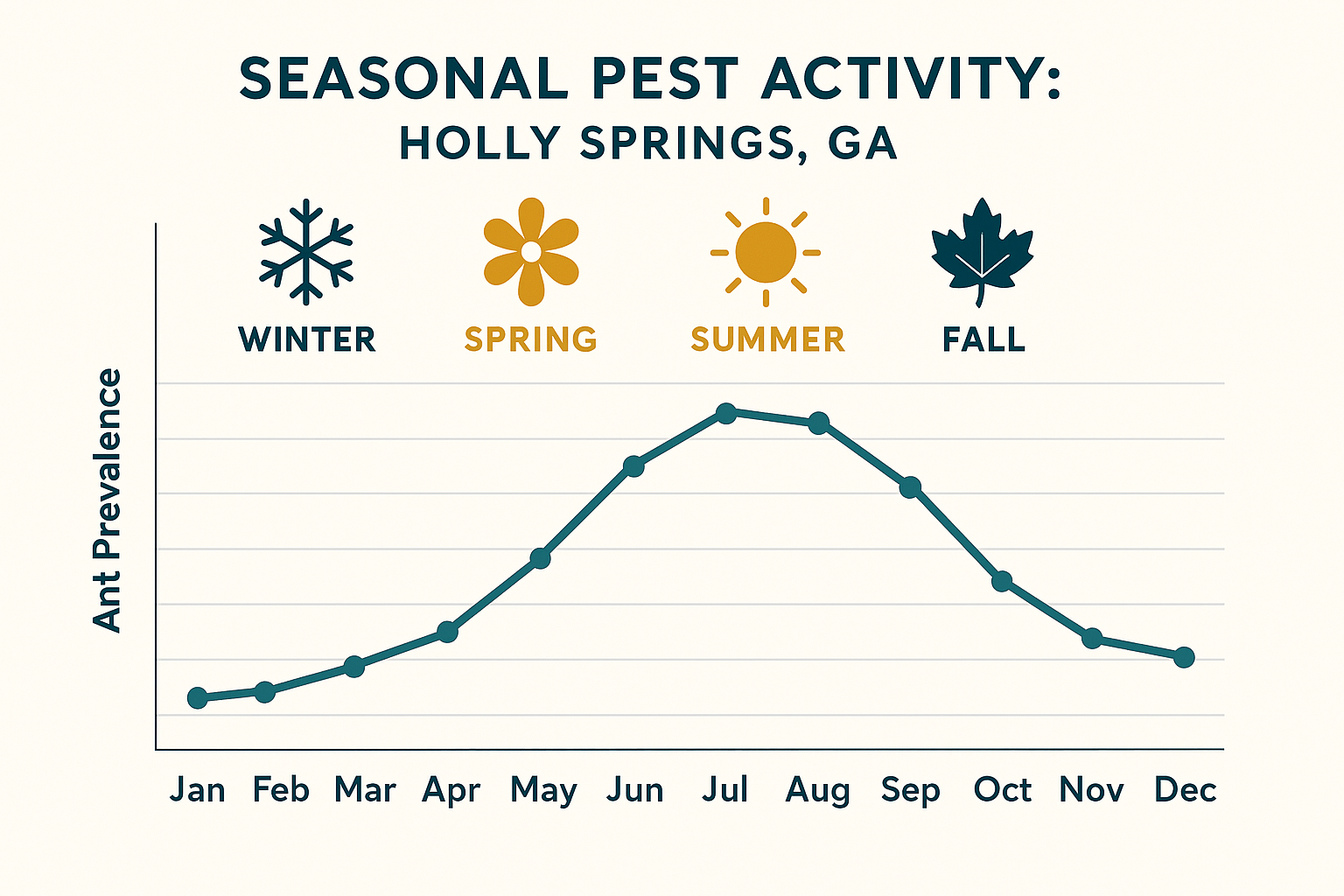
The chart above visualizes the typical activity peaks for the three most common ant families in Holly Springs:
- Carpenter ants – highest sightings in late April through early June.
- Odorous house ants – a broad surge from May to August, with a secondary bump in September.
- Pavement ants – most active during the cooler months of October through December.
Why does this matter? Spring and early summer are the window when colonies are expanding, queens are laying thousands of eggs, and foraging trails stretch toward homes. Treating during this growth phase interrupts the life cycle before the population explodes. Conversely, when autumn rains saturate the ground, many species—especially pavement ants—seek dry shelter inside, leading to a noticeable uptick in indoor foraging.
Month‑by‑Month Monitoring Checklist
- March‑April: Scan door thresholds and window sills for small scout trails. Trim back mulch that contacts the foundation.
- May‑June: Look for larger, organized columns on sidewalks and garden beds. Check underneath porch lights where ants often congregate.
- July‑August: Focus on interior kitchen counters and pantry edges; moisture from cooking can attract foragers.
- September‑October: Inspect roof eaves and attic vents for signs of nesting as ants seek cooler refuge.
- November‑December: Pay attention to baseboard cracks and utility entry points; pavement ants may be moving indoors for overwintering.
Staying proactive means catching a problem before it becomes a full‑blown infestation. For a deeper dive into regional pest trends, the Georgia Department of Agriculture’s pest information portal offers state‑wide data that complements our local observations.
Effective Ant Control Methods and What to Expect

Integrated Pest Management (IPM) – The EPA‑Backed Framework
At Anthem Pest, every ant‑control job starts with the EPA‑endorsed Integrated Pest Management (IPM) approach. IPM means we first assess the infestation, identify the ant species, and pinpoint the conditions that attract them. From there we choose the least‑toxic, most effective tools—often a combination of baits, targeted sprays, and structural treatments—to keep the colony out while protecting your family and pets.
Common Treatment Modalities
- Baiting systems: Low‑dose, slow‑acting insecticides placed in discreet stations lure foraging workers back to the nest, delivering the poison where it matters most.
- Perimeter sprays: A thin mist applied around the home’s foundation creates a barrier that discourages ants from crossing onto your property.
- Indoor residual sprays: Concentrated formulations are applied to cracks, baseboards, and other entry points, providing weeks of protection inside.
- Foam injections for wood‑nesting ants: Expanding foam carries a specialized insecticide deep into hollow logs or wooden structures where carpenter ants establish their colonies.
A Typical Anthem Pest Service Visit
When you schedule a visit, our certified technician follows a clear, step‑by‑step process:
- Inspection: We conduct a thorough walk‑through of interior and exterior zones, looking for ant trails, nests, and conducive moisture sources.
- Treatment plan: Based on the species and infestation level, we recommend a mix of the modalities above, explaining why each is chosen.
- Safety briefing: Before any product is applied, we discuss low‑toxicity options, any necessary evacuations of pets or children, and the protective gear we’ll use.
- Application: Bait stations are positioned discreetly, perimeter spray is misted, residual spray is treated in hidden cracks, and foam is injected only where wood‑nesting activity is confirmed.
- Cleanup & review: We tidy the work area, remove all bait containers after 24 hours, and walk you through what was done and what to monitor.
What to Expect After Treatment
Most homeowners notice a drop in ant activity within 48–72 hours, especially with bait systems that disrupt the colony’s foraging rhythm. Perimeter and residual sprays keep new ants from re‑entering for up to 4 weeks. For wood‑nesting ants, a follow‑up visit is usually scheduled 2 weeks later to assess foam effectiveness and re‑apply bait if needed.
Safety for Pets and Children
Anthem Pest exclusively uses EPA‑registered, low‑toxicity products that pose minimal risk when applied according to label directions. Our baits are sealed in tamper‑proof stations, and all sprays are applied in thin, targeted layers that dry quickly. We always advise keeping children and pets away from treated zones until the product has fully dried—typically 15–30 minutes for sprays and a few hours for foam.
Pricing Context from the NPMA 2024 Survey
The National Pest Management Association’s 2024 cost survey shows the average residential ant‑control service ranges from $120 to $250 per visit, depending on treatment complexity and region. Anthem Pest’s transparent pricing falls comfortably within this band, offering a full IPM package that includes the initial visit, follow‑up, and a 12‑month warranty for peace of mind.
Comparing Ant Control Pricing Options
At Anthem Pest Control, we believe pricing should be as clear as a sunny day in Holly Springs. That means no surprise fees, no hidden add‑ons, and a straightforward menu that lets you see exactly what you’re paying for—whether you choose a single treatment or a longer‑term plan.
Ant Control Pricing Infographic
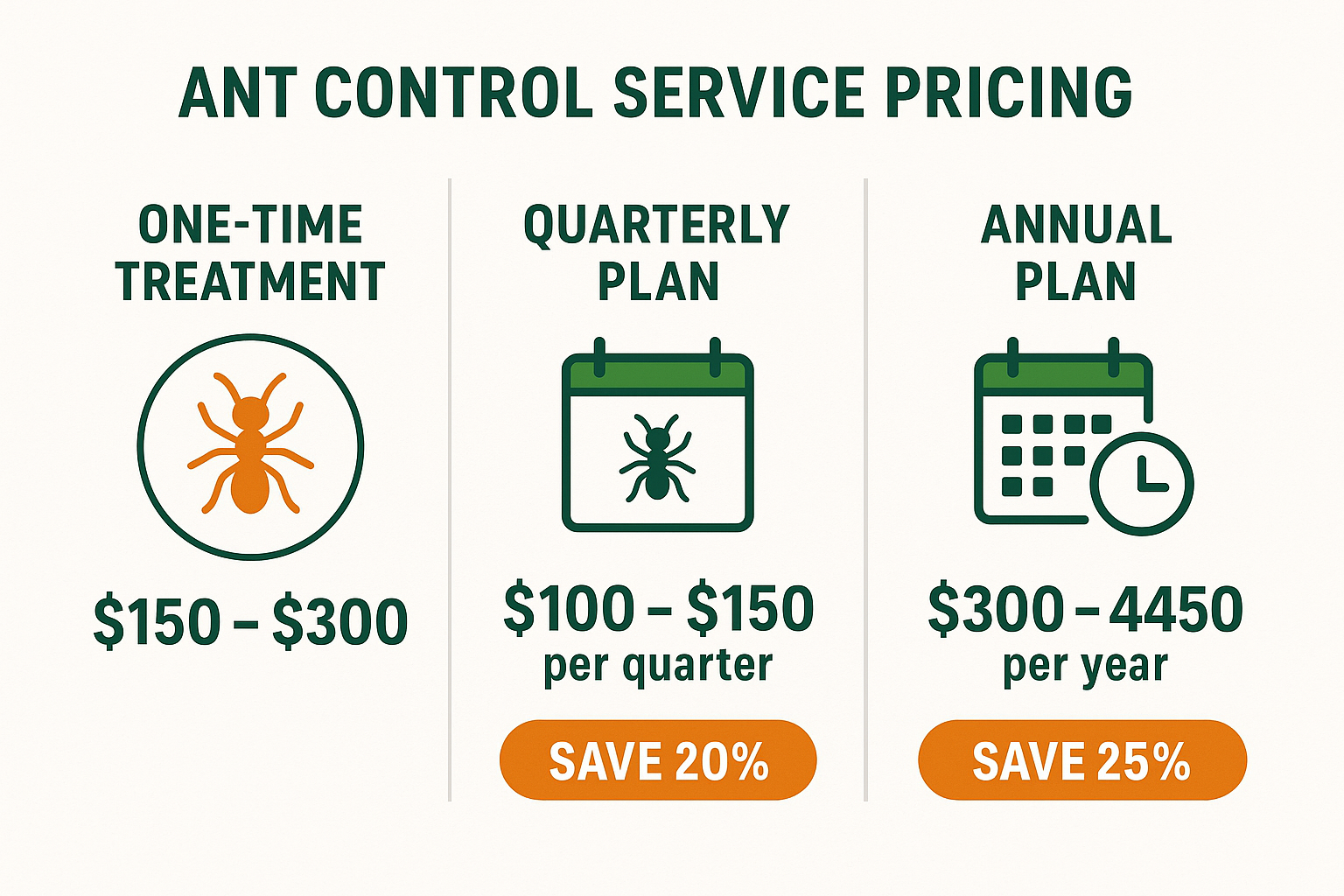
The graphic breaks down three core options:
- One‑time treatment: Ideal for a sudden infestation, priced between $120 – $180 depending on home size and ant species.
- Quarterly service plan: Four visits per year at $350 – $420. Includes scheduled treatments, a complimentary inspection each visit, and priority scheduling.
- Annual plan: One upfront payment of $480 – $560, delivering a 15 % savings versus the quarterly option plus added perks such as a free structural assessment and a discounted rate on any additional pest services.
What Drives the Price?
Several variables shape the final quote:
- Home size: Larger square footage requires more product and labor.
- Infestation severity: A light trail may need a single spray, while a deep colony demands multiple treatments.
- Ant species: Carpenter ants, for example, often need more thorough inspection because they can damage wood structures.
- Access points: Homes with many cracks, gaps, or landscaping features may require extra sealing work.
Calculating Your ROI
Think of ant control as an investment in your home’s health. A single carpenter ant colony can compromise wooden beams, leading to costly repairs—often $1,000 – $5,000 for structural fixes. By spending $150 on a one‑time treatment, you potentially avoid that entire expense, delivering a ROI of over 800 %. The subscription plans amplify this value by preventing re‑infestations, meaning you pay once and reap continuous protection year after year.
Get Your Personalized Quote
Ready to see the exact cost for your property? Use Anthem’s free estimate tool to input your home details and receive a customized quote within minutes. Our transparent pricing ensures you know exactly what you’re paying for, so you can make an informed decision without any hidden surprises.
Protect Your Home with Anthem Pest Control
Why Early Detection and Seasonal Timing Matter
Ants rarely appear out of nowhere. Homeowners who spot the first foraging trail, a small mound in the yard, or unexplained food debris are already ahead of the infestation curve. Catching these signs early stops colonies before they expand into massive, hard‑to‑eradicate networks. Equally important is timing: spring and early summer bring a surge of ant activity as queens establish new nests, while late summer and fall trigger indoor migrations seeking shelter from cooler weather. Aligning treatment with these seasonal peaks maximizes efficacy and minimizes the number of applications needed.
Anthem’s Local Edge in Holly Springs
Anthem Pest Control isn’t a faceless national chain; we live and work in Holly Springs, GA, every day. Our technicians know the local ant species—Carpenter ants, Pavement ants, and the ever‑persistent Fire ants—and understand how the region’s humidity, landscaping trends, and construction styles influence their behavior. This intimate knowledge lets us design Integrated Pest Management (IPM) plans that blend safe, low‑impact treatments with targeted baits, habitat modification, and preventive barriers. The result is a solution that’s effective, affordable, and compliant with Georgia’s environmental regulations.
Take the Next Step Today
If you’ve noticed any of the signs we discussed, or simply want peace of mind, our certified technicians are ready to assess your home and design a customized plan that fits your budget. We’ll walk you through every step—from the initial inspection to the post‑treatment follow‑up—so you know exactly what’s happening and why.
Call us now at 877‑371‑8196 for a free, no‑obligation quote. Our friendly staff will schedule a seasonal inspection before the next peak activity period, ensuring you stay one step ahead of ant invasions.
Ready to protect your home? Visit Anthem Pest Control and secure the expert, local service your family deserves.