Recognizing Gnats and Why They Matter
What a Gnat Really Is
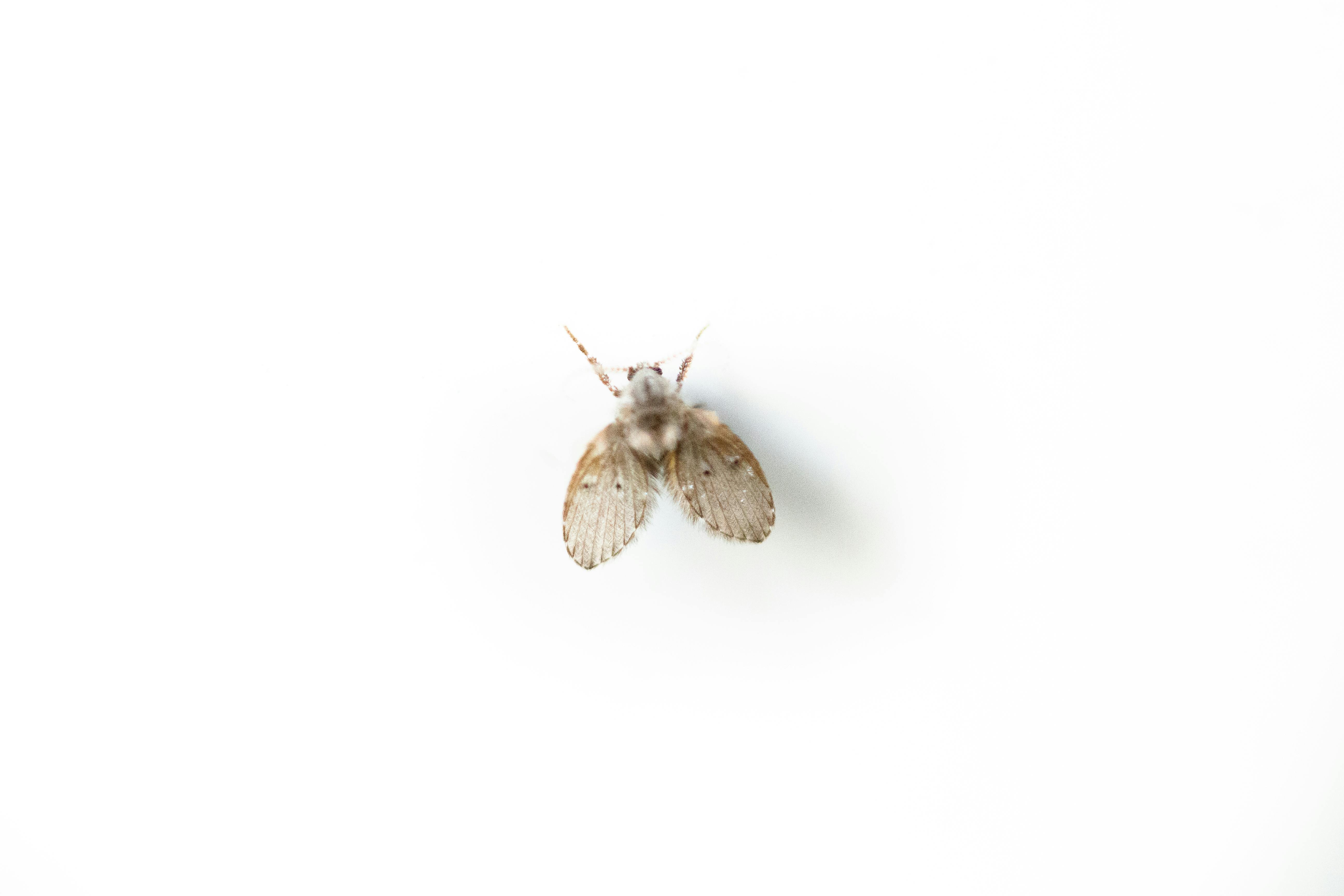
Gnats are tiny, soft-bodied flies that most homeowners encounter in three common guises: fungus gnats, fruit flies, and non-biting midges. Because they hover and bite-lessly around lights, they are often mistaken for mosquitoes, yet they lack the robust body and aggressive bite of true mosquitoes. Understanding that gnats belong to several species helps you target the right control method instead of treating them like a mosquito problem—especially when professional gnat control Decatur GA is needed to address a persistent indoor infestation.
How to Spot a Gnat
The visual clues are subtle but reliable. Adult gnats measure just 1‑3 mm—about the size of a grain of sand—so they appear as a faint, moving speck. Their wings are clear with a faint vein pattern, and they tend to fly in a lazy, hovering manner rather than darting. Fungus gnats, the most common indoor variety, have a slightly “fuzzy” thorax that gives them a matte appearance compared with the glossy look of fruit flies.
Where Gnats Hide Indoors
Gnats love moisture, so they gravitate toward the dampest corners of a home. Typical hotspots include:
- Over‑watered houseplants where moist soil provides a breeding ground for larvae.
- Kitchen drains and garbage disposals that retain organic residue.
- Damp basements or crawl spaces with poor ventilation.
- Fruit bowls and compost bins that emit fermenting aromas.
Each of these sites supplies the moist organic material gnats need to lay eggs and develop into adults.
Health and Comfort Risks
While gnats do not bite, their presence can still affect household well‑being. Some people experience mild allergic reactions—such as sneezing or itchy eyes—when swarms pass close to the face. More importantly, gnats act as a “food chain” for other pests; they attract spiders, predatory beetles, and even small rodents that feed on them. Finally, a persistent gnat swarm is an unsightly nuisance that can make a kitchen feel unclean and deter guests.
Quick DIY Inspection Tips
Before calling a professional, you can perform a few simple checks to confirm a gnat problem:
- Sticky traps: Place yellow adhesive traps near houseplants, drains, and windows. Gnats are attracted to the color and will become visible within 24‑48 hours.
- Soil inspection: Lift the top inch of potting mix. If you see tiny, translucent larvae moving in the damp soil, fungus gnats are breeding there.
- Larvae search: Pour a small amount of water into kitchen drains and look for a thin, white, worm‑like film after a few minutes. That film indicates gnat larvae feeding on organic buildup.
These low‑cost steps give you a clear picture of the infestation level and help a pest professional like Anthem Pest Control tailor the most effective treatment plan.
How Gnats Invive Your Home
Gnats are tiny, but they’re surprisingly adept at finding a way inside. Understanding the routes they use and the conditions that make your home inviting is the first step toward keeping them out. In Decatur’s humid climate, the combination of outdoor breeding sites and small indoor entry points creates a perfect storm for a gnat invasion.

Outdoor Breeding Grounds
Gnats lay their eggs in moist, organic material. The most common outdoor hotspots around a Decatur home include:
- Decaying organic matter – fallen leaves, rotting fruit, and compost heaps provide abundant food for larvae.
- Standing water – anything from clogged gutters to birdbaths can become a nursery if the water isn’t changed regularly.
- Over‑watered lawns – soggy soil retains moisture long after a rainstorm, allowing larvae to develop unnoticed.
- Compost piles – while great for gardening, a poorly managed pile can attract swarms that later migrate indoors.
When these sites are close to doors, windows, or vents, adult gnats are only a few steps away from slipping inside.
Indoor Entry Points
Even the tiniest crack can serve as a highway for gnats. Homeowners often overlook these vulnerable spots:
- Gaps around windows and doors – weather‑stripping that’s worn or missing creates a direct passage.
- Ventilation fans – bathroom and kitchen exhaust fans often have unsealed openings that lead straight to the attic or crawl space.
- Screen damage – torn or loosely fitted screens on doors and windows let gnats slip through without resistance.
Regular inspections and simple sealing measures can dramatically reduce the number of insects that make it past your front door.
Role of Indoor Plants
Many homeowners love houseplants, but over‑watering turns a decorative pot into a miniature breeding ground. Gnats love the damp soil of popular foliage such as:
- Pothos (Epipremnum aureum)
- Peace lily (Spathiphyllum spp.)
- Spider plant (Chlorophytum comosum)
- Ferns and philodendrons
When soil stays wet for more than 24 hours, it provides the perfect environment for larvae to thrive. The adult gnats then emerge, hover around the plant, and eventually find their way toward other parts of the house.
Seasonal Surge
Gnats are most active during the warm, humid months of late spring through early fall. Temperatures between 70 °F and 85 °F combined with high relative humidity accelerate their life cycle, allowing a single female to produce several generations in just a few weeks. In Decatur, this seasonal spike is evident in the activity chart featured in Part 4, where gnat sightings peak in July and August.
Preventive Habits
Stopping gnats before they become a nuisance is easier than battling an established infestation. Adopt these homeowner‑friendly habits:
- Water plants wisely – let the top inch of soil dry out between waterings, and consider using a moisture meter for precision.
- Seal entry gaps – apply caulk around windows, doors, and vent openings; replace torn screens promptly.
- Maintain dry drains – clean sink, bathtub, and floor drains regularly, and use a drain cover to keep moisture from pooling.
- Manage outdoor sources – keep compost piles turned, empty standing water containers daily, and trim over‑grown vegetation near the house.
By addressing both the outdoor breeding grounds and the indoor pathways, you create a hostile environment for gnats and protect your Decatur home from future invasions.
Effective Gnat Treatment Methods
DIY Approaches
Many homeowners start with low‑cost, low‑risk tactics that can keep gnats at bay while you gauge the severity of the problem. One of the simplest methods is to reduce moisture in the soil where gnats love to lay eggs. Allow the top inch of potting mix to dry out between waterings, or replace part of the soil with a coarse, well‑draining medium such as sand or perlite. This creates a physical barrier that interrupts the larvae’s development cycle.
Homemade traps are another budget‑friendly option. A shallow dish filled with apple cider vinegar and a few drops of dish soap attracts adult gnats; the soap breaks the surface tension so they drown. You can also make a sugar‑water bait by dissolving a tablespoon of sugar in a cup of warm water, then adding a splash of vinegar. For a visual lure, hang yellow sticky cards near windows, houseplants, or trash cans—gnats are drawn to the color and become trapped on the adhesive surface.
If you prefer a chemical‑free spray, insecticidal soaps and neem oil work well against both adult gnats and their larvae. Dilute the product according to the label, then mist the undersides of leaves and the surface of the soil. Both agents are derived from natural sources, break down quickly, and pose minimal risk to pets and children when used as directed.
Professional Solutions
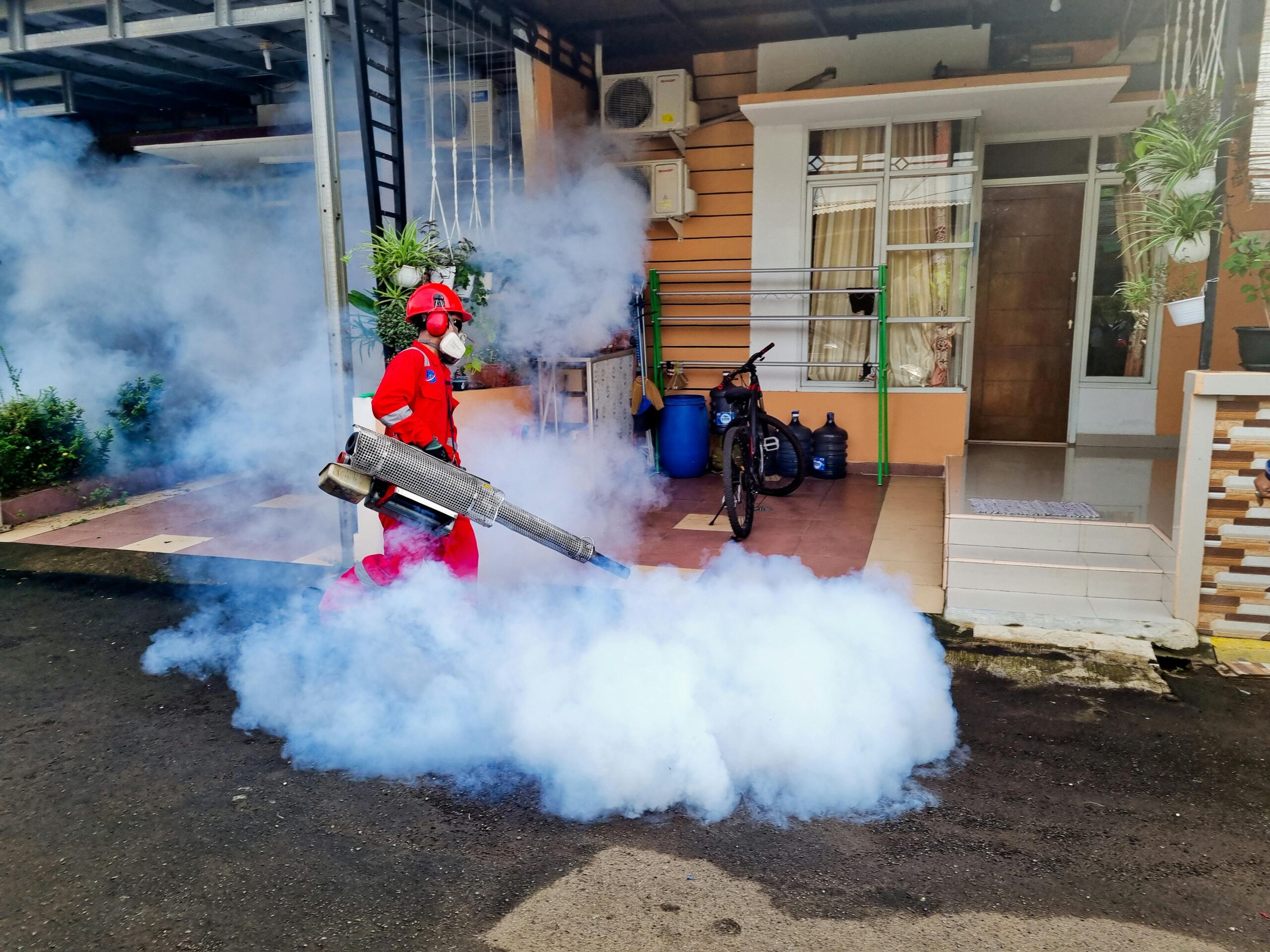
When the infestation spreads beyond a few pots or begins to infiltrate living spaces, it’s time to call in a licensed exterminator. Anthem Pest Control’s technicians start with targeted indoor fogging or misting. Using a fine‑atomized spray, they reach hidden crevices, plant pots, and drainage areas where gnats hide. The accompanying image shows the safety gear—protective gloves, goggles, and a respirator—that technicians wear to keep the treatment safe for occupants.
For longer‑lasting protection, professionals apply residual sprays to core‑area zones such as kitchen sinks, bathroom drains, and the perimeter of indoor plant collections. These formulations contain active ingredients that persist for weeks, breaking the gnat life cycle by killing larvae before they emerge as adults.
Anthem’s Integrated Pest Management (IPM) plans go a step further. An IPM strategy blends regular monitoring, exclusion tactics (like sealing cracks and installing screen doors), and judicious chemical use. By tracking gnat activity with sticky traps and moisture meters, technicians can pinpoint hot spots and apply treatment only where needed, reducing overall pesticide exposure while delivering effective control.
Safety Considerations
Whether you’re mixing a DIY spray or a professional is fogging your home, safety should never be an afterthought. Ensure the area is well‑ventilated—open windows and run fans to disperse any airborne particles. Keep pets and children out of the treatment zone until the product has dried or the fog has settled, typically 30‑60 minutes. Always read and follow the label directions, paying special attention to recommended re‑entry intervals and personal protective equipment.
When DIY Fails: Signs It’s Time for a Licensed Exterminator
- Gnats persist despite regular soil drying and homemade traps for more than two weeks.
- Swarms appear in multiple rooms, especially near lighting fixtures or kitchen appliances.
- Larvae are visible in the top layer of potting soil or in standing water inside drains.
- Allergy‑like symptoms (sneezing, itchy eyes) increase, indicating a high adult gnat count.
- Attempted treatments cause no noticeable drop in numbers, suggesting a resistant population.
These indicators point to a larger, possibly hidden infestation that requires the expertise, equipment, and licensed chemicals that only a professional service like Anthem Pest Control can provide. By addressing the problem early with a comprehensive IPM plan, you protect your home, your family’s health, and your peace of mind.
Pricing Options and Seasonal Planning
Understanding how much gnat control Decatur GA will cost—and when to schedule it—helps you protect your home without surprise bills. At Anthem Pest Control, we keep pricing simple, transparent, and tied directly to the level of service you need. Whether you prefer a single, targeted treatment or a year-long maintenance plan, you’ll know exactly what you’re paying for and why it matters for seasonal gnat activity.
Pricing Breakdown
- One‑time gnat treatment – $79: Includes a thorough on‑site inspection, a professional fogger application that reaches hidden breeding sites, and a follow‑up visit to ensure the problem is fully resolved.
- Quarterly maintenance plan – $199 per year: Four scheduled treatments (one each season), priority scheduling for emergencies, and a savings badge that demonstrates you’re getting more value than the cumulative cost of four single visits.
The one‑time option is perfect for homeowners who notice a sudden spike in gnats and need fast relief. The quarterly plan, on the other hand, spreads the cost across the year while delivering consistent protection—especially useful when gnats begin to emerge early in the warm months.
Visual Pricing Comparison
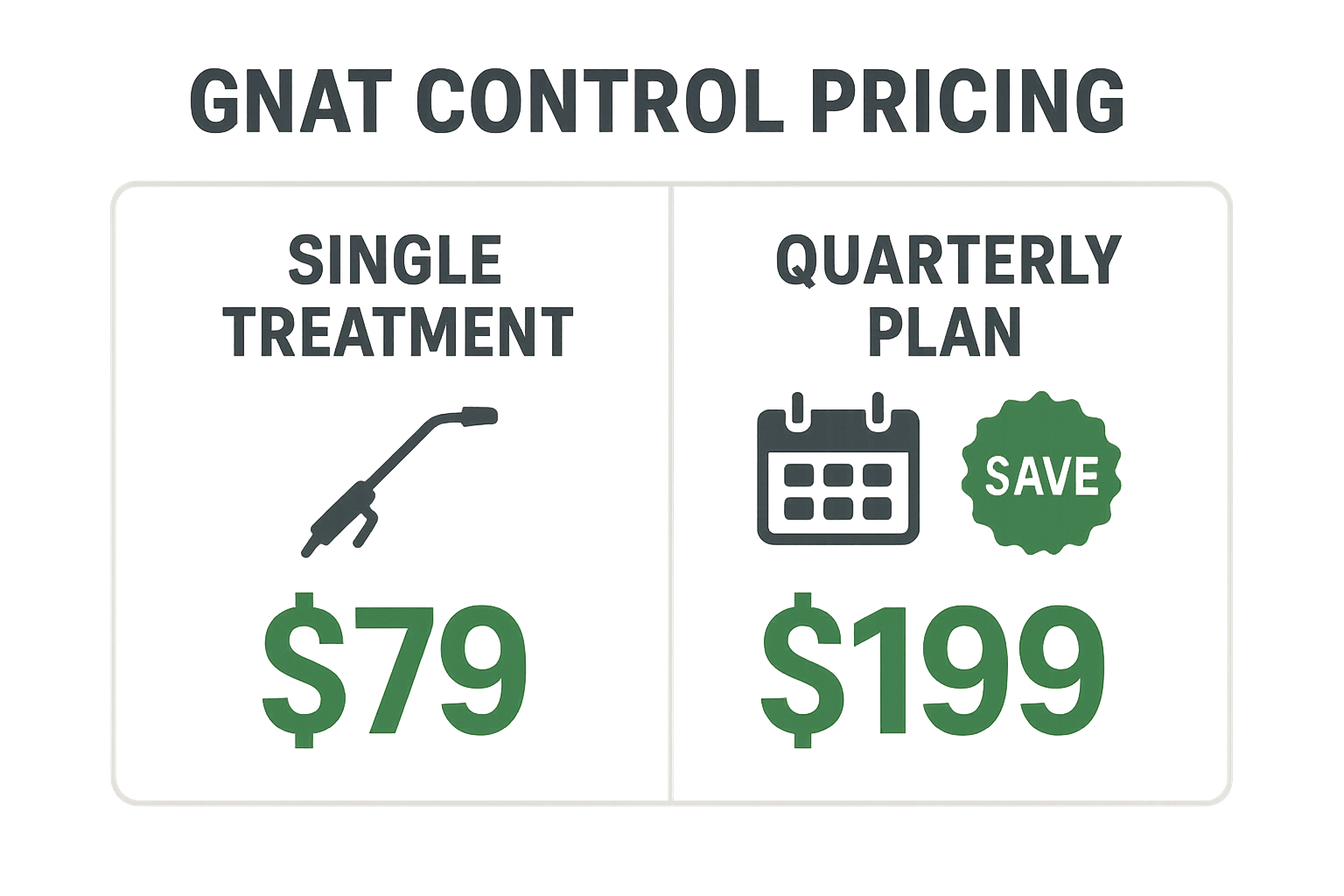
The graphic above illustrates how the quarterly plan saves you roughly 30 % compared to purchasing four separate one‑time treatments. It also highlights the added perks—priority scheduling and a dedicated service guarantee—that come with the annual package.
Seasonal Activity Chart
Gnat populations in Decatur, Georgia follow a predictable pattern driven by temperature and humidity. The chart below shows typical activity levels throughout the year, helping you decide when to act for maximum impact.
| Month | Activity Level |
|---|---|
| January | Low |
| February | Low |
| March | Moderate |
| April | Moderate |
| May | High |
| June | Peak |
| July | Peak |
| August | Peak |
| September | High |
| October | Moderate |
| November | Low |
| December | Low |
From June through August, gnat activity surges as warm evenings and frequent rain create ideal breeding conditions. Those are the months when homeowners most often request emergency treatments. Conversely, the cooler stretch from November to February sees minimal activity, making it the perfect window for preventive applications that stop gnats before they become a nuisance.
Aligning Your Treatment Schedule with the Seasons
To get the best return on your investment, match your service plan to the chart’s insights for gnat control Decatur GA homeowners rely on. If you opt for the one-time treatment, schedule it just before the high-activity window—ideally in late May. This pre-emptive strike reduces the initial gnat surge and can keep numbers low throughout the summer.
For the quarterly maintenance plan, we recommend the following timeline:
- Early Spring (March): Preventive fogger that tackles overwintering adults and eliminates early breeding sites.
- Early Summer (June): Full‑strength treatment timed with the peak emergence period to knock down the bulk of the population.
- Late Summer (August): Follow‑up application that catches any late‑season hatchlings and prevents a fall resurgence.
- Fall (October): Protective fogging that reduces residual eggs and prepares your yard for the low‑activity months.
By spacing treatments this way, you maintain a protective barrier year‑round while taking advantage of the natural dip in gnat numbers during the cooler months. This approach not only maximizes efficacy but also stretches your dollar further, as fewer chemicals are needed when gnats are already dormant.
Ready to see the exact pricing details or discuss a custom schedule for your property? Visit Anthem’s detailed service page for a full breakdown of costs, service guarantees, and seasonal recommendations tailored to Decatur homeowners.
Protect Your Home with Anthem Pest Control
If you’ve followed this guide, you already know how to spot gnats, locate the cracks they slip through, and choose between DIY sprays, outdoor foggers, or professional treatments.
- Identify: small, dark flies hovering near damp soil, indoor plants, or drains.
- Entry points: window screens, door gaps, vent openings, and plumbing leaks.
- Treatment options: homeowner‑applied traps, insecticidal sprays, or licensed fogging services.
A licensed professional brings three advantages you can’t replicate on your own: a thorough inspection that uncovers hidden breeding sites, safe fogging that reaches every crack without exposing your family to harsh chemicals, and a guaranteed reduction in gnat activity that most over‑the‑counter products simply can’t promise.
Anthem Pest Control backs that promise with transparent pricing, eco‑friendly products, and a commitment to keep your home safe and affordable year‑round.
Ready for a hassle‑free assessment? Give us a call for a free, no‑obligation quote and let our certified technicians evaluate your property’s specific gnat situation.
Call us today at 877‑371‑8196 or visit Anthem Pest Control to protect your home before gnats turn a minor nuisance into a full‑blown infestation.
Our technicians follow Integrated Pest Management principles, targeting gnats only when populations exceed safe thresholds. This approach minimizes chemical use while delivering lasting results, so you can enjoy your yard and indoor spaces without worrying about swarms.
Because we serve neighborhoods across the U.S., we understand the seasonal patterns that drive gnat spikes in Decatur and similar climates, allowing us to deliver effective gnat control Decatur GA homeowners can rely on. Whether you need a one-time treatment before a family gathering or a seasonal plan to keep gnats at bay all summer, we work around your schedule and budget.