
Why Silverfish Are a Hidden Threat in Georgia Homes
Silverfish (Lepisma saccharina) may look like tiny, silvery fish, but they’re actually primitive insects that have survived for millions of years. They thrive in warm, humid environments—conditions that are common inside Georgia homes, especially during the long, moist summer months. Their flattened bodies allow them to slip into cracks, floorboards, and the backs of cabinets, where they can stay hidden for months while feeding on starches, sugars, and proteins found in paper, glue, and fabric.
What homeowners actually see
- Quick, fish‑like silhouettes darting across walls or ceilings at night.
- Small, yellowish or brownish stains on walls, baseboards, or books.
- Fine, irregular holes or shredded edges on paper, wallpaper, clothing, and even stored food packaging.
- Increased dust that contains tiny scales shed by the insects.
These signs are easy to dismiss as ordinary dust or occasional moth activity, which is why many residents never connect the dots until the damage becomes noticeable.
Why the damage matters
Silverfish are not disease vectors, but their feeding habits can cause costly property issues. They chew through book bindings, damage wallpaper, and create unsightly holes in clothing and linens. Over time, the cumulative effect can degrade valuable heirloom documents, children’s books, and decorative fabrics. In addition, the shed scales and fecal pellets can trigger allergic reactions in sensitive individuals, turning a minor nuisance into a health concern.
Georgia’s climate creates a perfect playground
The Peach State’s climate—characterized by high humidity, warm temperatures, and frequent rainfall—provides the ideal micro‑habitat for silverfish. In towns like Holly Springs, where homes often feature older wood framing and basements that stay damp, the insects find endless sources of moisture. Even well‑sealed homes can develop hidden pockets of humidity behind appliances or under sinks, giving silverfish a safe place to breed and multiply.
Backed by research
For a deeper dive into indoor pest management best practices, the University of Georgia’s Extension service offers comprehensive guidance on silverfish identification and control. You can review their recommendations here: UGA Extension – Silverfish Management. This authoritative resource underscores the importance of early detection and targeted treatment, especially in humid regions.
Understanding that silverfish are more than a fleeting sight helps homeowners recognize the hidden threat they pose. By catching the early signs and knowing why Georgia’s environment favors their growth, residents can take proactive steps—before the insects cause irreversible damage to cherished belongings or create indoor allergen issues.
Spotting a Silverfish Infestation in Your Kitchen

Imagine stepping into a bright, modern kitchen: sleek black cabinets, a glossy countertop, and a minimalist black clock ticking above the sink. It’s the kind of space most homeowners love—clean, stylish, and easy to keep tidy. Unfortunately, that same clean environment can hide a quiet invader: the silverfish. These tiny, fish‑shaped insects love the dark, damp corners of a kitchen, and spotting them early can save you from months of hidden damage.
Where to Look
Silverfish are masters of hiding, but they have favorite hangouts that are easy to check:
- Pantry shelves, especially near grain boxes and cereal packages.
- Under and behind appliances such as the refrigerator, dishwasher, and stove.
- Behind base cabinets where moisture can collect.
- Near leaky faucets or under the sink where humidity lingers.
Recognizing the Signs of Damage
Even if you don’t see the insects themselves, their work leaves clues. Look for:
- Small, irregular holes in cereal boxes, flour bags, or paper towels.
- Shredded paper or yellowed edges on the backs of pantry items.
- Fine, silvery powdery residue that resembles tiny crumbs.
- Yellow or brown stains on countertops caused by their excrement.
These signs are often mistaken for normal wear, but a pattern of tiny holes and shredded packaging is a dead‑giveaway that silverfish are feeding behind the scenes.
Simple DIY Checks
Before calling a professional, you can run a few low‑cost checks yourself:
- Place a few sticky traps (the kind used for spiders) along the baseboards and under appliances. Check them after 24‑48 hours.
- Turn off the kitchen lights and shine a flashlight along cabinet edges and under the sink. Silverfish are attracted to light and may dart into view.
- Run a quick moisture test with a hygrometer; any area consistently above 60 % relative humidity is a silverfish hotspot.
Why Early Detection Matters
Silverfish reproduce quickly, and a small population can become a full‑blown infestation within weeks. Early detection lets you address moisture problems, seal entry points, and, if needed, schedule a targeted treatment before the pests spread to other rooms or damage valuable food stores. Acting now not only protects your kitchen’s appearance but also prevents the hidden cost of replacing compromised pantry items.
At Anthem Pest Control, we know that a quick visual inspection can make all the difference. If you spot any of the signs above, give us a call at 877‑371‑8196 or visit our website for a fast, affordable solution.
Seasonal Patterns of Silverfish Activity in Georgia
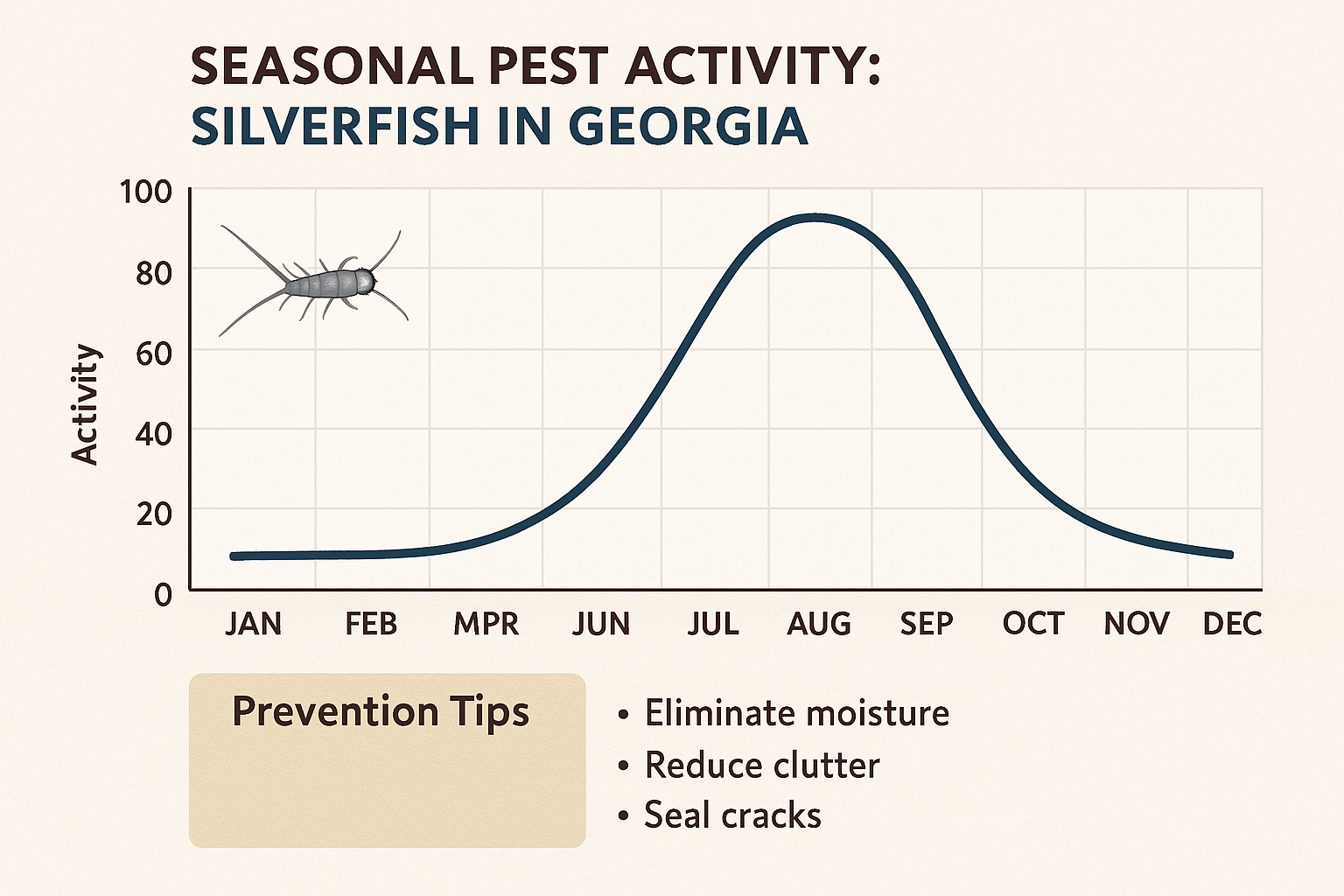
In Georgia’s humid climate, silverfish don’t hibernate—they simply follow the weather. A line‑graph tracking indoor sightings over a calendar year shows a classic “U” shape: activity is lowest in December through February, climbs steadily in March and April, hits a sharp peak from June through August, then tapers off in September and October before dropping again in November.
Why Summer Is the High‑Water Mark
The summer surge aligns with two key factors. First, outdoor humidity climbs above 70 % in July and August, and that moisture easily seeps into basements, crawl spaces, and bathroom walls—prime silverfish habitats. Second, homeowners often run air‑conditioners that cool indoor air but leave hidden pockets of dampness around condensate pans and leaky pipes, creating a perfect buffet for these nocturnal insects.
Month‑by‑Month Prevention Checklist
- January – February: Inspect attic vents and basement windows for drafts; seal any gaps to keep cold, dry air from encouraging condensation.
- March – May: Increase ventilation in bathrooms and kitchens; wipe down tile grout and replace any cracked caulk that could trap moisture.
- June – August (Peak Season): Deploy a dehumidifier in basements and laundry rooms to keep relative humidity below 50 %. Fix leaky faucets immediately and clean out AC condensate trays weekly.
- September – October: As humidity eases, focus on structural sealing—apply silicone caulk around baseboards, window frames, and door thresholds to block entry points.
- November – December: Perform a final sweep of stored items (books, clothing, pantry goods). Vacuum corners and behind appliances to remove eggs and shed skins before winter sets in.
Guidance from the EPA
The EPA Indoor Pest Management Guide recommends seasonal best practices that echo our checklist: keep indoor humidity low, eliminate food and water sources, and seal cracks before insects can establish a foothold. Following these steps during the identified peak months dramatically reduces the chance of a silverfish infestation taking root.
By syncing your home‑maintenance routine with Georgia’s silverfish calendar, you stay one step ahead of the pests while preserving the comfort of your living space—all without the guesswork of a reactive treatment.
Choosing the Right Silverfish Control Method and Understanding Costs
Three Main Treatment Paths
When a silverfish population shows up in a Holly Springs home, most homeowners gravitate toward one of three proven strategies:
- Spray Treatment – A professional applicator disperses a residual insecticide directly onto baseboards, cracks, and other hiding spots.
- Bait Stations – Small, tamper‑proof containers filled with a slow‑acting gel are placed around the house. Silverfish feed, carry the toxin back to the colony, and the infestation collapses over time.
- Full Home Inspection with a Customized Plan – A technician conducts a thorough walkthrough, identifies moisture sources, structural gaps, and entry points, then designs a blended program (spray + bait + preventive measures) tailored to the property.
Pros and Cons at a Glance
| Method | Speed of Results | Invasiveness | Long‑Term Protection |
|---|---|---|---|
| Spray Treatment | ⚡ Immediate (within 24 hrs) | 🔧 Moderate – chemicals applied to visible surfaces | 🛡 2–4 weeks residual activity |
| Bait Stations | 🐢 1–2 weeks to see decline | 🛑 Low – stations are discreet and hidden | 🛡 3–6 months as colony collapses |
| Full Inspection + Customized Plan | ⚡ Immediate for spray components, 🐢 weeks for bait | 🔧 High – may involve sealing cracks, moisture control, and multiple visits | 🛡 6 months + preventive follow‑ups |
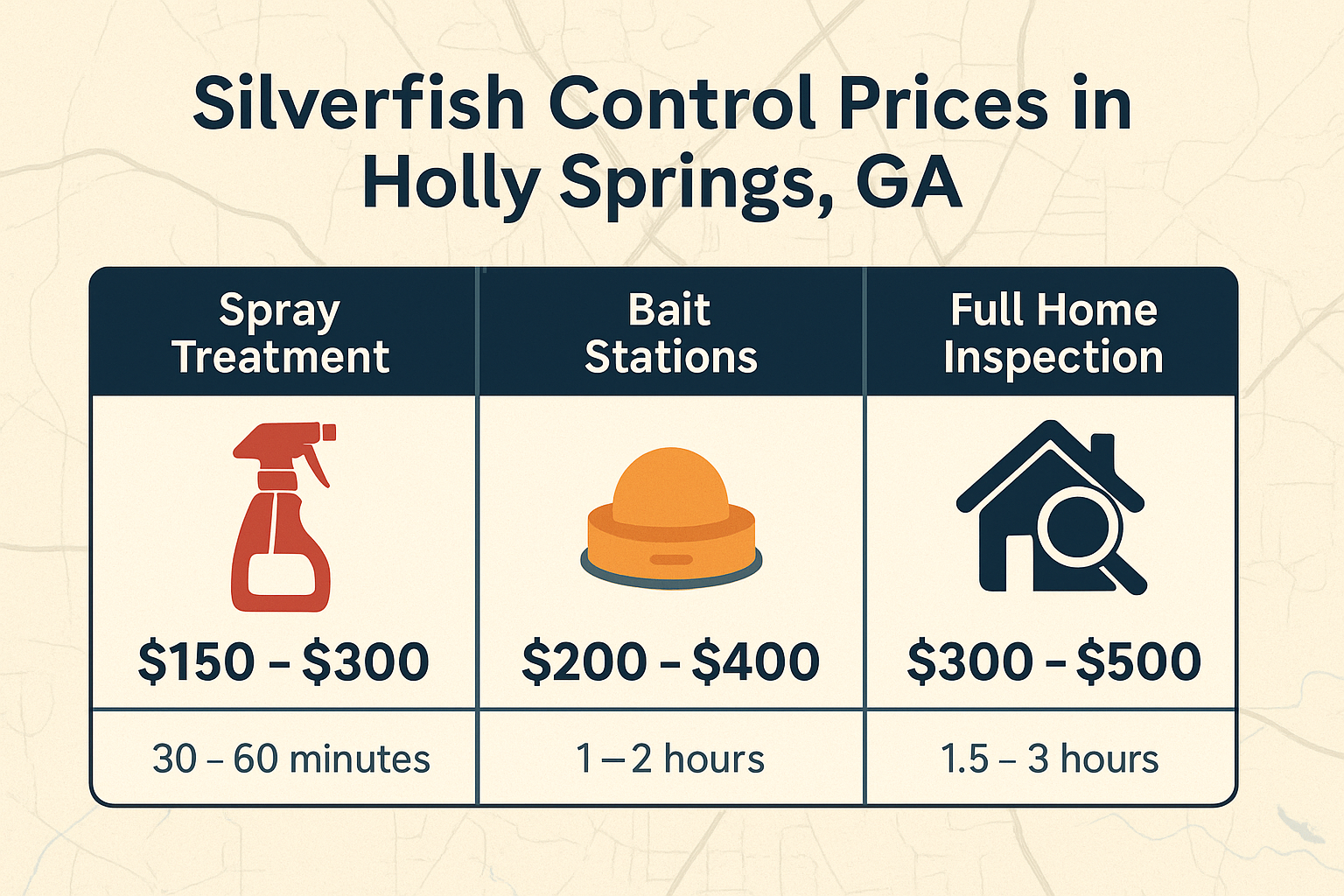
Price Comparison for Holly Springs Homeowners
| Method | Cost Range | Treatment Duration |
|---|---|---|
| Spray Treatment | $120 – $180 per visit | 1‑hour service |
| Bait Stations | $150 – $220 (includes 5‑10 stations) | Initial placement + 2‑week monitoring |
| Full Inspection & Customized Plan | $250 – $400 (covers inspection, spray, bait, and sealant) | 2‑3 visits over 4‑6 weeks |
What Drives the Price?
Even within a single city, the final bill can shift based on a few key variables:
- Home size – Larger square footage means more surface area to treat and potentially more bait stations.
- Infestation severity – A light sighting may need only a single spray, while a heavy, multi‑room problem often requires a full‑service plan.
- Seasonal discounts – Spring and early summer are peak pest‑control months; many companies, including Anthem Pest Control, offer 10‑15 % off for early bookings.
- Structural factors – Older homes with cracks, poor ventilation, or excess moisture can add labor costs for sealing and dehumidification.
Credibility Check
Our pricing aligns with the National Pest Management Association (NPMA) 2025‑2026 Pest Service Cost Survey, which lists average silverfish control expenses nationwide between $120 and $380. By focusing on Holly Springs’ specific market dynamics, Anthem Pest Control ensures you receive a transparent quote without hidden fees.
Protect Your Home Today with Professional Silverfish Solutions
Finding silverfish early—before they multiply—can save you time, money, and the frustration of a full‑blown infestation. Because these nocturnal insects thrive in warm, humid months, scheduling an inspection in early spring or after a heavy rain gives technicians the best chance to catch them when populations are still low. A quick visual check of kitchen cabinets, bathroom tiles, and laundry rooms each month can reveal the tiny, silver‑shimmering bodies before they spread.
At Anthem Pest Control, every service is performed by fully licensed technicians who rely on EPA‑approved, low‑toxicity products. These treatments target silverfish at the source—cracks, baseboards, and damp areas—while protecting your family, pets, and indoor air quality. Our integrated approach combines spot‑treatments with preventive barriers, reducing the likelihood of re‑infestation for months after the service.
We believe pricing should be as clear as our treatment plans. Our Holly Springs team provides a transparent, itemized quote with no hidden fees, and because we know every home is unique, we tailor the approach to your specific layout and moisture conditions. The first inspection and quote are completely free and come with no obligation to proceed. Because we source all chemicals from reputable distributors, you can trust the safety data sheets and the minimal environmental impact.
If you’ve spotted the tell‑tale fish‑scale skins, notice a musty odor, or simply want to prevent a future problem, give us a call today. Our friendly staff will schedule a convenient time for a free, no‑obligation assessment.
Protecting your home doesn’t have to be stressful—let the local experts handle the hard work while you enjoy peace of mind. Call 877‑371‑8196 or visit Anthem Pest Control for your complimentary silverfish inspection.