Why Mosquitoes Are a Growing Concern in Druid Hills
Ideal Breeding Habitat
Druid Hills enjoys a humid subtropical climate, with warm summers and mild winters that keep water from evaporating quickly—conditions that make mosquito control Druid Hills GA especially important for homeowners. The neighborhood’s historic parks, ornamental ponds, and rain-filled gutters provide constant standing water, while the dense canopy of oak and magnolia trees creates shaded, cool pockets perfect for mosquito larvae to thrive. This combination of moisture and shade turns even a small backyard into a potential mosquito nursery.
Rising Complaints and Disease Reports
Local health department records show a 22 % increase in mosquito‑related 311 calls over the past two years, and neighboring Fulton County has logged a spike in West Nile virus cases during the peak summer months. Homeowners on community forums are reporting swarms that linger well after sunset, turning evening barbecues into a battle against buzzing pests.
Health Risks
Beyond the annoyance, mosquitoes are vectors for serious illnesses. In Georgia, West Nile virus remains the most common mosquito‑borne disease, with symptoms ranging from mild fever to severe neurological complications. Although Zika and dengue are less frequent, they have appeared in travelers returning to the area, highlighting the ever‑present risk. Pets are not immune either; heartworm, transmitted by mosquito bites, can cost thousands in veterinary care if left untreated.
The Real Cost of Doing Nothing
When homeowners ignore the problem, the nuisance escalates quickly. Outdoor activities—family dinners, pool parties, or simple porch relaxation—are curtailed, reducing quality of life. More importantly, untreated mosquito populations increase the likelihood of medical expenses, from doctor visits for feverish symptoms to potential hospitalization for severe viral infections. In the long run, the cost of a professional treatment plan is far lower than the hidden expenses of health care and lost enjoyment.
Timing and Identification Matter
Effective mosquito control starts with knowing when and where the insects are most active. Early‑season larval treatments target breeding sites before adults emerge, while adult fogging is most successful at dusk when mosquitoes seek hosts. By identifying the specific species present—Aedes, Culex, or Anopheles—homeowners can choose the right product and schedule to break the life cycle.
Understanding Druid Hills’ unique environment, the rising health threats, and the true price of inaction sets the stage for a proactive approach. The next step is learning how to pinpoint problem areas and time treatments for maximum impact.
Spotting Mosquitoes and Recognizing the Warning Signs
Mosquitoes may seem harmless until they turn your backyard into a buzzing nightmare. Knowing which bugs are lurking and catching the first hint of an infestation can save you time, money, and endless itchy bites. Below we break down the most common culprits in Druid Hills, the visual clues that set them apart, and the early warning signs that mean it’s time to act.
Common Mosquito Species in Druid Hills
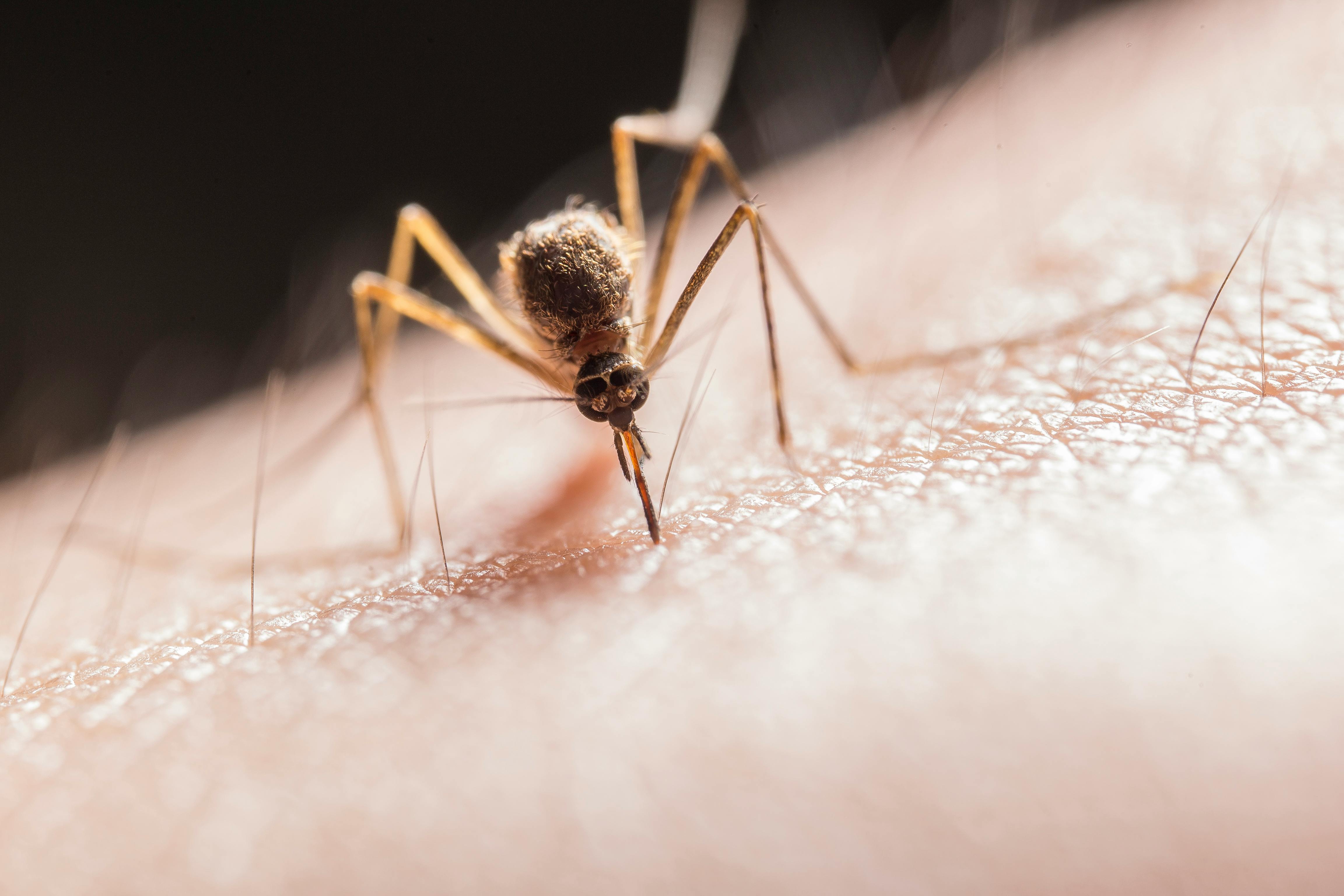
The two species you’ll encounter most often are Aedes albopictus (the Asian tiger mosquito) and Culex quinquefasciatus (the southern house mosquito). Aedes albopictus is aggressive during daylight, especially in the early morning and late afternoon, and is known for transmitting dengue and Zika. Culex quinquefasciatus prefers dusk and night, thriving in humid, shaded areas and serving as a vector for West Nile virus.
Visual Cues: Size, Wing Patterns, and Feeding Times
Both species measure roughly 3‑5 mm in length, but you can tell them apart by their markings. The Asian tiger mosquito displays bold, white‑striped legs and a single white band on its abdomen, resembling a tiny tiger’s stripes. The southern house mosquito has a more uniform brown‑gray body with no distinct leg markings. Remember: Aedes bites in daylight, while Culex becomes active after sundown.
Typical Breeding Sites Around the Home
Mosquitoes need just a few millimeters of stagnant water to lay eggs. In Druid Hills, the most common breeding hotspots include:
- Birdbaths that aren’t refreshed weekly
- Gutter clogs that hold rainwater for days
- Flower pot saucers that collect runoff after watering
- Rain barrels without proper covers
- Old tires, kiddie pools, and any discarded containers
Warning Signs Inside Your Home
Even before you see a single mosquito, there are subtle signs that an infestation is brewing:
- Clusters of itchy bites appearing on exposed skin, often in a line or “breakfast‑lunch‑dinner” pattern
- Increased mosquito activity at dusk, especially near open windows or doors
- Mosquitoes resting on walls, ceilings, or light fixtures—look for them in dim corners
- Small, dark specks on walls that may be dead mosquitoes or shed skins
Simple DIY Inspection Checklist for Homeowners
Use this quick checklist each month during mosquito season to stay ahead of the problem:
- Check all outdoor containers for standing water; empty or treat them.
- Inspect gutters and downspouts for clogs; clean if necessary.
- Scrub birdbaths and refill with fresh water weekly.
- Cover rain barrels with tight‑fitting lids.
- Flip or store any unused tires, planters, or plastic toys.
- Look for mosquito resting spots inside: walls, ceilings, and light fixtures.
- Note any bite clusters on family members and the time they occurred.
- Record findings in a simple log to track patterns over weeks.
By mastering these identification tips and running a regular inspection, you’ll catch mosquito activity early and keep your Druid Hills home comfortable all summer long.
Seasonal Mosquito Activity in Druid Hills
Why Temperature, Rainfall, and Humidity Drive Mosquito Life cycles
In Druid Hills, mosquitoes thrive where warmth, moisture, and stagnant water converge—conditions that make proactive mosquito control Druid Hills GA essential. A steady temperature above 65 °F accelerates the development of larvae, while high humidity keeps adult mosquitoes active and prevents rapid dehydration. After a rainstorm, even a shallow puddle becomes a breeding ground, turning ordinary garden spots into mosquito nurseries.
Typical Seasonal Pattern for Druid Hills
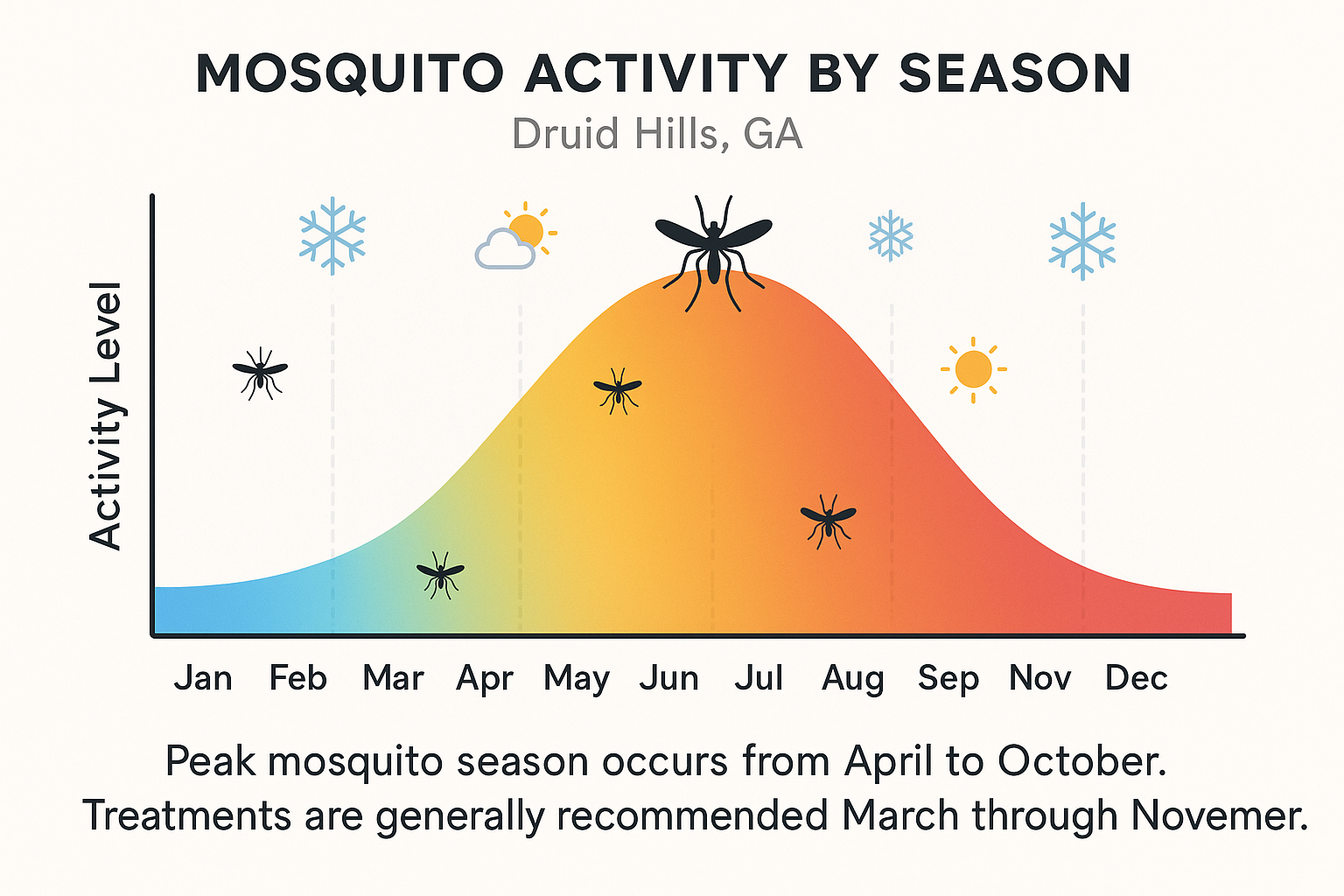
The chart above shows the classic four‑phase cycle:
- Low activity (January – March: the cool, the dry.
- Grading rise (late spring) as temperatures warm.
- Peak period (June – September the summer heat and humidity).
- Decline in fall (October – December) when nights become cooler.
Recommended Treatment Timing
By aligning your spray schedule with the chart, you maximize protection and minimize cost. The first apre‑season barrier spray in early March helps eliminate adult mosquitoes before they reproduce. A mid‑summer follow‑up in July targets any larvae that survived the early treatment and curbs the late‑summer surge.
For the most aeffective results, schedule the pre‑season service before the first consistent warm days (usually around the March 10‑15 “temperature threshold”). The midsummer application should be timed just after the first peak in mosquito counts, often the first two weeks of July.
Weather Events That Can Trigger Sudden Spikes
Heavy rain is the quickest catalyst for a mosquito boom. A single a10‑inch storm creates dozens of new breeding sites—everything from flower pot saucers to clogged gutters. Even a short period of standing rainwater can double the local population within a week. When you notice a rain‑heavy spell, treat your yard sooner rather than waiting for the next scheduled visit.
Similarly, a prolonged spell of high humidity (above 70 %) can extend the active lifeifes of adult mosquitoes, making a single night’s spray less effective. In such conditions, a supplemental “spot‑treatment” of known water sources (e.g., bird baths, rain‑catch barrels) helps keep the population in check.</‑p>
Seasonal Action Checklist
- Q 1 (Jan – Mar)
- Inspect yard for standing water in containers, pet dishes, and gutters.
- Schedule the pre‑season barrier spray with Anthem.
- Clean up leaf litter and remove dead plant material that can hold moisture.
- Q 2 (Apr – Jun)
- Monitor early‑season mosquito activity; use a trap or visual checks.
- Apply a laricide to any persistent water features that cannot’t be drained.
- Plan the midsummer follow‑up treatment.
- Q 3 (Jul – Sep)
- Conduct the mid‑summer barrier spray.
- After heavy rain, inspect and treat new standing water.
- Maintain regular yard maintenance to reduce breeding sites.
- Q 4 (Oct – Dec)
- Perform a final “fall‑off” treatment if a late‑season heat wave occurs.
- Store or remove outdoor containers that could collect water over winter.
- Schedule a spring inspection consultation with Anthem for next year.
Effective Mosquito Control Methods for Homeowners
Barrier Spray
Barrier sprays are a chemical mist applied to shrubs, lawn edges, and the exterior walls of your home. The formulation clings to foliage and surfaces, creating a residual shield that kills mosquitoes on contact for 2‑4 weeks. This method works best when applied just before the peak season and after any heavy rain, which can wash the product away. Homeowners appreciate the “set‑and‑forget” nature of a professional barrier, especially in neighborhoods like Druid Hills where dense vegetation provides ample resting sites.
Mosquito Traps
CO₂‑baited or UV‑light traps lure adult mosquitoes away from living spaces. For optimal results, place traps at least 15 feet from patios or doorways, and position them in shaded, wind‑protected corners where mosquitoes tend to congregate. Remember, traps are a supplemental tool—not a stand‑alone solution—because they capture only a fraction of the population and can become less effective when ambient mosquito numbers are high.
Larvicides
Larvicides target mosquito larvae before they emerge as biting adults. The most common product, (Bacillus thuringiensis israelensis), is a naturally occurring bacterium that kills larvae in standing water without harming fish, pets, or people. Apply Bti to birdbaths, clogged gutters, and any other water features that can’t be drained. Safety is a top priority: follow label directions, wear gloves, and avoid over‑application, which can lead to unnecessary chemical runoff.
Integrated Pest Management (IPM)
IPM blends source reduction, biological controls, and targeted chemical barriers into a cohesive strategy. Start by eliminating standing water, trimming overgrown foliage, and sealing entry points. Introduce natural predators—such as dragonfly nymphs or mosquito‑eating fish—where appropriate. Finally, schedule periodic barrier sprays to keep any stray adults from re‑infesting your yard. This layered approach maximizes control while minimizing chemical use, aligning with Anthem Pest’s commitment to safe, effective solutions.
DIY vs. Professional
DIY advantages include lower upfront cost and immediate action. Home‑grown sprays or off‑the‑shelf traps can be effective for small, isolated problems, provided you follow the product’s dosage and coverage instructions precisely. However, DIY drawbacks are common: uneven application, missed breeding sites, and the risk of resistance from over‑use.
Professional services bring expertise, equipment, and a calibrated treatment plan that covers every micro‑habitat on your property. Technicians can adjust formulations based on local mosquito species and weather patterns, ensuring consistent residual protection. While the price tag is higher than a DIY kit, the long‑term reduction in bites and the peace of mind of compliance with EPA regulations often justify the investment.
Choosing the right mix depends on your budget, the severity of the infestation, and how much time you can devote to ongoing maintenance. For most Druid Hills homeowners, a professional barrier spray combined with seasonal source‑reduction tasks offers the most reliable shield against those relentless summer buzzers.
Comparing Mosquito Control Pricing Options in Druid Hills
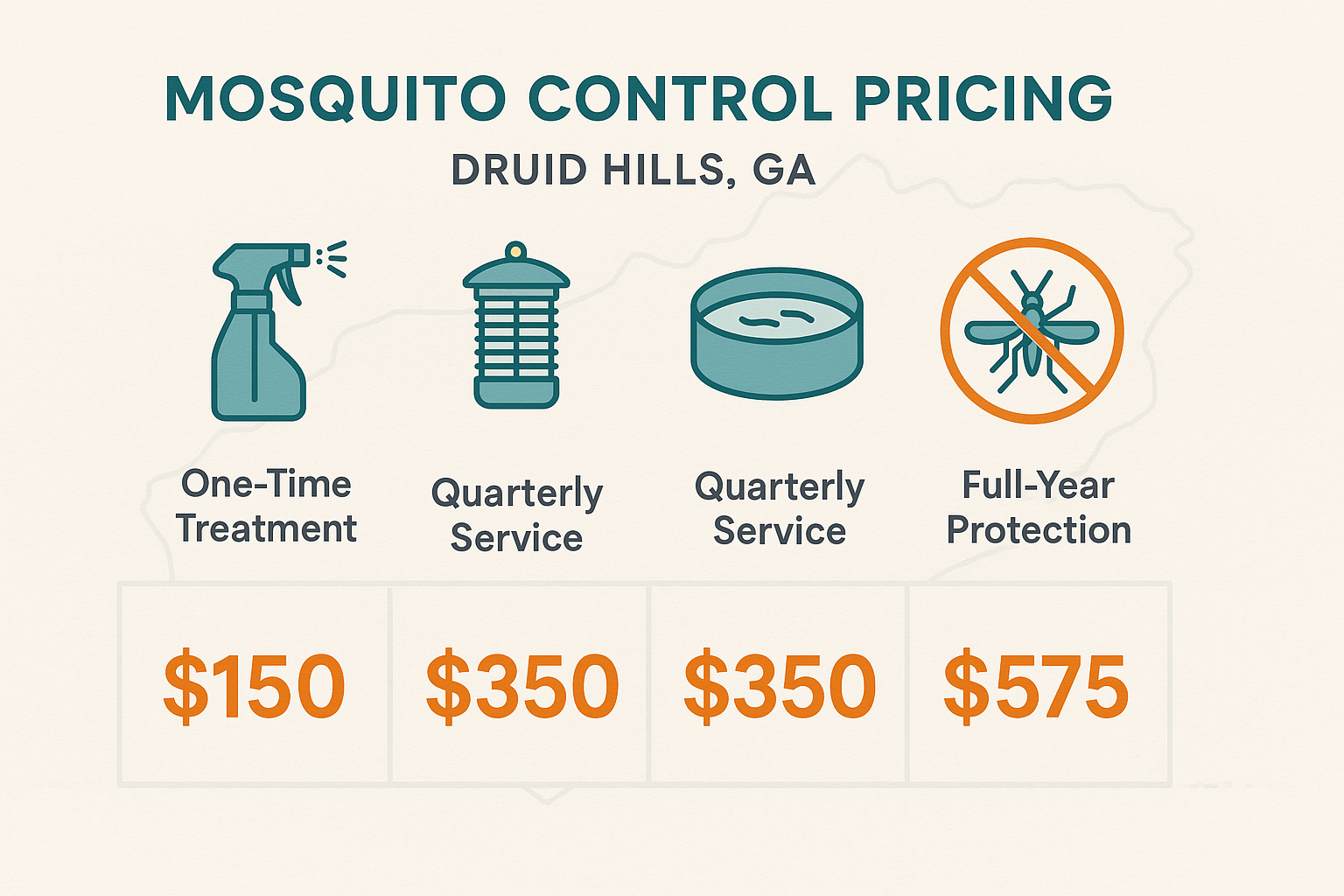
When it comes to keeping your yard bite-free, the way you pay can be just as important as the treatment itself—especially when evaluating mosquito control Druid Hills GA options. In Druid Hills, most companies offer three core structures: a one-time treatment, a quarterly service, and a full-year protection plan. Understanding what each includes and how the costs stack up helps you match the service to your property size, budget, and how much you use your outdoor space.
What’s in the package?
- One‑time treatment: A single spray application covering the perimeter of your home, plus a basic larvicide for standing water. Ideal for occasional visitors or a quick fix before a big event.
- Quarterly service: Four visits per year (spring, summer, early fall, late fall). Each visit includes a spray, a set of mosquito traps, and a booster larvicide. The schedule aligns with the peak mosquito activity window in Georgia.
- Full‑year protection: Eight visits, alternating between spray and trap‑plus‑larvicide applications. This plan also adds a complimentary inspection for breeding sites and a follow‑up call after each visit to verify results.
Typical price ranges in Druid Hills
| Package | Includes | Average Seasonal Cost | Cost per Treatment | Potential Savings vs. One‑Time |
|---|---|---|---|---|
| One‑time | Single spray + larvicide | $120‑$150 | $120‑$150 | — |
| Quarterly | 4 sprays, 4 traps, 4 larvicide boosts | $350‑$420 | $87‑$105 | 15‑20% off one‑time total |
| Full‑year | 8 visits, traps, larvicides, site inspection | $620‑$720 | $77‑$90 | 30‑35% off one‑time total |
Choosing the right plan for your home
If you have a modest yard (under ¼ acre) and only host occasional barbecues, the one‑time option may be enough to keep mosquitoes at bay for a weekend. For families who enjoy nightly patio dining or have children playing outdoors, the quarterly plan offers a balanced mix of protection and affordability—each visit is spaced to catch the mosquito surge before it peaks.
Homeowners with larger properties, water features, or a high activity level typically see the most value in the full‑year plan. The lower cost per treatment, combined with proactive site inspections, reduces the chance of a sudden infestation and often eliminates the need for emergency, higher‑priced treatments later in the season.
Ultimately, weigh your property size, budget, and how much time you spend outdoors. A clear comparison—like the infographic above—makes it easy to see that while the upfront price of an annual plan is higher, the per‑visit cost drops and long‑term savings become evident, especially in a mosquito‑prone area like Druid Hills.
Why a Certified Technician Is Your Best Defense

When it comes to protecting your Druid Hills home from mosquitoes, the difference between a DIY spray and a professional service often boils down to expertise. Anthem Pest Control’s technicians are not only EPA‑approved but also hold certifications from industry‑recognized programs that demand rigorous training on product safety, integrated pest‑management, and local regulations. This layered credentialing ensures every spray, fogger, or barrier is applied with the same precision a medical professional uses when prescribing medication.
Certified expertise you can trust
Our team members complete a multi‑stage curriculum that includes classroom instruction, hands‑on field practice, and annual recertification. They learn how to read a property’s micro‑climate, identify mosquito breeding hotspots, and select the most effective EPA‑registered formulations for the season. Because they are continually updated on the latest research, you receive a solution that is both cutting‑edge and compliant with Georgia’s environmental standards.
What happens during a typical service visit
- Comprehensive inspection: The technician walks your perimeter, checks for standing water, evaluates vegetation density, and uses a handheld meter to gauge adult mosquito activity.
- Custom treatment plan: Based on the inspection data, a tailored application schedule is drafted, specifying product types, concentrations, and target zones.
- Safety first: Before any spray, the technician explains personal protective measures, ensures pets and children are in a safe area, and confirms that neighboring properties are notified when necessary.
- Precise application: Using calibrated backpack sprayers or low‑volume foggers, the technician applies the product at the exact pressure and droplet size needed to penetrate foliage while minimizing drift.
- Post‑treatment guidance: After the spray, you receive a concise checklist—how long to keep windows closed, when to water lawns again, and signs that indicate a follow‑up visit is required.
This step‑by‑step approach maximizes coverage, reduces chemical waste, and creates a barrier that stays active throughout the peak mosquito season. By targeting the adult population and the larval habitats simultaneously, we cut the lifecycle short without over‑treating the environment.
Peace of mind, from insurance to guarantees
Every Anthem technician works under full liability insurance, so any accidental damage is covered without hassle. Our service agreements include a 100% satisfaction guarantee: if you notice persistent mosquito activity within the warranty window, we’ll return at no extra charge. Transparent pricing is presented up front—no hidden fees, no surprise add‑ons—so you know exactly what you’re paying for and why.
Beyond the spray can, the professionalism of our crew, the calibrated equipment they carry, and the clear communication they provide all combine to make a certified technician the single most effective line of defense against mosquito nuisance in Druid Hills.
Protect Your Home Today with Anthem Pest Control
Living in Druid Hills means sharing your yard with the natural beauty of mature oaks, water features, and humid summers—conditions that mosquitoes love. The combination of dense canopy, standing water in storm drains, and the region’s warm, moist climate creates a perfect breeding ground that can turn a pleasant evening into an itchy ordeal. Because the mosquito season here can start early and linger late, homeowners need a proactive, integrated approach that tackles both adult insects and their hidden larvae before they multiply. A coordinated strategy prevents treatments from missing hotspots and keeps costs down.
Why a Professional Plan Makes Sense
Choosing a professional mosquito‑control plan from Anthem Pest Control brings four clear advantages:
- Expert identification of the species and hotspots on your property, so treatment targets the right problem.
- Seasonal timing that aligns with the life cycle of local mosquitoes, delivering interventions when they’re most effective.
- Comprehensive treatment that combines barrier sprays, larvicide applications, and ongoing monitoring for lasting protection.
- Peace of mind knowing a licensed, locally trained team follows EPA‑approved protocols and uses low‑toxicity products safe for children and pets.
This layered defense can cut mosquito numbers by up to 90% during the season, letting you enjoy family gatherings outdoors.
Take the Next Step
Ready to take the bite out of your summer? Anthem Pest Control offers a free, no‑obligation quote so you can see exactly what’s needed for your home. Simply call 877-371-8196 or visit Anthem Pest Control to schedule a quick on‑site assessment. Our technicians will walk you through the plan, answer any questions, and set a treatment schedule that fits your calendar.
Our transparent pricing shows exactly what you pay—no hidden fees or long‑term contracts required.
Enjoy a Bite‑Free Summer
Remember, a bite‑free summer is just a phone call away. Let Anthem’s experienced team handle the heavy lifting, so you can enjoy evenings on the porch without swatting.
A quick call now can stop weeks of itchy evenings with trusted mosquito control Druid Hills GA homeowners rely on.