Why Ants Are a Growing Concern for Georgia Homeowners

Georgia’s warm, humid climate is a double‑edged sword. While it gifts us with long growing seasons and lush landscapes, it also creates the perfect breeding ground for ant colonies. Temperatures that rarely dip below 50°F and abundant rainfall keep soil moisture high, allowing ant queens to establish new nests year‑round. In regions like Peachtree City, where suburban yards blend with mature trees and mulch, ants find countless entry points and food sources.
What Species Are Most Common?
Three ant species dominate Georgia’s residential pest landscape:
- Carpenter ants (Camponotus spp.) – the largest of the lot, known for excavating wood to build their galleries.
- Pavement ants (Tetramorium immigrans) – small, dark workers that thrive in cracks of sidewalks, driveways, and building foundations.
- Odorous house ants (Tapinoma sessile) – named for the coconut‑like scent they emit when crushed; they’re notorious for infiltrating kitchens.
According to the Georgia Department of Agriculture, these three species account for over 80 % of all ant complaints filed in the state each year. Their adaptability means they can move from outdoor foraging trails straight into your home with minimal provocation.
Damage and Health Risks You Can’t Ignore
Carpenter ants are the only group that can cause structural damage. By tunneling through wood to create nesting chambers, they weaken support beams, floor joists, and even window frames. Over time, unchecked activity can lead to costly repairs that far exceed the price of a professional treatment.
Pavement and odorous house ants may not chew wood, but they pose other serious concerns. Their foraging trails often cross food preparation areas, contaminating pantry items, pet food, and even children’s snacks. While most ant species are not direct disease vectors, the bacteria they carry can trigger food‑borne illnesses, especially in households with young children or immunocompromised members.
Why Early Action Matters
Ant colonies expand quickly. A single queen can produce thousands of workers in just a few months, and the larger the colony, the harder it becomes to eradicate. Early detection—such as spotting ant trails along baseboards or noticing small piles of sawdust near wooden structures—allows homeowners to intervene before the infestation spreads.
That’s where Anthem Pest Control steps in. Our technicians are trained to identify the specific ant species present, assess the extent of damage, and recommend a targeted treatment plan. Whether it’s a localized baiting strategy for pavement ants or a comprehensive wood‑remediation program for carpenter ants, we combine industry‑approved products with locally tuned application techniques to protect your home efficiently and affordably.
For a broader look at the pest challenges Georgia homeowners face, explore the Anthem Pest Problems We Solve page. Understanding the scope of the issue is the first step toward a pest‑free home.
Spotting Ant Activity Inside and Around Your Home

Visual cues you can’t ignore
Ants are excellent at staying hidden, but they still leave a trail of evidence. Look for the following when you’re walking through kitchens, basements, or the yard:
- Ant trails: A thin, often glossy line of ants moving in a single direction. Trails are most noticeable on smooth surfaces like tile or countertops.
- Soil or sand piles: Small mounds near entry points, especially around foundation cracks or window sills, indicate where colonies are tunneling.
- Winged alates: These are the reproductive ants that appear during mating flights. Spotting them inside means a nest is already established nearby.
- Nests in walls or under foundations: Tiny holes or raised patches in drywall, plaster, or concrete can hide a hidden colony.
Behavioral signs that point to a problem
Ants don’t just wander—they’re after food, shelter, and sometimes the wood that makes up your home’s structure.
- Food mysteriously disappearing from pantry shelves, especially sugary or protein‑rich items.
- Chewed or hollowed‑out wooden beams, trim, or siding, a tell‑tale sign of carpenter ants.
- Sap leakage or “gummy” residue on tree trunks near the house, often a sign of ants protecting aphids or feeding on plant secretions.
Seasonal clues to keep on your radar
Ant activity spikes in the warmer months. In Peachtree City, the peak period runs from early spring through late summer. During this window you’ll notice:
- Longer, more frequent trails as colonies expand.
- Increased sightings of winged alates during the “nuptial flight” period, typically late April to early June.
Cross‑reference these observations with the seasonal chart in Part 4 to gauge whether you’re in a high‑risk period.
Distinguishing harmless outdoor ants from indoor threats
Not every ant is a danger to your home. Pavement ants, fire ants, and many field species usually stay outside. However, if you see any of the following, treat them as indoor risks:
- Carpenter ants (large, black or brown, with a smooth thorax).
- Pharaoh ants (tiny, yellow‑tan, often found in hospitals and kitchens).
- Odorous house ants (emit a rotten‑egg smell when crushed).
These species are known for nesting inside walls, ceilings, or under floors.
Quick DIY inspection tips before you call a pro
Spend a focused 15‑minute walk‑through to confirm what you’re dealing with:
- Inspect all entry points—doors, windows, utility openings—and seal obvious gaps with caulk or weather‑stripping.
- Place a small piece of duct tape on the floor near a suspected trail; ants will get stuck, giving you a sample for identification.
- Check pantry items for tiny crumbs or “ant highways” leading from the floor to food containers.
- Probe wooden structures with a screwdriver; soft, crumbly wood may indicate carpenter ant activity.
- Set out a non‑toxic bait (like a sugar‑water solution) in a shallow dish near the trail. If ants take it, you’ve confirmed foraging behavior.
Document what you find—photos, locations, ant type, and timing—and have that information ready when you contact Anthem Pest Control. A clear picture helps the technician diagnose the problem faster and choose the most effective treatment.
Understanding Ant Inspection Pricing in Peachtree City and Nearby Areas
Service tiers you’ll encounter
Most pest‑control companies break ant inspections into three clear tiers. A basic inspection usually involves a quick visual walk‑through of the interior and exterior to spot obvious activity. A comprehensive inspection with baiting adds detailed colony mapping, species identification, and placement of bait stations for ongoing control. The top‑level full treatment plan combines the comprehensive inspection with a customized chemical or non‑chemical treatment schedule, follow‑up visits, and a warranty on results.
Typical cost ranges
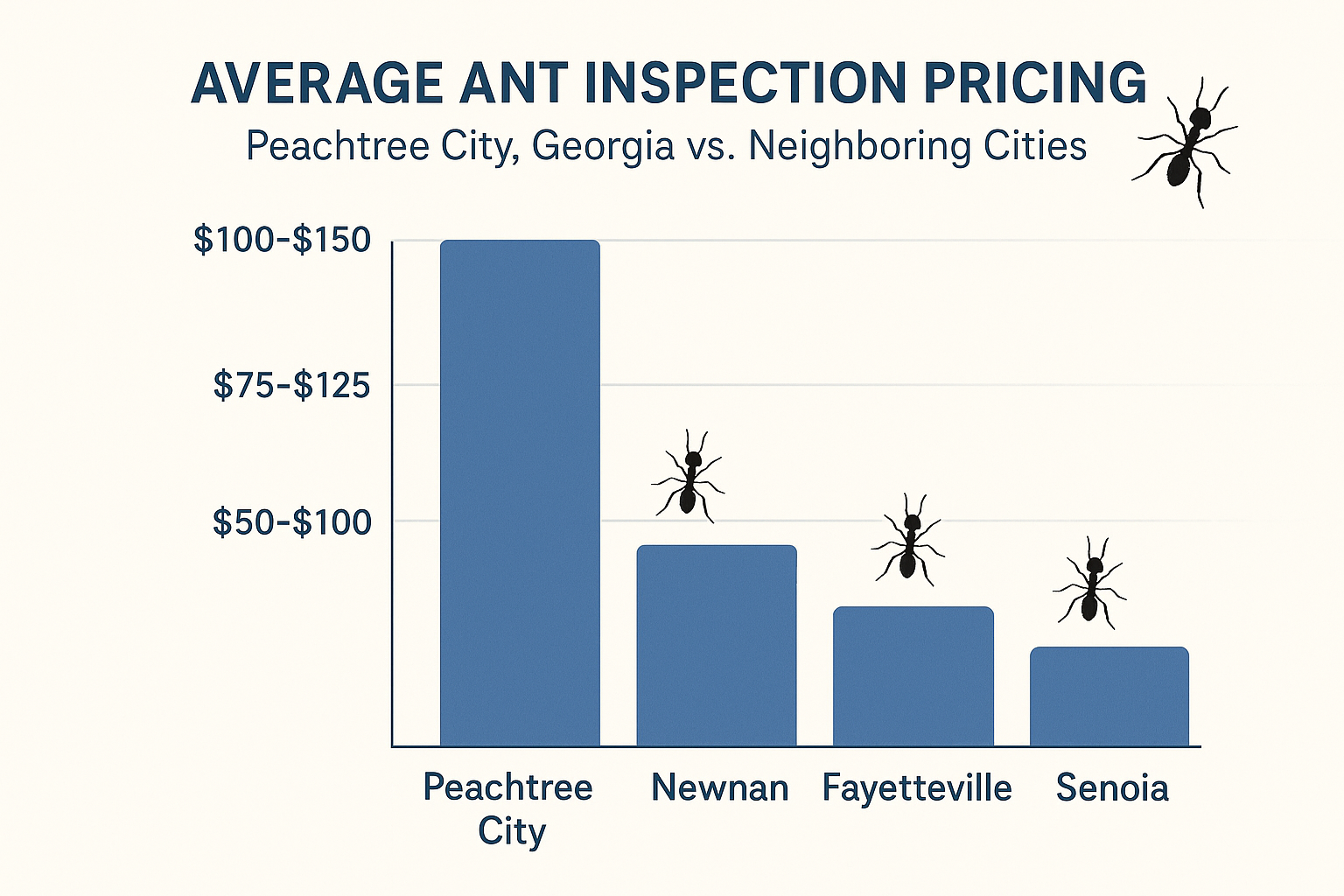
Below is a quick reference of what homeowners in Peachtree City and its neighboring communities can expect to pay for each tier.
| Service Tier | Peachtree City | Fayetteville | College Park |
|---|---|---|---|
| Basic inspection | $80–$120 | $85–$130 | $90–$135 |
| Comprehensive + baiting | $150–$220 | $160–$240 | $170–$250 |
| Full treatment plan | $250–$350 | $270–$380 | $285–$400 |
What happens during an inspection
A qualified technician will first identify the ant species—carpenter, odorous house, or pavement ants each require a different approach. Next, they’ll map active colonies, noting entry points, food sources, and moisture hotspots. Finally, the inspector provides a written recommendation that outlines the most effective treatment, whether it’s bait placement, perimeter sprays, or structural barriers.
Why a professional inspection pays off
DIY methods often miss hidden nests, leading to repeated infestations and higher long‑term costs. A professional inspection saves you time and money by targeting the problem at its source, reducing the need for repeated chemical applications, and protecting your home’s foundation from damage caused by carpenter ants.
Anthem Pest Control’s transparent pricing model
At Anthem Pest Control we believe you should never guess what you’ll be charged. Our quotes break down every component—inspection fee, bait stations, labor, and any follow‑up visits—so you see exactly where your dollars go. No hidden fees, no surprise add‑ons, just a clear path to an ant‑free home.
Seasonal Ant Activity Patterns in Georgia
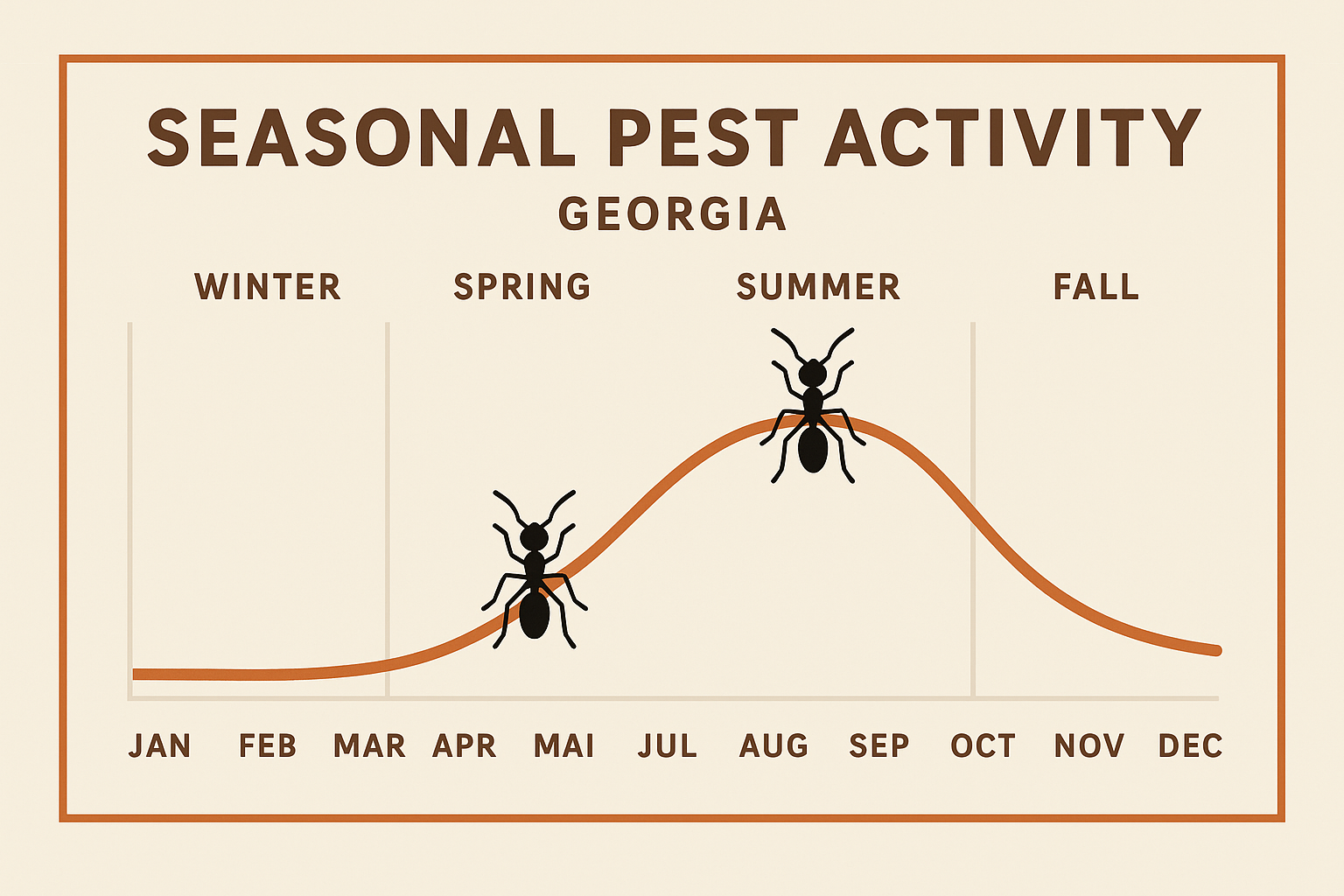
Understanding when ants are most active helps you schedule inspections before they become a nuisance. The line‑graph below visualizes the typical activity curve for common household ants across a calendar year in Georgia. Notice the sharp spikes in late April through June and a secondary rise in August, followed by a lull as temperatures dip in the fall.
Why Temperature and Humidity Drive the Peaks
Ant colonies are ectothermic; their metabolism accelerates as the mercury climbs. In Georgia, daytime highs of 70‑85°F (21‑29°C) provide the perfect environment for foraging workers to venture out. Simultaneously, spring showers raise soil moisture, making underground tunnels easier to navigate and keeping the brood well‑hydrated. These conditions explain the pronounced spring surge.
Summer brings another uptick, especially during humid weeks when outdoor humidity exceeds 70%. The moisture not only sustains the colony but also creates food sources—think sugary drinks left out on porches or ripe fruit on trees—that attract ants in large numbers.
Timing Preventive and Emergency Treatments
- Preventive treatments: Early spring (late February to early March) is ideal. Applying a perimeter barrier before the first activity spike stops colonies from establishing new foraging trails.
- Emergency interventions: Mid‑summer (mid‑July to early August) is when you’ll likely see the most complaints. Rapid spot treatments or bait placements during this window can curb an outbreak before it spills into the cooler months.
Linking Seasonal Activity to the Signs Discussed Earlier
The visual cues from Part 2—such as tiny ant trails along baseboards or small piles of soil near foundations—tend to appear just before the graph’s peaks. Spotting these early signs in March or July signals that a colony is gearing up for its high‑activity phase, prompting an immediate call to action.
How Anthem Pest Control Aligns Its Service Schedule
Anthem Pest Control tailors its calendar to Georgia’s ant rhythm. Our technicians conduct proactive inspections in late February, applying a low‑toxicity barrier that targets the species most common in Peachtree City. If homeowners report early spring sightings, we dispatch a rapid‑response team within 48 hours. During the summer surge, we increase bait station density and offer “mid‑season check‑ups” to catch any colonies that slipped through the initial barrier.
By syncing treatment timing with the natural ebb and flow of ant activity, Anthem ensures that Peachtree City homeowners stay one step ahead—preventing small ant families from turning into full‑blown infestations.
Effective Treatment Options and Prevention Strategies
When ants infiltrate your home in Peachtree City, the goal isn’t just to eliminate the workers you see marching across the kitchen counter; it’s to dismantle the entire colony. At Anthem Pest Control we combine proven chemical tools with non‑chemical tactics and a disciplined Integrated Pest Management (IPM) plan. This layered approach maximizes kill rates while minimizing risk to family, pets, and the environment.
Chemical Treatments: Baits, Sprays, and Dusts
Ant baits act like a Trojan horse. Workers collect the poisoned gel or solid matrix, carry it back to the nest, and share it with the queen and brood. Because the toxicant is slow‑acting, the colony has time to consume enough to cause a collapse. Sprays are best for immediate knock‑down of visible foragers and for treating cracks, baseboards, and entry points. They provide rapid relief but don’t reach deep nest chambers. Dusts (e.g., silica‑based or diatomaceous earth) cling to the exoskeleton of ants that walk through treated voids, dehydrating them over hours. Dusts excel in wall voids and under appliances where liquids could seep into unwanted areas.
Non‑Chemical Alternatives
Heat treatment is a chemical‑free option that raises the temperature of infested spaces to 120‑130 °F for a short period, lethal to ants at all life stages. It’s especially useful for delicate items or when occupants have sensitivities. Physical barriers—such as silicone caulks around foundation cracks, door sweeps, and mesh screens—prevent entry before ants ever set foot inside. Habitat modification tackles the root cause: removing food, water, and shelter that attract ants. Simple steps like trimming vegetation away from the house and fixing leaky pipes can make your property far less inviting.
Integrated Pest Management (IPM) at Anthem Pest Control
Our IPM strategy starts with a thorough inspection to identify species, colony size, and entry routes. We then prioritize low‑impact solutions, reserving chemicals for situations where other methods fall short. Monitoring stations are placed to track activity after treatment, allowing us to adjust tactics before a full‑scale re‑infestation occurs. This data‑driven cycle—inspect, treat, monitor, and prevent—delivers long‑term control while keeping pesticide use to the absolute minimum.
Preventive Measures Every Homeowner Can Implement
- Seal entry points: Use caulk, weather‑stripping, and door sweeps to close gaps around windows, doors, and utility penetrations.
- Proper food storage: Keep pantry items in airtight containers, clean crumbs promptly, and avoid leaving pet food out overnight.
- Moisture control: Repair leaky faucets, ensure proper drainage around foundations, and use dehumidifiers in damp basements.
- Landscaping adjustments: Trim trees and shrubs at least 12 inches from the house, keep mulch away from the foundation, and direct irrigation away from the home’s perimeter.
Follow‑Up Service and Maintenance Frequency
Ant colonies can rebound if untreated satellite nests remain. We recommend scheduling a follow‑up visit 2‑4 weeks after the initial treatment to verify colony collapse and re‑apply baits if needed. For high‑risk properties—those near wooded areas or with chronic moisture issues—quarterly maintenance visits provide the best shield against re‑infestation. During each visit, our technicians will re‑inspect vulnerable zones, refresh barrier treatments, and update you on any new ant activity.
Protect Your Home Today with Anthem Pest Control
When it comes to ants, timing is everything. Catching an infestation early—ideally in early spring or late summer—prevents a tiny trail from turning into a full‑blown invasion. Early detection lets you act before colonies spread to walls, foundations, and food storage areas, saving you both stress and costly repairs.
That’s why partnering with a professional service matters. Anthem Pest Control combines years of local experience in Peachtree City with a deep understanding of the region’s seasonal pest cycles. Our technicians know exactly which ant species are most active during each month and which treatment methods work best for the climate and construction styles in our community.
Why Choose Anthem?
- Expertise you can trust: Certified technicians trained in the latest integrated pest management techniques.
- Transparent pricing: No hidden fees—our quotes break down every step, so you know exactly what you’re paying for.
- Local knowledge: We’ve serviced homes throughout Peachtree City, so we understand the unique challenges your property faces.
- Safe, effective solutions: Treatments are designed to protect your family and pets while eliminating the ants.
We’re confident that a quick, professional inspection can give you the peace of mind you deserve. That’s why we offer a free, no‑obligation quote—no pressure, just clear information about what’s needed and how much it will cost.
Ready to take the first step? Call us today at 877‑371‑8196 or visit Anthem Pest Control to request your free quote. Our friendly team will schedule a convenient inspection, walk you through the findings, and recommend a customized plan that fits your budget.
Don’t let a small ant trail become a summer nightmare. Act now, secure your home, and enjoy a pest‑free environment for you and your family.