Recognizing Ant Activity in Your Home
Ants rank among the most common household invaders across the United States, and Suwanee, Georgia is no exception. Their ability to locate food, water, and shelter makes them quick to establish a foothold inside a home, often before you even notice a single worker on the kitchen counter.

Which Ants Are You Most Likely to Meet?
The three species that show up most frequently in suburban Georgia are carpenter ants, odorous house ants, and pavement ants. Carpenter ants are the largest, ranging from ¼ to ½ inch, with a black or dark‑brown body and a smooth, rounded thorax. Odorous house ants are much smaller—about ¼ inch—dark brown to black, and they emit a faint, rotten‑egg smell when crushed. Pavement ants are tiny, about ⅛ inch, light brown to reddish‑brown, and they often nest under sidewalks or driveways, spilling into homes through foundation cracks.
How They Slip Inside
Ants exploit any opening that connects the outdoors to your interior spaces. Common entry points include cracks in the foundation, gaps around windows and doors, and even tiny holes left by utility lines. Once a scout finds a suitable route, it leaves a pheromone trail that other workers follow, creating a foraging highway that can stretch from the yard to your pantry.
Early Warning Signs You Shouldn’t Ignore
Spotting an infestation early can save you from costly wood damage and extensive chemical treatments. Look for:
- Thin, irregular ant trails along baseboards, countertops, or behind appliances.
- Pinprick‑sized holes in wood, especially in window frames or door casings—carpenter ants drill these to expand their nest.
- Fine, sugary residue or “ant honeydew” near windowsills, indicating sap‑feeding species like odorous house ants.
- Visible damage to wooden structures, such as splintered or hollow sounding beams.
Why Ant Behavior Matters for Detection
Ant colonies operate like miniature cities. A single queen can produce thousands of workers, but the colony’s growth is seasonal. In spring and early summer, foraging activity spikes, making trails more noticeable. Conversely, in cooler months the ants retreat deeper into walls or soil, and you may only see occasional scouts. Understanding this rhythm helps you interpret whether a few ants are a harmless wanderer or the tip of a growing infestation.
When you catch these signs early, treatment can be confined to a single zone and often requires fewer chemicals, keeping costs low and your family safe. Delaying even a few weeks allows the colony to multiply, turning a simple trail into a full‑scale infestation that may damage structural wood and attract other pests.
For a deeper dive into ant biology and control methods, visit the Ant Control Guide provided by Anthem Pest Control.
How Ant Infestations Spread and What It Means for Your Property

Colony hierarchy: queen, workers, soldiers, and alates
Every ant infestation begins with a single queen that has the sole job of laying eggs. From her brood emerge three primary castes: workers, soldiers, and reproductive alates (the winged males and future queens). Workers handle foraging, nest maintenance, and caring for the young. Soldiers protect the nest from intruders, while alates are produced seasonally for mating flights. Understanding this division of labor helps explain why an infestation can appear suddenly—once the alates return and shed their wings, a new colony can spring up right under your floorboards.
Seasonal breeding cycles and swarming behavior
Most ant species in Georgia follow a predictable annual rhythm. In spring, rising temperatures and increased humidity trigger the production of alates. These winged ants take to the air in massive swarms, seeking mates and suitable nesting sites. After mating, males die, and fertilized queens drop to the ground, seeking shelter in cracks, tree stumps, or the wooden frames of your home. By late summer, the new queens have started laying eggs, and the colony’s population can double within weeks. This rapid growth underscores why a minor sighting in May can become a full‑blown infestation by September.
Pathways of expansion
- Satellite nests: Established colonies send out workers to scout for food and moisture. When conditions are favorable, they excavate new chambers a few feet away, creating satellite nests that remain linked to the original queen.
- Tunneling through wood: Carpenter ants, unlike termites, do not eat wood but hollow it out to create galleries. These tunnels can travel through structural members, providing hidden highways for workers to move between rooms.
- Exploiting moisture: Leaky pipes, roof leaks, or even condensation in basements offer the damp environment ants love. Moisture softens wood, making it easier for ants to carve passageways and expand their domain.
Specific risks to your home and belongings
- Wood damage: Carpenter ants can compromise load‑bearing beams, floor joists, and window frames, leading to costly structural repairs.
- Food contamination: Foraging workers trail back to the nest, leaving pheromone trails that attract more ants. They can contaminate countertops, pantry items, and pet food, increasing the risk of bacterial growth.
- Allergic reactions: While most ant bites are harmless, species like fire ants can cause painful welts and, in sensitive individuals, trigger severe allergic reactions that require medical attention.
Real‑world examples of unchecked infestations
Consider a Suwanee homeowner who noticed a few carpenter ants in the kitchen in early June. Assuming they were a one‑time sighting, no action was taken. By November, the ants had established multiple satellite nests within the attic, hollowing out the roof rafters. The homeowner faced $8,000 in structural repairs and an additional $2,500 for professional extermination. In another case, a family’s pantry was overrun after a small outdoor nest merged with a wall void, leading to widespread food spoilage and a costly deep‑cleaning service.
Why early detection matters
Ant colonies grow exponentially; a few dozen workers can become thousands in a matter of weeks. Detecting the first signs—tiny trails, small wood shavings, or occasional sightings—allows you to intervene before the insects tunnel into critical structural components. Early treatment, whether through targeted baits, localized dusts, or professional removal, can stop the expansion cycle, preserve the integrity of your home, and save you from expensive repairs down the line.
Effective Ant Treatment Options for Homeowners
Understanding the Treatment Landscape
When ants infiltrate a Suwanee home, the solution isn’t one‑size‑fits‑all. Professionals categorize treatments into five main groups:
- Chemical sprays – fast‑acting liquids applied to entry points, cracks, and visible trails.
- Bait stations – concealed containers that lure foraging workers with a slow‑acting poison.
- Dusts – fine powders placed in voids, wall cavities, and beneath baseboards.
- Foam injections – expanding foam that carries insecticide deep into nest chambers.
- Fumigation or outdoor smoke – whole‑structure or perimeter treatments for massive colonies.
How Bait Stations Work Their Magic
Bait stations are the cornerstone of long‑term ant control. Foraging workers carry the attractant back to the colony, sharing the toxicant with nest mates—including the queen. Because the poison acts slowly, ants have time to distribute it throughout the nest before dying, effectively collapsing the colony from the inside out. Proper placement—along trails, near food sources, and at exterior entry points—maximizes uptake.
Liquid Barrier Sprays vs. Granular Treatments
Liquid barrier sprays create an invisible wall that repels or kills ants on contact. They’re ideal for sealing cracks, door thresholds, and interior perimeters. The downside is that they can wash off with heavy rain or cleaning, requiring re‑application.
Granular treatments are sprinkled around the home’s foundation or poured into soil. They release a residual insecticide that migrates slowly, targeting ants that travel between the yard and the house. Granules are less intrusive indoors but may be less effective against indoor‑only species.
When to Consider Fumigation or Outdoor Smoke
Most ant problems are solved with sprays, baits, or dusts, but there are exceptions. Large, established colonies that have tunneled deep into structural wood, or species that build extensive underground networks (such as carpenter ants), may require:
- Fumigation – a sealed‑house treatment that saturates every hidden chamber with a gas that penetrates wood and soil.
- Outdoor smoke – a targeted, high‑temperature treatment that drives ants out of nests, allowing technicians to treat exposed workers directly.
These methods are typically reserved for infestations that threaten structural integrity or have proven resistant to conventional approaches.
Safety First: Child‑ and Pet‑Friendly Options
Anthem Pest Control only uses EPA‑approved products that meet strict safety standards. Many formulations are low‑odor, non‑toxic to mammals, and can be applied in occupied homes. When selecting a DIY option, homeowners should look for labels that specifically mention “pet‑safe” or “child‑safe,” and always follow the manufacturer’s ventilation and re‑entry guidelines.
The Role of a Licensed Technician
A certified technician brings two critical advantages:
- Accurate nest identification – pinpointing the colony’s exact location (whether it’s a wall void, attic, or yard mound) ensures the chosen method hits the target.
- Tailored application – professionals match the ant species, infestation size, and home layout to the most effective product, whether that’s a targeted foam injection for a hidden wood nest or a strategic bait grid for pavement‑dwelling ants.
Follow‑Up Visits and Ongoing Monitoring
Effective ant control rarely ends after a single visit. Most technicians schedule a follow‑up within 2–4 weeks to assess bait consumption, check for new activity, and apply supplemental treatments if needed. Ongoing monitoring—often through a simple visual inspection or a brief bait check—helps ensure the colony stays suppressed throughout the season.
Ant Removal Pricing Explained
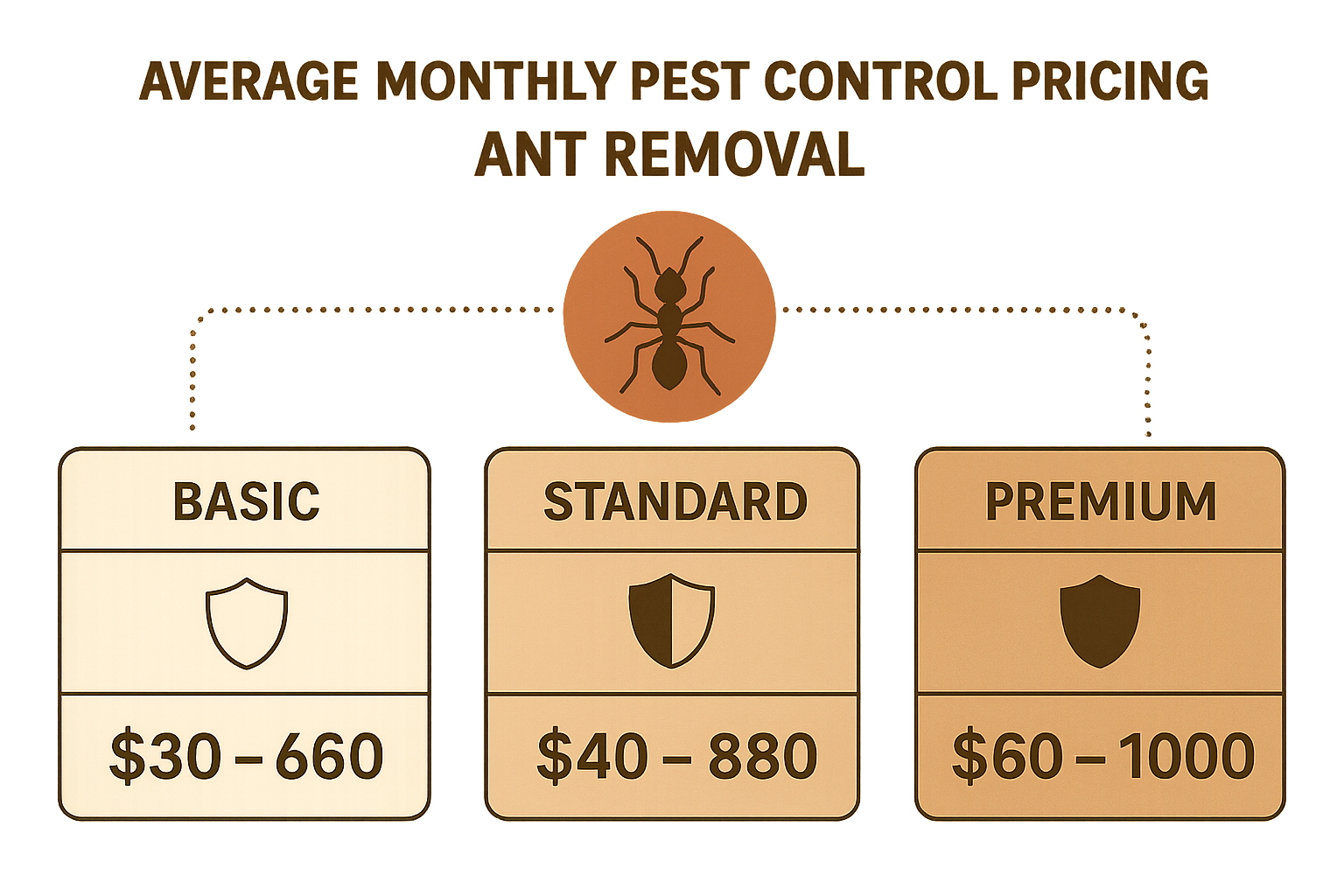
When you call a pest‑control professional, the first question on most homeowners’ minds is “How much will this cost?” Ant removal isn’t a one‑size‑fits‑all service; reputable companies break their offerings into three clear tiers—Basic, Standard, and Premium—so you can match the treatment to the severity of the problem and your budget.
Service Tier Overview
- Basic Tier
- One‑time initial inspection
- Spot‑treatment with a single‑application spray or bait
- One follow‑up visit (usually within 30 days)
- 30‑day warranty on the treated area
- Standard Tier
- Comprehensive inspection of interior and exterior perimeters
- Combination of spray, bait stations, and dust applications
- Two follow‑up visits (typically at 30‑ and 60‑day marks)
- 90‑day warranty covering re‑infestation
- Premium Tier
- Full‑home inspection with moisture and entry‑point analysis
- Integrated treatment plan: perimeter spray, indoor baits, and targeted dusting
- Three to four scheduled follow‑ups, plus on‑call support
- One‑year warranty with a free re‑treatment if ants return
Typical U.S. Price Ranges
| Tier | Typical Price Range | What’s Included |
|---|---|---|
| Basic | $80 – $150 | Initial inspection, single treatment, one follow‑up, 30‑day warranty |
| Standard | $150 – $250 | Full inspection, multiple treatment methods, two follow‑ups, 90‑day warranty |
| Premium | $250 – $450 | Comprehensive analysis, integrated treatments, three‑plus follow‑ups, 1‑year warranty |
Factors That Influence Cost
Even within these brackets, the final price can shift based on a handful of key variables:
- Infestation severity: A light, isolated trail may be handled with a single bait, while a large colony spanning multiple rooms demands more extensive treatment.
- Property size: Larger homes or multi‑unit buildings require additional spray lines and bait stations, increasing labor and material costs.
- Geographic location: Service rates in metropolitan areas like Suwanee, GA, often reflect higher labor costs and stricter environmental regulations.
- Access points: Homes with many cracks, gaps, or landscaping that provides ant highways may need extra sealing work, which is billed separately.
How Anthem Pest Control Aligns With These Tiers
Anthem Pest Control embraces the same transparent tier system, but we add two homeowner‑focused guarantees:
- All quotes are free and no‑obligation. You’ll see a line‑item breakdown before any work begins.
- Our service contracts include a written warranty that matches the tier you choose, so you know exactly how long you’re covered.
Whether you’re dealing with a single ant line in the kitchen or a full‑scale invasion that threatens your pantry, Anthem’s pricing lets you pick the level of protection that fits your peace of mind and your budget.
Ready to see the exact cost for your home? Request a free, no‑obligation quote today, and let our certified technicians design a treatment plan that eliminates ants and safeguards your space.
Seasonal Ant Activity in Georgia and Timing Your Treatment
Understanding when ants are most active in Georgia lets you stay one step ahead of an infestation. By aligning inspections and treatments with nature’s calendar, you reduce the chance of surprise invasions and keep your home comfortable year‑round.
Georgia’s Climate and Ant Behavior
Georgia’s humid subtropical climate means warm summers, mild winters, and a rainy shoulder season. Ant colonies respond to both temperature and moisture; when it’s warm and the ground is damp, workers venture out in larger numbers. In cooler months, activity drops as colonies focus on brood development inside the nest. Understanding this rhythm helps you anticipate when ants are most likely to cross the threshold into your home.
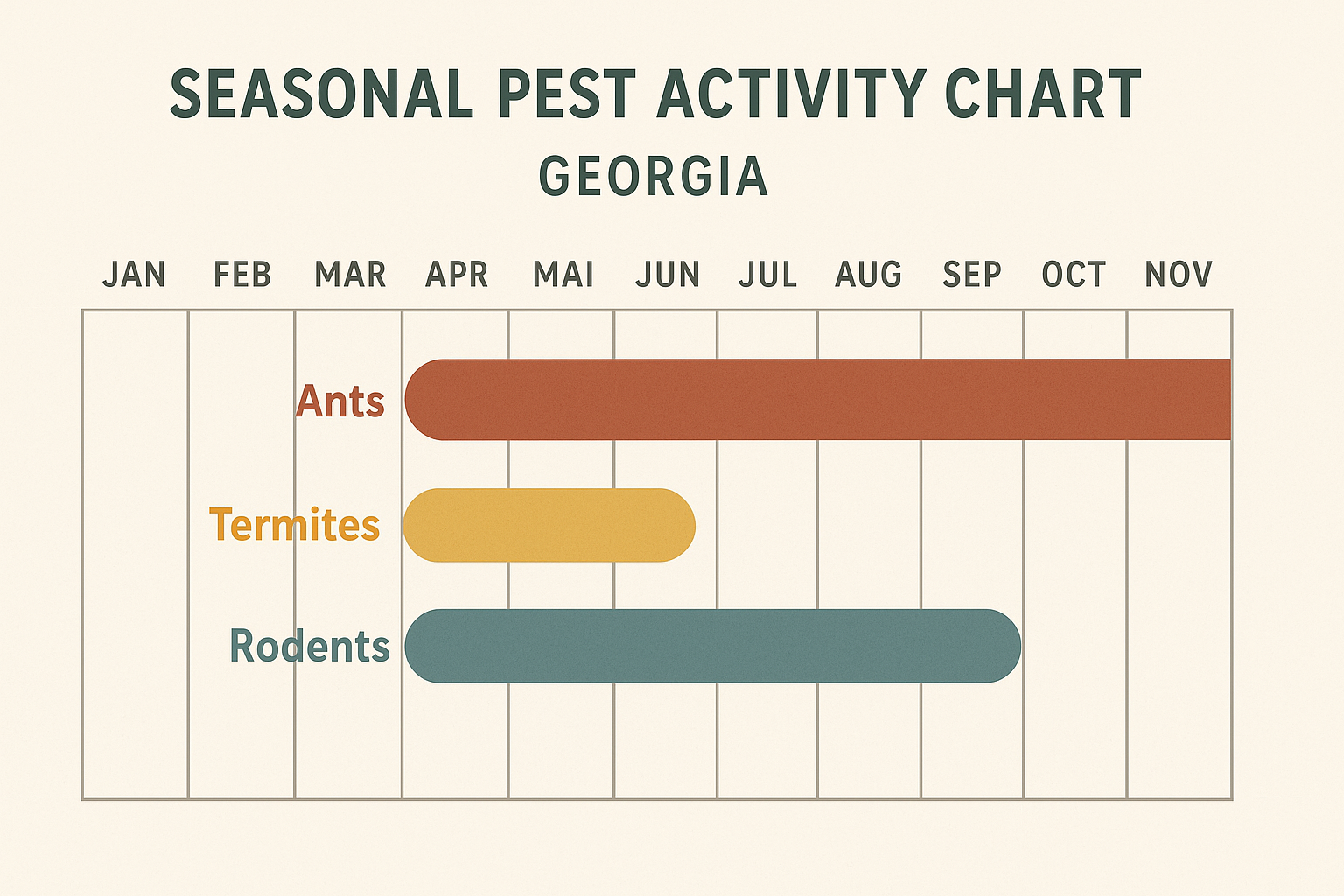
When Ants Are Most Active
Below is a quick reference for the three common ant species you’ll encounter in Suwanee and the months they typically peak. These peaks are driven by the interplay of temperature thresholds—typically above 70 °F—and relative humidity levels that exceed 60 %.
| Ant Species | Peak Month(s) |
|---|---|
| Carpenter Ants | Late April – May |
| Odorous House Ants | June – August |
| Pavement Ants | Early September – October |
Why Timing Matters
Ants are opportunistic. A sudden warm spell in early spring can trigger a surge in foraging, especially for carpenter ants that are scouting for new nesting sites. If treatment is applied after the colony has already established a trail inside, you’ll need more product and more visits. Acting before the peak gives the pesticide a chance to create a barrier that intercepts workers before they infiltrate. A well‑timed barrier also reduces the amount of chemical needed, aligning with Anthem’s commitment to safe, low‑impact solutions.
Optimal Treatment Windows
- Early Spring (late February–early March): Apply a pre‑emptive perimeter barrier. This stops carpenter ants and early foragers from entering as temperatures rise.
- Midsummer (July): Deploy targeted bait stations for odorous house ants when they are actively scouting for food sources.
- Early Fall (late September): Conduct a follow‑up barrier and spot‑treat pavement ant trails before they seek shelter for winter.
Homeowner Tips During High‑Activity Periods
- Store pantry items in airtight containers; sugar and protein attract foragers.
- Fix leaky pipes, clean gutters, and ensure proper drainage to eliminate moisture hotspots.
- Keep countertops clear and vacuum crumbs nightly, especially during summer heat.
- Trim vegetation away from the foundation to reduce bridge routes for ants.
Partner with a Local Pro
Anthem Pest Control monitors these seasonal patterns year‑round, so we know exactly when to schedule a barrier or baiting service for maximum impact. A local expert can also spot early signs—like tiny ant trails near windows—that most homeowners miss. Giving us a call before the peak season arrives means you’ll enjoy a quieter home and avoid costly repeat treatments later.
Protect Your Home with Professional Ant Control Today
Early identification and prompt treatment are the cornerstones of a pest‑free home. The longer an ant colony establishes itself, the deeper it spreads through walls, floorboards, and even your landscaping. By catching the problem at the first sign—tiny trails, small mounds, or unexplained bites—you prevent costly structural damage and protect the health of your family.
Anthem Pest Control delivers a three‑pronged approach that balances safety, effectiveness, and cost. Our technicians use EPA‑approved products that target ants without endangering children or pets, apply treatment methods that reach hidden colonies, and design prevention plans that keep the insects from returning.
- Safe, low‑toxicity chemicals approved for homes with kids and pets.
- Targeted treatment that eliminates the entire colony, not just visible workers.
- Transparent, upfront pricing so you know exactly what you’re paying for.
What sets Anthem apart is our nationwide network of certified technicians. No matter where you live in the United States, a local expert can arrive on schedule, assess the specific ant species in your yard, and tailor a solution that fits your budget. Because we believe in honesty, every estimate is itemized, and there are no hidden fees after the job is done.
Because ants are most active during the warm months in Suwanee, scheduling an early spring inspection gives you a head start before colonies expand. Our service includes a follow‑up visit to verify that the treatment was successful and to apply a protective barrier that deters future invasions. With Anthem’s ongoing maintenance plans, you’ll never have to wonder whether the next ant season will catch you off guard.
Peace of mind is priceless when you know your family is safe from unwanted guests. A professional ant control program not only eliminates the current problem but also builds a protective shield around your foundation, crawl spaces, and outdoor entertaining areas. That’s the confidence you get when you choose a trusted partner like Anthem.
Ready for a pest‑free home? Call us today for a free, no‑obligation quote. Our friendly team is standing by at 877‑371‑8196 or you can request a quote online at Anthem Pest Control. Let our experts handle the inspection, treatment, and ongoing prevention so you can enjoy a comfortable, ant‑free living space.