Why Pest Control Matters for U.S. Homeowners
When a pest slips through the front door, the problem rarely stays hidden. From sneezing fits triggered by allergens to costly structural repairs, the ripple effects touch health, finances, and peace of mind. Understanding these risks helps homeowners make informed decisions—and that’s where a data‑driven, friendly guide can make all the difference.
Health risks that can’t be ignored
Common invaders such as rodents, cockroaches, and bed bugs carry more than just an unwelcome presence. They are vectors for a range of illnesses and allergic reactions:
- Allergies and asthma: Dust‑mite fragments, cockroach droppings, and rodent urine can aggravate respiratory conditions, especially in children and seniors.
- Disease transmission: Rats and mice spread Hantavirus, leptospirosis, and salmonella, while mosquitoes are notorious carriers of West Nile virus and Zika.
- Skin irritation: Bed bug bites often cause itching, redness, and secondary infections if scratched.
Property damage that eats away at equity
Beyond health, pests gnaw, chew, and burrow, undermining the very structure of a home:
- Termites: Silent wood‑destroyers that can compromise foundations, floors, and load‑bearing beams.
- Carpenter ants: They seek out damp wood, accelerating rot and weakening support beams.
- Rodents: Their gnawing damages electrical wiring, increasing fire risk, and they contaminate insulation with urine and feces.
Resale value and daily comfort
Homebuyers expect a pest‑free environment. A single infestation can lower market value by up to 10 % and stall negotiations. Even when a sale isn’t imminent, living with pests erodes comfort: noisy rodents in the attic, buzzing mosquitoes on the porch, or the unsettling sight of ants marching across the kitchen counter all detract from the sanctuary you deserve.
What the numbers say
According to the EPA Pest Management Handbook, “over 40 % of U.S. homes report at least one pest issue each year.” This statistic underscores that pest encounters are the norm, not the exception, and proactive management is essential for every homeowner.
Anthem Pest Control: a trusted national partner
Anthem Pest brings a unique blend of nationwide reach and local expertise. With service teams in every state, we understand regional pest patterns while delivering consistent, safe, and affordable solutions. Our transparent pricing means you know exactly what you’re paying for—no hidden fees, just effective prevention and rapid extermination when needed.
Whether you’re battling a summer surge of mosquitoes or preparing for the termite season, Anthem Pest’s data‑driven approach equips you with the knowledge and tools to protect your home, your health, and your investment.

Identifying the Most Common Household Pests

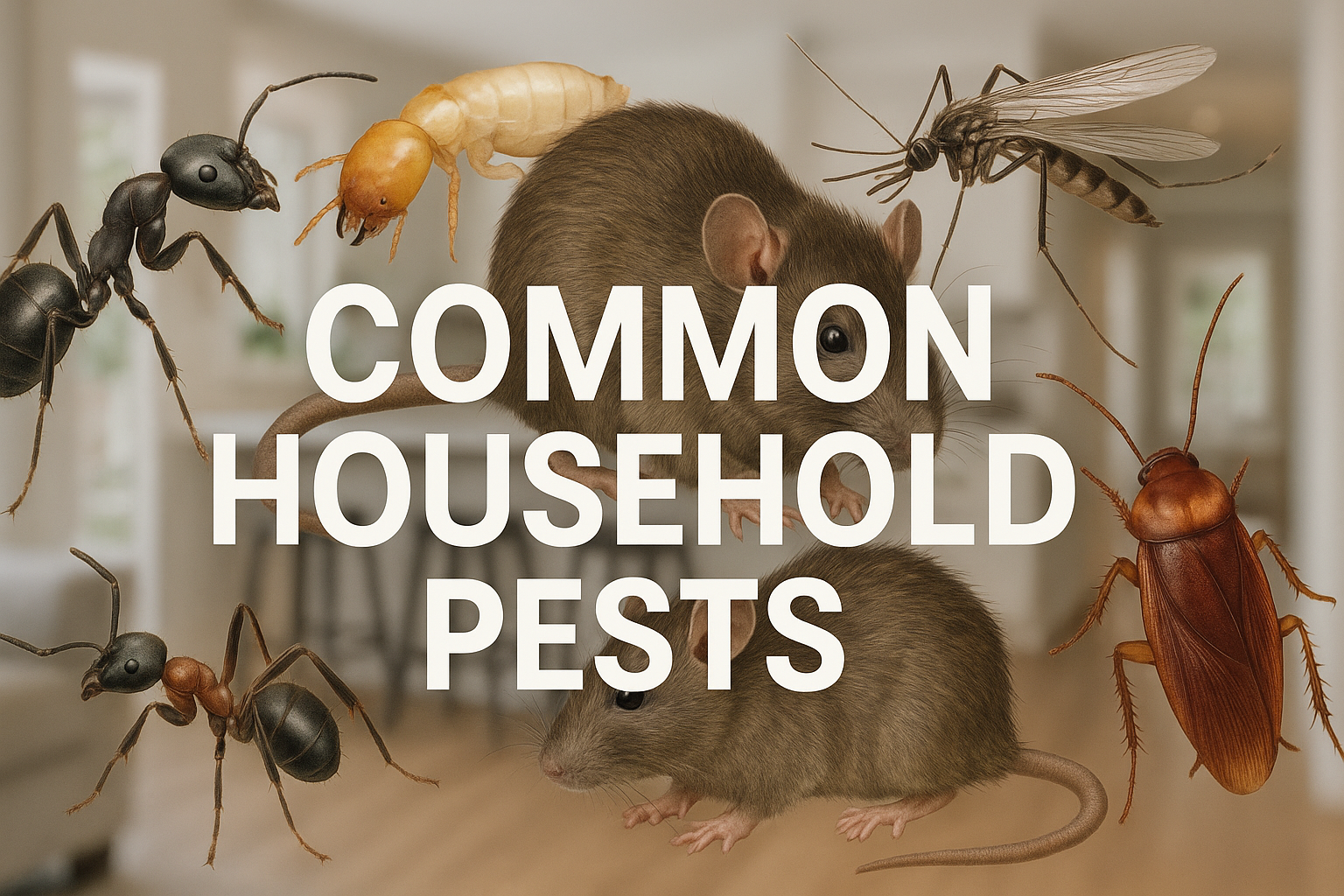
Knowing what to look for is the first step in stopping an infestation before it spreads. Below are the visual clues that homeowners in any climate can use to spot the six pests that cause the most headaches.
Ants
Kitchen ants are usually the black carpenter or odorous species that form steady trails toward sugary or greasy crumbs. Look for thin, continuous lines of ants marching along countertops, under appliances, or near pantry edges. Food contamination appears as tiny specks of ant frass (droppings) on open food containers.
- Irregular ant trails on kitchen surfaces
- Small black or brown insects, 1‑3 mm long
- Residue or frass near food packages
Arlington, TX: In the hot summer months, residents often find ant trails emerging from outdoor mulch beds and spilling into the pantry. Boise, ID: Springtime sees sugar‑ant colonies exploiting indoor plant pots and leaking faucet drips.
Termites
Termites hide in plain sight. The tell‑tale mud tubes—smooth, pencil‑shaped tunnels of soil and saliva—connect the soil to wood structures. When you tap hollow‑sounding wood, a dull thud often means a colony is feeding inside. Unlike carpenter ants, termites cause silent structural damage that can go unnoticed for years.
- Moist, earthen mud tubes on foundations or walls
- Wood that sounds hollow when struck
- Fine, sand‑like droppings (frass) near wood
Arlington, TX: Sub‑tropical humidity encourages subterranean termites to build extensive mud tubes beneath concrete slabs. Boise, ID: Dry‑climate drywood termites infest wooden decks and interior trim, often leaving only a few pellets of frass.
Rodents
Rats and mice are nocturnal intruders that leave a trail of evidence. Fresh droppings—dark, rice‑shaped pellets—appear along walls, in cabinets, or near food storage. Gnaw marks on wood, plastic, or wiring indicate active chewing, while shredded insulation hints at nesting.
- Small, dark droppings in clusters
- Gnaw marks with clean, smooth edges
- Scrapings of insulation or shredded paper
Arlington, TX: Warm winters keep roof rats active year‑round, often entering through eaves. Boise, ID: House mice seek shelter in basements during cold snaps, leaving droppings near stored firewood.
Mosquitoes
Adult mosquitoes are easy to spot when they swarm near standing water. Empty bird baths, clogged gutters, or forgotten plant saucers become breeding grounds within 48 hours. Their bites cause itchy welts, and in some regions they can transmit West Nile virus or Zika.
- Stagnant water sources around the home
- High‑pitched whine near windows at dusk
- Red, itchy bumps after outdoor evenings
Arlington, TX: Summer thunderstorms create temporary pools in low‑lying yards, prompting rapid mosquito spikes. Boise, ID: Early summer meltwater collects in garden pots, providing perfect hatcheries for mosquito larvae.
Cockroaches
Cockroaches are nocturnal scavengers that hide in cracks, behind appliances, and inside cabinets. Their presence is signaled by shed skins, dark droppings, and a faint, musty odor. Because they shed allergenic particles, they can trigger asthma attacks, especially in children.
- Fast‑moving, reddish‑brown insects at night
- Smear marks and droppings near food prep areas
- Shedding of exoskeletons in hidden corners
Arlington, TX: Warm, humid basements foster German cockroach colonies that quickly spread to kitchens. Boisha, ID: In colder months, American cockroaches congregate in sewer lines and emerge in basement showers.
Accurate identification empowers you to act quickly and choose the right treatment. The EPA Pest Management Handbook and the NPMA Pest Factsheet both confirm these visual cues as reliable indicators for each species.
DIY Prevention Strategies Every Homeowner Can Implement
Seal Entry Points
Every pest starts with a gap—whether it’s a cracked foundation, an unsealed window, or a gap under the front door. Grab a tube of exterior‑grade caulk and seal cracks around baseboards, utility penetrations, and siding. A simple door sweep, costing $10‑$25, blocks ants, roaches, and even rodents from slipping underneath.
Don’t forget window screens; a torn mesh is an open invitation for flies and mosquitoes. Replacing a screen typically runs $15‑$40 per window, and the whole job can be completed in an afternoon with just a screwdriver and a bit of patience. Most homeowners can finish these tasks for under $200 total, keeping the budget low while dramatically reducing entry points.
Reduce Moisture
Moisture is the magnet that draws mosquitoes, termites, and many other pests. Start by inspecting all plumbing fixtures, roof leaks, and basement walls. Even a slow drip from a faucet can create a breeding ground. Fixing a leaky pipe usually costs $50‑$150 for parts and labor if you hire a pro, but many simple repairs—tightening a joint or replacing a washer—are doable with a basic wrench set.
In humid climates like Plano, TX, a portable dehumidifier set to 50‑55% relative humidity can cut indoor moisture by up to 30%. The CDC’s Mosquito‑Borne Disease Guidelines highlight that eliminating standing water—bird baths, clogged gutters, or plant saucers—reduces mosquito breeding dramatically. Empty, scrub, and store containers upside down to keep water from lingering.
Proper Food Storage and Waste Management
Food left out is a neon sign for ants, cockroaches, and rodents. Store dry goods in airtight containers—plastic bins with snap‑lids or glass jars with rubber seals. Keep pantry shelves clean, wiping up crumbs immediately after meals.
When it comes to trash, use bins with tight‑fitting lids and take out garbage at least once a week. According to the University of Illinois Extension, ant activity spikes by 40% in homes where food residues are left on countertops for more than 30 minutes. Compost bins should be kept outdoors, sealed, and away from the house foundation.
Landscape Maintenance for Suburban Plano, TX
Outdoor spaces can serve as highways for pests. Trim trees, shrubs, and vines so they stop touching the house—ideally keeping a 2‑foot clearance. This reduces the “bridge” ants and spiders use to reach your roof.
Wood piles, leaf litter, and dense grass are perfect hiding spots for termites and rodents. In Plano’s suburban neighborhoods, stack firewood at least 18 inches off the ground and away from siding. Regularly rake leaves and mow the lawn to a height of 3‑4 inches; this discourages ticks and reduces moisture near the soil surface.
Finally, consider a perimeter barrier of crushed stone or gravel. It creates a dry, inhospitable zone that many crawling insects avoid, and it’s a low‑cost visual improvement that adds curb appeal.
Homeowner Prevention Checklist

Use the checklist above as a quick reference before the season changes. By tackling these low‑cost, high‑impact steps now, you’ll give pests far fewer opportunities to set up shop—saving you time, stress, and future professional treatment costs.
Professional Treatment Options and Transparent Pricing
When you call a pest‑control professional, the biggest question on most homeowners’ minds is “What exactly am I paying for?” At Anthem, we believe that clear, upfront pricing builds trust. Below you’ll find a straightforward walk‑through of our most requested services, what each treatment entails, and the price ranges you can expect in 2024. Knowing the details helps you compare options, budget wisely, and feel confident that you’re getting the right solution for your home.
Inspection & Assessment
Our technicians start every job with a thorough inspection. Think of it as a health check‑up for your house: we examine the exterior foundation, crawl spaces, attics, and interior rooms, looking for signs of activity, entry points, and conditions that attract pests. The inspection includes a detailed report, a discussion of findings, and a customized treatment plan tailored to your property’s layout and the specific pest pressures you face. Because the scope can vary—larger homes or properties with complex structures may require more time—the typical fee ranges from $75 to $150.
Chemical Barriers
Chemical barriers act like an invisible fence around your home. Our technicians apply a perimeter spray that creates a protective shield on the foundation, siding, and around doors and windows. Inside, we use residual sprays on baseboards, wall voids, and other hidden pathways where insects travel. This dual approach blocks both outdoor invaders and indoor wanderers, providing weeks of ongoing protection after a single application. The average cost for a full chemical‑barrier treatment falls between $200 and $400 per service.
Baiting & Trapping
For rodents and ant colonies, baiting and trapping are the most effective long‑term strategies. We strategically place rodent bait stations in concealed locations—behind appliances, in attics, and along exterior walls—where they’re out of reach of children and pets but attractive to mice and rats. Ant baits, usually in gel or station form, are positioned along trails to allow worker ants to carry the poison back to the colony. Because the bait stations are serviced and replenished throughout the season, the typical price range is $100 to $250 per season, depending on property size and infestation level.
Termite Solutions
Termites demand a specialized approach. Anthem offers two proven methods: a liquid termiticide barrier that saturates the soil around your foundation, and a bait‑system network that monitors and eliminates colonies before they reach your structure. The liquid barrier provides immediate protection, while the bait system offers ongoing surveillance and treatment. Both options require professional installation and periodic inspections. According to the 2024 NPMA termite cost study, homeowners can expect to invest between $1,200 and $3,500 for a comprehensive termite solution, depending on the size of the treatment area and the chosen technology.
Mosquito Control
Summer evenings are meant for relaxing, not swatting. Our mosquito program combines larvicide fogging—targeting breeding sites such as standing water—with adult barrier sprays applied to foliage, decks, and patio umbrellas. The treatment creates a protective zone that reduces mosquito activity for several weeks. We offer seasonal packages that include two to three applications throughout the peak months, typically priced between $150 and $300 per package. This range covers both residential yards and larger properties with extensive landscaping.

| Service | Description | Price Range |
|---|---|---|
| Inspection & Assessment | Comprehensive visual exam, pest identification, and a customized treatment plan. | $75 – $150 |
| Chemical Barriers | Perimeter spray and indoor residual applications to create a protective shield. | $200 – $400 |
| Baiting & Trapping | Strategic placement of rodent bait stations and ant bait gels for ongoing control. | $100 – $250 |
| Termite Solutions | Liquid termiticide barrier or bait‑system monitoring, tailored to infestation level. | $1,200 – $3,500 |
| Mosquito Control | Larvicide fogging and adult barrier sprays applied seasonally. | $150 – $300 |
By laying out each service, its methodology, and a realistic price window, Anthem helps you compare options without hidden fees. Whether you need a one‑time treatment or a seasonal protection plan, the transparency in our pricing means you can make an informed decision that fits both your pest‑control needs and your budget.
Frequently Asked Questions About Home Pest Management
Do I need a separate treatment for each pest?
- Most modern programs use an Integrated Pest Management (IPM) framework that targets multiple species with a single, coordinated plan.
- IPM starts with a thorough inspection, then applies the least‑toxic control methods that work across overlapping pest habitats—e.g., a perimeter barrier can deter ants, spiders, and roaches simultaneously.
- When a pest requires a specialized approach (like bed‑bugs or termites), Anthem adds a targeted treatment while keeping the core IPM schedule intact, so you don’t end up with a dozen separate appointments.
- Data from the National Pest Management Association shows that households using IPM see a 30‑45 % reduction in total pesticide applications compared with “one‑pest‑one‑treatment” strategies.
How long does a treatment last?
- Chemical perimeter barrier: Typically provides 3–6 months of protection, depending on weather exposure and soil type.
- Bait stations (ants, cockroaches, rodents): Effective for 6–12 months; stations are inspected quarterly to replace depleted bait.
- Low‑toxicity sprays (indoor fogging, crack‑and‑crevice): Offer 2–4 weeks of residual activity, making them ideal for immediate knock‑down followed by longer‑lasting IPM measures.
- Biological controls (e.g., beneficial nematodes for soil‑dwelling insects): Remain active for 4–8 weeks, after which re‑application aligns with seasonal pest pressure.
- Anthem schedules follow these efficacy windows, so you receive a reminder before any product’s protection window expires, ensuring continuous coverage.
Are the chemicals safe for pets and children?
- All products used by Anthem are EPA‑registered and meet the agency’s “Reduced Risk” criteria, meaning they have low acute toxicity and are approved for residential use.
- Our standard protocol applies a minimum‑effective dose and restricts spray drift, which reduces exposure risk by up to 70 % compared with legacy pesticide applications.
- We prioritize low‑toxicity options such as pyrethroids with a short environmental half‑life and insect growth regulators that target insects without affecting mammals.
- After each service, technicians provide a safety sheet that outlines re‑entry times—usually 30 minutes for indoor sprays and 2 hours for perimeter treatments—so families can resume normal activities quickly.
- Independent studies cited by the EPA confirm that when applied according to label directions, the risk to children and pets is negligible, and Anthem’s technicians receive quarterly training to stay current on the safest application techniques.
Take Action Today – Protect Your Home with Anthem Pest
When it comes to pests, timing is everything. Catching a problem early—whether it’s a lone ant trail, a faint rustle in the attic, or the first signs of a mosquito bloom—gives you a huge advantage. Early identification lets you act before a tiny invasion turns into a full‑blown infestation that damages structure, spreads disease, or drives up treatment costs. Pair that vigilance with a routine preventive maintenance plan, and you create a barrier that most pests can’t cross. Add a professional intervention, and you have the most reliable line of defense against the bugs that threaten your home’s comfort and safety.
Why act now? A recent NPMA 2023 Study found that homes receiving annual professional pest management experience a 60 % reduction in repeat infestations. That drop isn’t just a number—it translates into fewer emergency calls, lower chemical usage, and a calmer household that can focus on living, not on pest control.
What you gain by scheduling a free inspection
- A thorough walk‑through by a certified technician who knows the local pest landscape.
- A customized action plan that targets the species most likely to invade your property.
- Clear, transparent pricing with no hidden fees, so you can budget confidently.
- Peace of mind that your home is protected year‑round, not just after the fact.
Ready to take the first step? Our 30‑minute consultation is completely free and designed to give you a clear picture of any current or potential pest issues.